
Selecting live plants for a vivarium isn’t about grabbing the prettiest leaf at the nursery — it’s about choosing species that will actually survive and thrive under the unique humidity, light, and substrate conditions of an enclosed reptile or amphibian habitat. The wrong choice leads to rot, pest issues, or a plant that starves without direct sun.
I’m Mo Mahin — the founder and writer behind Furric. I’ve spent years studying vivarium-specific horticultural requirements, cross-referencing light and moisture tolerances, and analyzing thousands of owner reports to determine which plants hold up under real enclosure conditions.
Whether you’re setting up a tropical paludarium or a bioactive desert terrarium, this guide reviews the best plants for a vivarium based on humidity needs, growth habit, and long-term survivability in confined spaces.
How To Choose The Best Plants For A Vivarium
Not every houseplant can handle the confined, humid, low-light world inside a glass terrarium. You need species that tolerate stagnant air, resist fungal rot, and won’t outgrow the space within weeks. Here’s what separates vivarium-worthy plants from the rest.
Light Tolerance & Vivarium Placement
Most vivariums rely on LED strips or compact fluorescent bulbs that produce low to medium light levels. Fittonia (Nerve Plant) and Maranta (Prayer Plant) are proven performers under these conditions. Avoid species labelled “full sun” unless you have high-output lighting — they’ll stretch, pale, and die within a month.
Moisture Needs & Root Zone Stability
Closed and semi-closed vivariums maintain 70–90% humidity. Plants like live moss and Fittonia thrive here, but species that need dry-out periods between waterings (most succulents) will rot. Look for plants described as “emersed-tolerant” or “bog-friendly” if your setup includes standing water or a false bottom.
Growth Rate & Maintenance Burden
Fast-growing plants like Pothos can overwhelm a small vivarium within weeks, requiring constant trimming. If you want low-maintenance, choose slow spreaders: Hoya Compacta (Hindu Rope) or Lemon Lime Maranta. Simulated options like artificial Boston Fern are also valid if your animal needs dense cover without plant-care overhead.
Quick Comparison
On smaller screens, swipe sideways to see the full table.
| Model | Category | Best For | Key Spec | Amazon |
|---|---|---|---|---|
| Maranta Prayer Plant | Live Rooted | Pet-safe tropical enclosures | 12–16 in height at maturity | Amazon |
| Live Moss Variety Pack | Live Moss | Bioactive substrate & humidity | 3 sheets (3.5″ x 7″ each) | Amazon |
| Fittonia on Clay Moss Ball | Live Emersed | Emersed paludarium accents | Pre-mounted on clay moss ball | Amazon |
| Hoya Compacta | Live Hanging | Low-light trailing accents | 2″ pot starter plant | Amazon |
| Exo Terra Boston Fern | Artificial Replica | Quarantine & sterile setups | Medium-size silk fern | Amazon |
In‑Depth Reviews
1. Live Plant, Lemon Lime Maranta Prayer Plant

The Lemon Lime Maranta offers a rare combination of vivid variegation and vivarium-friendly physiology — its leaves fold upward at night (nyctinasty), adding dynamic visual interest. Unlike many tropicals, it’s ASPCA-recognized as non-toxic, making it safe for enclosures housing geckos, frogs, or small mammals that may nibble leaves.
At 12–16 inches tall in a 4-inch pot, this plant provides immediate canopy cover without overwhelming small terrariums. It thrives under bright indirect light — typical of most LED viv strips — and needs watering only when the top half of the soil is dry. The Hopewind packaging includes bubble wrap and moist paper towels, and multiple buyers confirmed it arrived healthy even in winter shipping conditions.
The main constraint is humidity: Maranta prefers warm, stable air (65–75°F) and will crisp at leaf edges if the vivarium drops below 50% humidity for extended periods. It’s an excellent choice for closed tropical paludariums but less suited for open-top arid setups. A couple of users noted minor edge cuts on leaves during transit, but overall health was unaffected.
Why we love it
- Pet-safe and non-toxic for reptiles and amphibians
- Dramatic nighttime leaf movement adds visual appeal
- Arrives large and well-packaged with minimal shock
Good to know
- Needs consistent humidity above 50% to prevent leaf crisping
- Not suitable for open-top or dry terrariums
2. Live Moss Variety Pack for Reptiles – 3-Pack Mixed Real Terrarium Mosses
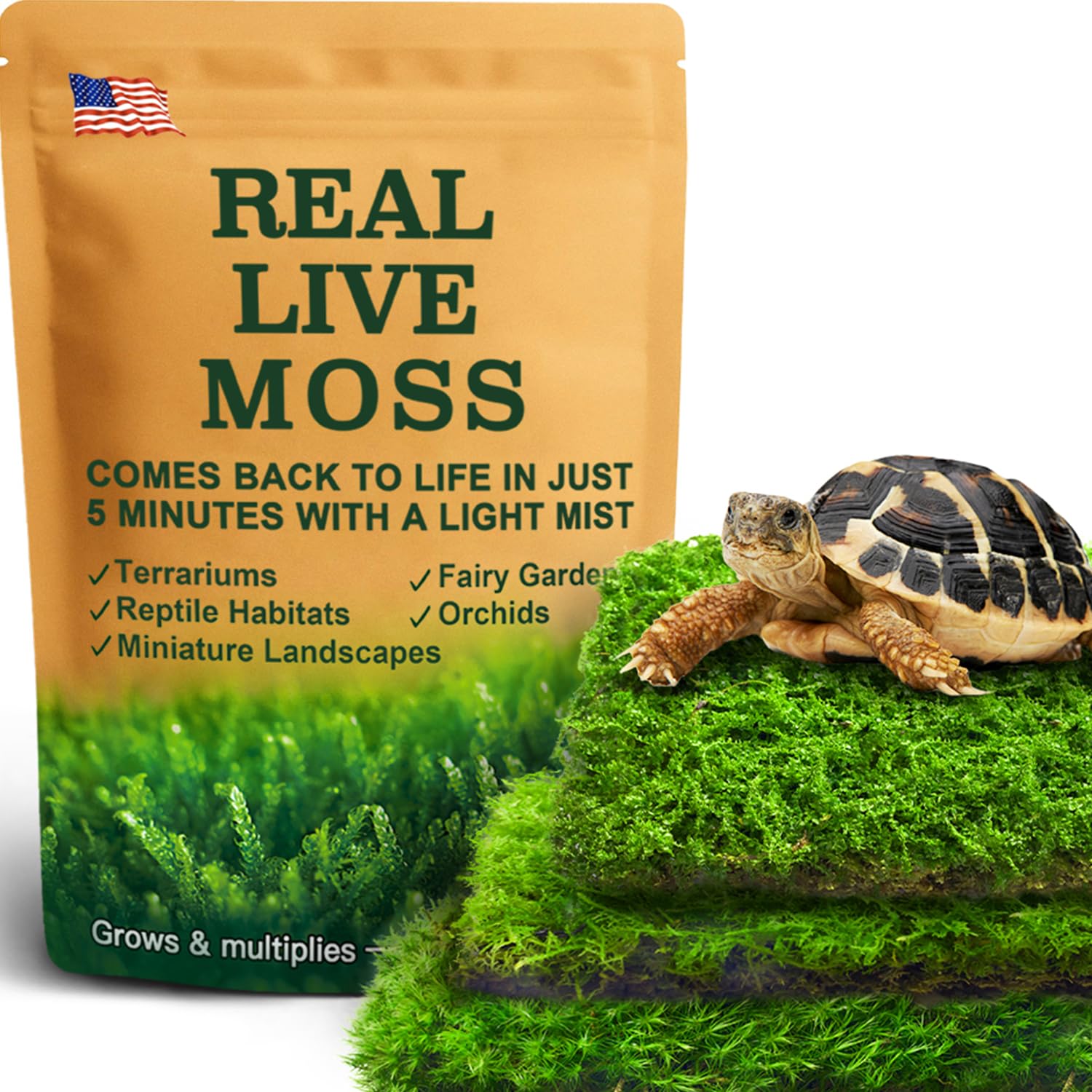
This 3-sheet moss pack from LUCKYRUNES delivers three distinct textures — ideal for creating a natural forest-floor substrate layer in bioactive enclosures. Each sheet measures 3.5 by 7 inches and arrives dry and crispy, but revives to a lush green within 5–10 minutes of misting. This dormancy-based shipping method reduces rot risk during transit.
Live moss excels at humidity stabilization. Unlike dried sphagnum that decomposes quickly, these sheets hold moisture for days and can be divided and regrown over months. Reptile keepers reported that their snakes, geckos, and tortoises used the moss for burrowing and nesting, and it held up well under moderate foot traffic. The pack includes Eurohypnum leptothallum and other low-light moss species suited for shaded terrarium corners.
The biggest caveat is that one of the three moss types requires consistently wet conditions; it will dry out and die if placed in a low-humidity desert or spider enclosure. Some buyers also noted the pieces were smaller than expected — closer to 4×4 inches for two sheets — and no printed care instructions were included. Still, for the price per square inch of live ground cover, it’s a budget-friendly way to carpet a vivarium floor.
Why we love it
- Revives quickly after shipping; low shock mortality
- Excellent moisture retention for high-humidity setups
- Three textures create a realistic micro-landscape
Good to know
- One sheet needs constant moisture — not for dry vivariums
- Actual sheet size slightly smaller than listed
3. SubstrateSource Live Planted Decor – Nerve Plant (Fittonia albivenis) on Clay Moss Ball
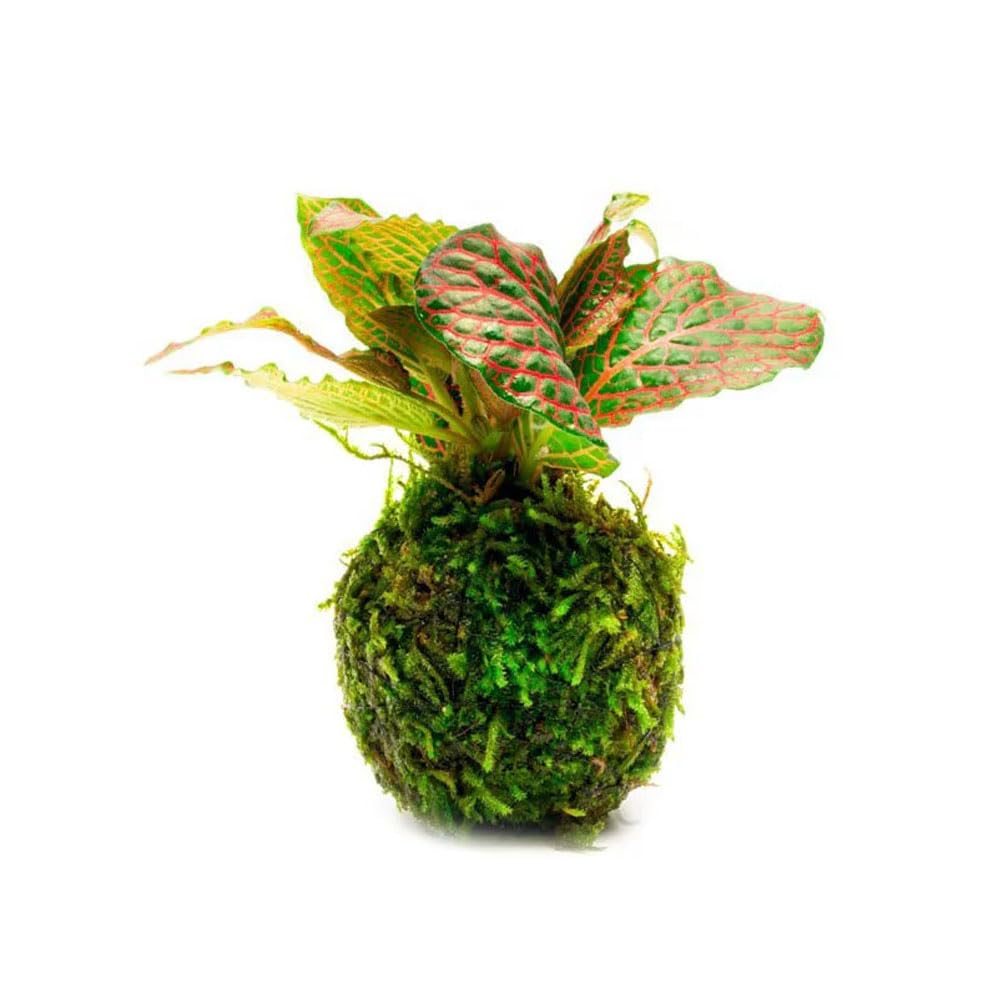
The Fittonia Nerve Plant is a classic vivarium choice because of its compact growth and striking vein patterns — white, pink, or red lines against dark green leaves. SubstrateSource mounts this plant on a clay moss ball, which simplifies placement in paludariums or emersed hardscape. You can drop it directly into a water feature edge or tuck it into a crevice without worrying about soil spillage.
It tolerates low to medium light (6–8 hours/day) and needs no CO₂ injection, keeping maintenance simple for beginners. The plant grows moderately in high-humidity closed terrariums, and its shallow root system won’t disturb the substrate layer. Multiple customers praised the packaging quality — the plant arrived full, green, and securely cushioned.
The downside: the clay moss ball mounting keeps the root zone small, so the plant won’t reach its full terrestrial size. One buyer reported their unit was barely an inch tall and died within days, though this appears to be an outlier given the overall 5-star average. Also, the specific vein color (white, skeleton, or red) is random based on inventory, so you can’t guarantee a particular look.
Why we love it
- Pre-mounted on clay ball for easy emersed placement
- Thrives in low light without CO₂ supplementation
- Striking vein patterns add visual contrast
Good to know
- Vein color is random — cannot choose pink/white/red
- Clay ball limits root expansion to small size
4. Hoya Compacta aka Hoya Hindu Rope – 2″ Pot Live Plant

Hoya Compacta, commonly called Hindu Rope, is a slow-growing trailing succulent with thick, twisted leaves that create a rope-like appearance. In a vivarium, this plant serves as a low-maintenance accent for vertical hardscape — its trailing habit lets it drape over branches or ledge edges without overwhelming the space. The 2-inch pot starter is ideal for small to medium enclosures where you want greenery without rapid expansion.
It requires little watering — the fleshy leaves store moisture, so it can handle the occasional dry period if your vivarium ventilation is higher. It also produces fragrant pink sphere-shaped flowers from spring to late summer under the right conditions, which is a rare treat in enclosed setups. Buyers consistently reported healthy, well-rooted arrivals with no leaf damage, packed in fiber.
The catch: Hindu Rope is not a true high-humidity plant. In closed terrariums with constant condensation, it may develop rot at the stem base. It’s better suited for open-top or partially ventilated vivariums where the substrate can dry slightly between waterings. Also, at 2 inches, it’s very small — you won’t get instant visual impact; it’s a grower’s plant that fills in over months.
Why we love it
- Extremely drought-tolerant — hard to overwater
- Unique twisted foliage adds sculptural interest
- Blooms fragrant pink flowers in right conditions
Good to know
- Susceptible to stem rot in constantly wet closed terrariums
- 2-inch pot is very small; slow grower
5. Exo Terra Boston Fern Terrarium Plant, Medium

Exo Terra’s Boston Fern replica is purpose-built for situations where live plants won’t survive — quarantine terrariums, high-traffic basking zones, or enclosures with animals that dig up or eat foliage. The silk material and wire-stem construction look realistic from a few inches away, and the weighted plastic base keeps it upright without toppling onto your animal.
Reptile keepers reported that leopard geckos and king snakes used the fern fronds as hiding cover, and the fern bends easily to shape around decor. It’s also trivial to clean — just rinse under warm water and let dry, no fear of rot, pests, or fertiliser runoff. Several owners noted it held up well under heat lamps (up to basking temperatures) without melting or fading over a year.
However, the silk material is not indestructible. After about 12 months, the fronds can begin shedding small fabric particles — a potential ingestion risk for animals that eat live prey and might strike the fern. The base is also lightweight; in enclosures with strong water flow or large reptiles pushing against it, the plant may need to be wedged into a corner for stability.
Why we love it
- Zero maintenance — no watering, lighting, or pruning
- Holds up under heat lamps without melting
- Provides realistic hiding cover for shy reptiles
Good to know
- Silk material degrades after ~12 months, shedding small pieces
- Lightweight base may need anchoring in active enclosures
FAQ
Can I mix live plants with artificial plants in the same vivarium?
Will my reptile eat or damage live vivarium plants?
How often should I replace live moss in a bioactive vivarium?
Final Thoughts: The Verdict
For most gardeners, the best plants for a vivarium winner is the Lemon Lime Maranta Prayer Plant because it balances pet safety, humidity tolerance, and vivid foliage in a manageable 12–16 inch size. If you want instant humidity stabilization and ground cover, grab the Live Moss Variety Pack. And for a quarantine or sterile setup where live plants can’t survive, nothing beats the Exo Terra Boston Fern replica.