
Axolotl tanks are notoriously cool, dim, and low-flow — conditions that turn most aquarium plants into mush within weeks. The wrong leaves rot, foul the water, and stress your amphibian before you even notice a change in parameters.
I’m Mo Mahin — the founder and writer behind Furric. I spend my weeks comparing aquatic plant specifications, studying nitrate-uptake data across 50+ species, and cross-referencing verified buyer experiences to find the rhizome and floating species that genuinely survive in 60-64°F axolotl habitats.
This guide breaks down five plants that can handle the temp, tolerate low light, and won’t get buried in sand. If you’re looking for the most reliable, low-hassle options among the best plants for axolotl tanks, these species actually deliver.
How To Choose The Best Plants For Axolotl Tanks
Axolotls demand cool water (60-64°F), subdued lighting, and very low current — conditions that eliminate nearly all stem plants and carpeting plants. You need species that grow slowly, don’t rely on root tabs buried in sand, and won’t melt when the tank light runs only six hours a day.
Rhizome vs. Rooted vs. Floating
Rhizome plants (anubias, java fern) attach to hardscape and absorb nutrients from the water column, making them ideal for sand-bottom axolotl tanks where root tabs can’t be placed effectively. Floating plants (salvinia, frogbit) pull nitrates directly from the surface and block excess light that stresses axolotls. Rooted stem plants should be avoided — they typically demand warmer temps and stronger light.
Temperature Tolerance
Most aquarium plants stall or die below 68°F. Anubias and java fern are among the few that continue slow growth in the 60-64°F range. Before buying, confirm the species can survive below 65°F; many listings only specify “tropical” ranges, which won’t hold up in an axolotl tank.
Leaf Toughness and Edibility
Axolotls sometimes nibble or bump into plants. Thin-leaved species tear easily and rot. Look for broad, thick leaves (anubias barteri, java fern) that can withstand occasional contact without breaking. Never add plants treated with pesticides — those chemicals can be lethal to axolotls.
Quick Comparison
On smaller screens, swipe sideways to see the full table.
| Model | Category | Best For | Key Spec | Amazon |
|---|---|---|---|---|
| Java Fern & Anubias Bundle | Bundle | Beginner-friendly combo setup | Two species, low-light rhizome | Amazon |
| Java Fern Mat (Canton Aquatics) | Rhizome | Natural carpet effect on hardscape | Coconut coir base, 4-6 inch leaves | Amazon |
| Anubias Barteri (Marcus Fish Tanks) | Rhizome | Broad-leaf anchor on driftwood | 2-inch pot, thick dark-green leaves | Amazon |
| Anubias Nana Petite (Marcus Fish Tanks) | Rhizome | Small foreground accent | 20-30 leaves per pot, compact | Amazon |
| Water Spangles (Salvinia Minima) | Floating | Nitrate control & shade cover | 60+ leaves, forms dense mat | Amazon |
In‑Depth Reviews
1. Java Fern and Anubias Aquarium Plant Bundle (Greenproaquatic)

This bundle pairs java fern and anubias — two of the most reliable species for axolotl tanks. Both are rhizome plants that attach to driftwood or rock, meaning they never need substrate planting. The java fern has tall, textured fronds that reach 5-8 inches, while the anubias offers broad, waxy leaves at a shorter height, giving the tank vertical depth without blocking flow.
Buyer reviews consistently note that both plants arrived healthy and stayed green even after multi-day shipping. One verified reviewer separated the two pieces and tied them to ornaments with fishing line, reporting root attachment within two weeks. The bundle is designed for low to medium light and needs zero CO₂ injection, matching the subdued conditions axolotls require.
A few reviewers mentioned that some anubias leaves dropped during transit. That’s common with this species — trim the damaged leaf at the rhizome and new growth typically appears within 10-14 days. Quarantine the bundle in a separate container for three days before adding to the main tank to avoid introducing unwanted snails or limpets.
Why we love it
- Contains two complementary rhizome species in one purchase
- Thrives in 60-64°F water with basic LED lighting
- No substrate required — attaches to hardscape
Good to know
- Some anubias leaves may drop during shipping
- Not a carpeting plant — expect vertical growth, not ground cover
2. Java Fern Mat with Coconut Coir (Canton Aquatics)

This java fern comes pre-attached to a coconut coir mat, giving you an instant green wall or foreground carpet without individual tying. The coir provides a stable anchor that holds the fern’s rhizome above the substrate — critical for axolotl tanks where buried rhizomes rot fast. The fern grows slowly at 62°F but stays deep green and doesn’t melt.
Verified buyers highlight the absence of snails and the plant’s resilience. One reviewer noted that after a month and a half the fern was flourishing in a low-tech tank with no CO₂. Some stems did detach from the mat during shipping, but that’s easy to fix with aquarium-safe superglue on a piece of lava rock. The coir itself won’t decay noticeably for six to nine months.
The mat shape works best in tanks 10 gallons or larger — smaller tanks may need cutting, which can stress the rhizome. Keep java fern leaves clear of the water surface; if the fronds break the surface, they can dry out and wilt. Pair with a floating plant to diffuse light and reduce algae on the fern leaves.
Why we love it
- Pre-attached coir mat eliminates individual planting effort
- Consistently arrives snail-free based on buyer reports
- Rhizome stays above substrate for healthy growth in sand tanks
Good to know
- Some stems may detach from mat during shipping
- Not ideal for nano tanks under 5 gallons
3. Anubias Barteri (Marcus Fish Tanks)

Anubias barteri is the standard broad-leaf option for axolotl tanks. The leaves are thick, dark green, and resistant to the tearing that occurs when axolotls brush against delicate stems. This Marcus Fish Tanks pot arrives with a 2-inch rockwool plug, but you must remove the plug and attach the rhizome to wood or stone — burying the rhizome will kill the plant.
Five-star reviews dominate, with multiple buyers calling this their fourth purchase from the same seller. The plants ship bare-root without pots, which reduces rot risk during transit in cold weather. One reviewer separated the single pot into two plants and both thrived. The seller also offers a live arrival guarantee provided temperatures stay above 20°F during shipping.
Anubias barteri grows slowly — expect one new leaf every two to three weeks in a 62°F tank. That slow pace means it won’t outgrow its spot quickly, but it also means nitrate removal is minimal compared to floating plants. Use this as a mid-ground accent piece rather than your primary filtration plant.
Why we love it
- Thick, tear-resistant leaves withstand axolotl contact
- Strong root system on arrival based on buyer photos
- Live arrival guarantee for cold-weather shipping
Good to know
- Very slow growth in cool water
- Rockwool plug must be removed before planting
4. Anubias Nana Petite (Marcus Fish Tanks)

The petite version of anubias nana stays under 2 inches tall, making it the best option for small foreground accents or attaching to the base of a centerpiece driftwood. It shares the same rhizome structure as its larger cousin, so it must remain unburied. In an axolotl tank, this plant works well near the front glass where it stays visible without blocking swimming space.
Buyer feedback is overwhelmingly positive: the plants arrived vibrant with strong roots, and several reviewers commented on the excellent packaging. One verified buyer left the plant in its bag for four extra days while on vacation and still found it healthy. The seller uses organic material and recommends against ordering when temperatures drop below 30°F to ensure live arrival.
Because of its tiny leaf size, anubias nana petite collects debris less than broad-leaf varieties. That’s a real advantage in axolotl tanks where leftover food particles and waste settle on broad surfaces. A gentle turkey-baster blast every two weeks keeps the leaves clean without manual wiping.
Why we love it
- Compact size fits small tanks and foreground areas
- Less debris accumulation than broad-leaf anubias
- Proven shipping resilience based on buyer reports
Good to know
- Slowest growth of any anubias variety
- Too small to provide significant nitrate reduction
5. Water Spangles – Salvinia Minima
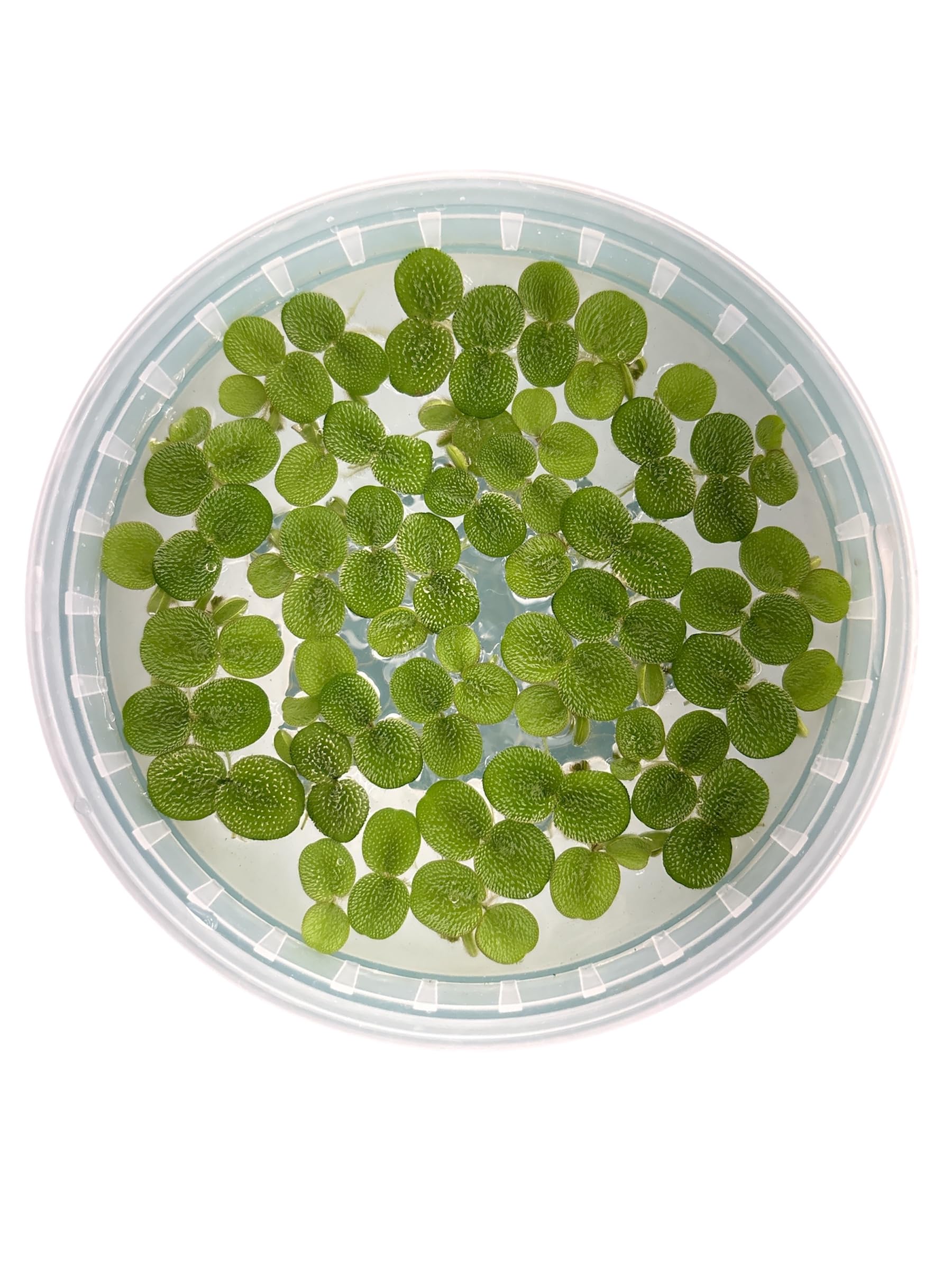
Water spangles (Salvinia minima) are a floating plant that does exactly what an axolotl tank needs: blocks excess light, consumes nitrates, and provides cover that makes axolotls feel secure. They form a dense surface mat within two to three weeks in medium light, and the small round leaves are soft enough that axolotls can push through them without injury.
Verified buyers report that the plants arrived moist and healthy, with new growth visible within a week. One reviewer noted that with fertilizer, the spangles multiplied rapidly from a single container to cover two betta tanks — impressive spread that translates to fast nitrate export in axolotl tanks. The species is also adaptable to brackish water, though that’s not relevant for axolotls.
The main caution: water spangles need surface movement to prevent stagnation, but axolotls hate strong current. Use a small sponge filter or an air stone to create gentle surface ripples — enough to keep the spangles from rotting, but mild enough that your axolotl doesn’t get pushed around. Thin out the mat weekly to maintain open areas for oxygenation.
Why we love it
- Rapid nitrate absorption improves water quality
- Soft leaves safe for axolotl contact
- Cuts light intensity to reduce algae and stress
Good to know
- Requires gentle surface movement to avoid rot
- Needs weekly thinning to prevent full surface coverage
FAQ
Can I use fertilizer in an axolotl tank?
How much light do axolotl tank plants need?
Why are my anubias leaves turning yellow?
Can axolotls eat aquarium plants?
Will live plants lower the pH in my axolotl tank?
Final Thoughts: The Verdict
For most keepers, the best plants for axolotl tanks winner is the Java Fern and Anubias Bundle because it gives you two tried-and-true rhizome species in one order, both capable of surviving cool water with minimal light. If you want instant broad-leaf coverage on a driftwood centerpiece, grab the Java Fern Mat. And for surface nitrate control and shade, nothing beats the Water Spangles.