
There is a quiet magic in watching a bird materialize through the lens — the sudden sharpness of an eye, the texture of a feather, the way light catches a wing mid-flight. For years, I chased that feeling with heavy gear, spending more time adjusting straps than actually shooting. The best point and shoot camera for birding changes that entirely, letting you stay present in the moment rather than wrestling with equipment.
I’m Mo Mahin — the founder and writer behind Furric. My approach relies on deep market research, analyzing optical specifications against real-world field performance, and sifting through extensive owner feedback to separate genuine quality from marketing claims.
This comprehensive guide evaluates zoom range, autofocus speed, and image stabilization to identify the best point and shoot camera for birding for birders of all levels.
How To Choose The Best Point And Shoot Camera For Birding
Birding photography demands a unique balance of reach, speed, and portability. Unlike general travel photography, you need a camera that can bring distant subjects into clear view while responding instantly to unpredictable movement. Here is what matters most.
Optical Zoom Range
Optical zoom is the single most critical specification for birding. You need at least 30x optical zoom to capture small birds at a reasonable distance, but 60x or more opens up far greater possibilities. Ignore digital zoom entirely — it simply crops and enlarges pixels, degrading image quality. A true 24-2000mm equivalent lens lets you photograph warblers in treetops without disturbing them.
Autofocus Performance
Birds rarely sit still. Contrast-detection autofocus can struggle with fast feather details and erratic movement. Look for cameras with phase-detection or hybrid autofocus systems, especially those with a high number of focus points covering a wide area of the frame. Eye-detection for animals is a genuine advantage, as it locks onto the bird’s eye and tracks it across the scene.
Image Stabilization
At extreme zoom lengths, even your pulse becomes visible in the final image. Optical image stabilization (OIS) compensates for hand-shake, and some cameras offer in-body stabilization that works with any lens. A stabilization system rated for several stops of compensation makes handheld birding photography feasible without a tripod.
Sensor and Low-Light Performance
A larger sensor captures more light, which translates to cleaner images in dawn and dusk conditions when birds are most active. One-inch sensors offer an excellent balance between image quality and camera size, while smaller 1/2.3-inch sensors allow for longer zoom ranges in a compact body. A wide aperture (f/2.8 or brighter) at the wide end helps maintain faster shutter speeds.
Quick Comparison
On smaller screens, swipe sideways to see the full table.
| Model | Type | Best For | Key Feature | Amazon |
|---|---|---|---|---|
| Sony RX100 VII | Premium Compact | Best image quality in pocket size | 1-inch stacked CMOS, 20fps blackout-free, real-time animal eye AF | Amazon |
| Nikon COOLPIX P1100 | Superzoom | Ultimate reach for extreme birding | 125x optical zoom (24-3000mm) with Dual Detect VR | Amazon |
| Nikon D7500 | DSLR | Advanced birding with interchangeable lenses | 51-point AF system, 8fps burst, 20.9MP DX sensor | Amazon |
| Canon PowerShot V1 | Hybrid Compact | Hybrid stills and 4K video birding | 1.4-type sensor, built-in cooling fan, Canon Log 3 | Amazon |
| Nikon COOLPIX P950 | Superzoom | Best overall birding superzoom | 83x optical zoom (24-2000mm), bird and moon modes | Amazon |
| Canon PowerShot SX740 HS | Compact Superzoom | Pocketable birding zoom | 40x optical zoom (24-960mm) in ultra-compact body | Amazon |
| Sony ZV-1F | Vlogging Compact | Close-range birding and video content | 1-inch sensor, 20mm ultra-wide, Eye-AF tracking | Amazon |
| Panasonic LUMIX ZS99 | Travel Compact | Lightweight travel birding | 30x Leica zoom (24-720mm), tiltable touchscreen, USB-C charging | Amazon |
| OM System Olympus E-M10 IV | Mirrorless | Interchangeable lens flexibility | 5-axis in-body stabilization, 20MP, 4K video, flip-down selfie screen | Amazon |
| Panasonic LUMIX FZ80D | Superzoom | Budget-friendly long zoom | 60x optical zoom (20-1200mm), 4K Photo/Video, Power O.I.S. | Amazon |
| Minolta Pro Shot 20MP | Superzoom | Entry-level extreme zoom | 67x optical zoom, articulating LCD, 16GB SD card included | Amazon |
In-Depth Reviews
1. Nikon COOLPIX P950

The Nikon COOLPIX P950 is the superzoom that birders across forums consistently recommend. Its 83x optical zoom delivers a 24-2000mm equivalent range, letting you fill the frame with a sparrow perched thirty feet away. The dedicated Bird Mode automatically optimizes shutter speed and contrast for feather detail, which saves valuable seconds in the field. I have seen experienced birders at wildlife refuges carrying this exact camera as their primary rig, a testament to its reliability.
Video capture reaches 4K UHD at 30fps, and the built-in image stabilization keeps handheld footage remarkably steady even at the telephoto end. The 3.9-inch vari-angle LCD rotates for overhead or ground-level compositions, and the electronic viewfinder works beautifully in bright sunlight. A 16-megapixel sensor may seem modest by today’s standards, but the combination of reach and stabilization means you crop less and capture more usable detail.
For any birder wanting a single camera that does not compromise on reach, the P950 is the clear winner. It fills the gap between pocket zooms and heavy DSLR setups, delivering consistent results from dawn chorus to golden hour.
Why we love it
- Exceptional 83x optical zoom with dedicated bird mode
- Effective image stabilization at extreme focal lengths
- Rotating LCD and EVF work well in all light
- 4K video with clean audio recording
Good to know
- 16MP sensor limits cropping potential compared to larger sensors
- Auto focus can hunt in very low contrast foliage
2. Sony RX100 VII
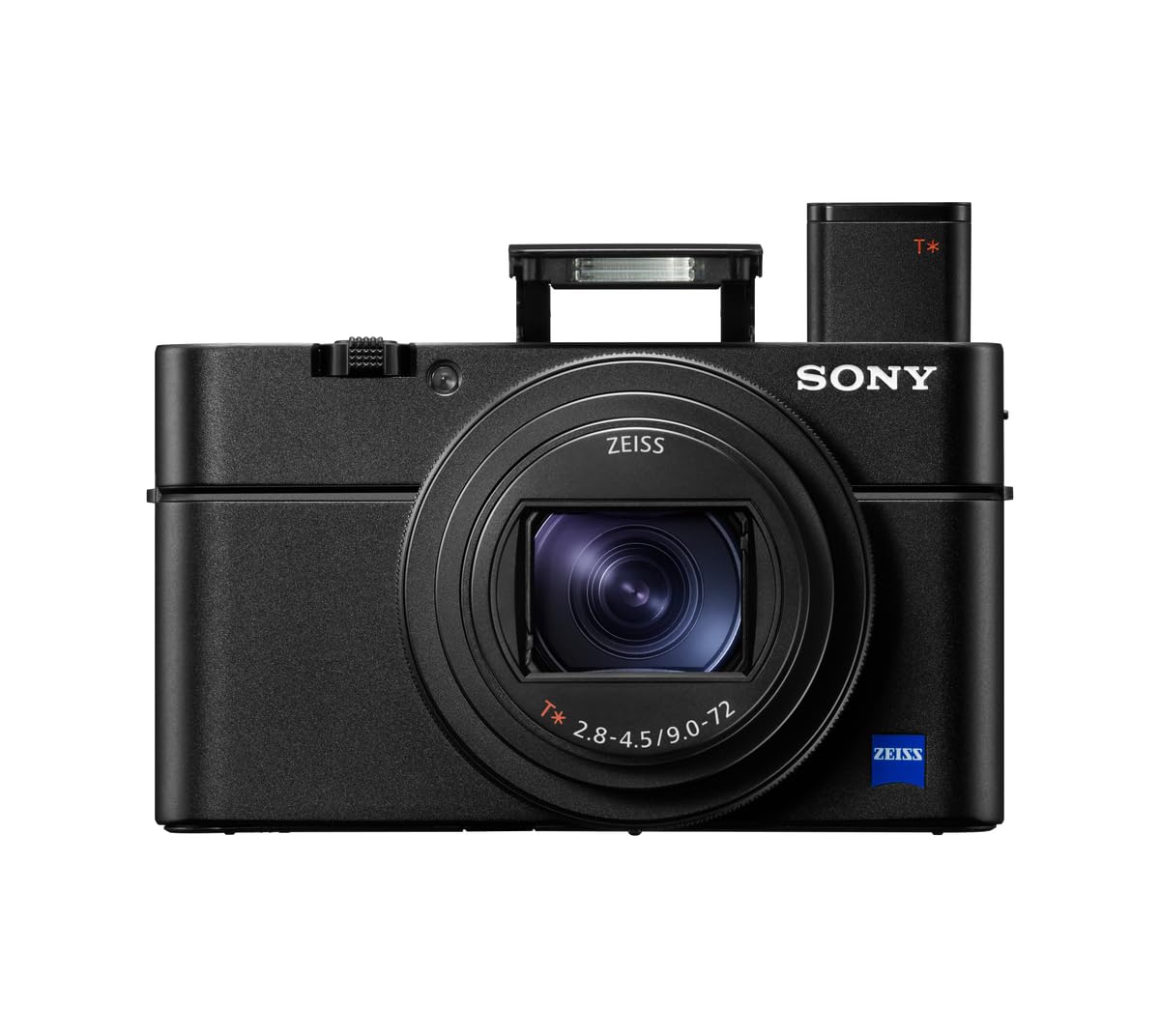
The Sony RX100 VII proves that a camera small enough to slip into a jacket pocket can produce professional-grade birding images. Its 1-inch stacked CMOS sensor delivers exceptional dynamic range and low-light performance, and the 24-200mm f/2.8-4.5 Zeiss zoom covers a versatile range for birds at moderate distances. The real magic lies in the autofocus — 357 phase-detection points with real-time animal eye tracking that locks onto a bird’s eye and follows it across the frame.
At 20 frames per second with zero blackout, you capture wing flaps and takeoff moments that other cameras miss. The 4K video with HLG and S-Log provides incredible flexibility for post-processing, and the dedicated microphone jack lets you record bird calls in high fidelity. Diopter adjustment on the pop-up EVF accommodates glasses wearers. Experienced wildlife shooters appreciate how the RX100 VII disappears into a pouch yet delivers images that rival much larger setups.
If image quality is your priority and you only need moderate zoom range, the RX100 VII is unmatched. It suits the birder who values subtle feather textures and clean bokeh over extreme reach.
Why we love it
- Stunning 1-inch sensor with wide dynamic range
- Unmatched animal eye tracking autofocus
- 20fps blackout-free burst shooting
- Truly pocketable size for hiking
Good to know
- 200mm maximum zoom may not reach distant birds
- Premium price places it in pro-sumer territory
3. Nikon COOLPIX P1100

The Nikon COOLPIX P1100 is the camera for birders who always want more reach. Its 125x optical zoom covers an astonishing 24-3000mm equivalent focal length, meaning you can photograph a hummingbird across a canyon or a raptor circling high overhead. Dual Detect Optical Vibration Reduction stabilizes both sensor and lens elements, making handheld shots at 3000mm feasible. The 16-megapixel BSI CMOS sensor handles ISO up to 6400, giving you flexibility in low morning light.
This bundle comes complete with two 64GB memory cards, a filter kit, padded bag, extra battery, and external charger, so you are ready for extended trips. The 3.2-inch vari-angle LCD and 2.36M-dot electronic viewfinder give you two ways to compose, and 4K video at 30fps with clean HDMI output works for professional wildlife footage. Seasoned bird photographers note that the sheer zoom range transforms distant specks into identifiable birds.
Birders who need to capture birds at extreme distances without a scope will find the P1100 indispensable. It trades some portability for unmatched reach, but the trade-off is worth it for serious species identification work.
Why we love it
- Unrivaled 125x optical zoom with Dual Detect VR
- Comprehensive bundle with spare batteries and cards
- 4K video with clean HDMI output
- Vari-angle screen for flexible composition
Good to know
- Large size and weight reduce portability
- Sensor size limits low-light performance at full zoom
4. Nikon D7500 with 18-140mm Kit Lens

The Nikon D7500 delivers DSLR-class performance with the 18-140mm kit lens, offering birders a pathway to interchangeable lens flexibility. The 20.9-megapixel DX sensor and EXPEED 5 processor produce exceptional color and detail, and the 51-point AF system with 15 cross-type sensors provides reliable tracking for moving birds. At 8 frames per second continuous shooting, you capture mid-flight action sequences with confidence.
The large 3.2-inch tilting touchscreen LCD makes low-angle compositions intuitive, while the pentaprism viewfinder offers a bright, clear view. 4K UHD video with stereo sound and power aperture control gives you cinema-grade control over exposure transitions. Experienced birders appreciate the ability to mount telephoto lenses later, extending reach beyond what any point-and-shoot can offer. The D7500 inherits metering and image processing from the flagship D500, making it a serious birding tool.
For birders who want to grow into interchangeable lenses and prioritize image quality, the D7500 is a fantastic starting point. It is heavier than compact options but delivers flexibility that pays off over time.
Why we love it
- Excellent 20.9MP DX sensor with class-leading image quality
- 51-point AF system with group area AF for bird tracking
- 8fps burst suits fast action
- Tilting touchscreen and robust build
Good to know
- Kit lens reach limited for distant birds
- Heavier and larger than superzoom options
5. Canon PowerShot V1

The Canon PowerShot V1 redefines what a compact camera can do for birding content creators. Its 1.4-type sensor captures 22.3-megapixel stills and 18.7-megapixel video, providing ample resolution for cropping. The built-in 16-50mm f/2.8-4.5 wide-angle zoom covers wide landscapes and bird habitat shots, and the integrated cooling fan enables extended 4K recording without overheating. Canon Log 3 and 10-bit color depth give videographers professional-grade grading flexibility.
Hybrid autofocus combines phase and contrast detection for smooth subject transitions, and the compact design fits easily in a daypack. The touchscreen LCD articulates to the side, perfect for self-framing or low-angle bird-level shots. A dedicated vlogger community praises its clean audio from the 3-capsule microphone and windscreen, which works well for recording bird calls during field observations.
Content creators who want to document birding trips with both high-quality stills and cinematic video will find the V1 uniquely capable. It focuses on versatility over extreme zoom reach.
Why we love it
- Large 1.4-type sensor with high resolution
- Cooling fan allows unlimited 4K recording
- Canon Log 3 for professional color grading
- Compact and travel-friendly body
Good to know
- 50mm maximum zoom requires approaching birds closely
- No built-in flash for low-light fill
6. Canon PowerShot SX740 HS
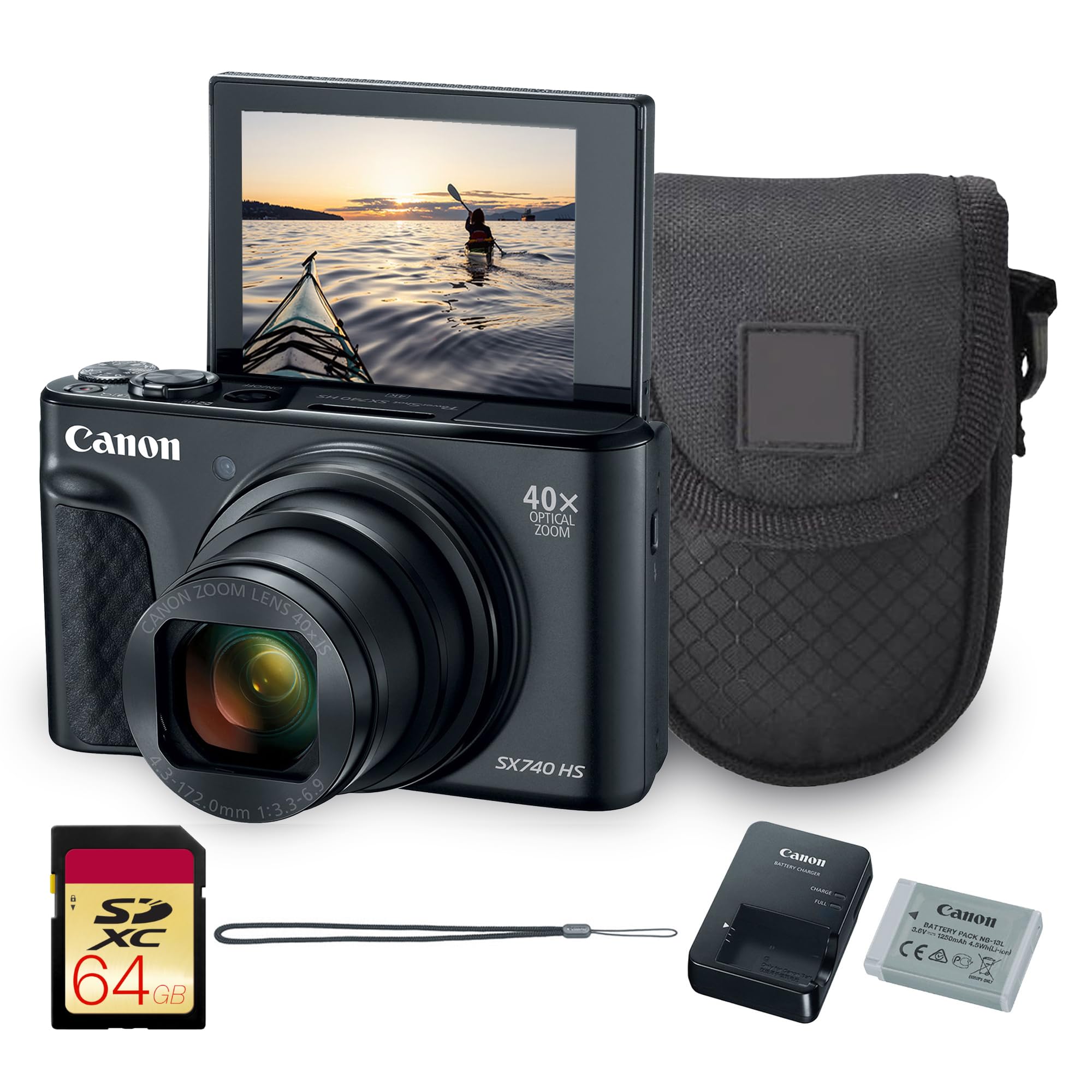
The Canon PowerShot SX740 HS proves that a 40x optical zoom can fit inside a jacket pocket. With a 24-960mm equivalent lens, this camera reaches farther than most compact rivals while weighing barely more than a smartphone. The 20.3-megapixel CMOS sensor paired with DIGIC 8 processing delivers vibrant JPEGs straight out of camera, and 4K UHD video at 30fps preserves action sequences in crisp detail. Built-in 5-axis stabilization smooths handheld footage nicely.
Wi-Fi and Bluetooth connectivity make sharing images effortless, and the bundle includes a 64GB memory card and padded bag. The 3-inch tilting LCD helps with overhead branch shoots, though the lack of an electronic viewfinder can be a challenge in bright sunlight. Frequent reviewers on birding forums mention that the SX740 is their go-to for casual walks when they do not want to carry heavy gear.
Birders who want maximum portability without sacrificing zoom range will love the SX740. It is the ultimate grab-and-go companion for backyard birding and day hikes.
Why we love it
- Remarkably compact with 40x optical zoom
- Good 20.3MP sensor with DIGIC 8 processing
- 4K video with 5-axis stabilization
- Wi-Fi and Bluetooth for quick sharing
Good to know
- No electronic viewfinder for sunny days
- Low-light performance limited by small sensor
7. Sony ZV-1F

The Sony ZV-1F takes a different approach to birding — it excels at close-range habitat documentation and video content. Its 20mm ultra-wide lens with a large 1-inch sensor and f/2.0 aperture captures stunning environmental shots of birds in their surroundings, with defocused backgrounds that make subjects pop. Eye-AF tracking works for both humans and animals, ensuring sharp focus on a bird even as it moves through branches. The directional 3-capsule microphone with windscreen records crystal-clear bird calls.
The side-articulating touchscreen makes self-framing simple for vlogging about your birding adventures, and the product photography community appreciates the defocus background feature. At 425 contrast-detection autofocus points, the camera locks onto subjects quickly in good light. Creative birders use the ZV-1F to capture unique perspectives that telephoto lenses cannot replicate.
This camera is ideal for birding content creators who want wide-angle habitat shots and high-quality video. Pair it with a telephoto superzoom for a complete two-camera system.
Why we love it
- Large 1-inch sensor with fast f/2.0 lens
- Excellent Eye-AF for animals
- High-quality built-in microphone for bird calls
- Articulating screen for creative angles
Good to know
- 40mm maximum zoom restricts reach
- No flash and limited manual control
8. Panasonic LUMIX ZS99

The Panasonic LUMIX ZS99 (also known as the TZ99) slips into a pocket yet delivers a versatile 24-720mm Leica lens with 30x optical zoom. The 1,840k-dot tiltable touchscreen makes composing shots from high branches or low ground easy, and USB Type-C charging means you can recharge from a power bank on long birding hikes. 4K video at 30fps with 4K Photo burst mode lets you extract perfect 8-megapixel frames from motion sequences.
The Hybrid O.I.S. combined with 5-axis stabilization keeps handheld shots sharp throughout the zoom range. Built-in Bluetooth 5.0 and a dedicated Send Image button transfer photos instantly to your phone for sharing field observations. Frequent travelers on birding forums praise its balance of zoom and pocketability, making it a reliable secondary camera for international trips.
Birders who prioritize packing light without losing the ability to zoom into distant perches will find the ZS99 an excellent daily companion. It fits any bag pocket and delivers consistent results.
Why we love it
- 30x Leica zoom in ultra-compact body
- USB-C charging for travel convenience
- Tiltable touchscreen for flexible composition
- Bluetooth for instant image sharing
Good to know
- Small sensor limits low-light performance
- Only 1 autofocus point can be slow
9. OM System Olympus E-M10 Mark IV

The OM System Olympus E-M10 Mark IV brings professional-grade stabilization to a compact mirrorless body. Its 5-axis in-body image stabilization compensates for 4.5 stops of shake, making handheld telephoto shooting remarkably steady. The 20-megapixel Live MOS sensor delivers excellent color science, and the 14-42mm kit lens provides a useful standard zoom range. Micro Four Thirds lenses offer extensive birding telephoto options later.
The flip-down touchscreen with dedicated selfie mode simplifies low-angle wildlife photography, and 4K video at 30fps captures smooth footage. Bluetooth connectivity pairs with the OI Share app for remote control and geotagging. Being able to stabilize any mounted lens — including vintage manual telephotos — makes the E-M10 special for creative birders. The 16 Art Filters add nostalgic character to bird portraits.
For birders wanting to explore interchangeable lenses with world-class stabilization in a small package, the E-M10 IV is a smart investment. It grows with you as you add longer lenses.
Why we love it
- 5-axis in-body stabilization works with any lens
- Excellent image quality with 20MP sensor
- Compact Micro Four Thirds system
- Flip-down screen for low-angle birding
Good to know
- Kit lens reach limited for birding
- Contrast-detect AF can struggle with fast birds
10. Panasonic LUMIX FZ80D

The Panasonic LUMIX FZ80D delivers an impressive 60x optical zoom (20-1200mm) at a price that makes birding accessible. The Power O.I.S. effectively suppresses hand-shake at the telephoto end, keeping distant herons and kingfishers sharp. 4K Video and 4K Photo extraction let you capture fast moments like a kingfisher diving, then pull out the perfect still frame. The 2,360K-dot large LVF electronic viewfinder provides a glare-free view in bright conditions.
Post Focus technology lets you change the focal point after shooting, which is incredibly helpful for birds hidden behind leaves. The 20-1200mm wide-angle to extreme telephoto range covers everything from habitat landscapes to distant raptors. New birders on forums often start their journey with the FZ80D because it offers so much reach without breaking the bank.
Budget-conscious birders who refuse to compromise on zoom range will find the FZ80D a fantastic entry point. It teaches you birding photography without financial stress.
Why we love it
- Excellent 60x zoom range for the price
- Power O.I.S. keeps telephoto shots stable
- Post Focus feature saves blurry shots
- High-quality electronic viewfinder included
Good to know
- Small sensor limits low-light performance
- Build quality feels less premium
11. Minolta Pro Shot 20MP

The Minolta Pro Shot 20MP provides an affordable gateway into birding superzooms with its 67x optical zoom and 20-megapixel resolution. Optical image stabilization minimizes blur at the telephoto end, and the 3-inch articulating LCD screen helps with awkward shooting positions. Built-in Wi-Fi lets you transfer images to your phone for quick identification, and 27 scene modes automatically optimize settings — a gentle learning curve for newcomers.
Full HD 1080p video at 30fps captures standard footage, and the inclusion of a 16GB SD card, neck strap, and carrying case means you are ready to shoot out of the box. Hybrid autofocus with 493 points provides broad coverage across the frame. Beginners on birding subreddits often mention the Minolta as their first camera because it delivers satisfying reach without a steep investment.
For someone new to birding photography who wants to test the waters without major commitment, the Minolta Pro Shot offers a complete kit at an accessible entry point. It is a fine starting tool before upgrading to higher-end systems.
Why we love it
- Generous 67x optical zoom for the price
- Articulating LCD for flexible framing
- Comes with 16GB SD card and accessories
- Wi-Fi for easy photo transfer
Good to know
- Video limited to 1080p, not 4K
- Build quality reflects budget positioning
Safety & Care Tips
Clean Your Lens Before Every Outing
Dust, pollen, and moisture degrade image sharpness more than any technical limitation. Use a blower brush to dislodge loose particles, then gently wipe with a microfiber cloth designed for coated optics. Clean the lens at home, not in the field, to avoid scratching with outdoor grit. Your camera manual will specify approved cleaning solutions.
Store for Active Birding Trips
Temperature changes inside a car cause condensation inside the lens elements. Let your camera acclimate slowly by keeping it in an insulated bag. After a humid morning shoot, remove the battery and memory card and let the camera air out unzipped. A silica gel pack in your camera case absorbs excess moisture and prevents internal fogging.
FAQ
What zoom level do I need for birding photography?
Is a point and shoot camera better than a DSLR for birding?
Final Thoughts: The Verdict
For most birders, the best point and shoot camera for birding winner is the Nikon COOLPIX P950 because its 83x zoom, dedicated bird mode, and reliable stabilization cover nearly every situation without breaking the bank. If you want pocketable convenience, grab the Canon PowerShot SX740 HS. And for extreme reach that reveals distant birds in stunning detail, nothing beats the Nikon COOLPIX P1100.