
Broken eggs, wasted feed, and thirsty hens in the summer heat are the daily frustrations that turn backyard poultry keeping from a joy into a chore. The difference between a smooth-running flock and a constant battle often comes down to the gear you choose — from the nesting box that protects your eggs to the waterer that keeps your birds hydrated through a scorching afternoon.
I’m Mo Mahin — the founder and writer behind Furric. I’ve spent years comparing specifications, studying poultry husbandry data, and analyzing aggregated owner feedback to separate the truly effective equipment from the stuff that merely looks the part on a product page.
This guide breaks down the most reliable hardware on the market, covering coops, feeders, waterers, and nesting boxes, so you can build a setup that works for both you and your flock. Whether you need a walk-in run for twenty birds or a compact solution for a small backyard, the best poultry equipment saves you time, money, and daily frustration.
How To Choose The Best Poultry Equipment
Poultry equipment is a long-term investment — the difference between a feeder that lasts a decade and one that cracks within a year often comes down to material choice, capacity planning, and specific design features that solve real problems your flock will face daily. Here is what matters most when you’re building your setup.
Nesting Box Design: Rollout vs. Standard Compartments
Standard nesting boxes leave eggs exposed to pecking, breaking, and soiling. Rollout or rollaway designs use a sloped floor that gently moves the laid egg into a shielded collection tray behind a protective lid. This single feature is the most effective way to stop egg-eating behavior in your flock and dramatically reduces the number of dirty eggs you need to clean. Look for boxes made from G90 galvanized steel or heavy-gauge metal — thin sheet metal will bend under the weight of larger breeds like Orpingtons or Cochins.
Feeder Capacity and Port Efficiency
A feeder that lets your birds pull food onto the ground is costing you money every week. The best designs use a deep port or tunnel that allows the hen to eat from the opening but prevents her from raking feed out. Capacity matters proportionally to flock size — a 10-pound feeder works for a small backyard flock of 4-6 hens, but flocks of 15 or more need at least a 50-pound reservoir to avoid daily refills. Also check for a roost-resistant lid; if a hen can perch on top of the feeder, you will find droppings in your feed.
Waterer Materials and Insulation
Plastic waterers are lightweight and easy to clean, but they degrade in sunlight unless they are UV-stabilized. Dark green or opaque materials block light that encourages algae and slime growth — clear plastic waterers will develop a green tinge within days in direct sun. In hot climates, an insulated waterer keeps water noticeably cooler and reduces evaporation. For winter, look for models that accept a heater base or have freeze-proof nipple designs. The drinking method matters too: cups are easier for young chicks and bantams, while horizontal nipples stay cleaner longer and are harder for wild birds to use.
Coop Size, Security, and Assembly
The single biggest mistake new poultry keepers make is buying a coop that is too small. Each standard hen needs about 4 square feet inside the coop and 10 square feet in the run. A coop listed for 4 chickens will feel cramped with 4 full-sized hens. Check the actual interior floor dimensions rather than trusting the “holds X chickens” claim. Predator-proofing is non-negotiable — the coop should have hardware cloth with ½-inch openings (not chicken wire, which raccoons can tear open), secure locking latches that a raccoon cannot manipulate, and a solid floor or apron that prevents digging entry. Assembly difficulty varies widely; pre-punched panels and clear manuals make a significant difference in setup time.
Quick Comparison
On smaller screens, swipe sideways to see the full table.
| Model | Category | Best For | Key Spec | Amazon |
|---|---|---|---|---|
| CoopWorx Poultry Feeder | Feeder | Large flocks, minimal waste | 80-lb capacity, 8 feed ports | Amazon |
| HenGear Nesting Box | Nesting Box | Clean egg collection, large flocks | G90 galvanized steel, rollout tray | Amazon |
| 4ever2buy Metal Chicken Coop | Walk-in Run | Large outdoor run, multiple birds | 10×20 ft, 6.4 ft tall | Amazon |
| Omlet Insulated Waterer | Waterer | Hot climates, clean water | 3 gallon, insulated, 99% light-block | Amazon |
| RentACoop Twin Cup Set | Feeder/Waterer | Space-saving, small flocks | 10-lb feeder, 2-gal waterer | Amazon |
| Homestead Essentials Nesting Box | Nesting Box | Mid-sized flocks, rollout eggs | 3 compartments, galvanized steel | Amazon |
| Petsfit Wooden Chicken Coop | Coop | Small backyard, 2-4 birds | Fir wood, PVC roof, 3 doors | Amazon |
In‑Depth Reviews
1. CoopWorx Poultry Feeder — 80 lb Capacity

The CoopWorx feeder solves the two biggest feeder problems at once: feed waste and pest attraction. Its patented funnel design lets the birds consume virtually 100% of the feed inside the reservoir — no stale feed sitting at the bottom, no food scattered on the ground inviting rodents and wild birds. The 80-pound capacity means a flock of 14-20 hens can go days between refills, and the 8 feed ports allow multiple birds to eat simultaneously, reducing competition at feeding time.
The telescoping legs adjust the port height from 9 to 18 inches off the ground, accommodating everything from bantams to full-sized turkeys. The lid is specifically designed to discourage roosting — no more droppings on top of your feed. Made from heavy-duty, UV-stabilized plastic in the USA, this feeder is built to withstand years of outdoor exposure without cracking or fading.
Some owners with very small bantam breeds noted that even the lowest leg setting might be slightly high for tiny birds, and the lid bolt requires a socket wrench during assembly rather than a simple hand tool. But for medium to large flocks, this is the last feeder you will need to buy.
Why we love it
- Near-zero feed waste saves money over time
- Adjustable height works for multiple bird species
- Roost-resistant lid keeps feed clean
Good to know
- Lowest height setting may still be too tall for bantams
- Assembly requires a socket wrench for the lid bolt
2. HenGear Nesting Box — Medium, Up to 32 Hens
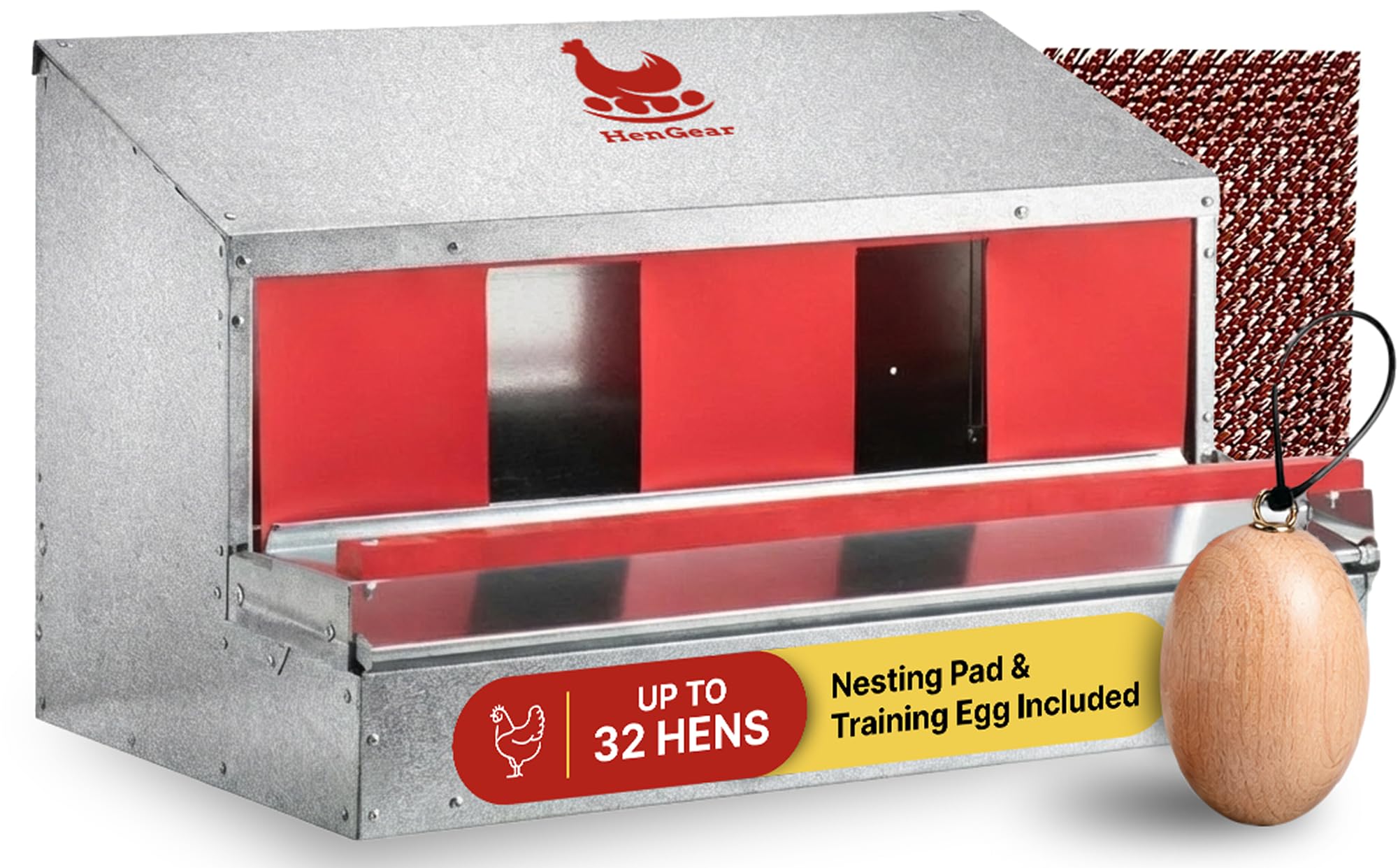
The HenGear nesting box is built from G90 galvanized steel — a rust-resistant grade that holds up in damp outdoor environments far better than standard galvanized or painted steel. The rollout design includes a full-size nesting pad that extends into the tray, which keeps eggs dramatically cleaner than a bare metal surface. Owners consistently report that egg-eating behavior stops almost immediately after switching to this box.
The reversible rollout system is a standout feature: you can collect eggs from inside the coop or from outside through the hinged back access. This flexibility means you can position the box against a coop wall and never need to enter the run to gather eggs. The open community interior, rather than cramped individual compartments, lets hens settle naturally and reduces crowding stress.
Assembly is the main trade-off — the box ships flat with many pieces, and while the manual is clear, some owners recommend watching the YouTube assembly video to save time. A few users noted that some eggs occasionally don’t roll all the way forward if the angle is not perfectly set, but the design allows you to adjust the slope. For the price, this is the most effective solution for keeping eggs clean and preventing breakage in medium to large flocks.
Why we love it
- G90 galvanized steel is exceptionally durable outdoors
- Reversible collection works from inside or outside the coop
- Stops egg-eating behavior in most flocks
Good to know
- Assembly is time-consuming with many small parts
- Rollout angle may need adjustment for consistent egg movement
3. 4ever2buy Metal Chicken Coop — 10×20 FT
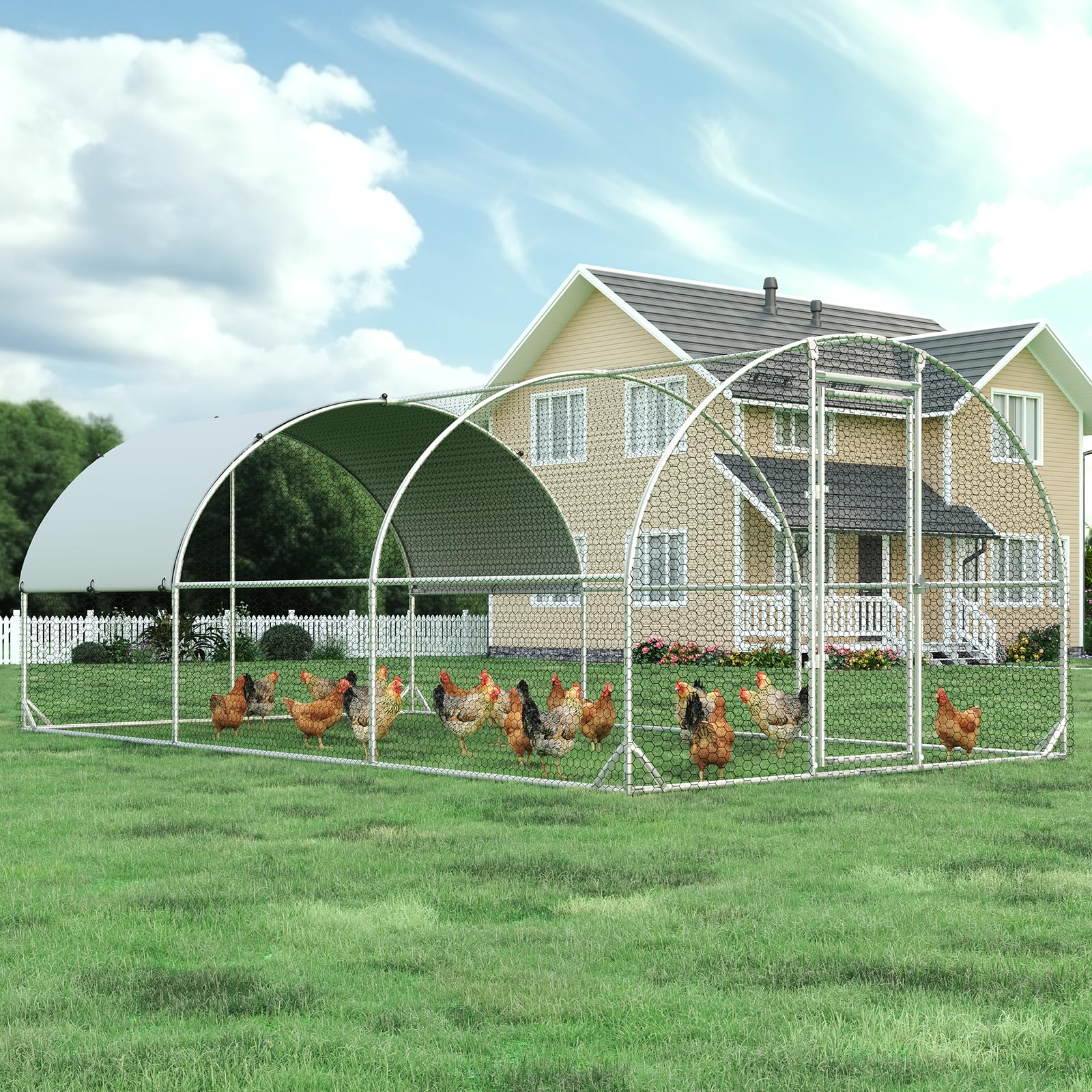
The 4ever2buy walk-in run is the solution for anyone tired of crouching down to access their birds. At 6.4 feet tall, you can walk inside upright, and the 10×20 foot floor provides enough room for 18 to 22 chickens to roam, scratch, and dust-bathe comfortably. The frame is made from reinforced, rust-resistant alloy steel, and the included waterproof PE cover protects from rain, UV rays, and light snow.
The run is wrapped in dense galvanized hardware cloth rather than standard chicken wire — a critical distinction that stops raccoons, foxes, and even snakes from getting through. Two adults can assemble the entire structure in about an hour thanks to labeled parts and a clear manual. The design is versatile enough to double as a garden trellis or a temporary holding pen for ducks and rabbits.
A few owners reported that the included zip ties for securing the cover are low quality and recommend replacing them with wire ties for a more permanent hold. Some also noted that the door latch requires careful adjustment to close properly. The wire mesh can be sharp on cut edges, so wearing gloves during assembly is wise. For a large run at this price point, the overall value is strong, but plan on a few minor modifications for predator-proofing perfection.
Why we love it
- Full walk-in height eliminates stooping
- Hardware cloth wrapping stops common predators
- Quick assembly with labeled parts
Good to know
- Stock zip ties are flimsy — upgrade to wire ties
- Door latch may need post-assembly adjustment
4. Omlet Insulated Chicken Waterer — 3 Gallon
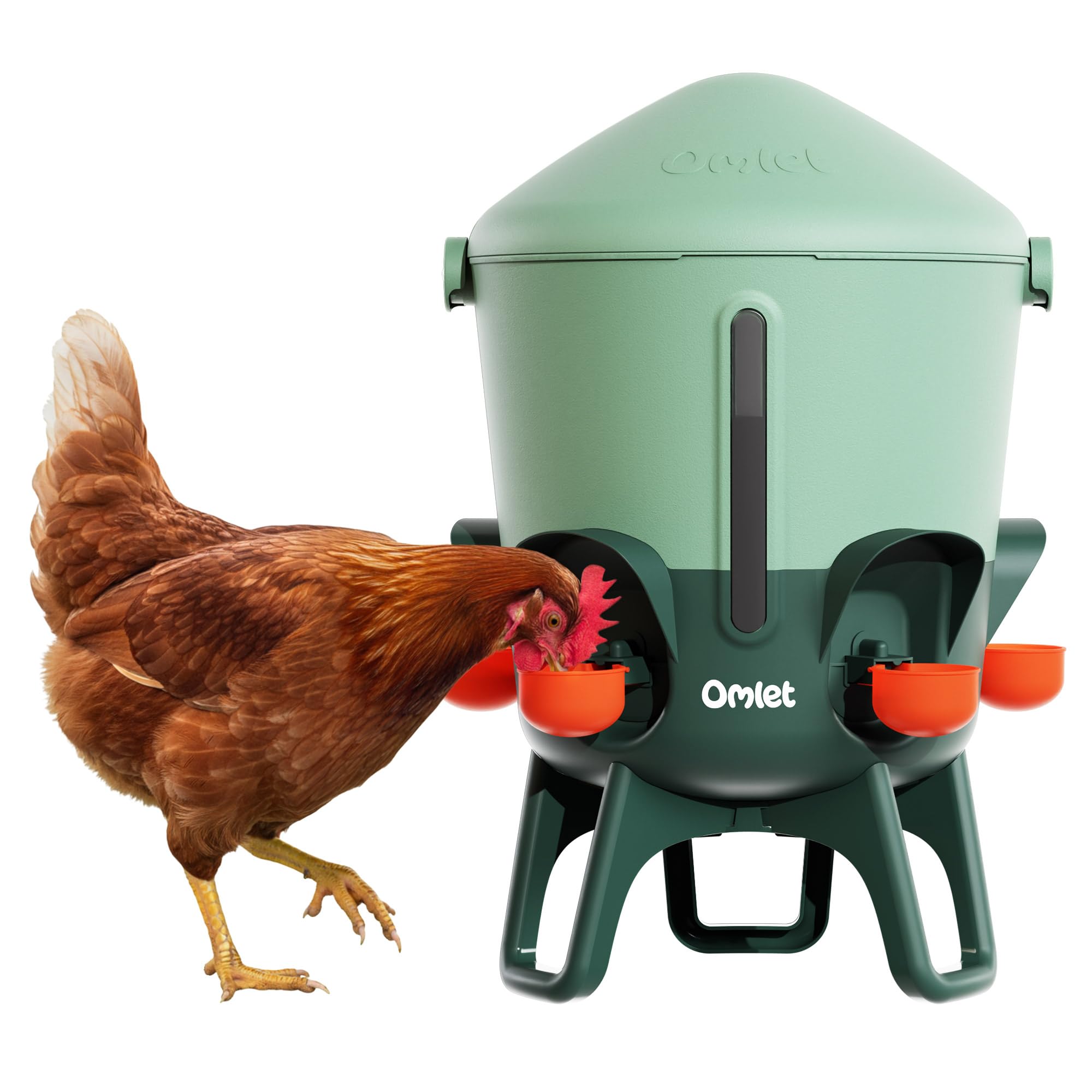
The Omlet waterer addresses the two most common water-related complaints from poultry keepers: algae growth and high water temperature in summer. The insulated body and UV-stable plastic block 99% of light, which prevents the slimy green buildup that plagues clear plastic waterers within days. In 90°F heat, owners report the water stays noticeably cool throughout the day, eliminating the need for adding ice blocks.
The 3-gallon capacity works well for a flock of about 10 chickens, requiring refills every other day rather than daily. The waterer comes with both cups and nipples, giving you the flexibility to switch between drinking methods depending on your birds’ preferences or the season. The raised legs and optional hanging hardware keep the unit off the ground, reducing contamination from bedding and droppings.
The one consistent complaint is that the orange cups attract bees and wasps in warm weather — a common issue with colored drinking ports. Some users found the assembly instructions slightly vague on how to secure the legs. The price is significantly higher than standard plastic waterers, but the build quality and insulation performance justify the premium for keepers in hot climates who struggle with daily water changes.
Why we love it
- Insulation keeps water cool in extreme heat
- 99% light block prevents algae entirely
- Includes both cup and nipple options
Good to know
- Cups can attract bees in warm weather
- Assembly instructions could be clearer on leg mounting
5. RentACoop Twin Cup Chicken Waterer and Feeder Set
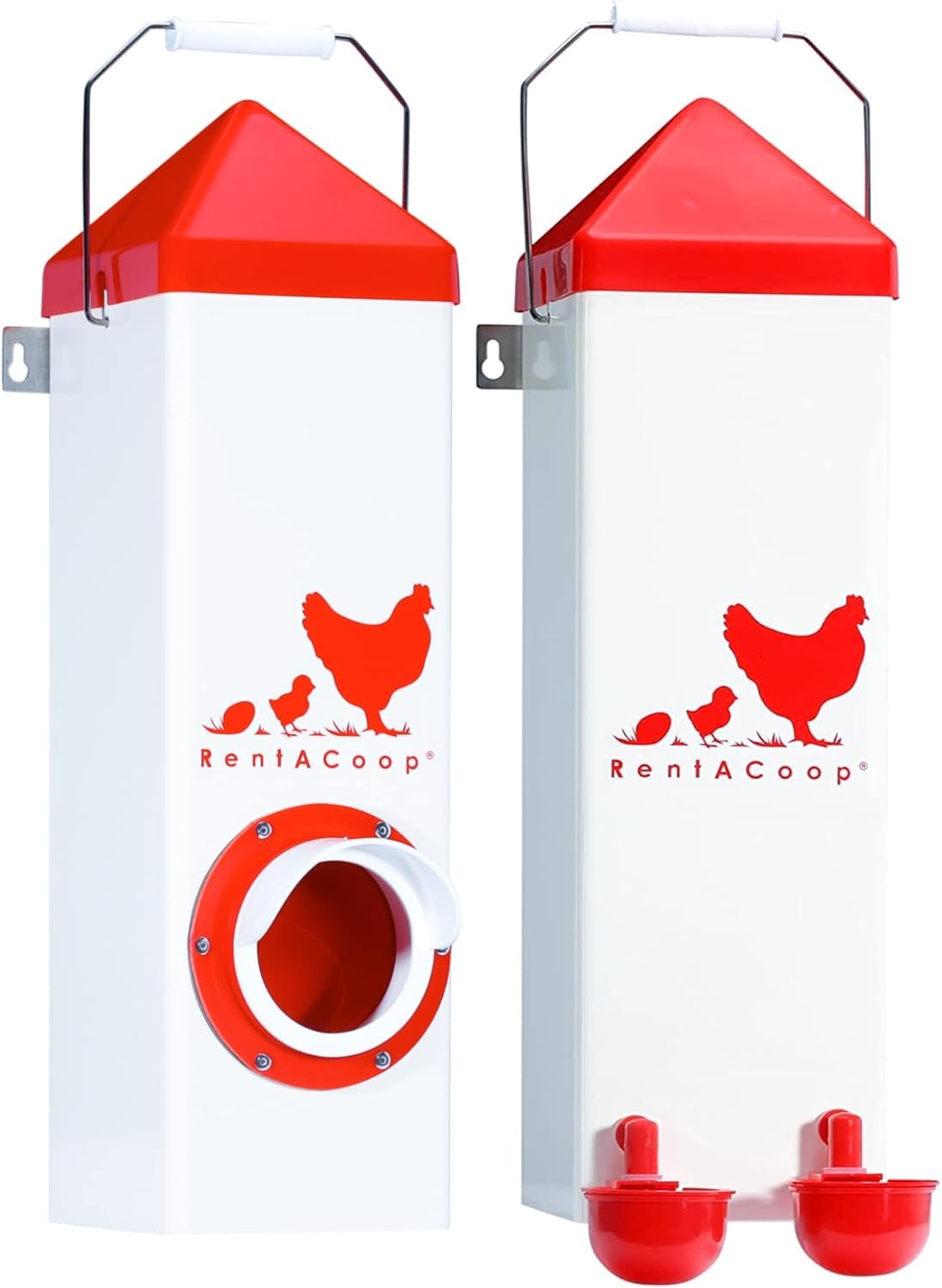
The RentACoop set is designed for keepers who want a space-saving, all-in-one feeding and watering solution without sacrificing quality. The feeder uses a deep port design that prevents chickens from pulling feed out onto the ground — a significant improvement over open-tray feeders that waste a shocking amount of pellets and crumble. The waterer comes with auto-filling cups that keep water replenished, plus two horizontal nipples for a cleaner drinking option.
Both units feature peaked lids that discourage roosting, and they can be mounted on wood, wire, or a stand using the included hardware. The BPA-free material is thick enough to handle outdoor exposure, and the lids keep rainwater and snow out of the feed and water. The compact footprint — each unit measures just 5.5 inches wide — means you can fit both in a small coop without crowding your birds.
The main drawback reported by some users is that the feeder pipe can be too long for smaller chickens, making it difficult for them to access the feed at the bottom. Several owners noted that the water cups can get dirty quickly and require frequent cleaning, while the nipples stay cleaner longer. A few customers experienced cracking in the waterer during freezing temperatures, though the company offers replacement parts. For small flocks in limited spaces, this combo delivers reliable performance at a fair price.
Why we love it
- Compact design fits small coops perfectly
- Feeder port design cuts down feed waste significantly
- Includes both cups and nipples for water
Good to know
- Feeder pipe may be too deep for young or small chickens
- Water cups require regular cleaning to stay sanitary
6. Homestead Essentials 3 Compartment Rollout Nesting Box
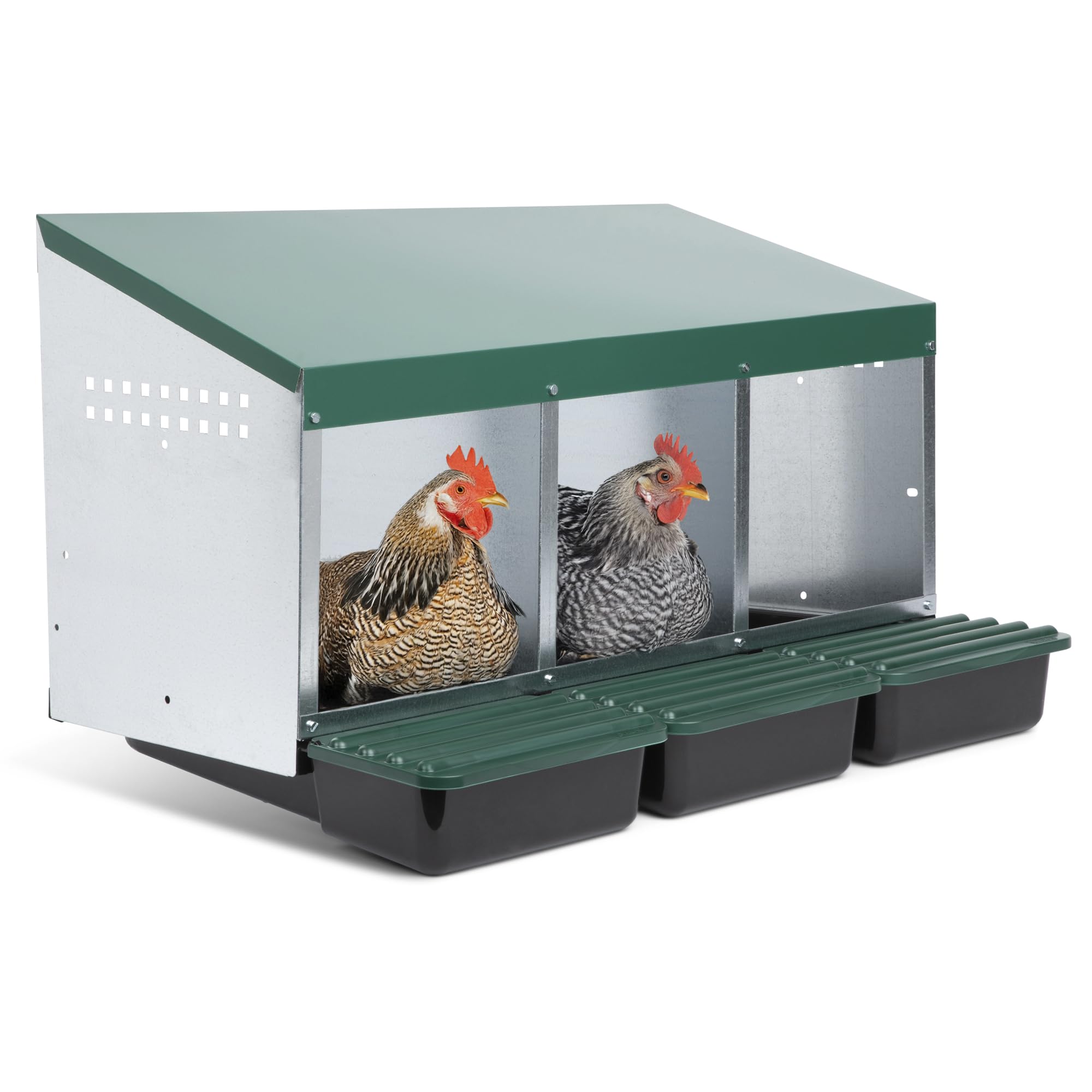
The Homestead Essentials nesting box brings the rollout egg collection concept to a more accessible price point without cutting corners on the core function. Each of the three compartments accommodates up to five hens, making this a practical choice for a mid-sized flock of around 14 to 20 birds. The galvanized steel construction is sturdy and designed to last years outdoors, with a sloped roof that prevents chickens from roosting on top.
The rollout mechanism works exactly as intended — eggs gently roll forward into a protected collection area underneath a secure lid, keeping them safe from pecking, breakage, and dirt. Owners consistently report that the box eliminates the need for nesting material like hay or shavings, as the smooth surface allows eggs to roll freely without catching. Assembly is straightforward, with pre-punched panels that align easily.
The most common frustration is that some hens simply refuse to lay in rollout boxes — a behavioral issue that can take a few weeks to resolve, and some flocks never fully adapt. The mounting brackets are not included, so you will need to attach the box to a wall or build a stand. A few owners also noted that the compartments are slightly tight for extra-large breeds like Jersey Giants. For the price, this is a solid entry point into rollout nesting that delivers clean eggs and less breakage.
Why we love it
- Rollout design keeps eggs clean and intact
- Sturdy galvanized steel holds up to outdoor conditions
- Easy assembly with pre-punched panels
Good to know
- No mounting hardware included for wall attachment
- Some hens may resist using rollout boxes initially
7. Petsfit Wooden Chicken Coop — For 2-4 Chickens
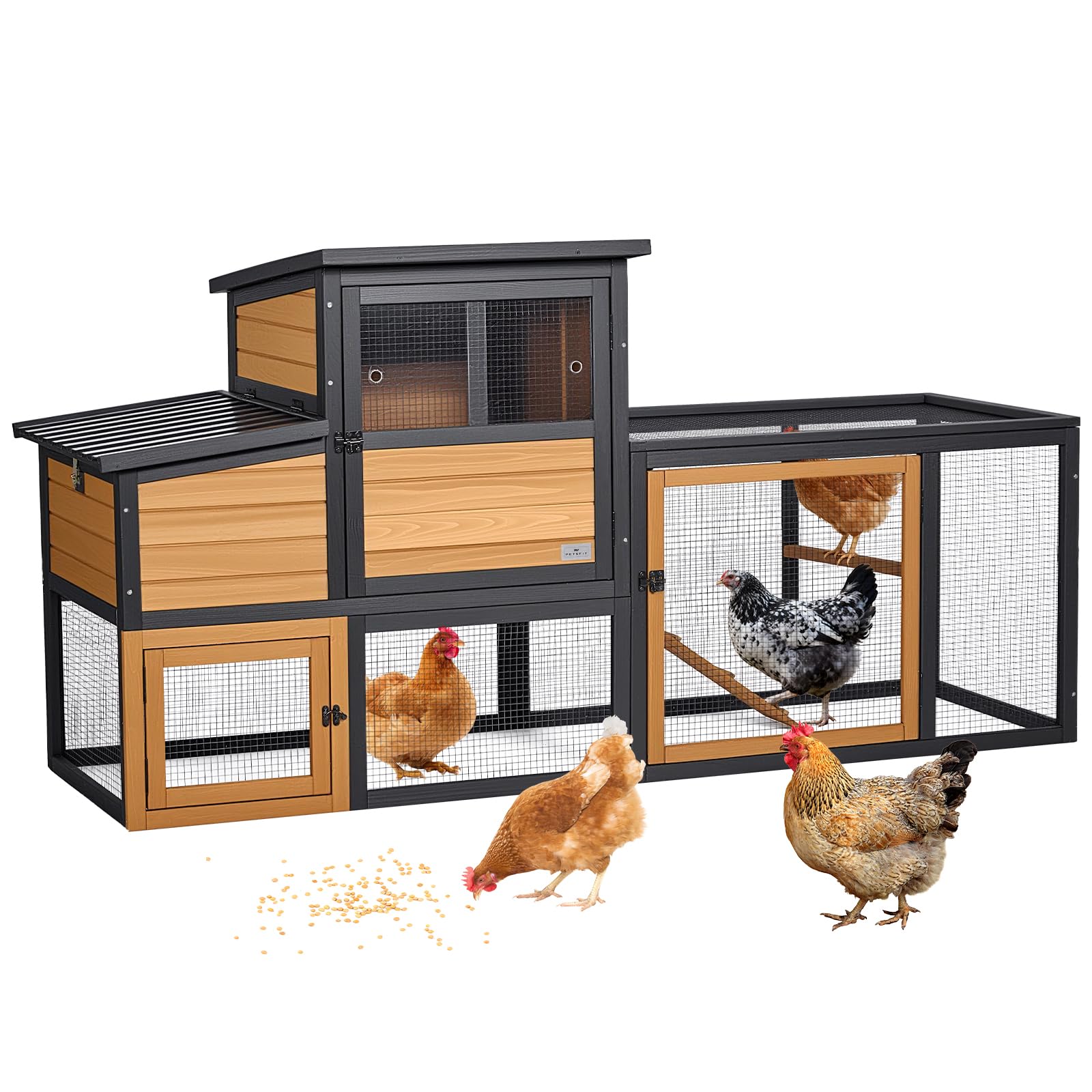
The Petsfit coop is a budget-friendly entry point for new backyard poultry keepers with a small flock of 2 to 4 standard-sized hens. The fir wood construction has a pleasant cedar-like scent and comes pre-painted with a UV coating, and the weather-resistant PVC roof helps protect against rain and sun exposure. The overall footprint of 80.5 by 30 inches includes both the enclosed coop and a wire-mesh run, giving the birds a safe outdoor space during the day.
Three separate doors make cleaning and access manageable: a wide front door, a lower clean-out door for bottom access, and a run door. The sliding clear PVC window improves airflow and natural light, helping reduce moisture buildup inside the coop — a common cause of respiratory issues in confined spaces. Six ground stakes are included to help anchor the coop against wind and deter some predator digging attempts.
The biggest concern across owner feedback is predator security. The stock latches are weak, the floor panels can pop out under pressure, and thin wire mesh will not stop a determined raccoon. Most owners who keep this coop long-term add hardware cloth, reinforce the latches with carabiners or padlocks, and screw the floor panels down. The coop is also not designed for easy moving — it is fragile once assembled. For a starter coop kept in a protected yard with a small flock, it serves well, but expect to invest a few hours in modifications to make it truly predator-proof.
Why we love it
- Attractive fir wood design with UV coating
- Easy assembly in about 30 minutes
- Three doors provide good access for cleaning
Good to know
- Stock predator protection is inadequate — needs reinforcement
- Flimsy construction — not suitable for frequent moving
FAQ
How many nesting boxes do I need for my flock?
Can I leave a gravity waterer out in freezing weather?
What size feeder do I need for 20 chickens?
Is galvanized steel safe for chicken nesting boxes?
Final Thoughts: The Verdict
For most poultry keepers, the best poultry equipment winner is the CoopWorx 80-lb Feeder because it eliminates nearly all feed waste and pest problems while serving a large flock with minimal refill effort. If you want a waterer that stays clean and cool through summer heat, grab the Omlet Insulated Waterer. And for a nesting solution that stops egg breakage and keeps eggs collection-ready, nothing beats the HenGear G90 Nesting Box.