
That bag of “premium” bird seed sitting under your feeder is probably half-full of milo and red millet that most songbirds will kick onto the ground before they even touch the sunflower kernels. You aren’t feeding birds—you’re feeding weeds and rodents.
I’m Mo Mahin — the founder and writer behind Furric. I’ve spent years digging through seed-bag labels, comparing ingredient panels, cross-referencing USDA facility certifications, and analyzing thousands of verified owner comments to find which brands actually deliver clean, high-oil seed without filler.
The difference between a feeder that empties in two days and one that gets ignored for weeks often comes down to the oil content and shell thickness of the sunflower heart. This guide breaks down every factor that defines the real price for bird seed beyond the sticker on the bag.
How To Choose The Best Price For Bird Seed
Cheap bird seed is expensive when half of it ends up as weeds under your deck. The real cost of feeding wild birds depends on oil content, kernel-to-shell ratio, and the presence of edible additives like suet nuggets versus indigestible fillers. Here is what separates a high-value bag from a waste of money.
Oil Content and Shell Thickness
Black oil sunflower seeds pack roughly 40 percent more oil per kernel than striped sunflower seeds. Thin shells let chickadees and titmice crack them open without wasting energy. Striped varieties have a thicker hull that large-beaked birds like cardinals and jays can handle, but smaller species often abandon them. Look for terms like “high-oil” or “thin shell” on the label.
Filler vs. Edible Additives
Every grain listed in the ingredients serves a purpose or pads the weight. Milo, red millet, and hulled oats are common fillers that most songbirds ignore. Suet nuggets, peanut pieces, and sunflower chips, on the other hand, are 100 percent edible and increase the usable food mass inside every scoop. A “No Mess” blend that removes the shell also eliminates the need to rake hull debris.
Packaging and Freshness
Seed stored in a non-resealable bag inside a garage or shed absorbs ambient moisture and loses oil rancidity within weeks. Bags with zipper closures or that are hand-packed in small batches tend to preserve the natural fat content longer. If a bag feels dusty when you pour it, the oil has already started to degrade, and birds will show less interest.
Quick Comparison
On smaller screens, swipe sideways to see the full table.
| Model | Category | Best For | Key Spec | Amazon |
|---|---|---|---|---|
| Kaytee Seed & Suet No Mess | No Mess Blend | Minimizing hull debris under feeders | 2x more birds than black oil sunflower alone | Amazon |
| Happy Wings Black Oil Sunflower | Premium Single Seed | High-energy feeding with no filler | 5 lb bag, USDA/BRC-GS approved facility | Amazon |
| Desert Valley Black Oil Sunflower | Non-GMO Single Seed | Non-GMO feeding in resealable bags | 3 lb pick, hand-packed in small batches | Amazon |
| Wagner’s Striped Sunflower Seed | Large Beak Blend | Attracting cardinals, jays, and grosbeaks | Thick-shelled striped sunflower seed | Amazon |
| Kaytee Cardinal Blend | Squirrel Deterrent Mix | Discouraging squirrels while feeding cardinals | 7 lb mix with safflower | Amazon |
In‑Depth Reviews
1. Kaytee Seed & Suet No Mess Blend Blueberry Flavor 10 Pounds

This blend replaces the traditional shell-based waste with 100-percent edible seeds, suet nuggets, and sunflower chips. The blueberry flavoring isn’t just marketing—it adds an olfactory cue that cards and woodpeckers respond to aggressively. Owner reports confirm it attracts three times more woodpeckers than standard black oil sunflower alone, making it a standout for specialized songbird appeal.
The 10-pound bag delivers the highest usable food mass per scoop in this roundup because there are zero hulls to discard. Ground-feeding birds like spotted towhees clean up any scattered bits quickly, which keeps patios and balconies nearly debris-free. Multiple users on apartments confirm they can fill a tube feeder every other day without a rake ever touching the ground beneath it.
Seasoned buyers note that the corn and millet content is dominant in the mix, but those ingredients still get consumed by species like dark-eyed juncos and mourning doves. The bag works best in tube, hopper, or platform feeders. The suet nuggets do soften in hot weather, so avoid storing the bag in direct sun if you want to keep the texture intact.
Why we love it
- Eliminates hull mess completely
- Blueberry flavor boosts woodpecker visits
- Highest edible-to-total weight ratio of any blend tested here
Good to know
- Corn and millet dominate the base—not ideal if you strictly want sunflower
- Suet nuggets soften in high heat; store in a cool spot
2. Happy Wings Black Oil Sunflower Seeds – 5 lb
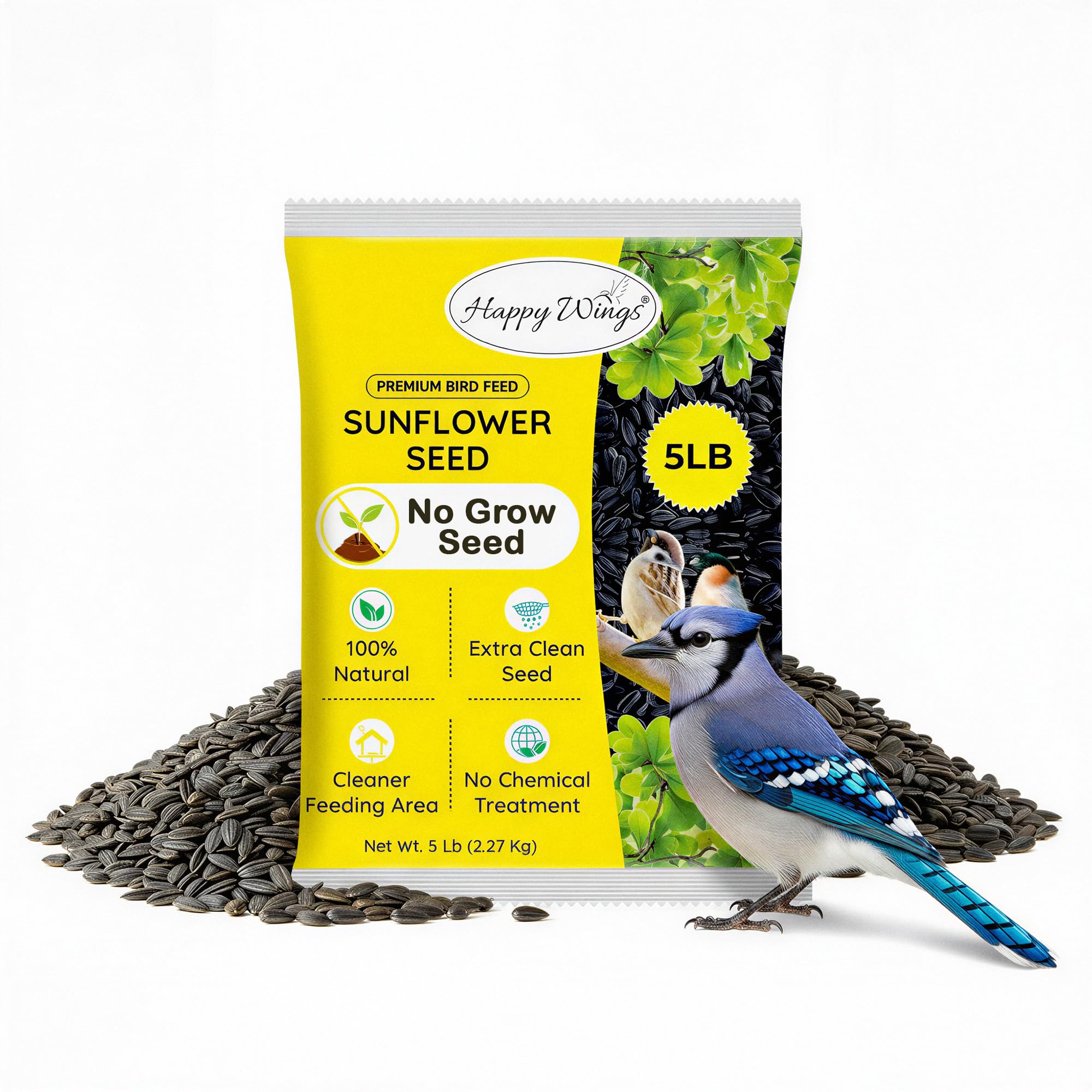
Happy Wings sources black oil sunflower seeds processed in USDA- and BRC-GS–approved facilities that meet the Wild Bird Feeding Institute standards. The kernel size skews slightly smaller than the striped variety, but the oil content is noticeably higher—owner comments frequently note that birds finish every seed and return within hours. This matters because a high-oil kernel delivers more calories per gram, which is critical for birds during cold months.
The “No Grow” formula means the seeds have been heat-treated to kill germination, so you won’t find sunflower sprouts popping up under your feeder. That alone saves hours of weeding over the course of a season. The 5-pound bag is compact enough for balcony feeders yet substantial enough for a mid-size hopper setup.
Customer feedback is uniformly positive, with several reviewers calling it “better than supermarket seed” and noting that their finches, sparrows, and chickadees empty the tray quickly. One caveat: the smaller kernel size means chickadees and titmice love it, but large-beaked cardinals sometimes prefer a thicker shell that gives them more to grip. If cardinals are your primary target, consider a striped blend instead.
Why we love it
- No-grow treatment prevents sprouts under the feeder
- Processed in USDA-approved facility—clean quality control
- High oil content packs more calories per seed
Good to know
- Smaller kernel size less attractive to heavy-beaked cardinals
- Bag does not include a resealable zipper; transfer to an airtight container
3. Desert Valley Black Oil Sunflower Seed, 3 Pounds

Desert Valley stands out because it hand-packs every batch in small runs, which minimizes the dust and cracked hulls that accumulate when seed is mass-shipped in bulk containers. The kernel-to-shell ratio is visibly higher than store-brand black oil sunflower—opening the bag reveals a uniform dark seed with almost zero broken pieces. The oil coating is glossy enough to see without a magnifying glass, indicating fresh fats that birds find irresistible.
The 3-pound bag is available alongside 5- and 10-pound options, and the smaller format is ideal for single-feeder households where seed turnover is slow. The resealable bag itself is a practical feature: outdoor storage in humid climates often destroys seed within two weeks, but the zipper closure lets you squeeze out excess air between fills. Owners report doves, jays, woodpeckers, and nuthatches arriving within hours of the first pour.
The Non-GMO claim is backed by the ingredient label showing zero fillers—no milo, no cracked corn, no red millet. That purity is why the per-pound cost runs slightly higher than commodity sunflower seed at big-box stores. Reviews are nearly universal 5-star, though one buyer flagged the price as premium for the bag size. If you value traceability and zero filler, this is the cleanest black oil seed in the list.
Why we love it
- Hand-packed in small batches—minimal dust and cracked shells
- Resealable bag preserves oil freshness in humid climates
- 100 percent Non-GMO black oil sunflower, zero filler grains
Good to know
- 3-pound bag empties fast with a busy feeder; budget for reorders
- Premium per-pound cost compared to bulk store options
4. Wagner’s 62028 Striped Sunflower Seed, 5-Pound
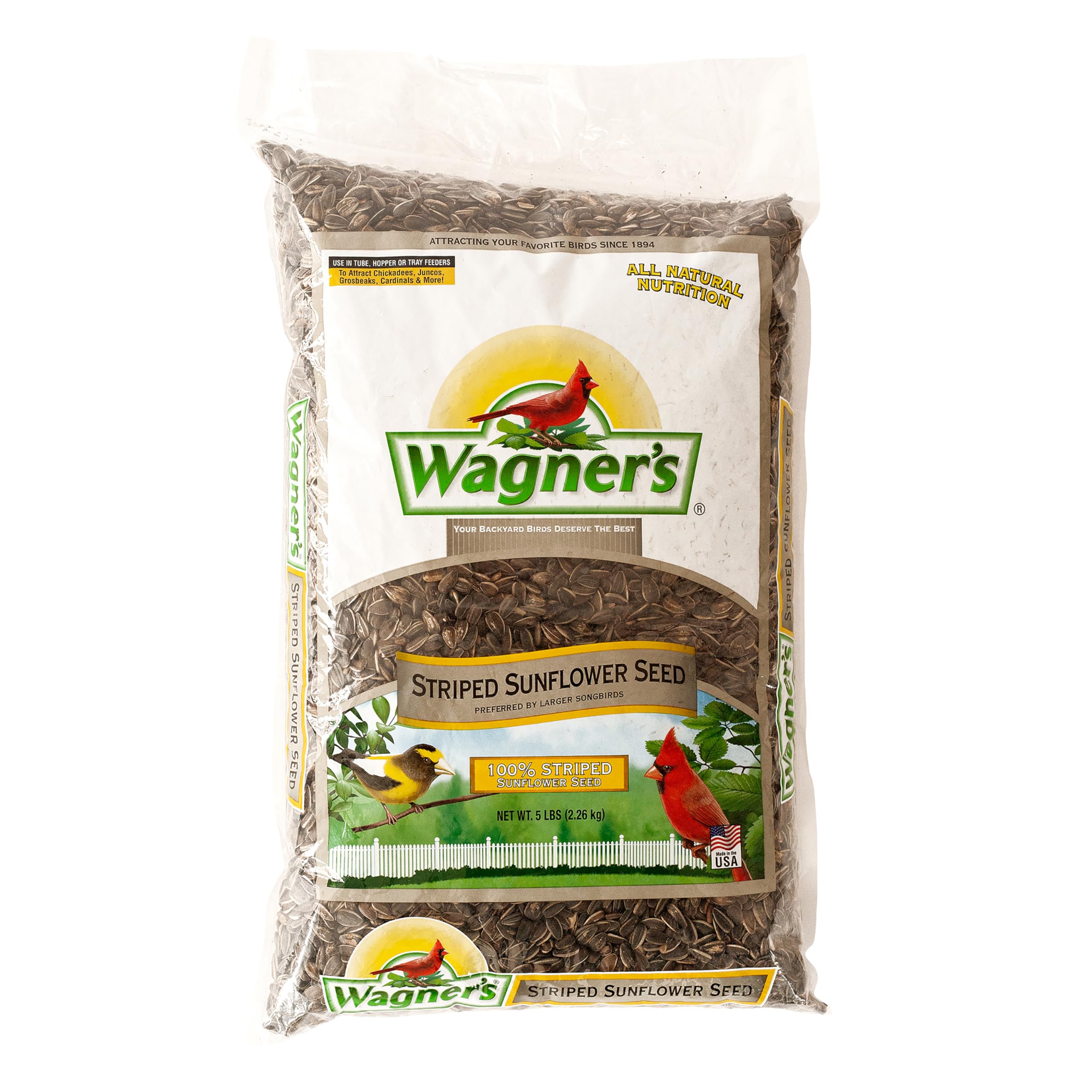
Wagner’s striped sunflower seed is the opposite of a “one-size-fits-all” blend. The thicker shell is explicitly designed for large-beaked birds—cardinals, blue jays, and grosbeaks are the primary audience. Smaller songbirds like chickadees will struggle to crack open the hull, but that’s the point: this seed targets the heavy hitters that command attention at any feeder.
The 5-pound bag is filled with fresh seed that owner reviews consistently describe as “no excess powder” and “crisp.” The darker stripe pattern on the hull is a visual indicator that the kernel inside is whole, not broken. Mixing this seed with safflower has been a successful tactic for readers who want to discourage starlings and squirrels while still attracting cardinals—the thick shell and safflower’s bitter taste create a double barrier.
One notable user reported that their indoor rats rejected the seed entirely because of the shell toughness, while the same seed was a hit with outdoor squirrels and rabbits. That durability under humidity makes it a better option than black oil in wetter climates, where thin shells can soften and mold inside full hoppers. Just be ready for a constant cardinal audience once the bag is opened.
Why we love it
- Thick shell holds up better in humid weather without molding
- Attracts cardinals, blue jays, and grosbeaks reliably
- Mixes well with safflower to deter squirrels
Good to know
- Thick shell excludes small-beaked species like chickadees
- Hulls create mess under the feeder—plan for cleanup
5. Kaytee Cardinal Wild Bird Seed, 7 lb

Kaytee’s Cardinal Blend is a two-part mix of black oil sunflower and safflower seeds. The safflower’s bitter taste is the primary tool here—squirrels generally reject it after the first bite, while cardinals, chickadees, nuthatches, and grosbeaks feed without hesitation. Owners consistently report that squirrels “love it too,” but the ratio of sunflower to safflower keeps most of them from staying long.
The 7-pound bag carries enough volume to fill a medium hopper feeder twice, and the smaller seed size works well in tube feeders with narrow ports. The blend is additive-free and certified allergen-free, which minimizes the risk of mycotoxins that can develop in cheaper mixed bags. Multiple reviews mention blue jays and woodpeckers joining the cardinals at the feeder, making it a broader attractant than the name implies.
A recurring note from seasoned buyers is that Tractor Supply often sells this blend at a lower per-pound price, but the convenience of Amazon delivery and the freshness of the bag upon arrival still make it a solid entry-level mid-range option. One buyer described emptying the feeder every other day, which means the blend is popular enough to create a refill habit. If cardinals are your target species and squirrels are your nemesis, this is the most direct solution in the list.
Why we love it
- Safflower content deters squirrels without harming birds
- Works in tube, hopper, and platform feeders
- Attracts cardinals plus woodpeckers, jays, and nuthatches
Good to know
- Per-pound cost is sometimes higher than local farm supply stores
- Birds empty the feeder fast; refill frequency increases with popularity
FAQ
Why do birds kick seed out of my feeder onto the ground?
Is striped sunflower seed better than black oil sunflower for cardinals?
Can I mix different bird seed bags together to save money?
How can I tell if my bird seed has gone bad?
Does the “No Grow” treatment affect the nutritional value of sunflower seeds?
Final Thoughts: The Verdict
For most gardeners, the best price for bird seed winner is the Kaytee Seed & Suet No Mess Blend because it eliminates hull waste entirely while attracting twice the number of birds per scoop compared to black oil sunflower alone. If you want a pure single-ingredient black oil seed processed in a USDA-certified facility, grab the Happy Wings Black Oil Sunflower. And for a Non-GMO, hand-packed option that guarantees zero filler, nothing beats the Desert Valley Black Oil Sunflower Seed.