
A puppy that feels light in your arms or has ribs showing with every movement is a common worry for new owners. Finding the right nutrition to build healthy mass without causing digestive upset or fat-only gain demands a targeted strategy, not just any high-calorie kibble.
I’m Mo Mahin — the founder and writer behind Furric. I have spent years analyzing veterinary nutritional data, comparing calorie density ratios, and studying aggregated owner feedback on hundreds of canine diet formulas to identify which approaches produce real, sustainable weight gain in growing puppies.
This guide breaks down the highest-performing options for underweight pups, providing concrete specs on protein percentages, fat content, and calorie-per-cup metrics so you can confidently choose the best puppy food to gain weight.
How To Choose The Best Puppy Food To Gain Weight
Selecting a weight-gain diet for a growing puppy requires evaluating three specific nutritional pillars: calorie density, protein quality, and digestibility. A food that is calorie-heavy but causes loose stool or allergic reactions will actually slow weight gain by reducing nutrient absorption.
Calorie Density Per Cup
Standard puppy foods hover around 350-400 calories per cup. For puppies that need to gain weight, look for formulas exceeding 450 calories per cup. High-calorie options, such as specialized performance blends, can reach 600 calories per cup, allowing your puppy to consume more energy in a smaller volume — ideal for pups with small appetites or sensitive stomachs that can’t handle large meals.
Protein Percentage vs. Fat Content
A protein level of 28-32% supports muscle development, while fat content between 18-25% provides the concentrated energy needed for healthy weight gain. Avoid formulas with protein below 25% — they are designed for weight maintenance, not growth. Also watch for low-fat diets (below 12%), which lack the density necessary for bulking up a skinny puppy.
Digestive Support Ingredients
Probiotics, prebiotics, and enzymes are critical when switching a puppy to a high-calorie diet. A sudden increase in fat and protein can disrupt gut flora, leading to loose stool and poor nutrient absorption. Formulas with added postbiotics, probiotics, or whole-food fibers (like sweet potato or barley) help maintain stool quality during the transition.
Quick Comparison
On smaller screens, swipe sideways to see the full table.
| Model | Category | Best For | Key Spec | Amazon |
|---|---|---|---|---|
| Bully Max Pro 2X | Dry Kibble | Maximum calorie density | 600 cal/cup, 31% protein | Amazon |
| Purina Pro Plan Sport 30/18 | Dry Kibble | Large breed joint support | 30% protein, glucosamine | Amazon |
| Purina Pro Plan Development Wet | Wet Food | Picky eaters & topper use | DHA, grain-free varieties | Amazon |
| PetAg Dyne Liquid | Liquid Supplement | Quick calorie boost without volume | High-fat liquid, vanilla flavor | Amazon |
| Bully Max 25/11 Lamb | Dry Kibble | Weight management active breeds | 25% protein, 11% fat, lamb | Amazon |
| Rogue Pet Science Healthy Weight | Powder Topper | Sensitive stomach puppies | Probiotic + enzyme powder | Amazon |
| Buddy & Lola Weight Gainer | Powder Topper | Nursing mothers & rescue pups | Maple bacon flavor, 90 servings | Amazon |
In‑Depth Reviews
1. Bully Max Pro 2X High Calorie Dog Food
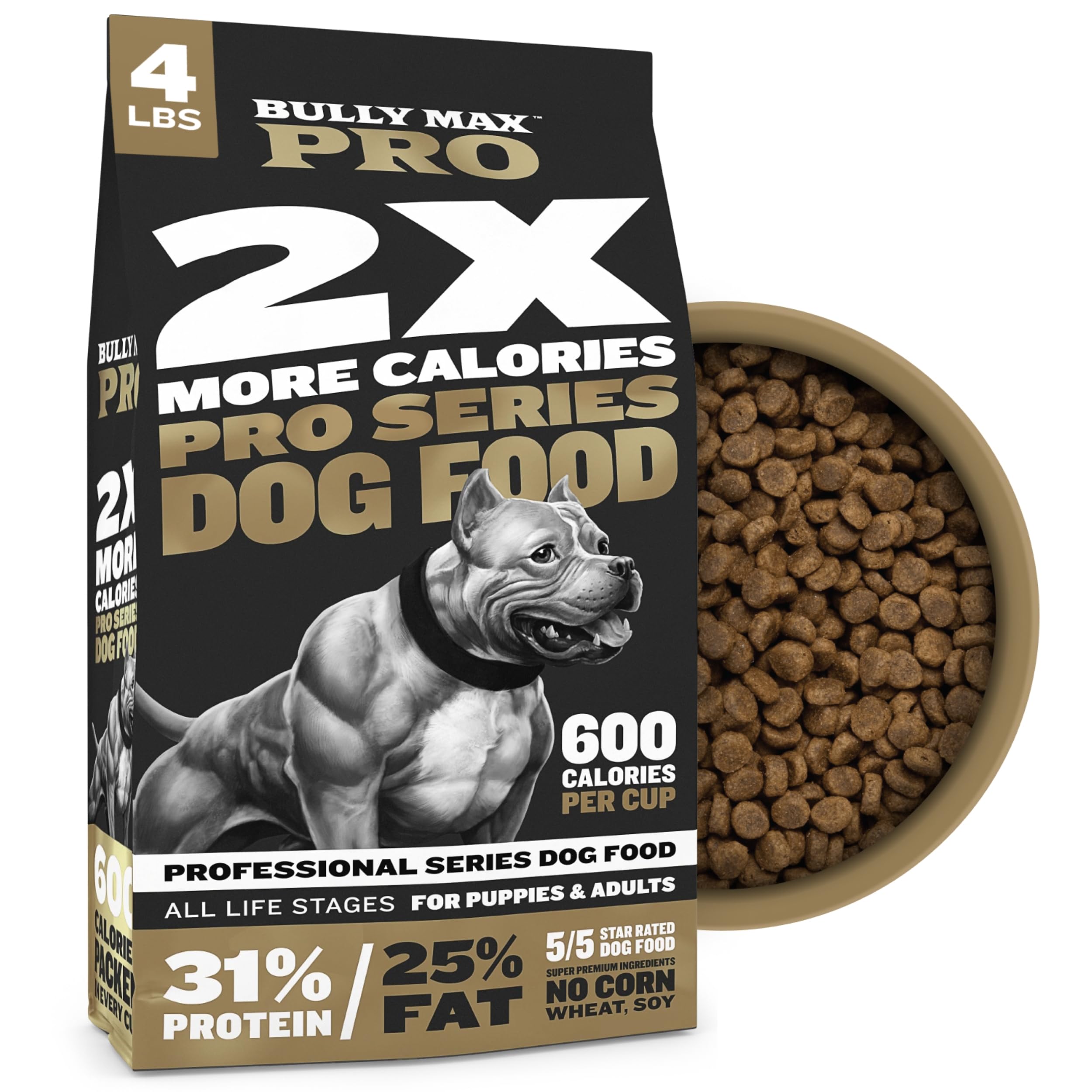
At 600 calories per cup with a 31/25 protein-to-fat split, this formula is the most calorie-dense complete kibble on this list. It allows you to feed up to 60% less volume than standard puppy foods while delivering the same or higher energy intake — critical for pups with small appetites or sensitive stomachs that cannot handle large meal portions.
The slow-cooked chicken recipe includes heart-healthy flaxseed, 19 essential vitamins and minerals, and probiotics to support digestion during the transition to a high-fat diet. Owners of French Bulldogs and Boston Terriers report visible size gains within two months, and the kibble is free from corn, wheat, soy, and artificial additives.
Keep in mind that the extreme calorie density may cause loose stool in some individuals if introduced too quickly — a gradual 7-day transition is non-negotiable. For large breed puppies over 100 pounds, the cost per bag adds up fast, but for targeted weight gain with minimal food volume, this is the most efficient tool available.
Why we love it
- Highest calorie density (600 cal/cup) on the market
- Supports lean muscle via 31% protein and probiotics
- Free from common fillers, corn, soy, and wheat
Good to know
- Must transition slowly to avoid digestive upset
- Expensive for large breeds requiring high monthly volume
2. Purina Pro Plan Sport Development Large Breed 30/18
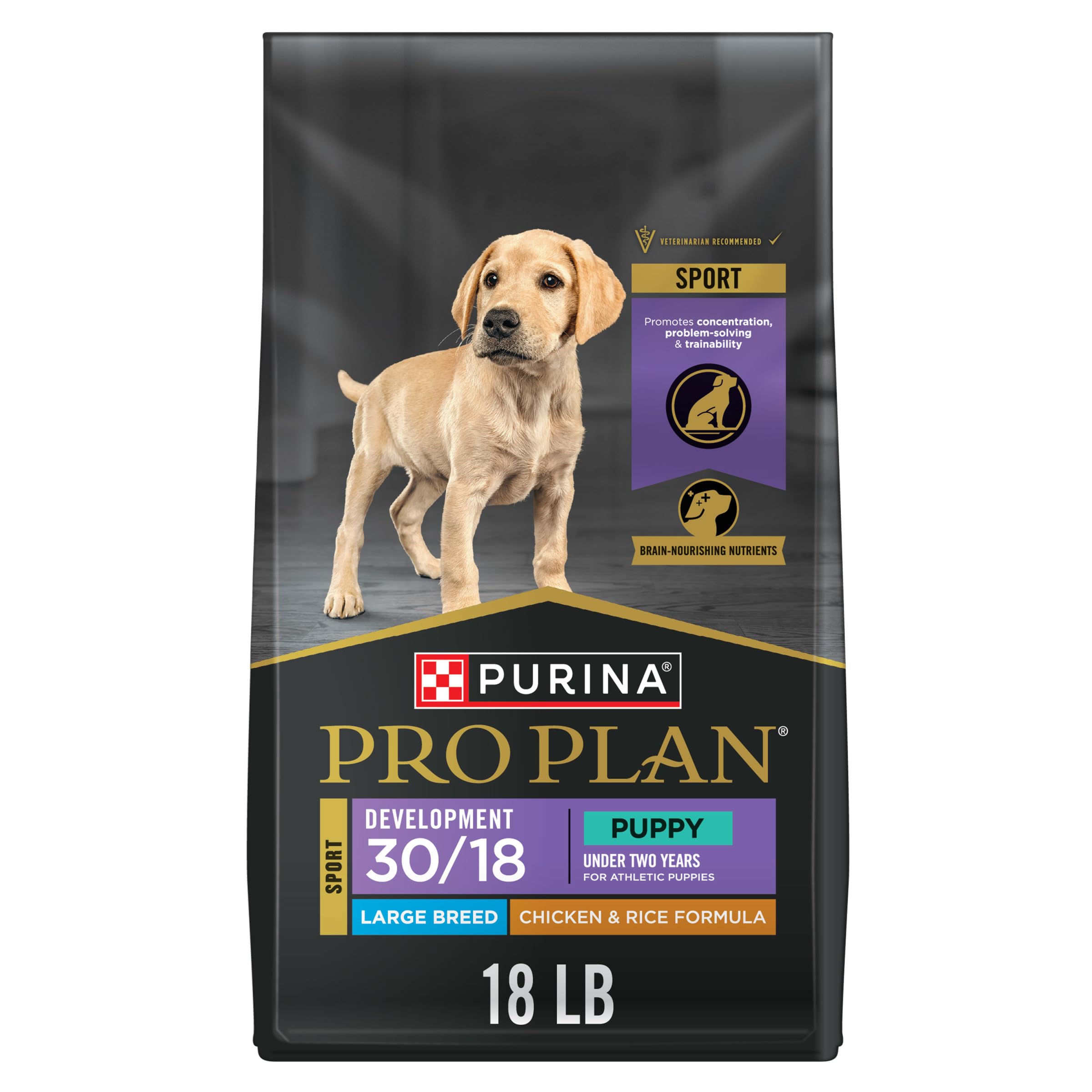
Real chicken is the first ingredient in this 30% protein, 18% fat formula designed specifically for athletic large-breed puppies. The 30/18 ratio provides the protein needed for muscle development while maintaining a lower fat content than the ultra-dense options, reducing the risk of rapid bone growth issues that can cause joint problems in giant breeds like Great Danes.
Glucosamine supports cartilage and joint health during the critical growth window, while calcium, phosphorus, and essential vitamins promote proper bone mineralization. Puppy owners of Labrador Retrievers and German Shepherd mixes report solid, regular bowel movements and sustained energy without the digestive sensitivity often seen in high-protein diets.
Some owners of giant breeds note that the formula may cause slight foot buckling if the puppy grows too fast, requiring a switch to a lower-protein food around 9 months. For large breed puppies that need steady, controlled weight gain with joint protection, this is the most balanced choice.
Why we love it
- Glucosamine for joint and cartilage support during rapid growth
- 30% protein supports lean muscle without excessive fat
- Veterinarian-recommended for large and giant breeds
Good to know
- May cause excessive growth speed in giant breeds requiring diet switch
- Price point has risen; some owners find cheaper comparable formulas
3. Purina Pro Plan Development Wet Puppy Food Variety Pack

This 12-can variety pack of chicken and turkey grain-free wet food is designed for puppies up to one year old. With real poultry as the first ingredient and added DHA for brain and vision development, it provides complete nutrition for growing pups. The wet texture and dual-flavor variety make it ideal for picky eaters who refuse dry kibble alone.
Each can is free from corn, wheat, soy, artificial colors, flavors, and preservatives — a clean ingredient profile that reduces allergy triggers. Owners of Golden Retriever puppies report that mixing this wet food over dry kibble encourages complete consumption of meals, ensuring the puppy gets the full caloric intake needed for weight gain.
As a complete food it is less calorie-dense than the dry options on this list, so using it solely as a weight-gain diet may require larger volumes or pairing with a high-calorie dry formula. For puppies that need palatability and digestive gentleness, this variety pack delivers consistency without fillers.
Why we love it
- DHA supports cognitive and vision development in young puppies
- Grain-free formula appeals to sensitive stomachs
- Two-flavor variety prevents meal boredom for picky eaters
Good to know
- Lower calorie density requires higher feeding volume
- Best used as a topper rather than sole weight-gain diet
4. PetAg Dyne High Calorie Liquid Supplement
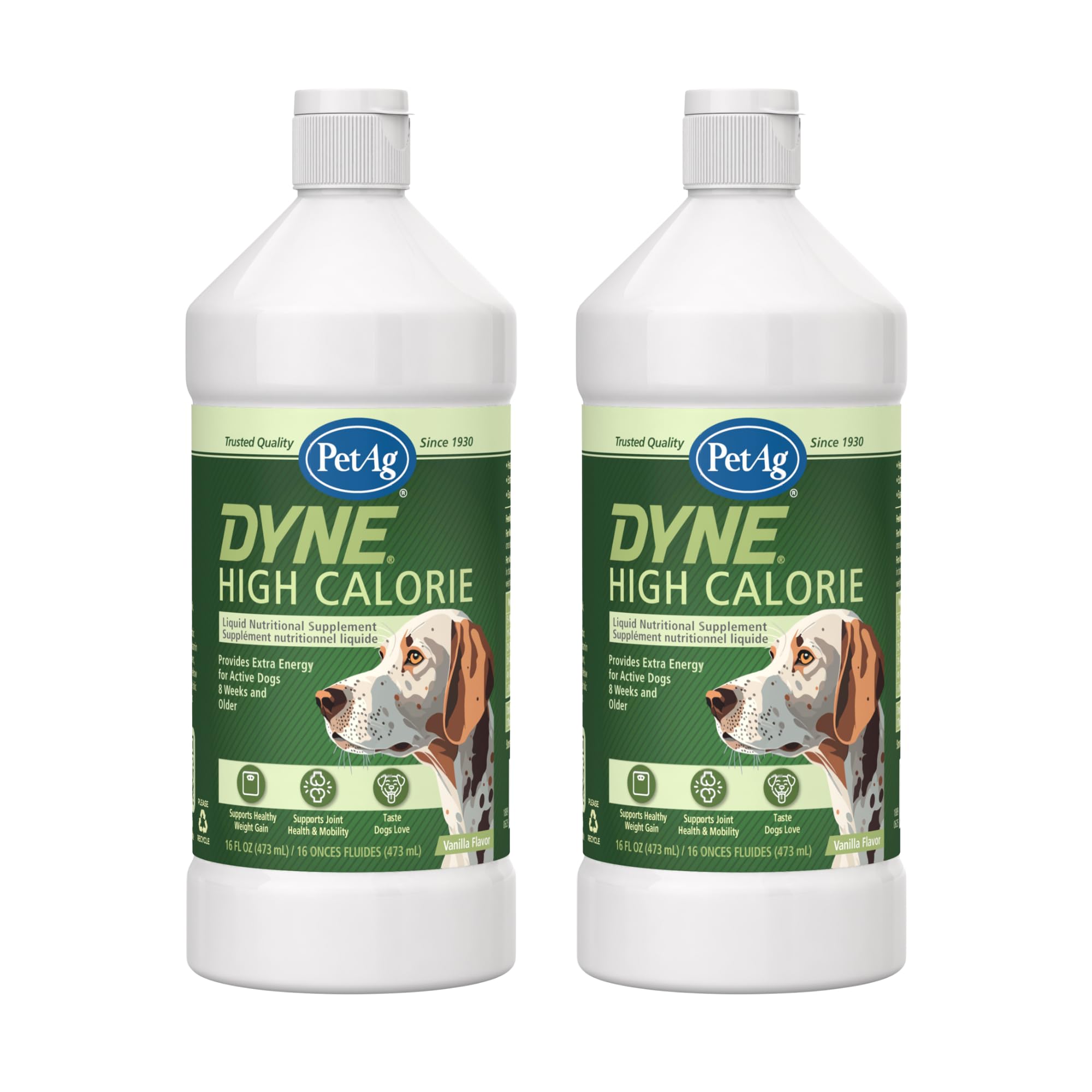
Dyne is a high-fat liquid supplement delivering concentrated calories without the bulk of dry or wet food. Designed for puppies 8 weeks and older, the sweet vanilla flavor makes it highly palatable — owners report that it can be poured directly over kibble or fed separately to puppies that are refusing meals due to illness, stress, or pickiness.
The low-volume, high-energy formula is especially useful for working dogs, pregnant or lactating mothers, and senior dogs needing a quick calorie top-up without limiting stomach capacity for their normal diet. Multiple owners note that it does not cause diarrhea, and it effectively increased weight in underweight male dogs during recovery periods.
Because it is a supplement rather than a complete food, Dyne should be used alongside a balanced puppy diet, not as a replacement. The liquid form has a shorter shelf life after opening compared to dry kibble, so the 2-pack is ideal for maintaining freshness over the usage period.
Why we love it
- Concentrated calories in a low-volume liquid — ideal for small appetites
- Sweet vanilla flavor is palatable for picky or sick puppies
- Does not cause loose stool when used as directed
Good to know
- Not a complete diet — must be used as a supplement only
- Shorter post-opening shelf life than dry kibble
5. Bully Max 25/11 High Protein Lamb Dog Food
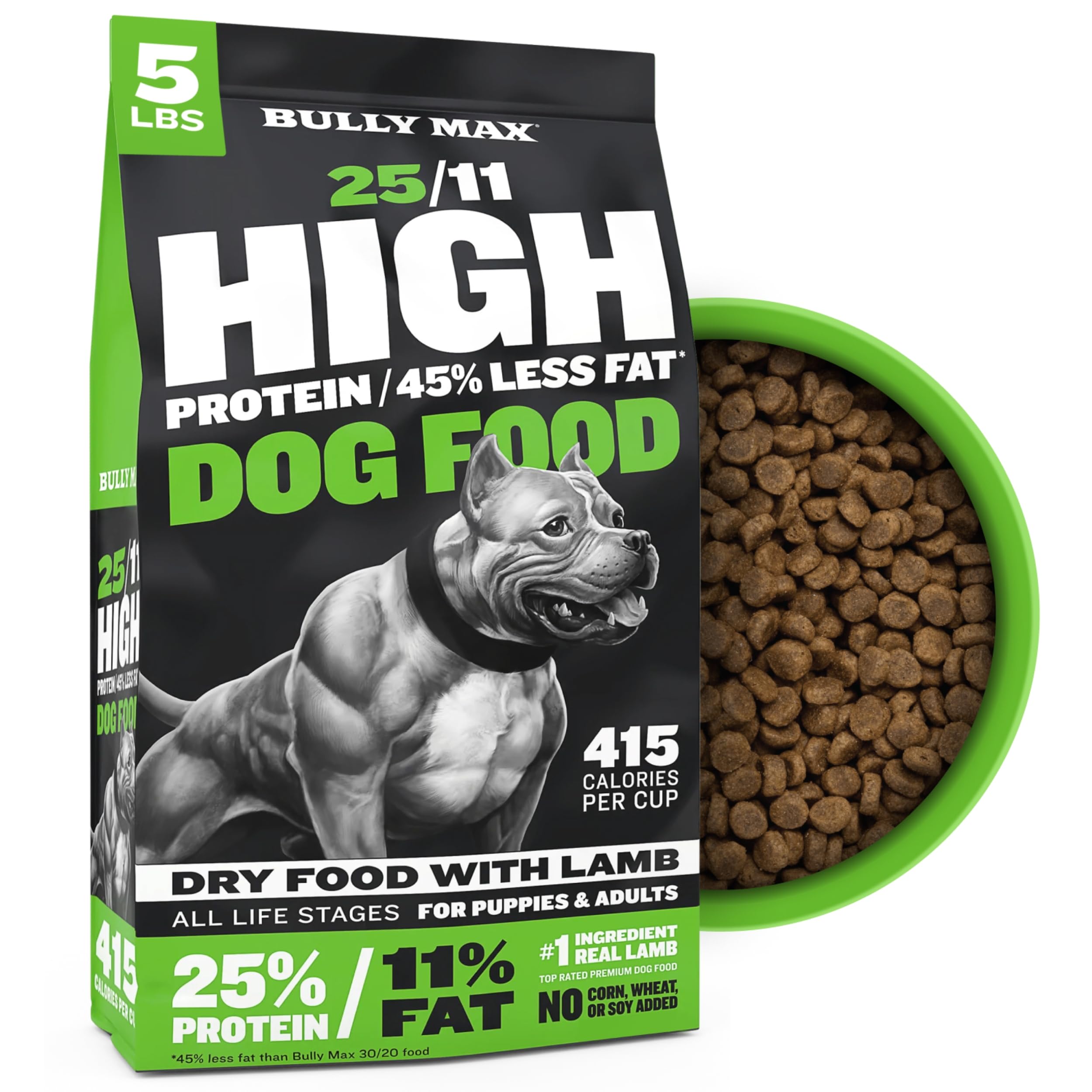
The 25/11 lamb formula from Bully Max provides a chicken-free protein source for puppies with poultry allergies or sensitivities. At 25% protein and only 11% fat, this is 45% leaner than the Pro 2X formula, making it better suited for active breeds that need muscle maintenance without excess body fat gain — ideal for Pit Bulls, Rottweilers, and working dogs in training.
Super-premium ingredients include barley, oats, sweet potatoes, and omega-rich salmon oil for joint support. Postbiotics and probiotics aid digestive health, and the formula meets AFFCO requirements for complete and balanced nutrition across all life stages from 4 weeks old. Owners of pocket bullies report significant improvement in digestion and coat quality.
Because of the lower fat content, this is not the best option for severely underweight puppies that need rapid calorie loading. It works best as a weight management or maintenance food once the puppy has reached a healthy range, or for active breeds that burn through calories quickly.
Why we love it
- Chicken-free lamb recipe ideal for poultry allergies
- Lower fat content supports lean muscle without excess weight
- Probiotics and salmon oil for digestion and coat health
Good to know
- Too low in fat for severely underweight puppies needing rapid gain
- Not as calorie-dense as other weight-gain formulas
6. Rogue Pet Science Healthy Weight Natural Weight Gainer
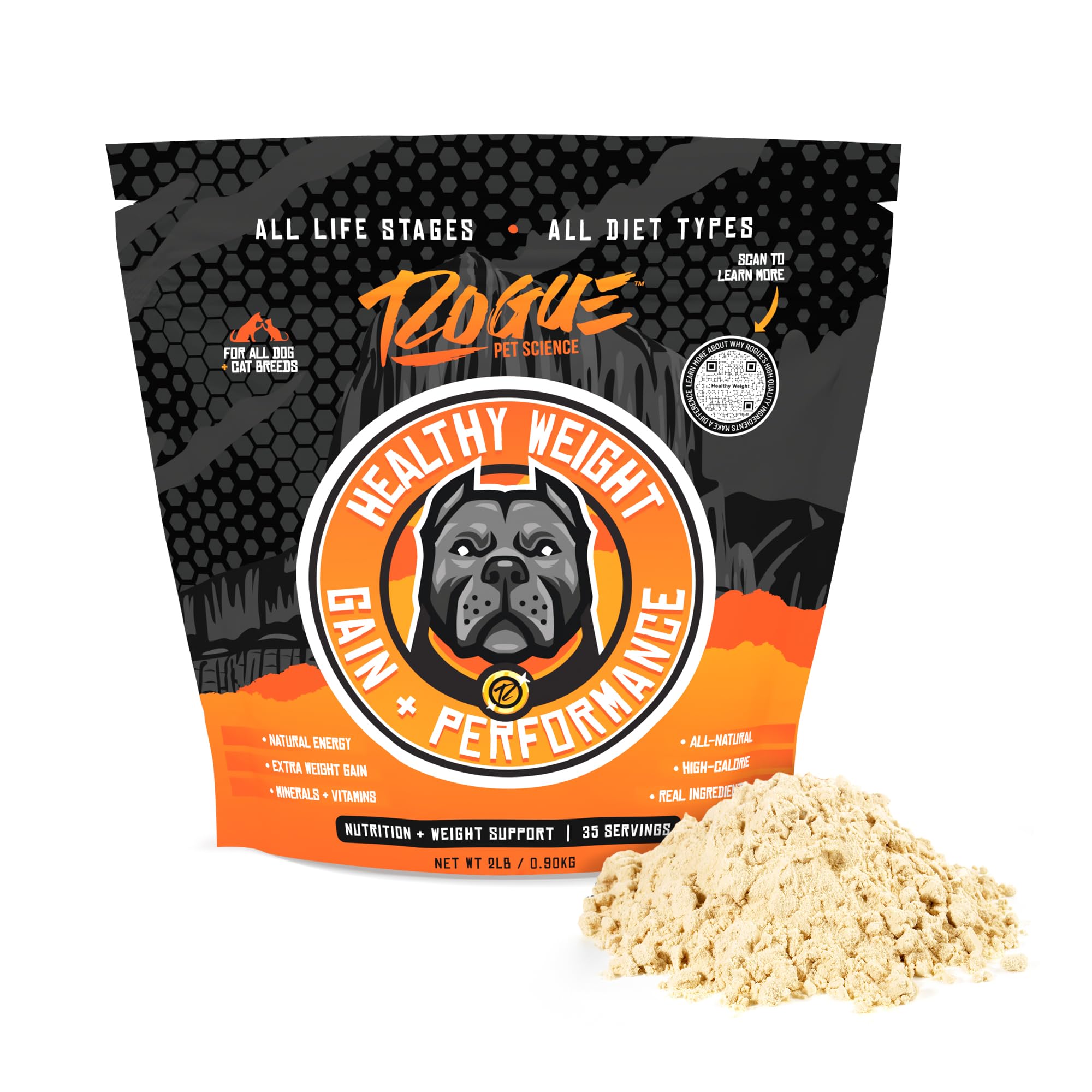
This powdered food topper uses whole-food ingredients — whole egg, sprouted barley, organic sweet potato, and organic carrot fiber — to provide a high-calorie, high-protein boost. The formula includes prebiotics, probiotics, and enzymes specifically aimed at improving digestive health and nutrient absorption, which is critical for puppies prone to loose stool.
Owners of Mudi puppies report noticeable weight gain within two weeks without creating a pot-bellied appearance, indicating lean mass development rather than just fat storage. Senior owners also note improved coat shine and energy levels alongside the weight gain. The egg-based flavor is highly palatable for picky eaters.
The main caveat is that several owners experienced mild loose stool during the first week despite starting with smaller amounts than the label suggests. For sensitive-stomach puppies, beginning with half the recommended dose and slowly increasing over 10 days is advised. The powder format also means it must be mixed with wet food or water, adding a preparation step.
Why we love it
- Whole-food ingredients with probiotics for sensitive digestion
- Visible weight gain reported within 2 weeks in underweight puppies
- Made in the USA with organic sweet potato
Good to know
- May cause foul-smelling gas and initial loose stool
- Requires mixing with wet food or water for administration
7. Buddy & Lola Dog Weight Gainer Supplement

Formulated for picky eaters, underweight dogs, bully breeds, and nursing mothers, this powdered supplement provides essential nutrients to support healthy mass gain. The maple bacon flavor aims to entice even reluctant eaters, and the 90-count supply offers good value for multi-dog households or rescue environments.
Owners of senior dogs (including a 16-year-old Lab and a 12-year-old Yellow Lab) report significant weight gain — one gained 12 pounds in a month when combined with a digestive health food. Dog training facilities also use it to help nervous pups maintain eating habits during boarding, praising the appetite-stimulating effect.
The limitation is palatability inconsistency: some puppies (including a Great Dane) refused it after initial acceptance, and one owner saw no weight gain after finishing a full bag. Success seems to depend on the individual dog’s flavor preference. For nursing mothers and rescue dogs that need an appetite boost, this supplement is worth trying, but have a backup plan if refusal occurs.
Why we love it
- Formulated for puppies, nursing mothers, and rescue dogs
- Maple bacon flavor can stimulate appetite in picky eaters
- 90 servings per container — good value for multi-dog homes
Good to know
- Palatability varies — some dogs refuse after initial acceptance
- Results may be inconsistent; not all dogs gain weight on this formula
FAQ
How much weight should a puppy gain per week on a weight-gain diet?
Can I mix a high-calorie supplement with my current puppy food?
What protein percentage is too high for a puppy gaining weight?
Final Thoughts: The Verdict
For most owners seeking concentrated results with minimal feeding volume, the best puppy food to gain weight winner is the Bully Max Pro 2X because its unmatched 600 cal/cup density and 31% protein drive fast lean mass gain in small appetites. If you need joint-protecting nutrition for a large breed puppy, grab the Purina Pro Plan Sport 30/18. And for a quick calorie top-up without changing your puppy’s current diet, nothing beats the PetAg Dyne Liquid Supplement.