
A puppy’s brain burns energy faster than its body. Fifteen minutes of nose work equals a half-hour walk, yet most toys only target jaws. The difference between a bored pup that chews your baseboards and a tired, content companion is the type of mental challenge you offer. Selecting the right puzzle means matching your dog’s current skill level with a toy that forces decision-making — sliding, flipping, sniffing, or swiveling — rather than just fetching.
I’m Mo Mahin — the founder and writer behind Furric. I analyze product specs, study canine enrichment research, and cross-reference thousands of owner reviews to find which puppy puzzle toys genuinely engage problem-solving without frustrating a novice nose.
A focused buyer looking for a durable, skill-appropriate challenge will find the best match by consulting a curated list of the top puppy puzzle toys that balances difficulty level, material safety, and cleanup convenience.
How To Choose The Best Puppy Puzzle Toys
Not every puzzle box fits a young learner. A toy that demands too much coordination can frustrate a pup, while one that yields treats too easily becomes a food bowl. Matching the puzzle mechanics to your dog’s current skill level — and your own tolerance for messy pawprints — makes the difference between a shelf queen and a daily go-to.
Understanding Difficulty Levels
Most structured puzzle toys label a Level (1, 2, or 3) on the package. Level 1 typically involves sliding a single cover to reveal a treat. Level 2 adds flippers, bone-shaped blocks, or multiple compartments that require sequenced actions. Level 3 demands sliding, lifting, and rotating in order. A puppy that learns a Level 2 in under three minutes probably needs a Level 3 next. Snuffle mats and balls bypass level systems entirely — they rely on scenting depth rather than mechanical manipulation, making them naturally adjustable by how deep you push the treats into the fabric folds.
Treat Capacity and Feeding Versatility
A puzzle that holds only a few pieces of kibble limits engagement time. Look for a stated capacity of at least ¼ cup for a single session — toys that can hold ¾ cup effectively double as slow feeders for meal times, reducing gulping and potential bloat. The texture of the treat matters too: dry kibble slides out easily from plastic sliders, while smearable spreads like cream cheese or peanut butter stick to crevices, increasing difficulty and duration.
Material Cleanliness and Durability
Puzzle toys gather drool, treat crumbs, and kitchen grease. BPA-free plastic components should be dishwasher-safe on the top rack or designed with smooth, crevice-free surfaces that hand-wash in thirty seconds. Soft snuffle toys need machine-washable polyester or fleece. Any toy with glued seams, batting stuffing, or electronic squeakers will fail within weeks if your pup is a persistent chewer — save those for supervised sessions only.
Quick Comparison
On smaller screens, swipe sideways to see the full table.
| Model | Category | Best For | Key Spec | Amazon |
|---|---|---|---|---|
| Outward Hound Nina Ottosson Puppy Hide N’ Slide | Level 2 Plastic | Pups ready for flippers and blocks | ¼ cup capacity / 11.6″ wide | Amazon |
| Outward Hound Nina Ottosson Dog Brick | Level 2 Versatile | Smart pups needing adjustable difficulty | ¾ cup capacity / bones & sliders | Amazon |
| Brightkins Pizza Party! Treat Puzzle | Beginner Slide Toy | First-time puzzle learners | 12 compartments / 9.96″ round | Amazon |
| Glory To Dog Snuffle Puzzle Ball | Snuffle Ball | Small breed / sensory foragers | 4″ fleece ball / machine washable | Amazon |
| CHEWFFON Interactive Baguette Toy | Plush Scent Toy | Light chewers / bedtime rituals | 14″ long / dual squeakers | Amazon |
In‑Depth Reviews
1. Outward Hound by Nina Ottosson Puppy Hide N’ Slide Treat Puzzle

The Puppy Hide N’ Slide is a dedicated Level 2 that pushes a pup beyond basic sliding into flipping and swiveling. Its 11.6‑inch square base gives a stable platform — the 2‑pound weight resists tipping even when an excited 20‑pound dog bats at the flippers. The green design targets young dogs with block-shaped compartments and bone-style flippers that require a sequence rather than a single paw swipe.
Owner feedback consistently reports that puppies who master this toy in under five minutes are ready for a Level 3 upgrade. The non-slip rubber bottom helps keep the board in place on tile or hardwood, though some owners note that determined pups can slide it a few inches with enough force. Cleaning is straightforward: the plastic components rinse clean under warm water, and the shallow ¼‑cup capacity prevents overfeeding during training sessions.
The sweet spot for this puzzle is the moderately confident puppy — one that understands “search” but still needs the satisfaction of visible progress. The flipper mechanism offers just enough resistance to make the pup think, but not so much that a soft‑mouthed breed gives up. Owners who pair it with smeared spreads like plain yogurt or pumpkin purée extend session times considerably.
Why we love it
- Heavy, non-slip base stays planted on slick floors
- Sequential flippers teach a multi-step problem-solving routine
- Works as a slow feeder for measured meals
Good to know
- Bone flippers may be chewed off if left unattended with a strong chewer
- Only holds ¼ cup — not enough for a full meal replacement
2. Outward Hound by Nina Ottosson Dog Brick

The Dog Brick brings three distinct mechanics — pick‑and‑remove bones, flip‑open lids, and sliding blocks — into a single 12.75‑inch by 8.75‑inch board. That variety means a single toy can stay relevant as a puppy advances: start with the bone‑pull zone (easiest), then graduate to the lid compartments, then the sliders. Owners can even freeze wet food inside the compartments to bump difficulty without buying a new toy.
With a ¾‑cup capacity, the Dog Brick doubles as a full‑meal slow feeder. The sliders and bone pieces are chunky enough that a teething puppy can mouth them without choking, though the white bone portions are the most tempting chew targets — several reviews mention removing them after the session ends. The slip‑resistant bottom works adequately on carpet and rough tile, but on polished concrete the toy can shift under a determined paw.
Cleaning is more involved than with a single‑piece puzzle — all removable parts need to be popped out and washed separately. The upside is that the modular design lets you replace individual bone pieces if they get gnawed, rather than tossing the entire board. For owners who want a single puzzle that grows with the puppy through its first year, this offers the most play‑value per square inch.
Why we love it
- Three unique play mechanisms in one board prevent boredom
- ¾‑cup capacity works for full meal replacement
- Replaceable bone pieces extend product lifespan
Good to know
- Multiple removable parts increase cleanup time
- Slip‑resistant bottom not fully effective on slick floors
3. Brightkins Pizza Party! Treat Puzzle
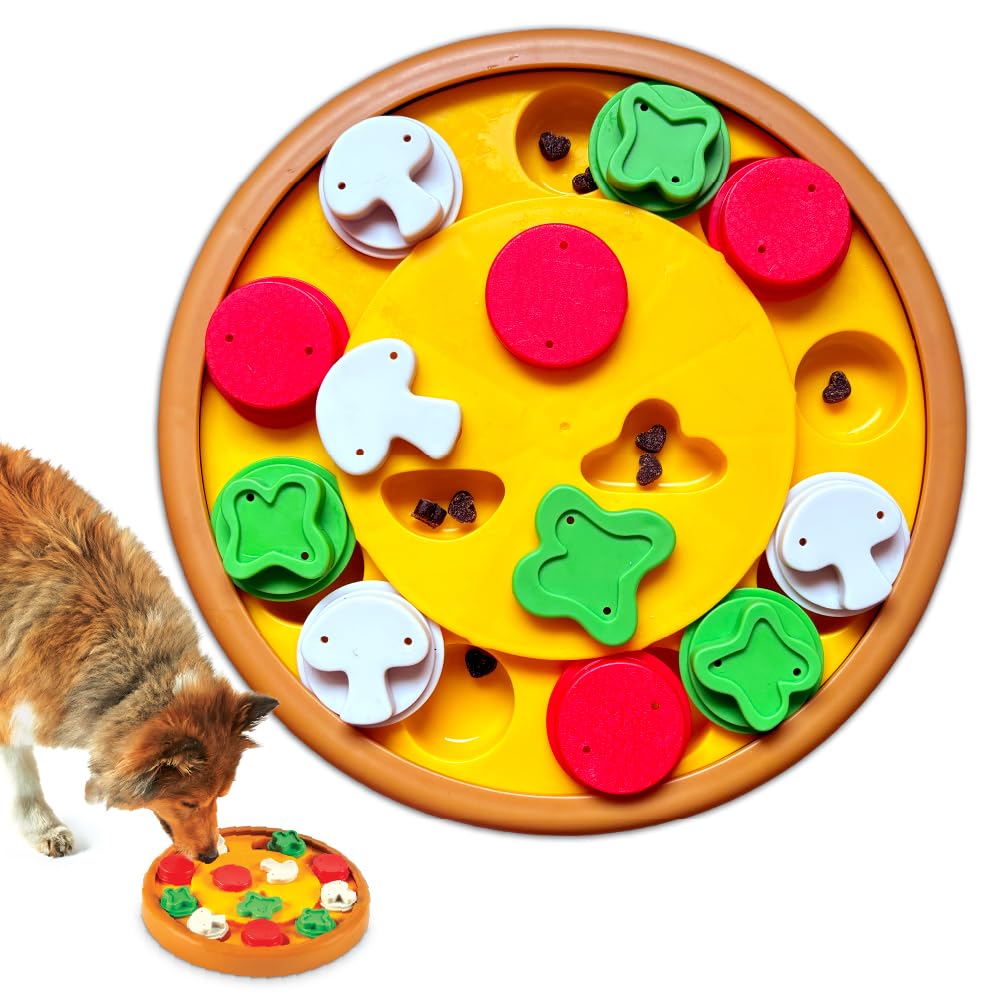
The Pizza Party puzzle uses a familiar sliding‑lid mechanism across twelve compartments arranged in a pizza‑slice pattern. Each plastic “topping” slides freely in both directions, so a puppy can push any obstacle left or right to expose the treat — there’s no correct sequencing, making this a pure discovery toy. The 9.96‑inch round shape fits inside most crates and smaller playpens without hogging floor space.
Certified professional dog trainer (CPDT‑KA) input shaped the included guide booklet, which gives new owners concrete tips on how to introduce a puzzle for the first time — start with all lids open, then close one, then two, building up to a full challenge. The BPA‑free plastic is top‑rack dishwasher safe, and the wide, even spacing between compartments prevents a pup’s paw from getting stuck while still being reachable for a short‑nosed breed like a pug or French bulldog.
The trade‑off for simplicity is long‑term engagement. Smart puppies can solve the full twelve‑compartment setup in under two minutes after three or four sessions. Owners looking for enduring difficulty should pair this with frozen yogurt or wet food spread into the wells. For a three‑month‑old puppy’s first brain game, this is the ideal entry point — low frustration, high reward, and quick cleanup.
Why we love it
- Zero wrong moves — all lids slide both ways
- Trainer‑written guide helps first‑time puzzle owners
- Dishwasher safe for grease‑free cleaning
Good to know
- Too simple for experienced pups after a few rounds
- Plastic lid‑holding bumps vary slightly in fit quality
4. Glory To Dog Puppy and Small Breed Snuffle Ball
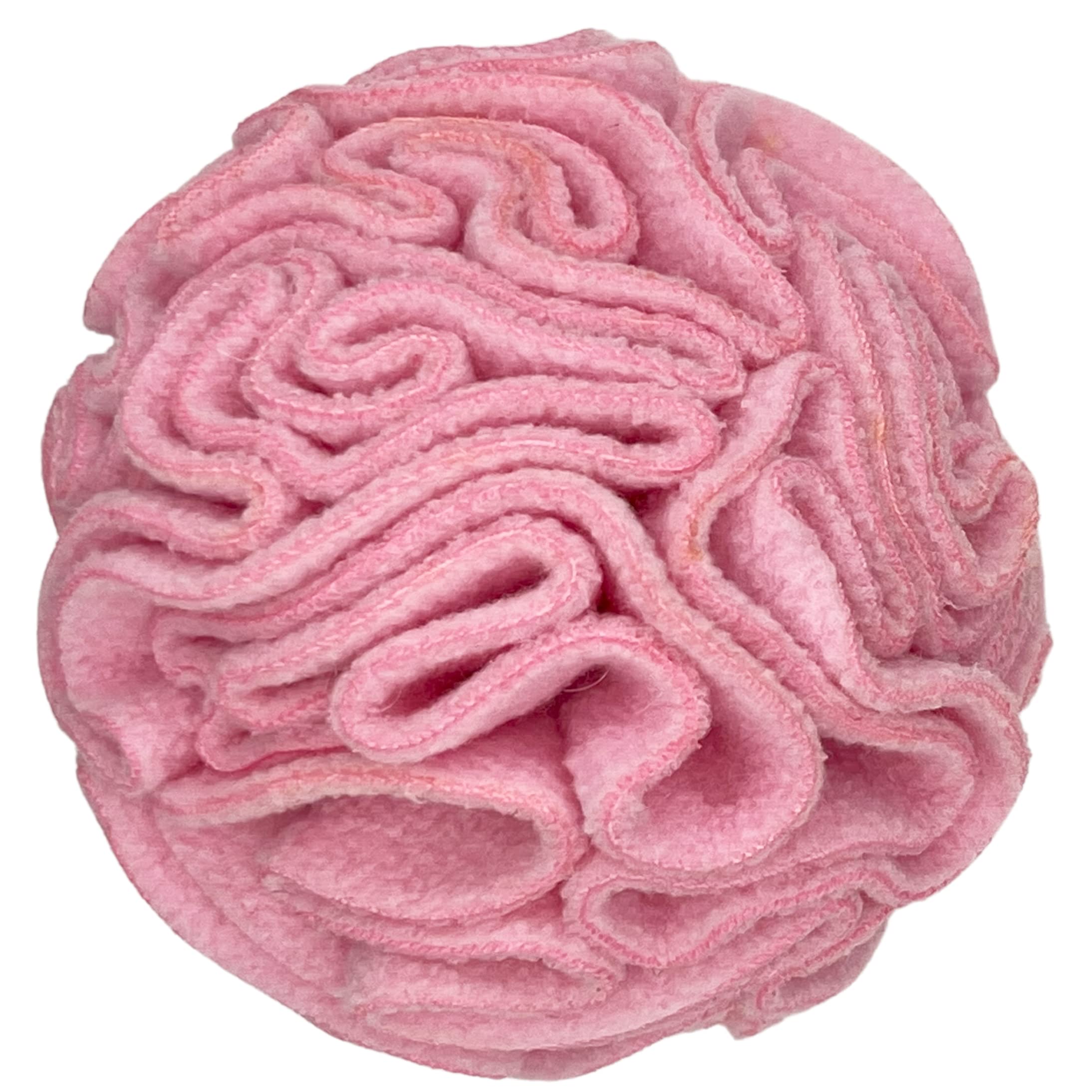
The Glory To Dog Snuffle Ball replaces slides and flippers with pure scent‑based foraging. The 4‑inch fleece ball uses layered polyester folds that trap tiny pieces of kibble or freeze‑dried liver at varying depths. There’s no mechanism to break, no plastic to crack — the challenge is olfactory only, which matches a puppy’s strongest natural sense. The design specifically targets small mouths: extra‑small and small breeds can wrap their jaws around the ball without struggling.
Variable depth is the core feature here — push a treat halfway into a fold for an easy find, or tuck it deep into the center layer for a longer search. The fleece material holds treats snugly enough that a tossed ball won’t scatter kibble across the floor, yet soft enough that a puppy missing most of its adult teeth can still nose into the folds. When the ball gets slimy, a cold machine cycle with low heat drying restores it without shrinking the fabric.
Durability is the limiting factor for heavy chewers. The fleece construction can survive gentle mouthing and batting, but a dedicated shredder can tear through the fabric in under a week. For toy‑breeds, senior dogs, or puppies in the non‑destructive phase, this snuffle ball provides the closest thing to a natural scavenging experience that fits in a crate. Several owners report it becoming a bedtime comfort object even when empty.
Why we love it
- Treasure‑hunt mechanics match natural canine foraging instincts
- Machine washable without losing shape or softness
- Safe for puppies with few teeth or soft mouths
Good to know
- Not durable enough for aggressive chewers
- Small 4‑inch size limits treat capacity per session
5. CHEWFFON Interactive Baguette Snuffle Toy

This 14‑inch baguette‑shaped plush combines a snuffle layer with two squeakers and four built‑in treat pockets. The cotton exterior hides small training treats inside folds along the length of the “loaf,” while the squeakers inside the ends provide an audible reward when the pup chomps. The form factor is deliberately awkward to carry — a dog has to figure out how to grip the long body, which adds a physical coordination element absent in flat boards.
Unlike hard plastic puzzles, the baguette is soft enough to work as a bedtime comfort toy. Several reviews describe it becoming part of a nightly wind‑down routine: the owner hides a few kibble pieces in the pockets, the pup sniffs for five minutes, then settles down with the toy as a pillow. The dual squeakers provide intermittent noise reinforcement that keeps interest high during the first few sessions, but they can be silenced by a determined chewer who punctures the polyester batting.
Durability divides opinion. Some owners report the toy surviving weeks of daily play with Labs and Goldens, while a determined Doxie shredded one in under thirty minutes. The baguette is machine washable, but the squeakers and batting may bunch or clump after repeat cycles. This toy is best suited for a puppy that mouth‑carries rather than destroys — if your pup is still in the shred‑everything phase, reserve this for supervised or short sessions.
Why we love it
- Soft plush doubles as a comfort object after play
- Four treat pockets plus squeakers offer multiple reward layers
- Awkward long shape adds a coordination challenge
Good to know
- Squeakers and batting can degrade in the wash over time
- Not durable enough for persistent shredding breeds
FAQ
What level puzzle should a 10‑week‑old puppy start with?
How many times per day should I use a treat puzzle with my puppy?
My puppy chews the plastic pieces off the puzzle board. Is that dangerous?
Can I freeze wet food inside plastic puzzle toys?
How do I clean a puzzle that smells like old kibble and drool?
Final Thoughts: The Verdict
For most puppies, the top puzzle toys winner is the Outward Hound Dog Brick because its three‑in‑one mechanics and ¾‑cup capacity let it grow with the pup from first‑timer to seasoned solver without a second purchase. If you want a sensory, low‑frustration introduction to foraging, grab the Glory To Dog Snuffle Ball. And for a durable, weighted board that challenges a progressing puppy, nothing beats the Outward Hound Puppy Hide N’ Slide.