
Raising quail from egg to button is one of the quickest payoffs in backyard poultry, but the difference between a 40-percent hatch and a 90-percent hatch almost always comes down to the incubator climate. A machine that drifts a single degree Fahrenheit for six hours can turn a promising clutch into a sticky, non-starter loss. The market is flooded with multi-species gadgets, yet the ones that actually hold a quail-sized egg, maintain surface moisture, and cycle the turner at intervals that match the species’ natural development separate the hobby-grade units from the reliable ones.
I’m Mo Mahin — the founder and writer behind Furric. I’ve spent dozens of hours cross-referencing temperature compensation curves, quail-specific egg tray geometry, and long-owner feedback loops to isolate the incubators that actually deliver consistent day-17 pips without constant user babysitting.
Every incubator on this list was selected for its ability to handle the unique demands of Coturnix and Bobwhite eggs specifically — shorter incubation periods, smaller egg mass, and higher humidity requirements compared to chickens. Whether you are setting a dozen eggs for a homeschool project or running a 56-egg production schedule, the right quail incubator cuts wasted days and lifts your hatch rate from frustrating to reliable.
How To Choose The Best Quail Incubator
Quail eggs are roughly one-third the mass of a chicken egg, which means they lose heat faster, require tighter humidity control, and cannot tolerate aggressive turner arms designed for larger shells. Understanding three spec clusters will keep you from buying a machine that only works on paper.
Forced-Air vs Still-Air — The Temperature Gradient Trap
Still-air incubators rely on natural convection, which creates a hot zone at the top and a cooler zone near the base. For quail eggs that sit low in a tray attached to a turner, this gradient can be 3–4°F across the egg surface, leading to uneven development and late-stage deaths. Forced-air units use a small circulation fan to keep temperature uniform within ±0.5°F. Every unit on this list uses forced-air circulation because quail embryos are less tolerant of hot spots than chicken embryos.
Turn Interval and Tray Geometry
Standard chicken incubators cycle the turner every 120 minutes. Quail eggs benefit from a turn every 60 to 90 minutes during the first 14 days because their smaller yolks settle faster and stick to the shell membrane more readily if left stationary. Also check whether the egg tray has slots specifically sized for quail eggs — a chicken egg tray lets quail eggs roll sideways and stack, blocking airflow and preventing clean rotation. Look for trays with 1-inch-wide channels or adjustable dividers that grip the smaller diameter.
Water Fill Method and Humidity Stability
Opening the lid to refill water drops internal humidity by 10–15 points in seconds, and it takes a forced-air unit 30–60 minutes to recover. For quail, which need 45–50 percent humidity during development and 65–70 percent during lockdown, those swings can dry out membranes. A side-mounted or external bottle water refill port lets you top off without breaking the seal. The incubators reviewed below that include external refill are marked clearly — they are the ones that maintain lockdown humidity without constant human intervention.
Quick Comparison
On smaller screens, swipe sideways to see the full table.
| Model | Category | Best For | Key Spec | Amazon |
|---|---|---|---|---|
| 56‑Egg APODESS Incubator | Premium | Large batch production | 56 chicken egg eq. capacity; external auto water refill | Amazon |
| Sailnovo 24‑Egg Incubator | Prem. | Quick‑set hatching modes | 4 hatching modes (Chick/Duck/Quail/Manual); memory backup | Amazon |
| 52‑Egg howooiua Incubator | Mid | Stable humidity auto‑fill | External bottle auto water refill; 360° transparent lid | Amazon |
| 18‑Egg MQUPIN Incubator | Mid | Dual‑size tray flexibility | Auto climate control 68–104°F; built‑in LED candler | Amazon |
| 15‑Egg Nailrepro Incubator | Mid | Auto humidity misting | Auto humidity misting; side water refill; 30+ quail egg capacity | Amazon |
| 12‑Egg CluckRun Incubator | Value | Budget‑minded beginners | Auto turn stop 4 days before hatch; built‑in candler | Amazon |
| 40‑Quail ONKO Incubator | Value | Dedicated quail batches | 40 quail egg capacity; dedicated quail‑sized fan/turner | Amazon |
In‑Depth Reviews
1. 56‑Egg APODESS Incubator
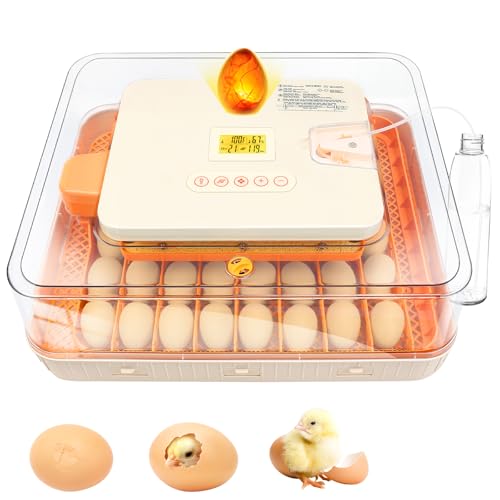
The APODESS machine hits the sweet spot for anyone running more than three dozen quail eggs per cycle. Its 360° forced-air fan and dual adjustable vents keep temperature within ±0.5°F even in a 65°F basement, and the three-zone ABC water system feeds humidity from external bottles so you never crack the lid during lockdown. Owners report the smart alarm triggers at ±2°F or ±10 percent humidity, giving you a corrective window before the clutch suffers.
The turner defaults to 120-minute intervals, but the adjustable clips grip quail eggs individually — no sideways rolling. At 12.4 pounds, the unit feels dense and the detachable top lid makes post-hatch cleanup straightforward under a faucet. One owner noted that using warm water in the external bottle stabilizes humidity faster than cold tap water, a small technique that lifts consistency.
For the price, the build quality exceeds most foam-shell competitors. The transparent panoramic lid offers clear viewing, and the digital display cycles through incubation days, turning countdown, and cumulative run time. If you need volume without sacrificing per-egg stability, this is the production-level workhorse.
Why we love it
- External auto water refill with three zones prevents humidity crashes
- Large 56-egg capacity with adjustable clips for quail-size eggs
- Smart alarm alerts ±2°F deviation before damage occurs
Good to know
- Weight (12.4 lb) makes it less portable for small classrooms
- Some users recommend a secondary hygrometer to verify onboard sensor
2. Sailnovo 24‑Egg Incubator
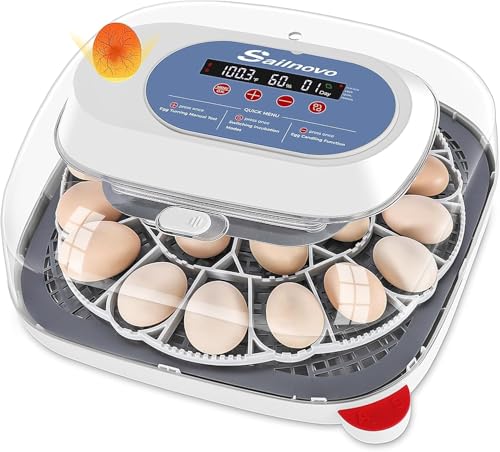
The Sailnovo is the most beginner-friendly premium unit on the list because of its four smart hatching modes — Chicken, Duck, Quail, and Manual. Selecting Quail mode sets temperature at 99.5°F and pre-loads a 17-day countdown, removing the guesswork for first-time quail keepers. The advanced forced-air fan system comes with a separate styrofoam insulating cover for cold rooms, an accessory most incubators skip.
The auto-turner cycles every 120 minutes and stops three days before hatch, but the real differentiator is the memory backup function: if power flickers, the unit resumes the exact incubation stage without resetting. The built-in candling light is bright enough to see vein development at day 4 without an external flashlight. Owners consistently report a 70–75 percent hatch rate with shipped quail eggs, which is above average for mail-order fertility.
The A/B water ports let you fill incubation and hatching sides separately, so you can raise humidity to 65 percent at lockdown without affecting the main reservoir. The silicone base cover lifts out for direct rinsing, preventing bacterial buildup between batches.
Why we love it
- One-touch Quail preset eliminates programming errors for beginners
- Memory backup preserves settings through power interruptions
- Styrofoam cover included for cool-room operation
Good to know
- Humidity adjustment requires sliding a vent rather than a digital pump
- Some users find the alarm loud — not a con for attentive keepers
3. 52‑Egg howooiua Incubator
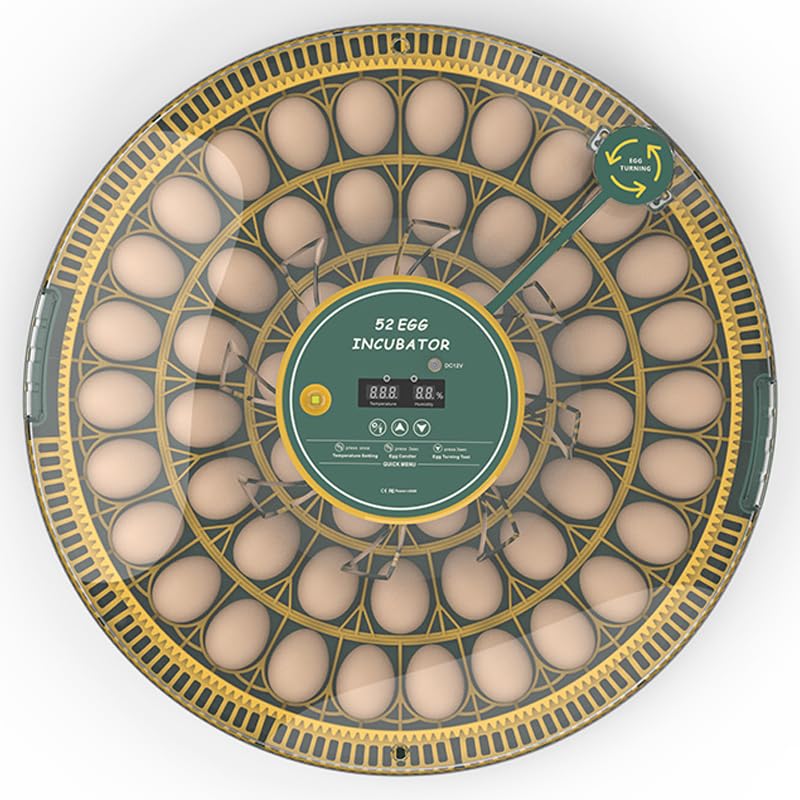
The howooiua sits at a capacity crossroads — big enough for 52 chicken eggs (and proportionally more quail) but still smaller than a cabinet-style unit. Its turner cycles every hour instead of the standard two, which aligns well with quail physiology. The forced-air circulation eliminates hot and cold spots across the rectangular interior, and the external water supply bottle uses a standard drinking water bottle inverted onto a base, keeping the lid sealed for the full cycle.
Designing specifically for quail, you can fit approximately 70 quail eggs in the adjustable tray slots. The built-in LED candler is strong enough to check a quail egg through the shell at day 5. Early-owner feedback highlights stable temperature readings within ±0.4°F after a 24-hour stabilization run. The rectangular shape makes more efficient use of shelf space than round domes, fitting better on a lab bench or classroom counter.
One caveat: the humidity sensor appears to lag slightly behind actual conditions, so pairing the unit with a digital hygrometer for the first two cycles is smart until you learn its behavior. Once calibrated, the auto water supply keeps humidity in the 45–55 percent band without manual intervention.
Why we love it
- Hourly egg turn matches quail development needs better than 2-hour cycles
- External bottle refill uses standard water bottles, no proprietary parts
- Rectangular design maximizes use of shelf and counter space
Good to know
- Humidity sensor may need a separate calibration hygrometer initially
- Holds up to 70 quail eggs but tray clips require careful positioning
4. 18‑Egg MQUPIN Incubator
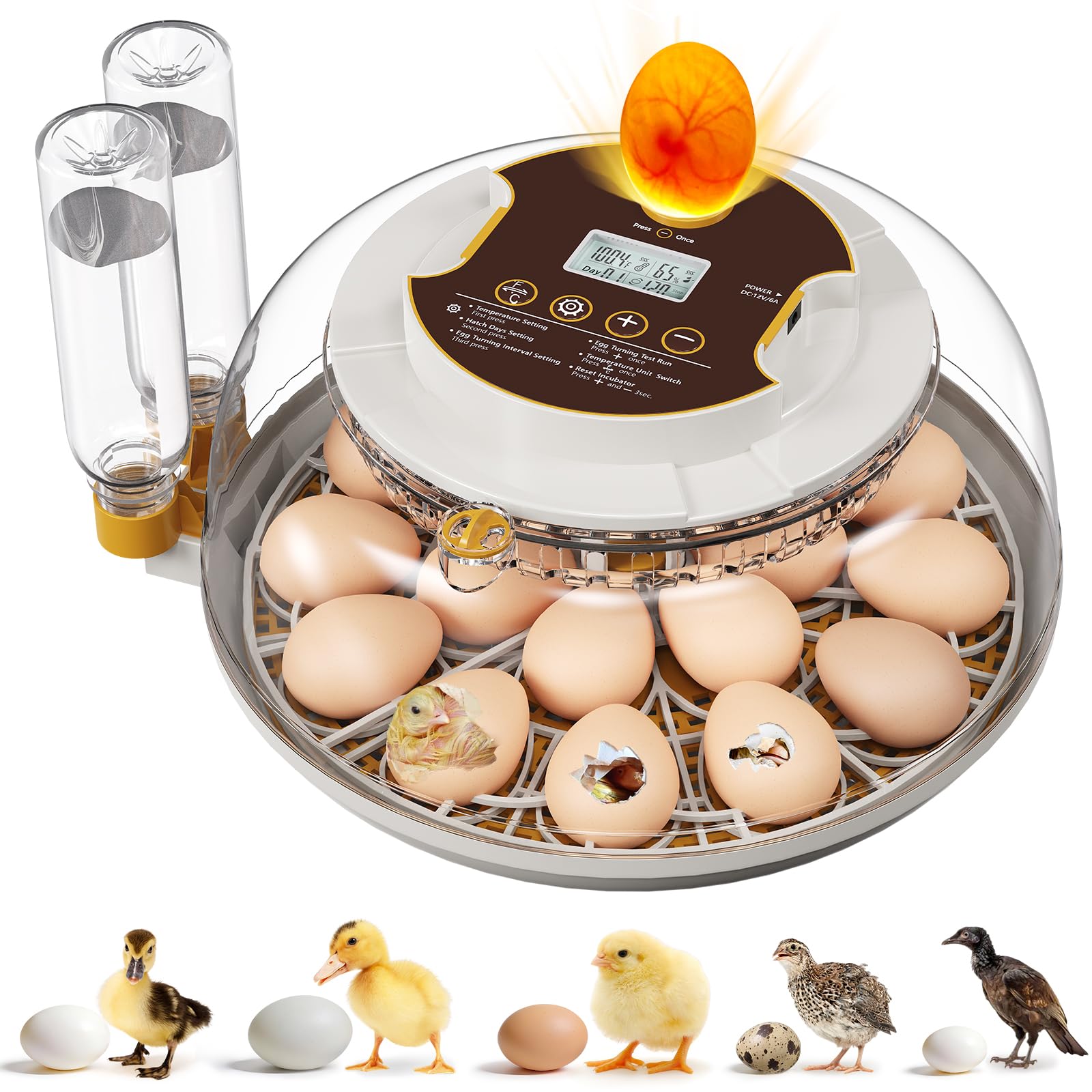
The MQUPIN offers an 18-chicken-egg capacity that translates to roughly 40 quail eggs when using the smaller tray. The standout feature is the selectable turn interval — 60, 120, or 180 minutes — allowing you to match the machine to your species rather than accepting a fixed rate. The climate control system automatically maintains 68–104°F and 40–80 percent humidity, and the digital display updates in real time.
In practice, owners see a 77 percent hatch rate on their first run with quail, and the unit includes a clear 360° dome and a built-in LED candler for checking viability. The included foam shell insulation is a thoughtful addition for basements or garages that hover around 60°F. The removable dual trays make species switching simple — run a chicken batch, then swap to the quail tray without buying a second machine.
The unit weighs about 5.6 pounds, making it one of the lighter mid-range options. The instruction insert includes a cheat sheet for species-specific humidity and temperature targets. For the hobbyist who hatches chickens and quail in alternating months, the tray-swap versatility saves both space and budget.
Why we love it
- Three turn interval options let you tailor the cycle to quail embryos
- Dual trays switch between 18 chicken eggs or ~40 quail eggs easily
- Foam insulation shell helps stabilize temperature in cool rooms
Good to know
- Humidity control is passive (water channels) rather than a misting pump
- LED candler is adequate but not as bright as dedicated candling devices
5. 15‑Egg Nailrepro Incubator
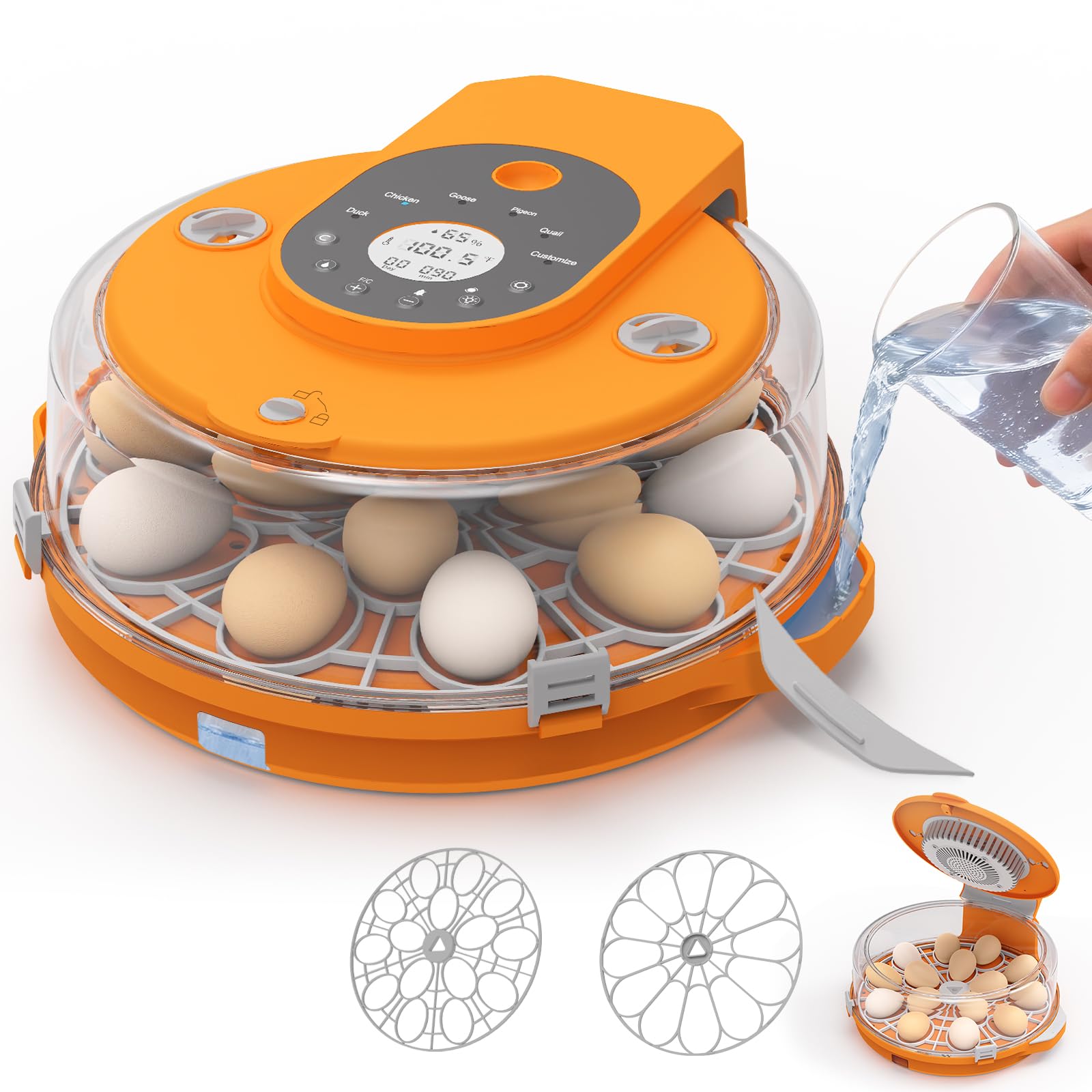
The Nailrepro is the only unit in this roundup with a true precision misting pump that automatically regulates humidity based on internal sensor feedback. You can still adjust temperature and humidity manually, but the auto mode works well enough that one owner reported a 15-out-of-19 quail egg hatch on the first attempt. The one-touch presets for Chicken, Duck, Goose, and Quail make initial setup a 30-second job.
The side water refill port allows you to monitor the visible water window without lifting the lid, and the quiet fan system circulates air with minimal noise. The tray configuration holds up to 30+ quail eggs, with dedicated slots that prevent the smaller eggs from tipping sideways during rotation. The smart alarm triggers for out-of-range conditions and mutes automatically once parameters stabilize.
One owner noted that the turner arm struggled with goose eggs due to their larger diameter, but for quail the rotation was smooth and consistent. At 4 pounds, the unit is the lightest mid-range option on the list and fits comfortably on a kitchen counter or classroom shelf.
Why we love it
- Precision misting pump maintains humidity without manual intervention
- Side water refill and visible level window prevent lid-opening losses
- One-touch Quail preset simplifies setup for beginners
Good to know
- Warranty covers only 0.6 year — shorter than most competitors
- Turner arm geometry may not suit large goose eggs
6. 12‑Egg CluckRun Incubator
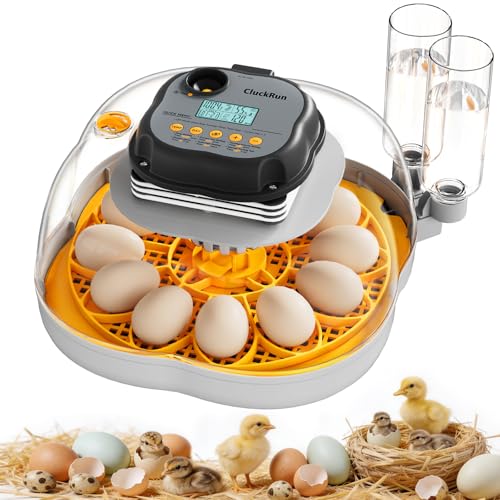
The CluckRun 12-egg incubator proves that a low entry point does not mean a stripped-down feature set. The automatic turner stops four days before hatch by default and offers customizable intervals of 60, 120, or 180 minutes. The high sidewalls provide a secure environment for quail chicks post-hatch, preventing falls during the critical first hours out of the shell.
The integrated egg candler is bright enough to spot infertile quail eggs by day 5, and the digital display shows incubation days, turning countdown, and real-time humidity simultaneously. Owners report a 75 percent hatch rate for quail in an 18-day cycle, and the unit runs quietly enough for a bedroom or home office. The 3-year warranty is longer than any other machine in this comparison, signaling confidence in the build.
The unit includes two water bottles, a cleaning brush, and a detailed manual. The 10.8 x 10.8 x 6.3-inch footprint makes it the most compact option here, ideal for small apartments or homeschool setups where space is at a premium.
Why we love it
- Exceptional 3-year warranty beats every other incubator on the list
- Customizable turn interval (60/120/180 min) suits quail specifically
- Compact footprint fits small spaces without sacrificing functionality
Good to know
- 12-egg chicken capacity means around 20 quail eggs — limited volume
- No dedicated quail preset requires manual temperature setting
7. 40‑Quail ONKO Incubator

The ONKO is the only incubator on this list purpose-built around the dimensions of a quail egg — the tray slots, fan placement, and turner arc are all engineered for the 1.3–1.5 cm diameter of a Coturnix egg rather than adapted from a chicken design. The 40-egg capacity is ideal for keepers who want to run a single quail batch without wasting space on chicken-sized dividers.
Temperature and humidity control are automatic via digital feedback, and the external water bottle feeds the humidity reservoir without opening the 360° transparent lid. The ABS shell is easy to disassemble and base-washable under running water, preventing shell debris and bacteria from carrying over between hatches. One owner reported a near 100 percent hatch rate with his own quail eggs using a secondary hygrometer for verification.
Most users, however, find the performance-to-cost ratio favorable, with an 80 percent hatch rate reported for Jumbo Texas A&M quail. Using a separate thermometer/hygrometer inside seems to be the universal best practice for this model.
Why we love it
- Designed specifically for quail egg dimensions, not adapted from chicken specs
- Good hatch rates (80–100%) reported with attentive humidity management
- Easy disassembly and direct water-rinse base for hygiene
Good to know
- Turner motor reliability is inconsistent across long-term ownership
- Onboard temperature/humidity gauge may need calibration against a secondary unit
FAQ
What temperature should I set my quail incubator to for Coturnix quail?
How many quail eggs can I fit in a 24-egg chicken incubator?
Why is my quail hatch rate low even though the incubator shows correct readings?
Final Thoughts: The Verdict
For most quail keepers, the best water winner is the 56‑Egg APODESS Incubator because its external auto water refill and ±0.5°F temperature stability eliminate the two biggest failure points in quail hatching — humidity crashes and hot spots. If you want one-touch simplicity and a dedicated Quail preset for learning the ropes, grab the Sailnovo 24‑Egg Incubator. And for budget-minded beginners who need a compact footprint and the longest warranty on the market, nothing beats the CluckRun 12‑Egg Incubator.