
The first year of a cat’s life is the only window you get to build a foundation that dictates their bone density, organ function, and immune strength for the next 15 years. A dry kitten food that delivers precise concentrations of DHA, calcium, phosphorus, and animal-based protein determines whether your kitten develops sharp vision, a resilient coat, and steady digestion — or a lifetime of avoidable vet visits.
I’m Mo Mahin — the founder and writer behind Furric.
Below, I break down the five highest-rated formulations on the market so you can confidently choose the best quality dry kitten food for your growing cat’s specific needs.
How To Choose The Best Quality Dry Kitten Food
Not every bag labeled “kitten formula” delivers the dense, species-appropriate nutrition a growing cat requires. You need to evaluate ingredient sourcing, guaranteed analysis ratios, and the bioavailability of key nutrients like calcium and phosphorus, which govern skeletal development. Below are the critical factors that separate a premium formula from a marketing-driven bag of fillers.
Protein Source and Animal-Based Concentration
Kittens are obligate carnivores, meaning their amino acid requirements — particularly taurine and arginine — must come from muscle meat, not plant proteins. Look for a named meat (deboned chicken, turkey, salmon) as the first ingredient, and verify that the guaranteed analysis shows at least 40% crude protein on a dry matter basis. Formulas that rely on corn gluten meal or pea protein concentrate dilute the amino acid profile your kitten needs for organ growth.
DHA and ARA for Neural Development
Docosahexaenoic acid (DHA) is an omega-3 fatty acid that accumulates in the kitten’s brain and retinal tissue during the first 12 months. Formulas fortified with DHA from salmon oil or fishmeal support faster neural pathway development, better training response, and sharper vision. Check the ingredient list for explicit DHA sources — not just “fish oil” but a named oil like “salmon oil” or “menhaden fish oil.”
Kibble Geometry and Weaning Transition
A kitten’s jaw and deciduous teeth are not designed to crush large, hard kibble. Small-diameter, thin-profile kibble — often described as “babycat” shape or “disc-shaped” — allows a weaning kitten to chew without gum trauma. Some premium formulas also offer rehydratable kibble that softens quickly in warm water, bridging the gap from wet food to dry.
Quick Comparison
On smaller screens, swipe sideways to see the full table.
| Model | Category | Best For | Key Spec | Amazon |
|---|---|---|---|---|
| Wellness CORE Kitten | Mid-Range | High protein growth | 55% animal protein, DHA from salmon oil | Amazon |
| Hill’s Science Diet Sensitive Stomach | Mid-Range | Digestive sensitivity | Prebiotic fiber, 3.5 lb bag | Amazon |
| Nulo Freestyle Turkey & Duck | Mid-Range | Probiotic gut health | BC30 probiotics, 84% animal protein | Amazon |
| Blue Buffalo Freedom Indoor Kitten | Premium | Indoor kitten weight control | DHA + ARA, LifeSource Bits antioxidants | Amazon |
| Royal Canin Mother & Babycat | Premium | Weaning and newborn kittens | Rehydratable kibble, 3 lb bag | Amazon |
In‑Depth Reviews
1. Wellness CORE Kitten Dry Cat Food

Wellness CORE hits a dense 55% crude protein from turkey meal and deboned chicken, placing it at the top tier for muscle development in growing kittens. The inclusion of DHA from salmon oil — not a generic fish oil blend — provides targeted neural and retinal support during the critical first 12 months. Owners consistently report shinier coats and firmer stools within two weeks of switching, which tracks with the prebiotic fiber content (chicory root) and probiotic fortification.
The 5-pound bag offers strong value for the ingredient quality, especially considering the grain-free, non-GMO claim. However, the 18% fat content is slightly higher than some competing formulas, which may require portion control for indoor kittens prone to weight gain. Reviews note that cats who reject poultry-heavy blends sometimes prefer the turkey-and-duck variety from this same line.
Texture-wise, the disc-shaped kibble is small enough for 6-week-old kittens to chew without gum strain. No corn, wheat, or soy ingredients appear in the guaranteed analysis, and the brand manufactures in a US facility with globally sourced inputs that meet AAFCO nutrient profiles for growth and reproduction.
Why we love it
- 55% high-quality animal protein for lean muscle growth
- DHA from salmon oil supports brain and vision development
- Grain-free formula with no corn, wheat, or soy
Good to know
- 18% fat content may require portion control for indoor kittens
- Some picky kittens prefer other protein flavors within the same brand
2. Hill’s Science Diet Kitten Sensitive Stomach & Skin
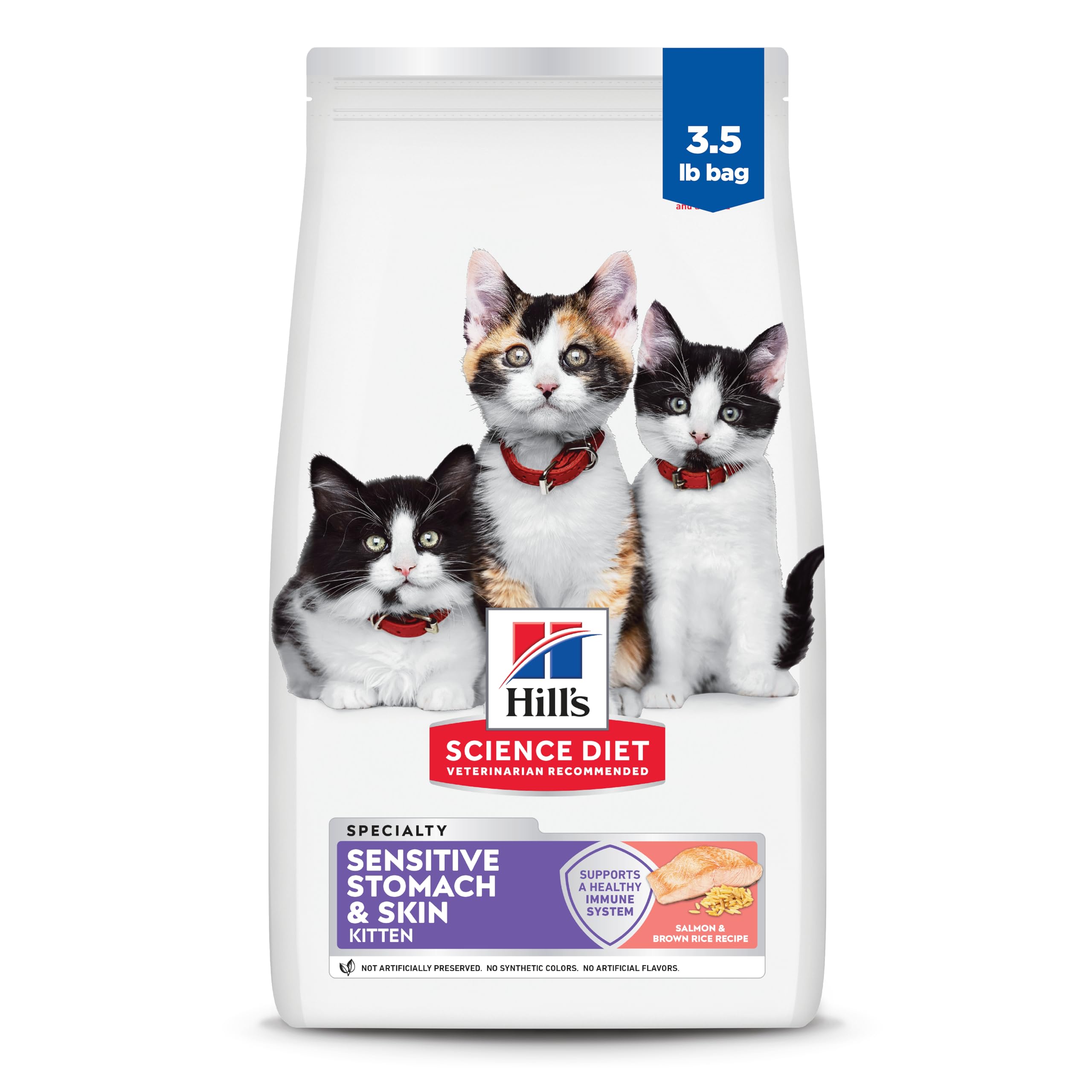
This formula targets the specific pain point of loose stools, constipation, and skin irritation — the most common owner complaints during the kitten growth phase. The salmon-and-brown-rice base delivers a single novel protein source that reduces the likelihood of food sensitivity reactions, while the prebiotic fiber blend (including beet pulp and cellulose) promotes steady nutrient absorption. Customer reviews from Bobtail and Bengal owners confirm that chronic constipation resolved within 5 to 7 days of transition.
The 3.5-pound bag size is smaller than most competitor offers, but the calorie density and digestibility mean the bag lasts longer per feeding. Omega-3 and omega-6 fatty acids from the salmon ingredient support a softer coat and reduced scratching, which multiple owners corroborated. The kibble is slightly larger than the Royal Canin Babycat shape, but weaning kittens around 8 weeks handle it without issue.
Hill’s is the most veterinarian-recommended brand in the US, and this recipe includes clinically proven antioxidants (vitamins C and E) alongside DHA for brain development. The formula is made in the USA with global ingredients, though some owners with strictly grain-free households should note the brown rice inclusion.
Why we love it
- Salmon as single novel protein reduces food sensitivities
- Prebiotic fiber resolves constipation and loose stools
- Veterinarian-recommended with clinically proven antioxidants
Good to know
- Contains brown rice, not suitable for strict grain-free diets
- 3.5 lb bag offers less volume per purchase than competitors
3. Nulo Freestyle Cat & Kitten Dry Food Turkey & Duck
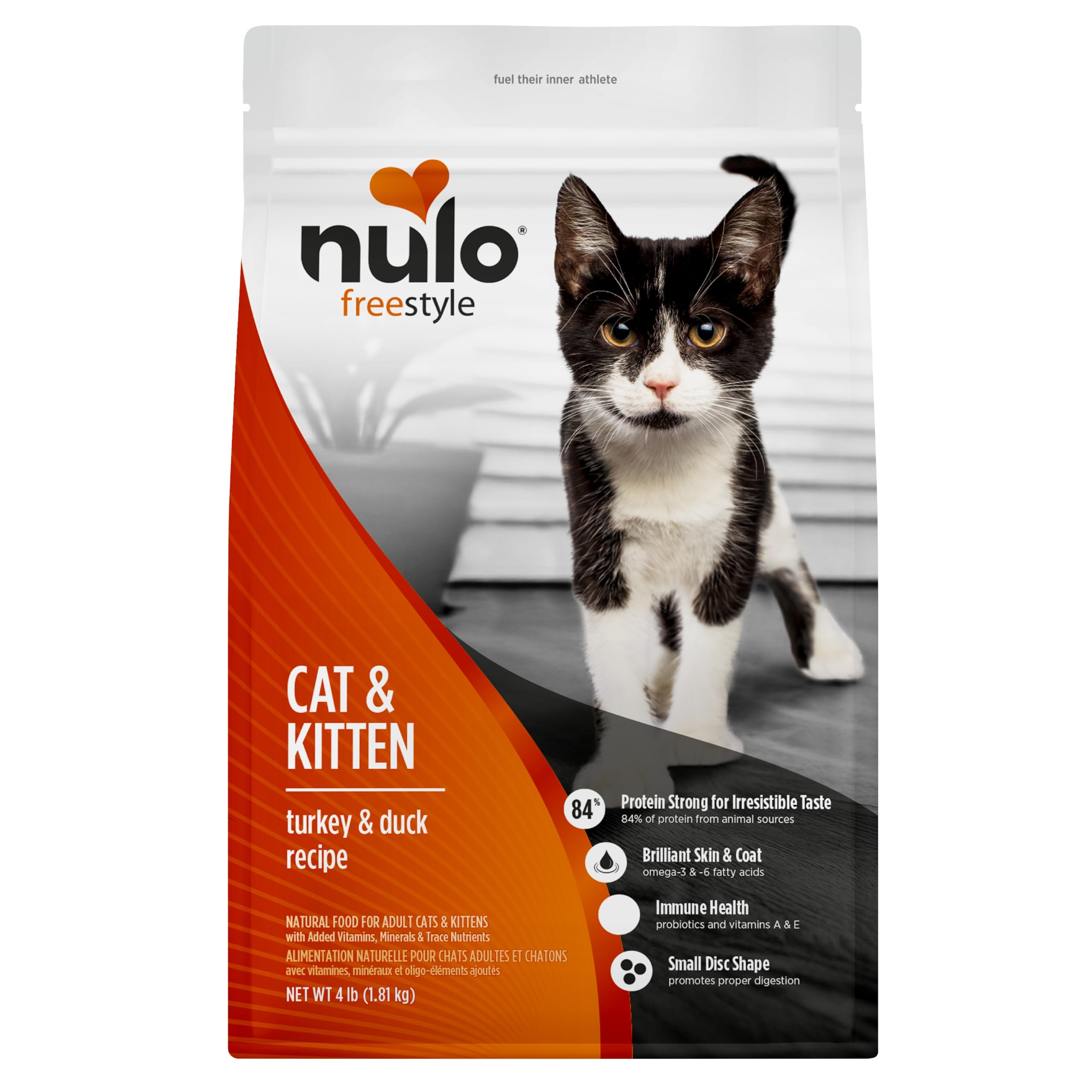
Nulo differentiates itself with an 84% animal-based protein claim and a patented BC30 probiotic strain (Bacillus coagulans) that survives the kibble baking process — a critical advantage over probiotics that are destroyed at extrusion temperatures. The turkey-and-duck flavor combination provides a diverse amino acid profile that supports lean muscle mass without relying on a single protein source. Owners of Bengal kittens reported a drastic reduction in flatulence and diarrhea after switching to this formula.
The 4-pound bag uses a small disc-shaped kibble that is particularly easy for senior cats with dental issues, but also suitable for teething kittens around 6 months of age. Omega-3 and omega-6 fatty acids from menhaden fish oil feed skin and coat health, and the addition of taurine supports cardiac function. The formula is completely grain-free, with no corn, wheat, soy, rice, white potato, or tapioca — unusually strict for this price tier.
However, the distinct duck flavor may not appeal to all palates. Multiple verified reviews from multi-cat households noted that one or more cats rejected the duck profile entirely, while the same brand’s chicken-and-cod or turkey-and-chicken flavors were accepted. This is a flavor-preference risk, not a nutritional one.
Why we love it
- 84% animal-based protein for superior amino acid density
- BC30 probiotic survives baking for effective gut support
- Grain-free with no potato, tapioca, or rice fillers
Good to know
- Duck flavor may be rejected by picky cats
- Higher protein concentration may cause weight gain if overfed
4. Blue Buffalo Freedom Grain-Free Indoor Dry Kitten Food

Blue Buffalo’s Freedom line tackles the double challenge of indoor kitten weight management and developmental nutrition. Real deboned chicken is the first ingredient, and the formula includes both DHA and ARA — two long-chain fatty acids that work together to accelerate neural connectivity and retinal cell development. The proprietary LifeSource Bits are cold-processed antioxidant clusters that retain more vitamin potency than heat-extruded kibble.
At 5 pounds per bag, this is the largest volume in the premium tier, making the per-feeding cost competitive with mid-range options. The grain-free recipe excludes corn, wheat, soy, and poultry by-product meals — a standard that many budget brands fail. Owners of multi-cat households report that all cats from 6 weeks to 4 years of age accept this food eagerly, and the semi-soft morsel texture (rather than hard pellets) is noted as uniquely palatable for weaning kittens.
The primary trade-off is that this formula is designed specifically for indoor kittens, meaning lower calorie density than outdoor-active kitten formulas. Owners with highly active indoor kittens may need to supplement with wet food to meet energy requirements. Additionally, the LifeSource Bits can sometimes crumble at the bottom of the bag, though this does not affect nutritional value.
Why we love it
- DHA plus ARA dual-support for brain and eye development
- LifeSource Bits preserve cold-processed antioxidants
- Real chicken first ingredient, no poultry by-product meals
Good to know
- Indoor formula may not satisfy high-energy active kittens
- LifeSource Bits may crumble in the bag during shipping
5. Royal Canin Feline Health Nutrition Mother & Babycat Queen Dry Cat Food
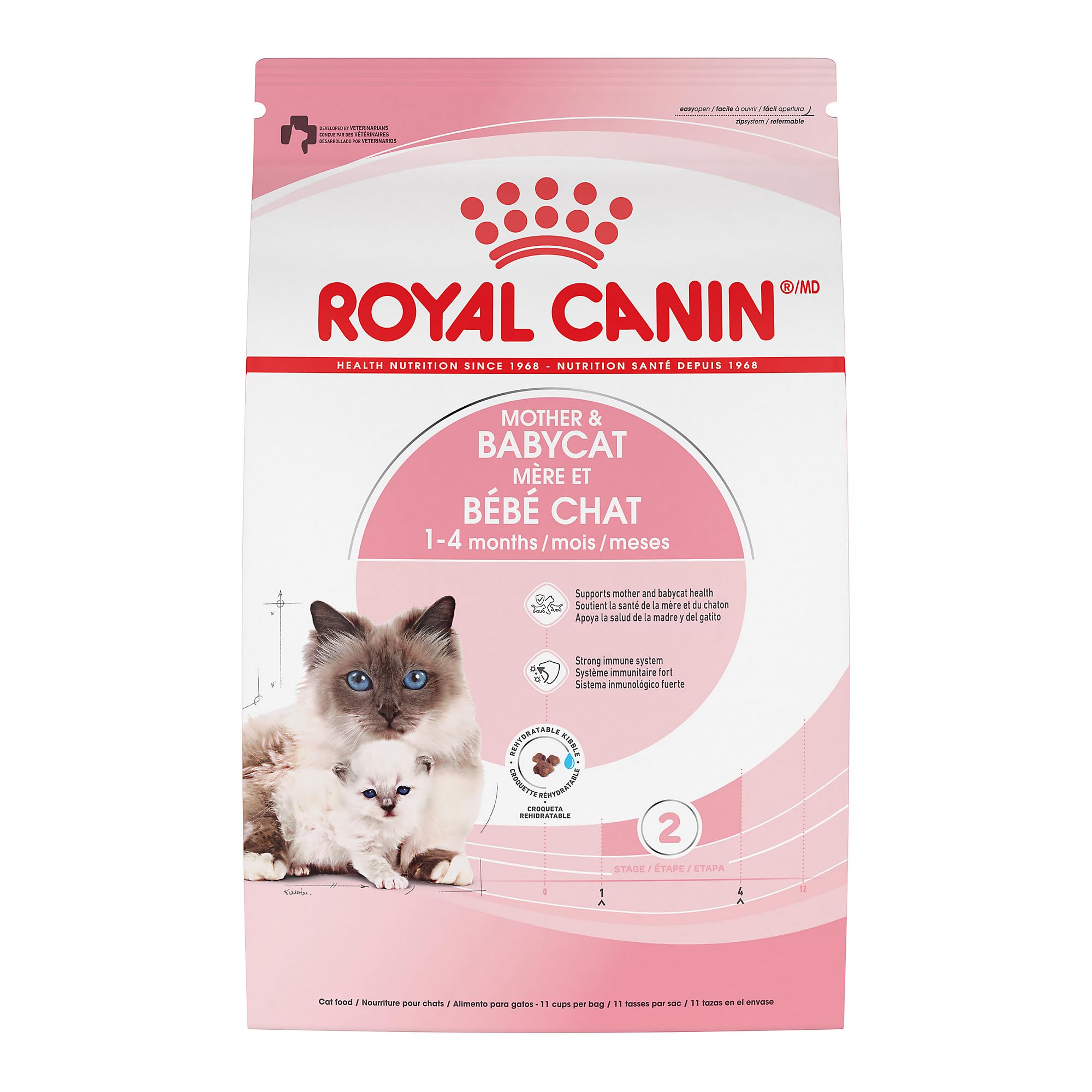
Royal Canin’s Mother & Babycat formula is engineered for the narrowest age window — 1 to 4 months — and is the only product in this list specifically designed to support both nursing queens and weaning kittens. The kibble is intentionally small (4.5 mm diameter) and features a rehydratable texture that softens within minutes when mixed with warm water, mimicking the transition from milk to solid food. This makes it the safest choice for fostering neonatal kittens or litters with dental immaturity.
Clinically proven antioxidants (vitamins E and C) support the developing immune system, while a blend of prebiotics (FOS and MOS) and highly digestible chicken protein promotes a stable gut microbiome. Breeders of Siberian and Maine Coon kittens frequently cite this formula as their top recommendation for preventing the weaning diarrhea that often occurs with larger-kibble diets. The 3-pound bag is smaller by weight, but the calorie density is calibrated so that a 4-week-old kitten requires only a small daily volume.
The premium price reflects the specialized production process and the veterinary-validated nutritional profile. Owners of older kittens (6 months+) should transition to Royal Canin’s kitten-stage formula after 4 months to maintain appropriate calcium-to-phosphorus ratios.
Why we love it
- Rehydratable kibble designed for weaning from milk to solid food
- Supports nursing queens and kittens 1-4 months old
- Vet-recommended with clinically proven microbiome support
Good to know
- Designed for 1-4 month old kittens, not all life stages
- Premium price reflects specialized formulation
FAQ
Can I feed an all-life-stages formula to my kitten instead of a kitten-specific dry food?
How do I know if my kitten’s dry food has enough taurine?
Do grain-free kitten foods provide better nutrition than formulas with grains?
What is the ideal crude protein percentage for kitten dry food?
Final Thoughts: The Verdict
For most kitten owners, the best quality dry kitten food winner is the Wellness CORE Kitten Formula because it delivers 55% animal protein, DHA from salmon oil, and grain-free nutrition at a mid-range price that outperforms many premium competitors. If your kitten suffers from chronic loose stools or a sensitive stomach, grab the Hill’s Science Diet Sensitive Stomach & Skin. And for weaning-age kittens under 4 months old, nothing beats the rehydratable kibble of the Royal Canin Mother & Babycat.