
Every bunny parent knows the worry of dumping a bowl of pellets only to watch their rabbit pick out the sugary pieces and leave the nutrition behind. It’s frustrating, and worse, it can lead to weight problems, dental disease, and digestive upset. The right pellet eliminates that guessing game entirely, delivering complete nutrition in every single bite.
I’m Mo Mahin — the founder and writer behind Furric. I’ve spent countless hours studying veterinary nutritional guidelines, dissecting ingredient panels, and reading through thousands of real owner experiences to separate the truly healthy rabbit foods from the ones that are all marketing.
After evaluating veterinary guidelines and real owner experiences, I’ve curated this definitive guide to the best rabbit food for your beloved bunny’s health and happiness.
How To Choose The Best Rabbit Food
Picking the right bag of pellets is one of the most impactful decisions you’ll make for your rabbit’s long-term health. A poor choice can lead to obesity, dental overgrowth, and gastrointestinal stasis — conditions that are stressful for both you and your bunny. Here’s what to look for every time you shop.
Fiber Content & Dental Health
Rabbits need a minimum of 18% crude fiber in their pelleted diet to keep their digestive tract moving and their continuously growing teeth worn down. Anything lower than that puts your bunny at risk for gut slowdown and painful molar spurs. Always check the guaranteed analysis on the bag, and prioritize timothy hay or meadow hay as the first ingredient over alfalfa for adult rabbits.
Life Stage & Protein Balance
Junior rabbits (under 20 weeks) require higher protein — around 16–17% — and slightly more calcium to support rapid bone and muscle growth. Adult rabbits, on the other hand, need lower protein (12–14%) and a carefully balanced calcium-to-phosphorus ratio to prevent bladder sludge and kidney issues. Feeding an all-life-stages formula to a senior bunny can cause long-term harm, so match the bag to your rabbit’s age.
Ingredients to Avoid
Steer clear of any pellet that lists added sugars, molasses, corn syrup, or dried fruit as a main component. These ingredients encourage selective feeding — your rabbit will pick out the sweet bits and ignore the balanced pellets — and contribute to obesity and dental disease. A high-quality rabbit food should be a uniform, single-component extruded nugget that your bunny cannot pick apart.
Quick Comparison
On smaller screens, swipe sideways to see the full table.
| Model | Type | Best For | Key Feature | Amazon |
|---|---|---|---|---|
| Vitakraft VitaSmart | Pellet Mix | Adult bunnies who love variety | Timothy hay base with vegetables & foraging textures | Amazon |
| Science Selective House Rabbit | Uniform Pellet | Indoor house rabbits of all ages | Timothy hay & thyme formula with prebiotics | Amazon |
| Vitakraft Sunseed Vita Prima | Pellet Mix | Owners wanting a value foraging blend | Omega-3s, garden vegetables & sun-cured hay | Amazon |
| Sherwood Pet Health Adult | Veterinary Diet Pellet | Bunnies with digestive sensitivities | Grain & soy-free, short & long-strand prebiotic fibers | Amazon |
| Science Selective Supreme Junior | Uniform Pellet | Baby & dwarf rabbits up to 20 weeks | 19% fiber, 17% protein, zero added sugar | Amazon |
In-Depth Reviews
1. Vitakraft VitaSmart Complete Nutrition Rabbit Food
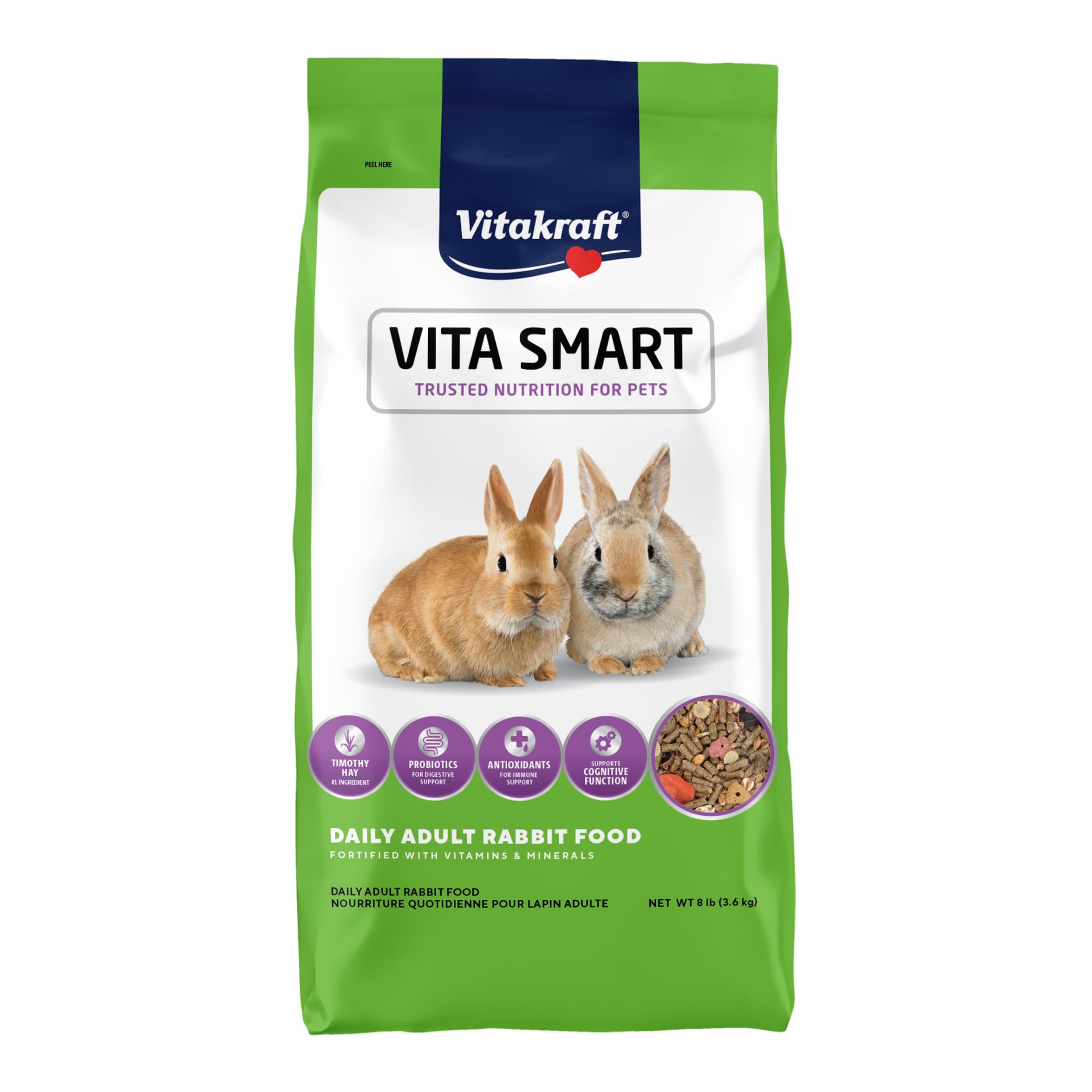
Vitakraft has been in the pet nutrition space for over 180 years, and the VitaSmart formula shows that depth of experience. Built on a timothy hay and alfalfa fiber foundation, this pellet mix incorporates wholesome vegetables and carefully balanced vitamins to support strong bones, healthy skin, and steady energy for adult rabbits. The ingredient list skips artificial colors and unnecessary fillers, which is exactly what you want when you’re feeding a sensitive herbivore.
The blend encourages natural foraging behavior — your bunny will sift through the pellets and vegetables, which keeps mealtime mentally stimulating. Multiple owners of senior rabbits (including one 9-year-old angora) report that their picky eaters finish every piece in the bowl, even if they save the pellets for last. The 8-pound bag size is practical for single-bunny households and stays fresh longer than bulk sacks.
For the rabbit parent who wants a nutritionally complete mix with variety that doesn’t rely on sugary additives, this is the most balanced daily option at a mid-range price point. It delivers the gut-healthy fiber your bunny needs while keeping mealtime engaging enough to prevent boredom.
Why we love it
- Timothy hay based with added vegetables for natural foraging
- No artificial colors or flavors
- Fortified with vitamins A, D, and minerals for bone health
- High fiber content supports dental wear and digestion
Good to know
- Contains alfalfa fiber, so best for adult rabbits rather than seniors with calcium concerns
- Mixed format means some bunnies may selectively eat treats first
2. Supreme Petfoods Science Selective House Rabbit Food

Science Selective has earned a devoted following among house rabbit owners, and the House Rabbit formula is the brand’s finest work for indoor bunnies. It’s built around timothy hay, grass, and thyme — herbs that support respiratory health and add natural flavor without sugar. The pellet shape is a round, uniform nugget that’s large enough to encourage chewing but small enough to prevent choking, a thoughtful design detail that many owners specifically mention in their feedback.
The formulation is fortified with essential vitamins A and D, and the calcium-to-phosphorus ratio is carefully balanced to reduce the risk of bladder sludge — a common concern for indoor rabbits that don’t get as much sunlight. Owners report that even notoriously picky bunnies devour these pellets, with one reviewer calling them “rabbit crack.” The prebiotics (MOS) support healthy gut motility, and the linseed provides omega-3 and omega-6 fatty acids for a glossy coat.
If your rabbit lives indoors and you want a timothy-based, low-calcium pellet that won’t encourage selective eating, this is the gold standard at a reasonable price. It’s a uniform pellet, so every bite is identical — no picking out treats and leaving nutrition behind.
Why we love it
- Timothy hay and thyme base — no alfalfa for adult rabbits
- Uniform round pellet prevents selective feeding
- Low calcium formulation supports urinary tract health
- Prebiotics and linseed for digestion and coat condition
Good to know
- Not suitable for juvenile rabbits under 20 weeks who need higher protein
- Some bunnies take a few days to adjust from sweeter alfalfa-based foods
3. Vitakraft Sunseed Vita Prima Daily Adult Rabbit Food
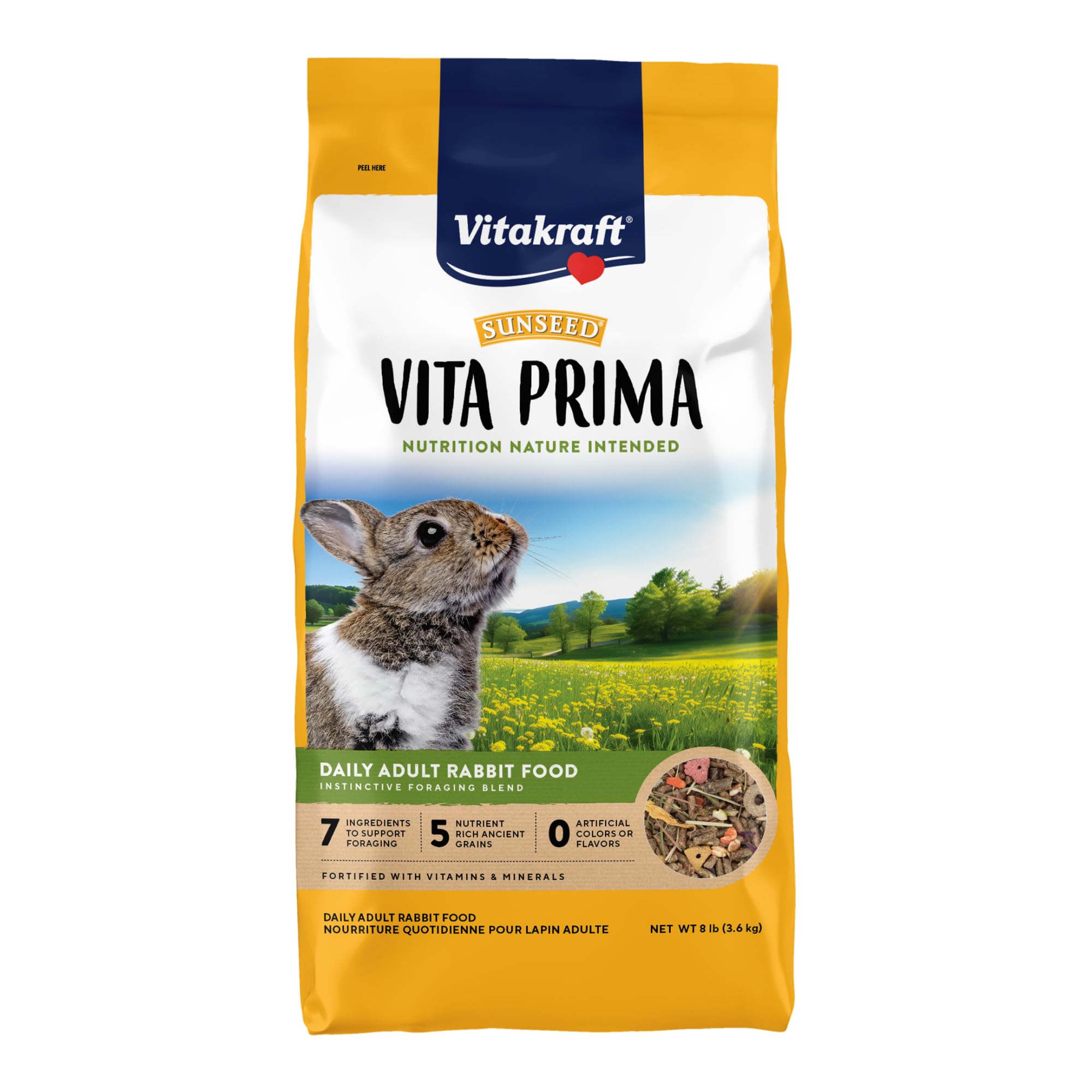
Vitakraft’s Sunseed Vita Prima delivers a generous 8-pound bag of timothy hay pellets mixed with sun-cured hay, carrots, apple pieces, and grains — all without artificial colors. It’s a foraging blend designed to make every meal an engaging activity, and the omega-3s from flaxseed support skin health and a soft, shiny coat. The bag-to-price ratio is impressive, especially when compared to boutique veterinary diets that cost significantly more per pound.
Real owner feedback highlights two distinct use cases: many use it as a standalone daily food and report soft fur, normal stools, and enthusiastic eating. Others prefer it as a treat base or foraging mix rather than a primary pellet, citing the presence of ground corn and the mixed format as potential concerns for weight management. One experienced owner of three rabbits noted that while their bunnies love it, they feed it sparingly to avoid gas and weight gain.
For budget-conscious rabbit parents who want a nutritious blend with visible ingredients and a proven 180-year brand heritage, this is the smartest value play. Use it as the main diet for a healthy adult rabbit with no history of digestive issues, or as a special enrichment mix alongside a uniform pellet.
Why we love it
- Large 8-pound bag at an accessible price point
- Omega-3s and essential fatty acids for coat and joint health
- Sun-cured hay and visible vegetables encourage natural foraging
- No artificial colors or synthetic preservatives
Good to know
- Contains ground corn, which some owners prefer to avoid as a filler
- Mixed format can lead to selective eating in some bunnies
4. Sherwood Pet Health Adult Rabbit Food Alfalfa Timothy Hay-Based Blend

Sherwood Pet Health takes a biologist-formulated approach to rabbit nutrition, and it shows in every detail of this 10-pound bag. The blend uses whole natural ingredients with short and long-strand fibers for optimal digestive health, plus balanced amino acids from quality plant-based protein sources. It’s completely grain-free and soy-free — no cheap fillers like soybean hulls or rice hulls that displace the hay your rabbit’s digestive system is designed to process.
The real-world results are striking. One owner of a bunny with chronic digestive issues reported achieving “golden status” poops after switching, along with a noticeable increase in hay consumption. Multiple reviewers mention softer, silkier fur compared to previous brands. The company’s customer service is equally impressive — they’ve provided free critical care products and expert advice to owners of sick rabbits, going far beyond what any typical pet food brand would offer. The pellets have a fresh, natural smell and no dusty residue at the bottom of the bag.
If your rabbit has a sensitive stomach, recurring GI issues, or you simply want the most thoughtfully formulated pellet on the market, Sherwood is worth the premium. It’s an investment that often pays for itself in reduced veterinary visits and happier, healthier bunnies.
Why we love it
- Grain, soy, and filler-free formula for sensitive digestion
- Short and long-strand prebiotic fibers for gut health
- Biologist-formulated with whole food ingredients
- Exceptional customer service and freshness guarantee
Good to know
- Higher price point than mainstream grocery brands
- Some bunnies need a slow transition due to the rich fiber profile
5. Science Selective Supreme Junior Rabbit Food

Junior rabbits have specific nutritional demands that adult formulas simply cannot meet, and Science Selective’s Supreme Junior formula nails every single requirement. With 19% crude fiber — higher than many adult foods — and 17% protein, it supports the rapid muscle and skeletal development of bunnies up to 20 weeks of age. The calcium-to-phosphorus ratio is precisely calibrated at 0.8% to 0.5%, providing enough mineral density for growing bones without risking bladder sludge later in life.
The uniform extruded nugget format means your young rabbit cannot selectively eat around the healthy bits. This is crucial because baby bunnies are notoriously picky and would happily fill up on sugary alfalfa treats if given the choice. Spinach provides natural antioxidants, and linseed delivers omega-3 and omega-6 fatty acids for developing skin and coat health. A harlequin mini lop owner reported that her 5.5-month-old bunny preferred these pellets over a competing brand that contained added sugar, maintaining a healthy weight and producing normal poops from day one.
For any rabbit parent bringing home a new baby bunny or dwarf breed, this is the safest, most research-backed starter food available at a budget-friendly price. It’s fully compliant with FEDIAF guidelines and recommended by veterinarians worldwide.
Why we love it
- Optimized 19% fiber and 17% protein for growing rabbits
- Zero added sugar — prevents early obesity and selective eating
- Balanced calcium (0.8%) and phosphorus (0.5%) for bone health
- Suitable for dwarf breeds with smaller pellet size
Good to know
- Only appropriate for rabbits up to 20 weeks of age
- Smaller bag size (4.4 lb) means more frequent repurchasing for multiple bunnies
Safety & Care Tips
Proper Food Storage
Rabbit pellets are rich in natural fats from seeds and linseed, which can go rancid if exposed to heat, light, or moisture. Always transfer your rabbit food into an airtight container made of BPA-free plastic or stainless steel, and store it in a cool, dark cabinet. Avoid leaving the bag open or storing food in direct sunlight, as oxidation degrades the essential omega fatty acids your bunny needs for a healthy coat and immune system.
Transitioning Foods Safely
A rabbit’s digestive system is delicate, and sudden food changes can cause gastrointestinal stasis — a life-threatening condition. When switching to a new brand or formula, mix 75% of the old food with 25% of the new food for the first three days. Gradually shift to a 50-50 ratio for days four through six, then 25% old to 75% new through day nine. By day ten, your bunny should be fully transitioned. Monitor droppings closely during this period.
FAQ
How much pellet food should I feed my rabbit daily?
Can rabbits eat only pellets without hay?
Final Thoughts: The Verdict
For most pet parents, the best rabbit food winner is the Vitakraft VitaSmart Complete Nutrition because it balances a timothy hay base with engaging foraging textures, essential vitamins, and a price that won’t strain your monthly budget. If you want a uniform pellet that completely eliminates selective eating, grab the Science Selective House Rabbit Food. And for a bunny with digestive sensitivities, nothing beats the grain-free, veterinarian-formulated Sherwood Pet Health Adult Blend.