
Fresh, fragrant hay is the cornerstone of a rabbit’s health, yet finding a bag that stays green, crunchy, and dust-free consistently can feel like a gamble. The wrong bale leads to uneaten piles, wasted money, and a bored bunny who stops chewing—inviting dental and digestive problems that are costly to fix.
I’m Mo Mahin — the founder and writer behind Furric. I’ve spent years analyzing market trends, comparing nutritional specifications, and studying aggregated owner feedback across dozens of hay producers to pin down exactly which brands deliver on freshness and fiber content without the filler.
After evaluating leaf texture, stem-to-greens ratios, packaging methods, and long-term consistency reports from thousands of small-pet households, I’ve tailored this guide to help you confidently choose the best rabbit hay for your specific pet’s needs and your budget.
How To Choose The Best Rabbit Hay
Not all hay is created equal. The difference between a bag your rabbit devours and one it ignores comes down to cutting stage, leaf texture, fiber content, and storage conditions. Understanding these four variables will save you money and keep your bunny healthy.
Cutting Stages: First, Second, or Third Cut?
First-cut timothy is coarse, stemmy, and high in fiber — ideal for adult rabbits needing dental wear, but often snubbed by picky eaters. Second-cut offers a balanced mix of softer leaves and moderate stems; its green color and fragrant aroma make it the most palatable option for daily feeding. Third-cut is almost entirely soft leaves with very little stem, highest in protein and fat, best reserved for underweight rabbits or as a special treat rather than a staple.
Freshness Indicators: Color, Smell, and Feel
Quality hay should be olive-green to bright green, not yellow, brown, or grey. It should smell sweet and grassy — like a summer meadow — not musty, sour, or dusty. When you squeeze a handful, it should feel crisp but not brittle; stems should snap cleanly, not crumble into dust. Any bag that fails these three sensory checks should be returned immediately regardless of brand reputation.
Packaging and Shelf Life
Oxygen and humidity are hay’s enemies. Breathable paper bags or perforated boxes allow the hay to off-gas moisture without trapping condensation, extending its crunch window. Vacuum-sealed or fully airtight plastic can trap moisture and invite mold if the hay wasn’t dried to below 12% moisture before packing. Always check the harvest date, and never buy hay stored in direct sunlight or on a warm warehouse floor.
Quick Comparison
On smaller screens, swipe sideways to see the full table.
| Model | Category | Best For | Key Spec | Amazon |
|---|---|---|---|---|
| Small Pet Select Straight Timothy Cubes | Hay Cubes | Less mess, travel, dental wear | 5 lb box, 100% straight timothy | Amazon |
| High Desert 2nd Cutting Timothy Hay | Loose Hay | Picky eaters, soft texture preference | 4 lb box, 2nd cut leafy mix | Amazon |
| Oxbow Harvest Stacks Timothy with Carrots | Enrichment Hay | Reducing waste, enticing picky bunnies | 35 oz bag, harvested discs | Amazon |
| Kaytee Timothy Hearty Hay | Loose Hay | Budget daily feeding, crunch lovers | 48 oz bag, first cut crunchy | Amazon |
| Sherwood Adult Rabbit Food Timothy/Alfalfa Blend | Hay-Based Pellet | Weight gain, grain/soy-free nutrition | 4.5 lb bag, pelleted blend | Amazon |
In‑Depth Reviews
1. Small Pet Select Straight Timothy Hay Cubes

Small Pet Select solves the problem of dusty, messy loose hay with a pressed cube that is 100% straight timothy hay — no alfalfa, no fillers, no binders. Each cube is smaller than the typical large-animal cube, sized deliberately for rabbit and chinchilla mouths. Owners report that even picky bunnies who ignore loose hay go straight for these cubes, making them an excellent tool for maintaining fiber intake during travel or when pairing with a hay rack.
The five-pound box delivers consistent freshness thanks to breathable carton packaging that allows the hay to off-gas without trapping moisture. Customers repeatedly note that the aroma stays sweet and grassy from the first cube to the last, with minimal crumbling at the bottom of the box. The straight-timothy composition means no surprise legumes that could upset a rabbit’s calcium-sensitive digestion.
While some reviewers mention that cubes at the bottom of the box can arrive partially broken or powdery, this is an expected byproduct of shipping compressed hay — and the crumbles can be sprinkled over loose hay to encourage foraging. For owners who prioritize mess reduction and guaranteed timothy-only ingredients, this is the top-tier choice in cube form.
Why we love it
- 100% straight timothy with zero alfalfa or fillers
- Compact, low-mess format ideal for travel or small cages
- Consistently fresh, grassy aroma across box life
Good to know
- Bottom cubes may arrive crumbly from shipping vibration
- Some picky rabbits may need time to accept the cube texture
2. High Desert 2nd Cutting Timothy Hay
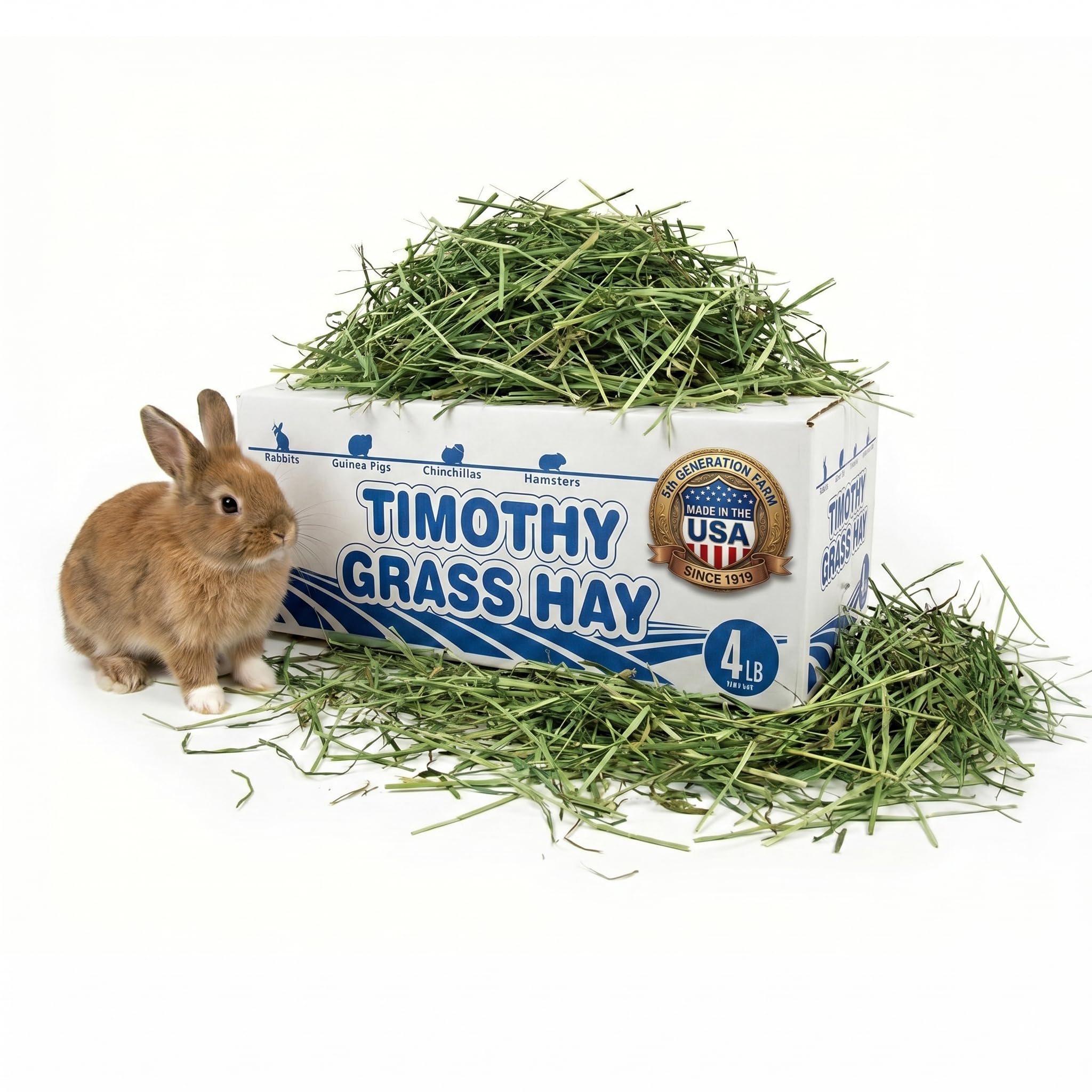
High Desert positions this 2nd cutting timothy hay specifically for rabbits and guinea pigs that turn up their noses at coarse, stem-heavy first-cut hay. The soft, leafy texture — a balanced mix of tender blades and thin stems — mimics what a rabbit would naturally choose to graze in a meadow. The four-pound box is hand-packed in a breathable carton that preserves that sweet, cut-grass smell, which is the single biggest cue for a rabbit to begin eating.
Reviewers consistently call out the minimal dust and dirt content compared to mass-market grocery-store hay; the hay arrives mostly green and fragrant with very few of the thick, woody stalks that get left in the bottom of the cage. The hand-packed process means each box is filled from a controlled batch, reducing the variability that plagues larger brands. Owners of notoriously picky rabbits report that this is one of the few hays their pets will empty a hay feeder of overnight.
The trade-off is occasional batch inconsistency — a minority of customers have received boxes that are drier and more stemmy than usual, suggesting that quality control can vary between harvests. Buying the larger box and storing it in a cool, dark pantry helps flatten out those marginal batches. For daily feeding of a soft-hay lover, the texture-to-waste ratio here is hard to beat.
Why we love it
- Soft, leafy 2nd cut texture rabbits eagerly graze
- Low dust and minimal stem waste compared to grocery-store hay
- Hand-packed in breathable carton for freshness
Good to know
- Occasional batch inconsistency in stem-to-leaf ratio
- Four-pound box feeds one rabbit for about 2–3 weeks
3. Oxbow Harvest Stacks Timothy with Carrots

Oxbow reimagines loose hay as pressed, stackable discs — each one about two inches tall and four and a half inches wide — that drastically reduce the scatter and waste of traditional bagged hay. The timothy hay is bound with a dried carrot center, adding a natural sweetness that owners of convalescing or finicky rabbits use to encourage eating. Because the discs are compact, they fit neatly into small-space cages, travel carriers, and enrichment toys without trailing hay all over the floor.
Customers consistently praise the design for cutting down on the daily mess: instead of a pile of stems that get pushed out of the cage, the rabbit chews through the disc, leaving only a small ring of crumbs. The carrot inclusion is small enough to avoid calcium overload but flavorful enough to tempt a rabbit who has lost interest in plain hay. Several reviewers used these stacks to successfully switch a rabbit from a pellet-heavy diet back to a hay-centric one.
The biggest drawback is cost-per-ounce relative to loose hay; a 35-ounce bag covers about a week for one rabbit if stacks are the primary hay source. Many owners use them as a supplementary treat or enrichment item alongside a cheaper bulk loose hay. The discs can also crumble if dropped, but the pieces remain edible. If your rabbit needs enticement or you value a clean cage, this is the smartest design on the market.
Why we love it
- Pressed disc format cuts loose-hay mess by over half
- Dried carrot core entices picky or sick rabbits to eat
- Space-saving design fits travel carriers and small cages
Good to know
- High cost-per-ounce if used as sole daily hay source
- Discs can crumble when tossed by playful rabbits
4. Kaytee Timothy Hearty Hay

Kaytee’s Hearty Hay line is formulated as a first-cut timothy product, meaning it prioritizes long, crunchy stems over soft leaves. For rabbits that love to chew and need consistent dental wear, this texture keeps them grinding for hours. The 48-ounce bag is widely available and sits at the entry-level price point for timothy hay, making it the go-to for multi-pet households or owners on a strict budget who still want a recognizable brand with decent quality control.
Customer feedback highlights the hay’s consistent crunch and fresh smell, with many owners reporting that their rabbits empty the hay bin faster than with bagged mixes from big-box pet stores. The Kaytee brand has distribution scale that means most bags on shelves are relatively fresh, with fewer incidents of yellowed or expired product than smaller artisanal brands might have during supply gaps. The “Hearty Hay” moniker is literal — this is stem-forward hay designed for aggressive chewers.
The main limitations are color and texture variability: some bags arrive with a noticeable amount of brown or tan stems, which less hungry rabbits may pull out and leave in a pile. The first-cut profile means less palatability for rabbits accustomed to soft, green second-cut hay. For owners with a rabbit that isn’t picky about stem-to-leaf ratio, this is the most economical path to daily hay — but watch for bags that look more brown than green before committing to stock up.
Why we love it
- Crunchy first-cut texture promotes dental health
- Economical per-ounce price for daily heavy feeders
- Widely available with consistent quality at scale
Good to know
- Occasional brown stems may be rejected by picky rabbits
- Not the soft, leafy texture picky eaters prefer
5. Sherwood Pet Health Adult Rabbit Food Timothy/Alfalfa Blend

Sherwood’s formula takes a fundamentally different approach: rather than loose hay, this is a pelleted food built on a timothy and alfalfa hay base, stripped of grains and soy. The pellet form means every bite delivers consistent nutrition, eliminating selective feeding where a rabbit picks out sugary pieces and leaves the hay. The inclusion of alfalfa boosts calorie density and calcium, making this an appropriate option for underweight rabbits, growing juveniles, or seniors needing weight maintenance support.
Reviews consistently note that Sherwood pellets smell noticeably fresh compared to the stale, dusty odor of mass-market pellet blends. The hay-based formula is designed to be fed free-choice alongside unlimited loose hay, not as a replacement. Owners report softer fur and more consistent stool quality after switching, attributing the improvement to the absence of soybean hulls and rice hulls that pad out cheaper pellet formulas. The small-bag format (4.5 lbs) encourages fresh rotation.
The alfalfa content makes this unsuitable for adult rabbits prone to calcium sludge or bladder stones — those animals need a straight timothy pellet instead. The price per pound is steep, reflecting the whole-ingredient sourcing and small-batch production. This is not a budget daily food; it’s a targeted nutritional tool for rabbits that need extra calories or a grain-free digestive reset while still getting their primary roughage from loose hay.
Why we love it
- Grain- and soy-free pellet based on real hay ingredients
- Alfalfa content aids weight gain for underweight rabbits
- Fresh, green aroma outperforms stale mass-market pellets
Good to know
- Not a complete hay replacement; must feed with loose hay
- Alfalfa blend too rich for rabbits with calcium sensitivity
FAQ
Why does my rabbit eat around the stems and leave only the leaves?
Can hay cubes replace loose hay entirely?
How can I tell if a bag of hay has gone bad before opening it?
Final Thoughts: The Verdict
For most gardeners, the best rabbit hay winner is the High Desert 2nd Cutting Timothy Hay because its soft, leafy texture satisfies picky eaters while keeping waste extremely low. If you want less mess and easier storage, grab the Small Pet Select Straight Timothy Cubes. And for a budget-friendly daily crunch that keeps teeth filed down, nothing beats the Kaytee Timothy Hearty Hay.