
A dog that inhales dinner in twelve seconds and then stares at you for the next hour isn’t bored — that dog is under-challenged. Standard fetch and squeaky plush toys provide a burst of dopamine and nothing else, leaving your pup’s problem-solving engine idle. The shift from passive amusement to active enrichment is the single most impactful change you can make for your dog’s daily happiness, and the right puzzle delivers measurable mental fatigue that a tennis ball simply cannot.
I’m Mo Mahin — the founder and writer behind Furric. I’ve spent years analyzing dog product data, studying canine enrichment research, and comparing the material composition, difficulty progression, and safety engineering of hundreds of interactive toys to identify which designs actually hold up to real-world pawing and gnawing.
Whether your dog is a treat-obsessed genius who solves Level 3 puzzles in under a minute or a reactive chewer who needs a durable challenge, this guide breaks down the mechanics, safety considerations, and replay value of the five most compelling options to help you find the best rated interactive dog toys for your specific pup’s needs.
How To Choose The Best Rated Interactive Dog Toys
Interactive dog toys vary wildly in construction, mental demand, and physical interaction style. Selecting the right one depends on matching the toy’s mechanics to your dog’s size, chewing style, and independent play threshold. Here are the three core factors that separate a toy your dog will master in one session from one that provides weeks of challenge.
Difficulty Progression and Replay Value
Flat puzzles with a single action — flipping a flap or sliding one tile — train a dog to solve them within minutes, after which the toy becomes a stationary treat bowl. The most effective interactive toys incorporate multiple steps: a sequence of actions that the dog must perform in order, or adjustable components that let you increase the challenge as your dog improves. Look for toys with at least two distinct mechanisms or a documented level system (Level 1 through Level 3 or 4). Toys that lack progression are one-session wonders.
Material Safety and Part Integrity
Every interactive toy introduces the risk of detachable pieces, especially as dogs gain confidence and become more forceful. Plush puzzles with removable squeakers or fabric pouches can be shredded by determined chewers, spilling stuffing and small parts. Rigid plastic puzzles often feature sliding tiles or doors that can be pried off. The safest toys use integrated, one-piece designs or food-grade materials (PP, ABS) with no BPA, PVC, or phthalates. If the toy has removable components, check whether they are large enough to avoid swallowing and whether replacement parts are sold separately.
Energy Type: Mental vs. Physical Exertion
Not all interactive toys tire a dog the same way. A motion-activated electronic ball that chases, spins, and bounces targets high prey drive and physical endurance — it burns physical energy but demands minimal cognitive work. A multi-step treat puzzle with sliders, wheels, and hidden compartments taxes the working memory and impulse control. For most owners, a mix works best: a physical toy for days when your dog needs to run off steam, and a mental puzzle for rainy afternoons or post-walk settling. If your dog finishes a 30-minute walk and still paces, start with a cognitive puzzle before reaching for the motion ball.
Quick Comparison
On smaller screens, swipe sideways to see the full table.
| Model | Category | Best For | Key Spec | Amazon |
|---|---|---|---|---|
| KADTC 3-Level Spin Puzzle | Puzzle Feeder | Fast eaters who need prolonged mental work | 3 levels, 4 play modes, up to 0.67 in treat size | Amazon |
| KADTC 2-Level Rolling Dispenser | Puzzle Feeder | Puppies and small dogs learning puzzle play | 2 levels, 14 oz center chamber, adjustable holes | Amazon |
| Cheerble Wicked Ball Rolly | Motion Ball | High-energy dogs needing physical chasing | 3 motion modes, 70 min battery, E-TPU material | Amazon |
| Outward Hound Nina Ottosson MultiPuzzle | Level 4 Puzzle | Expert dogs who mastered Level 3 puzzles | Level 4, 15-inch diameter, 1 cup capacity | Amazon |
| Outward Hound Hide-A-Squirrel | Plush Puzzle | Gentle players who enjoy hunting and digging | 12.6 x 7.1 in trunk, 6 squeaky squirrels | Amazon |
In‑Depth Reviews
1. KADTC 3-Level Spin Treat Dispenser Puzzle
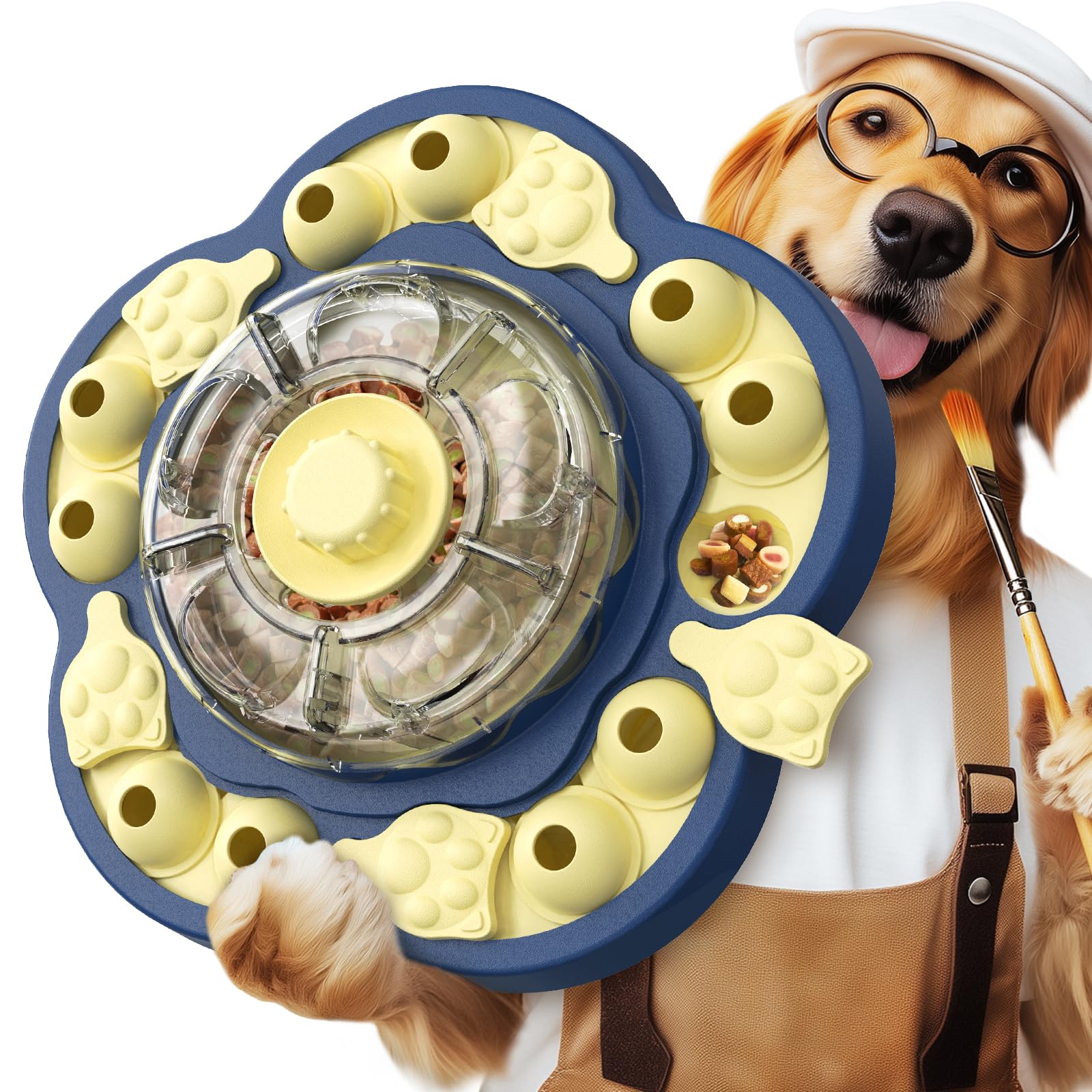
This vertical puzzle from KADTC uses a patented spindle design that drops treats into lower pods as the dog spins the center wheel, then requires sliding and sniffing to access rewards from multiple openings. The 3-level, 4-mode structure means a fast-eating Labrador can start on Level 1 with all flaps open and progress to a closed-flap configuration that takes six to seven minutes per meal — a massive improvement over the thirty-second bowl inhale. The 12.99-inch diameter and 3.15-inch height fit most dog sizes, though the manufacturer recommends 10 pounds and up for safe paw interaction.
Owners report that the spinning compartments operate smoothly without sticking or jamming, and the clear food pods remove for quick rinsing. The integrated main structure reduces loose game pieces during play, which directly addresses the part-detachment safety concern common in slider-based puzzles. The ABS plastic is free of BPA, PVC, and phthalates, and the bottom traction ring keeps the unit stable during enthusiastic pawing on hardwood or tile floors.
The primary trade-off involves the moving parts: if a dog is extremely forceful, some components can dislodge, creating a potential choking hazard, so supervision during early use is wise. The puzzle requires no assembly out of the box, and the three-level progression ensures that a dog who masters the simplest configuration still has two harder modes to grow into. For owners whose dogs finish food in under a minute and still seem wired, this puzzle delivers the mental fatigue that shortens those post-meal pacing sessions.
Why we love it
- Genuine 3-level progression with four distinct play modes
- Spin-to-release design effectively slows eating from seconds to minutes
- Food-grade ABS with no BPA, PVC, or phthalates
Good to know
- Forceful dogs may dislodge moving parts — supervise initial play
- Best for dogs 10 pounds and up due to pod opening size
2. KADTC 2-Level Rolling Treat Dispenser
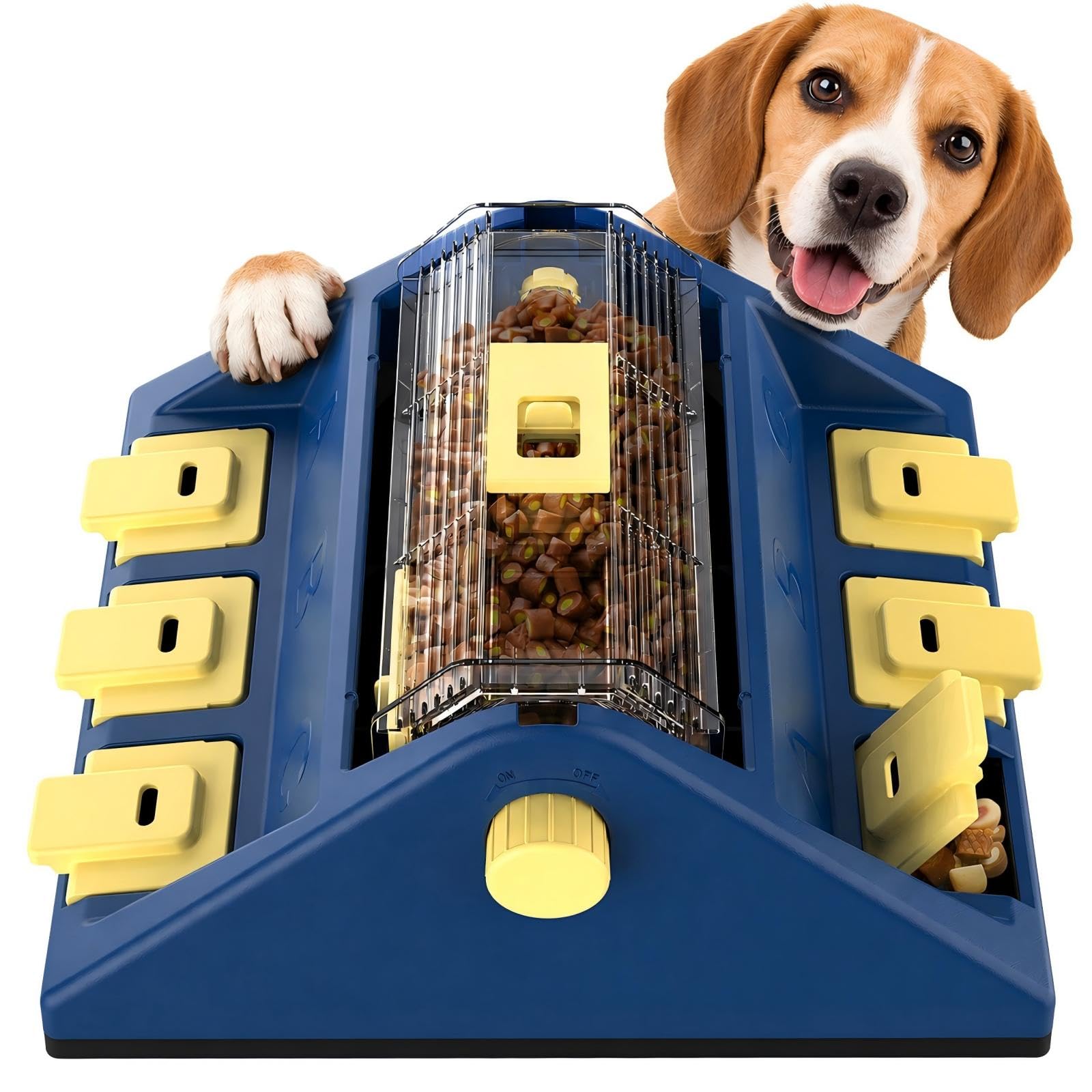
Where many entry-level puzzle feeders offer a single action — flip a door, eat a kibble — this KADTC unit introduces a genuine two-stage challenge. The first level features six flip-open treat boxes that deliver immediate gratification, building confidence in puppies or first-time puzzle users. The second level introduces a rotating center cylinder that drops food into side reward doors, requiring the dog to paw or nose the wheel in a specific direction. The 14-ounce center chamber and adjustable dispensing holes allow the owner to fine-tune difficulty: more holes for easier play, fewer holes for a slower, more demanding meal.
The integrated unit design minimizes loose pieces, and the food-grade polypropylene construction is free of BPA, PVC, and phthalates. Owners of 12-pound dogs report that the wheel turns smoothly without overspinning, and dogs who lacked paw strength learned to push the cylinder with their nose instead. The 11.89 x 10.47-inch footprint fits comfortably in a standard crate or kitchen corner, and the unit is water-resistant enough for outdoor use on a dry patio.
The lack of suction feet means the puzzle can slide on smooth floors during enthusiastic play — a minor fix involving a non-slip mat underneath. The 2-level system may not challenge a seasoned puzzle dog who has already mastered Level 3 or 4 puzzles, but for puppies, small breeds, or dogs new to interactive feeding, the progression from quick-win flaps to the rotating cylinder provides a satisfying learning curve that keeps them engaged through multiple meals.
Why we love it
- Two distinct challenge levels prevent one-session mastery
- 14-ounce capacity with adjustable dispensing holes for kibble control
- Integrated design reduces removable pieces compared to slider puzzles
Good to know
- Tends to slide on bare floors without a mat underneath
- Best suited for small to medium dogs new to puzzle play
3. Cheerble Wicked Ball Rolly
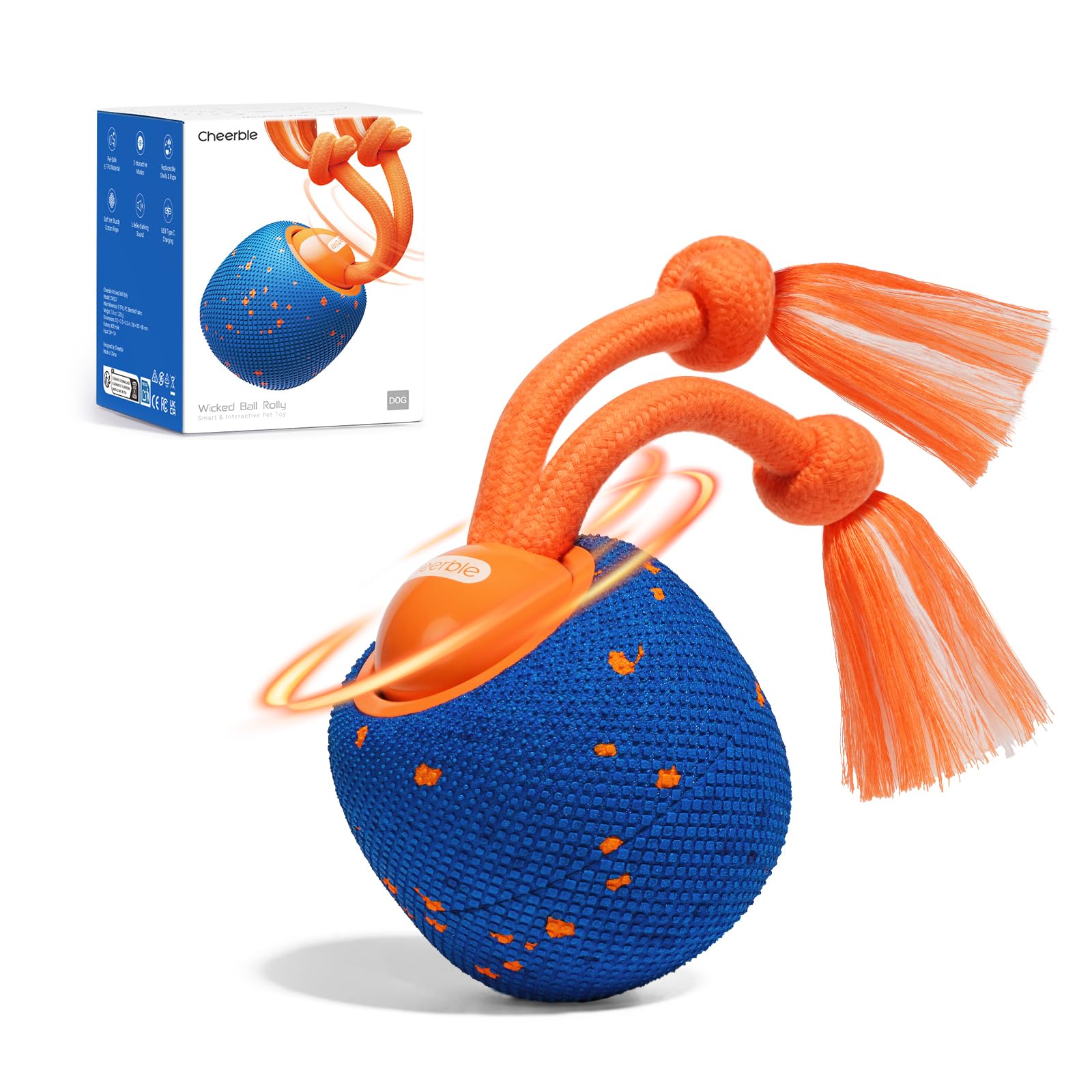
This electronic interactive ball shifts the play paradigm from stationary puzzle-solving to active chase-and-pounce. The 3.14-inch sphere uses three motion modes — Hybrid, Spin, and Roam — to create wide, unpredictable movements that mimic prey behavior, engaging a dog’s natural stalking drive. The E-TPU material is significantly lighter and softer than standard rubber or hard plastic balls, reducing tooth damage risk and floor noise during indoor play. The replaceable shell and rope system extends the toy’s life: when the rope frays or the outer color fades, you swap the shell rather than discarding the entire unit.
The automatic 10-minute play and 30-minute rest cycle prevents overstimulation, and the ball wakes when nudged, resuming play without the owner needing to press a button. The Type-C rechargeable battery delivers 70 minutes of Hybrid Mode runtime, 60 minutes in Roam Mode, and 45 minutes in Spin Mode, with a 96 to 102-minute recharge window. Owners of Great Danes and German Shepherds report high engagement levels, with the rope attachment providing a carrying handle that satisfies mouthing instincts.
The battery runtime of roughly one hour per full charge means that a high-energy dog with a long play session will drain the ball before tiring out — some owners report needing two units for continuous play. The rope attachment is not chew-proof; aggressive chewers can destroy it within two days, leaving the ball immobile but still vibrating. The Spin Mode also produces a faint barking sound that some owners find annoying on hard floors. This is a physical-exertion tool, not a cognitive puzzle, so it should complement rather than replace treat-dispensing puzzles in your dog’s enrichment rotation.
Why we love it
- Three dynamic motion modes mimic real prey for instinctive chasing
- Replaceable shell and rope reduce long-term replacement costs
- Soft E-TPU material protects teeth and minimizes floor noise
Good to know
- Rope attachment is vulnerable to determined chewers
- One-hour battery may require two units for extended play
4. Outward Hound Nina Ottosson MultiPuzzle

Nina Ottosson’s MultiPuzzle is the highest-rated commercially available dog puzzle on the market, designated Level 4 Expert in the brand’s progressive difficulty system. The 15-inch diameter board contains three distinct mechanisms: sliding tiles that reveal hidden compartments, a spinning wheel that rotates treats into reach, and slider bars that require lateral manipulation. The dog must perform these actions in sequence, engaging working memory and impulse control simultaneously. The puzzle holds up to one cup of kibble or treats, and the difficulty can be adjusted using the included tips and tricks guide.
The plastic construction has withstood years of daily use in many households — owners report using the same unit since 2021 without cracking. The tiles are stiffer than lower-level puzzles, which slows down dogs who have breezed through Levels 1 to 3. The flat design makes it easy to integrate into mealtime: fill the compartments, set the board down, and let the dog work through each mechanism. The 1.8-pound weight provides enough bottom mass to stay stable on carpet, though it can slide on hard floors.
The white bone pieces and red lids are detachable and can be chewed or lost by determined dogs — several owners report missing pieces within days. The top-row latches are stiff out of the box, sometimes causing kibble to fly out when the dog manipulates them, and the large 15-inch diameter may be difficult for very small dogs to reach across. Cleaning requires hand-washing each removable piece individually, which is more labor-intensive than integrated designs. The puzzle works best for treat-oriented dogs who have already mastered Level 3 and need a genuine cognitive step up, but the loose pieces demand supervision with aggressive chewers.
Why we love it
- Genuine Level 4 challenge with three distinct mechanical actions
- Long-lasting build quality — many units survive years of daily play
- Adjustable difficulty with included tips and tricks guide
Good to know
- Detachable bone pieces and lids are chewable and losable
- Stiff top-row latches may frustrate smaller or less experienced dogs
5. Outward Hound Hide-A-Squirrel

This 2-in-1 plush puzzle combines a soft tree trunk with six squeaky squirrels that the dog must sniff out, dig free, and tug from their pockets. The X-Large trunk measures 12.6 x 7.1 inches, holding all six squirrels in individual compartments that activate the dog’s natural hunting instincts. Unlike rigid plastic puzzles, the plush material allows for carrying, cuddling, and gentle play that transitions from puzzle-solving to comfort object. The squirrels are sold separately as replacement packs, which is crucial because the squeakers and fabric tails are the first components to fail under regular use.
Owners of puppies and small dogs report this as a durable option for gentle play — a 5-pound Morkie and a 7-month-old sharp-toothed puppy both engaged with the toy without destroying it. The 4.8-ounce weight makes it easy for small dogs to carry the trunk around, and the squeakers provide immediate audio feedback that reinforces the hunting behavior. For dogs with strong prey drive, the hide-and-seek mechanics provide a structured outlet that prevents them from digging into couch cushions or under beds.
The durability ceiling is low for aggressive chewers. Customer reviews consistently note that squirrels lose tails and hair within minutes of first play, and squeakers typically fail within three months of daily use. The polyester plush material is not water-resistant and cannot be machine washed without losing shape, so outdoor use is not recommended. The toy is best suited for gentle players who enjoy the mental game of locating and retrieving prey-like objects rather than shredding them, and the affordable replacement squirrel packs make it economical to refresh the toy when squeakers wear out.
Why we love it
- Engages natural prey drive through hide-and-seek mechanics
- Replaceable squirrel packs extend toy life at low cost
- Soft plush construction allows for cuddling and carrying between play sessions
Good to know
- Not durable for aggressive chewers — tails and squeakers fail quickly
- Not machine washable and not water-resistant
FAQ
How long does it take a dog to master an interactive puzzle?
Are electronic motion balls safe for dogs that chew aggressively?
Can interactive dog toys replace daily walks?
How do I clean a puzzle slow feeder that has dried kibble stuck in the crevices?
What is the best way to introduce a shy or anxious dog to puzzle toys?
Final Thoughts: The Verdict
For most dogs who need a meal-time challenge that builds with their skills, the rated interactive dog toys winner is the KADTC 3-Level Spin Treat Dispenser Puzzle because its three-level progression and integrated design prevent one-session boredom while minimizing choking risks from loose pieces. If your dog is a fast eater who needs to slow down from seconds to minutes per meal, the KADTC 2-Level Rolling Dispenser offers the best value with adjustable dispensing holes. For high-energy dogs who need to chase and pounce indoors, the Cheerble Wicked Ball Rolly provides unpredictable physical play that no stationary puzzle can match.