
A cat vomiting after every meal or scratching until their coat looks ragged isn’t “normal shedding” — it’s a cry for a formula that respects their biology. Dry kibble loaded with corn and unnamed byproducts triggers inflammation in sensitive guts, while wet pates with a single novel protein source can flip the switch from constant mess to consistent purrs. The difference between a stressed-out feline and a glossy-coated companion often comes down to what lands in the bowl, not how much you’re feeding.
I’m Mo Mahin — the founder and writer behind Furric. I’ve spent years cross-referencing feline nutritional science with AAFCO nutrient profiles, analyzing ingredient density across hundreds of formulas, and weighing owner-reported stool quality against label claims to identify the patterns that genuinely improve cat health.
Whether your cat battles dry skin, loose stools, or turns its nose up at everything, the right mix of prebiotics, moisture content, and high-quality animal protein makes all the difference. This guide breaks down the best recommended cat food across wet and dry formats to match your cat’s specific needs.
How To Choose The Best Recommended Cat Food
Selecting a cat food that supports digestion, coat health, and long-term vitality requires more than trusting a familiar brand name. The three factors below are the most common points where formula quality separates a mediocre meal from a truly beneficial diet.
Protein Source and Ingredient Transparency
Cats are obligate carnivores, meaning their digestive systems evolved to extract nutrients from animal tissue, not grains. Look for formulas where the first ingredient is a named animal protein — “chicken,” “rabbit,” “salmon” — rather than “meat meal” or “poultry by-product.” The specific source matters for cats with allergies; novel proteins like rabbit or venison reduce the chance of triggering an immune response.
Prebiotic Fiber and Digestive Support
A sensitive stomach benefits from a precise blend of prebiotics like chicory root or dried fermentation products. These fibers feed beneficial gut bacteria, leading to firmer stools and less gas. Avoid formulas that rely solely on cellulose or generic plant fiber, which can pass through undigested and cause loose stools.
Moisture Content and Texture Preference
Wet food naturally contains 75-85% moisture, helping cats that don’t drink enough water maintain kidney and urinary tract health. Dry kibble offers convenience and dental benefits through crunchy texture, but can be dehydrating if a cat doesn’t drink enough. Many owners find success with a wet food base and dry kibble as a topper or separate meal.
Quick Comparison
On smaller screens, swipe sideways to see the full table.
| Model | Category | Best For | Key Spec | Amazon |
|---|---|---|---|---|
| ORIJEN Guardian 8 | Premium Dry Kibble | High-Protein, ancestral-style nutrition | 90% animal ingredients; freeze-dried liver coating | Amazon |
| Instinct Minced Rabbit | Premium Wet Pate | Novel protein diets; grain-sensitive cats | Farm-raised rabbit; no carrageenan | Amazon |
| Purina ONE Wet Variety | Mid-Range Wet | Hydration and variety for picky eaters | Grain-free pate; three protein recipes | Amazon |
| Royal Canin Digestive Care | Veterinary Diet Dry | Sensitive stomachs with stool quality issues | Ring-shaped kibble; prebiotic + fiber blend | Amazon |
| Purina Cat Chow Gentle | Budget Dry Kibble | Budget-friendly sensitive stomach management | Omega-6 fatty acids; farm-raised turkey | Amazon |
In‑Depth Reviews
1. ORIJEN Guardian 8 Dry Cat Food
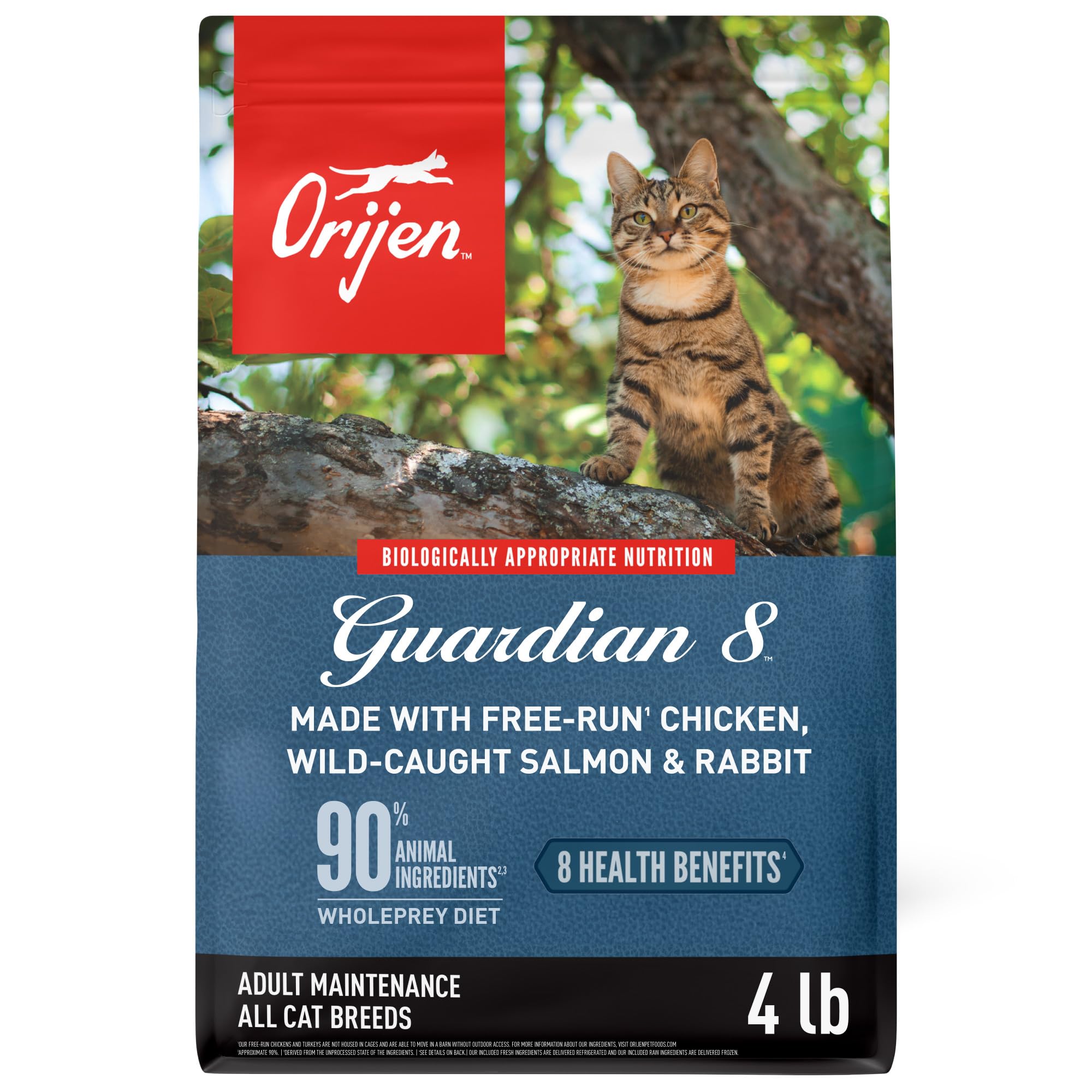
ORIJEN starts with fresh or raw chicken, wild-caught salmon, and rabbit — three distinct animal proteins that deliver a complete amino acid profile without relying on plant starches. The 90% animal ingredient content mirrors what a cat would eat in the wild, supporting everything from muscle tone to brain function through organ and bone inclusions that boost taurine and omega-3 levels.
The freeze-dried liver coating adds a burst of raw flavor that even picky felines seem to crave, transforming the kibble from bland pellets into a more instinctually appealing meal. The disc-shaped kibble measures roughly 10.5×3.5mm, making it easy for adult cats to chew without being so small it accelerates gulping and regurgitation.
While this formula is marketed for “all life stages” in terms of digestibility, the guaranteed analysis skews high-protein (over 40% crude protein), which may be excessive for sedentary indoor cats prone to weight gain. Transition slowly over 7–10 days to allow the gut microbiome to adjust to the dense animal content.
Why we love it
- First five ingredients are fresh or raw meat, not meals
- WholePrey inclusion means organ and bone for natural nutrient balance
- Freeze-dried coating drives acceptance even in finicky eaters
Good to know
- Very high protein can cause loose stools if introduced too fast
- Some low-activity cats may gain weight on the calorie density
2. Instinct Minced Natural Wet Cat Food Rabbit

Instinct’s minced rabbit wet food offers a novel protein option that sidesteps the most common feline allergens — chicken and beef. Farm-raised rabbit appears as the primary ingredient, supported by whole food inclusions like carrots, spinach, and cranberries suspended in a savory broth that increases overall moisture intake.
The minced texture lands somewhere between a pate and a chunked stew, making it approachable for cats with dental sensitivities while still providing visible meat pieces that satisfy a cat’s instinctual preference for varied mouthfeel. Each cup is easy to open and portion-controlled at 3.5 ounces, reducing waste compared to larger cans that sit in the fridge for days.
This formula is completely grain-free, potato-free, and carrageenan-free, which matters for cats with confirmed food sensitivities. However, rabbit is a lean protein, so this food is best used as one component of a varied rotation rather than a sole lifelong diet unless your cat has severe allergies that require a single-protein regimen.
Why we love it
- Rabbit is a true novel protein rarely found in standard formulas
- No carrageenan, grain, or potato — eliminates common trigger ingredients
- Convenient cup format heats up quickly and stays fresh
Good to know
- Rabbit protein is lower in fat; may need supplementation for high-energy kittens
- Some cats find the minced texture less appealing than traditional pate
3. Purina ONE Grain Free Wet Cat Food Variety Pack

Purina ONE delivers three grain-free pate recipes — beef, chicken, and ocean whitefish — giving owners a rotation-ready wet food option without committing to a single protein that a cat may eventually reject. The pate texture is smooth and tender, easy to mash for cats with missing teeth or those transitioning from soft to solid food.
Real meat or fish is the first ingredient in each recipe, and the moisture-rich format supports hydration in cats that are notoriously bad water drinkers. Added vitamins, minerals, and antioxidants back the immune system, while omega fatty acids support skin and coat health — a useful combo for cats in all life stages, from kitten to senior.
The pull-top cans are convenient but produce more packaging waste than bulk pouches or cups. Some cats may be sensitive to the variety of proteins, so it’s wise to introduce each flavor slowly and watch for any digestive upset before cycling through the pack.
Why we love it
- Three distinct proteins reduce flavor fatigue and encourage eating
- Grain-free with no artificial colors, flavors, or preservatives
- Moisture-rich pate supports kidney and urinary health
Good to know
- Multiple proteins in one pack can complicate allergy diagnosis
- Pate texture may be too soft for cats who prefer chunky food
4. Royal Canin Feline Digestive Care Dry Cat Food

Royal Canin designed this formula specifically for adult cats with sensitive stomachs, relying on an optimal blend of prebiotics and dietary fiber that has been internally tested to achieve over 95% healthy stool quality after 10 days. That precision matters for owners who are tired of cleaning up loose, malodorous stool.
The ring-shaped kibble is a deliberate engineering choice — its unique geometry encourages slower eating compared to standard round kibble, which reduces the speed of ingestion and helps prevent regurgitation and vomiting in cats that tend to inhale their food. Highly digestible protein sources also lower the fermentation load in the colon, producing less gas and firmer stools.
This formula pairs perfectly with Royal Canin’s Digestive Care wet food for mixed feeding, allowing owners to boost moisture while keeping the digestive support consistent. The main trade-off is the price per pound, which sits at a premium tier compared to basic grocery brands, but the targeted relief usually offsets the cost for cats with chronic digestive issues.
Why we love it
- Clinical trial shows measurable stool quality improvement in 10 days
- Ring shape physically slows eating speed
- Prebiotic blend targets gut microbiome, not just symptom masking
Good to know
- Higher price per pound than standard dry kibble
- Not suitable for cats without confirmed digestive sensitivity
5. Purina Cat Chow Gentle Sensitive Stomach Dry Cat Food
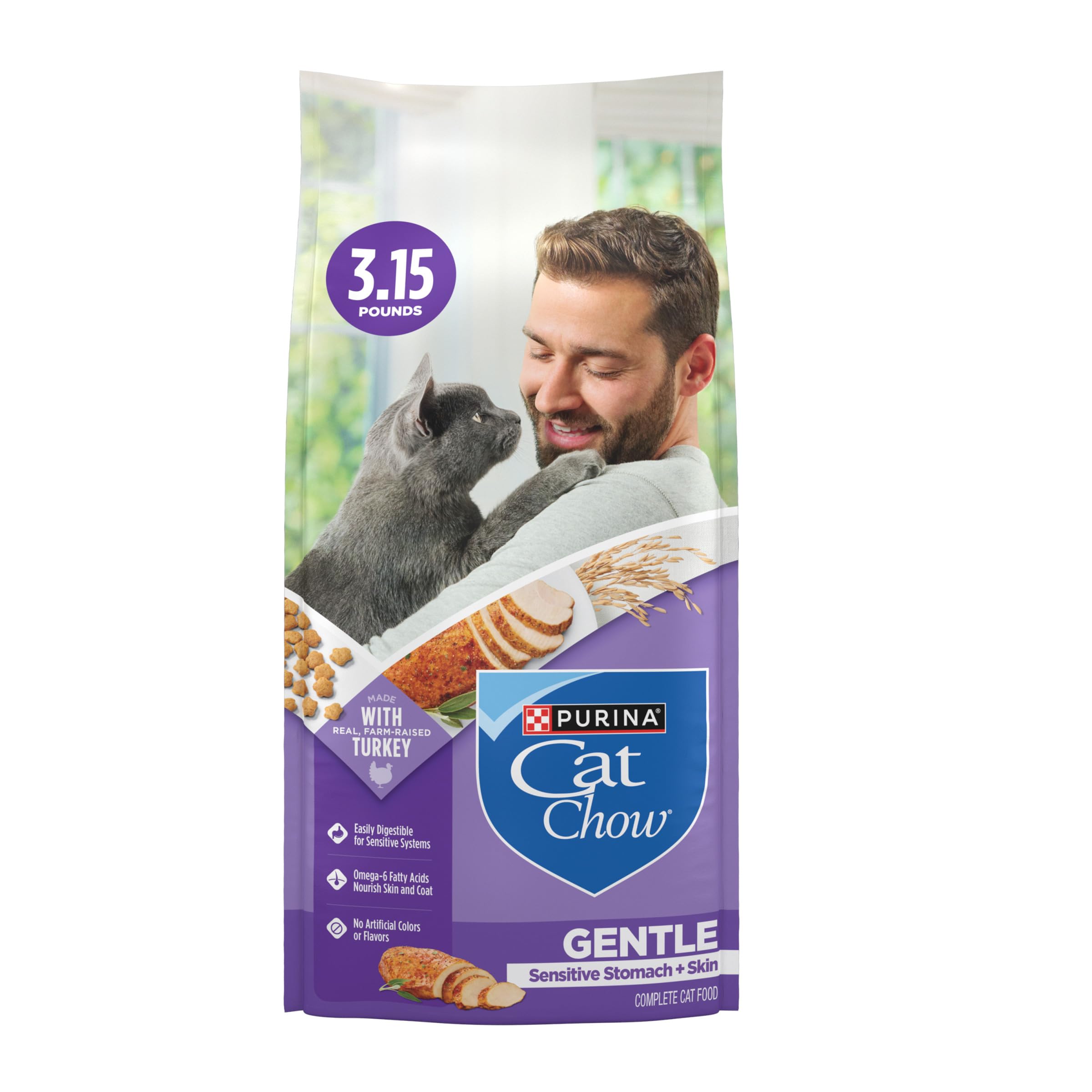
Purina Cat Chow Gentle uses real farm-raised turkey as its primary protein, offering a single-source animal ingredient that reduces the risk of digestive upset compared to multi-protein blends. Omega-6 fatty acids are added to support skin barrier function, which matters for cats that develop dandruff or excessive itching from food sensitivities.
The formula includes 29 essential vitamins and minerals while explicitly avoiding artificial colors and flavors. The crunchy kibble texture provides mild dental abrasion, though it won’t replace regular tooth brushing for tartar control. The four-bag pack keeps food fresher longer if you portion it out, though the bags are not resealable — plan to transfer the kibble into an airtight container after opening.
This is a budget-friendly entry point into sensitive stomach management, but the guaranteed analysis shows a slightly lower crude protein percentage than premium competitors. For cats with moderate sensitivity — occasional soft stool, some dry skin — this formula often delivers noticeable improvement without the higher price tag of veterinary diets.
Why we love it
- Single farm-raised turkey source reduces ingredient confusion
- Contains prebiotic fiber for gentle digestive support
- No artificial flavors or colors despite entry-level price
Good to know
- Protein content is lower than high-end grain-free formulas
- Non-resealable bags require an airtight container for freshness
FAQ
How do I know if my cat needs a grain-free diet?
How much wet food should I mix with dry kibble?
Is “all life stages” food safe for kittens?
Final Thoughts: The Verdict
For most cats with sensitive stomachs, the best recommended cat food winner is the Royal Canin Digestive Care because its targeted prebiotic blend and slow-eating kibble design directly address stool quality and regurgitation — two of the most common owner complaints. If you want a dense, ancestral-style protein profile that mimics a natural feline diet, grab the ORIJEN Guardian 8. And for owners managing suspected food allergies, nothing beats the novel protein safety of the Instinct Minced Rabbit.