
A chronic kidney disease (CKD) diagnosis demands an immediate shift in your cat’s nutrition. The level of phosphorus, protein source quality, and hydration content in their bowl become daily decisions that directly affect renal workload and quality of life. Choosing the wrong food accelerates disease progression, while the right one can add comfortable, healthy years.
I’m Mo Mahin — the founder and writer behind Furric. I have spent countless hours analyzing owner feedback, veterinary nutritional guidelines, and the specific phosphorus-to-calorie ratios across the major therapeutic cat food brands to deliver a clear, data-driven comparison.
This guide breaks down the specific formulas, protein management strategies, and palatability differences among the top veterinary diets to help you confidently select the right renal diet for cats for your feline’s specific stage of kidney disease.
How To Choose The Best Renal Diet For Cats
Selecting a kidney-support diet is a medical decision, not just a grocery choice. Price matters less than the specific restricted-phosphorus profile and protein source. Here are the three non-negotiable criteria for evaluating any therapeutic renal formula.
Phosphorus and Protein Balance
The primary goal of a renal diet is to reduce phosphorus intake because high blood phosphorus accelerates CKD. Look for a guaranteed analysis with phosphorus levels below 0.6% on a dry matter basis for moderate-stage disease, and below 0.3% for advanced stages. Protein must be high-quality but reduced so the kidneys process fewer nitrogenous waste products, which means the protein source must be highly bioavailable—such as real chicken, chicken meal, or egg—to maintain muscle mass with less renal strain.
Wet Food vs. Dry Kibble Hydration
Dehydration stresses the kidneys. A wet food diet or a mix of wet and dry is almost always preferred for cats with CKD because it provides a significant portion of daily water intake directly from the food. Canned formulas typically offer around 78% moisture, which supports renal blood flow and helps flush toxins. Dry kibble alone is rarely adequate for hydration-dependent kidney support, so a wet-based or combo-feeding strategy is the standard recommendation.
Appetite Stimulation and Palatability
Cats with kidney disease often experience nausea and reduced appetite due to uremic toxins. The best diets include specific appetite trigger technologies, such as Hill’s Enhanced Appetite Trigger (E.A.T.), or come in highly palatable forms like chunks in gravy or stews. If your cat refuses their food, intake drops, and the disease accelerates. Choosing a diet with strong palatability and multiple flavor options helps ensure consistent daily consumption.
Quick Comparison
On smaller screens, swipe sideways to see the full table.
| Model | Category | Best For | Key Spec | Amazon |
|---|---|---|---|---|
| Hill’s k/d Dry (Ocean Fish) | Dry Kibble | Advanced kidney protection + appetite | ActivBiome+ & E.A.T blend | Amazon |
| Blue Buffalo K+M Dry | Dry Kibble | Kidney + joint mobility combo | Glucosamine + chondroitin | Amazon |
| Hill’s k/d Wet Chicken Stew | Wet Food | Hydration + enticing stew texture | 2.9 oz cans, 24-pack | Amazon |
| Pro Plan NF Early Care Wet Pate | Wet Pate | Early-stage CKD management | Moderate protein, 5.5 oz cans | Amazon |
| Pro Plan NF Advanced Care Dry | Dry Kibble | Restricted phosphorus for adv. CKD | Omega-3s, 3.15 lb bag | Amazon |
| Royal Canin Urinary Care Wet | Wet Food | Urinary mineral regulation support | Regulates mineral balance | Amazon |
| Weruva Wx Phos Focused Wet | Wet Food | Ultra-low phosphorus entry-level | 50% less P than AAFCO min | Amazon |
In‑Depth Reviews
1. Hill’s Prescription Diet k/d Kidney Care Dry Cat Food, Ocean Fish, 4 lb. Bag

Hill’s k/d dry formula with Ocean Fish is clinically proven to improve and lengthen quality of life in cats with CKD, making it the most backed therapeutic option on this list. The proprietary ActivBiome+ Kidney Defense blend uses prebiotics to shift the gut microbiome toward metabolite profiles that protect kidney tissue. The kibble also includes Enhanced Appetite Trigger (E.A.T.) technology, which is critical because uremic nausea often kills a cat’s drive to eat.
This formula delivers more essential amino acids than the AAFCO minimum, supporting lean muscle maintenance even as total protein is restricted. The 4 lb. bag uses a dry-matter phosphorus level targeted for moderate to advanced kidney disease, making it a heavy-duty option for stage 2 or 3 CKD. The ocean fish flavor also provides a novel protein source that helps avoid food fatigue in cats used to chicken-based diets.
Owners consistently report improved litter box habits and a visible return of energy within the first two weeks of switching. The only drawback is the 4 lb. bag size—it disappears quickly for a multi-cat household, so bulk ordering is practical. This is the veterinarian-backed gold standard for a reason.
Why we love it
- Clinically proven to extend lifespan in CKD cats
- ActivBiome+ prebiotics target kidney protection via gut health
- Enhanced Appetite Trigger helps cats with nausea eat consistently
Good to know
- 4 lb. bag requires frequent reordering for multi-cat homes
- Requires a veterinary prescription for purchase
2. Blue Buffalo Natural Veterinary Diet K+M Kidney + Mobility Support Dry Cat Food, Chicken 7-Lb Bag
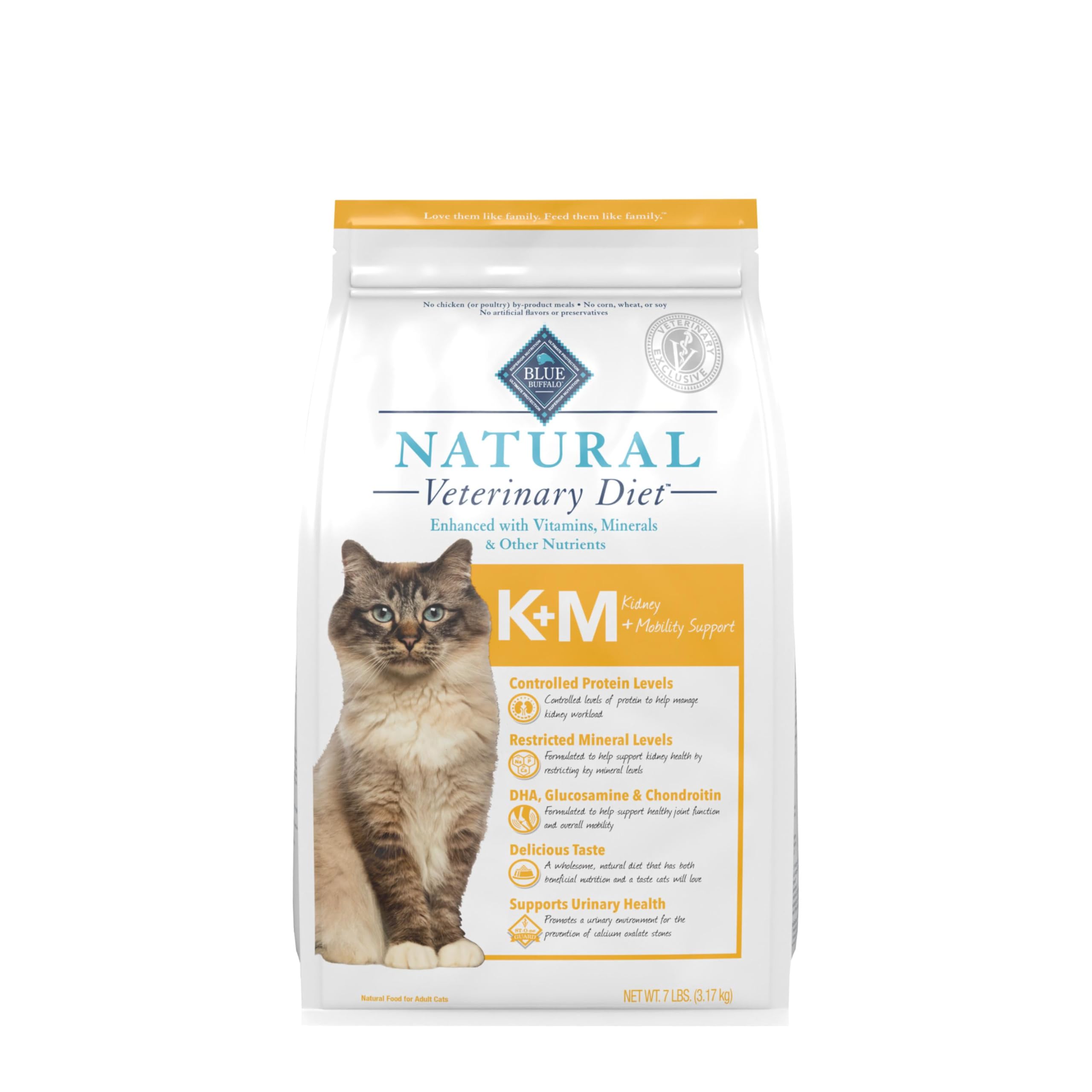
Blue Buffalo’s K+M formula stands out because it addresses a common comorbidity: chronic kidney disease often occurs in older cats who also suffer from arthritis. This dry food combines controlled levels of high-quality protein (starting with real chicken) to manage kidney workload with added glucosamine and chondroitin to support joint health and mobility. It is one of the few renal diets that actively targets both problems in a single formula.
The phosphorus and protein levels are calibrated for early to moderate kidney disease, making it a solid fit for stage 1 or early stage 2 cats. The bag is an impressive 7 lb., which is significantly larger than most veterinary diet kibble bags at this price tier, offering better cost-per-day value. It also avoids chicken by-product meals, corn, wheat, and soy, which reduces allergy risks and inflammatory triggers.
Owners of senior cats with creaky hips and borderline kidney values report that this food helps keep their cat active and eating well. The main consideration is that it is a veterinary diet, so a prescription from your veterinarian is required. If your cat has advanced kidney disease, you may need a stricter phosphorus profile than this provides.
Why we love it
- Dual kidney + joint support in one kibble for geriatric cats
- 7 lb. bag provides excellent value and fewer reorders
- Made without corn, wheat, soy, or by-product meals
Good to know
- Phosphorus restriction may not be tight enough for stage 3+ CKD
- Veterinary prescription required to purchase
3. Hill’s Prescription Diet k/d Kidney Care Wet Cat Food, Chicken & Vegetable Stew, 2.9 oz. Cans, 24-Pack

Hill’s adds the power of ActivBiome+ to a wet format in this Chicken & Vegetable Stew, creating a highly palatable, hydration-heavy kidney support food. The gravy and bite-sized chunks provide a texture that even finicky CKD cats find appealing, which directly addresses the anorexia that often complicates treatment. The 24-count case offers enough volume to try the stew without committing to a massive bulk purchase.
Each 2.9 oz. can delivers around 78% moisture, which is essential for maintaining renal blood flow and supporting toxin excretion in a cat that might not drink from a bowl frequently. Phosphorus and sodium are both clinically reduced to protect kidney function, and the formula provides more essential amino acids than the AAFCO minimum to help maintain muscle mass against the catabolic effects of CKD.
The stew consistency makes it an excellent topper for picky dry-food eaters or a standalone meal for cats on a full-wet diet. Owners report that cats who refused other renal foods will often eat this stew. The only catch is that 2.9 oz. is a small serving; a larger cat may need two cans per day, which increases the daily cost.
Why we love it
- High-moisture stew formulation combats dehydration in CKD cats
- Bite-sized chunks in gravy appeal to picky eaters with nausea
- ActivBiome+ prebiotics support kidney function via gut health
Good to know
- 2.9 oz. cans are small; large cats may need two cans per meal
- Serving cost is higher than dry kibble options
4. Pro Plan Veterinary Diets NF Kidney Function Early Care Feline Formula Adult Wet Cat Food Pate – (Pack of 24) 5.5 oz. Cans
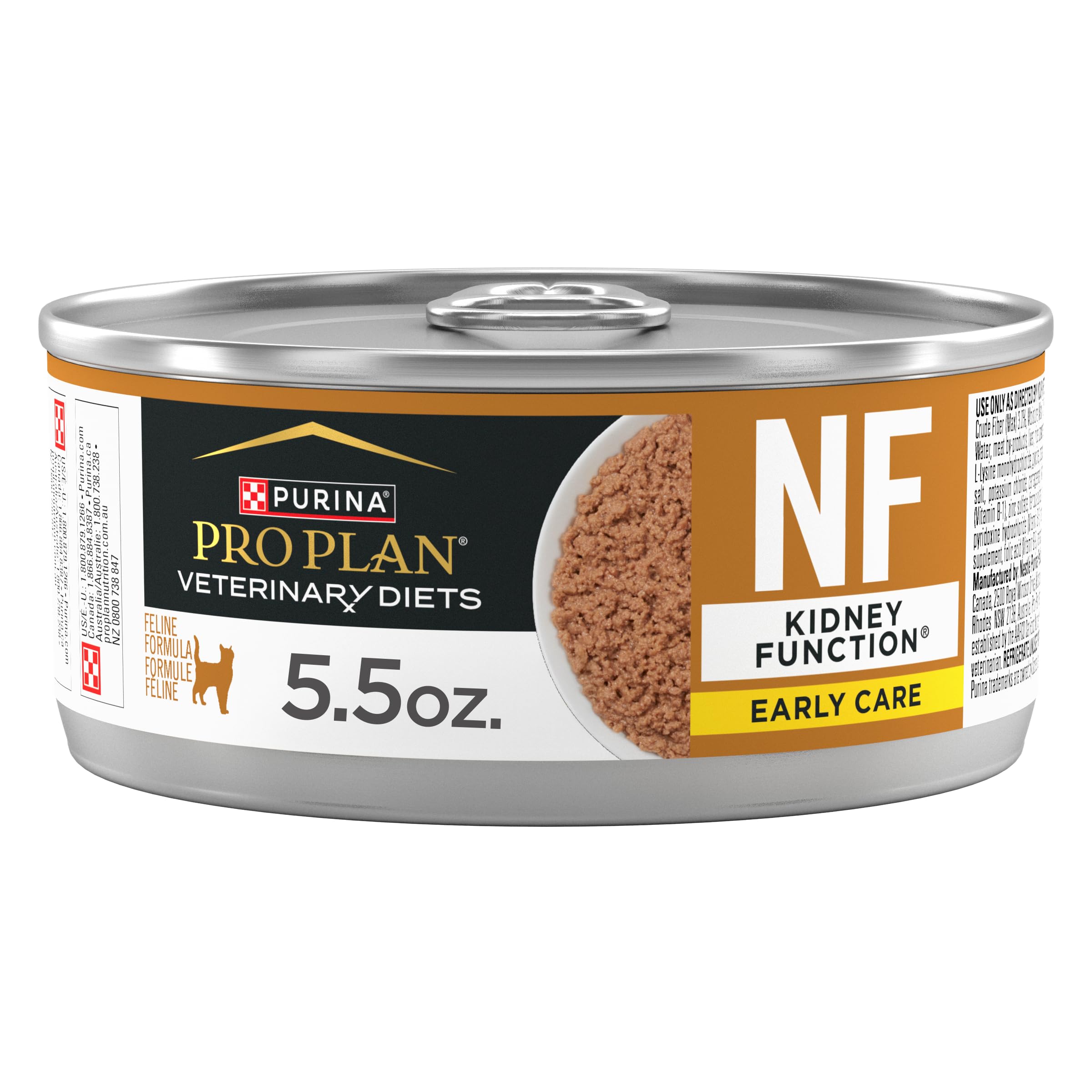
Purina Pro Plan’s NF Early Care formula is designed specifically for cats in the early stages of CKD, offering a moderate amount of high-quality protein rather than the severely restricted protein levels found in advanced-stage diets. This preserves muscle mass longer while still providing restricted phosphorus to slow disease progression. The 5.5 oz. can size is a major advantage—it provides a full meal in one can, reducing waste and the hassle of portion-prepping partial cans.
This pate includes omega-3 fatty acids (EPA and DHA), which have anti-inflammatory properties and are clinically associated with slower renal decline. Antioxidants help combat oxidative stress, and a prebiotic fiber nourishes the GI tract to reduce the nausea and diarrhea common in CKD cats. The ground texture is soft and easy to eat for cats with dental sensitivities or mouth ulcers from uremia.
Owner feedback frequently highlights that cats who are transitioning from a standard adult diet accept this pate more readily than some of the stricter advanced-stage renal formulas. Because it is an early-care diet, it is not appropriate for cats with stage 3 or 4 kidney disease who need tighter phosphorus control. This is a strategic choice for proactive management before the disease advances.
Why we love it
- 5.5 oz. cans provide a complete meal serving with less waste
- Moderate protein preserves muscle mass better than severe restriction
- Omega-3s and prebiotics offer dual anti-inflammatory and GI support
Good to know
- Not suitable for advanced-stage (stage 3+) CKD management
- Requires a veterinary prescription to purchase
5. Pro Plan Veterinary Diets Purina NF Kidney Function Advanced Care Feline Formula Dry Cat Food – 3.15 lb. Bag

Purina Pro Plan’s NF Advanced Care dry formula targets cats with more significant kidney function loss. The reduced level of high-quality protein paired with restricted phosphorus provides the tighter control that stage 2 or stage 3 CKD cats require. Each serving includes omega-3 fatty acids from EPA and DHA, which help reduce intrarenal inflammation and lower proteinuria, directly slowing the rate of kidney damage.
The kibble also contains a prebiotic fiber source to nourish a healthy GI tract, which is important because CKD cats often suffer from gastrointestinal upset due to uremic toxins. Antioxidants in the formula combat the oxidative stress that accelerates kidney tissue damage. The 3.15 lb. bag is small, but this is a common trade-off with restricted dry veterinary formulas to ensure freshness and nutrient stability.
Cats who are already eating dry food tend to transition to this kibble with minimal fuss, though picky eaters may still need a wet topper. Owners report positive changes in bloodwork, particularly reduced BUN and creatinine levels, within a few months of consistent use. The small bag size means you will reorder every 3–4 weeks for a single cat, so planning ahead is necessary.
Why we love it
- Tighter phosphorus restriction for mid-to-advanced stage CKD
- Omega-3 EPA and DHA target renal inflammation directly
- Prebiotic fiber improves GI tolerance in uremic cats
Good to know
- 3.15 lb. bag requires frequent reordering for a single cat
- Dry kibble alone may not provide enough hydration for CKD cats
6. Royal Canin Feline Care Nutrition Urinary Care Adult Thin Slices in Gravy Cat Food, 3 oz (Pack of 12)

Royal Canin’s Urinary Care is a non-prescription option that focuses on mineral balance rather than explicit phosphorus restriction for full CKD management. It is designed for healthy adult cats at risk of urinary crystal formation, but it can serve as a transitional or supportive food for cats with very early kidney concerns who also have a history of urinary issues. The thin slices in gravy provide strong palatability plus added hydration.
Each 3 oz. serving regulates the mineral balance (calcium, magnesium, phosphorus) in the urine, which helps prevent crystals and supports a healthy urine concentration. It is not a dedicated renal diet, so cats with confirmed diagnosis of stage 2 or higher CKD need a stricter formula like Hill’s k/d or Pro Plan NF. However, as a mixed-feeding complement to a dry urinary formula or as a high-moisture treat, it provides value.
Owners report that even extremely picky cats eat the thin slices enthusiastically, which makes it useful for coaxing a cat with a decreased appetite to eat something. It is not a substitute for a veterinary therapeutic renal diet, but it fills a niche for early preventative care or for cats whose CKD is very well-controlled with other management.
Why we love it
- Regulates urinary mineral balance for crystal prevention
- Thin slices in gravy format encourages hydration
- Extremely palatable for picky or nauseous cats
Good to know
- Not a phosphorus-restricted therapeutic renal diet
- Suitable only for very early or preventative care, not active CKD
7. Weruva Wx Phos Focused, Chicken Formulas Variety Pack, 3oz Can (Pack of 12)
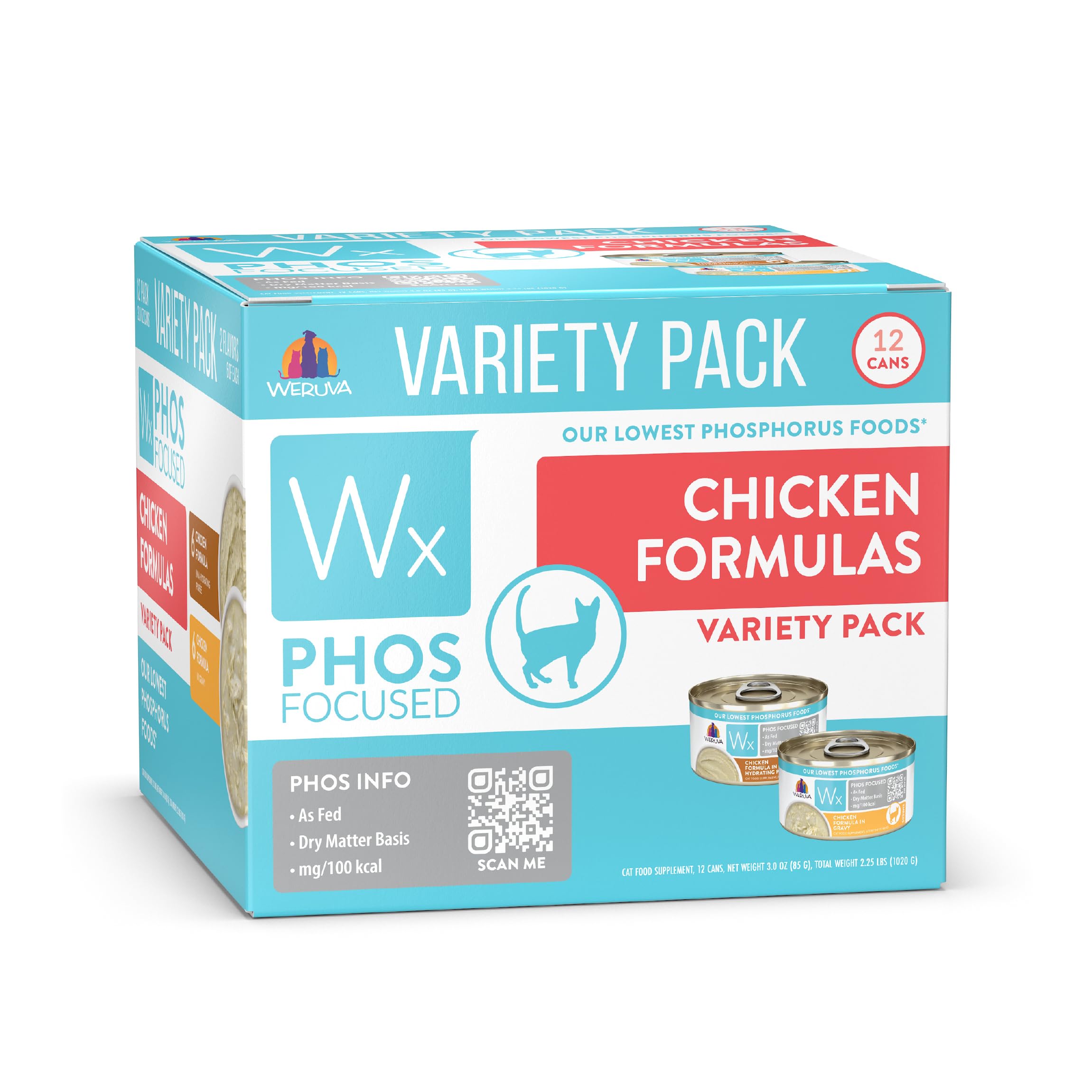
Weruva’s Wx Phos Focused is a non-prescription all-natural wet food that achieves remarkably low phosphorus levels—up to 50% less phosphorus than the AAFCO minimum—without relying on filler ingredients or powdered cellulose to manipulate the numbers. This makes it an accessible entry point for owners looking for a low-phosphorus diet without immediately committing to a prescription brand. The formula uses bone free proteins that are highly bioavailable.
This is a raw-inspired diet that avoids corn, gluten, soy, wheat, artificial colors, flavors, and hormones. The chunks in gravy texture provides strong hydration, which is essential for kidney health. The variety pack includes multiple chicken-based recipes, which helps keep mealtime interesting for cats who get bored with a single flavor. The 3 oz. can size is manageable for a single meal for most cats.
Because it is a non-prescription diet, it is a good option for owners transitioning to a low-phosphorus diet or for cats with very early elevations in renal values who do not yet qualify for prescription food. It is not as tightly controlled as Hill’s k/d or Pro Plan NF for advanced CKD, so its best use is for preventative care or as a complement to a stricter veterinary diet.
Why we love it
- Non-prescription accessible low-phosphorus option
- 50% less phosphorus than AAFCO minimum with natural ingredients
- Bone free proteins are highly bioavailable for muscle maintenance
Good to know
- Not a veterinary therapeutic diet for advanced CKD management
- 3 oz cans require multiple cans per day for larger cats
FAQ
Can I feed my cat a low-phosphorus diet without a veterinary prescription?
Is dry kibble or wet food better for a cat with kidney disease?
What specific bloodwork values tell me the diet is working?
Can I mix a renal diet with regular cat food for better taste?
How do I know if my cat is eating enough on a new kidney diet?
Final Thoughts: The Verdict
For most owners managing chronic kidney disease, the best renal diet for cats is the Hill’s Prescription Diet k/d Kidney Care Dry Food because it combines ActivBiome+ Kidney Defense for gut-mediated kidney protection with Enhanced Appetite Trigger technology that helps ensure consistent daily intake. If your cat also needs joint support in a single bag, grab the Blue Buffalo K+M dry food. And for maximum hydration and palatability in a cat that rejects kibble, nothing beats the Hill’s Prescription Diet k/d Chicken & Vegetable Stew for enticing even the most finicky CKD cat to eat.