
When your dog is diagnosed with chronic kidney disease, every meal becomes a medical decision. The wrong balance of phosphorus, protein, or sodium can accelerate the condition, while the right formulation can help stabilize values and extend quality time. Choosing a renal diet isn’t about picking a brand — it’s about reading the guaranteed analysis and matching it precisely to your dog’s lab work.
I’m Mo Mahin — the founder and writer behind Furric. I spend my days studying the intersection of veterinary nutritional science and commercial pet food manufacturing, analyzing how ingredient sourcing and mineral restriction actually translate into clinical outcomes for dogs with compromised kidney function.
Whether your dog is in early-stage renal insufficiency or advanced chronic kidney disease, selecting the right renal diet for dogs involves understanding phosphorus ceilings, protein quality, and sodium limits that vary significantly across therapeutic formulas.
How To Choose The Best Renal Diet For Dogs
Kidney-support diets are not interchangeable with general senior or sensitive-stomach formulas. The nutritional profile must actively reduce the workload on damaged nephrons while preventing malnutrition. Here are the non-negotiable factors.
Phosphorus Restriction Is the Priority
The primary driver of kidney disease progression in dogs is hyperphosphatemia — elevated blood phosphorus. A therapeutic renal diet restricts phosphorus to between 0.2% and 0.6% on a dry matter basis. Anything above 0.8% is too high for a dog with confirmed stage 2 or higher kidney disease. Check the guaranteed analysis and calculate dry matter if necessary.
Protein Quantity vs. Protein Quality
Older advice called for severe protein restriction, but modern veterinary nutrition emphasizes high-quality, highly digestible protein in moderate amounts. The goal is to meet amino acid requirements without generating excess nitrogenous waste. Look for named animal proteins (turkey, chicken, eggs) rather than generic meat meals, and avoid diets with less than 14% protein on a dry matter basis unless specifically instructed by your veterinarian.
Sodium and Omega-3 Fatty Acids
Sodium should be below 0.3% on a dry matter basis to avoid worsening hypertension common in renal patients. Omega-3 fatty acids, specifically EPA and DHA from fish oil, have been shown to reduce renal inflammation and slow fibrosis. A ratio of EPA:DHA near 1:1 is ideal.
Quick Comparison
On smaller screens, swipe sideways to see the full table.
| Model | Category | Best For | Key Spec | Amazon |
|---|---|---|---|---|
| Hill’s k/d Kidney Care Stew | Wet Veterinary | Maximum hydration & appetite stimulation | 0.22% phosphorus (dry matter) | Amazon |
| Royal Canin Renal Support S | Dry Veterinary | Crescent-shaped kibble for picky eaters | 0.4% phosphorus (dry matter) | Amazon |
| Pro Plan NF Kidney Function | Dry Veterinary | Restricted protein with energy density | 0.35% phosphorus (dry matter) | Amazon |
| Blue Buffalo KS Kidney Support | Dry Veterinary | Natural ingredient profile with chicken | 0.4% phosphorus (dry matter) | Amazon |
| SquarePet VFS Low Phosphorus | Dry Limited Ingredient | OTC alternative for early-stage CKD | Cage-free turkey, pea-free | Amazon |
| Forza10 Renal Pet Food | Dry Limited Ingredient | Hydrolyzed protein for food sensitivities | Hydrolyzed fish protein | Amazon |
| Hill’s i/d Digestive Care Wet | Wet Veterinary | Digestive support alongside kidney care | ActivBiome+ prebiotic blend | Amazon |
In‑Depth Reviews
1. Hill’s Prescription Diet k/d Kidney Care Chicken & Vegetable Stew Wet Dog Food

This is the wet formulation that veterinarians reach for when a dog refuses dry kibble or needs additional hydration to support renal perfusion. The phosphorus level on a dry matter basis sits at approximately 0.22%, which is well within the safe zone for stage 2 and 3 chronic kidney disease. The ActivBiome+ Kidney Defense prebiotic blend is a proprietary addition that targets gut-kidney axis support, helping to reduce uremic toxins absorbed through the intestinal wall.
The stew texture with visible chicken pieces and vegetables provides enough palatability to overcome the reduced protein content typical of renal diets. Owners report that dogs with missing teeth or reduced appetite due to nausea associated with uremia adapt to this food within days. The 12.5-ounce cans deliver sufficient moisture to keep hydration high without forcing water consumption.
Clinical case data shows dogs fed this formula as part of a management plan often see stable creatinine and BUN levels for 12-18 months beyond initial diagnosis. The cost is a genuine investment, but for owners who have bought 19 extra months of quality life with a kidney-diseased border collie, the value is undeniable. This is the food to use when you need the highest probability of acceptance and the lowest phosphorus load.
Why we love it
- Clinically proven to extend life expectancy in CKD dogs
- Stew format supports hydration without effort
- ActivBiome+ prebiotics target the gut-kidney axis
Good to know
- Premium cost per can adds up over months of feeding
- Veterinary prescription required for purchase
2. Royal Canin Veterinary Diet Canine Renal Support S Adult Dry Dog Food
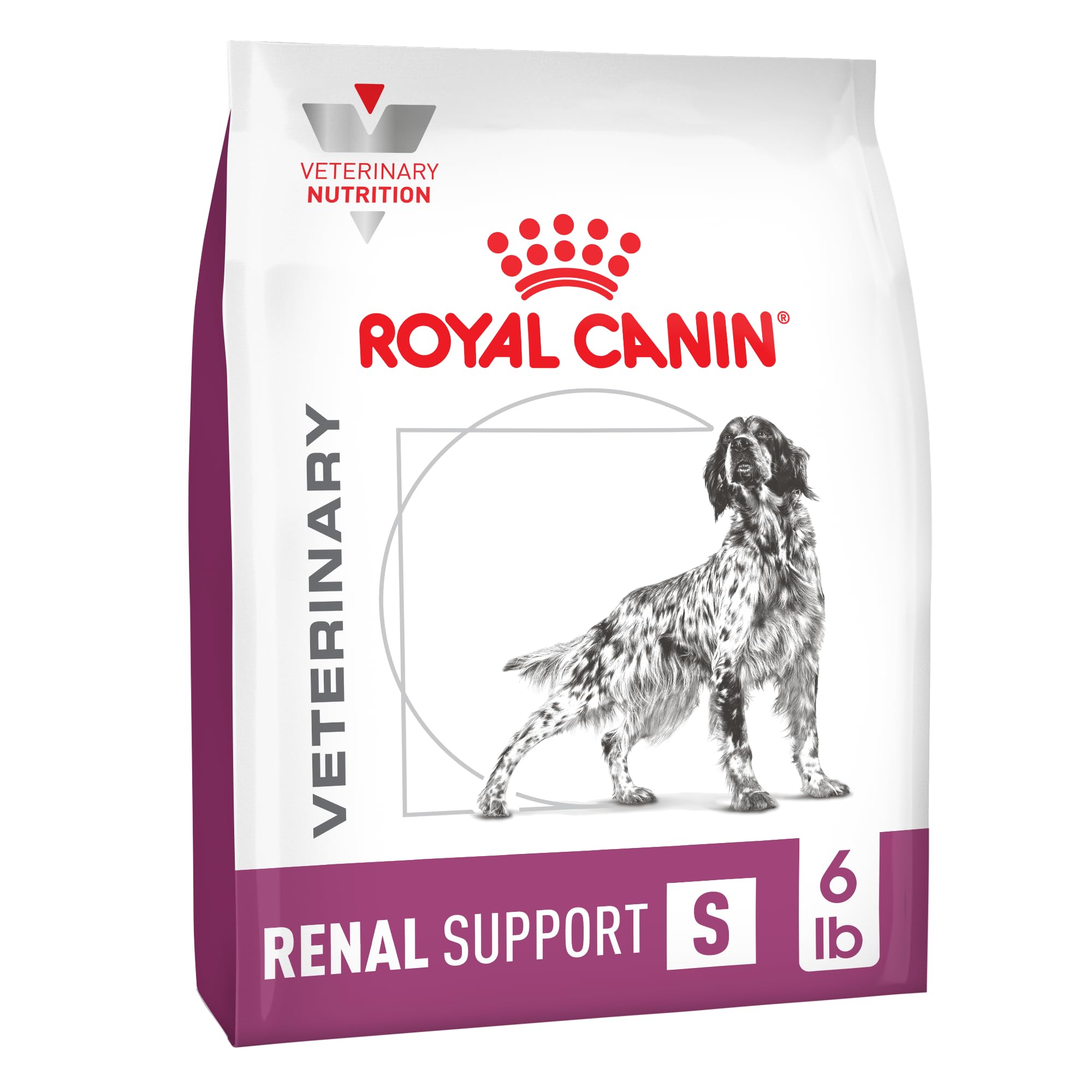
Royal Canin designed the “S” variant — short for Savory — specifically to overcome the anorexia that often accompanies renal disease. The crescent-shaped kibble geometry and aroma coating are engineered to trigger feeding response even when a dog’s sense of smell is diminished by uremia. The phosphorus content is maintained at approximately 0.4% on a dry matter basis, which makes it appropriate for IRIS stage 1-2 patients. The formula uses chicken as the primary protein source, delivering high biological value amino acids without overloading the kidneys.
This diet includes an antioxidant complex containing vitamin E and vitamin C alongside fatty acids from fish oil. The combination targets both oxidative stress in the kidneys and systemic inflammation. The kibble size is notably larger than mini-breed formulations, which owners of small dogs should note — some have found the pieces too large for a 5-pound Chihuahua and need to break them or moisten before feeding.
Owners report that mixing this dry food with Royal Canin’s wet renal support varieties helps transition dogs away from general-purpose diets. The bag contains approximately 27 cups of food, providing flexibility for mixed feeding protocols. For picky dogs who reject Hills k/d but need a veterinary-exclusive phosphorus-restricted diet, this is the most reliable alternative on the market.
Why we love it
- Crescent shape and aroma designed for appetite stimulation
- Antioxidant complex targets renal oxidative stress
- Fish oil provides EPA/DHA for anti-inflammatory support
Good to know
- Kibble size may be too large for toy breeds
- Requires veterinary prescription for purchase
3. Pro Plan Veterinary Diets Purina NF Kidney Function Canine Dry Dog Food

Purina NF takes a different approach by emphasizing energy density alongside protein and phosphorus restriction. Dogs with renal disease often lose muscle mass due to protein-calorie malnutrition, and this formula delivers concentrated calories to help maintain body condition. The restricted protein still relies on high-quality sources that provide essential amino acids without generating excessive urea nitrogen. The phosphorus sits around 0.35% dry matter, appropriate for stage 2-3 CKD management.
The kibble texture is notable — some owners report that it softened poorly when soaked, so transitioning may require a gradual approach. The formula includes a specific antioxidant profile with beta-carotene and vitamins E and C to support immune function, which can be compromised in renal patients. The flavor profile, described as vegetable-based, is less meat-forward than chicken- or turkey-based renal diets, which can be either an advantage or a disadvantage depending on your dog’s preference.
One of the strongest real-world data points comes from a 15-year-old Chihuahua who refused home-cooked meals and supplements but ate this food consistently, stabilizing renal values over months. For dogs who need calorie density to prevent muscle wasting, this formula offers a different nutritional balance than the Hill’s or Royal Canin equivalents. The 6-pound bag is manageable for trial feeding before committing to a larger supply.
Why we love it
- Energy-dense formula helps prevent muscle wasting
- Restricted phosphorus supports stage 2-3 CKD
- Antioxidant blend supports compromised immune systems
Good to know
- Kibble may not soften well for dogs needing soaked food
- Some dogs refuse the vegetable-based flavor profile
4. Blue Buffalo Natural Veterinary Diet KS Kidney Support Dry Dog Food

Blue Buffalo KS stands apart from the other veterinary-exclusive renal diets because of its ingredient philosophy. The formula avoids chicken by-product meals, corn, wheat, and soy — using real deboned chicken as the first ingredient. The phosphorus level is approximately 0.4% on a dry matter basis, and sodium is controlled to under 0.3%. This makes it a good option for owners who want a more natural ingredient deck while still using a veterinary therapeutic diet.
The kibble size has drawn criticism from owners of small dogs, who note that despite the package showing a Yorkie, the pieces are relatively large compared to mini-breed formulations. A 16-year-old dog with only one tooth required the kibble to be crushed manually. However, for medium to large breeds, the crunch factor provides good dental abrasion. The formula also includes Blue Buffalo’s exclusive LifeSource Bits, which contain a precisely measured blend of antioxidants, vitamins, and minerals.
The prescription requirement means you’ll need your vet to authorize the purchase, but the price on Amazon often comes in below what local veterinary clinics charge for the same bag. Owners report that dogs who rejected Hill’s k/d for its flat taste profile accepted this chicken-forward recipe. This is the renal diet to try when your dog turns its nose up at other prescription options but you need the phosphorus control that only a veterinary-exclusive formula provides.
Why we love it
- Real deboned chicken as first ingredient
- No corn, wheat, soy, or by-product meals
- LifeSource Bits provide targeted antioxidant nutrition
Good to know
- Large kibble size unsuitable for toy breeds
- Requires veterinary prescription for purchase
5. SquarePet VFS Low Phosphorus Formula Dry Dog Food

SquarePet VFS is the rare over-the-counter diet that genuinely works for early to moderate renal disease. It is not a veterinary prescription diet, but its phosphorus and protein levels are purposefully restricted. The formula uses cage-free turkey and whole eggs as protein sources, avoiding peas, corn, soy, and wheat — which aligns with the limited ingredient philosophy often needed when food sensitivities complicate the clinical picture. The formula includes taurine and L-carnitine for cardiac and muscle support, which is important because renal disease and heart disease frequently coexist in senior dogs.
The 4.4-pound bag size is a double-edged sword. It’s small enough to trial without financial overcommitment — a real concern given that a 13-year-old Chinese Crested with CKD stage 3 rejected Hill’s k/d but ate this eagerly. But it’s also small enough that larger dogs will go through it quickly. Owners of 40-pound dogs report feeding roughly 1 cup per day and seeing weight stabilization over two months, suggesting the calorie density is adequate for maintenance.
The real-world longevity data is impressive for an OTC formula. One documented case shows a dog maintaining stable stage 3 CKD through age 16, with the owner specifically crediting SquarePet for slowing disease progression. This is the formula to use when you want to avoid prescription diets — for whatever reason — but still need targeted phosphorus restriction and clean ingredient sourcing. The amino acid profile, with added taurine and L-carnitine, makes it more complete than many homemade renal recipes.
Why we love it
- OTC purchase — no veterinary prescription required
- Cage-free turkey and whole egg protein sources
- Pea-free, corn-free, soy-free for sensitive dogs
Good to know
- Small bag size requires frequent repurchase for larger dogs
- Not designed for advanced or end-stage kidney disease
6. Forza10 Vet-Approved Renal Pet Food with Omega-3
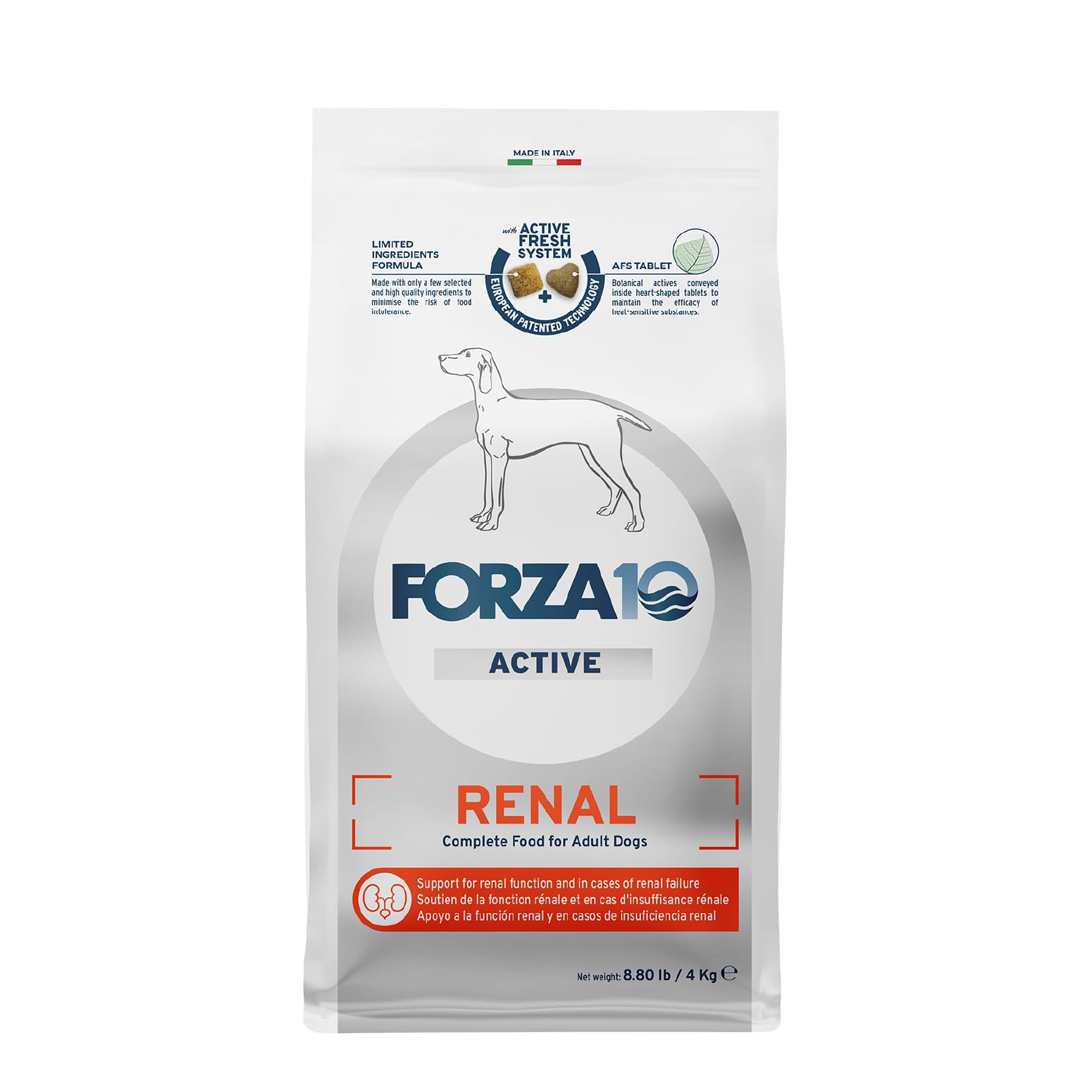
Forza10 brings an Italian formulation philosophy to the renal diet category. The key differentiator is the use of hydrolyzed fish protein, which reduces the likelihood of adverse food reactions that can complicate the management of kidney disease. Cranberries and dried dandelion are included for their traditionally recognized kidney-support properties, though the clinical evidence for dandelion specifically in dogs with CKD is less robust than for phosphorus restriction. The formula is non-GMO and free from by-products, wheat, soy, and artificial preservatives.
The 8.8-pound bag is generous relative to other premium renal options, but owners of large breeds will still find it disappears quickly — one owner of a Labrador reported it lasting only 11 days. The cost per pound is higher than typical OTC diets, but comparable to prescription renal diets. The kibble shape is an unusual mix of squares and hearts, which some dogs seem to find novel and appealing after months of refusing standard round kibble.
One compelling case study involves an 11-year-old German Shepherd with early kidney disease who developed ear infections, itching, and loose stools on multiple prescription renal diets. After switching to Forza10, the owner reported fur regrowth, resolution of itching, and reduced stool output within one month. The hydrolyzed protein is likely the mechanism behind this improvement, as food-triggered inflammation can worsen both skin health and renal workload. For dogs with concurrent allergies or inflammatory bowel disease, this makes Forza10 a serious consideration.
Why we love it
- Hydrolyzed fish protein reduces food reaction risk
- Made in Italy with non-GMO ingredients
- Includes cranberry and dandelion for renal support
Good to know
- High cost per pound compared to larger kibble bags
- Bag lacks a resealable closure mechanism
7. Hill’s Prescription Diet i/d Digestive Care Wet Dog Food

Hill’s i/d is primarily a digestive health diet, but it earns a place on this list because renal disease and gastrointestinal dysfunction are tightly linked. Uremic toxins accumulate when kidneys fail, damaging the intestinal lining and causing nausea, vomiting, and diarrhea. The ActivBiome+ Digestion prebiotic blend in i/d is clinically shown to rapidly activate the gut microbiome, helping to reduce uremic toxin absorption through the gut wall. The highly digestible formula minimizes the metabolic workload on an already compromised system.
The turkey-based wet formula with 13-ounce cans provides both hydration and palatability. Owners of senior dogs with concurrent kidney disease and chronic pancreatitis or inflammatory bowel disease often find that i/d is the only food their dog keeps down. The S+OXSHIELD technology also reduces the risk of developing struvite and calcium oxalate crystals — relevant because kidney patients are at elevated risk for urinary stone formation. The electrolytes and B vitamins help replace nutrients lost through vomiting or diarrhea.
This is not a primary renal diet — it does not restrict phosphorus as aggressively as k/d or NF formulas. But for dogs in renal crisis who cannot eat, or those whose kidney disease is complicated by digestive issues, i/d provides a bridge. Many owners use it as a pill delivery system, forming meatballs around medications. The cost is significant, but for dogs with terminal nausea from uremia, the difference between eating and not eating can be measured in days. Use this alongside a renal diet, not in place of one, unless your veterinarian directs otherwise.
Why we love it
- ActivBiome+ prebiotics reduce gut-derived uremic toxins
- Highly digestible for dogs with concurrent GI issues
- Electrolytes and B vitamins replenish lost nutrients
Good to know
- Not a phosphorus-restricted renal diet — use as a supplement
- Veterinary prescription required for purchase
FAQ
Can I feed a renal diet without a veterinary prescription?
How does phosphorus restriction slow kidney disease progression?
Why does my dog refuse prescription renal diet food?
Is homemade renal diet better than commercial options?
Final Thoughts: The Verdict
For most dog owners managing chronic kidney disease, the renal diet for dogs winner is the Hill’s Prescription Diet k/d Kidney Care Stew because it delivers the lowest phosphorus load in a highly palatable wet format that supports hydration — two factors that directly affect disease progression. If you need a dry option for a picky eater, grab the Royal Canin Renal Support S for its appetite-stimulating crescent kibble design. And for an over-the-counter solution that works for early-stage disease without a prescription, nothing beats the SquarePet VFS Low Phosphorus Formula, especially for dogs who also need limited ingredient sourcing.