
When a newborn puppy cannot nurse from its mother, the window between life-threatening decline and steady weight gain narrows to hours. Choosing the wrong liquid — especially cow’s milk — triggers diarrhea that dehydrates a pup faster than hunger ever could. A proper canine milk replica must deliver colostrum-like immunity factors, a lactase-friendly protein source, and a fat-to-protein ratio engineered for explosive growth, not human infant needs.
I’m Mo Mahin — the founder and writer behind Furric. I have spent thousands of hours analyzing nutritional labels, cross-referencing veterinary formulation guidelines, and studying owner feedback across dozens of brands to isolate which replacement milk formulas actually sustain neonatal dogs through the critical first six weeks of life.
This guide evaluates the leading options based on digestive tolerance, nutritional completeness, and ease of preparation. Whether you are bottle-feeding an orphan, supplementing a large litter, or weaning a reluctant eater, the right replacement milk for puppies makes the difference between a frightened pup and a thriving one.
How To Choose The Best Replacement Milk For Puppies
Not all cans and cartons labeled “puppy milk” are built the same. A formula that works for a 12-week Labrador puppy may cause life-threatening bloat in a three-day-old Chihuahua. Below are the three factors that separate safe nutrition from risky shortcuts.
Protein Source and Digestive Tolerance
The overwhelming majority of puppy digestive upset from milk replacers stems from the protein fraction. Whole goat milk protein contains smaller fat globules and a different casein structure than cow milk, making it far less likely to trigger diarrhea in sensitive or very young pups. Formulas built on soy or plant protein isolates lack the taurine and arginine profile a puppy’s liver requires and should be avoided entirely.
Fat and DHA Content for Neurological Development
Puppy brains grow explosively between days 10 and 35. The formula must deliver at least 30% fat on a dry matter basis, plus a direct source of docosahexaenoic acid (DHA) — the omega-3 fatty acid that drives retinal and synaptic development. Formulas that list “vegetable oil” without specifying DHA content are nutritionally incomplete for orphaned neonates.
Form Factor: Liquid Ready-to-Feed vs. Powdered Concentrate
Ready-to-feed liquids eliminate mixing errors and bacterial contamination during reconstitution, making them the safer choice for inexperienced caregivers and emergency kits. Powdered formulas offer dramatically lower cost per ounce and longer unopened shelf life, but require precise water temperature (98-100°F) and rigorous hygiene to prevent bacterial blooms. Once opened, liquid cartons must be discarded after 72 hours in the refrigerator; powder can last up to four weeks if kept dry.
Quick Comparison
On smaller screens, swipe sideways to see the full table.
| Model | Category | Best For | Key Spec | Amazon |
|---|---|---|---|---|
| PetAg Goat’s Milk Esbilac Liquid | Liquid RTF | Sensitive stomachs, instant feeding | Whole goat milk protein + fiber blend | Amazon |
| Nutri-Vet Milk Replacer Powder | Powder | Small breed puppies, storage longevity | Opti-Gut probiotic blend, 12 oz bag | Amazon |
| Zesty Paws Puppy Milk Replacer + Colostrum | Powder | Colostrum immunity, skin & coat | Colostrum + Omega-3 DHA + probiotics | Amazon |
| Pet-Ag PetLac Liquid for Puppies | Liquid RTF | All-breed nursing, large litters | Milk + vegetable protein, 32 oz carton | Amazon |
| Pet-Ag Goat’s Milk Esbilac Powder | Powder | Long-term value, sensitive digestion | Prebiotic + probiotic goat milk powder | Amazon |
In‑Depth Reviews
1. PetAg Goat’s Milk Esbilac Liquid
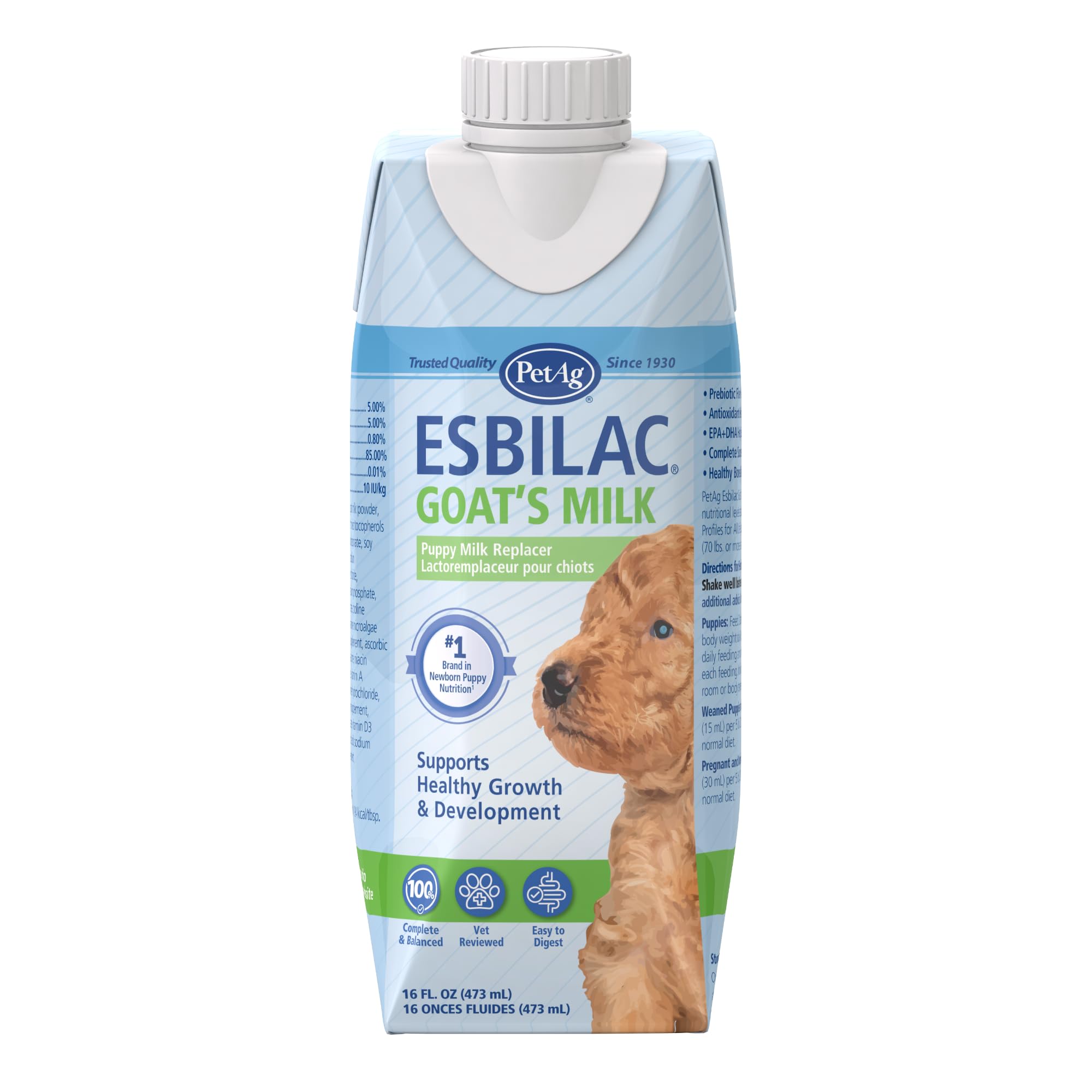
The PetAg Goat’s Milk Esbilac Liquid earns the top position because it removes the single biggest source of error in neonatal feeding: mixing. This 16-ounce Tetra Pak delivers a sterile, consistent 33% fat dry-matter profile made from whole goat milk protein — a form proven to reduce diarrhea in pups with immature digestive tracts. The added special fiber blend mimics the prebiotic effect of mother’s milk, helping establish Bifidobacterium colonies in the gut during the first seven days.
Custodian reviews consistently mention that even pups refusing cow-based formulas lap this up willingly. The resealable carton is practical for the 72-hour refrigerated window, though a 16-ounce volume is better suited for single-puppy households or small litters rather than high-volume breeders. Owners report less “puppy gas” and firmer stools compared to milk replacers based on soy or casein-heavy cow milk.
The ready-to-feed format means zero risk of over-concentration — a common mistake with powders that can cause hypernatremia in neonates. The main trade-off is unit economics: at roughly 30% more per ounce than powdered options, large litters will burn through cartons quickly. For peace of mind with a fragile first-time bottle-feeding situation, this is the safest liquid on the shelf.
Why we love it
- Zero mixing errors — truly ready to feed
- Goat milk protein minimizes digestive upset
- Resealable carton extends fridge life
Good to know
- Expensive per ounce versus powder
- Must discard 72 hours after opening
2. Nutri-Vet Milk Replacer For Puppies Powder

Nutri-Vet’s powdered formula is built around a veterinarian-formulated base that includes Opti-Gut — a proprietary blend of Enterococcus faecium and fructooligosaccharides (FOS). These probiotics survive stomach acid to colonize the small intestine, directly combating the dysbiosis that kills orphaned puppies who cannot regulate their own gut flora. The bag produces roughly 96 ounces of mixed milk, giving it the lowest cost-per-feeding in this roundup.
Customer reviews from small-breed breeders highlight that this powder mixes with minimal clumping when whisked into 98°F water, and that pups readily accept it from both bottles and shallow dishes during weaning. The formula is labeled for small breeds, but the nutritional profile — 30% protein and 40% fat on a dry matter basis — supports any breed size through the first six weeks.
The primary drawback is the mixing hygiene burden: any leftover mixed milk must be discarded after 24 hours, and the powder itself must be stored in a cool, dry place to prevent moisture clumping. Some owners note the powder settles slightly if not consumed immediately, requiring a gentle swirl mid-feeding. For caregivers comfortable with precise mixing, this is the best cost-per-gram option.
Why we love it
- Best price per mixed ounce in the lineup
- Opti-Gut probiotics support fragile digestion
- Long unopened shelf life for emergency kits
Good to know
- 24-hour discard rule for mixed liquid
- Powder can clump in humid conditions
3. Zesty Paws Puppy Milk Replacer + Colostrum
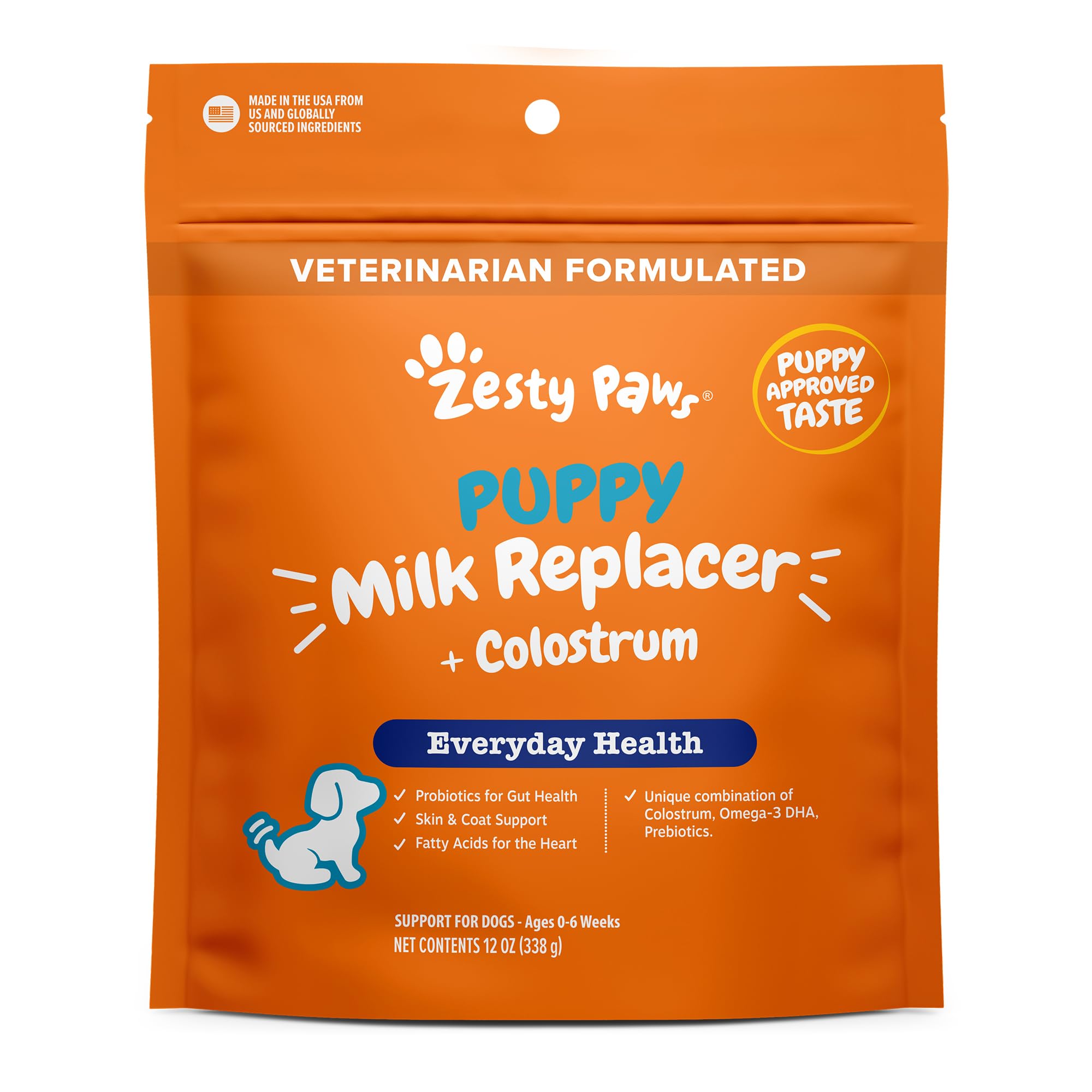
Zesty Paws takes a different approach than the traditional milk-replacer brands by front-loading bovine colostrum — the antibody-rich “first milk” that provides passive immunity to neonates whose own immune systems are not yet functional. This is especially valuable when a pup missed the critical 12-hour colostrum window from its mother. The powder also packs a higher DHA concentration than most competitors, listed as “marine lipid concentrate” on the ingredient panel.
The formula is fortified with both prebiotics (inulin) and live probiotics (Bacillus coagulans), creating a dual-pathway gut support system that reduces the sour-smelling stool often associated with milk replacers. The 12-ounce can holds roughly 90 mixed ounces, placing it in the middle of the cost spectrum between budget powders and premium liquids. Owners report that the flavor is consistently accepted even by fussy weaning-age puppies transitioning to solid food.
The colostrum addition does come with a caveat: bovine colostrum can occasionally cause mild stool softening in extremely sensitive toy-breed puppies during the first 24 hours of use. This typically resolves as the gut adapts. The manufacturer recommends transitioning gradually by mixing with the previous formula for two days. For breeders seeking immune support alongside basic nutrition, this is the most advanced profile available.
Why we love it
- Bovine colostrum boosts passive immunity
- Higher DHA for neurological development
- Probiotic + prebiotic dual gut support
Good to know
- Colostrum can cause temporary loose stool
- Can size yields fewer ounces than bagged powders
4. Pet-Ag PetLac Liquid for Puppies

PetLac is the only liquid in this review with a 32-ounce carton, making it the most practical ready-to-feed option for litters of five or more puppies. The base uses milk and vegetable protein — a combination that lowers the lactose load compared to straight cow milk while still delivering the 28-30% protein and 35-38% fat that growing bones require. The resealable Tetra Pak design allows the carton to be used across multiple feeding cycles within the 72-hour refrigerated window.
The thinner consistency compared to goat-milk formulas makes PetLac easier to draw into a syringe or bottle nipple, particularly important when feeding puppies under 48 hours old who have weak suction reflexes. Customer notes from kennels frequently mention that this liquid produces less nipple clogging than thicker emulsions. The formula is labeled for puppies from newborn to six weeks old and works across all breed sizes when adjusted for feeding volume.
The vegetable protein inclusion is a point of trade-off: while it eases digestibility for some pups, it provides a slightly different amino acid profile than an all-milk-protein formula. Puppies that thrive on whole milk proteins may show less explosive growth on this blend. For a large-litter emergency where you need shelf-stable liquid at volume, the 32-ounce carton is unmatched.
Why we love it
- Largest ready-to-feed carton at 32 ounces
- Low lactose blend minimizes gassiness
- Thin viscosity reduces nipple clogging
Good to know
- Vegetable protein changes amino acid profile
- Less concentrated nutrition than goat milk formulas
5. Pet-Ag Goat’s Milk Esbilac Powder

The powdered version of Pet-Ag’s goat milk Esbilac brings the same whole-goat-milk protein base as the liquid format but in a 5.25-ounce can that reconstitutes to roughly 42 ounces of milk. This is the go-to choice for breeders who want the digestive tolerance of goat milk but prefer to mix smaller batches rather than open a new liquid carton every 72 hours. The can is tiny — about the size of a tuna tin — making it easy to stash in a diaper bag or whelping kit.
The formula adds both prebiotics (FOS) and probiotics (Enterococcus faecium) that the liquid version does not advertise, giving it a digestion-support edge for the most sensitive pups. The mix ratio is 1 part powder to 2 parts warm water, producing a milk that matches the liquid version’s viscosity once properly dissolved. Customer reviews from dachshund and chihuahua breeders frequently report that this powder keeps tiny pups gaining weight steadily without the sour-stool odor associated with soy-based replacers.
The small can means you will repurchase frequently if feeding more than two puppies, and the per-ounce cost after mixing is higher than Nutri-Vet’s bag. Additionally, the powder requires meticulous dissolution in water between 95-100°F — temperatures above 105°F kill the live probiotics and denature the immune globulins. For owners of toy breeds or brachycephalic breeds known for finicky digestion, the formula’s gentleness justifies the smaller volume.
Why we love it
- Whole goat milk protein for ultrasensitive guts
- Added prebiotics and live probiotics
- Ultracompact can fits any emergency kit
Good to know
- 5.25 oz yields less total milk than bagged powders
- Water temperature must stay below 105°F
FAQ
Can I use cow milk from the grocery store for puppies?
How do I transition a puppy from formula to solid food?
Why does my puppy have green stool after formula feeding?
How long can an opened can of powdered milk replacer be stored?
Should I supplement nursing puppies with milk replacer preventively?
Final Thoughts: The Verdict
For most gardeners, the replacement milk for puppies winner is the PetAg Goat’s Milk Esbilac Liquid because it eliminates mixing errors, uses whole goat milk for maximum digestive tolerance, and delivers a complete nutritional profile in a ready-to-feed carton. If you want to stretch your budget without sacrificing probiotic support, grab the Nutri-Vet Milk Replacer Powder. And for immune-compromised pups that missed their mother’s colostrum, nothing beats the Zesty Paws Puppy Milk Replacer + Colostrum.