
Every multi-pet household eventually faces the same kitchen-floor standoff: one pet needs a prescription diet, another eats anything in sight, and the food bowl becomes a nightly battleground. Standard automatic feeders can’t tell the difference between a diabetic cat and a food-obsessed dog—that’s why the RFID pet feeder was engineered.
I’m Mo Mahin — the founder and writer behind Furric. I spend my time comparing the technical specifications of specialized pet gear, studying the RF protocols, bowl materials, and sensor ranges that separate a reliable feeder from a frustrating one, and analyzing aggregated owner feedback from hundreds of verified households.
Whether you’re managing weight-control kibble, medication-mixed meals, or simply trying to let your senior cat graze in peace, the right rfid pet feeder can restore calm to your feeding routine without requiring constant supervision.
How To Choose The Best RFID Pet Feeder
Selecting the right RFID pet feeder is less about brand names and more about understanding three design decisions that determine whether your pets stick to their own bowls. Focus on the identification method, the physical barriers, and the power architecture that keeps the system running when you’re away.
Identification Method: Microchip vs. RFID Collar Tag
The feeder’s core technology determines who gets fed. ISO 15-digit microchip readers are ideal for pets that already have a subcutaneous chip—your vet can verify the chip number before pairing. RFID collar tags, by contrast, are smaller and easier to swap between pets but require your animal to wear a collar, which some cats resist. A few premium models support both, giving you a fallback if the pet’s chip has migrated or is non-ISO.
Physical Barriers and Closing Dynamics
An open bowl is useless if a determined second pet can squeeze in before the lid closes. Look for models with adjustable closing speed: a 1-second closure effectively blocks most food thieves, while a slower 3-second door works better for timid cats that startle easily. Integrated side shields and a fully enclosed back panel prevent larger pets from bypassing the RFID lock entirely.
Power Redundancy and Connectivity
A feeder that relies solely on AC power or a single battery type creates a single point of failure. The most dependable units accept DC power plus Alkaline or Lithium backup batteries, ensuring meal schedules continue during power outages. Dual-band Wi-Fi (2.4GHz and 5GHz) provides stable app connectivity for remote scheduling and diet tracking, but the feeder should store a full meal schedule locally so it dispenses food even when the internet drops.
Quick Comparison
On smaller screens, swipe sideways to see the full table.
| Model | Category | Best For | Key Spec | Amazon |
|---|---|---|---|---|
| SureFeed Microchip Feeder (MPF001) | Microchip | Wet & Dry Food with Side Shield | 13.5 fl oz bowl capacity | Amazon |
| Closer Pets MiBowl (CP500) | Hybrid | Fully Enclosed Microchip Access | 6-month battery life | Amazon |
| PETLIBRO ONE RFID (Single) | Collar Tag | App-Controlled Diet Tracking | 3L reservoir, dual-band Wi-Fi | Amazon |
| HoneyGuaridan RFID Feeder | Collar Tag | Ceramic Bowl & Large Capacity | 4.6L / 19-cup storage | Amazon |
| HEAPETS RFID Cat Feeder | Collar Tag | Compact Entry-Level Setup | 0.45L single-meal bowl | Amazon |
| SureFeed Connect (Hub Required) | Smart Scale | Portion Weight Tracking | Integrated ±1g scales | Amazon |
| PawsPik Automatic RFID Feeder | Hybrid | 16-Cup Bulk & Microchip Mode | 16-cup / 5.13 kg capacity | Amazon |
| PetSafe FreshFeed Refrigerated | Refrigerated | Chilled Wet Food Scheduling | 40°F cooling, 6 trays | Amazon |
| PETLIBRO Dual-Cat Pack | Pair | Simultaneous Two-Cat Management | 2x 3L feeders, matching pair | Amazon |
In‑Depth Reviews
1. Closer Pets MiBowl Smart Selective Microchip-Activated Feeder (CP500)

The Closer Pets MiBowl uses ISO and AVID 15-digit microchip recognition along with its included RFID collar disc, giving you two paths to identify the correct pet. Its enclosed back and optional side guards form a physical barrier that prevents larger dogs or food-aggressive cats from reaching the bowl from odd angles—a design feature rarely found at this level.
Owners consistently report battery life exceeding six months on four C-cells, and the bowl holds up to 12 ounces of wet or dry food. The 11.83 fl oz capacity works well for small to medium cats and small dogs, though the bowl measures just 4.72 inches wide, which may feel tight for brachycephalic breeds with wide faces. Cleanup is straightforward: the bowl, lid, and side shields are all dishwasher-safe.
The MiBowl’s quiet, simple mechanism has fewer moving parts than competitors, which reduces the chance of rotor jams. The pairing process is well-documented with video guides, and the training mode helps cautious pets learn the bowl’s behavior without pressure. For a household with one or two pets on separate diets, this is the most reliable microchip feeder on the market.
Why we love it
- Supports both ISO microchips and included RFID collar disc
- Fully enclosed sides prevent access from larger pets
- Reported battery life of 6+ months on C-cells
Good to know
- Not compatible with non-15-digit chips
- Narrow bowl may not suit broad-faced cats
- No app connectivity or diet tracking available
2. SureFeed Microchip Pet Feeder (MPF001)

The SureFeed MPF001 is a proven workhorse that relies on the pet’s existing ISO microchip, eliminating the need for bulky collar tags. The lid closes to form a seal with a neoprene lip, which keeps wet food from drying out and retains moisture for prescription diets. Owners report battery life often exceeding 12 months on four D-cells, making it one of the lowest-maintenance RFID feeders available.
Side shields are sold separately, and the feeder’s open sides mean a persistent food thief can sometimes access the bowl if the shield isn’t added. The 13.5 fl oz dual-compartment bowl holds both wet and dry food separately, and the lid’s dual-speed setting lets you choose between a fast close for aggressive thieves or a slower, quieter close for nervous eaters.
The SureFeed’s reliability across years of heavy use is well-documented in owner feedback. The main criticism is that the plastic bowl retains odors over time—some users switch to the optional ceramic or glass bowls. Pairing is straightforward if your pet’s microchip is ISO-compliant, but non-ISO chips require the SureFlap collar tag instead.
Why we love it
- Reads the pet’s existing ISO microchip directly
- Exceptional battery life often exceeding 12 months
- Dual-speed lid suits both timid and aggressive pets
Good to know
- Side shields must be purchased separately
- Plastic bowl can retain food odors over time
- No app control or diet tracking features
3. SureFeed Microchip Pet Feeder Connect (Hub Required)

The SureFeed Connect takes the core microchip reader from the standard MPF001 and adds integrated precision scales that measure food weight to within one gram. This is critical for pets on strict veterinary diets where every gram matters—the feeder uses LED guides during filling and tracks intake over time through the Sure Petcare app.
Note that the Connect requires the separate Hub to push data to your phone; the Hub is sold separately, increasing the total investment. The lid uses Intruder Mode with a five-second re-scan cycle and forced lid closure, which effectively blocks food thieves even while the assigned pet is eating. The sealed bowl keeps wet food fresh between meals, and the feeder accepts both microchip and optional collar tag identification.
Customer feedback is split: owners who integrate the feeder with the Hub and app praise the weight tracking and multi-cat diet management, while those who skip the Hub or face connectivity issues report frustration with scale drift and support responsiveness. For owners committed to precise data tracking and willing to manage the Hub setup, this is the most advanced feeder available.
Why we love it
- Integrated scales with ±1g portion accuracy
- Intruder Mode with 5-second re-scan and forced closure
- Supports both microchip and collar tag identification
Good to know
- Requires sold-separately Hub for app connectivity
- Scale accuracy may drift over time on some units
- No rear side shield included for full enclosure
4. PETLIBRO ONE RFID Automatic Cat Feeder
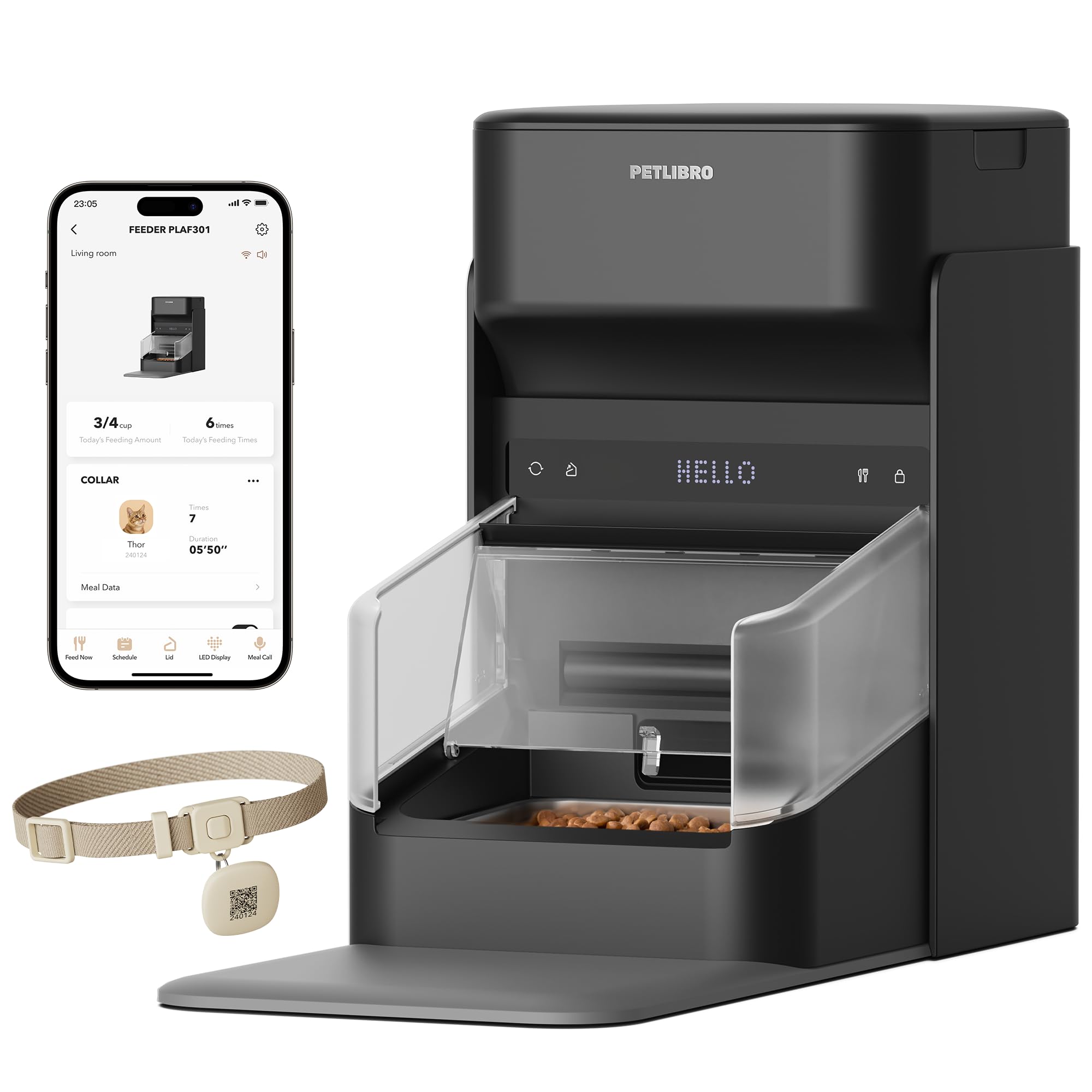
The PETLIBRO ONE uses lightweight RFID collar tags to activate the lid, and its dual-band Wi-Fi (2.4GHz and 5GHz) ensures stable remote access for scheduling and monitoring. The app tracks which cat ate, when, and how much—data that helps spot appetite changes early. The 3-liter reservoir holds roughly two weeks of kibble for a single cat, and the turnstyle dispensing mechanism avoids the rubber belts that wear out on older designs.
Bowl shields and a lid that closes at an adjustable speed help block food thieves, though the included RFID tag collar charm is large for kittens. Some owners report that the bowl can shift slightly, creating a gap where food jams between the rotor and the tray—this typically clears with a manual push but requires you to be home. The stainless steel bowl is removable and dishwasher-safe, and the 5-layer freshness protection includes a silicone gasket and desiccant pouch.
The ONE’s quiet operation and responsive app make it a popular upgrade for owners moving from timer-only feeders. The lack of a manual open button on the unit itself is a minor inconvenience. For owners who want remote control and feeding logs without the Hub requirement of the SureFeed Connect, this is the best app-integrated option.
Why we love it
- Full app control with real-time diet tracking per cat
- Turnstyle dispenser with no rubber belt to fail
- Adjustable lid closing speed for different pet temperaments
Good to know
- Bowl can shift and cause food jams in the rotor
- No manual button to open the lid without the app
- RFID tag collar charm is large for kittens
5. HoneyGuaridan RFID Automatic Cat Feeder
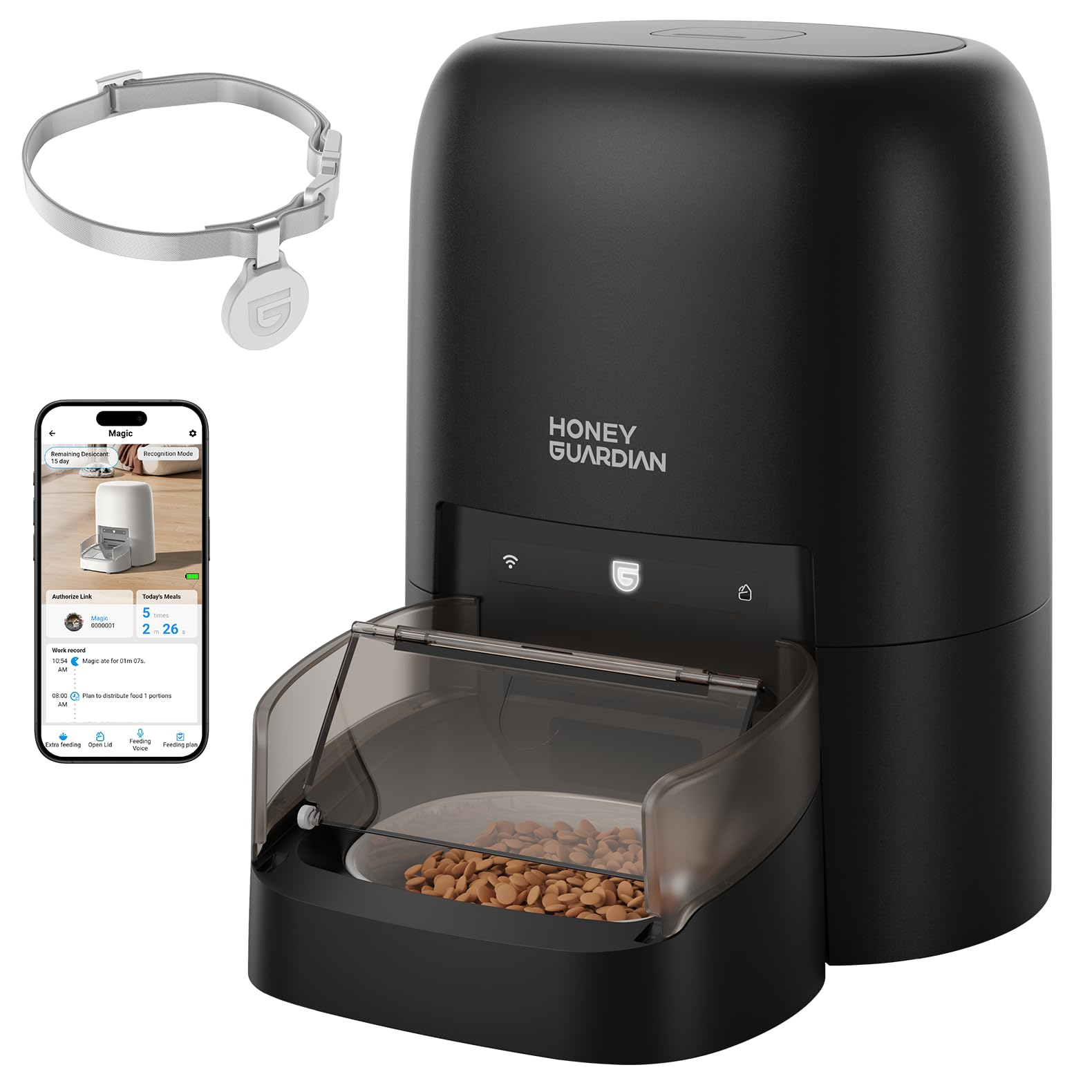
The HoneyGuaridan stands out in the mid-range by pairing a 4.6-liter (19-cup) reservoir with a ceramic bowl—a material that resists bacterial growth and doesn’t scratch like plastic or stainless steel. The 5-layer freshness system includes a sealed lid, silicone gasket, desiccant pouch, and airtight rotor, which keeps kibble crunchy for the three weeks the reservoir can last a single cat.
App connectivity via dual-band Wi-Fi allows separate daily schedules for each day of the week, and the RFID collar tag provides a short reading range that triggers a fast lid close—this prevents food theft effectively, especially when the feeder is placed inside a box or cabinet for single-cat access. The three power modes (AC, 4x AA backup, optional lithium battery) ensure the feeder dispenses even during extended outages without Wi-Fi.
Owner feedback highlights consistent portion sizes as the main issue—some units dispense slightly variable amounts, which matters for strict medical diets. The included RFID tags are lightweight and don’t bother most cats, but the feeder requires collar use and doesn’t read microchips. For budget-conscious multi-pet homes that need large capacity and ceramic hygiene, this is a strong pick.
Why we love it
- 19-cup / 4.6L reservoir reduces refill frequency
- Ceramic bowl is hygienic and easy to clean
- Three power modes for outage-proof feeding
Good to know
- Portion sizes can be inconsistent between servings
- Requires collar tag; no microchip reader built in
- No optional side shields for full enclosure
6. HEAPETS RFID Automatic Cat Feeder
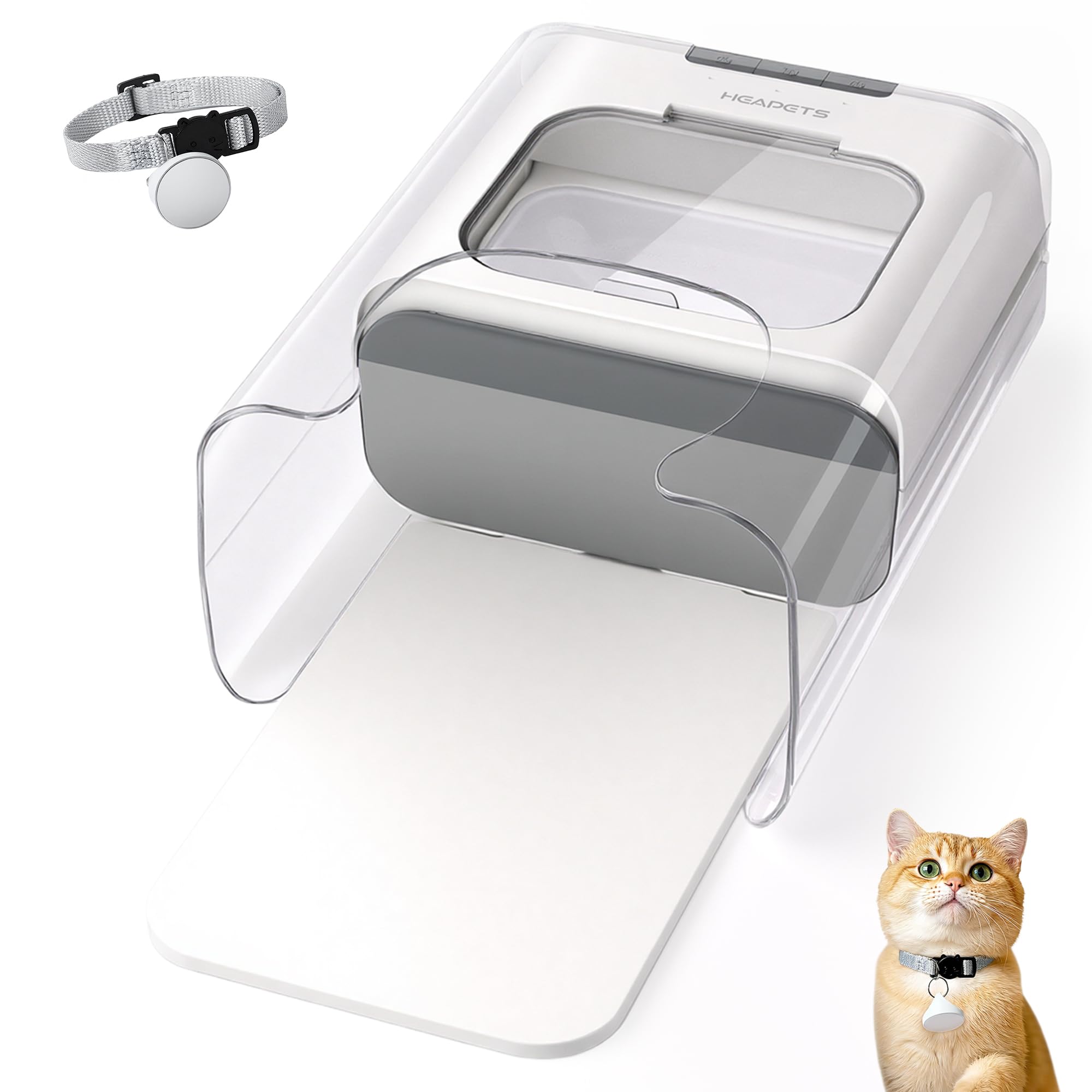
The HEAPETS feeder is a compact entry-level RFID solution that comes pre-paired with its ultra-lightweight collar tag, so setup is essentially out-of-box. Its main innovation is a retractable food bowl: if an unauthorized pet pushes past the lid, the tray automatically retracts to prevent theft. The transparent side shield and sturdy lid create a physical barrier that works well for pets that aren’t overly food-aggressive.
The 0.45-liter single-meal bowl is designed for one serving at a time, which limits its use to pets that eat on a schedule—it’s not suited for free-feeding a grazer. The feeder runs on AC power only (no battery backup), so a power outage resets the schedule. The 3-button interface is intuitive, and the manual switch button helps during the training phase when the cat learns to approach the bowl.
Customer reviews consistently praise the simple operation and sturdy build, but note that a very determined food-aggressive cat can occasionally push in alongside the assigned pet. The small bowl size means you’ll refill daily for a cat on a standard diet. For a single-cat home or a supplementary feeding station for a pet with specific dietary needs, this is a solid, no-fuss option.
Why we love it
- Out-of-box setup with pre-paired collar tag
- Retractable tray blocks food theft automatically
- Compact footprint fits in cabinets or tight corners
Good to know
- AC-powered only with no battery backup option
- Small 0.45L bowl requires frequent refills
- Not suitable for food-aggressive pets determined enough to push past
7. PawsPik Automatic Microchip RFID Cat Feeder
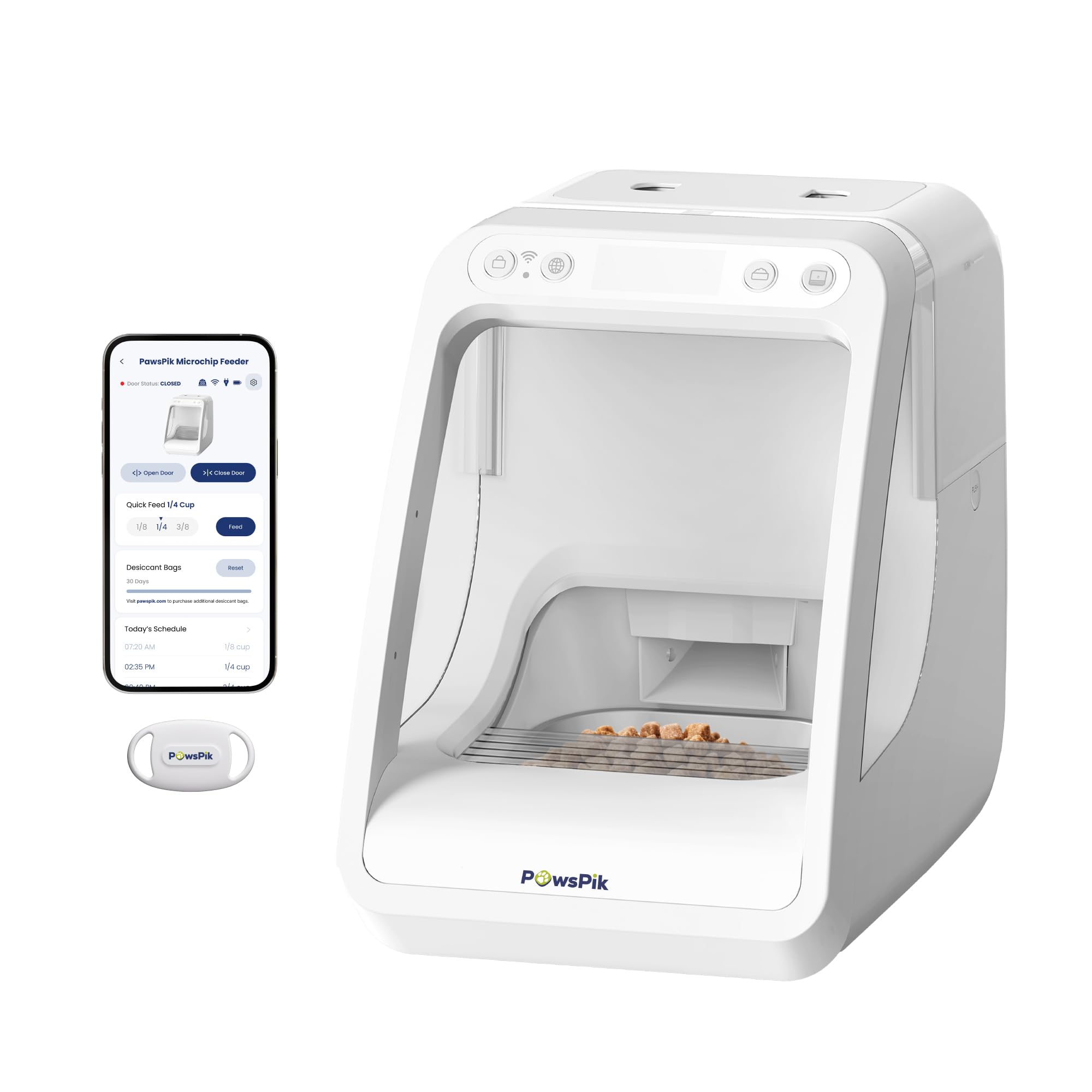
The PawsPik feeder offers dual identification—ISO 15-digit microchip or included PawsPik RFID tag—giving you flexibility if your pet’s chip has migrated or isn’t ISO-compatible. The 16-cup reservoir is among the largest in this category, reducing refill frequency for multi-day trips. A gravity-fed silicone propeller dispenses kibble without a rubber belt, eliminating a common failure point found in other feeders.
Two access modes set this feeder apart: Closed Mode opens only for the paired pet, while Open Mode keeps the bowl accessible but closes when an unauthorized pet approaches. The Open Mode is particularly useful in multi-pet homes where the feeder is in a shared space—it lets the assigned pet graze while still protecting their food. The app supports up to 10 meals per day with precise portion sizes from 1/8 cup to 1/2 cup increments.
Owner feedback is largely positive, but a consistent complaint is that the feeder sometimes closes on the assigned pet if the chip reading is borderline—a 1-star review highlights the frustration of this happening repeatedly. The feeder is designed for one pet per unit, so a second feeder is required for a second pet. For owners who need bulk capacity and the flexibility of microchip or tag identification, this is a serious contender.
Why we love it
- 16-cup capacity for extended travel without refills
- Dual Mode: Closed and Open for flexible feeding scenarios
- Supports both ISO microchips and RFID tags
Good to know
- May close on assigned pet if chip read is inconsistent
- Designed for one pet per feeder only
- RFID tag mode can’t simultaneously track non-tagged pets
8. PetSafe FreshFeed Refrigerated Pet Feeder
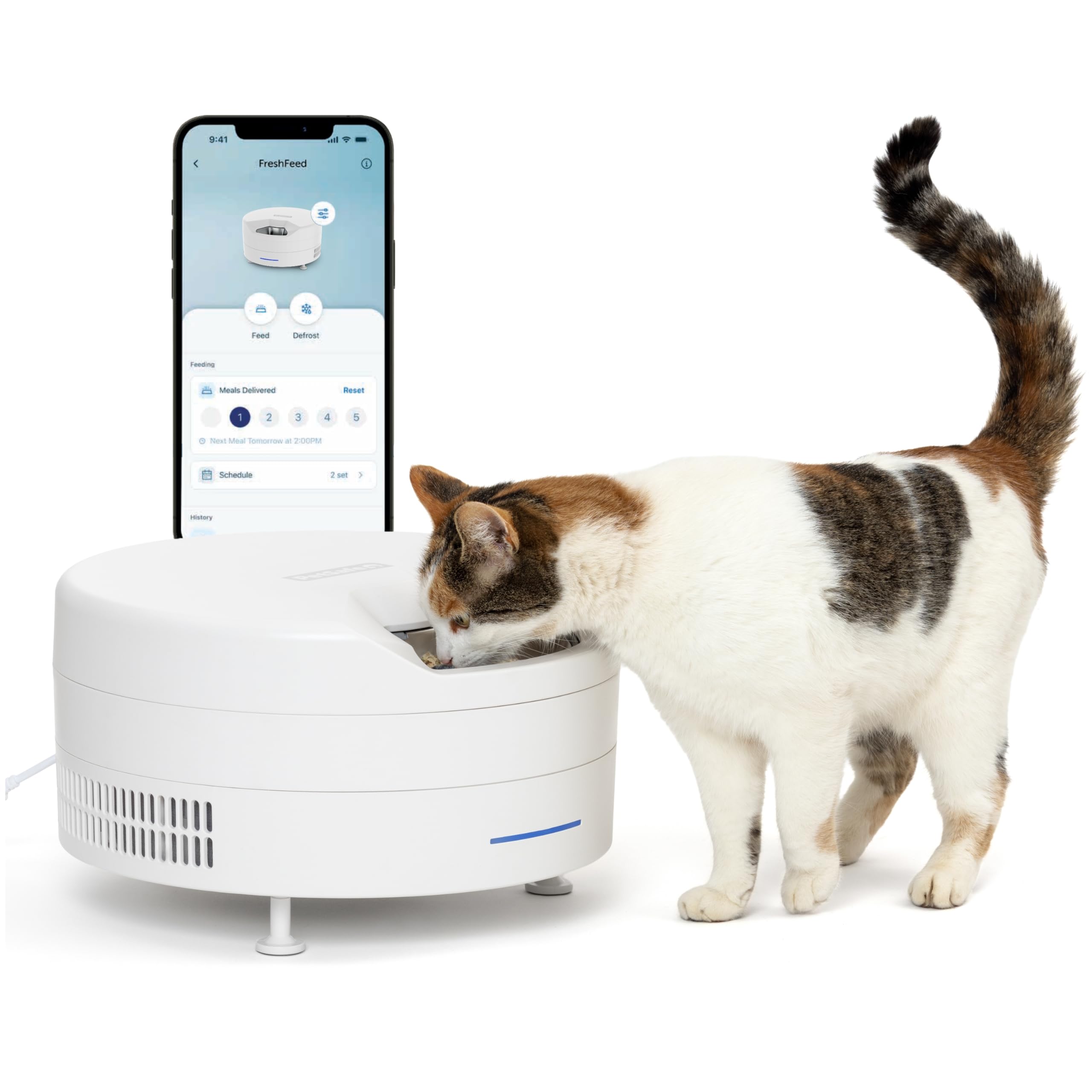
The PetSafe FreshFeed is a specialized unit for owners who feed wet, fresh, or refrigerated diets exclusively. Its dual-semiconductor cooling system maintains approximately 40°F, keeping pre-portioned meals cold for up to 48 hours without a sitter—significantly safer than leaving wet food at room temperature on ice packs. The rotating tray holds six stainless steel inserts, each with a 5-fluid-ounce capacity.
The feeder connects to the PetSafe Pet Companion app for scheduling and dispensing, offering alerts when meals are served and when food runs low. The mechanism is remarkably quiet, and the open-front design is less intimidating for nervous cats compared to enclosed RFID bowls. The legs are non-removable because they house the cooling vents and fans, which makes the unit 8.9 inches tall—some owners use a tilt to make the compartments easier to reach for smaller pets.
Customer feedback highlights the excellent temperature control, with internal thermometers consistently showing 37–39°F. The main considerations are the price point and the limited number of meals (six) before the tray needs reloading. The feeder is not true RFID access control—it dispenses on a schedule, not based on pet identification. For owners committed to wet food diets who want temperature safety and app convenience, this is the only refrigerated auto-feeder worth considering.
Why we love it
- True 40°F refrigeration keeps wet food safe for days
- App control with meal scheduling and alerts
- 6 stainless steel trays are dishwasher safe
Good to know
- No RFID pet identification; schedule-based dispensing
- Maximum 6 meals per load before refill required
- Tall design may require tilting for small pets
9. PETLIBRO Automatic Cat Feeders for 2 Cats (Pack of 2)
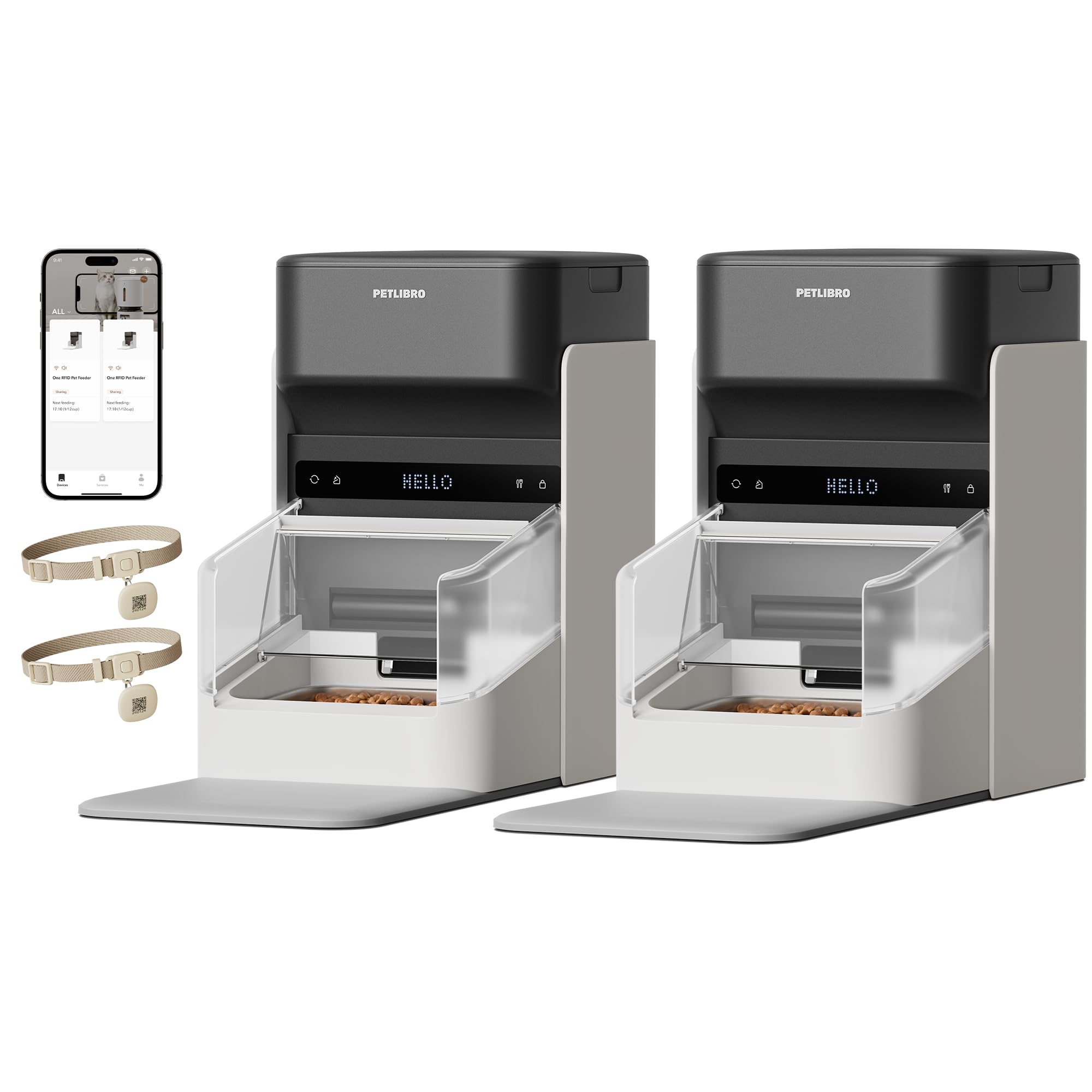
The PETLIBRO two-cat pack delivers two synchronized RFID feeders that operate independently—each recognizes its assigned cat through a unique collar tag—so you can monitor both pets’ eating habits through a single app interface. Each unit holds a 3-liter reservoir, and the coordinated tracking lets you compare intake patterns side by side, which is invaluable when managing weight or medication schedules for two cats simultaneously.
The 5-layer freshness protection (sealed lid, silicone gaskets, desiccant bags, airtight rotors, and RFID-locked lids) keeps kibble fresh across the 10 daily meals per feeder. The dual-band Wi-Fi ensures stable connectivity for remote adjustments, and the battery backup (requires AA batteries, not included) keeps the schedule running during power outages—though Wi-Fi features are disabled on battery power alone. The included stainless steel bowls and bowl shields are removable for cleaning.
Owners report that the pair setup effectively resolves food theft in multi-cat homes, though the collar tags can be bulky for small kittens and the bowl shifting issue from the single PETLIBRO ONE model persists here. The price is significant, but when compared to buying two separate RFID feeders from different brands, the matched software integration and unified app make this the most cohesive multi-cat solution available. For a two-cat household on a budget, this is the best turnkey system.
Why we love it
- Two matched feeders with unified app tracking for both cats
- Battery backup ensures feeding continues during power outages
- 5-layer freshness protection for long-term kibble storage
Good to know
- Collar tags are bulky for small kittens
- Bowl shifting can cause food jams in both units
- No manual lid open button on the device itself
FAQ
Can an RFID pet feeder work with a pet that doesn’t have a microchip?
How do I train a timid cat to use an RFID feeder?
Will an RFID feeder work during a power outage?
What’s the difference between a standard microchip feeder and an RFID collar tag feeder?
How do I prevent a determined pet from pushing past the lid?
Final Thoughts: The Verdict
For most multi-pet households, the rfid pet feeder winner is the Closer Pets MiBowl (CP500) because it combines reliable microchip and tag identification with a fully enclosed design and exceptional battery life. If you want remote scheduling and real-time diet tracking via your phone, grab the PETLIBRO ONE RFID feeder. And for owners managing strict wet or refrigerated diets, nothing beats the PetSafe FreshFeed for temperature safety and portion convenience.