
Robot vacuums with mopping exist, but their wet cleaning is often an afterthought — a damp pad dragged behind a suction motor. A dedicated mopping robot prioritizes scrubbing over airflow, delivering wet passes that actually lift dried spills and grime from hard floors without the vacuum compartment taking up space. The market has shifted, and buyers are realizing that a purpose-built mop cleans better than any combo unit that tries to do everything at once.
I’m Mo Mahin — the founder and writer behind Furric. I’ve spent months comparing water-tank capacities, scrubbing RPMs, navigation logic, and pad-wash cycles across dozens of mopping-only and combo units to identify which dedicated scrubbers offer genuine value for homeowners who split their vacuum and mop duties.
This guide evaluates the true cost of mop-first robots, highlighting models that deliver spotless floors without a vacuum attachment you won’t use. If you want clean hard floors without paying for a suction motor you do not need, you have landed on the right article for the best robot mop without vacuum.
How To Choose The Best Robot Mop Without Vacuum
Every hardware engineer I’ve spoken to confirms the same truth: squeezing a vacuum motor into a mop body forces compromises on water tank volume, scrubbing power, and battery endurance for wet cleaning. A purpose-built mop sheds that weight. Here are the four specs that separate a weekend scrubber from a daily workhorse.
Mopping Technology: Spinning vs. Vibrating vs. Spray
Spinning disc mops (typically two rotating pads at 180-200 RPM) produce higher torque against sticky residues like dried coffee or sauce. Vibrating or sonic mops (100+ oscillations per minute) excel at distributing thin water layers evenly across large stretches of sealed hardwood. Spray-and-wipe systems like the Braava Jet use precision jet spray followed by a dragging pad — effective on light dust but struggle with baked-on grime. For heavy-duty floor restoration, spinning disc mopping wins.
Navigation & Mapping Intelligence
LiDAR (laser distance scanning) builds room maps within the first cleaning cycle, allowing room-specific water flow, no-go zones, and efficient row-by-row coverage. Gyro-based navigation is cheaper but can drift over time, missing patches near corners or furniture legs. Visual SLAM sits between them, using the camera to track position but requiring consistent lighting. A dedicated mop without a vacuum should still carry LiDAR or camera navigation — otherwise you risk streaky, overlapping passes.
Water Tank Capacity & Self-Emptying Base
Tank size dictates how much wet surface the robot can cover before returning to the dock. Onboard tanks smaller than 200 ml require mid-cleaning refills for homes over 1,000 square feet. Premium docks with auto-refill (like on the Roborock Qrevo) pull from a 3–4 L reservoir so the robot never runs dry mid-job. Self-washing bases also heat-dry the pads, which prevents mold and odor between cleaning sessions.
Carpet Detection & Pad Lifting
If your home mixes tile and area rugs, the mop must either recognize the transition and lift pads (12 mm lift is the current standard) or avoid carpets entirely via no-go zones. Without pad lifting, the wet mop saturates carpet edges and leads to mildew underneath. This feature is now common on mid-range and premium models but nearly absent on budget units without LiDAR.
Quick Comparison
On smaller screens, swipe sideways to see the full table.
| Model | Category | Best For | Key Spec | Amazon |
|---|---|---|---|---|
| iRobot Braava Jet M6 | Spray & Wipe | Sealed hardwood precision | Jet spray + precision dock | Amazon |
| EVERYBOT EDEG2 | Dual Spin | Tough stain scrubbing | 300 ml large tank, remote | Amazon |
| Bissell SpinWave Expert | Handheld Power | User-control scrubbing | Corded, soft/hard mop pads | Amazon |
| eufy X10 Pro Omni | Auto-Wash Dock | Hands-free deep mopping | 8,000 Pa, 12 mm pad lift | Amazon |
| Roborock Qrevo Series | Spinning Mop | Large-home automation | 200 RPM, 10 mm lift | Amazon |
| Shark Matrix Plus | Sonic Scrub | Edge and corner cleaning | 100x/min sonic + LiDAR | Amazon |
| MANVN Ultra-Slim | Budget Combo | Under-furniture reach | 2.87 in slim, Wi-Fi | Amazon |
| Generic 3500Pa Combo | Entry Combo | Tight budget starter | 3500 Pa, remote + app | Amazon |
| Generic 2300Pa Combo | Budget Slim | Pet hair on hard floors | 2300 Pa, 2-in-1 tank | Amazon |
In‑Depth Reviews
1. iRobot Braava Jet M6 (6110)

The Braava Jet M6 remains the benchmark for dedicated spray-and-wipe mopping because iRobot engineered it from the ground up as a wet cleaner — no vacuum motor, no shared dustbin. Its precision jet spray deposits water exactly where the pad passes, reducing moisture waste compared to combos that wet an entire pad surface. Imprint Smart Mapping learns floor plans over several runs and lets you set room-specific water levels: heavy for the kitchen tile, light for the dining room hardwood.
At 174 ml internal tank, the M6 handles about 350 square feet per fill, so for large open-concept homes you will see it return to its dock to request a refill via the Braava Jet refill kit. The navigation combines a front-facing camera and floor tracking sensor (vSLAM), which works well in consistent lighting but can drift on dark floors or direct sunlight. The oscillating pad drags rather than spins, so dried sauce or mud stains may require two passes or the “deep scrub” mode that sprays then pauses before wiping.
Battery life sits comfortably at about 2.5 hours of wet cleaning, enough for a 1,000-square-foot home on a single charge. The reusable microfiber pads wash well after 20+ cycles, though the disposable Swiffer-compatible pad option is a convenient alternative for quick touch-ups. One downside: the M6 uses no water-level sensor, so if you start a job with half a tank the robot continues until empty and then sits idle on the floor, crossing its arms as it asks for more water via the app notification.
Why we love it
- Spray-then-wipe logic avoids over-wetting delicate hardwoods
- vSLAM mapping accurately learns multi-level homes
- Recharge and resume for medium-sized floor plans
- Swiffer-compatible pad flexibility
Good to know
- Small onboard tank (174 ml) limits coverage between refills
- Dragging pad struggles with thick dried food stains
- Camera navigation requires good ambient lighting
- No pad-lifting — requires no-go zones for carpets
2. EVERYBOT EDEG2 Robot Mop Cleaner

The EVERYBOT EDEG2 is a rare breed — a mopping robot that refuses to compromise on water capacity or spin torque because it carries zero vacuum hardware. Its dual spinning pads hit 180 RPM each, generating enough rotational friction to loosen dried ketchup and coffee rings from ceramic tile without relying on chemical scrubbing. The 300 ml onboard water tank is nearly double the Braava Jet M6, allowing the EDEG2 to clean about 800 square feet before requesting a refill manually.
EVERYBOT chose to skip Wi-Fi and app connectivity entirely, instead offering a straightforward remote control for directional guidance. Purists and older users will appreciate not wrestling with an app to set up no-go zones or scheduling — the device simply starts, scrubs in a random or spiral pattern until the battery drains, then returns to its charging station. The slim 3.0-inch profile slides under sofa skirts and bed frames that taller LiDAR towers cannot reach.
Battery life runs about 90 minutes of continuous spinning mopping, enough for a 500–600-square-foot area on one charge. The single scrub mode works fine for daily maintenance, but there is no spot or edge-focus program, so corners and baseboards get only tangential pad contact. The EDEG2 also lacks any carpet-detection sensor, meaning if a low-pile rug sits within its cleaning path the pads will soak it. Best used in an all-hard-floor home or paired with physical barriers.
Why we love it
- Dual spinning discs at 180 RPM for tough-dried stain removal
- 300 ml tank reduces mid-clean refill frequency
- Ultra-slim 3.0-inch height for under-furniture cleaning
- Remote control simplicity with no app dependency
Good to know
- No carpet detection — wet pads will soak area rugs
- Spiral navigation misses systematic grid coverage
- No scheduling or timer feature
- Requires manual pad washing after every other use
3. Bissell SpinWave Hard Floor Expert Corded Spin Mop 20393

Bissell’s SpinWave Expert is not a robot — it is a corded, user-pushed spin mop that belongs in this guide because many homeowners want motorized scrubbing without automated navigation. Why bring it here? Because every robot mop listed above slows down around chair legs and baseboards, while a manual spin mop hits those spots with direct pressure. The SpinWave spins two triangular pads at high speed while you guide the handle, giving you control over which 12-inch patch gets extra dwell time.
The unit weighs 8.3 pounds and stores a 22-foot cord, covering about 400 square feet before switching outlets. The spray trigger on the handle directs a fine water mist exactly where you aim — no over-wetting the grout lines. Bissell includes two washable microfiber pads (soft and scrubby) and two disposable ones. The triangular shape reaches into corners more effectively than the circular pads on the EVERYBOT EDEG2.
There is no battery, no app, no mapping — just plug, press the pedal, and scrub. For a quick mid-week spot mop or for homes under 600 square feet, the SpinWave outscrubs every autonomous mop in this guide at a lower cost. But it requires your time and physical effort, which defeats the “set and forget” value of a dedicated robot mop.
Why we love it
- High-speed spinning pads deliver scrub power equal to premium robots
- Hands-on spray trigger cuts down water waste
- Triangular pad shape reaches corners and edges effectively
- Washable and disposable pad options included
Good to know
- Corded design limits range to outlet length
- Requires full manual attention — no automation at all
- Not suitable for deep cleaning large open areas
- Pads require hand-washing after each use
4. eufy X10 Pro Omni
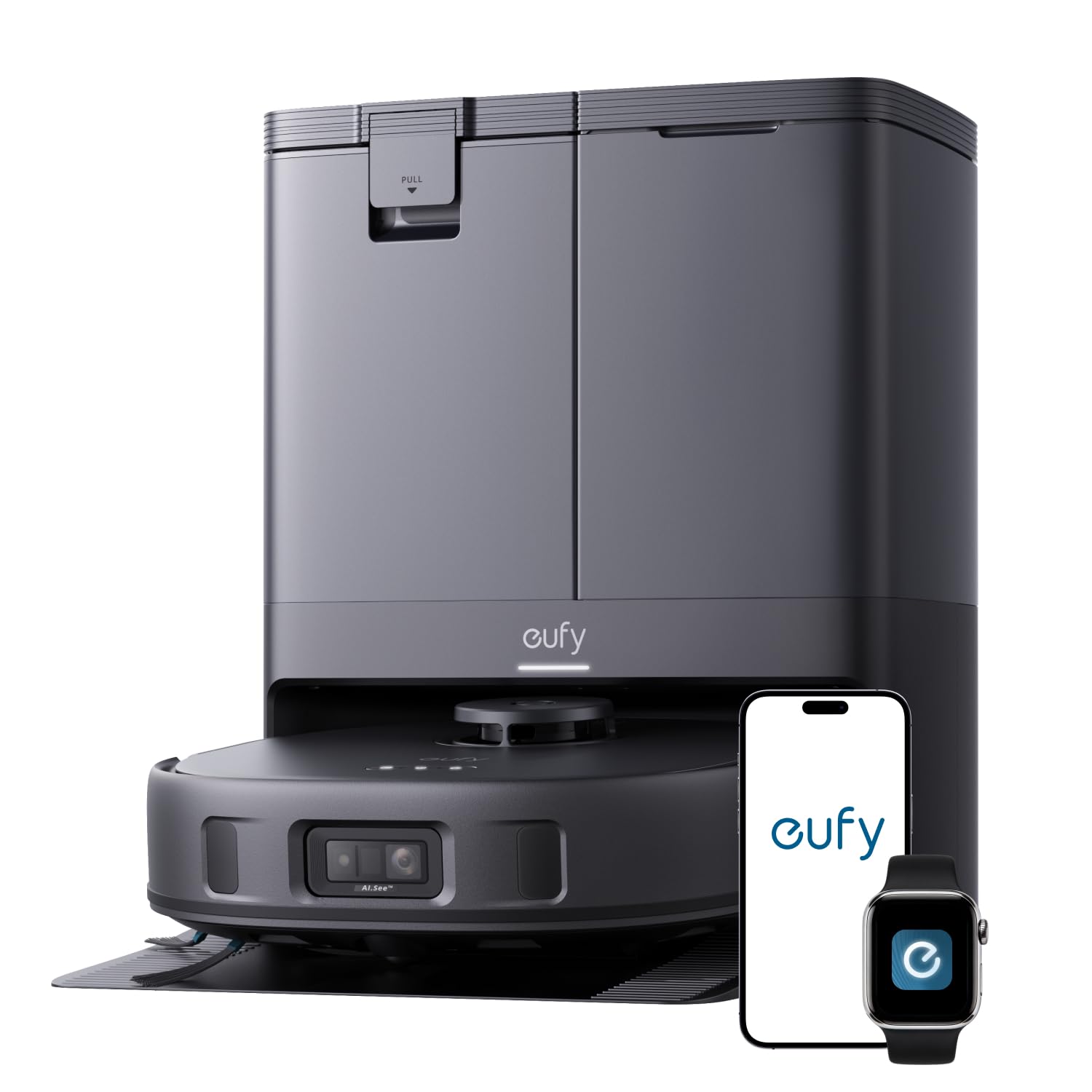
The eufy X10 Pro Omni represents the highest tier of automated mopping available without manually washing pads. The self-cleaning dock rinses the two spinning mop pads with fresh water after every cleaning, then dries them at 45°C heated air to prevent bacterial smell. The 3 L clean-water tank refills the robot automatically, allowing the X10 to mop up to 2,000 square feet across multiple sessions without user intervention — this is the closest any consumer robot gets to “set and forget” mopping.
iPath Laser Navigation creates detailed room maps on the first run and recognizes up to four map levels for multi-story homes. The 8,000 Pa suction motor is overkill for mopping-only use, but eufy includes the option to disable vacuum mode entirely, turning the X10 into a dedicated scrubber on hard floors. The 12 mm auto-lift feature raises both pads when crossing carpet transitions, so low-pile rugs stay completely dry. AI obstacle avoidance detects 100+ objects (shoes, wires, pet bowls) and navigates around them without lighting assistance.
Battery life reaches 173 minutes on a single charge, more than enough for a typical home. The 2.5 L dust bag inside the station needs replacing every 60 days in vacuum mode, but for mop-only use you can skip that bag entirely. The only catch: the X10 requires 2.4 GHz Wi-Fi, and the dock occupies a 17-by-18-inch footprint on the floor. At this price, you are paying for automation rather than scrubbing torque — the spinning pads rotate at a moderate speed, so heavy soil may need two passes.
Why we love it
- Auto-wash and hot-air dry mop pads — no manual cleaning
- 12 mm pad lift keeps carpets completely dry
- 3 L auto-refill tank for uninterrupted large-area mopping
- Obstacle avoidance works reliably day and night
Good to know
- Dock is large and requires permanent floor space
- Spinning mops are not as aggressive as the EVERYBOT EDEG2
- Higher initial investment than dedicated spray mops
- Vacuum motor adds noise even when disabled
5. Roborock Qrevo Series (QV 35A)

Roborock’s Qrevo line has become the benchmark for automated mopping because it combines 200 RPM spinning mops with a 10 mm auto-lift mechanism and a full station that washes, dries, and refills. The two circular pads spin in opposite directions, creating a scrubbing motion that dislodges sticky spills more effectively than the oscillating wipe of the Braava Jet M6. At 8,000 Pa, the vacuum side is overkill for mop-only users, but the vacuum mode can be toggled off in the app, leaving the Qrevo to focus solely on wet cleaning.
PreciSense LiDAR builds multi-floor maps (up to four levels) in minutes, even in complete darkness. The Reactive Tech obstacle avoidance detects furniture, cables, and shoes, and adjusts cleaning density accordingly. The 4 L clean water tank in the dock provides enough water for 3,552 square feet of mopping without manual refill — enough for even the largest single-level homes. The dock also empties the dustbin into a sealed bag, though mop-only users can skip that feature entirely.
The 180-minute battery life means the Qrevo never stops mid-session unless its water tank runs dry. The symmetrical side brushes reduce hair tangling around the mop base, which is a genuine pain point for pet owners. The 10 mm pad lift works well on low-pile carpets but struggles slightly on thick shag rugs, where the pads may still make contact. The biggest drawback is the price and the large dock footprint — the base measures 16.6 by 17.3 inches, similar to the eufy X10, and needs a dedicated wall outlet and 2.4 GHz Wi-Fi connection.
Why we love it
- 200 RPM spinning mops deliver superior scrubbing force
- 4 L dock tank allows ultra-large area continuous mopping
- LiDAR navigation works in pitch-black rooms
- Self-washing pads with heated drying prevent mold
Good to know
- Large dock footprint may not fit cramped utility closets
- Pad lift at 10 mm may still dampen thick shag rugs
- Requires constant 2.4 GHz Wi-Fi for full features
- Vacuum-side suction cannot be completely silenced
6. Shark Matrix Plus 2-in-1 AV2610WA

Shark’s Matrix Plus integrates sonic mopping into a 2-in-1 package, oscillating the wet pad at 100 cycles per minute while traveling across hard floors. The vibration frequency is higher than the spinning disc mops but lower in peak torque — think fine polishing rather than deep scrubbing. Shark’s Matrix Clean technology runs the robot through a precision grid pattern, crossing each tile multiple times so the sonic motion gradually breaks up dried-on film without soaking the floor.
The self-emptying base holds up to 60 days of debris in a bagless HEPA container, but for mop-heavy homes the HEPA filter also traps allergens expelled during the drying cycle. CleanEdge Detection uses side air blasts to push debris from corners into the vacuum path, though this matters less if you primarily use the mop function. LiDAR navigation maps rooms quickly and detects obstacles, but the mapping does not allow room-specific water flow — the same moisture level applies everywhere unless you create no-go zones.
The two reusable microfiber mopping pads included are washable and durable across several cycles. The Matrix Plus straddles a middle ground: strong vacuum capability for carpet-focused homes but competent enough as a sonic mop that you can leave the vacuum attachment in the closet on mop days.
Why we love it
- Sonic mopping (100 cycles/min) buffs floors without soaking wood
- Matrix grid pattern ensures no tile is missed in a single pass
- Bagless self-emptying base with true HEPA filtration
- Corner-tracking air blasts push debris from edges
Good to know
- Water flow cannot be customized per room in the app
- 110-minute runtime is shorter than premium rivals
- Sonic motion less effective on thick, sticky stains
- Mop pads require frequent washing between sessions
7. MANVN Ultra-Slim Robot Vacuum and Mop Combo
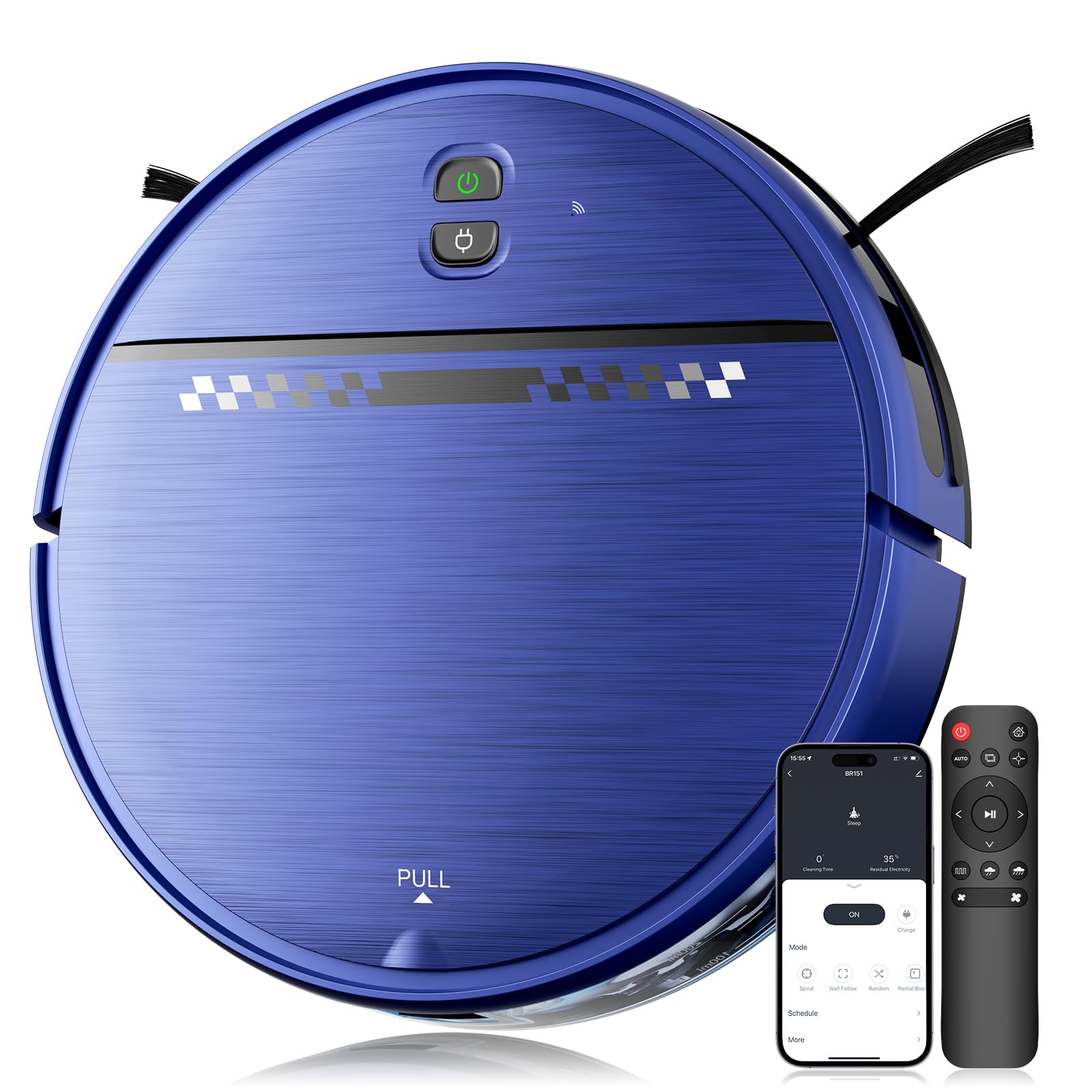
The MANVN combo stands apart for its 2.87-inch ultra-slim height, which slides under sofa frames, bed skirts, and low-clearance cabinets that full-height LiDAR robots cannot enter. While technically a 2-in-1 with a 2300 Pa suction motor, the mop attachment mounts directly onto the dustbin unit and distributes water passively via a microfiber pad — no spinning disc or jet spray. The cleaning path covers about 150 square feet before the 250 ml water tank needs topping off, enough for a small apartment kitchen and entryway.
3D obstacle avoidance allows the robot to detect furniture legs and drop-offs, but the camera-based system struggles in low-light conditions, occasionally bumping into chair legs that the robot fails to register. Wi-Fi and app connectivity offer scheduling, remote start, and room-by-room cleaning with virtual no-go zones. The smaller battery (about 120 minutes) means the MANVN cannot mop a whole 1,000-square-foot home on one charge in continuous wet mode.
For buyers on a tight budget who absolutely need a floor-scrubbing robot that fits under furniture, the MANVN is a workable compromise. But the mopping performance is purely passive — the pad just wicks water from the tank as the robot glides, so dried stains and sticky spills remain after one pass. Pairing with a manual spin mop for spot cleaning is advisable if your household has children or pets that drop food on tile.
Why we love it
- Ultra-slim 2.87-inch height reaches under most low furniture
- 3D obstacle detection improves navigation safety
- Wi-Fi and app control with scheduling capability
- Budget-friendly entry into robot mopping
Good to know
- Passive mop pad does not scrub — light surface cleaning only
- Camera obstacle detection unreliable in dim rooms
- Small battery limits continuous wet-cleaning coverage
- Water tank empties quickly on large floors
8. Generic 3500Pa Robot Vacuum and Mop Combo
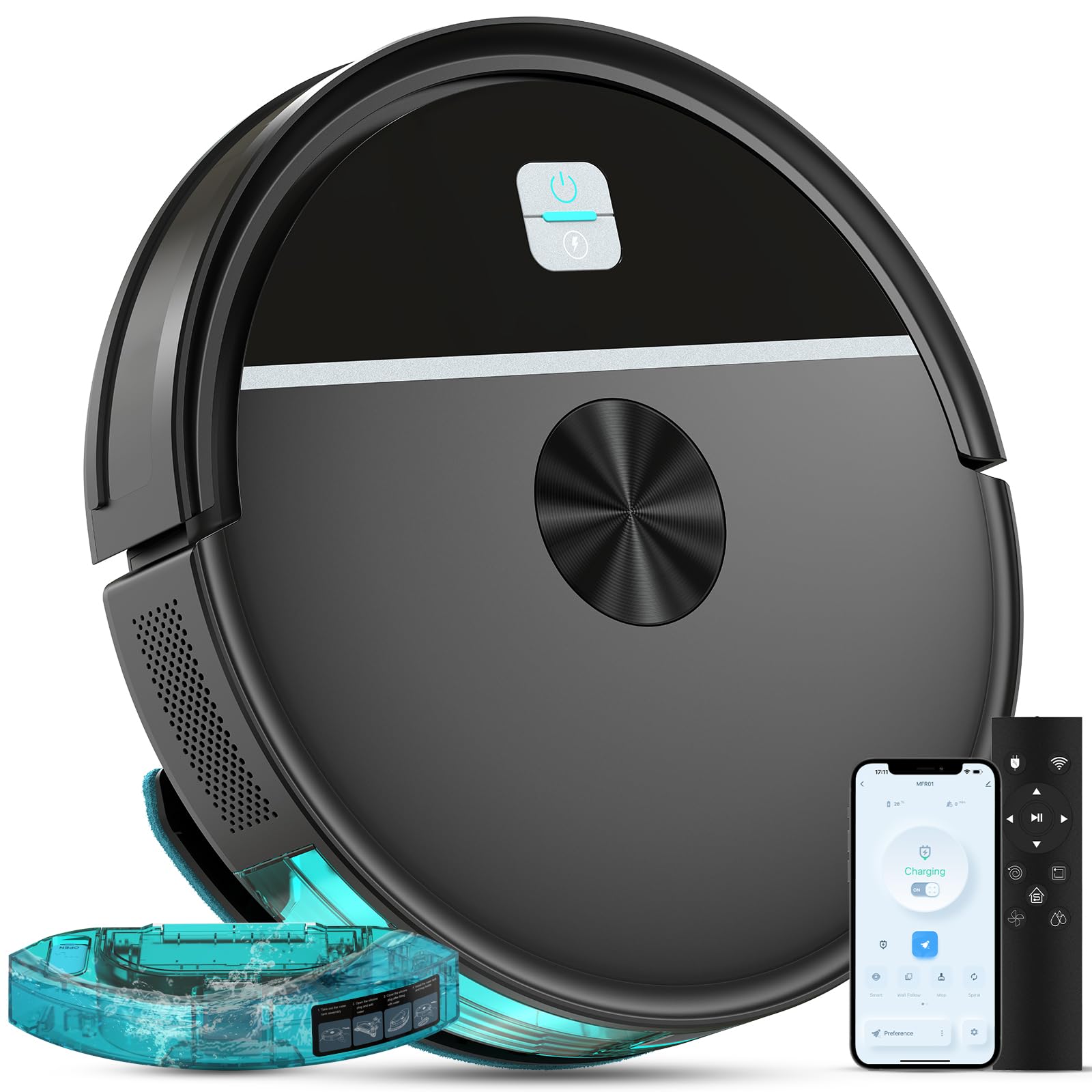
This generic 3500Pa 2-in-1 combo appeals strictly to buyers who want mop functionality without an upfront investment. The dustbin and water tank attach as a single module — switch from dry vacuuming to wet mopping by filling the tank and swapping the pad. The 3500 Pa suction is genuinely effective on low-pile carpets and hard floors for debris pickup, but the mopping action is just a wet drag behind the vacuum motor. Sticky residues require two or three passes, and the robot does not lift the pad on carpet, so area rugs get wet on every mopping cycle.
Wi-Fi, app, and remote control offer three ways to start a cleaning session, but the mapping is gyro-based rather than LiDAR, meaning the robot cannot remember your floor plan across multiple uses. It will bump, turn, and bump again until the cleaning time expires or the battery drains. The app provides basic controls but no room-selection or water-flow adjustment — all floors receive the same moisture level.
The battery claims around 100 minutes of runtime, though sustained mopping uses power faster due to water resistance on the wheels. At this price point, durability is a concern; several users report reduced suction after three months of daily use. For a dorm room, apartment, or rental where the mop function is a secondary need, this combo scratches the itch, but do not expect it to replace a dedicated scrubber like the Bissell SpinWave or the Braava Jet M6.
Why we love it
- Budget-friendly entry to robot mopping with vacuum backup
- Three control methods (app, remote, Wi-Fi) for flexibility
- Manageable size for small apartments and dorm rooms
- Can vacuum carpets when mop feature is not needed
Good to know
- Passive mop drag — no spinning or scrubbing mechanism
- Gyro navigation does not save maps across sessions
- No pad-lift — soaks area rugs during mopping
- Build quality and long-term reliability are uncertain
9. Generic 2300Pa Robot Vacuum and Mop Combo
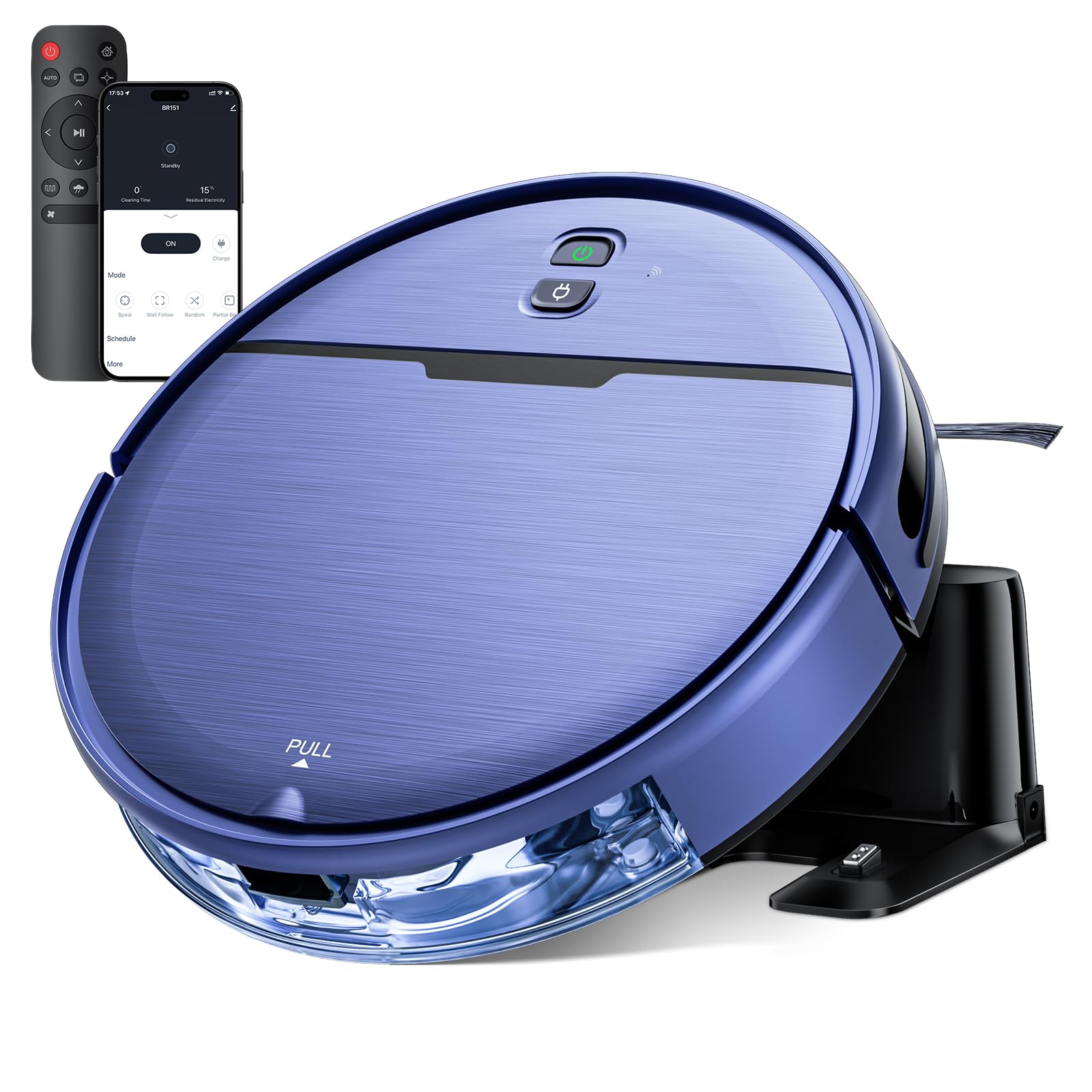
This budget 2-in-1 uses a 2300 Pa suction motor, suitable for dust and pet hair on sealed hard floors but insufficient for deep carpet cleaning. The mopping function works through a gravity-fed water tank that drips onto a microfiber pad as the robot glides — no spinning, no oscillation, no jet. For everyday maintenance in a 300–400-square-foot tile kitchen, this combo keeps the floor feeling slightly damp and picking up surface dust, but dried mud or syrup remains after a full cycle.
Voice control via Alexa and Google Assistant sets this unit apart from some generic competition, allowing hands-free start and stop. The 2-in-1 dust box and water tank swap easily, though switching between vacuum and mop mode requires lifting the robot to swap modules. The battery runs about 90 minutes, but the mopping mode drains it faster due to increased wheel traction resistance against wet floors.
The navigation uses gyroscopic track and anti-drop sensors, but lacking LiDAR or camera-based mapping, the robot curves around the room in a chaotic pattern, often missing corners or revisiting the same spot multiple times. This is purely a “run until battery dies” device with no room-aware scheduling. For the absolute lowest entry price into robot mopping, it works as a confidence builder — just know that every model above it in this guide mops with measurably more effectiveness.
Why we love it
- Lowest-cost way to try robot mopping at home
- Works with Alexa and Google Assistant for voice commands
- Quiet operation at 55 dB for night-time cleaning
- Long runtime for light surface mopping
Good to know
- 2300 Pa suction is weak for anything beyond light dust
- Basic navigation misses sections of the room consistently
- No pad-lifting — carpets get wet on mop runs
- Build materials and motors have limited long-term durability
FAQ
Are robot mops without vacuums actually better than 2-in-1 combos?
Can I use a robot mop on laminate or engineered hardwood floors?
Do robot mops work with multiple sticky stains like dried egg or syrup?
How often should the water tank and pads be cleaned?
What should I do if my mop robot leaves puddles or streaks?
Final Thoughts: The Verdict
For most gardeners, the best robot mop without vacuum winner is the iRobot Braava Jet M6 because its spray-then-wipe logic preserves sealed hardwoods while delivering grid precision through smart mapping. If you want spinning disc torque for dried stains, grab the EVERYBOT EDEG2. And for fully automated wet cleaning without touching a pad, nothing beats the Roborock Qrevo or the eufy X10 Pro Omni, both of which self-wash and heat-dry their mops between sessions. Choose the one that matches your floor type, your need for automated scrubbing, and your tolerance for pad maintenance — because a dedicated mop mops better than any combo that tries to be everything.