
The hardest part of buying a robot vacuum under $200 isn’t finding one — it’s trusting that the suction, mapping, and mopping all work well enough to actually replace your weekly chore. At this price point, you’re dodging toy-grade navigation units and weak motors that leave hair and dust bunnies untouched.
I’m Mo Mahin — the founder and writer behind Furric. I’ve spent months cross-referencing specification sheets, studying navigation algorithms, and analyzing aggregated owner feedback from thousands of buyers to separate the genuinely capable automated floor cleaners from the overhyped shelf-fillers.
Whether you need self-emptying convenience, anti-tangle brush engineering, or pet-proof mapping that remembers multiple floor levels, this guide highlights the best robot vacuum and mop under $200 and explains exactly which strengths matter at this budget tier.
How To Choose The Best Robot Vacuum And Mop Under $200
Not every robot vac in the budget tier cleans the same way. To make the right pick, you need to weigh navigation technology, suction metrics, mopping architecture, self-emptying capability, and battery endurance — all while staying under the $200 line. Here are the key factors that separate a daily workhorse from a frustrating gadget.
Navigation Technology: LiDAR vs. Gyro vs. Random Bounce
LiDAR (laser-based) mapping scans your entire floor plan in minutes and drives row-by-row in neat parallel passes. Gyro-based systems track heading and distance but wander more. Pure random-bounce units, often found in the cheapest tier, repeat coverage inefficiently. For under $200, you can absolutely get LiDAR equipped models from Tikom, Lefant, or Tapo, and that’s the navigation threshold you should not compromise on.
Suction Power Thresholds for Pet Hair and Carpets
Measured in Pascals (Pa), suction strength determines how deeply a robot lifts embedded debris from carpet fibers. Entry-level rooms at 2,000–3,000 Pa handle basic dust on hardwood. For pets and medium-pile carpets, target 5,000 Pa and above. Several models in this bracket pound out 6,000–8,000 Pa — enough to overcome the resistance of rug fibers and pull out hidden dander and hair.
Mopping Architecture: Reservoir Pad vs. Active Water Control
Most budget combos use a gravity-fed or press-fit mop pad that drags behind the vacuum. The best ones add a micro-pump water tank with adjustable flow levels so you can set light dampness for wood or wetter mopping for tile. Without pump control, the mop becomes a barely-moist swipe fine for dust but useless against dried-on footprints. Look for at least 200 ml tanks and three water-level modes.
Self-Emptying Base Station Trade-Offs
A self-emptying dock eliminates daily dust bin emptying by sucking debris into a sealed bag. Capacities range from 2.5 L to 3.5 L, giving you 60 to 90 days of hands-off disposal. The trade-off at this price: self-empty stations add cost, so you usually sacrifice battery runtime or skip advanced mopping. If you have heavy-shedding pets, a 3 L plus bag is worth the swap.
Quick Comparison
On smaller screens, swipe sideways to see the full table.
| Model | Category | Best For | Key Spec | Amazon |
|---|---|---|---|---|
| roborock Q7 L5 | Premium | Highest suction (8,000 Pa) & dual anti-tangle | 8,000 Pa Suction | Amazon |
| Kilgone SDL40 | Premium | Self-emptying & 200 min runtime | 200 min / 2.5 L bag | Amazon |
| uninell (Self-Empty) | Premium | 7,000 Pa self-emptying with 90-day bag | 7,000 Pa / 3.5 L bag | Amazon |
| ILIFE A30 Pro | Premium | 280-day self-emptying bag capacity | 5 x 2.5 L bags | Amazon |
| iRobot Roomba 105 Combo | Mid-Range | Brand reliability & 4-stage cleaning | 100 min runtime | Amazon |
| Tapo RV20 Max Plus | Mid-Range | Self-empty dock with LiDAR & 3.27″ height | 2.5 L sealed bag | Amazon |
| Tikom L8000 Pro | Mid-Range | 45 dB quiet operation & 6,000 Pa suction | 6,000 Pa / 45 dB | Amazon |
| Lefant M330 Pro | Mid-Range | dToF precision mapping & 95 mm height | 95 mm slim / 150 min | Amazon |
| uninell UR1 | Budget | 180 min runtime & 5000 Pa suction | 5,000 Pa / 3.5 L bag | Amazon |
In‑Depth Reviews
1. roborock Q7 L5 Robot Vacuum and Mop Combo
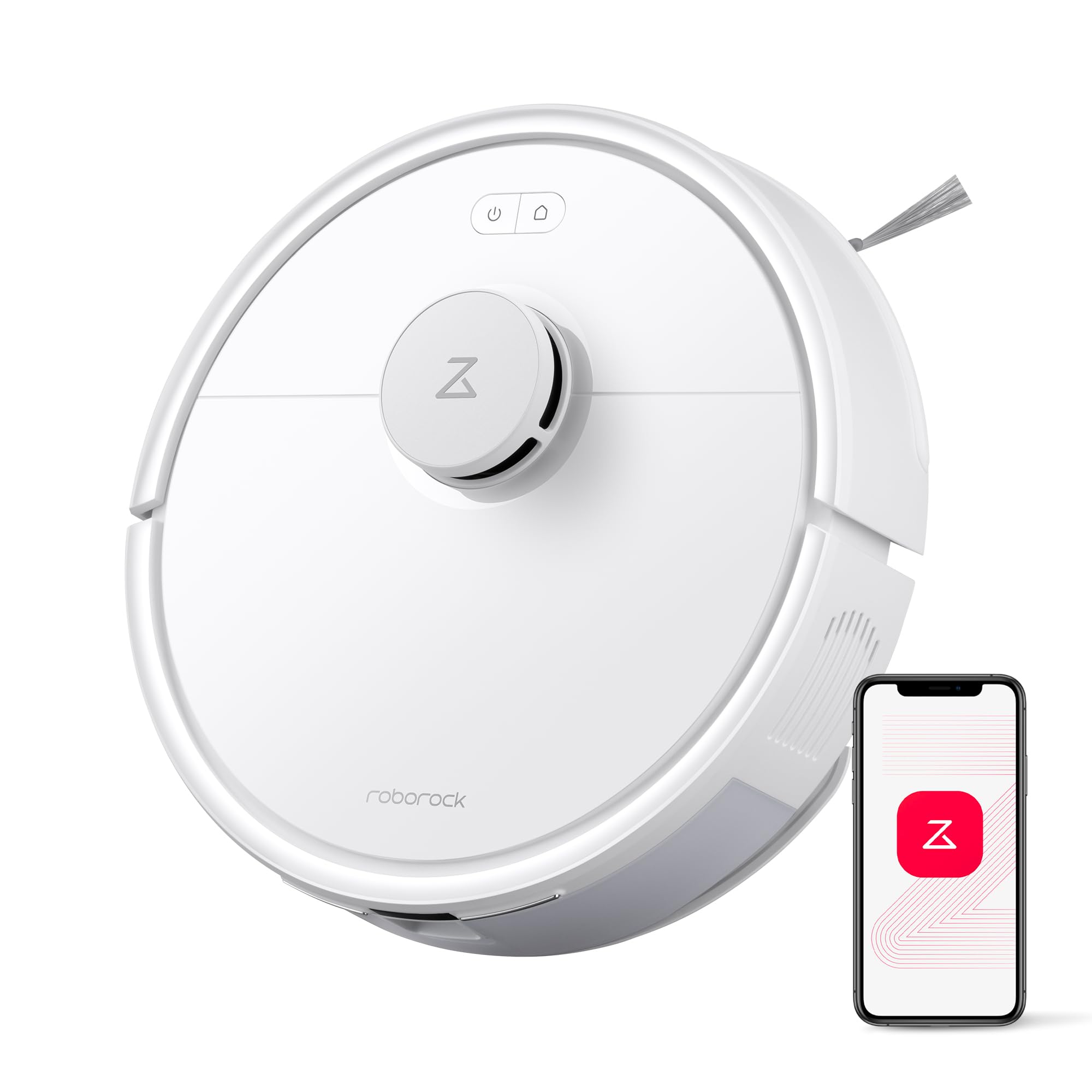
At 8,000 Pa, the roborock Q7 L5 offers the highest suction power in this entire comparison — a figure that pulls deeply embedded dirt from carpet fibers while maintaining excellent edge sweep coverage. The H-shaped dual anti-tangle brushes actively prevent hair from wrapping around the roller, which is rare at this price point and a real time-saver for pet households with shedding dogs or cats.
LiDAR 360-degree laser mapping scans your home in real time and saves multiple floor maps. The modular 270 ml water tank with a removable mop pad handles vacuum-and-mop in one pass, with three adjustable water levels to match floor type. Owners report a 10-minute scan of a 1,700 square foot space and rely on the no-go zone feature to protect rug fringes and floor vents. The app offers granular scheduling per room and child lock for safety.
One recurring note: the robot occasionally loses Wi-Fi login after returning to the dock, requiring a quick reconnect via the app. The mopping, while capable of handling dried-on stains, is more of a maintenance function than a deep scrub. For buyers prioritizing raw suction, anti-tangle engineering, and proven LiDAR mapping, this unit sits at the top of the value equation.
Why we love it
- Highest suction at 8,000 Pa in this price segment
- Dual anti-tangle brushes minimize cleaning maintenance
- LiDAR maps multiple floors with precise no-go zones
Good to know
- Wi-Fi login can drop after returning to charge
- Mopping is effective for maintenance, not deep scrubbing
2. Kilgone SDL40 Robot Vacuum and Mop Self-Emptying
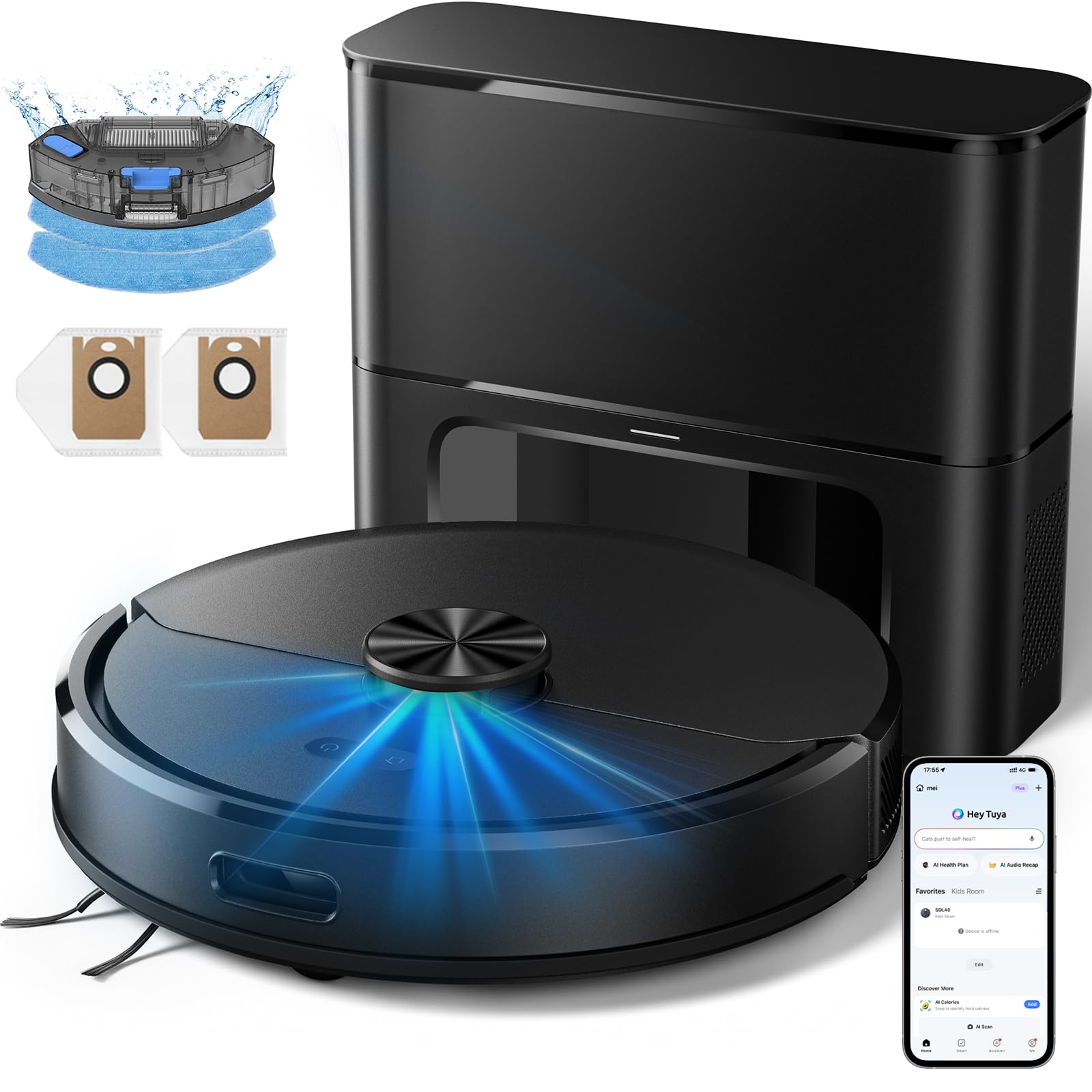
The Kilgone SDL40 combines a 2.5-liter self-emptying dust bag with 6,000 Pa cyclone suction and LiDAR mapping — a package that hits the sweet spot of hands-off maintenance and cleaning power under $200. The base station holds enough debris for weeks, and with a 200-minute battery runtime, a single charge covers up to 1,615 square feet, making it ideal for apartments and mid-sized homes.
The anti-tangle brush reduces hair wrap, while AI-powered sensors detect charging cables, shoes, and furniture, then suggest no-go zones to avoid obstruction. It climbs thresholds up to 18 mm and operates at 65 dB, quieter than a normal conversation. Owners with golden retrievers report the daily fur pickup is genuinely hands-free, and the auto-recharge-resume function means it returns to the last missed spot after recharging.
The mop is a passive trailing pad with no active scrubbing action — adequate for light dust removal but not for dried spills. In cluttered rooms with low-hanging furniture, the robot occasionally requires manual placement back on the dock. Still, the combination of self-emptying, long battery life, and solid navigation makes this a top-tier choice for busy families.
Why we love it
- 200-minute battery life covers large single-level homes
- 2.5 L self-emptying bag reduces disposal frequency
- LiDAR with auto-recharge-resume for complete coverage
Good to know
- Mop pad is passive and not suited for deep cleaning
- Struggles to re-dock in very cluttered or tight spaces
3. uninell Self-Emptying Robot Vacuum and Mop
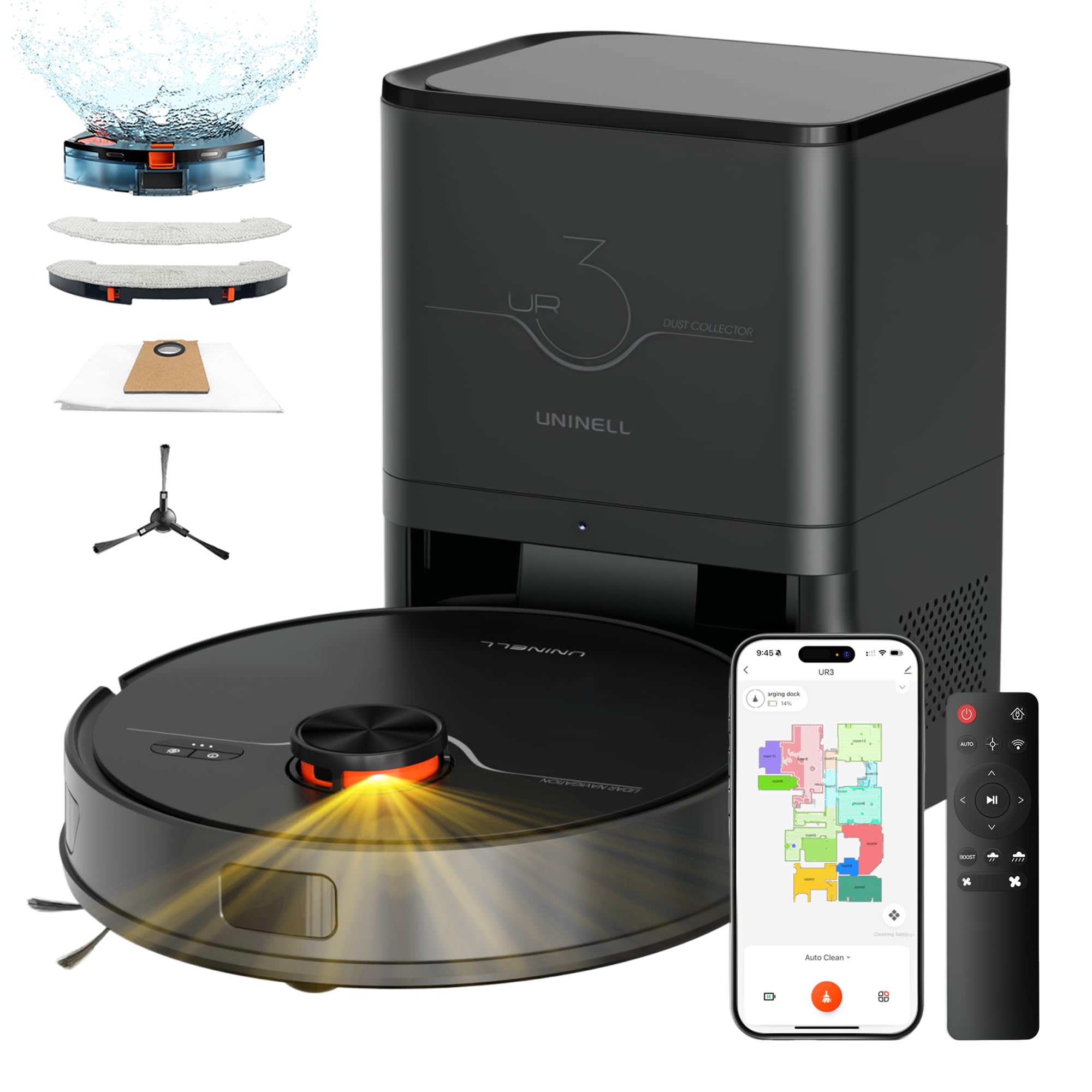
The 3.5-liter self-emptying station on this uninell model holds up to 90 days of dirt — a top capacity for the sub-$200 bracket. Backed by 7,000 Pa suction and auto-carpet boost, it ramps up power the moment it senses rug fibers, ensuring deep debris lift from low-pile carpets. The tangle-free brush design tackles pet hair from dogs or cats without manual cutting.
LiDAR mapping stores up to five distinct floor plans, enabling multi-story homes to switch between levels without re-scanning. The app lets you customize suction and water flow per room, while the included remote control works for users who prefer Wi-Fi-free operation. Owners note the quiet operation (comparable to a refrigerator hum) and the generous two-year warranty as standout peace-of-mind features.
Some users report the mop pad is a stationary drag unit with no scrubbing speed, so mopping is most effective for dust and light footmark removal. The self-emptying cycle is loud when active, and the dust bags are disposable (not reusable). For allergy sufferers needing frequent automated waste containment, the 3.5 L bag and HEPA-like filtration deliver noticeable air quality benefits.
Why we love it
- 3.5 L self-empty bag holds 90 days of debris
- 7,000 Pa with auto-carpet boost for deep rug cleaning
- 5-map memory for multi-story households
Good to know
- Mop pad is static and lacks scrub motion
- Self-empty cycle is loud; bags are single-use
4. ILIFE A30 Pro Robot Vacuum and Mop

ILIFE packs five 2.5-liter self-emptying bags in the box, adding up to an impressive 280 days of hands-off dust disposal — the highest included bag count in this comparison. The 5,000 Pa suction with four selectable modes (Quiet at 500 Pa up to Max at 5,000 Pa) lets you adapt to different surface soiling levels without consuming battery unnecessarily.
The LDS laser navigation combined with the Slam algorithm generates accurate maps and plans efficient cleaning routes. No-go zones and virtual walls are easy to set inside the ILIFEClean app, and the 2-in-1 water tank (200 ml dustbin plus 200 ml water tank) enables simultaneous vacuum and mop without swapping modules. Owners appreciate the quiet operation and the machine-washable mop pads.
The mop head does not lift when crossing carpets, so thresholds become a challenge when both vacuum and mop are active. The app interface has some ambiguous wording (e.g., “Close” instead of “Off”), and the dustbin fills quickly in heavy-shedding homes. For buyers who want maximum bag capacity and basic mopping mixed with solid navigation, the ILIFE A30 Pro is a smart value play.
Why we love it
- 280-day bag capacity prevents frequent replacement
- Four-stage suction adjustment saves battery on light dirt
- Accurate LDS laser mapping with no-go zone support
Good to know
- Mop head doesn’t lift, reducing carpet-climbing ability
- App interface has ambiguous labeling; small dustbin
5. iRobot Roomba 105 Combo Robot Vacuum & Mop
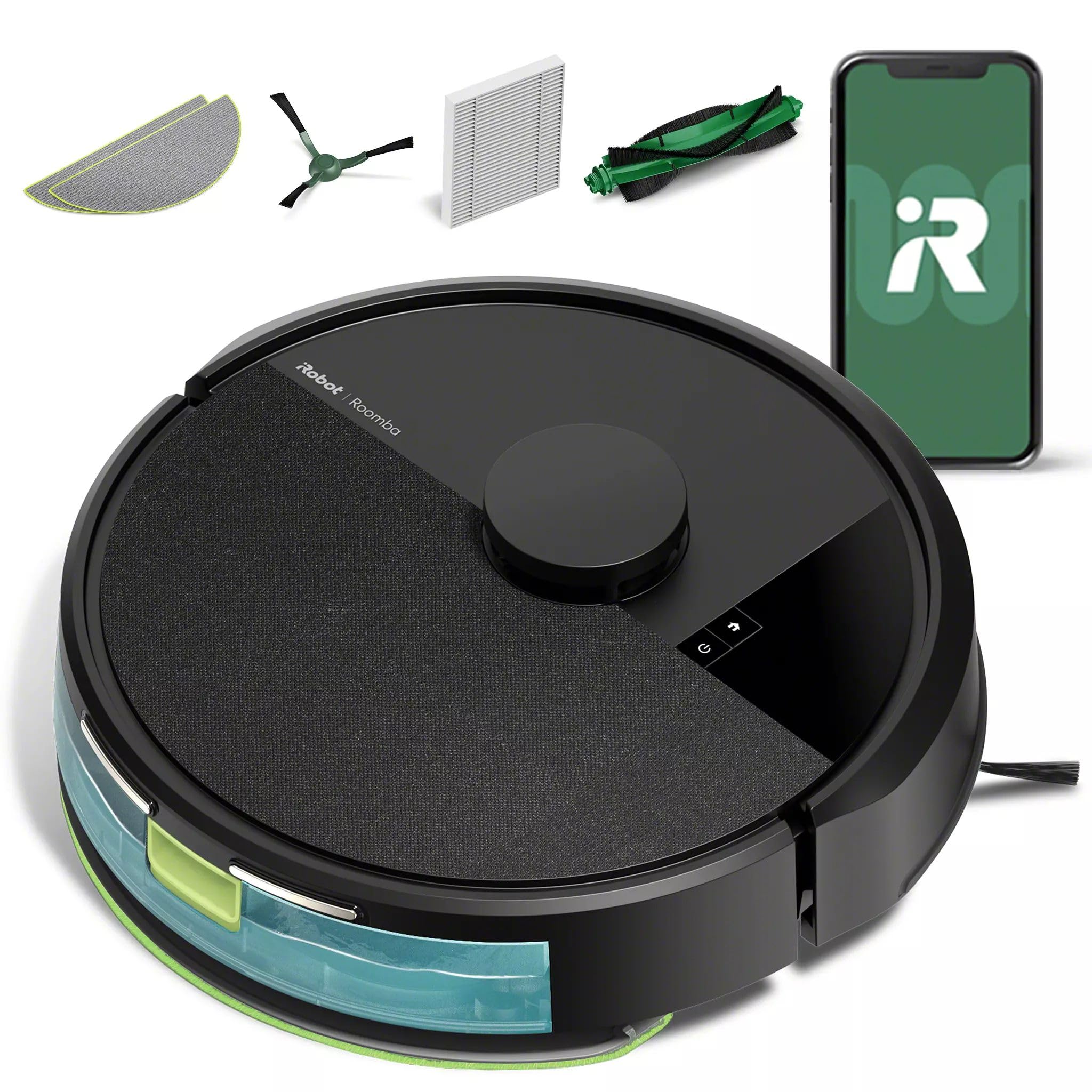
The iRobot Roomba 105 Combo brings the brand’s proven 4-stage cleaning system — 70X more power-lifting suction than the 600 series — into the sub-$200 range with ClearView LiDAR navigation. It maps your home in neat rows while automatically detecting and avoiding carpets when in mopping mode, a feature that saves you from programming complex no-go zones.
The built-in micro-pump mop pad dispenses water at three flow levels and supports SmartScrub for 2X deeper scrubbing, making it more capable than passive pad competitors. The Roomba Home App handles custom scheduling, room targeting, and keep-out zones with a clean interface. Owners with two dogs report the robot reliably maintains hard floors and low-pile rugs with minimal intervention.
Battery runtime is the weakest link here — only 100 minutes, and some users report needing a mid-clean recharge for homes over 1,000 sq. ft. The mopping solution uses water only; it does not accept cleaning chemicals easily. A small percentage of owners note inconsistent obstacle detection on thick rug edges. If you value an established brand with a strong app ecosystem and don’t mind a shorter runtime, the Roomba 105 is dependable.
Why we love it
- Automatic carpet detection in mopping mode protects rugs
- SmartScrub provides deeper scrubbing action for stains
- ClearView LiDAR with polished Roomba Home App
Good to know
- 100-minute battery may need a recharge mid-cleaning
- Mop uses water only; no cleaning solution compatibility
6. Tapo RV20 Max Plus Robot Vacuum and Mop

The Tapo RV20 Max Plus sits just 3.27 inches tall — the slimmest unit here — and glides under sofas and beds where taller bots get stuck. Despite the low profile, it houses a self-emptying dock with a 3-liter sealed bag that stores up to 60 days of debris, plus DeepVac technology that delivers over 97% dust pickup and 5,300 Pa max suction.
Mesh Grid Technology drives a systematic grid pattern that prevents missed spots, while the LiDAR navigation plans efficient routes and avoids obstacles even in the dark. The 300 ml water tank offers three adjustable flow levels. Owners with toddlers and puppies note that the mapping is easy to set up and the corner cleaning is surprisingly good for a slim robot.
The mopping function is adequate for daily upkeep but won’t handle mud or heavy dried-on residue — many owners use a Swiffer afterward for deeper shine. The robot may get stuck on thick rugs when the mop pad is attached, and a minority of units develop navigation errors after a few months. For low-clearance furniture owners who want self-emptying in a tiny footprint, the Tapo is a smart fit.
Why we love it
- Ultra-slim 3.27″ height reaches under most furniture
- Self-empty dock with 3 L bag and 60-day capacity
- Mesh Grid Technology ensures systematic coverage
Good to know
- Mop struggles with thick mud or heavy stains
- Some units report navigation drift after extended use
7. Tikom L8000 Pro Robot Vacuum and Mop Combo
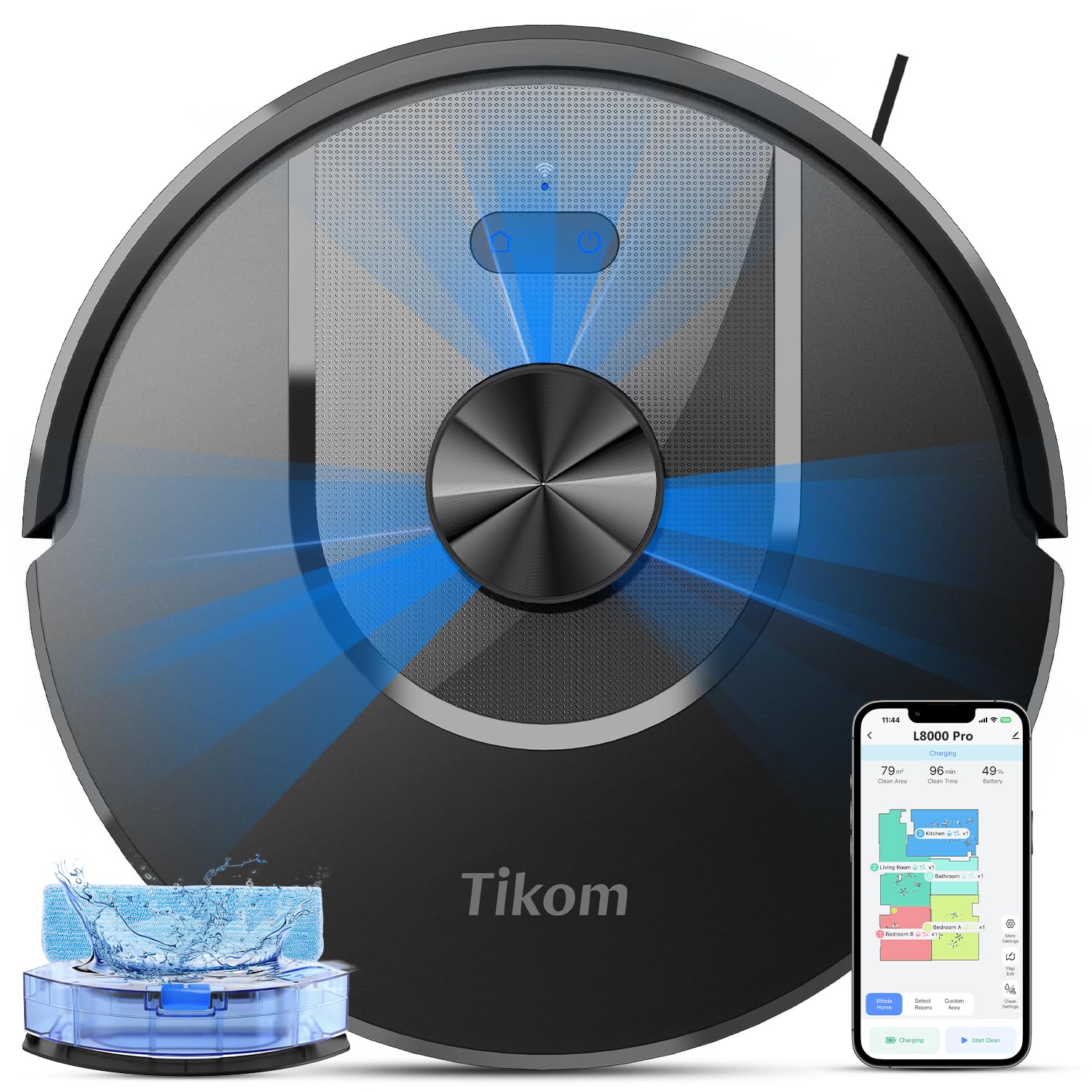
The Tikom L8000 Pro delivers 6,000 Pa of suction at only 45 dB in low mode — quiet enough to run during a nap or a conference call without distraction. LiDAR navigation maps and stores up to five floor plans, making it a strong candidate for duplex homes. The 450 ml dustbin and 300 ml water tank are both larger than previous-generation models, reducing mid-cleaning empties.
App control supports no-go zones, virtual walls, and custom cleaning schedules for specific rooms or spots. The robot climbs transitions reliably and rarely gets stuck thanks to effective obstacle avoidance. Owners upgrading from older Mint or Shark units report a massive jump in navigation precision and suction strength. The lidar-based mapping is fast, typically scanning a mid-sized floor in under 10 minutes.
Some users note that the voice announcements could be clearer, and the mop is better suited for light touch-ups than heavy scrubbing. Aftermarket replacement parts are not as widespread as for bigger brands. For buyers who prioritize a whisper-quiet operation and strong lidar mapping without needing a self-emptying base, the Tikom offers an impressive feature-to-cost ratio.
Why we love it
- 45 dB low mode is one of the quietest in this class
- Stores up to 5 floor maps for multi-level homes
- 6,000 Pa suction with 450 ml/300 ml large capacity bins
Good to know
- Mop is for light maintenance, not deep stain removal
- Voice prompts could be clearer; limited aftermarket parts
8. Lefant M330 Pro LiDAR Robot Vacuum and Mop

The Lefant M330 Pro uses dToF (direct Time of Flight) navigation, scanning up to 15 meters for precise real-time mapping that works in the dark. At just 95 mm tall, it fits under low-profile furniture with ease. The 190-degree PSD obstacle avoidance detects cords and small objects with millimeter precision, a feature usually reserved for higher-priced units.
The 450 ml visible dustbin lets you see fill level at a glance, and the anti-tangle suction port reduces hair wrap — especially helpful in multi-pet homes. It supports multi-floor mapping and includes voice control through Alexa and Google Assistant. Owners praise the simple setup and the quiet operation that doesn’t scare pets. The 150-minute battery provides enough coverage for typical home layouts on a single charge.
The mopping function is described by many owners as a light damp dusting — effective for fine particles but not for footprints or spills. The mop attachment prevents the robot from climbing raised thresholds (0.5-inch plus), so you must remove it manually after mopping or risk floor damage. Some units arrive with a flimsy foam pre-filter that tears quickly. For homes with very low furniture that need reliable obstacle detection, the Lefant is a smart navigation-first pick.
Why we love it
- dToF navigation with 15-meter range for accurate mapping
- Ultra-slim 95 mm body reaches low furniture gaps
- 190-degree obstacle avoidance protects cords and small items
Good to know
- Mop only delivers light dampening, not deep mopping
- Mop attachment blocks threshold climbing; foam pre-filter is fragile
9. uninell UR1 Robot Vacuum and Mop Combo

The uninell UR1 runs for 180 minutes on a single charge from its 2,600 mAh battery, covering up to 2,100 square feet before needing to dock. That kind of runtime is rare at the budget end, and it’s paired with 5,000 Pa suction, a HEPA filter, and an anti-tangle V-shaped brush designed specifically to prevent pet hair wrap.
Gyro-navigation drives a systematic cleaning pattern rather than random bouncing, and the 2.99-inch slim profile lets it slide under most beds and sofas. It supports Alexa voice control, the Smartlife app, a remote control, and physical buttons — making it accessible for all ages. The self-charging function kicks in automatically when the battery drops to 15%. Owners with three dogs report daily hair pickup with no tangles and a quiet sub-50 dB operation.
The mopping function is the weak link: the low water output and small tank mean it basically drags a slightly damp cloth, so it won’t clean spills or sticky messes. The random mode can be erratic, and the small dust bin requires frequent emptying for heavy-shedding pets. For budget buyers who value battery life above all else and need reliable daily vacuuming with a basic mop, the UR1 delivers excellent value.
Why we love it
- 180-minute battery covers up to 2,100 sq. ft.
- Gyro-navigation for systematic coverage at a low price
- Anti-tangle brush works well with pet hair
Good to know
- Mop is too weak for spill cleanup or sticky messes
- Small dust bin on the base station
FAQ
Will a robot vacuum under $200 damage my hardwood floors?
Can these robot vacuums handle thick, high-pile carpets?
How often do I need to replace the filter and brushes?
Do these robots support 5 GHz Wi-Fi?
Final Thoughts: The Verdict
For most households, the best robot vacuum and mop under $200 is the Kilgone SDL40 because it combines 200-minute battery life, 6,000 Pa suction, and a self-emptying 2.5-liter dust bag without exceeding the budget. If you want the highest raw suction and anti-tangle engineering, grab the roborock Q7 L5. And for ultra-slim furniture access with dToF navigation, nothing beats the Lefant M330 Pro.