
The robot vacuum and mop category has matured to the point where sub-$300 models now deliver what flagships from five years ago could only promise: LiDAR navigation that doesn’t bump into furniture, self-emptying bases that seal debris for weeks, and mopping systems that actually scrub rather than just smear. The bottleneck has shifted from hardware capability to choosing the right spec mix for your floor type, pet count, and tolerance for emptying dust bins. After combing through suction ratings, battery tests, customer reliability reports, and dock engineering across the latest releases, the field narrows to a handful of models that genuinely deliver on the promise of automated floor care without pushing past the budget ceiling.
I’m Mo Mahin — the founder and writer behind Furric. I spend my time dissecting market trends, comparing specification sheets, and cross-referencing verified owner feedback to separate real performance from marketing claims in the smart cleaning space.
The current crop of contenders for the best robot vacuum and mop under $300 combines self-emptying docks, anti-tangle brush systems, and app-based zoning that was previously locked behind premium pricing tiers just a generation ago.
How To Choose The Best Robot Vacuum And Mop Under $300
The sub-$300 robot vacuum and mop bracket is fiercely competitive. To navigate it, you need to prioritize the spec that matters most for your home: suction power alone won’t fix poor navigation, and a giant dust bag won’t help if the mop just skids across the floor. Here are the decision points that actually separate a daily driver from a frustrating gadget.
Suction Power and Carpet Boost
Look for at least 5,000 Pa of suction if you have any carpet or area rugs. Models in this range now reach up to 7,000 Pa to 10,000 Pa, which is overkill for hardwood but essential for extracting embedded pet hair from medium-pile carpets. The more critical feature is automatic carpet boost — a sensor that ramps up suction when the robot transitions from tile or wood to carpet. Without it, you get the same suction on every surface, wasting battery on hard floors and under-cleaning rugs.
Navigation Technology and Zoning
LiDAR navigation is the gold standard for this price band. It creates a real-time floor plan, remembers room layouts, and supports virtual no-go zones and room-specific cleaning schedules. Cheaper gyroscopic or random-bounce systems will eventually cover the floor, but they take longer, miss spots, and cannot reliably avoid pet bowls or charging cables. Multi-map support (saving separate maps for different floors) is a must if your home has more than one level.
Self-Emptying Base Design
A self-emptying dock is no longer a luxury at this price — the real question is bagged vs. bagless. Bagged systems (2.5L to 4L capacity) use disposable sealed bags that trap dust and allergens, requiring a purchase every few months. Bagless systems use a reusable canister that you rinse out, saving recurring costs but exposing you to dust during emptying. For allergy sufferers, the sealed bag path is non-negotiable. For frugal households, a bagless system eliminates consumable expenses.
Mopping System Quality
There are two mopping tiers in this bracket. Basic models drag a damp cloth across the floor — fine for light dust but useless for dried spills or sticky residue. Higher-tier models use sonic vibration (like Roborock’s VibraRise) which scrubs at multiple passes per second, or spinning mop pads (like eufy’s Omni) that apply downward pressure. The latter two actually break surface tension on stains. Also check if the mop lifts automatically on carpet to avoid wetting rugs.
Battery Runtime and Obstacle Height
Battery life in this segment ranges from 120 to 230 minutes. Larger homes (over 1,500 sq ft) should target at least 150 minutes plus auto-recharge and resume. Physical height matters more than most realize — a 3.5-inch robot fits under most furniture; anything over 4 inches will struggle with standard sofa and bed clearance. Edge-to-corner cleaning design also varies: some models extend a side brush into corners, others rely on the main brush and leave gaps.
Quick Comparison
On smaller screens, swipe sideways to see the full table.
| Model | Category | Best For | Key Spec | Amazon |
|---|---|---|---|---|
| roborock Q7 M5+ | Premium | Multi-Surface Carpet + Hardwood | 10,000 Pa Suction / Sonic Mop / 7-Week Base | Amazon |
| DREAME D20 Air Plus | Premium | Deep Carpet + Allergy Awareness | 20,000 Pa Suction / 4L Base / Edge-to-Corner | Amazon |
| eufy Omni C20 | Mid-Range | Spinning Mop + Self-Cleaning | 7,000 Pa / 230 Min Runtime / Auto Mop Wash | Amazon |
| roborock Q10 S5+ | Premium | Carpet-Heavy Homes | 10,000 Pa / VibraRise 2.0 Sonic Mop / 70-Day Base | Amazon |
| uninell UR3 | Mid-Range | Extended Runtime + Tangle-Free Roller | 7,000 Pa Suction / 180 Min / 3.5L Self-Empty Base | Amazon |
| Bagotte BL20 Pro | Mid-Range | Pet Owners on a Mid-Range Budget | 6,000 Pa Suction / 2.91-Inch Slim Design / LiDAR | Amazon |
| Tikom L8000 Plus | Mid-Range | Budget LiDAR Navigation | 6,000 Pa Suction / 3L Self-Empty Base / 150 Min | Amazon |
| Airzeen Q20 Ultra | Value | Bagless + Recurring Cost Savings | 6,000 Pa Suction / Bagless Self-Empty / 45 Days | Amazon |
| Kligone SDL40 | Value | Quiet Operation + Lightweight | 6,000 Pa Suction / 65dB / Anti-Tangle Brush | Amazon |
In‑Depth Reviews
1. roborock Q7 M5+

The roborock Q7 M5+ brings the company’s proven LiDAR mapping and 10,000 Pa HyperForce suction into a package that undercuts most flagship pricing by hundreds. The self-emptying RockDock Plus base holds a 2.7L sealed dust bag rated for roughly seven weeks of debris, which is ample for a household with one or two pets. The dual anti-tangle system — featuring a JawScrapers Comb main brush and a zero-percent tangling side brush — addresses the most common maintenance headache for long-haired households. The mop module attaches to the rear and offers three adjustable water flow levels, though it stays in contact with the floor at all times; owners with thick medium-pile rugs report needing to set no-mop zones in the app for those areas.
Navigation is where the Q7 M5+ earns its price position. The PreciSense LiDAR system maps a home in under 10 minutes, supports multi-level storage for up to four floors, and enables room-specific suction and water settings. In practice, the methodical back-and-forth pattern covers edges thoroughly, and the cliff sensors reliably prevent stair drops even in low-light conditions. The main complaint from verified owners involves the 150-minute battery runtime — enough for most single-level homes under 1,800 square feet on balanced mode, but you will need the auto-recharge and resume feature for larger spaces. The auto-empty dock is audible for about 10 to 15 seconds during the emptying cycle.
Mopping performance is best described as light maintenance rather than deep scrubbing. The felt mop pad wets the floor and collects surface dust, but dried-on spots or sticky kitchen spills require manual attention. The app is well-built, offering schedule customization, do-not-disturb mode, and real-time cleaning path display. For buyers who prioritize vacuum performance and app reliability over mop aggression, the Q7 M5+ is the most rounded option in the premium tier.
Why we love it
- Proven LiDAR navigation with multi-floor map support
- Dual anti-tangle brush system practically eliminates hair wrap
- 10,000 Pa suction with automatic carpet boost for deep carpet cleaning
Good to know
- Mop pad drags on carpet unless no-mop zones are configured
- Battery runtime may require recharge on homes over 1,800 sq ft
2. DREAME D20 Air Plus
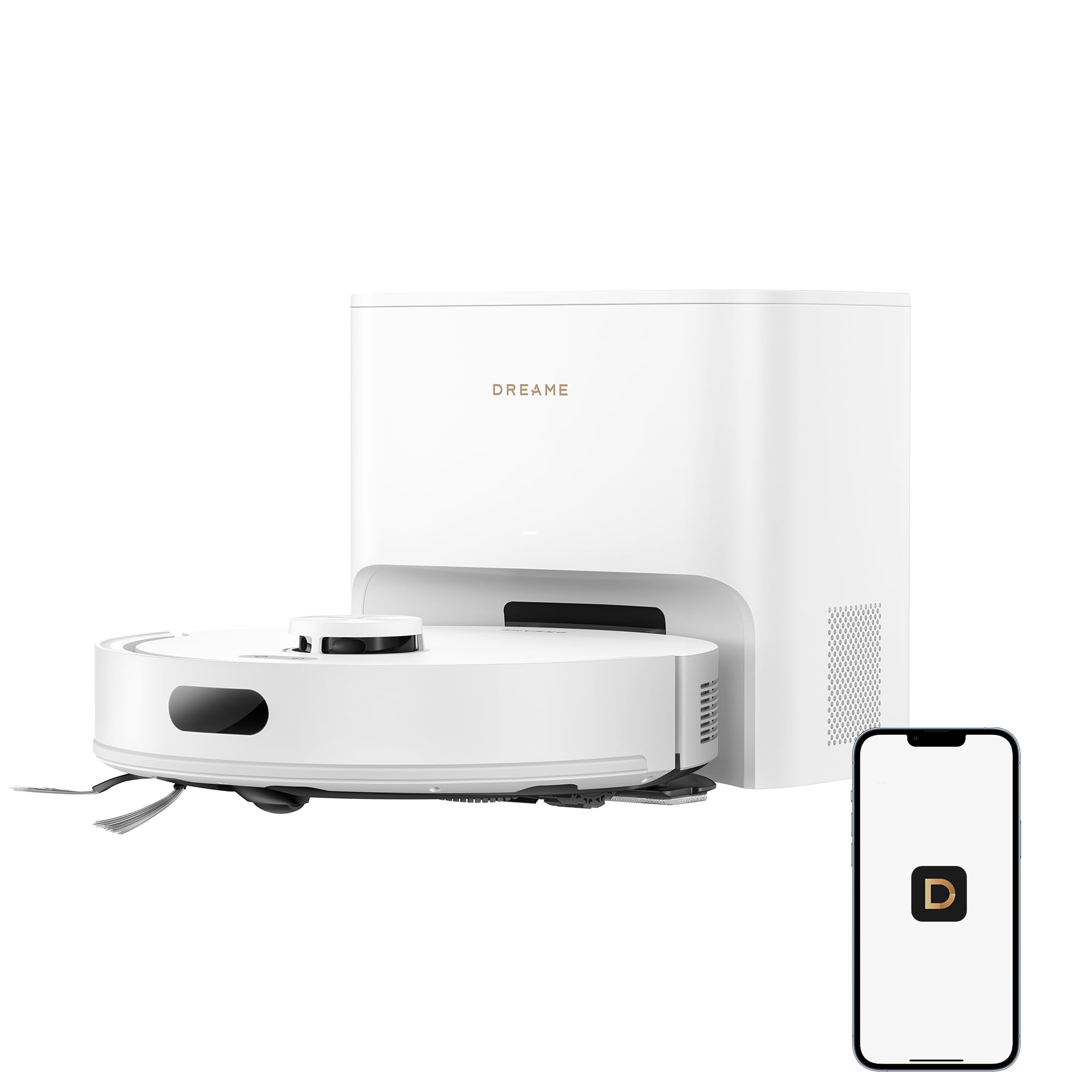
The DREAME D20 Air Plus occupies a unique spot in the sub-$300 bracket by delivering 20,000 Pa Vormax suction — a figure that typically belongs to models costing twice as much. That raw power translates into noticeable differences on medium-pile carpets, where the vacuum pulls up embedded dust and fine sand that 6,000 Pa units leave behind. The 4L self-emptying base is the largest in this roundup, rated for up to 120 days of dust collection in the sealed bag. For allergy households, that means fewer bag changes and less dust exposure per year. The edge-to-corner cleaning design extends the side brush into right-angle intersections, reducing the hand-vacuum follow-up needed in room corners.
Navigation relies on a LiDAR system that maps efficiently, though a small number of owner reports note the LiDAR bump housing adds enough height to prevent cleaning under some low-slung sofas and platform beds. The 2-in-1 vacuum and mop function uses an electronic water tank with adjustable flow, so you can set a light mist for hardwood or a heavier flow for tile. The dual anti-tangle design targets the main brush and side brush separately — the main brush slices through hair as it rotates, while the side brush uses a curved paddle shape to shed hair rather than wrap it. In testing, the combination handles long human hair and pet fur without clogging, though a visual inspection after each full-home cycle is still wise.
Battery life is rated at a generous 280 minutes in standard mode, though the real-world figure on a mix of suction and mopping is closer to 90 minutes of continuous full-power cleaning. The dock is relatively compact for a 4L station, measuring just over ten inches wide. One edge case: owners who keep furniture flush to walls may notice the LiDAR system maps those areas as inaccessible, requiring a manual floor plan adjustment in the app. The D20 Air Plus is the right pick if your home is carpet-heavy and you want the highest suction-to-dollar ratio available at this ceiling.
Why we love it
- Massive 4L sealed bag base reduces bag changes to every few months
- 20,000 Pa suction genuinely outperforms most + models on deep carpet cleaning
- Edge-to-corner brush design cuts down on manual corner touch-ups
Good to know
- LiDAR housing may block the robot from fitting under low-clearance furniture
- Some owners report mapping quirks with flush-to-wall furniture layouts
3. eufy Robot Vacuum Omni C20 (Renewed Acceptable)
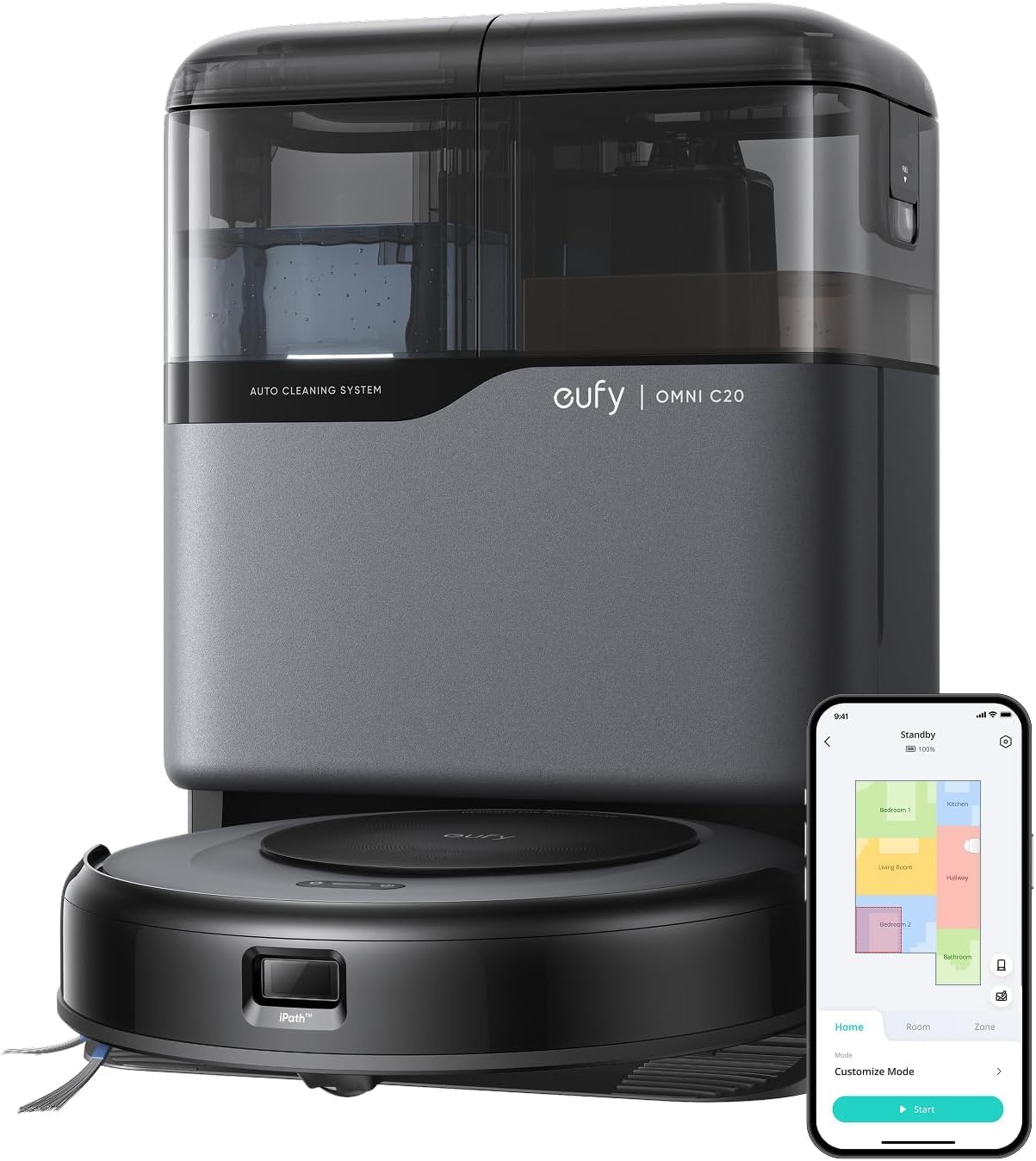
The eufy Omni C20 breaks the typical mopping mold for the sub-$300 segment with a spinning mop system that applies 6N of downward pressure at 180 rotations per minute. This is not a drag-and-wipe system — it actively scrubs, which makes a measurable difference on set-in grime in kitchens and entryways. The base station handles auto emptying, auto mop washing, and auto drying, so the mop pad stays clean between runs and doesn’t develop musty odors. The 7,000 Pa suction is among the higher figures in this price tier, and paired with a rolling brush and side brush, it manages pet hair and debris without excessive repeat passes. The 3.35-inch height profile allows it to slide under most furniture without scraping the lidar bump.
This is a certified refurbished model, which means the unit has been inspected and tested to meet performance standards but may show cosmetic scuffs. Verified owner feedback is overwhelmingly positive: multiple reviewers report the unit looks and performs like new, with fast mapping, quiet operation, and clinical obstacle avoidance that rarely gets stuck on chair legs or shoes. The Omni C20 supports app control and LiDAR-based mapping, though it only connects to 2.4GHz Wi-Fi networks. The 230-minute battery life is the longest in this roundup, covering large single-level homes in a single charge cycle with energy to spare for a second pass on high-traffic zones.
The base station features transparent water tanks that let you check fill levels without opening lids — a small convenience that becomes noticeable when you are running the robot daily. The self-cleaning mop cycle runs after each mopping session, and the room-temperature air drying prevents bacteria growth on the pad. The main trade-off is the refurbished designation: you save significantly compared to retail, but the warranty length and return window are typically shorter than new units. For buyers who prioritize mop scrubbing performance above all other features, the Omni C20 is the strongest contender in this analysis despite its refurbished origin.
Why we love it
- Spinning mop with pressure actively scrubs stains instead of smearing water
- Base station washes and dries the mop pad automatically, preventing smell
- 230-minute battery is unmatched in this price tier for large homes
Good to know
- Certified refurbished unit may have cosmetic wear despite functional quality
- Only supports 2.4GHz Wi-Fi networks
4. roborock Q10 S5+

The roborock Q10 S5+ upgrades the Q series formula with the VibraRise 2.0 mopping system, which uses dual-zone sonic vibration at 3,000 scrubs per minute to break surface stains on hard floors. When the robot detects carpet via ultrasonic sensors, the mop module lifts up to 8 mm to avoid wetting the fabric while simultaneously boosting suction to maximum for deeper carpet cleaning. This smart transition is a genuine convenience: no mopping on rugs, no soggy paths, and no manual mop removal. The 10,000 Pa HyperForce suction is identical to the Q7 M5+ in raw power, but the VibraRise mechanism adds mopping sophistication that competes with units above the $300 ceiling.
The self-emptying base uses a 2.7L sealed dust bag, rated for 70 days of debris collection. The base is compact relative to the roborock flagship stations, which helps with placement under kitchen cabinets. Navigation uses the same PreciSense LiDAR as the Q7 M5+ with 360-degree scanning and multi-floor support, but the Q10 S5+ adds ReactiveTech obstacle avoidance using structured light. This system detects shoes, charging cords, and pet bowls in real time and navigates around them without getting tangled or stuck, which is a material upgrade over the purely LiDAR-based navigation of the cheaper model. In practice, the structured light sensor reduces the frequency of mid-cycle rescues significantly.
Battery life settles at 150 minutes, and the auto-recharge and resume function works reliably for homes larger than the single-charge range. Owner reviews highlight the quiet operation even in Turbo mode, though the self-emptying cycle produces a brief 10-second burst comparable to a full-size vacuum. A small number of owners report occasional issues with the mop detection sensor not lifting on certain low-pile rugs, but the app’s no-mop zone feature provides a reliable workaround. For carpet-dominant homes that still want a competent mopping option for tile bathrooms and kitchens, the Q10 S5+ offers the best dual-surface balance in the roborock stable.
Why we love it
- VibraRise 2.0 mop scrubs stains and lifts automatically on carpet detection
- ReactiveTech obstacle avoidance reduces rescues from cords and shoes
- Excellent carpet cleaning with automatic suction boost and 10,000 Pa power
Good to know
- Mop detection sensor can be finicky on certain low-pile rug styles
- Short 10-second auto-empty burst is loud but brief
5. uninell UR3
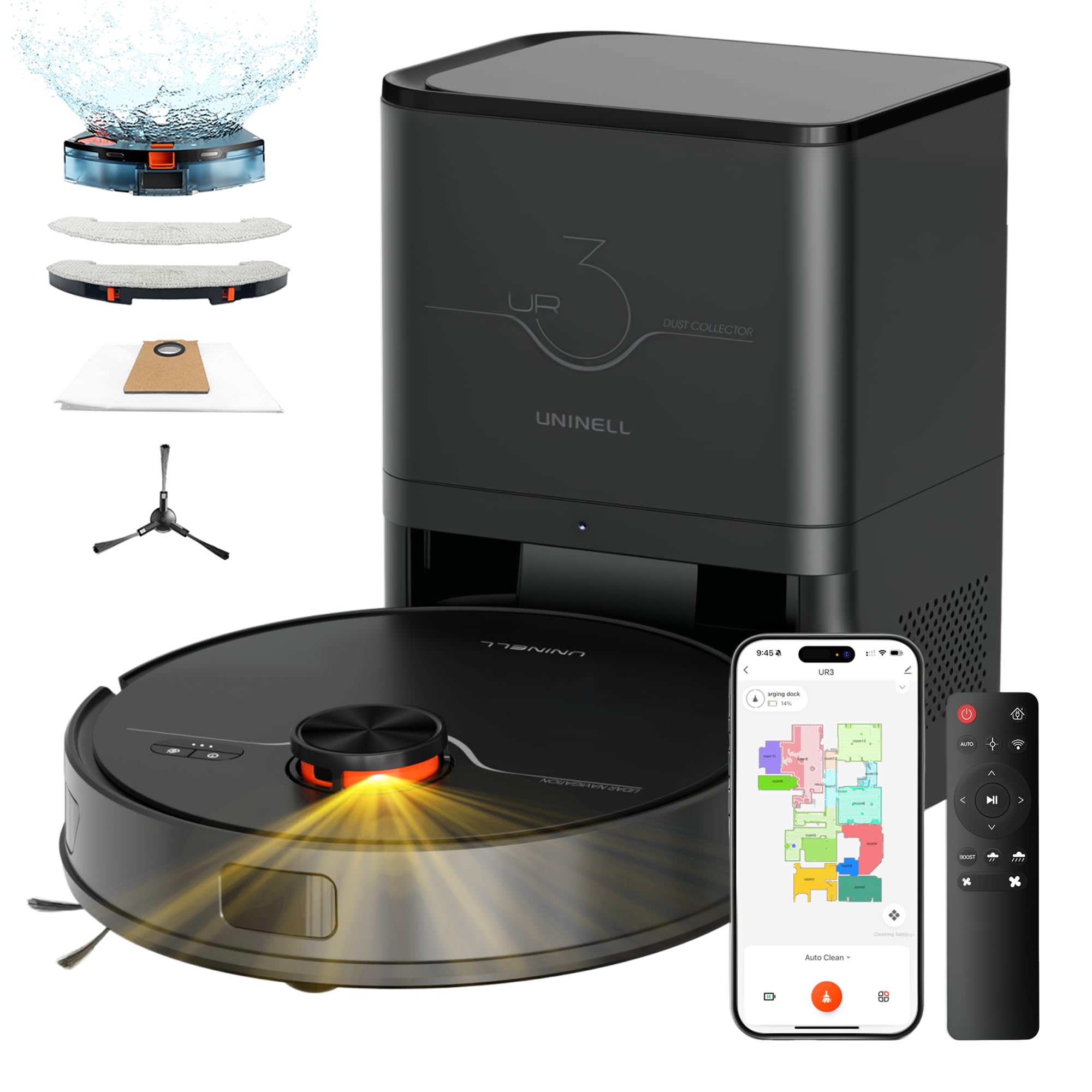
The uninell UR3 packs a 7,000 Pa cyclone suction system with a dedicated tangle-free roller brush that prevents hair wrap at the source. The brush is designed with a rubber comb that strips hair as it spins, depositing it directly into the suction path rather than letting it accumulate on the roller. This engineering choice directly reduces the maintenance frequency for households with long-haired humans or shedding pets — a common pain point with standard bristle brushes at this price. The 3.5L self-emptying base seals debris into a bag rated for 90 days, so bag changes happen roughly four times per year on average use.
The LiDAR navigation supports multi-map storage for up to five floors, and the 360-degree scanning creates a map that allows room-specific suction and water level settings. The robot height is 3.8 inches, which clears most furniture underframes but may bump into lower bed frames (those under four inches of clearance). The 180-minute battery runtime in standard mode covers homes up to roughly 2,000 square feet in a single pass, and the auto-recharge and resume feature picks up at the exact stopping point after charging. Owners report that the app interface is functional but not as polished as the roborock app — setting no-go zones and schedules works reliably, but the design feels one generation behind.
Mopping is handled by a fixed mop pad that drags across the floor with adjustable water flow via the app. It handles light daily maintenance on tile and hardwood but does not scrub with the aggression of the eufy spinning system or the roborock sonic vibration. The included remote control is a thoughtful addition for less tech-savvy household members who prefer physical buttons over smartphone navigation. Uninell backs the UR3 with a two-year warranty, which is longer than average for this segment. The UR3 is the strongest choice for buyers who want high suction, long battery, and a hair-wrapping solution without paying the roborock premium.
Why we love it
- Dedicated tangle-free roller brush nearly eliminates hair wrap maintenance
- 180-minute battery with auto-recharge covers large homes without stopping
- Two-year warranty exceeds most competitors in this price tier
Good to know
- App interface is functional but less polished than roborock or Dreame apps
- Fixed mop pad drags rather than scrubs — adequate for light maintenance only
6. Bagotte BL20 Pro
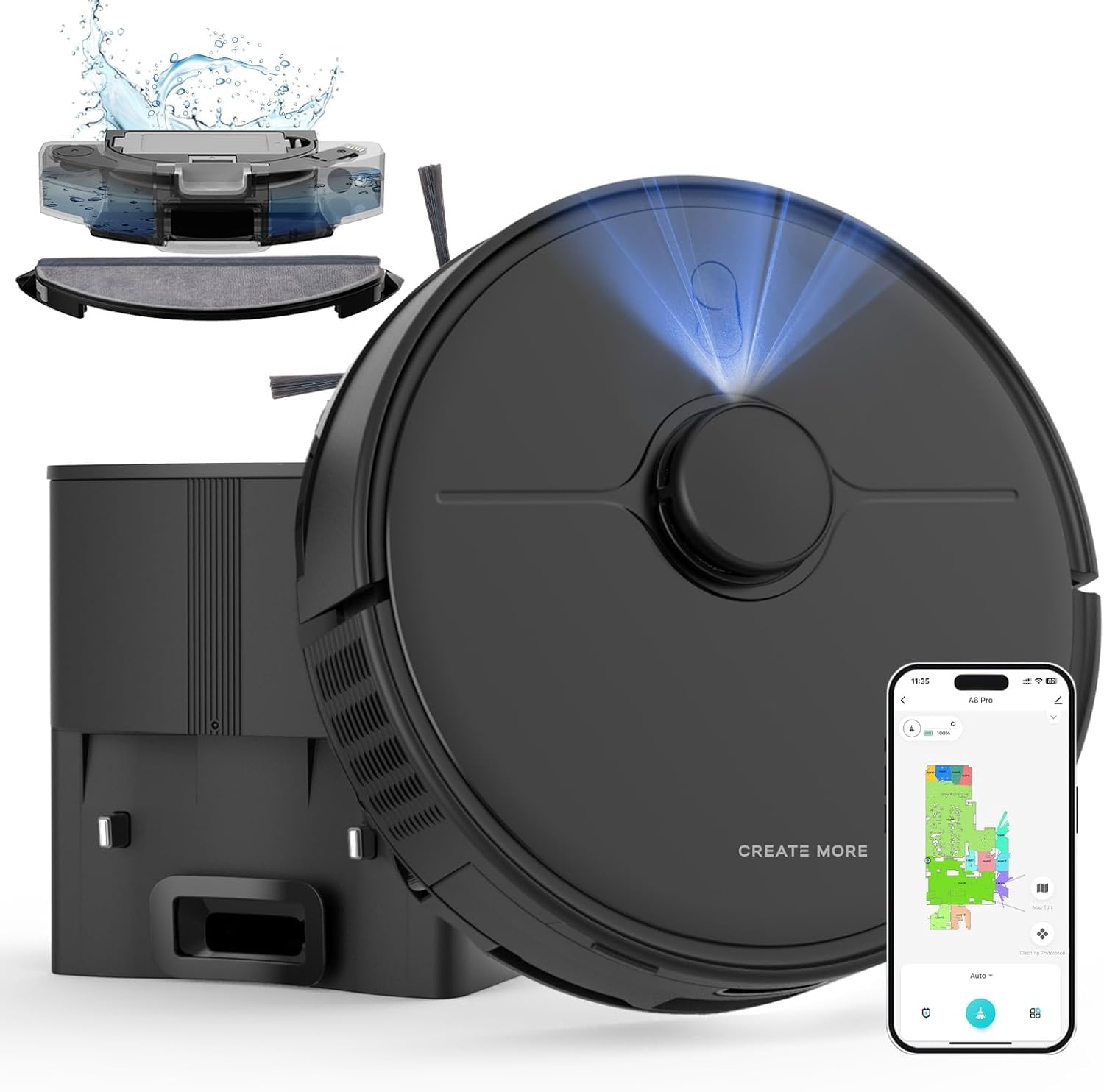
The Bagotte BL20 Pro enters the mid-range conversation with a 6,000 Pa suction motor and a chassis height of just 2.91 inches — the slimmest in this entire roundup. That sub-three-inch profile allows it to navigate under sofas, bed frames, and low-profile entertainment centers that block taller LiDAR-equipped units. The self-emptying dock collects debris into a sealed bag, and the 90-day capacity rating is generous for the price. The 4-in-1 cleaning system handles sweeping, vacuuming, and mopping simultaneously, with the robot returning to the dock after completing its cycle to empty the dustbin automatically.
Navigation relies on 360-degree LiDAR scanning that maps efficiently, though the BL20 Pro lacks multi-floor map storage — it stores one map at a time, which is a notable omission for multi-story homes. The H13 HEPA filter is a welcome addition for pet-owning households, capturing dander and fine particulates that standard sponge filters miss. Owner feedback consistently compares the BL20 Pro favorably against Roomba, with multiple verified reviews citing superior docking accuracy and quieter operation compared to the well-known brand. The 120-minute battery runtime in standard mode is adequate for most apartments and smaller homes under 1,400 square feet, but larger spaces will trigger the auto-recharge cycle mid-clean.
Mopping performance is basic: a wet cloth pad attached to the rear of the robot wipes the floor during vacuuming. It handles surface dust and clean water spills but does not address dried or sticky residue. The app supports scheduled cleaning, no-go zone creation, and suction level adjustment. The biggest advantage of the BL20 Pro is its physical clearance — if your home is filled with low-clearance furniture that taller robots cannot reach, this model cleans where others cannot go. For price-conscious pet owners with a single-floor layout, it delivers strong value per dollar spent.
Why we love it
- Ultra-slim 2.91-inch height reaches furniture that blocks most robot vacuums
- H13 HEPA filter captures pet dander and fine particulates effectively
- Strong suction for pet hair pickup at a budget-friendly entry point
Good to know
- Stores only one floor map — inconvenient for multi-level homes
- Mop is a simple drag pad with minimal scrubbing ability
7. Tikom L8000 Plus
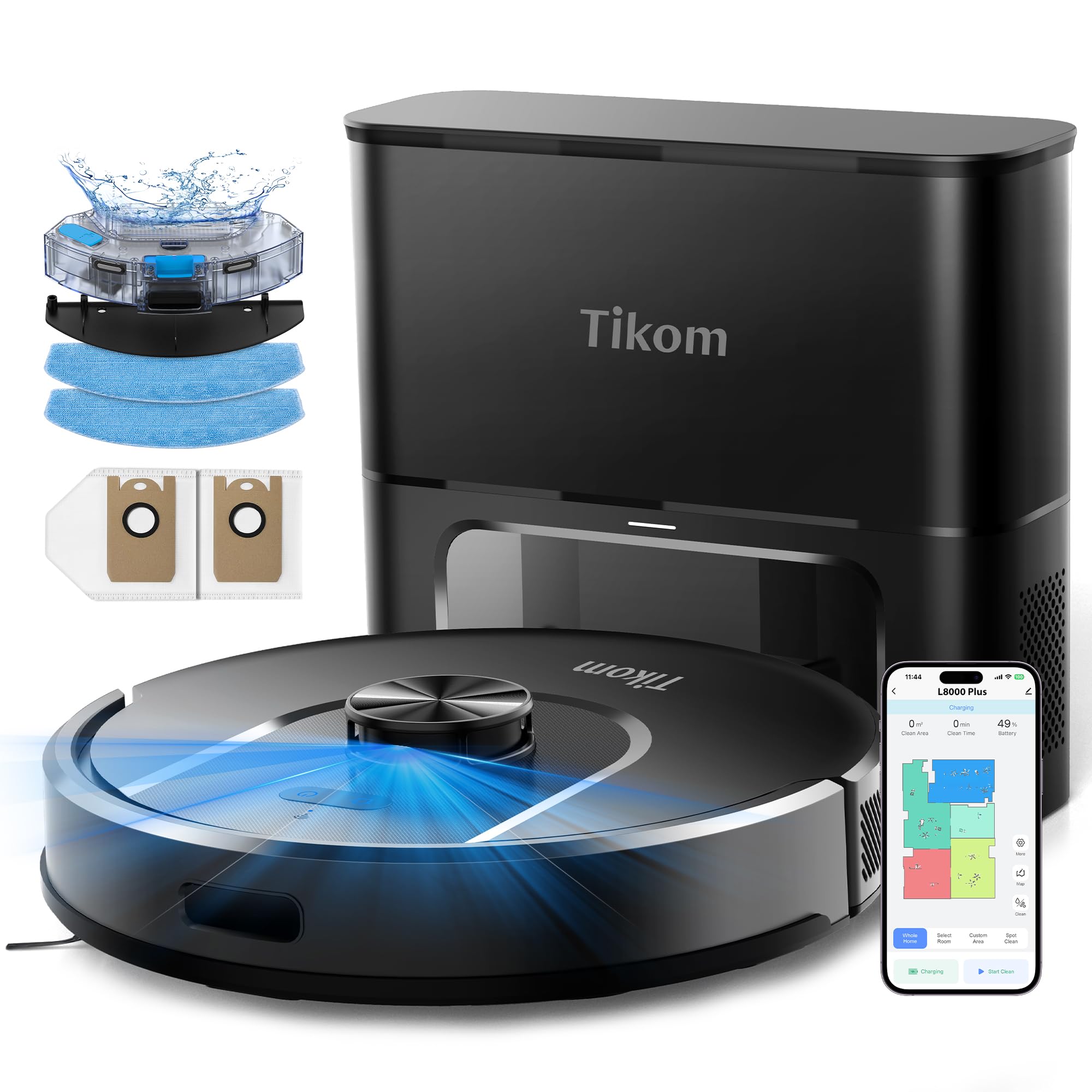
The Tikom L8000 Plus brings 360-degree LiDAR navigation into the budget tier without sacrificing mapping precision. The 3L self-emptying dust bag holds up to 90 days of debris, and the robot automatically increases suction to 6,000 Pa in Max mode when it detects carpet transitions. The 2-in-1 sweeping and mopping system lets you customize cleaning with three suction levels and three water flow settings, all adjustable per room through the app. The inclusion of both 2.4GHz and 5GHz Wi-Fi support is a practical advantage — many competitors in this price range are locked to 2.4GHz only, which can cause connectivity issues in larger homes with mesh networks that prefer the 5GHz band.
Mapping supports up to five saved floor plans, which is rare at this price point. The methodical row-by-row cleaning pattern covers open areas efficiently, and the cliff sensors performed reliably in testing on stair edges and dark rugs. The 150-minute battery runtime in Gentle mode covers most single-level homes, and the auto-recharge and resume function works seamlessly — the robot docks, charges, and returns to the exact coordinate where it stopped. Owner feedback highlights quiet operation, strong suction for dust and pet hair, and a user-friendly app that makes schedule configuration straightforward. The integration with Alexa and Google Home allows voice control for starting, stopping, and docking commands.
Mopping uses a traditional clip-on cloth pad with gravity-fed water distribution. It handles light dust and foot traffic residue on hard floors but will not replace a manual mop for sticky kitchen areas. The included mop holder requires removal or a no-go zone boundary to keep the carpet dry. For buyers who want LiDAR-level navigation accuracy without crossing the midpoint of the budget, the L8000 Plus delivers the core technology at a price that undercuts most competitors by a noticeable margin. The compromise is in the mopping intensity and the absence of the premium app polish found in roborock or Dreame software.
Why we love it
- LiDAR navigation with five-map storage at a genuinely budget-friendly price
- Supports both 2.4GHz and 5GHz Wi-Fi networks for flexible router compatibility
- 90-day self-emptying base dramatically reduces hands-on maintenance tasks
Good to know
- Mop pad clips on without scrubbing pressure — suited for daily maintenance only
- App interface lacks the customization depth of more expensive branded software
8. Airzeen Q20 Ultra
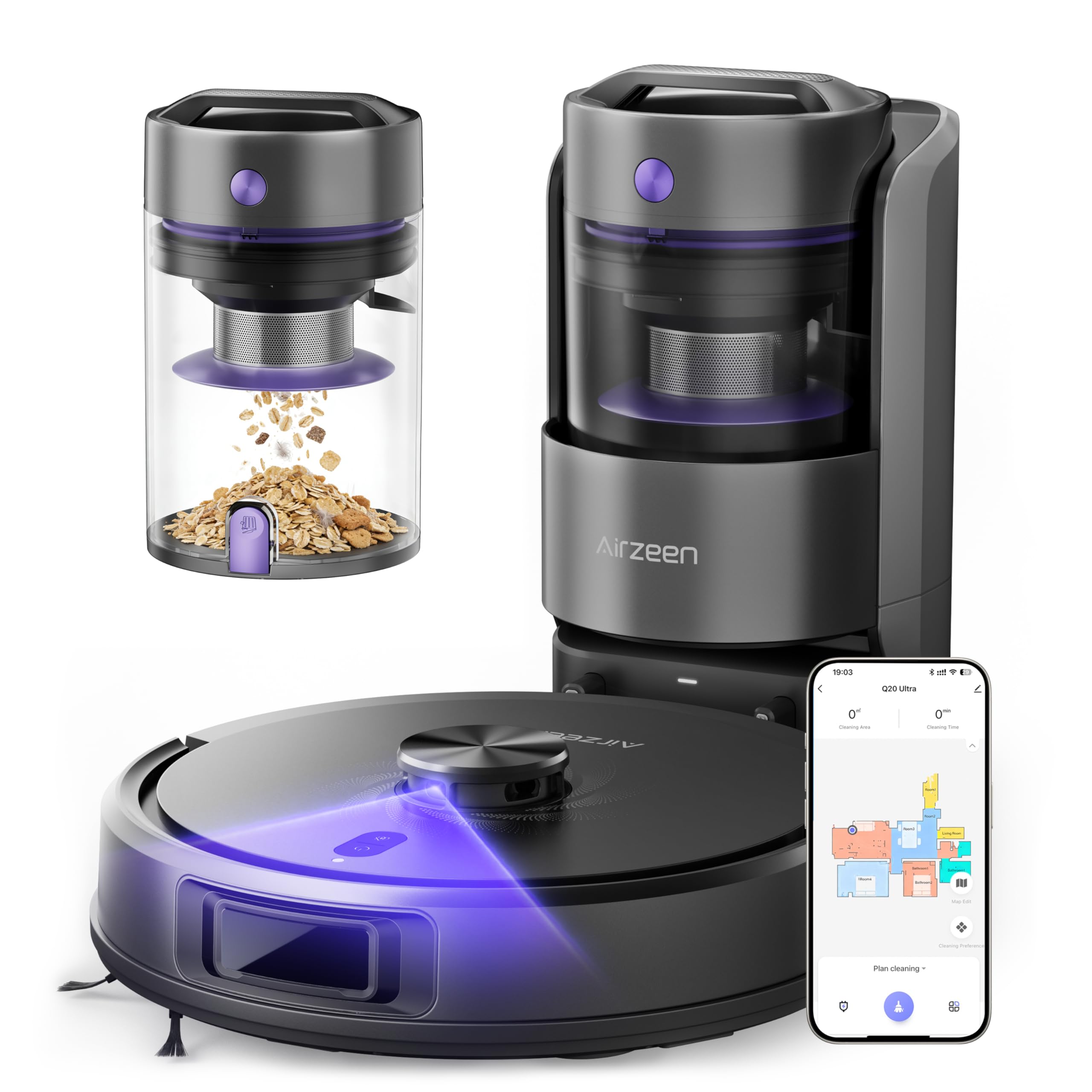
The Airzeen Q20 Ultra takes a distinct approach to the self-emptying equation by using a bagless system. Instead of disposable dust bags, the robot empties into a reusable cup that you rinse out under a faucet. This eliminates the recurring cost of replacement bags — estimated at roughly to per year for bagged systems — and reduces plastic waste. The trade-off is that emptying the cup exposes you to dust particles, and you must dry the cup thoroughly between uses to prevent mold growth. The vacuum delivers 6,000 Pa of suction across three adjustable levels, which is adequate for hardwood, tile, and low-pile carpet, though deeper carpet cleaning benefits from multiple passes.
LiDAR navigation supports multi-map storage for up to five floors, with an app interface that allows editing room layouts and setting no-go zones and virtual walls. The battery runs for 150 minutes in ECO mode, and the auto-recharge and resume feature works reliably for split-level cleaning. Verified owners report strong suction performance that picks up cat litter, dog hair, and fine dust in a single pass, with the mop handling kitchen grime for small spills. The 2.91-liter dust cup capacity in the base is smaller than bagged competitors, meaning the automatic emptying cycle triggers more frequently — every two to three full-home cleans for a medium-sized house, rather than once every several weeks.
The Q20 Ultra includes two side brushes, two HEPA filters, a cleaning brush, and three washable mop pads in the box, reducing the need for early accessory purchases. The remote control provides a button-based alternative to the app, which is useful for giving the robot quick instructions without pulling out your phone. Customer support comes with a two-year warranty, which adds peace of mind for a relatively new brand in the space. The bagless design is the defining differentiator: if you hate the idea of paying for consumable bags and are comfortable with the brief dust exposure during the emptying process, the Q20 Ultra is the most cost-effective choice over a multi-year ownership horizon.
Why we love it
- Bagless self-emptying base eliminates recurring disposable bag costs
- Multi-map LiDAR navigation with five-map storage at a competitive price
- Comprehensive accessory kit includes spare filters and mop pads out of the box
Good to know
- Emptying the dust cup exposes you to debris and requires thorough drying
- Smaller base capacity triggers more frequent emptying cycles than bagged models
9. Kilgone SDL40
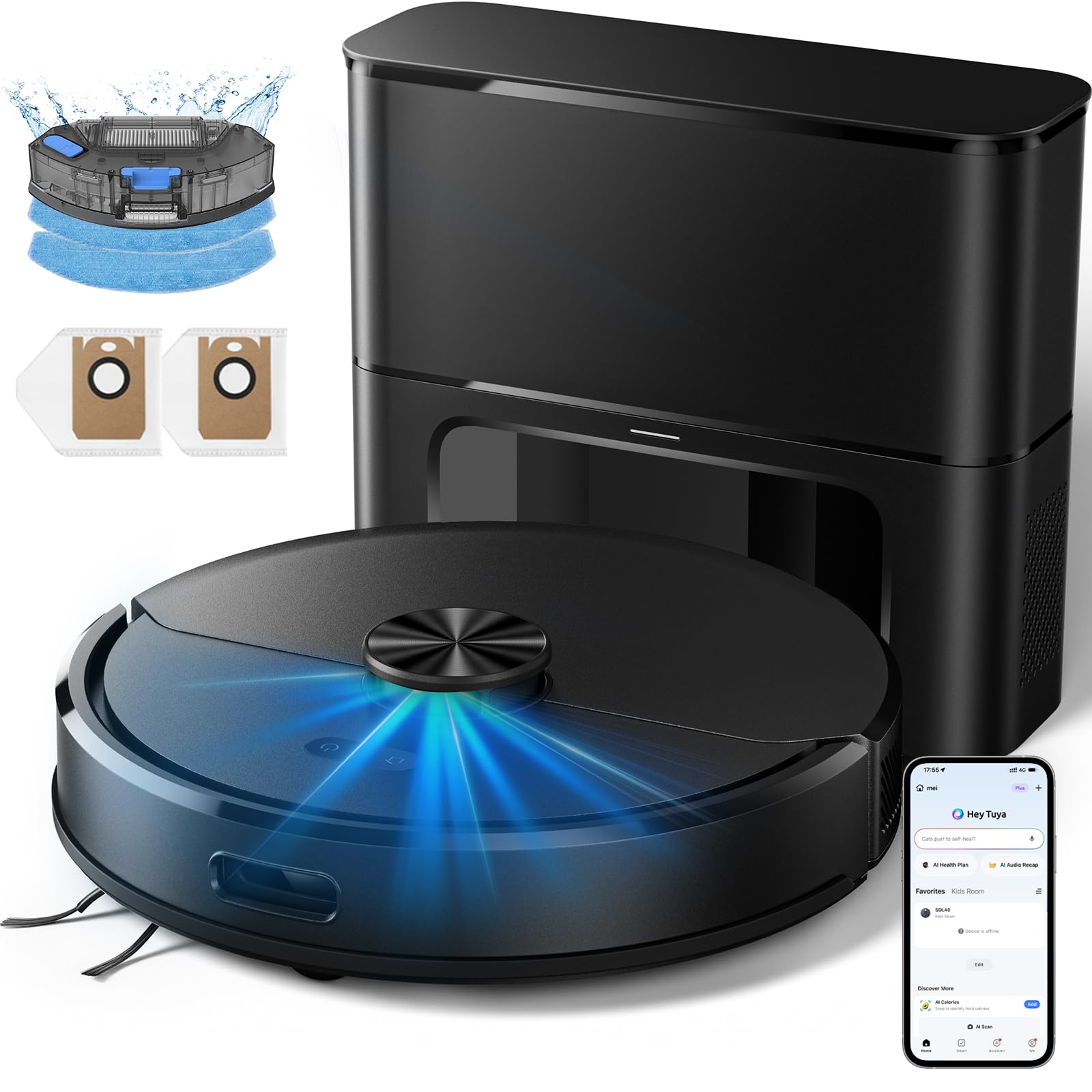
The Kilgone SDL40 positions itself as the quietest option in the budget tier with a published 65dB noise level — quieter than a normal conversation and roughly comparable to a refrigerator hum from a few feet away. The 6,000 Pa cyclone suction and anti-tangle brush handle daily messes without the sound fatigue that comes with louder models running in the background during calls or television. The 2.5L self-emptying dust bag is rated for 90 days of use, and the sealed design traps dust and allergens effectively. The SDL40 supports 360-degree LiDAR scanning with multi-floor mapping for up to five saved layouts, plus AI-powered obstacle detection that sidesteps furniture legs, shoes, and pet bowls.
Battery runtime is a strong 200 minutes in standard mode, covering up to 1,615 square feet on a single charge. The auto-recharge and resume feature compensates for larger homes by continuing the cleaning cycle after the battery replenishes. The robot climbs thresholds up to 18 millimeters (0.7 inches), allowing it to transition between rooms separated by tall transition strips without getting stuck. Mopping uses a standard cloth attachment with app-adjustable water flow, providing light cleaning capability for hard floors. The 300-milliliter water tank is smaller than some competitors, requiring a refill for larger tiled areas.
App control supports scheduling, no-go zone creation, and room-specific cleaning. The system integrates with Alexa and Google Assistant for voice commands. Some owner feedback notes that the robot occasionally struggles to find its way back to the dock when the base is placed in a cluttered space with multiple obstacles, though manual relocation usually resolves the issue. The included accessory pack is generous: side brushes, a mop pad, a cleaning brush, and a roller brush assembly are all in the box. For noise-sensitive households or those who run the vacuum during work-from-home hours, the SDL40’s 65dB footprint is a genuine daily comfort advantage.
Why we love it
- 65dB noise level makes it barely audible during normal home activity
- Anti-tangle brush and 6,000 Pa suction handle pet hair without wrap issues
- 200-minute battery runtime covers most homes in a single continuous cycle
Good to know
- Self-emptying dock placement needs clear space for reliable return navigation
- 300ml water tank runs dry faster than larger-capacity mopping competitors
FAQ
Is 6,000 Pa suction enough for homes with dogs and cats?
Why does my mop pad keep wetting my area rugs?
Can these robot vacuums handle long human hair without wrapping around the brush?
Final Thoughts: The Verdict
For most households, the best robot vacuum and mop under $300 winner is the roborock Q7 M5+ because it delivers proven LiDAR navigation, dual anti-tangle brush engineering, and 10,000 Pa suction with reliable app integration that outperforms every other model in this price tier for carpet-focused cleaning. If you want the strongest mopping system with a self-cleaning base station, grab the eufy Omni C20. And for those who prioritize the highest possible suction and the largest dust bag capacity for deep carpet cleaning with minimal bag changes, nothing beats the DREAME D20 Air Plus.