
Pet hair has a way of embedding itself deep into carpet fibers, clinging to upholstery, and drifting into corners that a standard push-vacuum simply cannot reach. The daily chore of chasing fur tumbleweeds across the floor drains time and energy, making a dedicated autonomous cleaner less of a luxury and more of a household necessity for anyone sharing their home with shedding companions.
I’m Mo Mahin — the founder and writer behind Furric. My approach to analyzing the robot vacuum market focuses on cross-referencing real-world suction metrics, brush design effectiveness against hair wrap, and navigation algorithms that determine whether a unit actually covers a room or just bumps around aimlessly.
This guide breaks down nine models engineered to tackle the unique demands of a pet-heavy household, comparing tangle-resistant brush systems, self-emptying station capacity, and suction power to help you find the best robot vacuum cleaner for pet hair that fits your home and routine.
How To Choose The Best Robot Vacuum Cleaner For Pet Hair
Not all robot vacuums handle pet hair equally. A unit that performs flawlessly on hardwood may choke on a medium-pile carpet, and a model with impressive suction can still fail if its brush design lets hair wrap into a solid tangle. Focus on four specific factors to narrow your search.
Suction Power and Carpet Type
Suction is measured in Pascals (Pa). For low-pile carpets and hard floors, 2,500 to 5,000 Pa is usually sufficient. Medium-pile carpets require at least 6,000 Pa to pull embedded fur from the fibers. High-pile or shag carpets benefit from 10,000 Pa or more, though some robots struggle to roll over thick carpet edges regardless of suction. Look for a model with carpet boost — an automatic suction increase when the unit detects a rug.
Brush Design and Hair Wrap Resistance
The brush roller is where pet hair becomes a problem. Traditional bristle brushes trap hair between the bristles, requiring frequent cleaning with a seam ripper or scissors. Rubber or silicone rollers — like the dual rubber brushes found in iRobot Roomba models — resist tangling because hair slides off the smooth surface. Some models add angled scraper blades or comb-like teeth inside the housing to strip hair before it wraps. If you have long-haired pets or breeds that shed heavily, an anti-tangle brush system is not optional.
Navigation and Mapping
Random-bounce navigation leaves gaps in coverage and wastes battery by re-cleaning the same areas. LiDAR (Light Detection and Ranging) navigation creates a precise floor plan, enabling row-by-row cleaning and room-specific scheduling. Higher-end models add 3D structured light or camera-based obstacle avoidance to identify cables, shoes, and pet waste. For multi-story homes, a robot that saves multiple floor plans and auto-detects which level it is on eliminates the need to remap each time you carry it upstairs.
Self-Emptying Station Capacity and Maintenance
Self-emptying stations range from bagged systems that hold debris for 60–75 days to bagless systems that dump into a bin you empty manually. Bagged systems contain dust better during disposal but require recurring purchases. Bagless systems eliminate consumable costs but release a puff of dust when emptied. Consider the dust bin size on the robot itself — a small bin (under 300 ml) will fill quickly in a home with multiple pets, forcing the robot to return to the base multiple times during a single cleaning cycle.
Quick Comparison
On smaller screens, swipe sideways to see the full table.
| Model | Category | Best For | Key Spec | Amazon |
|---|---|---|---|---|
| iRobot Roomba Plus 505 Combo | Premium | All-in-one vacuum & mopping | AutoWash dock, heated drying | Amazon |
| ECOVACS DEEBOT X11 OmniCyclone | Premium | Large homes, deep carpet cleaning | 19,500 Pa suction, bagless dock | Amazon |
| DREAME L50 Ultra | Premium | Obstacle avoidance & noise control | 19,500 Pa suction, 6cm threshold climb | Amazon |
| eufy E25 | Premium | Always-clean roller mopping | 20,000 Pa suction, HydroJet mop | Amazon |
| DREAME L10s Pro Ultra Heat | Mid-Range | Hot water mop self-cleaning | 7,000 Pa suction, 136°F pad wash | Amazon |
| iRobot Roomba Max 705 | Mid-Range | Reliable pet hair pickup | Dual rubber brushes, 75-day bag | Amazon |
| roborock Q7 M5+ | Mid-Range | Value LiDAR navigation | 10,000 Pa suction, 150-min runtime | Amazon |
| Shark Navigator AV2110S | Mid-Range | Bagless self-emptying simplicity | LiDAR navigation, 30-day base | Amazon |
| Shark Navigator RV2120AE | Mid-Range | Budget-friendly LiDAR robot | Anti-hair wrap brushroll, 60-day base | Amazon |
In‑Depth Reviews
1. iRobot Roomba Plus 505 Combo Robot Vacuum & Mop
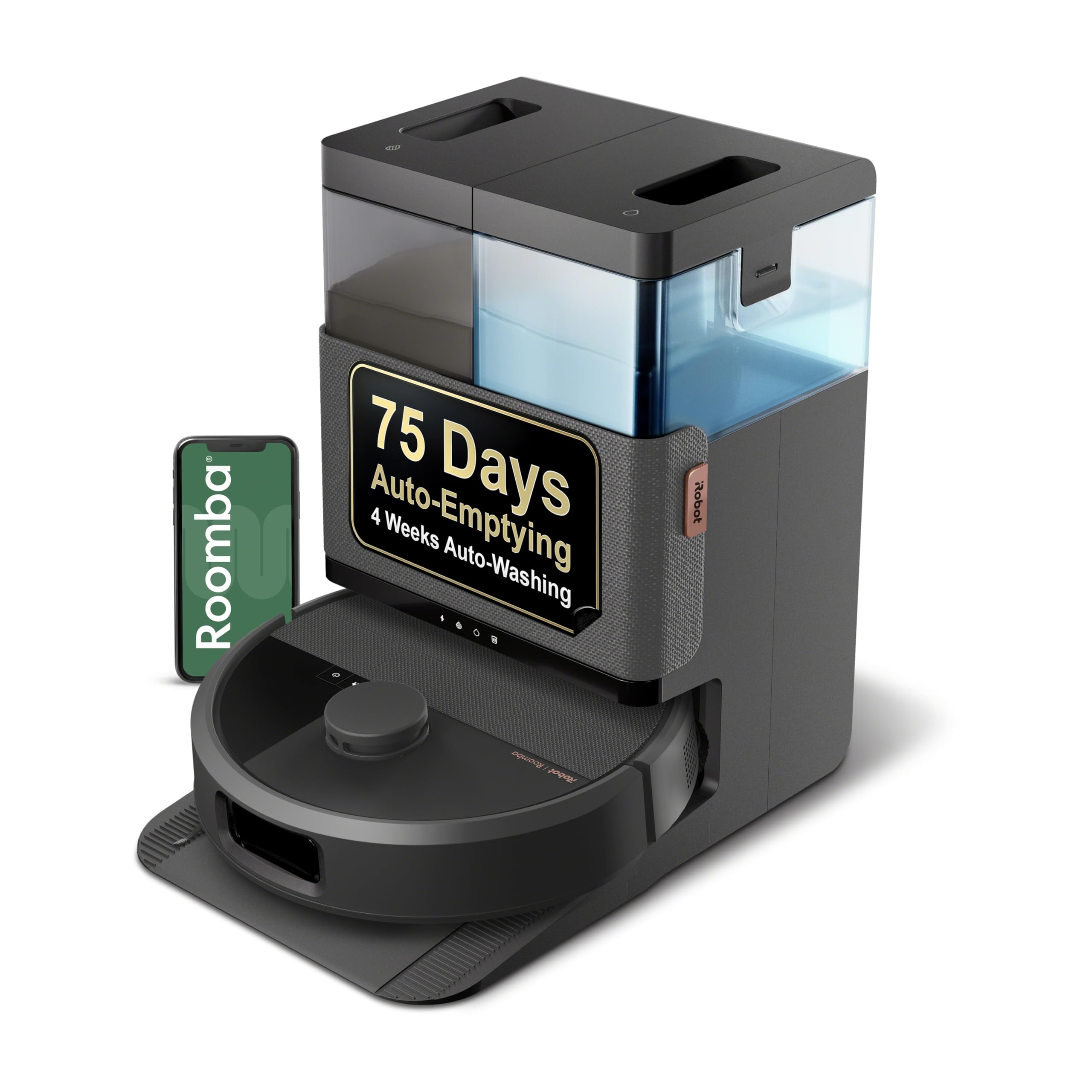
The Roomba Plus 505 Combo brings together iRobot’s proven dual rubber brush design with a fully self-contained AutoWash dock that empties dust, washes mop pads with hot water, and dries them with heated air. This model is the most complete hands-off solution for pet owners who want both vacuuming and mopping without touching a dirty pad. The PerfectEdge mop heads extend outward by 18% compared to standard mops, scrubbing along baseboards where fur and dust accumulate.
PrecisionVision AI identifies cords, socks, and pet waste before contact, while LiDAR mapping saves a floor plan that the robot follows in methodical rows. The dock holds enough capacity for 75 days of auto-emptying and 4 weeks of mopping cycles before the clean water tank needs refilling. Owners of multi-pet homes report that the self-washing feature eliminates the sour smell that builds up on traditional mopping pads after repeated use.
The main trade-off is noise — the emptying cycle is noticeably loud, and the robot itself is not the quietest in its class. Some users also found the initial app setup frustrating due to Wi-Fi password restrictions. But for a household that runs a robot daily, the combination of tangle-resistant brushes, integrated mopping, and a dock that manages its own maintenance makes this the strongest all-rounder.
Why we love it
- Self-washing and heated drying of mop pads
- Excellent dual rubber brush system resists hair wrap
- LiDAR mapping with reliable obstacle avoidance
Good to know
- App setup can be problematic with complex Wi-Fi passwords
- Auto-empty cycle is louder than most competitors
2. ECOVACS DEEBOT X11 OmniCyclone
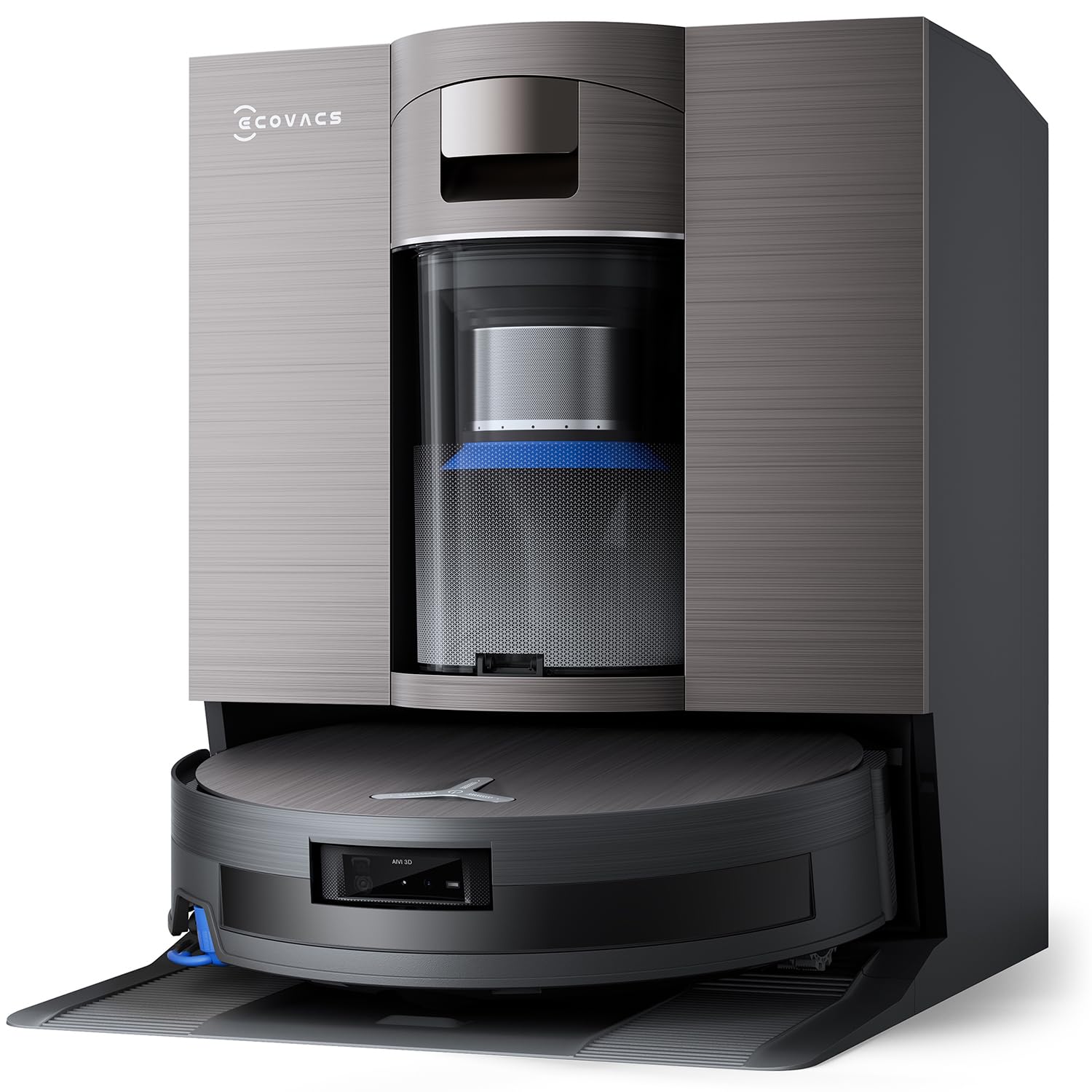
ECOVACS pushes the suction ceiling with the X11 OmniCyclone, delivering 19,500 Pa of draw through a 100W motor paired with ZeroTangle 3.0 brushes. The combination pulls embedded fur out of medium and high-pile carpets while the brush geometry prevents the clumping that plagues lesser rollers. The unit’s TruePass 4-wheel climbing system clears thresholds up to 0.9 inches and gaps up to 1.6 inches, meaning fewer stuck-in-the-doorway interruptions during a cleaning cycle.
The bagless OMNI station is a notable departure from the industry trend of 60-day bagged systems. Instead of replacing a bag, the station uses a cyclonic dust bin that auto-empties and requires the user to dump the container — no recurring consumable cost. The roller mop is washed with 167°F hot water and dried automatically, and the YIKO Agent learns your cleaning habits to adjust suction and mopping patterns over time. Owners of large homes (2,600+ square feet) report full coverage mapping in 20–30 minutes.
A few users with heavy-shedding breeds like Shelties noted that fur still wrapped around the side brush and front swivel wheel, requiring manual cleaning every few cycles. The dust bin screen inside the robot also tends to clog with lint from pet bedding, which needs periodic disassembly to clear. For homes that prioritize raw suction and bagless maintenance, the X11 is a top-tier choice, but the brush maintenance is not zero.
Why we love it
- Extremely high 19,500 Pa suction for deep carpets
- Bagless auto-empty dock eliminates consumable costs
- GaN fast charging reduces downtime between cycles
Good to know
- Front swivel wheel can still collect hair mats
- Robot dust bin screen may clog with lint
3. DREAME L50 Ultra Robot Vacuum and Mop
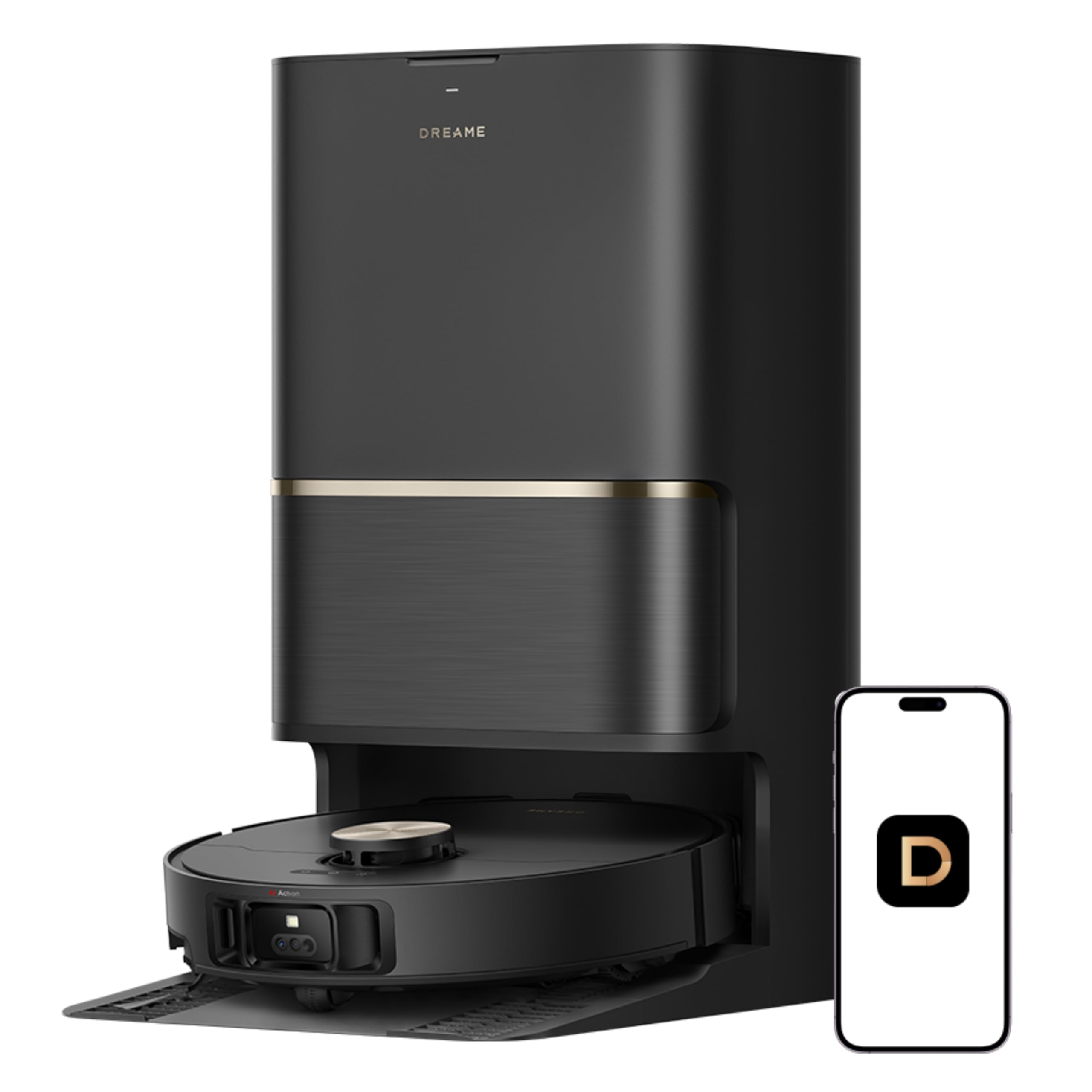
The Dreame L50 Ultra matches the 19,500 Pa suction of the ECOVACS X11 but distinguishes itself with a ProLeap system that lifts retractable legs to clear thresholds up to 6 centimeters high. This is a meaningful advantage for homes with raised door tracks, thick rug transitions, or sunken living rooms. The HyperStream Detangling DuoBrush uses a bristled rubber roller paired with a TPU rubber roller to collect hair from hard floors and carpets while shedding tangles before they tighten.
AI-driven 3D structured light obstacle avoidance recognizes 180+ object types — including shoes, furniture legs, and exposed cables — allowing the robot to navigate without bumping. The 180-minute battery runtime covers large floor plans on a single charge, and the PowerDock self-empties for up to 100 days, washes mop pads with hot water, and refills the robot’s water tank. Owners report that the noise level during suction is notably lower than other high-power units, making it viable for use during conference calls or overnight cleaning.
The Dual Flex Arm technology extends both the side brush and mop to reach into corners and under low-clearance furniture, a design that narrows the gap left by robots with fixed mops. The Dreamehome app supports five carpet care modes, including full carpet avoidance for homes where you do not want the mop touching rugs. The L50 Ultra delivers premium performance at a slightly lower maintenance overhead than some competitors, though its dock footprint is large.
Why we love it
- Exceptional 6cm threshold climbing ability
- Very quiet operation compared to other high-suction units
- Effective dual-brush system resists pet hair tangling
Good to know
- Dock takes up significant floor space
- App has a learning curve for advanced carpet settings
4. eufy Robot Vacuum E25
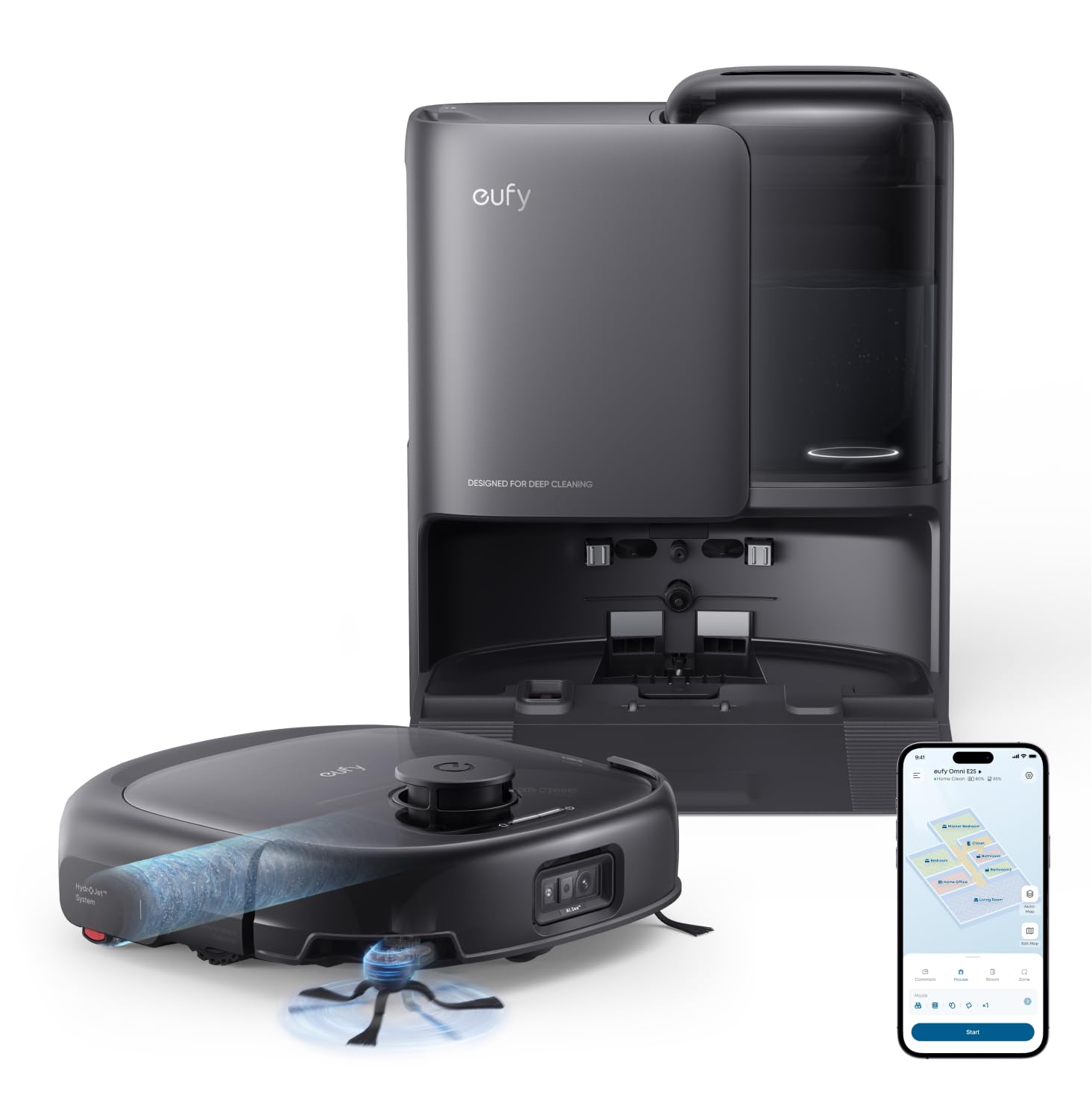
The eufy E25 stands out with its HydroJet system, which refreshes the roller mop with clean water twice per second during operation. This prevents the mop from dragging dirty water across the floor — a common complaint with pad-based mopping robots that only clean the pad at the dock. The 20,000 Pa suction is the highest raw number on this list, and the DuoSpiral anti-tangle brushes are specifically engineered to shed pet hair rather than collect it.
The CornerRover arm extends the side brush to scrub along baseboards and furniture legs, addressing the edge-cleaning gap that plagues circular robot designs. The all-in-one station auto-empties into a 3-liter bag (approximately 75-day capacity), self-washes the roller mop, hot-air dries it at 50°C, and refills the robot’s water tank. Laser-guided navigation stores up to five floor plans and auto-switches between levels, making it suitable for multi-story homes without requiring a remap.
User reports indicate that the mapping process is exceptionally fast — some homes map in under five minutes — and the robot operates at a maximum of 61 dB, quiet enough to run during sleep. The main limitation: the eufy app does not accept network passwords containing spaces, which may require changing your Wi-Fi configuration. Durability concerns have been raised by users who experienced failures after one year, but the current feature set justifies the price for those who want a mopping-first robot with powerful vacuum capability.
Why we love it
- Continuous roller mop refresh prevents cross-contamination
- Highest suction on the list at 20,000 Pa
- Stores up to 5 floor plans with auto-switching
Good to know
- App does not accept passwords containing spaces
- Long-term durability has been questioned by some owners
5. DREAME L10s Pro Ultra Heat

Dreame brings hot water self-cleaning to the mid-range segment with the L10s Pro Ultra Heat. The base station washes mop pads with 136°F water and dries them with hot air, eliminating the mildew smell that develops when pads stay wet between cleaning cycles. The 7,000 Pa suction is lower than the premium models on this list but still sufficient for low to medium-pile carpets and hard floors, where most pet hair accumulation occurs.
MopExtend technology pushes the mop outward when the robot detects a wall or corner, improving edge coverage without requiring a mechanical arm. Smart obstacle avoidance uses 3D structured light to identify shoes, cables, and cat toys, with owners noting that the robot confidently navigates around objects rather than stopping to debate the path. The 220-minute battery runtime is among the longest in this guide, covering larger homes in a single pass even when mopping mode is active.
The dock automatically mixes cleaning solution into the wash water, a feature typically reserved for flagships, while the camera with microphone enables remote pet check-ins through the app. Some users have reported that the base station’s cleaning bin is fixed in place — you have to wipe it manually rather than removing it for a rinse. A minority of owners also noted minor leaking from the dock, which can be mitigated by placing the unit on a rubber mat. For the price, the mop washing capability and battery life represent strong value.
Why we love it
- 136°F hot water mop washing prevents odor
- 220-minute runtime covers large homes in one charge
- Camera feature allows remote pet check-ins
Good to know
- Dock cleaning bin is not removable for easy cleaning
- Occasional leaking has been reported by some users
6. iRobot Roomba Max 705
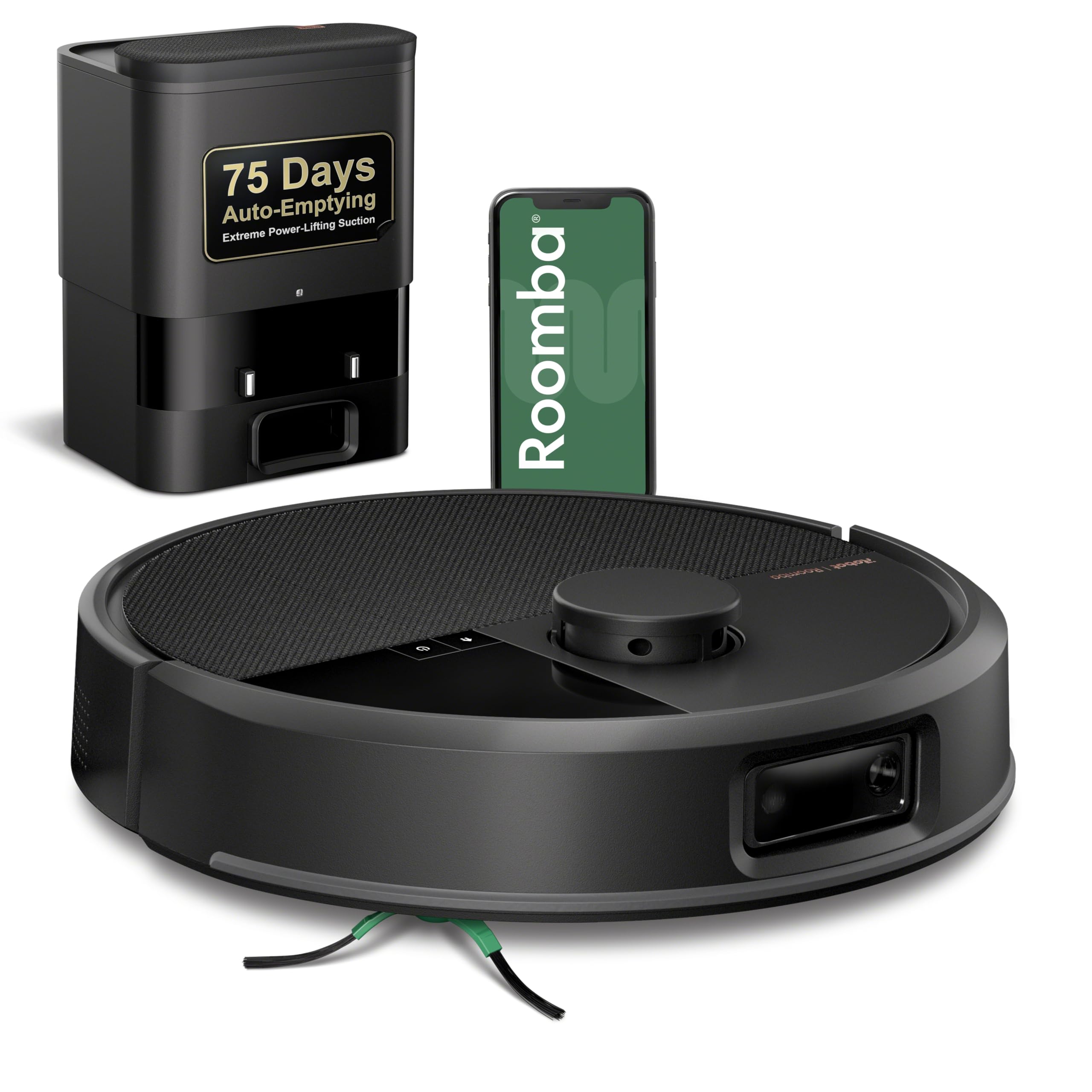
The Roomba Max 705 is a vacuum-only robot that leans into iRobot’s core strength: reliable pet hair pickup without the complexity of integrated mopping. The patented dual rubber brushes flex to maintain contact with both hard floors and carpets while resisting hair wrap far better than bristle alternatives. Carpet Boost mode automatically increases suction when the robot transitions from tile to rug, ensuring that fur embedded in the fibers gets lifted on every pass.
ClearView Pro LiDAR builds an accurate map of the home, and PrecisionVision AI distinguishes between permanent obstacles (furniture legs, walls) and transient objects (cords, pet bowls, socks). The AutoEmpty dock traps particles as small as 0.7 microns and stores debris in an enclosed bag rated for 75 days between swaps. Owners transitioning from older Roomba 600 series units report a dramatic improvement in navigation efficiency — the Max 705 does not bounce around aimlessly but follows a structured, room-by-room pattern.
The design is tall: at 5.8 inches of cleaning path width, it will not slide under low-clearance couches or bed frames. The feeler brush on the side can detach when the robot crosses high-pile carpet transitions, and the auto-empty cycle generates enough noise to be disruptive during quiet hours. If mopping is not a priority and you simply want a vacuum that chews through fur without clogging, the Max 705 is a low-maintenance workhorse.
Why we love it
- Dual rubber brushes effectively resist hair tangling
- PrecisionVision AI avoids pet waste and cords
- AutoEmpty dock with 75-day bag capacity
Good to know
- Tall profile cannot clean under low furniture
- Side brush may detach on thick carpet edges
7. roborock Q7 M5+

The roborock Q7 M5+ brings LiDAR navigation and a self-emptying dock to a price point that undercuts most competitors with similar features. The 10,000 Pa HyperForce suction handles embedded pet hair on medium-pile carpets effectively, and the JawScrapers main brush combined with a 0% hair-tangling side brush significantly reduces the frequency of manual roller cleaning. Owners of multiple small dogs report that the robot maintains consistent pickup even when running daily on turbo mode.
The 2.7-liter sealed dust bag in the dock extends the auto-empty cycle to roughly 7 to 9 weeks depending on pet count, and the PreciSense LiDAR maps the home with enough accuracy to set no-go zones around pet feeding areas or litter boxes. The three-level adjustable water flow for the mop module lets you dial in the right amount of moisture for hardwood versus tile, though the mop function is basic — it drags a cloth pad behind the robot rather than scrubbing with a rotating head.
Battery life reaches 150 minutes in balanced mode, sufficient to cover up to 780 square feet in a single 45-minute run with 35-40% battery remaining. The app supports scheduling, room-specific cleaning, and real-time progress monitoring, but requires 2.4GHz Wi-Fi. Some users note that the robot can lose its map if it is physically moved to a different room, and the mop function has minimal documentation. For buyers who want LiDAR accuracy and self-emptying without paying for premium mopping features, the Q7 M5+ delivers strong value.
Why we love it
- LiDAR navigation at a competitive price point
- Anti-tangle brush design reduces maintenance
- Long 150-minute runtime for medium homes
Good to know
- Mopping function is basic and poorly documented
- Map can reset if the unit is manually relocated
8. Shark Navigator AV2110S
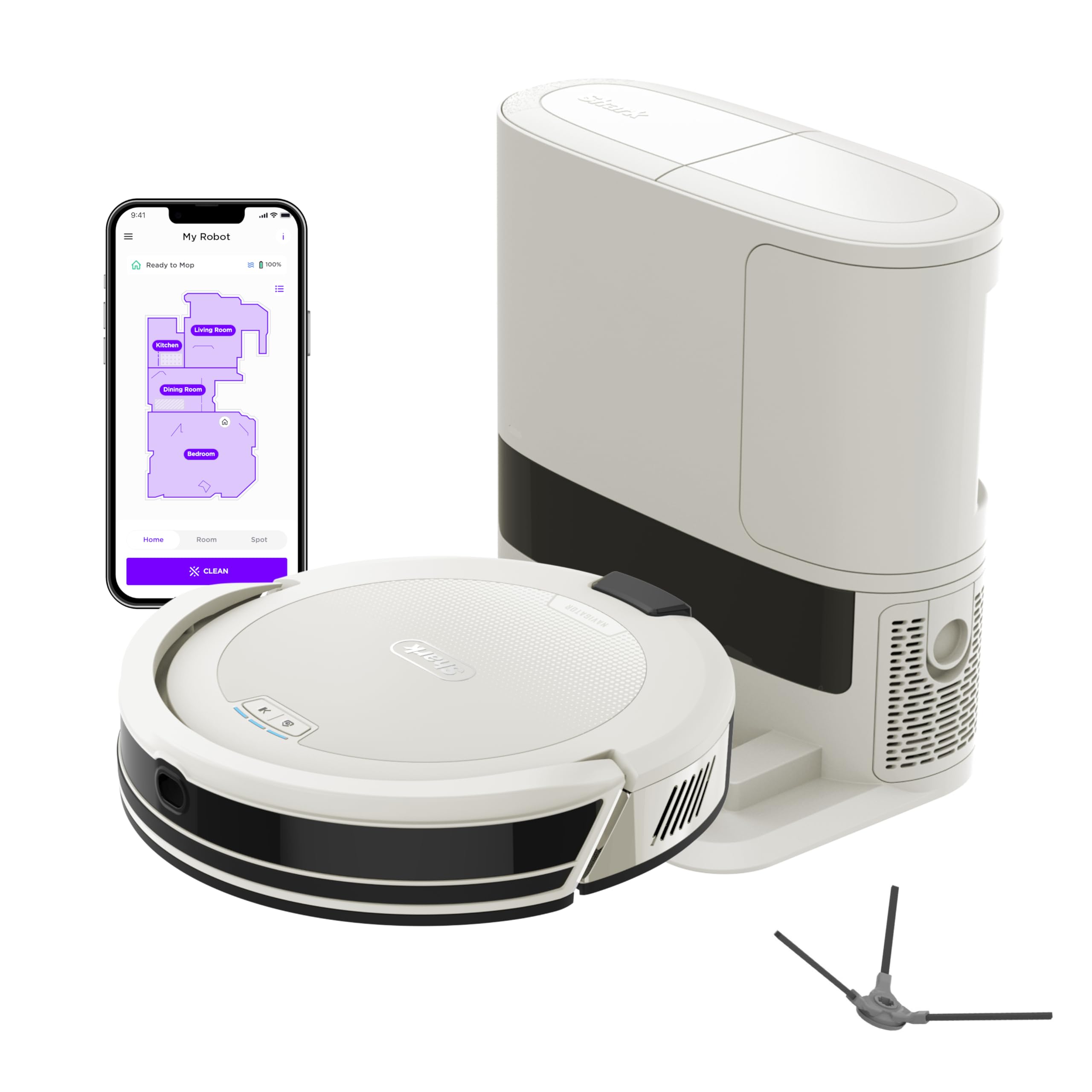
Shark’s Navigator series prioritizes simplicity: a LiDAR-guided robot that empties into a bagless 30-day capacity base, no consumable bags required. The self-cleaning brushroll with anti-hair wrap keeps pet fur from locking onto the bristles, and the powerful suction lifts dirt, dander, and hair from both carpets and hard floors without the added complexity of a mopping system. For pet owners who just want to vacuum and do not want to track another consumable, this is a clean proposition.
SmartPath navigation uses spot LiDAR to map the home in row-by-row passes, delivering up to 1.5x more coverage than earlier Shark ION models. The base detects and avoids objects without requiring you to pick up before each cleaning cycle — shoes, toys, and cables are typically identified and bypassed. Recharge and resume means the robot returns to the dock when the battery dips, charges, and picks up exactly where it stopped.
The 120-minute battery is adequate for average homes, though large floor plans may require an intermediate recharge. Owners report that the Navigator excels on hard floors and low-pile carpets but struggles visibly on medium to high-pile carpets, where suction drop-off reduces hair pickup. The base unit’s dirt reservoir collects debris for about a week in high-pet households before needing emptying, and finding replacement parts through third-party channels has been inconsistent.
Why we love it
- Bagless base eliminates disposable bag costs
- Anti-hair wrap brushroll reduces tangles
- LiDAR navigation with smart object detection
Good to know
- Performance drops significantly on thick carpets
- Replacement parts can be difficult to find
9. Shark Navigator RV2120AE

The Shark Navigator RV2120AE is the entry-level LiDAR pick in this lineup, sharing the same core navigation and brushroll technology as the AV2110S but with a bagless base rated for 60 days of debris capacity. The self-cleaning brushroll is engineered to dig into carpets while pulling hair away from the axle, and owner feedback consistently confirms that the unit picks up substantial amounts of pet hair from hard floors and low-pile rugs without clogging. The 120-minute runtime provides enough coverage for most apartments and smaller homes.
SmartPath LiDAR navigation and row-by-row cleaning make this robot noticeably more efficient than random-bounce competitors at the same price point. The ability to detect and avoid objects reduces the pre-cleaning routine — you do not have to scoop up every toy or cable before pressing start. Voice control via the SharkClean app, Alexa, or Google Assistant adds scheduling flexibility, and the recharge-and-resume feature ensures the robot finishes the job even if battery runs low mid-cycle.
The same carpet limitation applies: this unit performs well on hard floors and low-pile carpets but loses suction effectiveness on medium to high-pile carpeting. The robot bin collects about a week’s worth of pet hair before needing a quick check for clogs, and the absence of a mopping function means spills require separate handling. For a budget-conscious shopper who wants LiDAR accuracy and bagless convenience, the RV2120AE offers the most cost-effective path into structured robot cleaning.
Why we love it
- 60-day bagless base provides long intervals between emptying
- LiDAR navigation for organized cleaning patterns
- Budget-friendly entry point into smart robot vacuums
Good to know
- Struggles to clean medium to high-pile carpets well
- No mopping capability included
FAQ
What suction power in Pascals do I need for pet hair on carpets?
Are rubber brushes better than bristle brushes for pet hair?
How often should I empty the dustbin in a pet-heavy home?
Can robot vacuums handle pet accidents on the floor?
Final Thoughts: The Verdict
For most gardeners, the best robot vacuum cleaner for pet hair winner is the iRobot Roomba Plus 505 Combo because its self-washing mop dock, proven dual rubber brushes, and reliable obstacle avoidance cover the full spectrum of pet-related messes without demanding constant maintenance. If you want maximum suction and a bagless station, grab the ECOVACS DEEBOT X11 OmniCyclone. And for a robust entry-level LiDAR robot that handles daily fur pickup without breaking the bank, nothing beats the Shark Navigator RV2120AE.