
The single biggest frustration with robot vacuums isn’t suction or battery life—it’s finding the unit stuck on a stray sock, tangled in a charging cable, or feebly bumping into a chair leg until it gives up. If you’ve ever had to “rescue” a robot from under the sofa, you understand why obstacle avoidance is the feature that separates a genuine household assistant from a frustrating gadget. Modern sensors and AI processing have changed the game, but sorting through the marketing hype to find a model that genuinely dodges cords, pet bowls, and kids’ toys requires a focused look at the hardware and software actually doing the work.
I’m Mo Mahin — the founder and writer behind Furric. I’ve spent years cross-referencing LiDAR specs, structured light configurations, and RGB camera data against thousands of verified owner experiences to identify which obstacle avoidance systems deliver in real homes versus which ones work only in the lab.
Whether you’re tired of pre-cleaning before your cleaner runs or you need something that can navigate a house full of pet toys and low furniture, finding the right robot vacuum with obstacle avoidance requires understanding the tech that keeps it moving freely.
How To Choose The Best Robot Vacuum With Obstacle Avoidance
Not all obstacle avoidance systems are equal. A budget-friendly model with a simple bump sensor is a different machine entirely from a premium unit combining LiDAR, an RGB camera, and AI processing. Here are the three most important factors that determine whether your robot will actually avoid the objects you want it to avoid.
1. The Type of Obstacle Avoidance Sensor
The sensor array is the core of the system. Entry-level models rely on infrared or mechanical bump sensors, which only detect objects upon contact. Mid-range and premium options use LiDAR (laser-based distance measurement) to create a 2D map of the room, while the most advanced units add 3D structured light or an RGB camera with AI object recognition. LiDAR is excellent for walls and furniture but can struggle with low-profile cables or small toys. AI camera systems, like those in the Dreame L50 Ultra or Roborock Qrevo CurvX, can classify objects—distinguishing a phone cord from a pet—and navigate around them without making contact.
2. Measurable Specs: Suction Power vs. Navigation Intelligence
Suction is measured in Pascals (Pa). While 20,000Pa sounds impressive, a vacuum with poor navigation will miss entire sections of your floor regardless of its suction. Prioritize units that combine strong suction (10,000Pa minimum for mixed surfaces) with proven path planning. Check the rated battery life (120 to 240 minutes is common) and the dust bin or dock capacity—a larger dock bag extends periods between emptying. For mopping models, the mop washing and drying cycle quality (water temperature and air drying temperature) matters for preventing odor and bacteria buildup.
3. Auto-Emptying and Self-Cleaning Dock Capabilities
A robot that avoids obstacles but requires you to empty its dust bin after every run isn’t truly hands-free. Look for self-emptying docks with bags that hold 30 to 90 days of debris. For mopping robots, a dock that washes mop pads with hot water (70–80°C) and dries them with warm air (40–50°C) prevents mold and keeps the mops performing well. Also verify the dock’s water tank capacity—larger tanks (4.5L and above) minimize refilling frequency for large homes.
Quick Comparison
On smaller screens, swipe sideways to see the full table.
| Model | Category | Best For | Key Spec | Amazon |
|---|---|---|---|---|
| Roborock Qrevo CurvX | Premium | Large homes with varied floor types | 22,000Pa / Reactive AI / AdaptiLift | Amazon |
| Dreame L50 Ultra | Premium | Homes with high thresholds | 19,500Pa / ProLeap 6cm climb | Amazon |
| Yeedi M16 Infinity | Mid-Range | Pet owners needing tangle-free mopping | 30,000Pa / AI avoidance / self-cleaning mop | Amazon |
| eufy Robot Vacuum E25 | Mid-Range | Hands-off mopping with HydroJet | 20,000Pa / self-cleaning roller mop | Amazon |
| iRobot Roomba Max 705 | Premium | Pet hair on carpets | 180x suction / Anti-tangle rubber brushes | Amazon |
| iRobot Roomba Plus 505 | Mid-Range | All-in-one vacuum and mop combo | LiDAR / AutoWash dock / 75-day emptying | Amazon |
| DREAME L10s Ultra Gen 2 | Mid-Range | Large homes, self-contained station | 10,000Pa / DuoScrub mops / 75-day bag | Amazon |
| Shark Navigator RV2120AE | Mid-Range | Bagless auto-emptying convenience | LiDAR / 60-day self-empty base | Amazon |
| Shark PowerDetect AV2820S | Mid-Range | Deep carpet cleaning with NeverStuck | 3D Object Detection / 30-day base | Amazon |
| Lefant M3 Max | Mid-Range | 90-day self-emptying with strong suction | 20,000Pa / LiDAR / Freemove Tech | Amazon |
| Kilgone G20 | Budget | Ultra-slim under-furniture cleaning | 2.8in height / 3D avoidance / 65dB | Amazon |
In‑Depth Reviews
1. Roborock Qrevo CurvX

The Roborock Qrevo CurvX is the slimmest Roborock ever at just 7.98 cm, and it leverages that profile to glide under low sofas and cabinets where bulkier units get stuck. Its Reactive AI Obstacle Recognition uses structured light and an RGB camera to identify 108 object types, navigating around cords, shoes, and even pet waste without needing you to pre-clean the floor. The AdaptiLift chassis can raise itself up to 4 cm to clear higher thresholds or adjust individual wheels to maneuver around furniture legs—an industry-first feature that dramatically reduces stuck incidents.
HyperForce suction at 22,000 Pa lifts embedded dirt from deep carpet fibers, while the Zero-Tangling DuoDivide main brush handles long hair up to 40 cm without wrapping. The Multifunctional Dock 3.0 Thermo+ washes mops at 80°C hot water, dries them with warm air at 45°C, and auto-empties the dust bin. Owners of large homes (2,300+ sq ft) report the unit completes 95% of floor cleaning in a single charge with recharge-and-resume, and the app’s SmartPlan 2.0 learns cleaning habits to adapt routines by room type.
Some users find the app’s menu layout unintuitive initially, and the battery requires 6+ hours with two recharge breaks for particularly large homes. A small number of owners note the AI occasionally misidentifies leaves as pet waste, requiring obstacle avoidance to be temporarily disabled. Overall, the combination of industry-leading thinness, proactive chassis lifting, and powerful suction makes this a standout for demanding households.
Why we love it
- AdaptiLift chassis clears 4cm thresholds—fewer stuck situations
- 80°C hot water mop washing and warm air drying prevent mold
- 22,000Pa suction lifts deep carpet debris effectively
Good to know
- Battery requires recharge breaks for homes over 2,000 sq ft
- AI can misidentify certain objects like leaves
- App learning curve is steeper than some competitors
2. Dreame L50 Ultra
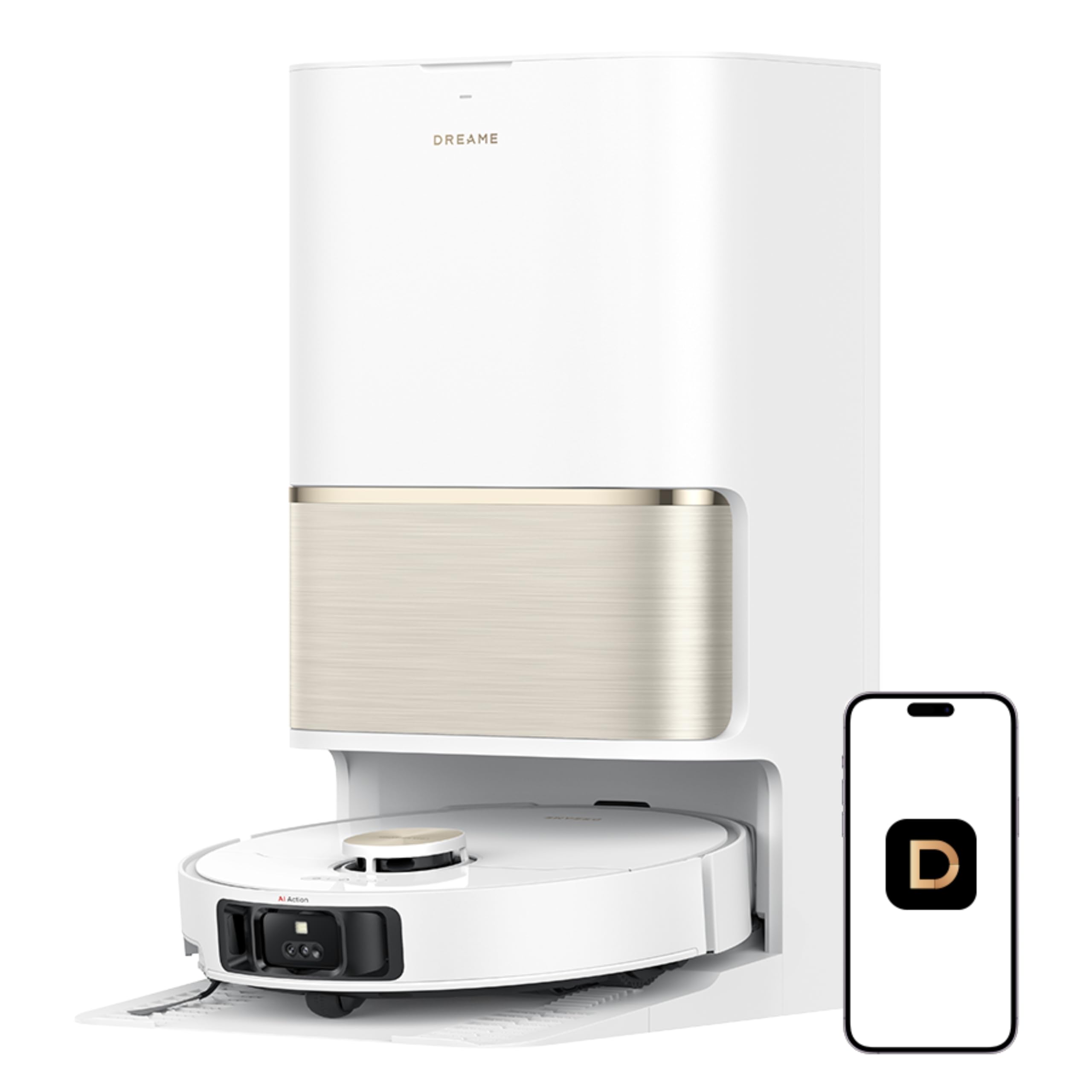
The Dreame L50 Ultra sets itself apart with ProLeap retractable legs that lift the robot up to 6 cm—enough to cross door tracks, thick rugs, and other floor transitions that trap lesser robots. The AI action combined with 3D structured light detects 180+ obstacle types, including shoes, cables, and furniture, avoiding them without bumping. The sixth-generation TurboForce motor delivers 19,500 Pa of suction with quieter operation than earlier Dreame models, making it suitable for open-plan living.
The HyperStream Detangling DuoBrush uses a bristled rubber brush paired with a TPU rubber brush to actively remove hair from the brush core, preventing wrap-around on hard floors and carpets. The All-in-One PowerDock holds a 100-day dust bag, washes mops with hot water, and dries them—plus it refills the cleaning solution and water tank automatically. Owners with busy families report it handles pet hair, crumbs, and sticky spills without manual intervention, and the app’s five carpet modes allow you to tailor cleaning for each rug type.
A few owners note the L50 Ultra can leave minimal water marks on hard floors if mopping is used on high humidity days, and the initial setup requires careful placement of the dock for the ProLeap system to work optimally. Some users wish for a longer battery than the rated 180 minutes for very large homes. The cord avoidance is rated highly, but very thin cables like phone charging wires can occasionally be swept up.
Why we love it
- ProLeap 6cm leg lift clears high thresholds effortlessly
- 100-day dust bag reduces emptying frequency dramatically
- HyperStream DuoBrush actively removes hair during cleaning
Good to know
- May leave slight water marks on hard floors in humid conditions
- Very thin cables can occasionally be caught
- Battery life may be insufficient for homes over 2,500 sq ft
3. Yeedi M16 Infinity
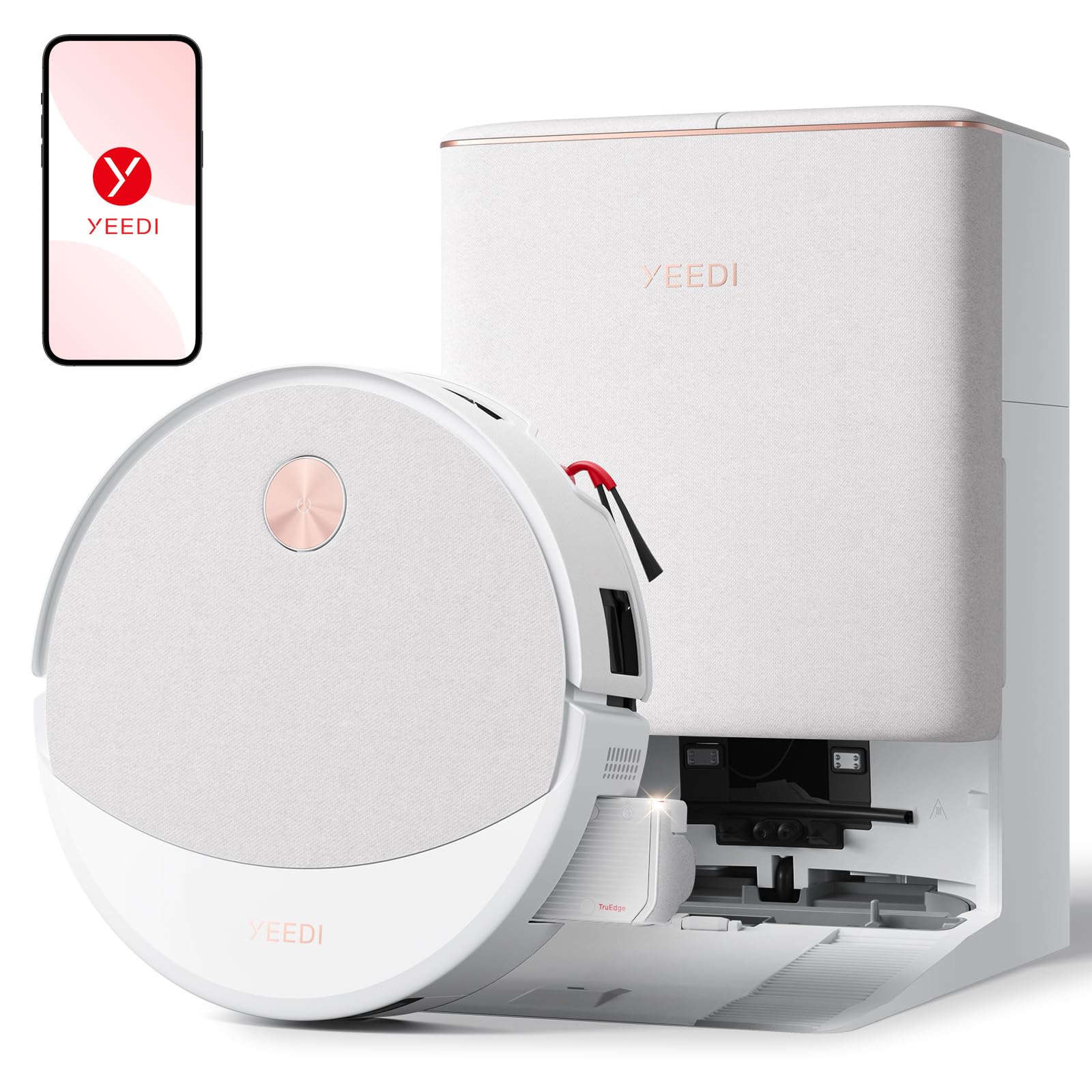
The Yeedi M16 Infinity combines a massive 30,000 Pa of suction with a self-cleaning OZMO roller mop that washes itself continuously while mopping—meaning each pass uses clean water rather than spreading dirty water across the floor. The AI Obstacle Avoidance system recognizes and navigates around common household items, and users report it effectively avoids cables and socks. The ZeroTangle 4.0 system is built specifically for pet homes, with brush geometry that reduces hair wrap significantly compared to earlier anti-tangle designs.
The Self-Emptying Omni Station collects dust, washes the mop with hot water, and dries it with warm air, cutting down on daily maintenance. The app-based mapping allows room-by-room cleaning, and the unit runs for 140 minutes on a single charge. Owners of homes with kids and pets praise its ability to handle crumbs, trash, and dried spills, and many note the self-cleaning mop feature eliminates the need for manual mop pad swapping. The fast 175W charging gets the robot back to work quickly for larger spaces.
Some users mention the AI can miss small objects like crayons or pen caps, and the edge-following leaves a gap of roughly 1 inch on baseboards. A few early reports note the app can crash occasionally during map editing. The obstacle avoidance is generally reliable, but very low-profile objects like charging cables lying flat on dark carpets can still be missed. Overall, it offers strong value for those prioritizing self-cleaning mopping at this tier.
Why we love it
- Self-cleaning roller mop uses fresh water for each pass
- 30,000Pa suction is among the highest in class
- ZeroTangle 4.0 handles pet hair effectively
Good to know
- Edges can miss about 1 inch along baseboards
- AI may not detect very small objects like pen caps
- App stability has occasional crashes
4. eufy Robot Vacuum E25
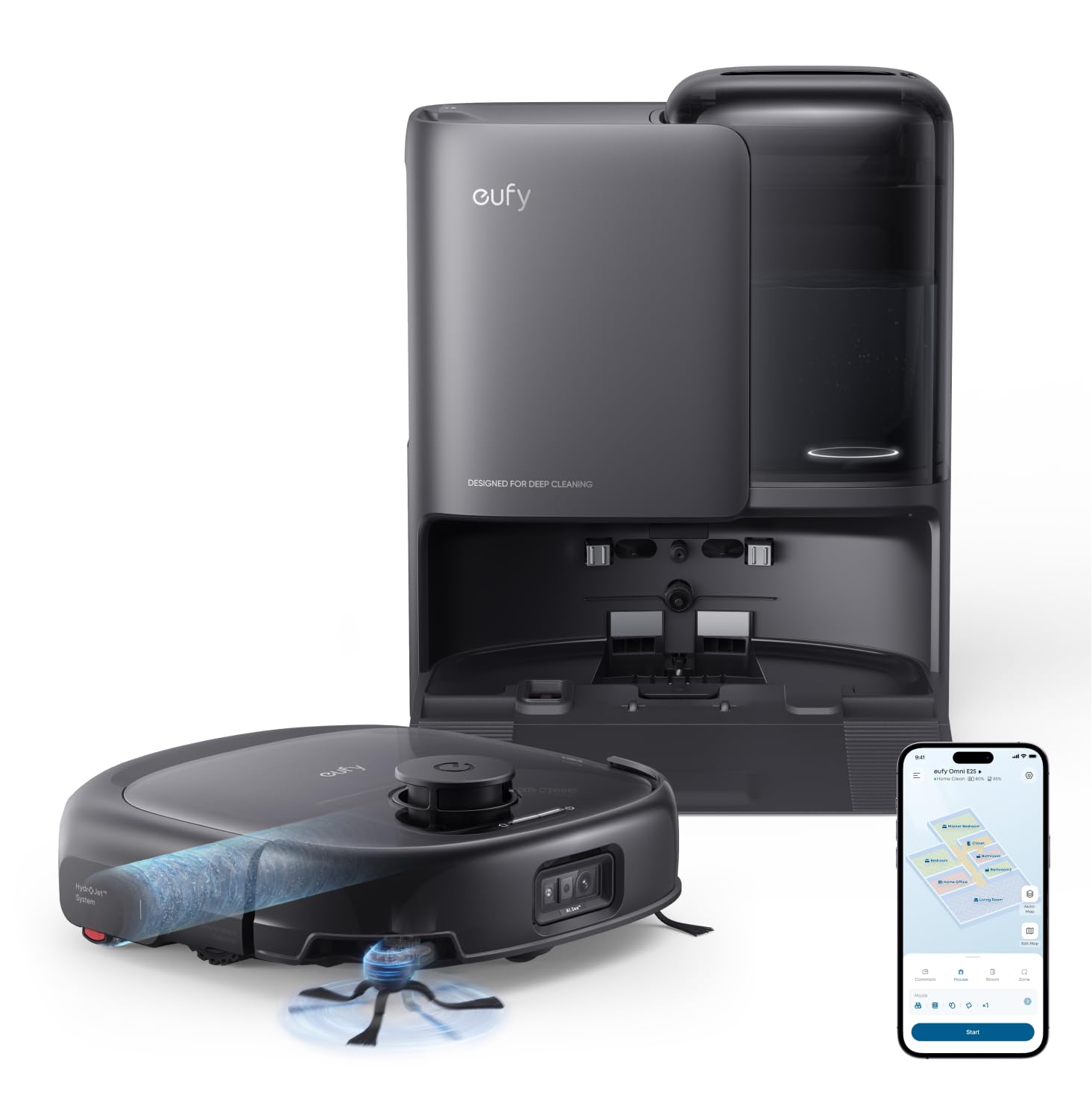
The eufy E25 centers on the HydroJet Always-Clean Roller Mop system, which refreshes the mop roller with clean water two times per second—preventing cross-contamination between rooms. The 20,000 Pa suction is strong enough for embedded dirt on carpets and grout lines, and the CornerRover arm extends to scrub along baseboards and tight corners. The All-in-One Station auto-empties dust into a 3L bag (lasting up to 75 days), self-washes roller mops, hot air dries at 50°C, and auto-refills water, covering five floor plans.
DuoSpiral Anti-Tangle Brushes are designed to reduce hair wrap, and the 10.8 mm mop lift protects carpets from wetness. The unit operates at a low noise level of ≤61 dB even in max mode. Owners find the mapping process takes roughly 4 minutes for an average home, and the system handles pet hair and daily debris without issue. The rotating mop head avoids the streakiness common with flat mop pads, and single roller design simplifies maintenance.
A significant number of users report navigation reliability issues—the unit can get stuck under furniture, spin in circles randomly, or fail to return to the dock. Some owners have experienced erratic behavior traced to the robot’s top lid interfering with sensors, requiring manual removal. The hair entanglement on the main brush is also cited more often than with dual-roller designs. The E25’s mopping is excellent when it works, but its navigation consistency is below the average for this price tier.
Why we love it
- HydroJet system prevents dirty water spread across rooms
- CornerRover arm reaches tight edges and baseboards
- Self-washing and drying dock reduces manual maintenance
Good to know
- Navigation reliability is inconsistent across units
- Main brush can still tangle with hair in some conditions
- Top lid interference with sensors reported by multiple owners
5. iRobot Roomba Max 705
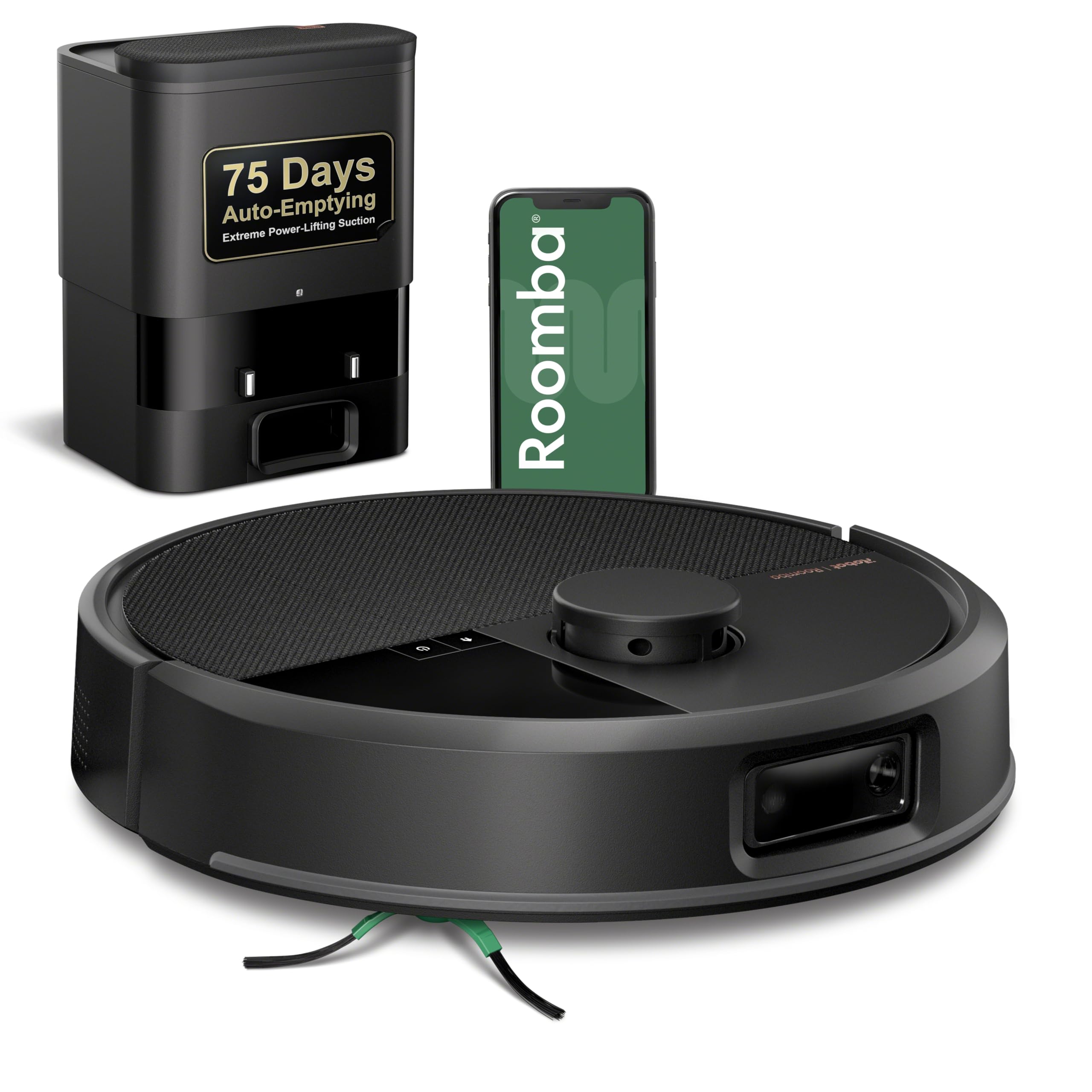
The Roomba Max 705 delivers iRobot’s patented dual rubber brush system, which is specifically engineered to flex and maintain contact with all floor types while resisting hair wrap. The PrecisionVision AI technology immediately recognizes cords, socks, and pet waste, navigating around them without making contact. The ClearView Pro LiDAR maps your home efficiently, and the AutoEmpty Dock traps particles as small as 0.7 microns in an enclosed bag that lasts up to 75 days. Owners report strong suction on both hard floors and carpets, with the unit handling large amounts of dog hair from multi-pet households.
The advanced Dirt Detect technology identifies large messes and repeats cleaning passes to ensure thorough pickup. The battery runs for 210 minutes, which is sufficient for homes up to 1,200 sq ft on a single charge, and the robot uses recharge-and-resume for larger spaces. The app lets you select specific rooms, adjust four suction levels, and set no-go zones. Many owners upgrading from older Roomba models note the Max 705 is significantly quieter and finishes cleaning in a fraction of the time thanks to the LiDAR navigation.
Some users report the obstacle avoidance is overly sensitive—it can avoid tall piles of hair or certain objects that it shouldn’t, leaving the mess behind. The self-emptying base can be very noisy during the disposal cycle, and some owners have experienced false “bag full” errors that require clearing. The side brush also detaches easily on transitions between floor types. A few reviewers note the cardboard bag interface feels cheap and can tear when removed, wasting bags.
Why we love it
- Dual rubber brushes are excellent for pet hair pickup and anti-tangle
- PrecisionVision AI effectively handles objects like cords and waste
- 210-minute battery covers large homes per charge
Good to know
- Obstacle avoidance can be overly cautious, avoiding some messes
- Self-emptying base is noticeably loud during cycle
- False “bag full” errors reported by some users
6. iRobot Roomba Plus 505 Combo
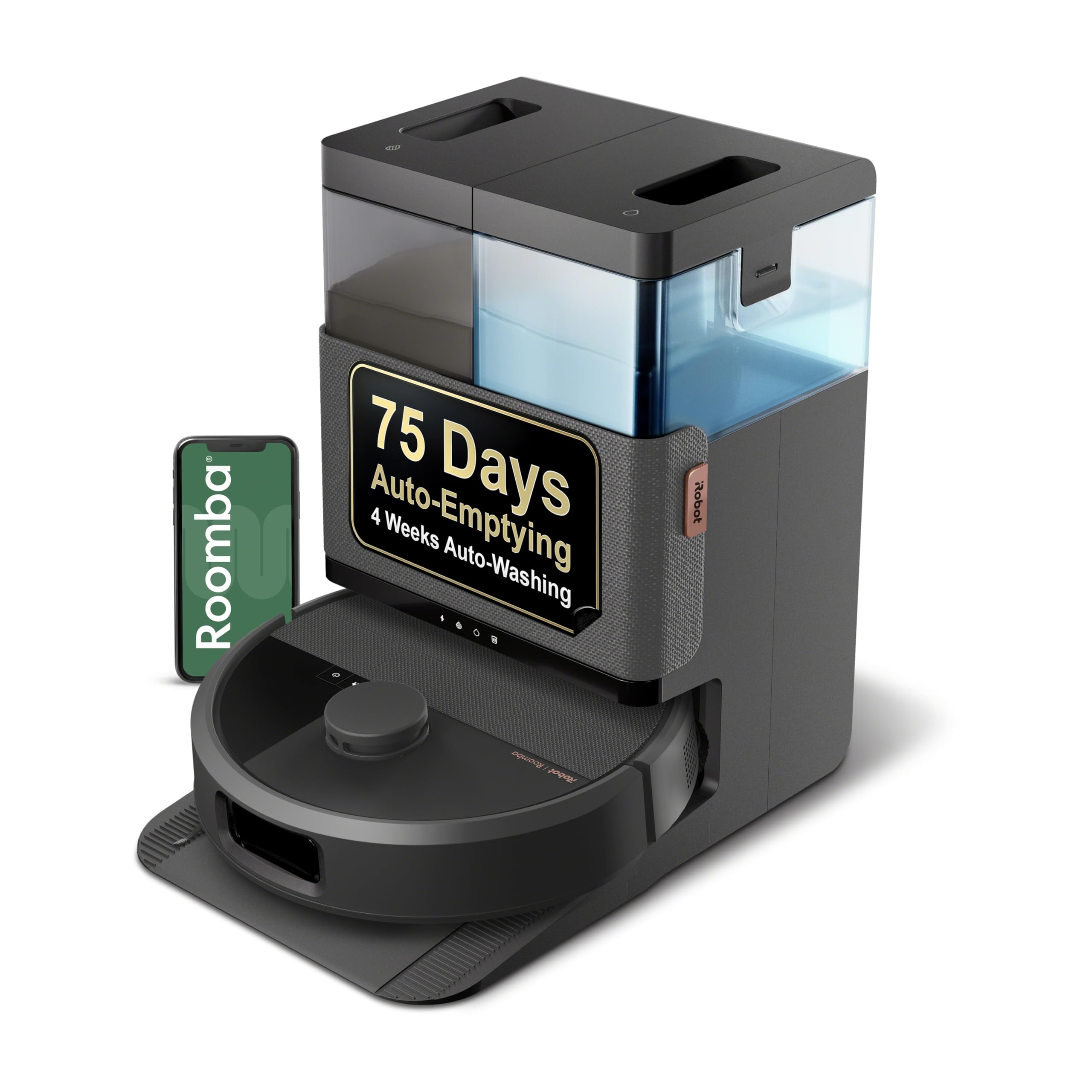
The Roomba Plus 505 Combo is iRobot’s integrated vacuum-and-mop solution, featuring Advanced DualClean Mop Pads with PerfectEdge that extend floor-mopping coverage by 18% compared to standard pads. SmartScrub adds 2x deeper scrubbing for tough messes like dried coffee and grime. The unit uses PrecisionVision AI to immediately recognize and avoid cords, socks, and pet waste, while the AutoWash Dock does everything: 75 days of auto-emptying, 4 weeks of mopping and pad washing with continuous pad refreshing, and heated drying.
The 70x more suction (compared to Roomba 600 series) handles crumbs, pet hair, and fine dust effectively. The mop pads auto-lift when sensing carpet ahead, enabling seamless multi-surface cleaning without wetting the rug. Owners of tile-heavy homes report excellent mopping performance, with the deep clean mode effectively removing sticky spills. The app allows you to choose between vacuum-only, mop-only, combo clean, or vacuum-first-then-mop sequences. Mapping is quick and accurate, and the system learns which rooms get dirtiest to prioritize cleaning.
Several owners mention app setup is frustrating, with some units taking two days to connect. The self-emptying and mopping cycles are louder than expected, and some users report the dirty water tank requires regular cleaning to prevent odor buildup. A small but concerning subset of owners experienced defective units with false “tray full” errors and poor customer service. The mop pad gets very wet at the start of a mopping run, and some users note it leaves residual dampness on carpets even with the auto-lift feature.
Why we love it
- AutoWash dock handles emptying, pad washing, and drying
- PerfectEdge mop extends coverage for corners and baseboards
- SmartScrub provides deeper scrubbing for dried-on messes
Good to know
- App setup can be time-consuming for some users
- Mopping can leave carpets slightly damp initially
- Customer service quality is inconsistent
7. DREAME L10s Ultra Gen 2

The Dreame L10s Ultra Gen 2 focuses on a self-contained cleaning station with a 4.5L clean water tank and 3.2L dust bag for up to 75 days of hands-free operation. The DuoScrub Mopping System uses two high-speed rotary mops that scrub under pressure, handling stubborn dirt and spills effectively. The Smart Pathfinder navigation with 3DAdapt Technology uses real-time mapping and AR scanning to add furniture information, making obstacle avoidance more precise over time. The MopExtend Tech enables edge cleaning coverage up to 165%, pushing the mop beyond the robot’s body reach.
The 10,000 Pa Vormax suction is lower than the top-tier models, but owners with two small dogs report it still handles daily pet hair and debris well when combined with the floating rubber brush that detangles hair. The unit features ultrasonic carpet recognition with five modes, including mop raising and suction boost. Owners find the unit very quiet, and the app provides easy control over suction and mop vigor. Many buyers appreciate the self-emptying and self-cleaning features, noting the robot eliminates the need for manual mopping maintenance.
Some owners mention the suction feels insufficient for deep carpet cleaning compared to 20,000Pa+ models. The unit’s reliability is a concern for a minority of buyers—a few report the mopping system failing after a month, with the company requiring a full unit return for warranty service. The edge cleaning is good but not perfect, with some crumbs left near rugs. The battery life is rated at 240 minutes, but high-suction mode drains it more quickly, requiring charges for larger homes.
Why we love it
- Large 4.5L water tank and 3.2L dust bag minimize refills
- DuoScrub rotary mops scrub under pressure for tough stains
- Quiet operation even at higher suction settings
Good to know
- 10,000Pa suction is lower than many competitors
- Long-term reliability has mixed reviews
- Warranty process may require full unit return
8. Shark Navigator RV2120AE

The Shark Navigator RV2120AE distinguishes itself with a bagless self-emptying base that holds up to 60 days of debris, eliminating the ongoing cost of replacement bags. The SmartPath Navigation uses spot LiDAR technology to precisely map your home and clean in a row-by-row pattern. The Self-Cleaning Brushroll digs deep into carpets and directly engages hardwood floors while being engineered to resist hair wrap. The object detection and avoidance system identifies obstacles and adapts to everyday changes in your home layout.
This model delivers up to 50% more suction than competitor robots, according to Shark’s testing, and owners confirm it handles pet hair and daily debris on hard floors effectively. The battery runs for 120 minutes, and the recharge-and-resume function completes cleaning after topping up. The app allows scheduling, zone cleaning, and voice control with Alexa and Google Assistant. Owners upgrading from older Roombas particularly note the superior navigation and lack of getting stuck—the unit maps accurately and rarely requires intervention.
The biggest drawback is carpet performance: multiple owners report the Navigator fails to pick up effectively on all carpet types, from low-pile to shag. The unit only has one rotating side brush, which reduces edge cleaning coverage compared to dual-brush models. The dust bin is not transparent, making it hard to judge fullness at a glance. Some owners find the recharge time long—up to 3 hours—which means the robot may take most of a day to finish a larger home with recharge-and-resume.
Why we love it
- Bagless base eliminates ongoing costs for disposal bags
- SmartPath LiDAR navigation is accurate and prevents stuck situations
- Self-Cleaning Brushroll resists hair wrap effectively
Good to know
- Carpet cleaning performance is below average
- Only single side brush reduces edge coverage
- Long recharge time (3 hours) delays completion
9. Shark PowerDetect AV2820S

The Shark PowerDetect AV2820S is built around three deep-cleaning technologies: DirtDetect senses hidden debris and automatically boosts suction, FloorDetect optimizes brushroll engagement for different surfaces, and EdgeDetect uses air blasts to pull debris from corners. The NeverStuck Technology allows the robot to lift and lower itself to maneuver over obstacles and cross thresholds, providing up to 2x more coverage than older Shark models. The 3D Object Detection system enables the robot to see objects high or low to the ground and move around or over them.
The bagless HEPA base holds up to 30 days of dust and debris, with True HEPA filtration capturing 99.97% of particles down to 0.3 microns—an important feature for allergy households. Owners report the mapping is excellent and the app scheduling is reliable. The unit picks up dirt effectively in corners and hard-to-reach areas, with strong suction handling heavy debris like dog food. The variety of cleaning modes (standard, matrix, and spot) allows tailored cleaning for different rooms and situations.
Several owners report that the battery life at 110 minutes is insufficient—particularly in matrix clean mode, which drains the battery within a single room, requiring a 3+ hour recharge. The side brush is reported to wear out quickly, and some units develop wheel or suspension issues after a few months. The HEPA filter’s fine screen cakes with dust quickly, requiring frequent cleaning to maintain suction. International users report the Shark Clean app is geo-restricted, making many features unavailable outside the US.
Why we love it
- NeverStuck technology lifts to cross thresholds and climb over obstacles
- True HEPA filtration captures 99.97% of allergens
- Multi-mode cleaning (standard, matrix, spot) for targeted cleaning
Good to know
- Battery life is short, especially in matrix clean mode
- Side brush wears out faster than competitors
- App features may be limited for international buyers
10. Lefant M3 Max
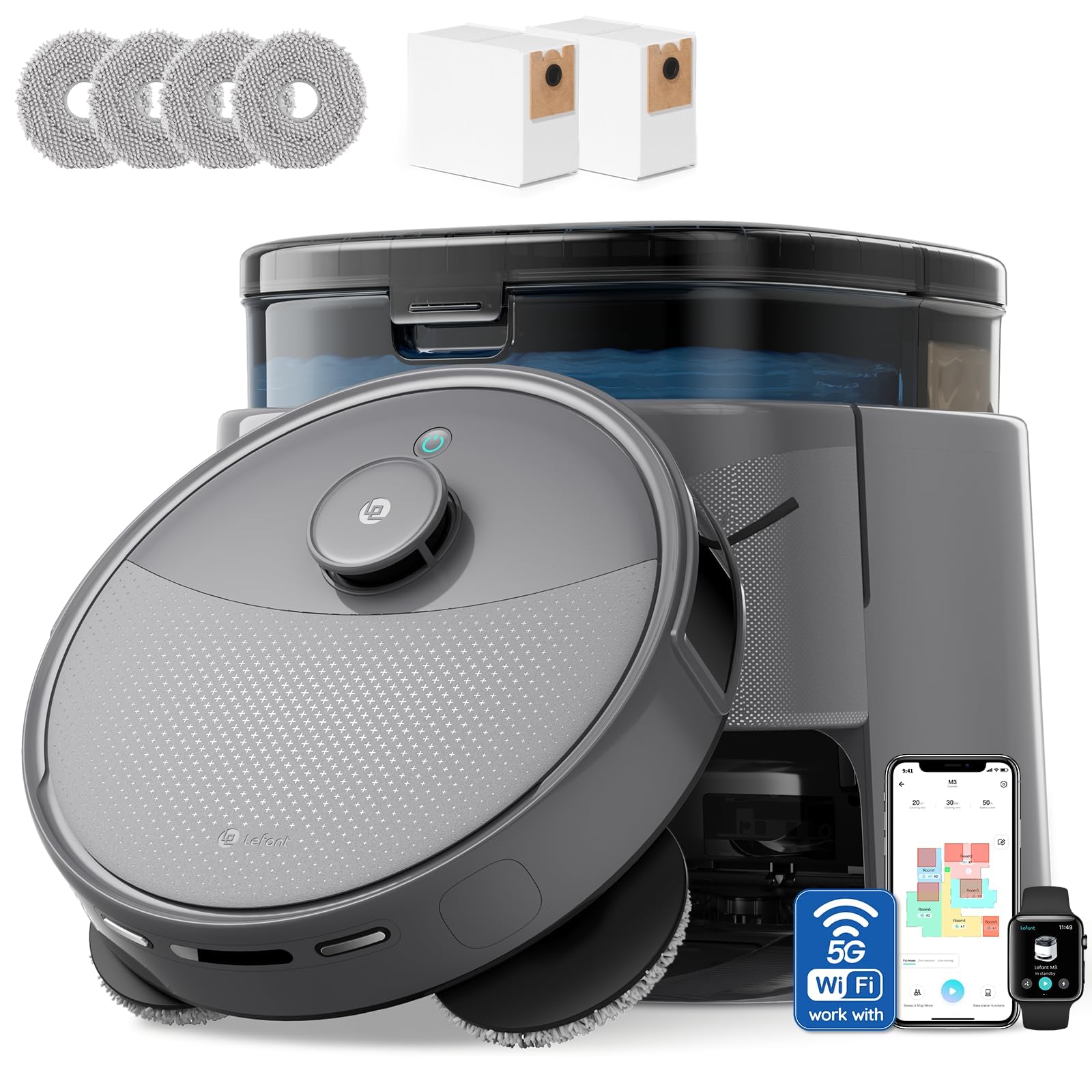
The Lefant M3 Max brings premium specs to a value-oriented price point, featuring 20,000 Pa suction and a 3.2L dust bag in the base station that allows up to 90 days of self-emptying. The 360° LiDAR navigation quickly scans and maps your home with multi-floor support, while the Freemove Tech 3.0 precisely dodges furniture, cords, and toys. The all-in-one smart dock uses 55°C hot water to dissolve grease on the mop pads, then dries them with cool air to prevent deformation.
The 5,200mAh battery provides up to 220 minutes of runtime, enough for homes up to 1,600 sq ft on a single charge. The unit supports dual-band WiFi (2.4GHz and 5GHz) for stable connectivity, and the app allows scheduling, cleaning mode selection, and directional control. Owners of homes with shedding pets like huskies report the unit effectively sucks up all hair without clogging, and the mopping function with scrub pads leaves streak-free finishes. The 11-inch slim design allows it to fit under most furniture.
Some owners note the battery life is insufficient for larger homes—those with 160m² (1,722 sq ft) layouts need mid-clean recharges. The mopping function lacks an extendable arm for corners, leaving some edge debris untouched. The app is functional but less refined than premium brands. A few users report the unit’s obstacle avoidance works well but requires removing very small objects like charging cables for best results. The cool air drying is slower than hot air systems and may not fully prevent mold in humid climates.
Why we love it
- 90-day self-emptying base is class-leading in this price tier
- 20,000Pa suction performs well on both hard floors and low carpets
- Dual-band WiFi support for reliable connectivity
Good to know
- Battery life insufficient for very large homes
- Cool air drying is slower than hot air alternatives
- Mop lacks extendable arm for corner edge cleaning
11. Kilgone G20

The Kilgone G20 is an ultra-slim entry-level robot vacuum at just 2.8 inches tall, designed to glide under beds, sofas, and low-clearance furniture that thicker robots cannot reach. The Smart 3D Obstacle Avoidance uses advanced sensors to detect and dodge furniture, cords, and shoes in real time, while the Zig-Zag navigation pattern covers 30% more floor than random-bouncing robots. The specialized no-tangle suction design prevents long hair and pet fur from wrapping around the brush, a common pain point in cheaper units.
At only 65 dB, the G20 operates quieter than a microwave, making it suitable for running during calls or while a baby naps. The 2,600mAh battery provides up to 120 minutes of runtime, covering up to 1,290 sq ft per charge, and the robot automatically returns to its dock when low. The 230 mL electronic mop provides wet cleaning for hard floors, paired with HEPA filtration for allergens. Owners appreciate the easy setup and app control, with many older users finding it remarkably simple to operate. The unit handles daily dust, pet hair, and debris effectively for its size.
The G20’s obstacle avoidance is functional but basic compared to LiDAR or AI systems—it will still require removing clutter and cords for best results. The dust cup fills quickly in homes with heavy pet shedding, requiring more frequent emptying. The mopping feature is basic and uses water only, without automatic pad washing or drying. Some users note the mapping is less precise than higher-tier units, and the 2.4GHz-only WiFi may cause connectivity issues in dual-band networks that don’t separate bands cleanly.
Why we love it
- Ultra-slim 2.8-inch height cleans under most furniture
- Whisper-quiet 65dB operation for unobtrusive use
- No-tangle suction design handles long hair and pet fur
Good to know
- Basic obstacle avoidance requires pre-cleaning of clutter
- Small dust cup needs frequent emptying in pet homes
- Mopping is basic without automatic washing or drying
FAQ
How does LiDAR navigation differ from AI camera-based obstacle avoidance?
Why does my robot avoid some obstacles but hit others?
What does “mop lifting” mean and why is it important for carpet avoidance?
How important is the battery capacity for obstacle avoidance performance?
Final Thoughts: The Verdict
For most homes, the robot vacuum with obstacle avoidance winner is the Roborock Qrevo CurvX because its combination of ultra-slim 7.98 cm profile, proactive AdaptiLift chassis, and powerful 22,000 Pa suction handles the widest range of real-world obstacles and floor types with minimal intervention. If you prioritize self-cleaning mopping with the best water management, grab the Yeedi M16 Infinity. And for the best value in a bagless self-emptying system with strong navigation, nothing beats the Shark Navigator RV2120AE.