
If you have hardwood floors, area rugs, or laminate that you’d rather not drag a wet cloth across, a dedicated dry-only robot vacuum is the smarter play. These units skip the mop tank entirely, focusing every watt of suction and every minute of battery on what they do best: pulling debris from carpets, tile, and bare floors without leaving moisture behind.
I’m Mo Mahin — the founder and writer behind Furric. I’ve spent the last several years analyzing vacuum specifications, comparing LiDAR navigation systems versus camera-based SLAM, and studying long-term owner feedback to separate the models that genuinely clean from those that just move dirt around.
I’ve scrutinized the mapping algorithms, the dust-bin capacities, the anti-tangle brush designs, and the self-emptying dock durability to bring you this guide to the best performing dry-only robot vacuums on the market. Whether you need row-by-row LiDAR precision or a bagless base that never requires replacement bags, the robot vacuum without mop category offers solutions that prioritize pure air-moving power and hassle-free dry maintenance over multi-function compromises.
How To Choose The Best Robot Vacuum Without Mop
Selecting the right dry-only robot vacuum means ignoring marketing fluff and focusing on the specs that actually determine how clean your floors will be. Here are the critical decision points that matter for a dedicated vacuum-only unit.
Navigation: LiDAR vs. Camera-Based VSLAM
LiDAR uses a spinning laser to map your rooms in real-time, creating precise, repeatable cleaning paths that run in straight, parallel rows. This is the gold standard for a vacuum-only robot because it works in complete darkness and remembers your floor plan after the first mapping run. Camera-based VSLAM (visual simultaneous localization and mapping) uses ceiling and wall landmarks to orient itself. It can work well but struggles in low light and occasionally loses its position, leading to missed spots.
Self-Emptying Dock: Bagged vs. Bagless
The primary benefit of a self-emptying dock is the extended maintenance interval—anywhere from 30 to 75 days. Bagged systems (like iRobot’s and eufy’s) trap allergens in sealed bags that you replace when full. Bagless systems (like Shark’s) eliminate the recurring cost of bags but require you to manually dump the dust bin in the base, which can create a puff of dust. For allergy sufferers, a sealed bag system is usually the better bet.
Anti-Tangle Brush Design
Pet hair and long human hair are the leading cause of brush stall on robot vacuums. The most effective anti-tangle designs actively cut hair off the roller brush during the cleaning cycle. eufy’s hair-detangling system slices hair every time the robot returns to the dock. Other models use rubber brushes with angled ridges that repel hair wraps. A standard bristle brush without any anti-wrap technology will need manual cleaning after every few runs.
Quick Comparison
On smaller screens, swipe sideways to see the full table.
| Model | Category | Best For | Key Spec | Amazon |
|---|---|---|---|---|
| Roborock Q10 S5+ | Premium | High suction & obstacle avoidance | 10,000 Pa suction | Amazon |
| Shark PowerDetect AV2820S | Premium | Climbing thresholds & edge cleaning | HEPA bagless base | Amazon |
| iRobot Roomba Plus 504 | Premium | Pet waste & object avoidance | 210 min battery life | Amazon |
| Shark Navigator AV2110S | Mid-Range | Self-cleaning brushroll | Bagless 30-day base | Amazon |
| Roborock Q7 M5+ | Mid-Range | High suction & dual anti-tangle | 10,000 Pa suction | Amazon |
| Dyson 360 Vis Nav | Mid-Range | HEPA filtration & edge duct | HEPA sealed filtration | Amazon |
| iRobot Roomba 105X | Mid-Range | Smart mapping & app control | 5.8″ cleaning path | Amazon |
| iRobot Roomba 105 | Mid-Range | Auto-empty dock | 75-day bag capacity | Amazon |
| eufy L60 | Mid-Range | Hair-detangling technology | 5,000 Pa suction | Amazon |
In‑Depth Reviews
1. Roborock Q10 S5+
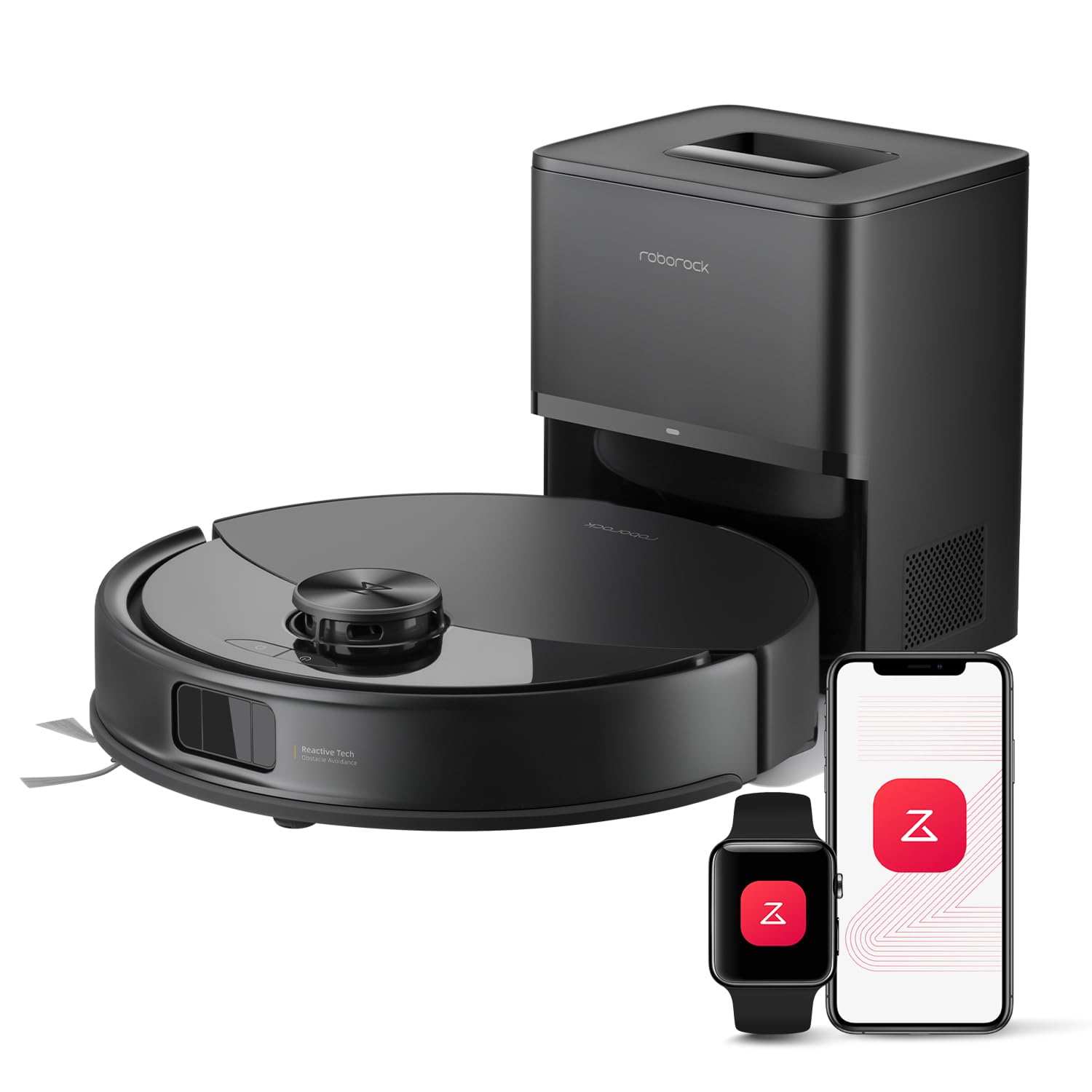
The Roborock Q10 S5+ brings a commanding 10,000 Pa of suction power to the table, making it one of the most potent dry-only robot vacuums in this price range. The dual anti-tangle system, featuring a JawScrapers comb main brush and a specialized side brush, aggressively reduces hair wrap around the roller — a common pain point for multi-pet households.
Its PreciSense LiDAR navigation scans 360 degrees to build detailed multi-level maps, and the robot rarely gets stuck on furniture legs or transitions thanks to ReactiveTech structured-light obstacle avoidance. The self-emptying station holds a 2.7L dust bag good for up to 70 days of debris, though the disposable bags do represent a recurring cost.
Owners report that the mopping module (included) is best left unused for those who want a pure dry experience, but the vacuum-only performance on carpets is exceptional due to the carpet boost mode that automatically increases suction when fibers are detected. The app supports scheduling, no-go zones, and suction-level adjustments.
Why we love it
- 10,000 Pa suction lifts deeply embedded pet hair from carpets
- ReactiveTech obstacle avoidance navigates around cords and toys
- Multi-level mapping remembers each floor’s layout
Good to know
- Uses disposable dust bags that require replacement
- Firmware update stability has been inconsistent for some users
- Side brush only cleans on one edge
2. Shark PowerDetect AV2820S

The Shark PowerDetect is engineered for homes with mixed flooring and thick transitions. Its NeverStuck Technology lifts and lowers the front end to climb over thresholds up to several inches high, significantly reducing the need to rescue the robot. The DirtDetect sensor automatically boosts suction when it rolls over hidden debris, and EdgeDetect uses blasts of air to pull dirt from corners.
This model uses a bagless self-empty base that holds up to 30 days’ worth of debris, which eliminates the ongoing expense of dust bags. The True HEPA filtration system captures 99.97% of particles down to 0.3 microns, making it a strong choice for allergy households. The three deep-cleaning technologies for different floor types dynamically adjust brushroll engagement, but the Android app has been criticized for a barebones interface without room-specific scheduling in the initial release.
Long-term reviews note that the unit’s 3D object detection can miss low-profile dog toys, and the self-empty base is noticeably loud when purging. The vacuum itself runs for 110 minutes on a full charge, which covers most single-level homes before needing a recharge-and-resume cycle.
Why we love it
- NeverStuck design climbs over rugs and thresholds without stopping
- Bagless base eliminates ongoing filter bag costs
- True HEPA filtration traps allergens at the base
Good to know
- App is limited — no room-specific scheduling initially
- Self-empty process is loud enough to hear across the house
- Object detection may not avoid pet waste consistently
3. iRobot Roomba Plus 504
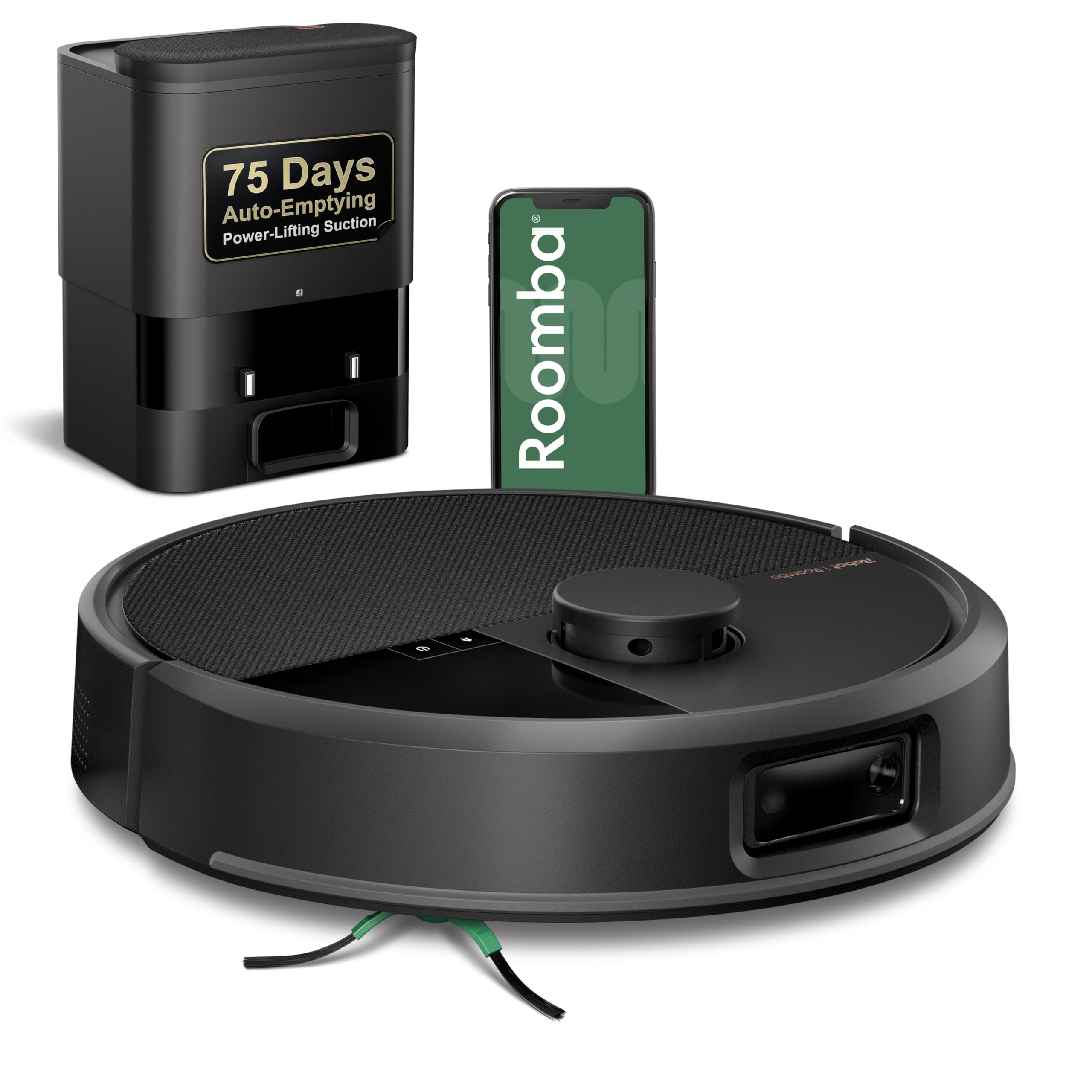
The Roomba Plus 504 is the most advanced iRobot in this list without a mop tank, featuring PrecisionVision AI that recognizes cords, socks, and even pet waste before making contact. Its ClearView Pro LiDAR laser maps your entire home in under 30 minutes, and the 210-minute battery life is among the longest available for a vacuum-only unit, allowing it to cover larger homes on a single charge.
The 150x power-lifting suction and patented dual rubber brushes flex against hardwood and carpets alike to lift embedded dirt and pet hair. The AutoEmpty Dock seals debris in a bag for up to 75 days, trapping allergens down to 0.7 microns. The new Roomba Home App offers four levels of suction, repeated cleaning passes in high-traffic zones, and the ability to target specific rooms or zones by voice.
Some owners report that the new app iteration lacks certain advanced features found in older iRobot software, like quiet hours and multi-map management. The robot also struggles on dark-colored rugs, occasionally misinterpreting them as drop-offs. The large unit footprint means it may not fit under low-profile furniture.
Why we love it
- PrecisionVision AI avoids pet waste, cords, and socks
- 210-minute battery covers large homes without recharge
- 75-day self-empty dock with sealed allergen bag
Good to know
- App is newer and lacks some older iRobot app features
- May treat dark rugs as cliffs and avoid them
- Large dock footprint takes up more floor space
4. Shark Navigator AV2110S
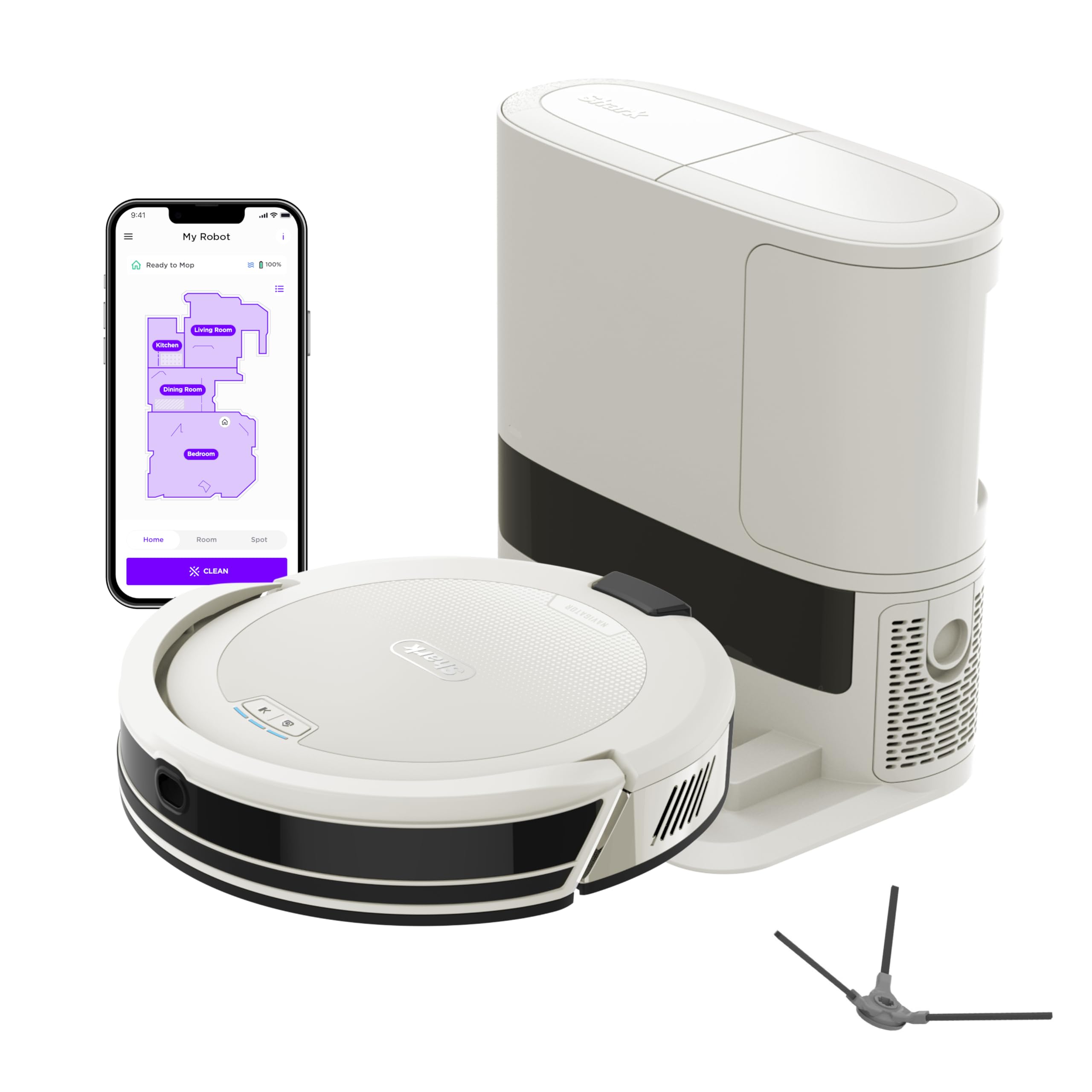
The Shark Navigator brings row-by-row LiDAR mapping and a self-cleaning brushroll with anti-hair wrap technology to a price point that undercuts most other LiDAR-equipped robots. Its SmartPath navigation creates a precise map on the first run and cleans in efficient rows, delivering up to 1.5x more coverage compared to the Shark ION series. The bagless self-empty base holds 30 days of debris with no disposable bags, keeping long-term costs low.
Advanced object detection sensors allow the robot to navigate around everyday obstacles like toys and furniture legs without stopping, and the self-cleaning brushroll actively prevents pet hair and long hair from wrapping around the roller. The SharkClean app lets you set schedules, target specific spots, draw no-go zones, and control via Alexa or Google Assistant.
Some users report that the unit occasionally gets stuck on certain rug fringes or falsely detects cliffs on dark flooring. The lack of a mopping function is intentional for buyers who prefer a dedicated dry-only experience, but the robot’s battery life of 120 minutes may require a mid-run recharge for homes larger than 1,500 square feet. The sound level is moderate — noticeable but not disruptive.
Why we love it
- LiDAR mapping for row-by-row cleaning at a mid-range price
- Self-cleaning brushroll reduces hair wrap maintenance
- Bagless base eliminates recurring purchase of dust bags
Good to know
- May get stuck on thick rug fringes
- No included tool for cleaning the internal bin
- False cliff detection on solid dark surfaces possible
5. Roborock Q7 M5+

The Roborock Q7 M5+ delivers the same 10,000 Pa suction as the more expensive Q10 S5+ but at a lower price point, making it a strong contender for those who prioritize raw suction power over extra features like obstacle avoidance. The dual anti-tangle system uses a JawScrapers comb brush and a 0% hair-tangling side brush to keep the roller free from pet hair wraps during and after cleaning cycles.
Its PreciSense LiDAR navigation maps your home with precision, and the RockDock Plus base holds a 2.7L sealed dust bag for up to 7 weeks of hands-free emptying. The app supports scheduled cleanings, no-go zones, and real-time battery monitoring. The included mop module is an optional attachment that can be removed for those who want a pure dry vacuum experience.
Owner feedback highlights that the mopping function is ineffective at agitating stains, reinforcing why many choose to simply leave the tank off. The vacuum itself is quiet enough not to spook pets, and it maps accurately enough to avoid obstacles rarely. Some users report that the side brush squeaks after extended use, and the app occasionally displays network errors during firmware updates.
Why we love it
- 10,000 Pa suction lifts embedded debris from deep carpet piles
- Dual anti-tangle brushes minimize hair wrap maintenance
- 7-week self-emptying capacity with sealed dust bag
Good to know
- Side brush may develop a squeak over time
- App can experience network errors during updates
- Mop module is ineffective and best left unused
6. Dyson 360 Vis Nav

The Dyson 360 Vis Nav stands apart with an extending side duct that redirects suction directly to the wall edge, eliminating the need for a spinning side brush that can flick debris around. Its 11.8-inch brush bar is wider than most, covering more floor with each pass, and the whole-machine HEPA filtration traps 99.99% of particles as small as 0.1 microns, making it the best choice for severe allergy management.
The robot uses 360-degree vision-based navigation with 26 sensors to see its environment, though this system relies on sufficient lighting and clear visual landmarks. It offers four cleaning modes — Auto, Boost, Quick, and Quiet — and automatically adapts suction power to debris levels in Auto mode. The washable HEPA filter means no disposable media costs, and the bagless bin empties directly into the trash.
The main criticism from owners is the navigation reliability. The VSLAM system can get confused in open floor plans, occasionally getting stuck in empty rooms or failing to resume a cleaning after recharging. Mapping a multi-room home can take several attempts, and the app lacks a real-time location tracker. Battery life is 65 minutes, which is shorter than most competitors, requiring at least one recharge cycle for average-sized homes.
Why we love it
- Extending side duct vacuums edges without a flicking brush
- HEPA sealed filter traps 99.99% of particles down to 0.1 microns
- Wider brush bar covers more floor area per pass
Good to know
- VSLAM navigation is less reliable than LiDAR in open spaces
- 65-minute battery life requires recharging mid-cleaning
- App lacks real-time tracking and reliable map editing
7. iRobot Roomba 105X
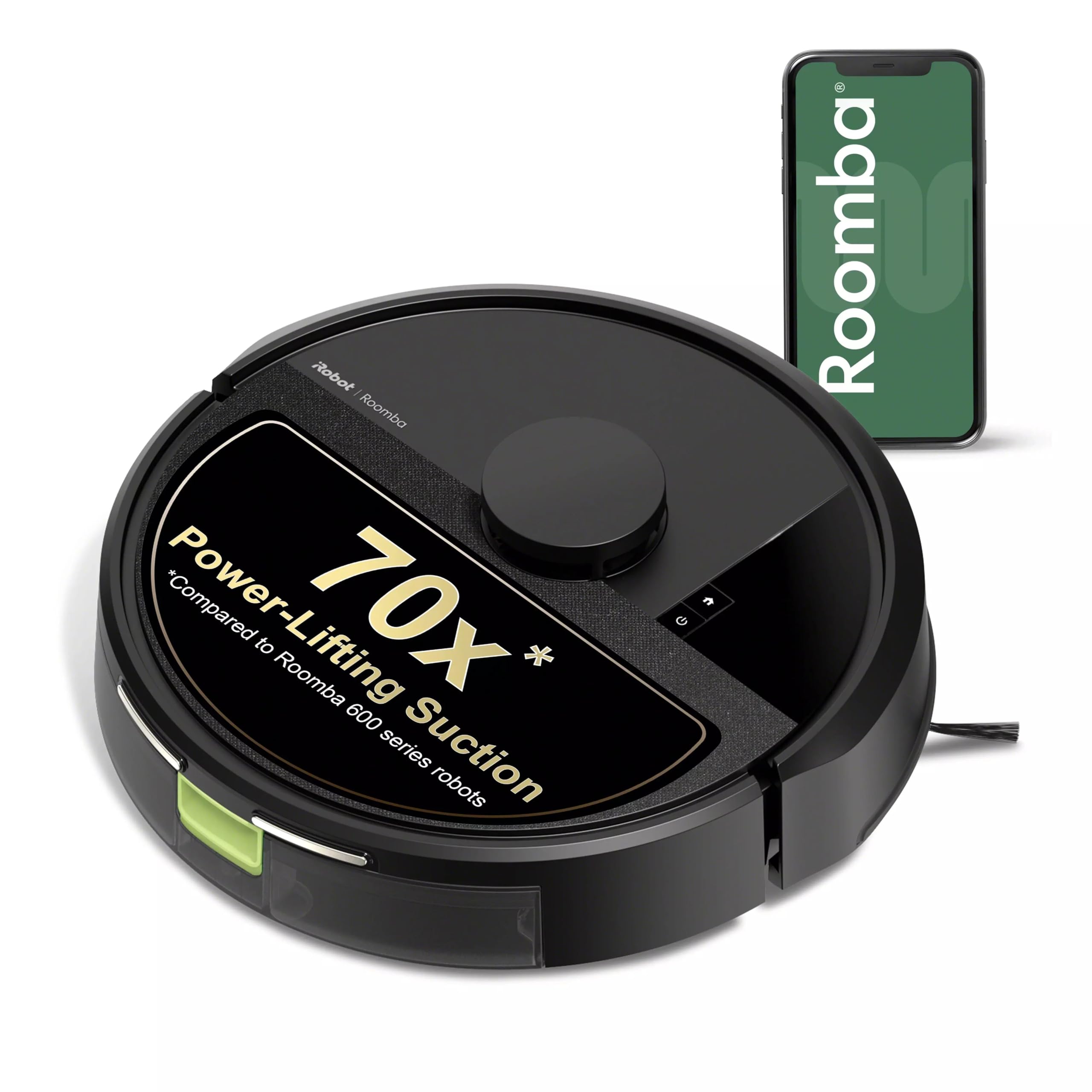
The Roomba 105X is a streamlined dry-only model that uses ClearView LiDAR mapping to clean in neat rows rather than random bouncing. Its 70x power-lifting suction and 3-stage cleaning system (suction, multi-surface brush, edge-sweeping brush) are tuned for homes with a mix of carpets and hard floors, and the 200-minute battery life provides ample runtime for most single-floor layouts.
Custom cleaning through the Roomba Home App lets you target specific rooms, adjust suction levels, and set keep-out zones around pet bowls or cords. The robot automatically returns to the dock when the battery is low and resumes the job where it left off. Voice control works with Alexa, Siri, and Google Assistant.
The 105X does not include a self-emptying dock, so the 0.1-gallon bin must be emptied manually after each major cleaning session. Some users note that the robot’s battery may not fully complete a 1,400-square-foot home on a single charge, requiring the recharge-and-resume cycle. The robot is generally quiet during operation but loud during the self-empty cycle on other Roomba models.
Why we love it
- LiDAR navigation cleans in efficient straight-line rows
- 200-minute battery is among the longest for this price tier
- Voice control works with Alexa, Siri, and Google Assistant
Good to know
- No self-emptying dock — bin must be emptied manually
- Battery may need a recharge cycle for larger homes
- Dock station is not included with the base model
8. iRobot Roomba 105
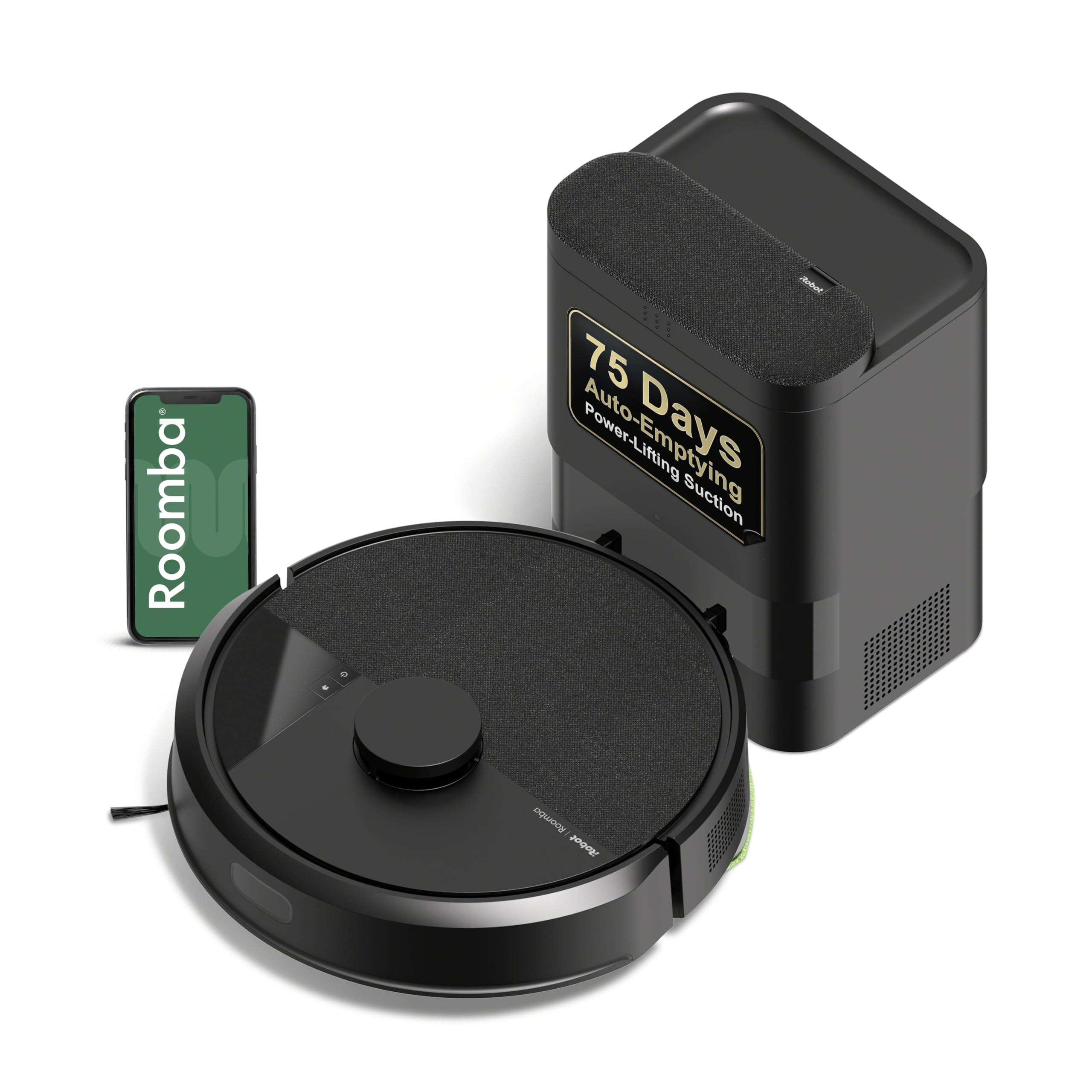
The Roomba 105 is the entry-point to iRobot’s AutoEmpty ecosystem at a lower cost than the Plus 504. Its ClearView LiDAR maps and navigates the same way as the 105X but adds the AutoEmpty dock that seals debris in a bag for up to 75 days — a major convenience upgrade for owners who want to touch the bin as infrequently as possible. The bag traps 99% of allergens down to 0.7 microns.
The 70x power-lifting suction and 3-stage cleaning system are identical to the 105X, and the Edge-Sweeping brush reaches into corners effectively. The app supports custom room scheduling, keep-out zones, and spot cleaning for up to 5 minutes in a single area. The robot’s battery life is 200 minutes, though some owners report it needs a recharge for homes over 1,400 square feet.
Customer satisfaction is mixed regarding long-term reliability. After 7-12 months, some units develop auto-empty clogs, random stuck errors, or navigation issues that require customer service intervention. The self-empty process uses proprietary dust bags, adding a recurring expense. The auto-empty dock is also noticeably loud — more so than the vacuum itself — which can be startling if the base is located near seating areas.
Why we love it
- Auto-empty dock with 75-day capacity for hands-free maintenance
- LiDAR mapping provides precise row-by-row cleaning coverage
- Spot cleaning mode targets individual messy areas for 5 minutes
Good to know
- Some units develop navigation or auto-empty issues after months of use
- Proprietary dust bags add recurring cost
- Self-empty base is significantly louder than the vacuum
9. eufy L60
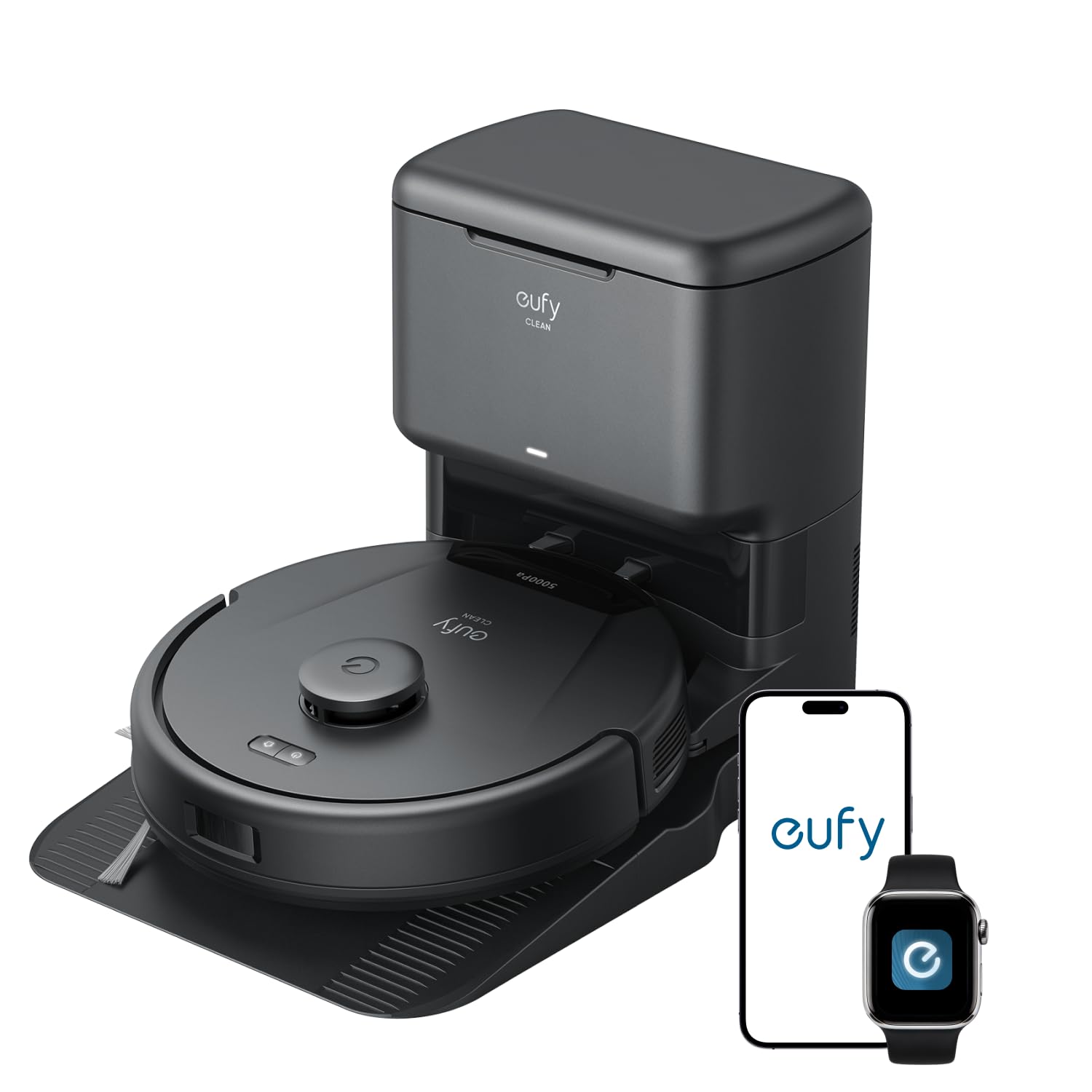
The eufy L60 enters the market with a haircutting technology that actively slices hair off the roller brush every time the robot returns to its self-empty station, rather than merely preventing wraps. This is a genuinely useful feature for homes with long-haired humans or shedding pets — it eliminates the most tedious maintenance task of robot vacuum ownership. The 5,000 Pa suction is moderate compared to premium Roborock models but sufficient for a single-pass clean on hard floors and low-pile carpets.
The iPath LiDAR navigation builds precise maps and remembers each floor separately, so you can carry the L60 upstairs and it will recognize the correct layout. The self-empty station uses a 2.5L dust bag that lasts up to 60 days before replacement. The app allows room selection, no-go zones, and scheduling, and voice control works with Alexa and Google Assistant.
Some owners report that after 3-6 months, the app may randomly lose the saved map, requiring a full re-mapping of the home. The LiDAR sensor can get blocked by low-hanging furniture, and the 120-minute battery may need two charge cycles for homes above 1,200 square feet. The self-empty station’s bag connection has been reported to lose seal contact over time, causing dust blowback.
Why we love it
- Active hair-cutting roller eliminates manual brush cleaning
- Multi-floor mapping auto-recognizes different floor layouts
- 5,000 Pa suction provides strong single-pass cleaning
Good to know
- App may lose saved maps after several months of use
- LiDAR sensor can get blocked by low furniture overhangs
- Battery requires a recharge for larger homes
FAQ
Is a robot vacuum without a mop worse at cleaning hard floors?
How does LiDAR navigation differ from camera-based navigation in a vacuum-only robot?
Can I use a robot vacuum without a mop on thick carpet?
How often should I empty the dust bin on a non-self-emptying robot vacuum?
Will a vacuum-only robot vacuum scratch my hardwood floors?
Final Thoughts: The Verdict
For most homeowners, the robot vacuum without mop winner is the Roborock Q10 S5+ because its 10,000 Pa suction, 70-day self-emptying capability, and robust obstacle avoidance deliver an uncompromising dry-only experience that handles everything from everyday dust to deeply embedded pet hair. If you want a HEPA-sealed system with a bagless base for zero disposable waste, grab the Shark PowerDetect AV2820S. And for object avoidance that protects the robot from pet waste and cables, nothing beats the iRobot Roomba Plus 504.