
That noise — the high-pitched struggle of a jammed brush roll — is the sound of a bad purchase decision. Every robot vacuum buyer shares one nightmare: the cord-eating, hair-tangled, half-mapped machine that requires more babysitting than the floors it was supposed to save. The smart money skips the floor-show and buys a unit with genuine LiDAR mapping, measured suction in Pascals, and a self-emptying base that actually holds a month of debris.
I’m Mo Mahin — the founder and writer behind Furric. I’ve spent the last two years dissecting robot vacuum data sheets, comparing laser navigation systems against budget gyroscopic alternatives, and correlating owner satisfaction scores with specific suction and battery specs across dozens of models.
Every option reviewed below was chosen because its real-world owner feedback matched its published specs — because a best robot vacuums list without verified performance data is just a shopping cart full of hope and customer support calls.
How To Choose The Best Robot Vacuums
Picking a robot vacuum without understanding three core specs — navigation type, suction power strategy, and base station capability — is like buying a car based on its paint color. Every good decision starts with knowing which floor plan your home presents and which obstacle types live on it.
Navigation: LiDAR vs. Gyroscopic vs. Camera-Based
LiDAR (laser-based mapping) scans your home in 360 degrees, creating a permanent map that survives power outages. Gyroscopic navigation spins and counts rotations — it works in the dark but drifts on thick carpets. Camera-based systems recognize objects like shoes or cables but fail in low light. For homes with multiple floors, complex furniture layouts, or pets that leave toys scattered, LiDAR is non-negotiable. Budget models with gyro-only guidance bump into legs and miss entire sections of rooms.
Suction Power and Carpet Behavior
A vacuum rated at 6000Pa (Pascals) on a smooth floor behaves differently at 6000Pa on a plush carpet. The key spec to look for is auto-carpet boost: the machine that detects a higher-pile surface and automatically increases motor RPM to pull deeply embedded grit. Without this, a high-Pa number is wasted on rugs taller than one inch. Owners of homes with medium-to-high pile carpet should prioritize units with a stated carpet detection feature and at least 5000Pa suction ceiling.
Self-Emptying Base Capacity and Maintenance Interval
The base station dust bag capacity — measured in liters or advertised as days — determines how often you touch debris. A 3-liter bag in a single-pet household lasts roughly 60 to 90 days; the same bag in a three-cat home might fill in three weeks. Bagless bases eliminate ongoing costs but require periodic filter cleaning. The trade-off is quiet: bagless self-empty bases are louder than bagged units, and that noise triggers pet anxiety more than the vacuum itself.
Mopping: Passive Damp Cloth vs. Active Scrubbing
Not all mops are equal. Entry-level models drag a damp cloth across the floor — fine for light dust maintenance, useless against dried syrup or coffee rings. Mid-range and premium units add vibration (sonic scrubbing at 100+ strokes per minute) or spinning pads that extend into corners. The best mops also lift automatically when carpets are detected, preventing wet streaks on your rugs. If your home is mostly hardwood or tile, the mopping system deserves as much scrutiny as the suction motor.
Quick Comparison
On smaller screens, swipe sideways to see the full table.
| Model | Category | Best For | Key Spec | Amazon |
|---|---|---|---|---|
| Roborock Qrevo CurvX | Premium | Deep carpet + obstacle avoidance | 22000Pa Suction / 150 min runtime | Amazon |
| NARWAL Flow 2 | Premium | Heavy wet mopping + pet hair | 31000Pa Suction / 275 min runtime | Amazon |
| DREAME L10s Pro Ultra Heat | Mid-Range | Hot-water mop cleaning + edge extend | 7000Pa Suction / 220 min runtime | Amazon |
| iRobot Roomba Plus 505 Combo | Premium | Obstacle AI + auto-wash dock | LiDAR / 120 min runtime | Amazon |
| Shark Stratos AV2700ZE | Mid-Range | Sonic mopping + never-touch base | 60-day capacity / 110 min runtime | Amazon |
| Shark PowerDetect AV2820S | Mid-Range | Auto deep-clean carpets | HEPA / 110 min runtime | Amazon |
| Shark Navigator AV2110S | Mid-Range | Pet hair + bagless self-empty | 30-day capacity / 120 min runtime | Amazon |
| uninell UR3 | Budget | Long runtime + 7000Pa suction | 3.5L bag / 180 min runtime | Amazon |
| Tikom L8000 Plus | Budget | Entry-level LiDAR + self-empty | 6000Pa Suction / 150 min runtime | Amazon |
In‑Depth Reviews
1. Roborock Qrevo CurvX

The Qrevo CurvX redefines high-end with 22000Pa HyperForce suction — enough to pull sand from deep carpet fibers in a single pass. The AdaptiLift chassis lifts the entire body to 4cm, clearing thresholds and furniture legs that trap lesser units. Owners with German Shepherds report zero hair tangles on the brush roll, confirming the Zero-Tangling Design works on fur strands up to 40cm long.
Navigation uses structured light and an RGB camera to recognize 108 object types, including shoes, cables, and pet bowls. The LiDAR tower retracts under low furniture to maintain a 3.14-inch profile, transitioning between open-space mapping and confined navigation without missing coverage. The 80°C hot water dock self-cleans mop pads and dries them with warm air, eliminating the mildew smell that plagues sponge-based systems.
The trade-off is speed — owners report the CurvX needs two recharges for homes exceeding 2500 square feet, making total cleaning spans longer than manual vacuuming. The app interface also draws criticism for unintuitive menu layouts, though the actual SmartPlan 2.0 learning feature adapts suction and water flow per room once trained. For buyers who prioritize obstacle avoidance and deep carpet performance above all else, this is the benchmark.
Why we love it
- AdaptiLift chassis clears thresholds up to 4cm without ramps.
- Zero hair tangles on the brush roll even with heavy-shedding breeds.
- 80°C hot water washes mop pads hygienically, preventing odor build-up.
Good to know
- Slow cleaning speed — large homes may require two charging cycles.
- App learning curve steeper than competitors; not intuitive out of box.
- Obstacle avoidance misidentifies leaves as feces, triggering avoidance.
2. NARWAL Flow 2
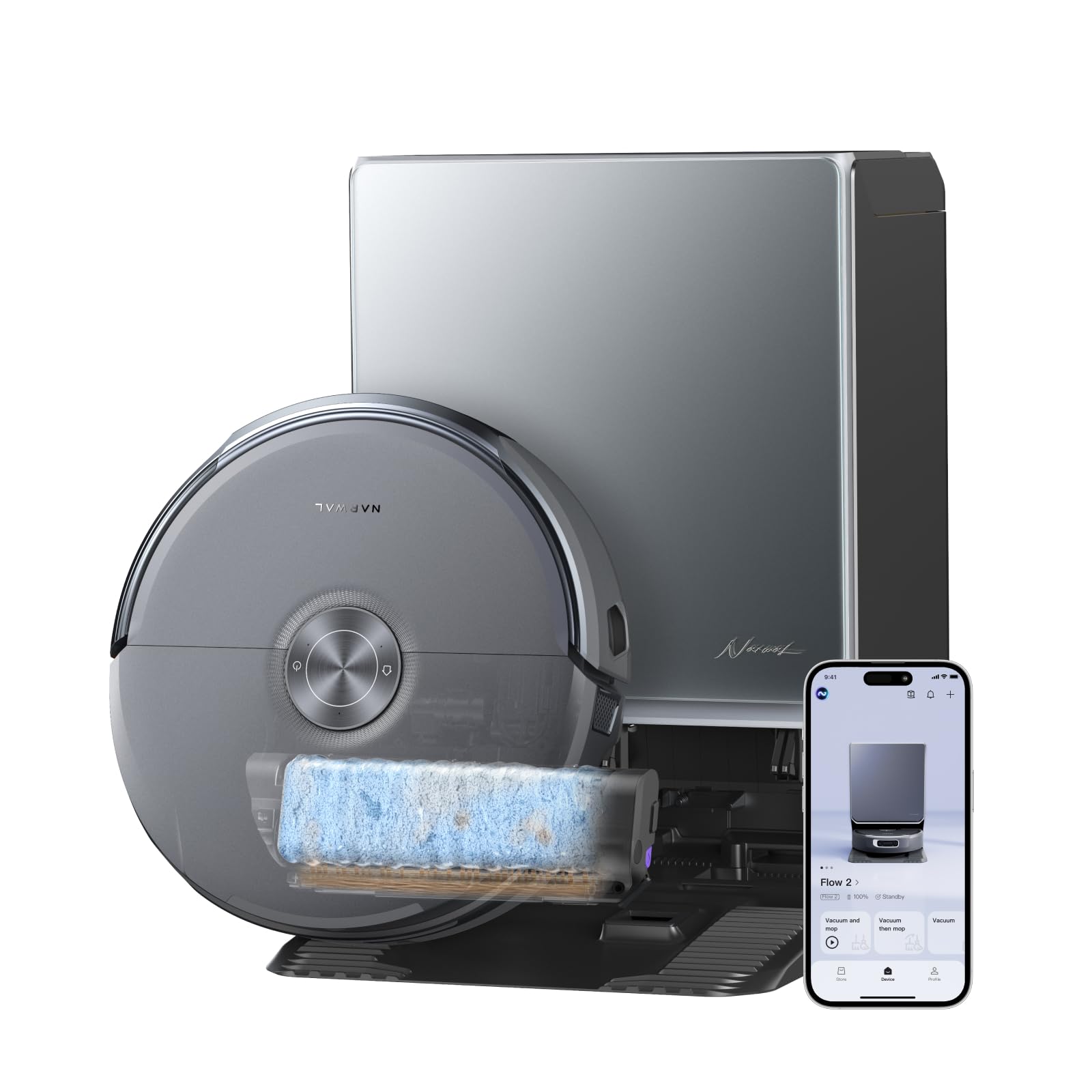
The Flow 2’s headline stat — 31000Pa suction — is real, but the mopping system is the standout. The FlowWash rolling track mop continuously rinses itself with fresh water, scrubs with 12N of downward pressure, and collects dirty water into a sealed tank. Owners confirm it handles dried-on kitchen grime and senior pet accidents without spreading residue or lingering smell.
The dual AI VLM brain uses a front-facing camera to recognize shoes, cables, and pet toys in real time, dynamically adjusting the cleaning path. The Smart Light Bar communicates base station status through color cues, eliminating the need to open the app for every cycle. Battery life clocks at 275 minutes, covering 4800 square feet per charge according to verified owner tests with 7000mAh cells.
The dock uses 212°F hot water to wash the mop and a 104°F warm air drying cycle that prevents bacterial growth. Dust capacity reaches 120 days with the 2.4-liter bag, making it the longest self-emptying interval in this list. The main downside: the mop washing and drying cycles take longer than competitive models, extending the overall time between runs. A minority report also flags poor customer support response for mopping alignment issues.
Why we love it
- Continuous-flow mop rinses with fresh water, never spreading dirty water.
- 120-day dust bag capacity minimizes maintenance.
- AI obstacle recognition avoids cables, shoes, and pet bowls without bumping.
Good to know
- Mop wash cycles are lengthy — total cleaning downtime is high.
- Customer support response is inconsistent for hardware issues.
- Heavy unit (11 pounds) makes moving the base station less convenient.
3. DREAME L10s Pro Ultra Heat

The L10s Pro Ultra Heat hits a sweet spot between price and mopping sophistication. Its 7000Pa suction with auto carpet boost handles embedded debris, but the real draw is the 136°F hot water self-cleaning dock. Owners report the mop pads come out noticeably cleaner than room-temperature washing, and the hot air drying prevents the sour-cloth smell that develops in cheaper combos.
MopExtend technology pushes one spinning pad outward when it detects a wall edge, increasing mopping coverage by reaching into baseboard crevices that standard circular paths miss. The dirt detection algorithm triggers a second mopping pass when floors are still visibly soiled — owners confirm this catches stubborn spots on kitchen tile after cooking spills. Battery life stretches to 220 minutes, covering most single-level homes without needing a recharge mid-cycle.
The 3D structured light obstacle recognition identifies up to 55 object types, though several owners note that low-profile cables still get sucked up occasionally. The dock lacks a removable water bin, meaning the internal tank requires manual cleaning to prevent scale buildup. At 17 inches wide, the base station footprint is larger than Shark competitors, so measure your cabinet clearance before committing.
Why we love it
- 136°F hot water mop washing removes grease better than cold-water docks.
- MopExtend arm reaches corners and edges standard robots miss.
- 220-minute battery covers most homes in a single charge.
Good to know
- Dock water tank is not removable — manual cleaning is required.
- Obstacle avoidance fails on thin cables and low-profile socks.
- Known leaking issues reported; a rubber mat underneath is recommended.
4. iRobot Roomba Plus 505 Combo
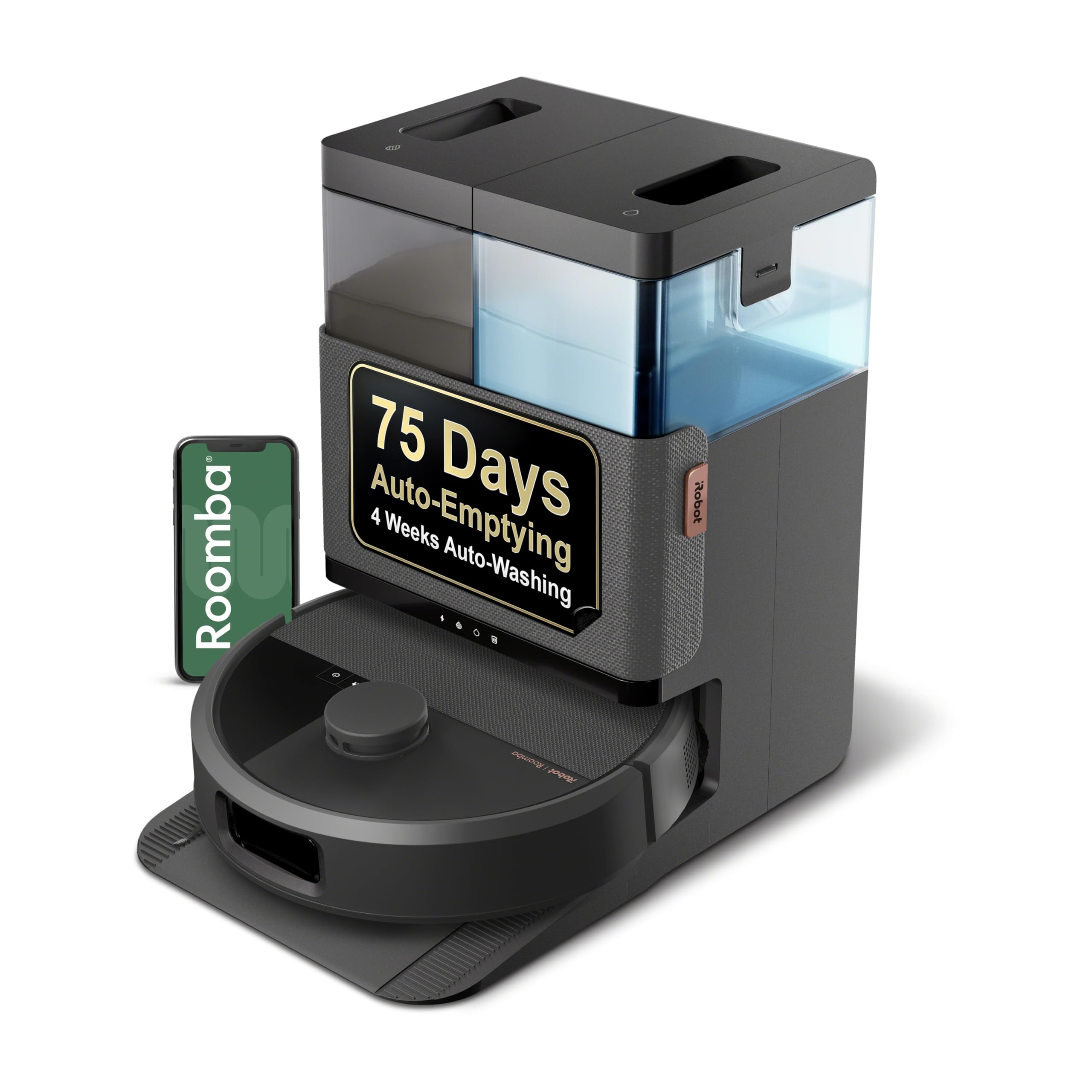
The Roomba 505 Combo is the first iRobot with a full auto-wash dock, and the difference is immediate. The DualClean Mop Pads with PerfectEdge extend coverage by 18% compared to fixed pads, and SmartScrub adds twice the scrubbing pressure on sticky messes. Owners confirm the initial deep clean cycle removed years of built-up kitchen grime that a standard damp-mop robot left behind.
ClearView Pro LiDAR maps the home in one pass, and PrecisionVision AI recognizes not just cords and socks but also identifies wet versus dry messes before adjusting the cleaning method. The mop pads auto-lift when crossing carpets, and the dock washes, dries, and refills the water tank for up to four weeks without manual intervention. The dust bag holds up to 75 days of debris, though heavy-pet households report replacing the bag at three weeks.
The app — while more polished than previous iRobot generations — still suffers from map editing that is slow and imprecise. Room labeling lacks a list view, making room-specific commands clunky. The battery drains to 60 percent after three rooms, so large homes force a mid-cycle recharge. The unit is also louder than the Shark and mid-range competitors during dock vacuuming, though the vacuum motor itself runs at acceptable noise levels.
Why we love it
- AutoWash dock handles mop cleaning, drying, and water refilling automatically.
- PrecisionVision AI distinguishes wet from dry messes before cleaning.
- Mop pads extend to edges, covering 18% more floor against walls.
Good to know
- App map editing is slow and lacks a list view for room selection.
- Dust bag fills quickly in multi-pet homes — 3-4 week replacement interval.
- Docking station noise is louder than Shark and Dreame bases.
5. Shark Stratos AV2700ZE
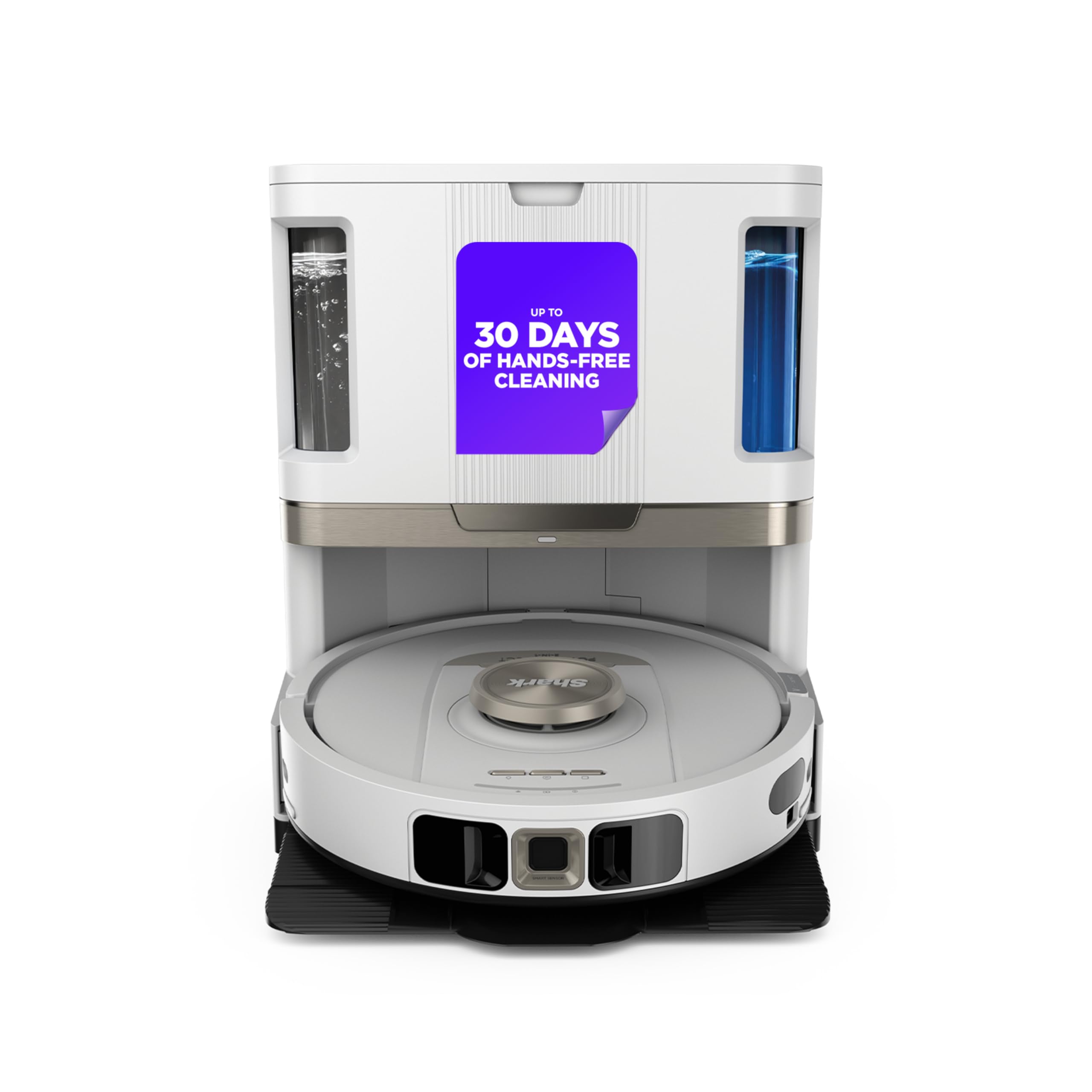
The Stratos brings sonic mop technology — 100 strokes per minute — to the mid-range price tier. This mechanical scrubbing breaks apart dried mud tracks and sticky kitchen spills that passive damp-cloth robots simply smear. Owners with huskies and labradors confirm the self-cleaning brushroll and HEPA filtration capture pet dander without clogging.
The NeverTouch base is a three-in-one station: it empties debris into a 60-day bagless bin, refills the robot’s water tank for up to 30 days, and automatically washes and dries the mop pad after every cleaning cycle. AutoLift technology raises the mop when carpets are detected and lifts the entire chassis over thresholds up to high-pile rug borders without intervention. EdgeDetect uses blasts of air to pull debris from wall corners into the cleaning path, targeting a weak point for many drum-style robots.
Setup instructions are unclear, according to multiple owner reports, and the app requires the use of Shark’s proprietary floor cleaning solution — generic floor cleaner may damage the water path. The 110-minute battery limits coverage to about 2000 square feet before recharging, and the mopping function, while more effective than basic units, still stops short of deep scrubbing that a manual mop delivers. Owners who already use Shark VACMOP solution will find this an easy ecosystem addition.
Why we love it
- Sonic mopping at 100 strokes per minute removes dried-on stains.
- NeverTouch base empties, refills, washes, and dries with zero bag contact.
- AutoLift chassis clears high rugs and thresholds without assistance.
Good to know
- Setup instructions are vague; initial app pairing can be frustrating.
- Requires Shark branded cleaning solution — generic fluids void warranty.
- 110-minute battery may not finish a large home before recharging.
6. Shark PowerDetect AV2820S

The PowerDetect Shark specializes in one thing — being impossible to get stuck — and it delivers. NeverStuck Technology lifts and lowers the front end to climb over thresholds, high-pile rug edges, and charging cables that usually snag lower-profile robots. Owners confirm they rarely rescue it from furniture legs or rug tassels, a claim few budget units can make.
Three detection systems work in concert: DirtDetect senses hidden debris and boosts suction automatically; FloorDetect adjusts brushroll engagement based on surface type; EdgeDetect blasts air from corners into the cleaning path for 50% better edge pickup compared to previous Shark models. The HEPA filter with Anti-Allergen Complete Seal traps 99.97% of particles down to 0.3 microns, which allergy-prone households specifically note as a feature that reduces morning sneezing.
Battery life is the weakest link at 110 minutes — owners report it covers only half their house on Max mode before returning for a 3-hour recharge. The 0.24-quart dustbin is small enough that the self-empty base must cycle frequently, and the rubber-like filter collects dust quickly, which reduces suction between cleanings. Owners who live in 1500-square-foot homes with mostly hard floors will find this more than adequate, but large carpeted homes will need to schedule multiple runs.
Why we love it
- NeverStuck technology climbs thresholds and rug borders without help.
- Triple detection system boosts suction for hidden dirt and edges.
- HEPA filtration with Anti-Allergen seal is certified for allergy relief.
Good to know
- Battery life on Max mode covers only half of a 2500 sq ft home.
- Small dustbin forces frequent self-empty cycles.
- Filter accumulates dust quickly, requiring weekly cleaning for max airflow.
7. Shark Navigator AV2110S
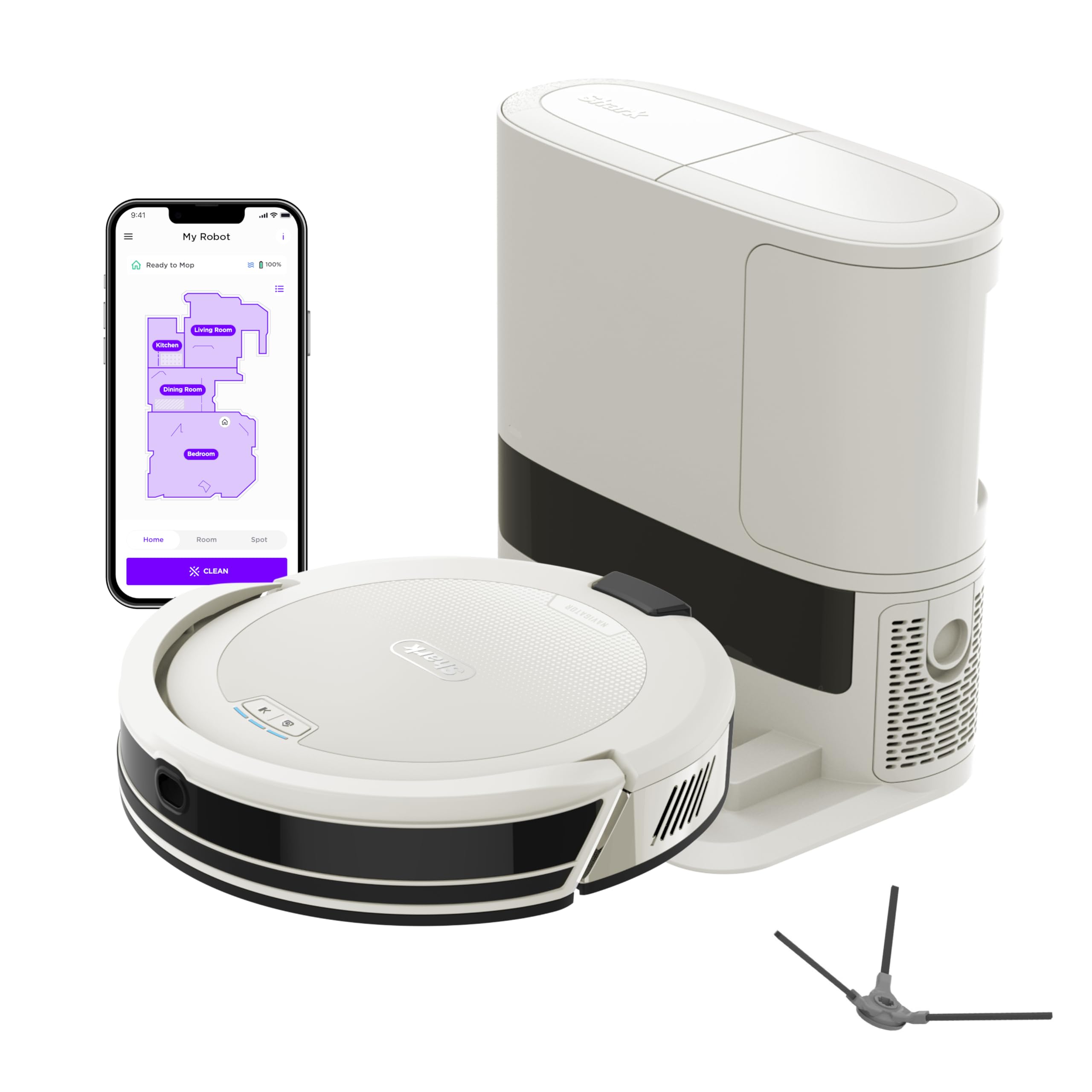
The Navigator AV2110S proves that the sweet spot for many buyers sits just under . Its bagless self-empty base holds a full 30 days of debris, eliminating the ongoing cost of disposable bags while still reducing daily emptying to a monthly event. Owners with multiple pets report the bin reservoir on the side remains odor-sealed between cycles, a design detail cheaper bases overlook.
SmartPath LiDAR navigation maps homes in row-by-row coverage with 98 to 99 percent accuracy per owner measurements, and the anti-hair wrap brushroll self-cleans as it spins. The recharge-and-resume feature returns the robot to the dock when the 120-minute battery drains, then sends it back to the exact spot it stopped — verified by owners who use the schedule for nightly runs in 2500-square-foot spaces.
The primary weakness is carpet performance. Multiple owner reviews confirm the Navigator is excellent on hard floors and short-pile rugs but struggles on medium-thick carpets, missing deeper debris that a Roborock or Dreame would pull. Replacement parts are also harder to find than for Roomba or Roborock models, so factor in availability when committing to long-term ownership. For hard-floor dominant homes with one or two pets, this is the efficiency champion at its price tier.
Why we love it
- Bagless self-empty base saves money on ongoing disposal bags.
- SmartPath LiDAR achieves 98%+ map coverage with methodical row-by-row passes.
- Self-cleaning brushroll prevents hair wrap without manual removal.
Good to know
- Weak on medium and high-pile carpets — deep debris is left behind.
- Replacement parts (brush rolls, filters) are less available than major brands.
- 3-hour recharge interrupts large-home cleaning schedules.
8. uninell UR3
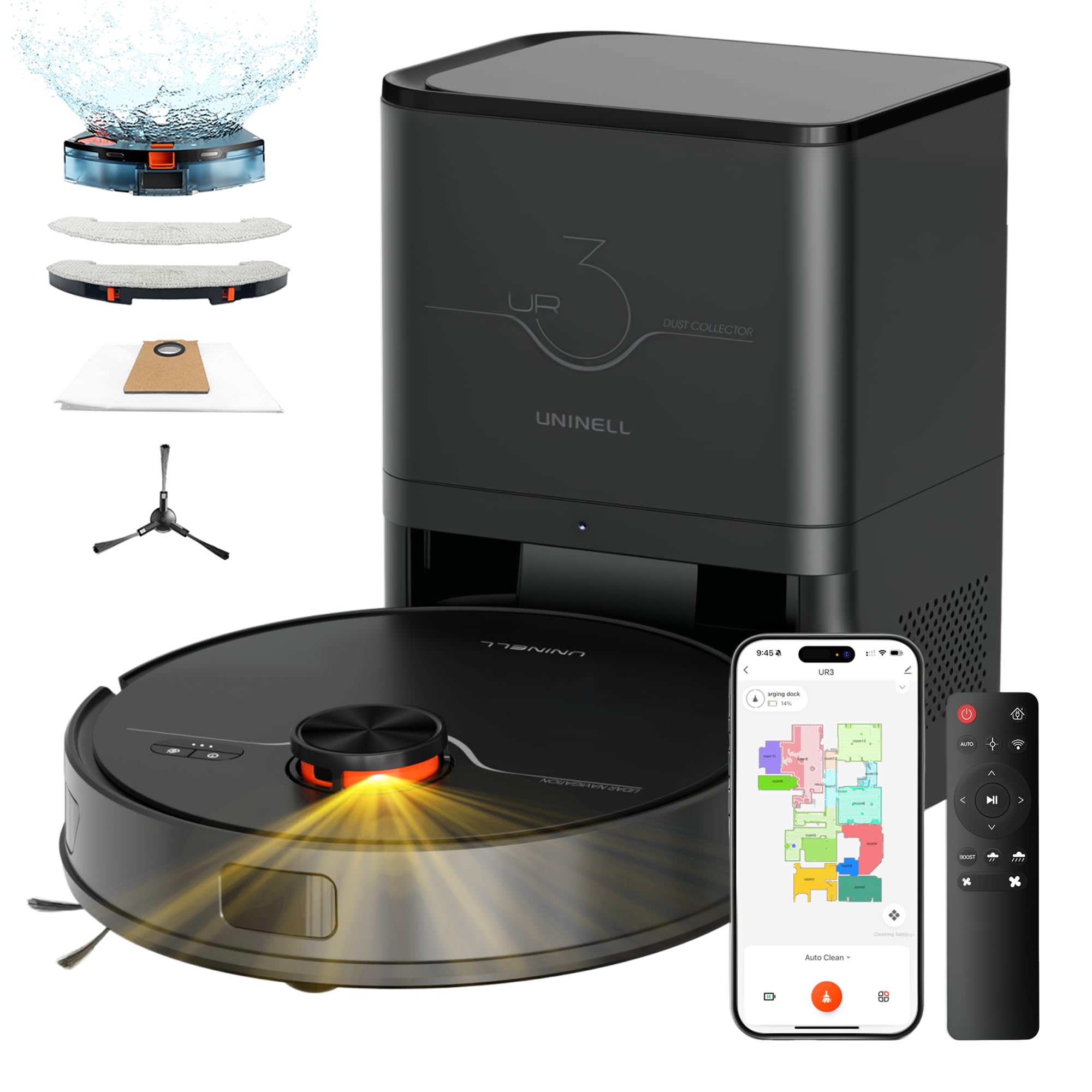
The UR3 packs a surprising spec sheet for its budget price: 7000Pa peak suction, a 3.5-liter self-emptying base advertised for 90-day capacity, and a 180-minute runtime that covers up to 2000 square feet in one charge. Owners consistently confirm the motor keeps enough pull for cat litter tracking and fine dust from hardwood gaps, with auto-carpet boost increasing suction 200% when it transitions from tile to rug.
360-degree LiDAR navigation handles the mapping competently, per owner reports — the first mapping run takes about 30 minutes for a 1500-square-foot home and saved maps survive power cycles. The tangle-free roller brush cuts down on hair wrap, though owners with long-haired occupants still report some winding around the brush ends every three to four cycles. Water flow control and no-mop zones are managed through the app, and a physical remote control is included for elderly users who avoid smartphone apps.
Obstacle avoidance is the weak point. The UR3 does not recognize cables or socks — owners must clear the floor before runs or the robot will ingest them. Mopping is a passive damp-pad system — adequate for dust control but useless against dried spills or sticky residue. The self-emptying bag is disposable and not reusable, adding a recurring cost of roughly per bag. For budget buyers who accept pre-cleaning as a ritual, the UR3 delivers LiDAR navigation and a self-empty base at an entry-level price.
Why we love it
- 7000Pa suction with 200% carpet boost cleans deeply on rugs.
- 180-minute battery covers most homes without recharging mid-cycle.
- LiDAR mapping at an entry-level price — unusual for this cost tier.
Good to know
- No obstacle recognition — cables, socks, and toys must be picked up first.
- Passive mop is water-resistant wipe only, not a scrubbing system.
- Self-empty bags are disposable and not reusable; adds ongoing supply cost.
9. Tikom L8000 Plus
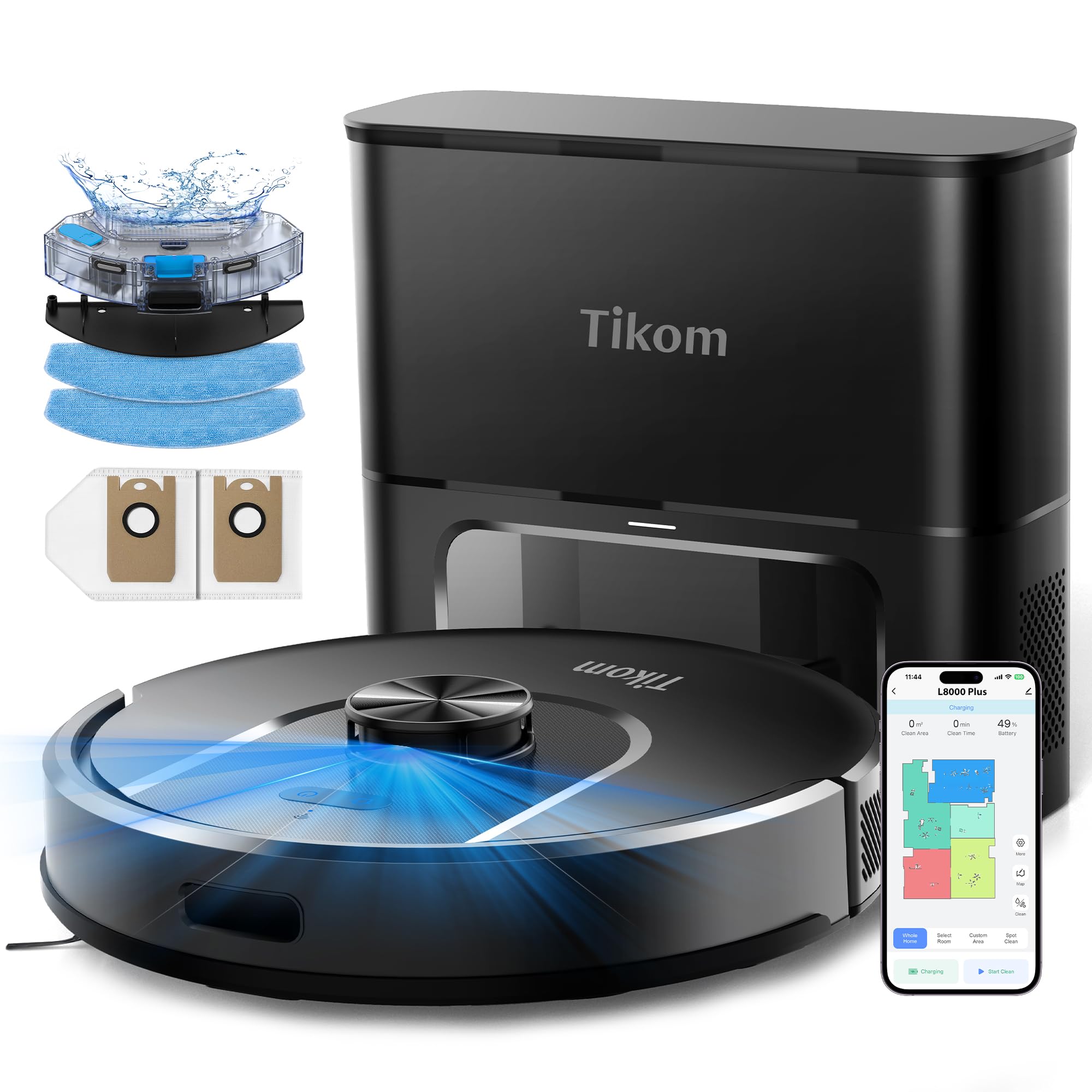
The Tikom L8000 Plus proves that self-emptying LiDAR navigation no longer requires a four-figure budget. Its 6000Pa suction lifts pet hair and fine dust from both hard floors and low-pile carpets, with owners confirming strong performance on visible debris and dust that a broom misses. The 3-liter self-emptying base stores up to 90 days of debris, making it the cheapest unit in this guide with a self-empty base station — a feature often reserved for models twice its price.
360-degree LiDAR creates floor maps that support up to five different levels, ideal for multi-story homes where the robot is moved between floors. No-go zones and no-mop zones are editable through the app, and the 150-minute battery in gentle mode covers a typical three-bedroom house without recharging. Voice control through Alexa works reliably, and the 2.4 GHz and 5 GHz Wi-Fi compatibility removes the single-band bottleneck that frustrates users with mesh networks.
The mopping function is a basic damp-cloth drag — owners note it refreshes tile surfaces but does not scrub stains or dried spills. The included HEPA filter traps fine particles, but replacement filters are not yet widely available in retail channels. Several owners mention that the suction drops noticeably when the dustbin reaches half capacity, requiring more frequent emptying than the advertised 90-day cycle suggests for heavy-pet households. For budget-constrained buyers seeking genuine self-empty, LiDAR, and app control, this is the most accessible entry point.
Why we love it
- Self-emptying LiDAR robot at lowest price in this comparison.
- Supports 2.4 GHz and 5 GHz Wi-Fi — no mesh network compatibility issues.
- Multi-floor mapping (up to 5 maps) for townhouses and split-level homes.
Good to know
- Mop is a passive damp pad — no scrubbing action for stuck-on messes.
- Suction drops noticeably when dustbin is half full.
- Replacement filters and brushes are not widely available yet.
FAQ
Do I need LiDAR navigation or is gyroscopic navigation enough?
How does auto-carpet boost affect battery life?
Why won’t my robot vacuum connect to 5 GHz Wi-Fi?
Can a robot vacuum replace a traditional upright vacuum?
What does Pa (Pascal) suction mean and how much do I need?
Final Thoughts: The Verdict
For most homeowners looking for the best robot vacuums, the winner is the Roborock Qrevo CurvX because it combines 22000Pa deep carpet suction with a 4cm AdaptiLift chassis that clears thresholds and obstacles without intervention. If you prioritize wet mopping over vacuuming, grab the NARWAL Flow 2 — its FlowWash continuous-rinse mop is the only system that guarantees no dirty water is spread across your floors. And for shoppers on a tighter budget who refuse to give up LiDAR navigation and a self-emptying base, nothing beats the Tikom L8000 Plus for accessible, reliable daily cleaning.