
Watching your horse flinch at the girth or hollow its back under saddle is a clear signal that pressure points are causing real pain, not just annoyance. A poorly fitted standard pad often compounds the issue by compressing unevenly over sore muscles, restricting movement and deepening discomfort.
I’m Mo Mahin — the founder and writer behind Furric. I’ve spent years comparing material compositions, analyzing owner-reported fit outcomes, and studying how different thickness profiles, gel densities, and wool felts interact with common equine back conditions like kissing spine and high withers to find what truly relieves pressure.
This guide breaks down the structural features that separate a true therapeutic pad from a general-use one so you can confidently pick the best saddle pad for horse with sore back that actually addresses your horse’s specific fit problem.
How To Choose The Best Saddle Pad For Horse With Sore Back
Not every thick pad helps a sore back. Some simply add volume that shifts under weight, creating new pressure points. You need a pad designed to target the specific pain source — whether that is a high wither, a swayed back, or general muscle atrophy. Focus on these three structural elements.
Spine Clearance and Wither Relief
A straight-across pad top presses directly onto the spinal processes, which is the last thing a sore-backed horse needs. Look for an anatomical spine channel or a contoured cut-out that runs the length of the withers. This channel must be at least two inches wide to allow the saddle’s tree to bridge over the spine without contact. Some pads use a raised wither bump to lift the front of the saddle off the shoulder blades, which is critical for high-withered horses.
Material Density and Shock Absorption
The material between the saddle and the horse’s back determines how much concussion from the rider’s weight actually reaches the sore muscles. Wool felt at one inch thickness provides natural wicking and moderate shock dispersion but compresses over time. Memory foam inserts offer customizable support but can trap heat. Gel padding distributes load across a wider surface and stays cool, though it adds weight. Pads that combine PU foam with a gel layer or use PORON-RXD under the saddle bars absorb up to ninety percent of impact — a measurable difference for horses with chronic soreness.
Anti-Slip Base and Saddle Security
A pad that drifts sideways during a ride creates uneven pressure that aggravates sore spots. The bottom layer must grip the horse’s coat without pulling hair. Materials like Tacky Too, silicone grid, or fleece with a high-friction weave keep the pad stationary. This stability also prevents the saddle from rolling, which is a common cause of bridging — when the saddle touches only the front and back of the back, leaving a painful gap in the middle.
Quick Comparison
On smaller screens, swipe sideways to see the full table.
| Model | Category | Best For | Key Spec | Amazon |
|---|---|---|---|---|
| ECP Equine Comfort Contoured Correction | Memory Foam | Customizable shim fit | 22″ spine, 4 pockets | Amazon |
| Kavallerie 3D Air-Mesh Half Pad | Gel / Air-Mesh | Saddle bridging issues | Gel padding, ventilated | Amazon |
| Weaver Equine Contoured Wool Blend Felt | Wool Felt | Western trail riding | 1″ thick, 6.1 lbs | Amazon |
| Kavallerie Gel Saddle Pad (Seat Saver) | ReiterGel | General pressure relief | 100+ gel holes, 3.8 lbs | Amazon |
| Reinsman Contoured Trail Pad | Spine Channel | Non-slip trail riding | Tacky Too bottom | Amazon |
| Southwestern Equine OrthoRide (Classic) | Wool / Poron | High withered horses | PORON-RXD shock layer | Amazon |
| Southwestern Equine OrthoRide (Correction) | Correction Build-up | Severe saddle fit gaps | 31×32, memory foam | Amazon |
In‑Depth Reviews
1. ECP Equine Comfort Contoured Correction Saddle Pad

The ECP pad’s defining feature is its four integrated pockets that accept adjustable memory foam inserts, letting you build up or reduce pressure exactly where your horse’s back shape varies. This is critical for horses with muscle atrophy on one side or a developing top-line, because you can add a shim under the saddle bar without adding bulk across the whole spine. The contoured shape eliminates the excess fabric that often blocks leg contact, and reviewers consistently note it fits both Wintec adjustable saddles and treeless models like the Ghost without rolling.
The shock-absorbing memory foam inserts themselves are dense — some owners found them too firm for horses that needed lighter pressure, but the ability to swap them for foam from other brands means you are not locked into a single feel. The Velcro closure system keeps each pocket locked in place, which prevents the shims from migrating during high-movement dressage or jumping. At two pounds, this is the lightest full-coverage correction pad on the list, making it an easy choice for hot-weather riding where weight and breathability matter.
A few users mentioned the spine length of twenty-two inches ran slightly short front-to-back on massive warmblood frames, so measure your saddle’s bearing surface before ordering. The fabric cleans up well with a hose and a stiff brush, and the twelve color options mean you can match it to show tack without sacrificing function.
Why we love it
- Fully customizable shim system for asymmetric muscle loss
- Lightweight and breathable for warm-weather use
- Four Velcro pockets prevent insert shifting
Good to know
- Spine length may be short for very large warmbloods
- Stock foam inserts can feel too firm for some horses
2. Kavallerie 3D Air-Mesh Half Pad

Kavallerie’s half pad targets saddle bridging — when the saddle’s front and back contact the horse but the middle sits off the back, creating a pressure concentration at both ends. The gel layer evenly distributes load across the entire saddle panel, filling that negative space without adding vertical lift. The 3D Air-Mesh construction is noticeably cooler than closed-cell foam or fur-lined equivalents, and the perforated gel allows airflow straight through the pad, reducing sweat accumulation under the saddle.
At just over two pounds, it works as an intermediary between the saddle and your existing pad, so you do not have to replace your entire setup. Owners of horses with chronic muscle atrophy report it eliminates the soreness that appeared after high-movement competitions, and it fits seventeen-inch seats without overhang. The fleece bottom side keeps the half pad from sliding on the horse’s coat, and the gel side sticks well to the saddle’s panels without leaving residue.
The main trade-off is that this is a half pad, not a full correction pad. It cannot build up height under the saddle bars the way a shimmable pad can. For horses that need significant wither clearance or have a swayed back, this provides cushion but not lift. Machine washable at thirty degrees Celsius, though you should reshape it flat while damp to keep the gel layer from bunching.
Why we love it
- Gel layer fills saddle bridging gaps effectively
- Breathable 3D Air-Mesh prevents heat buildup
- Lightweight and versatile under any saddle type
Good to know
- Half pad design does not provide significant wither lift
- Requires reshaping after machine washing
3. Weaver Equine Contoured Wool Blend Felt Saddle Pad

Weaver’s one-inch-thick wool felt pad is the go-to choice for western riders who want proven shock absorption without synthetic layers. Wool naturally wicks moisture away from the skin and resists compression better than polyester felt, which means this pad maintains its cushioning profile longer under a heavy western saddle. The contoured cut-out along the spine and the wither slit prevent the pad from pressing into the spinal processes, a common issue with straight-cut western blankets that trap heat and create pressure ridges.
The top grain leather wear leathers add durability where the saddle’s bars contact the pad, preventing the felt from fraying after repeated use. At just over six pounds, this is a substantial pad, but the reinforced spine keeps it from sagging during long trail rides. Owners of quarter horses and stockier breeds between fourteen and sixteen hands report an excellent fit with no slipping, and the light tan color reflects sunlight rather than absorbing it.
Because it is pure wool felt, there is no built-in correction system — you cannot swap out material thickness to address asymmetry. If your horse has significant muscle loss on one side, you will need to layer a separate shim pad underneath. The wool surface cleans easily with a dry sponge, which is a welcome advantage over synthetic pads that trap odor in the foam core.
Why we love it
- Natural wool felt resists compression and wicks moisture
- Contoured spine and wither slit prevent direct pressure
- Leather wear points add long-term durability
Good to know
- No built-in shim or correction system
- Heavier than foam or gel alternatives
4. Kavallerie Gel Saddle Pad (Seat Saver)

The Kavallerie Gel Pad is essentially a pressure-distribution layer that sits between the horse and the saddle, using ReiterGel to spread the rider’s weight across a wider surface. This is the same principle used in medical-grade seat cushions — it reduces peak pressure by moving the load away from bony prominences like the withers and spine. The hundred-plus gel holes create ventilation channels that prevent the moisture buildup that leads to skin sores, a common secondary issue when a horse is already sore and holding tension.
Owners of horses with wide, flat backs find this pad eliminates saddle shifting that other pads could not stop, and the gel’s tacky surface holds the saddle in place without pinching or pulling hair. It weighs three point eight pounds, which is fairly light for a full gel pad, and it can be hosed off after a muddy ride without degrading. Multiple versions exist — Seat Saver (standard flat), Front Riser, Middle Riser, and Rear Riser — so you can choose the specific lift orientation your horse’s back shape demands.
The primary durability concern is that some units have shown tearing at the edges within the first few weeks of use, especially if the pad is stored folded rather than flat. Also, the Amazon listing photos sometimes show the Front Riser version but ship the standard Seat Saver, so confirm the exact SKU before clicking buy. If you need a precise riser height, order directly from Kavallerie’s site to avoid the mix-up.
Why we love it
- ReiterGel distributes weight evenly over sore areas
- Multiple riser options for targeted lift
- Easy to clean with just water
Good to know
- Some units show edge tearing within weeks
- Amazon may ship wrong riser version
5. Reinsman Contoured Trail Pad
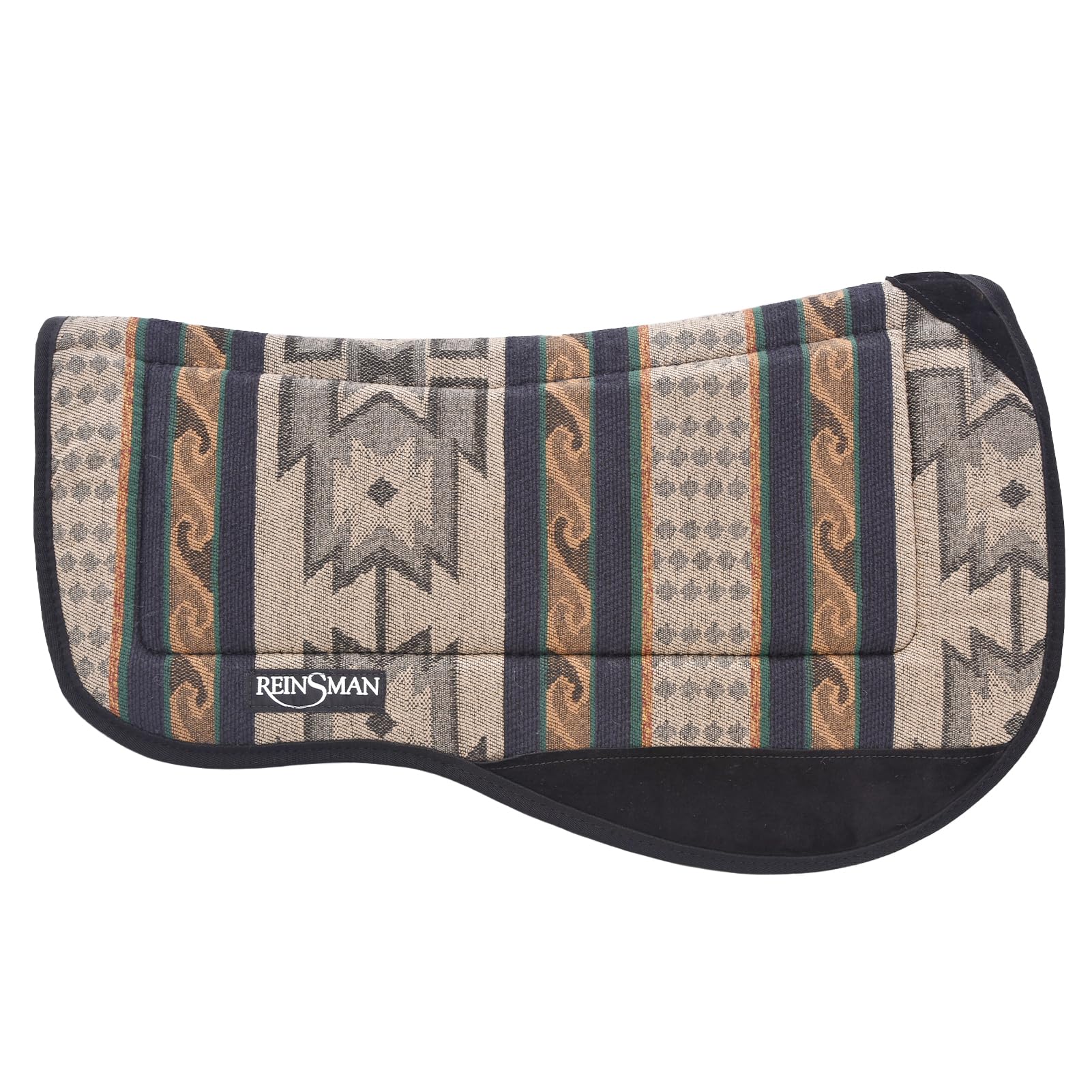
Reinsman built this pad around their Tacky Too bottom layer, a breathable, non-slip material that grips the horse’s coat without pulling hair. This is a genuine advantage for horses with sore backs because it eliminates the pad migration that creates friction and uneven pressure during long trail rides. The contoured spine channel is cut anatomically to follow the horse’s natural back slope, and a separate spinal relief channel runs the length of the pad to keep the saddle’s pressure off the vertebrae entirely.
The top material is UV- and stain-resistant, which matters for riders who leave pads on a fence between rides or ride in direct sun. Comfort felt inside the core absorbs shock from rough terrain — a benefit for both the rider’s lower back and the horse’s muscle recovery. Owners report these pads lasting over ten years with regular use, which is exceptional for a mid-weight trail pad. The twenty-eight-inch actual length (despite a thirty-inch label) means it sits well under most fifteen to sixteen-inch saddles without binding at the withers.
The measurement discrepancy is the biggest catch: the pad measures twenty-eight inches from binding edge to binding edge, not the advertised thirty, which can leave the binding sitting directly under the saddle bars if you need a full thirty-inch model. This risks creating rub soreness rather than preventing it, so check your saddle’s bearing surface length before ordering if you ride a large-framed horse.
Why we love it
- Tacky Too bottom eliminates slipping and pulling
- UV- and stain-resistant top holds up for years
- Spine relief channel protects the vertebrae
Good to know
- Actual length is 28 inches, not the labeled 30
- Binding can sit under saddle bars on larger saddles
6. Southwestern Equine OrthoRide Classic Pad
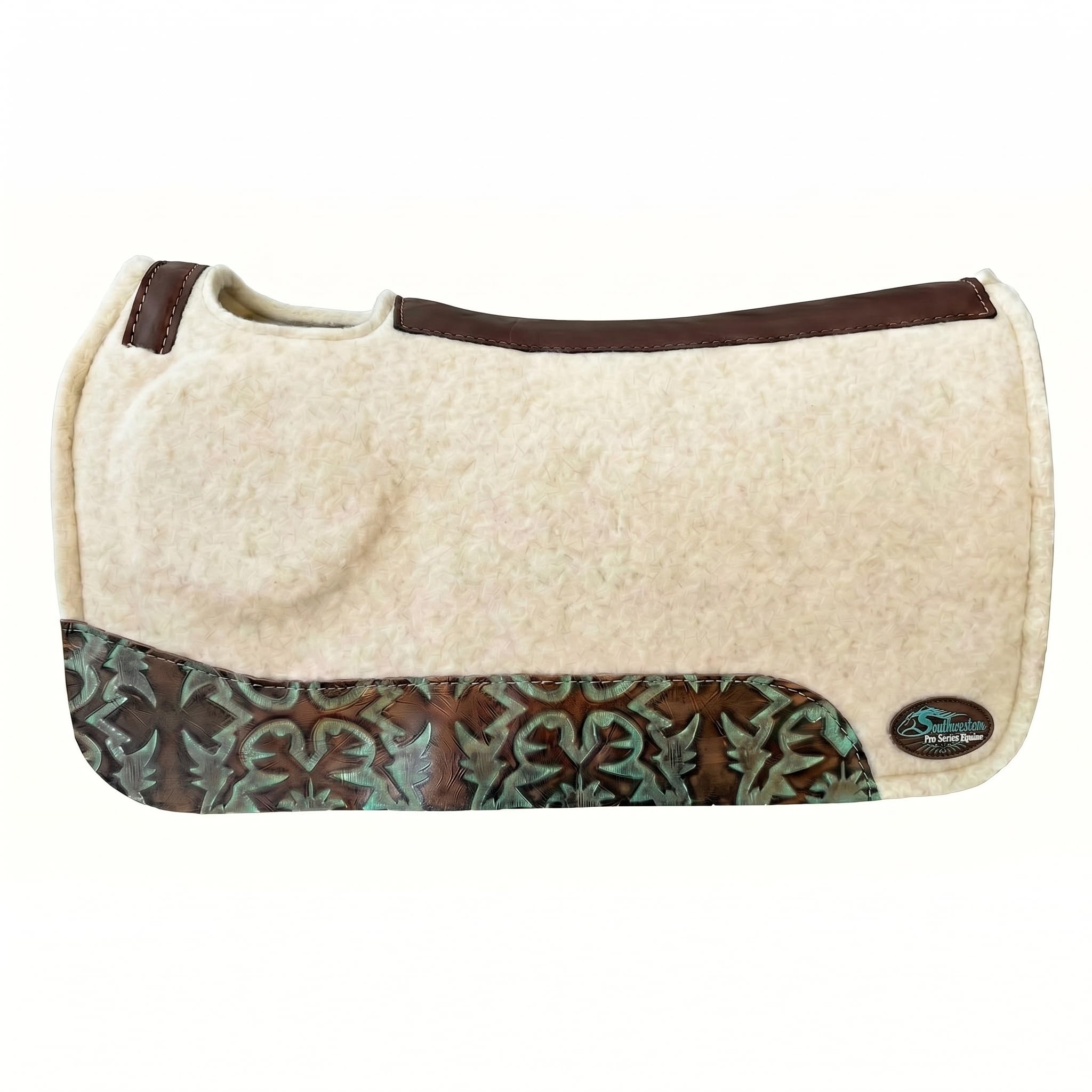
The OrthoRide Classic uses a build-up of all wool over the wither area combined with a layer of PORON-RXD under the saddle bars — an open-cell urethane foam developed for high-impact footwear that absorbs up to ninety percent of shock. This is a measurable performance claim that matters for horses landing hard from jumps or stopping fast in barrel racing. The wool build-up creates a gradual slope that lifts the front of the saddle off the withers, which is exactly what horses with sore high withers need to stop the saddle from rocking onto the bone.
Owner feedback from horses with past shoulder and neck injuries shows this pad can resolve pain-related behavior in as little as fifteen minutes of wearing, with the horse moving freely under saddle for the first time in months. The wool layer molds to the horse’s back over time, creating a custom cradle rather than forcing the horse to conform to a flat pad. The Laredo color pattern adds a classic southwestern look that matches most western tack.
The pad’s thickness under the leg area — about an inch — can create a gap that reduces leg cue clarity for some riders, especially those with shorter legs. Additionally, the wool build-up does not include a dedicated wither relief slit, so on extremely narrow horses it can bind at the shoulders. It is also the most expensive pad on the list, but the PORON-RXD inclusion justifies the premium for horses that need serious impact attenuation.
Why we love it
- PORON-RXD absorbs 90% of shock under the saddle bars
- Wool build-up molds to high withers over time
- Resolves pain-induced behavior quickly
Good to know
- Thick leg area may reduce leg cue contact
- No dedicated wither slit can cause binding on narrow horses
7. Southwestern Equine OrthoRide Correction Pad
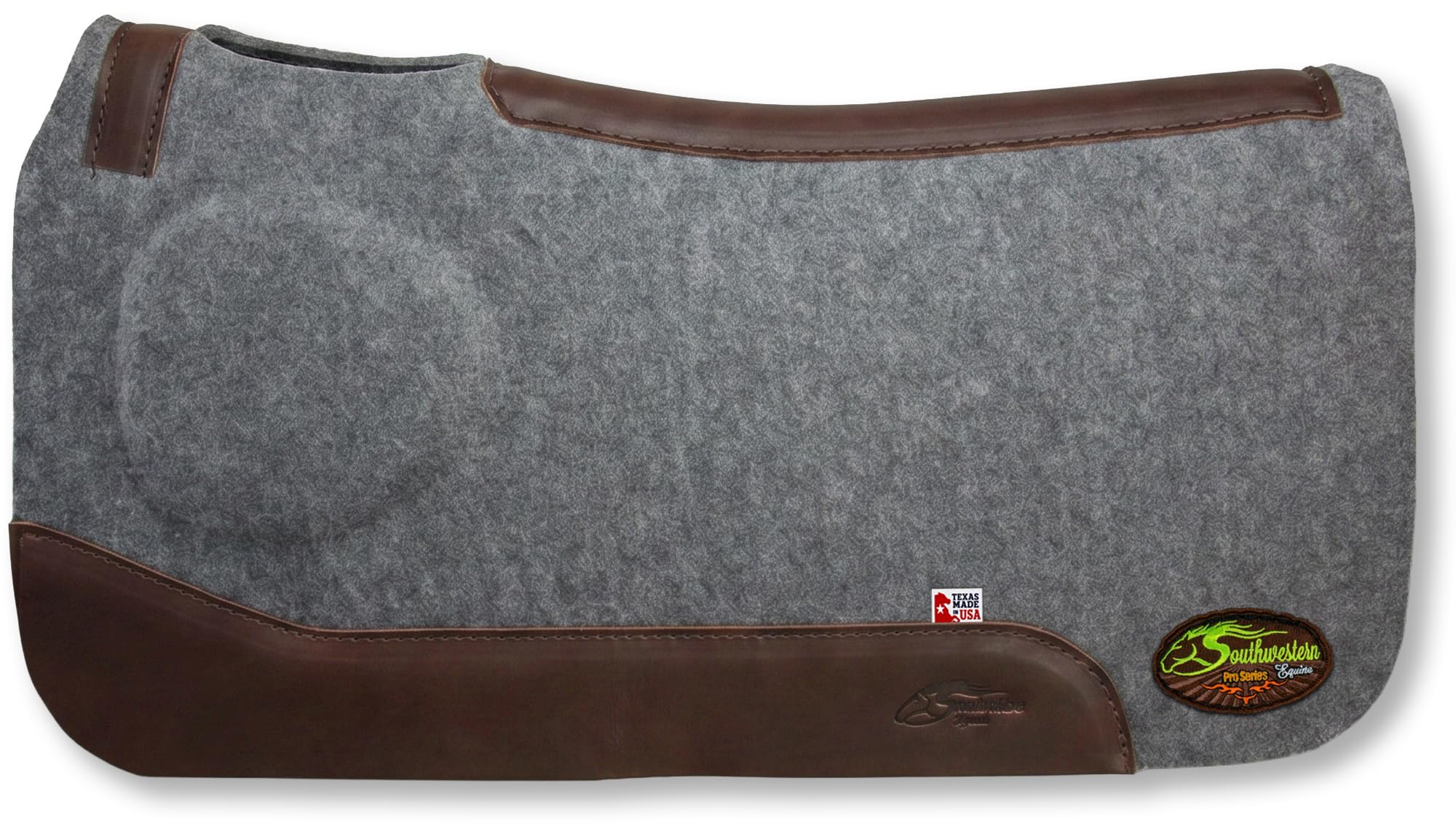
This is the largest and most aggressive correction pad in the lineup, built specifically for horses where standard pads leave a visible gap under the saddle. The thirty-one by thirty-two-inch size gives you extra length and width to cover horses with long backs or wide barrels, and the combination of felt base, memory foam layer, and PORON-RXD in the bars creates a multi-density build that can fill significant saddle fit gaps. Leather wear leathers at the withers and rear prevent the pad’s edges from fraying under the stress of a heavy western saddle.
Owners of young horses still developing muscle — particularly narrow two-year-olds and Arabians with underdeveloped withers — find this pad creates the lift that keeps the saddle level when there is nothing for the tree to grip. The wither bump is pronounced enough to stop the saddle from sliding back downhill on long endurance rides. Multiple reviewers mention that it fixed white hair spots at the withers caused by saddle rubbing, which is a strong indicator that the pad is relieving the pressure that was damaging the skin and muscle.
The leather at the wither connection point is the weak spot: several reports show the leather tearing within three months of moderate use, requiring a field repair to keep the pad functional. If you are riding in wet conditions or working cattle, the leather may break down faster than the foam core. Despite this, the pad’s ability to solve fit problems that seemed to require a new saddle makes it a worthwhile trial before spending thousands on custom tack.
Why we love it
- Large 31×32 size covers long-backed horses
- Multi-density build fills major saddle fit gaps
- Wither bump keeps saddle from sliding back
Good to know
- Leather at withers can tear within months
- Heavy build may not suit lightweight English saddles
FAQ
Will a thicker pad always fix my horse’s sore back?
Can I use a correction pad with a treeless saddle?
How do I know if my pad is causing more pressure than it relieves?
What is the difference between a front riser and a seat saver gel pad?
How often should I replace a therapeutic saddle pad for a sore back?
Final Thoughts: The Verdict
For most riders dealing with a horse that has developed back soreness from saddle fit issues, the saddle pad for horse with sore back winner is the ECP Equine Comfort Contoured Correction Pad because its adjustable memory foam shim system lets you customize pressure relief for asymmetric muscle loss and changing topline condition without buying a new pad. If your primary issue is saddle bridging and you want a breathable layer that works under your existing setup, grab the Kavallerie 3D Air-Mesh Half Pad. And for a high-withered horse that needs substantial lift and serious shock absorption for trail and competition work, nothing beats the Southwestern Equine OrthoRide Correction Pad.