
A saddle pad that shifts mid-trail can turn a peaceful ride into a constant battle with friction and irritation. The right pad locks your saddle in place, absorbs the concussion of uneven terrain, and keeps your horse comfortable over hours of varied footing — but the wrong choice amplifies pressure points and traps heat under a summer sun.
I’m Mo Mahin — the founder and writer behind Furric. I’ve spent years analyzing equine material science, comparing wool felt density ratings against memory foam compression curves, and cross-referencing rider feedback on trail-specific pad performance to separate functional designs from decorative gear.
After evaluating dozens of options, these are the five contenders that earned a spot in this guide to the saddle pad for trail riding.
How To Choose The Best Saddle Pad For Trail Riding
Trail riding demands a saddle pad that manages multi-hour compression, resists shifting on uneven slopes, and regulates temperature across changing weather. These four factors separate a pad that disappears under your saddle from one that creates new problems.
Material Density and Shock Absorption
Wool felt compresses gradually and returns to shape ride after ride, making it a reliable choice for western saddles that already distribute weight across a broad bearing surface. Memory foam responds more dynamically to pressure points, which benefits horses with sensitive backs or riders using saddles with less tree surface area. The 1/4-inch wool liner from Weaver Equine provides baseline protection, while the ECP memory foam pads offer adjustable shim stacks for targeted relief.
Thickness and Saddle Clearance
A pad that is too thick lifts the saddle away from the horse’s back, destabilizing the seat and putting the rider’s position ahead of the movement. A pad that is too thin fails to absorb trail concussion. The sweet spot for most trail setups falls between 1/2 inch and 1 inch of compressed material — the Tough 1 square pad and the ECP Western pad both land in this range. Measure your saddle’s gullet clearance before adding any pad, especially if your horse has prominent withers or a short back.
Shim Systems for Asymmetry Correction
Many trail horses develop uneven muscle development from years of traveling the same direction on loop trails. A pad with shim pockets lets you add a few millimeters of lift on the side that needs it without buying a custom saddle. The ECP half pad includes twelve contoured memory foam inserts that can be trimmed, stacked, or relocated across four pockets — a feature typically found on pads costing twice as much.
Breathability and Washability
A trail pad traps sweat against the horse’s back for hours at a time. Wool felt wicks moisture away from the skin and releases it into the air, but requires careful hand washing. Cotton-blend pads with flannel undersides — like the ECP Western pad — offer machine-washable convenience while still allowing airflow. Fleece-bottom pads like the Tough 1 square pad provide softness but hold moisture longer, so they work best in dry climates or cooler seasons.
Quick Comparison
On smaller screens, swipe sideways to see the full table.
| Model | Category | Best For | Key Spec | Amazon |
|---|---|---|---|---|
| ECP Western Saddle Pad | Premium Shim Pad | Multi-hour trail with fit correction | 12 adjustable memory foam shims | Amazon |
| ECP Memory Foam Half Pad | Mid-Range Shim Pad | Saddle balance correction | 12 memory foam inserts, 4 pockets | Amazon |
| Weaver Equine Wool Blend Liner | Budget Wool Liner | Under-pad moisture wicking | 1/4″ wool felt, 32″x32″ | Amazon |
| Cashel Long Foam Pad | Budget Foam Pad | Rider sciatic/hip relief | 3/4″ foam, 13″x15″ | Amazon |
| Tough 1 Square Saddle Pad | Budget Fleece Pad | Short trail, casual riding | 100% fleece bottom, 30″x30″ | Amazon |
In‑Depth Reviews
1. ECP Equine Comfort Products Thermoregulating Western Saddle Pad

The ECP Western pad solves the two problems that plague trail riders most: heat buildup under the saddle and saddle shift on long climbs. Its thermoregulating fabric absorbs sweat and circulates air through a diamond-quilted cotton top paired with a flannel underside, keeping the horse’s back cooler than traditional felt or fleece alternatives. The contoured shape mirrors the horse’s backline to reduce friction during lateral movement on switchbacks.
The shim system is what pushes this pad ahead of similarly priced competitors. Twelve memory foam inserts distribute across two pockets per side, letting you correct a saddle that sits slightly crooked due to asymmetric muscle development — a common condition in trail horses who favor one lead. Riders report that the shims stay in place after multiple wash cycles, though the foam itself may compress faster than felt in daily use. The pad’s 31 x 16-inch size fits standard western trees with room to spare.
Owner feedback consistently mentions the pad’s lightweight feel compared to wool alternatives. One rider noted that the wither clearance suited her Thoroughbred-cross better than traditional western pads, which often sit too far forward on narrow-backed horses. The only recurring complaint is the large white logo tape along the spine, which some riders consider visually distracting on an otherwise understated black pad.
Why we love it
- Thermoregulating fabric pulls sweat away from the horse’s back during multi-hour rides
- Adjustable shim system corrects saddle fit without requiring custom padding
- Machine-washable construction keeps trail grime from embedding in the fibers
Good to know
- Shim foam may compress faster than wool felt — consider replacing inserts yearly
- White logo tape on the spine is visible and may not match every rider’s aesthetic
2. ECP Equine Comfort Products Adjustable Memory Foam Half Saddle Pad

This half pad from ECP brings shim-correctable fit to riders who already own a saddle pad they like but need better balance. The polyester-cotton quilted top resists abrasion from cinch straps and billets, while the brushed underside provides grip without grabbing the horse’s hair. Measuring 8.5 x 22 inches, it sits under the saddle without extending past the skirt, making it compatible with both western and dressage trail configurations.
The four shim pockets — two over the shoulder area and two behind the seat — accept contoured memory foam inserts that riders can trim, stack, or remove entirely. This level of adjustability typically appears on pads priced above the budget-friendly range this one occupies. Riders with high-withered horses report removing shims from the back pockets and adding them to the front to level the saddle, a trick that helps prevent bridging on horses with uphill conformation.
Customer feedback highlights the pad’s effectiveness at fixing saddle roll in horses with uneven musculature. One rider noted that their 17.5-inch dressage saddle sat perfectly after inserting all three shims in each front pocket and none in the back. The pad also eliminates the need for the ruffled sheepskin that many correction pads carry, which some horses find irritating. The tradeoff is that the shims are labeled as memory foam but feel more like firm closed-cell foam — they absorb impact but lack the slow-recovery feel of true memory foam.
Why we love it
- Four shim pockets allow independent lift at the shoulder and behind the seat
- Shims can be trimmed, stacked, or removed to fit asymmetrical horses
- Low-profile design fits under existing trail pads without adding bulk
Good to know
- Shim material is firm closed-cell foam, not slow-recovery memory foam as advertised
- Not intended as a standalone trail pad — use under a full-size western or English pad
3. Weaver Equine 32″ x 32″ Contoured Wool Blend Felt Saddle Pad Liner

The Weaver wool blend liner serves a specific but essential role in a trail rider’s tack room: it protects the visible saddle pad from sweat and debris while adding a quarter-inch of felt cushion between the horse and the saddle. The wool-blend felt naturally wicks moisture away from the skin, reducing the risk of fungal growth during multi-day trail trips. The contoured shape follows the horse’s back and includes spine relief cutouts that prevent pressure on the vertebrae.
At 1/4-inch thick, this liner is not designed to fix a poor saddle fit or to absorb major concussion on rocky terrain. Instead, it works as a baseline layer that extends the life of your primary pad. Reviewers consistently note that the liner stays in place under a western saddle blanket — it does not bunch or shift during trot transitions. The 32 x 32-inch size covers the full bearing surface of most western saddles, and the tan color hides trail dirt better than light gray or white liners.
The wool blend material provides more grip than synthetic fleece alternatives, which helps prevent the saddle from sliding forward on downhill sections. Riders who pair this liner with a wool or felt top pad report excellent moisture management on hot days. The liner is hand wash only, which is typical for wool felt products, but it air-dries relatively quickly compared to cotton alternatives that hold water in the fibers.
Why we love it
- Wool blend felt wicks moisture and reduces fungal growth on multi-day trail rides
- Contoured shape with spine relief prevents pressure points on the vertebrae
- Grippy felt surface keeps the liner from shifting under saddle blankets
Good to know
- 1/4-inch thickness provides basic cushioning but does not correct saddle fit issues
- Hand wash only — not suitable for machine cleaning like synthetic liners
4. Cashel Long Foam Saddle Pad

The Cashel Long Foam pad takes an unusual approach to trail riding comfort: instead of padding the horse’s back, it pads the rider’s seat. The 3/4-inch foam block fits over the saddle seat, providing targeted cushioning for the sciatic area, tailbone, and hips — the three pressure points that cause riders the most pain after hours in the saddle. The pad measures 13 x 15 inches, covering the seat without interfering with the pommel or cantle.
Riders with back injuries, hip replacements, or fused spines report significant improvement in posting comfort and reduction in lower back soreness after switching to this pad. The foam compresses enough to maintain close contact with the saddle but rebounds between strides to prevent pressure buildup. Reviewers note that the pad stays stable even when a horse spooks or transitions abruptly, thanks to elastic straps that anchor it to the saddle strings.
The pad is not designed for riders who prefer a thin, direct connection to the horse’s movement — the foam adds a layer between the rider and the saddle that some dressage-oriented trail riders find intrusive. However, for riders who limit trail distances due to tailbone pain or hip stiffness, the Cashel pad often extends their ride time by an hour or more. One rider reported using it successfully on a three-day mountain trail ride with minimal discomfort and no bunching or shifting.
Why we love it
- 3/4-inch foam cushions the sciatic area, tailbone, and hips for riders with chronic pain
- Elastic anchor straps keep the pad in place during abrupt transitions or spooks
- Low profile fits under most western saddles without altering seat depth
Good to know
- Foam layer reduces the rider’s tactile connection to the horse’s back movement
- Some review units showed seam tearing near the label after extended use
5. Tough 1 Square Saddle Pad with Fleece Bottom
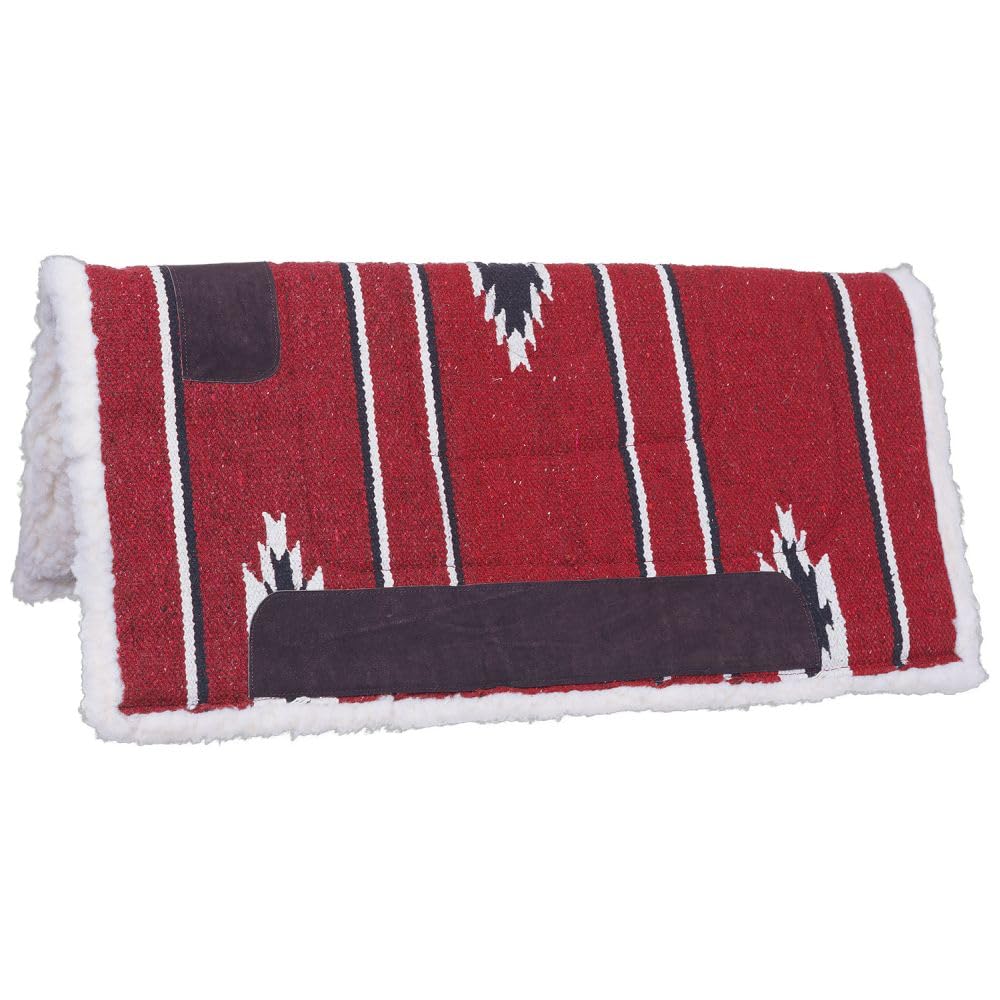
The Tough 1 square pad fills the entry-level role without cutting corners on the basics that matter for short trail rides. The 100-percent fleece bottom provides a soft contact surface against the horse’s back, while the acrylic-blend woven top resists staining from saddle sweat and trail dust. The pad measures 30 inches square with a 3-inch thickness at the spine, offering respectable shock absorption for the price point.
The polyester fill maintains its loft across multiple rides without clumping, and the wear leathers at the contact points prevent premature wear from cinch straps. Riders who use this pad for weekend trail loops report that it holds up well under moderate use, though the fleece bottom tends to mat down faster than wool felt in humid conditions. The southwestern design adds visual appeal for riders who want their tack to reflect a traditional western aesthetic.
This pad is best suited for riders who trail ride once or twice a week on established paths without extreme elevation changes. For that use case, the fleece-to-wool blend provides adequate cushioning and the pad stays in place under normal gaits. The primary limitation is breathability — fleece traps heat and moisture more than wool or cotton, so horses with thick winter coats may sweat excessively under this pad during summer rides. Riders in arid climates report fewer issues with heat buildup.
Why we love it
- Fleece bottom provides soft contact that reduces rubbing on short rides
- Polyester fill does not clump or shift after multiple trail uses
- Wear leathers protect the pad from cinch strap abrasion
Good to know
- Fleece bottom traps heat and moisture more than wool or cotton alternatives
- Best suited for moderate trail use — heavy daily riding will compress the fill faster
FAQ
Can I use a western saddle pad for English trail riding?
How thick should a trail saddle pad be?
What does a shim pocket do on a saddle pad?
Final Thoughts: The Verdict
For most trail riders, the saddle pad for trail riding winner is the ECP Equine Comfort Products Thermoregulating Western Saddle Pad because it combines thermoregulating fabric, a contoured anti-slip shape, and an adjustable shim system in a machine-washable package that handles multi-hour trail rides without heat buildup or saddle shift. If you need saddle fit correction without replacing your existing pad, grab the ECP Memory Foam Half Pad — its four shim pockets offer precision adjustment at a mid-range price. And for riders who want a reliable wool liner that protects their primary pad and wicks sweat on long summer rides, nothing beats the Weaver Equine Wool Blend Felt Liner.