
Axolotls have permeable skin and a constant need to sift, dig, and rest on the bottom of their enclosures. Choosing the wrong substrate can lead to impacted digestive tracts, torn gill filaments, or chronically stressed animals — the wrong sand is not just an aesthetic choice; it is a direct threat to their health. The right particle diameter and chemical composition determine whether your lotl thrives or merely survives.
I’m Mo Mahin — the founder and writer behind Furric. I have spent the last twelve years studying aquatic amphibian husbandry data, cross-referencing owner-reported health outcomes with substrate specifications, and analyzing the grain-size distributions and chemical leaching profiles of every major sand sold for sensitive bottom-dwellers.
After examining five leading options against axolotl-specific criteria — including grain size under 1 mm, pH neutrality, digestibility if accidentally swallowed, and ease of cleaning — I have isolated the safest and most practical choices for your tank. This guide breaks down thebest sand for axolotls using real owner feedback and measurable substrate specs.
How To Choose The Best Sand For Axolotls
Selecting a safe sand for axolotls requires a checklist that differs from standard aquarium gravel. Three critical factors define success: particle size, chemical inertness, and dust content after rinsing.
Grain Diameter And Digestive Safety
Axolotls feed via suction, and they often inhale substrate along with food. Sand grains larger than 2 mm can lodge in the digestive tract, causing impaction. Sub-millimeter sand — roughly the texture of table salt or finer — passes through the gut without obstruction. Avoid all gravel, pebbles, or coarse sands that feel gritty between your fingers.
pH Neutrality And Water Chemistry
Many aquatic sands are marketed for cichlid or reef tanks because they buffer pH upward. Axolotls require a pH range of 6.5 to 8.0, and calcium-carbonate-based sands can push the pH beyond safe limits. Silica-based or inert sands that do not alter water chemistry are the correct choice. Test your sand by soaking a sample in a cup of tank water for 24 hours and measuring the pH shift.
Dust Content And Cloudiness
Unrinsed sand releases fine particulate that clouds the water and can coat axolotl gills, reducing oxygen exchange. The best axolotl sands rinse clear after 3 to 6 passes with tap water. Sands that retain dust after repeated rinsing will cause recurring cloudiness every time the axolotl digs, which is their natural behavior.
Quick Comparison
On smaller screens, swipe sideways to see the full table.
| Model | Category | Best For | Key Spec | Amazon |
|---|---|---|---|---|
| Seachem Fluorite Black Sand Substrate | Premium | Planted tanks with live plants | Very fine grain (near-powder texture) | Amazon |
| Carib Sea Sunset Gold Sand | Mid-Range | Soft-bellied fish and pH-sensitive tanks | pH neutral; no dyes or paints | Amazon |
| Onyx Sand | Premium | Large tanks with heavy digging behavior | 15.4 lbs; fracted porous substrate | Amazon |
| Estes Aqua Sand, White | Budget | Beginners wanting easy rinsing | Large grain sand; 5 lb bag | Amazon |
| Zoo Med Vita-Sand in Gobi Gold | Budget | Terrestrial reptile enclosures | Calcium carbonate; vitamin-fortified | Amazon |
In‑Depth Reviews
1. Seachem Fluorite Black Sand Substrate, 7.7lb

The grain size of this sand is exceptionally fine — many owners describe it as closer to a powder than traditional aquarium sand. This is exactly what axolotls need: particles so small that even if accidentally inhaled during feeding, they pass through the digestive tract without causing impaction. The black coloration makes your axolotl’s natural pigment and gill color stand out vividly against the dark substrate.
Multiple rinses are mandatory because the bag contains significant dust. Owners report that 5 to 6 rinsing cycles yield clear water, and once settled, the sand stays put unless the axolotl actively digs. The substrate supports rooted live plants, which helps maintain water quality by absorbing nitrates — a direct benefit for axolotl health.
One consideration is the dust management. The initial cloudiness can take 24 to 48 hours to clear fully with a good filter. For a 20-gallon tank, two bags provide adequate depth for burrowing without compacting too densely. This is the safest grain-size profile in this lineup for axolotl-specific needs.
Why we love it
- Extremely fine grain reduces impaction risk
- Enhances plant root growth for natural filtration
- Aesthetic black color contrasts with axolotl skin
Good to know
- Requires 5–6 rinses to remove dust
- Water may stay cloudy for 48 hours after setup
2. Carib Sea ACS05839 Super Natural Sunset Gold Sand, 5-Pound

This sand is marketed specifically for soft-bellied fish and turtles, which makes it a strong candidate for axolotls that spend their entire day resting on the tank floor. The grains are soft and rounded, with a natural sunset gold hue that mimics riverbed environments. The manufacturer explicitly states no dyes or paints are used, so there is zero risk of chemical leaching into the water.
Owner feedback consistently highlights the need for extensive rinsing — 20 minutes or more — because the initial dust output is high. Once clean, the water remains crystal clear even during water changes, and the sand settles quickly after being disturbed by bottom-dwelling fish. The pH-neutral claim holds up in practice, making it safe for axolotl-sensitive water chemistry.
At 5 pounds per bag, you may need two units for a standard 20-gallon long tank to achieve a 1- to 2-inch depth. The natural gold color hides waste effectively, reducing the visual urgency to spot-clean every day. The sand has no sharp edges, which protects axolotl gill filaments and slime coats.
Why we love it
- No dyes or chemical coatings
- Rounded grains safe for delicate skin
- pH neutral — won’t alter tank chemistry
Good to know
- Requires very thorough rinsing (20+ minutes)
- Lightweight bag may need multiple units for deep tanks
3. Onyx Sand, 7 kg / 15.4 lbs
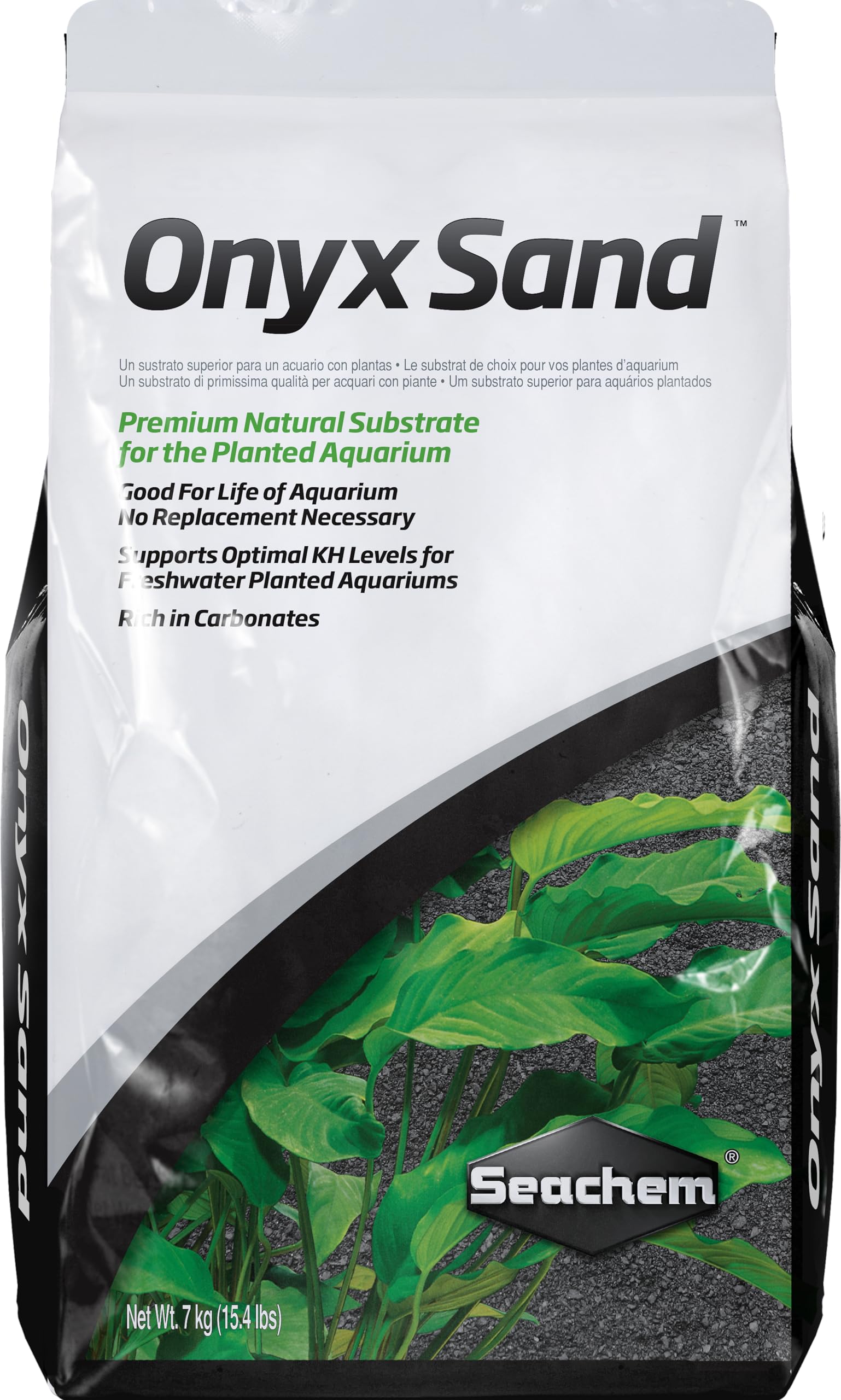
Onyx Sand stands out for its fracted porous structure, which provides excellent surface area for beneficial bacteria colonization. This biological filtration support is crucial for axolotl tanks, where ammonia and nitrite spikes can be fatal. The 15.4-pound bag covers a 75-gallon tank at a recommended depth with roughly eight bags, so for smaller axolotl enclosures like 20- or 40-gallon breeders, one bag goes a long way.
The sand has a slight buffering capacity, which means it can raise pH in very soft water conditions. Owners with cichlids have reported pH increases, so you must test your source water before long-term use. The color is described as a natural grey — not jet black — which some users find more subdued than expected.
Extensive rinsing is non-negotiable. Multiple owners describe the dust as extremely heavy, requiring 5 to 6 bucket rinses and a slow addition to the tank over several days to avoid overwhelming the filter. For experienced keepers who know how to manage dust, this sand offers the best biological performance in the list. Beginners may find the dust frustrating.
Why we love it
- Porous grains boost bacterial filtration
- Large bag size offers best per-pound coverage
- Natural grey color looks realistic
Good to know
- Slight pH buffering capacity — test your water
- Extremely dusty; needs up to 6 rinses
4. Estes 28199 Aqua Sand, White, 5 lb

Estes Aqua Sand is the easiest to rinse in this lineup. Multiple owners confirm that three quick passes in a 2.5-gallon tank produce minimal cloudiness, and the sand settles within hours. This low-dust characteristic reduces stress on axolotl gills and makes initial tank setup significantly faster for new keepers.
The grain size is noticeably larger than the Seachem or Carib Sea options — described by users as “large grain sand” rather than the near-powder texture of premium sands. While still fine enough to avoid impaction, the larger diameter means it stays in place better during water changes and axolotl digging. The white color brightens the tank but shows waste more prominently, requiring more frequent spot cleaning.
A 5-pound bag is relatively compact, and some users were surprised by the smaller volume than expected. For a 10-gallon axolotl tank, this single bag provides adequate coverage. For larger setups, you may need two bags. The sand is manufactured in the United States and arrives clean enough that owners report no chemical smell or residue.
Why we love it
- Minimal rinsing required — low dust output
- Settles and clears quickly after setup
- Bright white color for a clean look
Good to know
- Larger grain may still pose minor impaction risk
- 5 lb bag is smaller than it appears in photos
5. Zoo Med Vita-Sand in Gobi Gold

Zoo Med Vita-Sand is a calcium carbonate-based substrate fortified with vitamins and beta carotene. It is primarily marketed for desert reptiles like geckos and snakes, not aquatic amphibians. The calcium composition means it will buffer the water pH upward, which is a risk for axolotls that require stable, neutral to slightly basic water without sudden shifts.
The texture is extremely powdery — users compare it to cornmeal. While this fine particle size passes easily through digestive tracts, the dust problem is severe. Owners report that filling the tank requires a slow, deliberate pour to avoid creating a dust bowl that takes hours to clear. The yellow-Gobi Gold color helps with spotting waste, but the sand sticks to wet surfaces, including the axolotl’s face and gills after feeding.
For dedicated keepers who pH-test religiously and are willing to perform extraordinarily slow setup, this sand can work. However, the calcium content is a permanent variable in your water chemistry equation. Most axolotl experts recommend inert silica sands over calcium-based substrates to eliminate this risk entirely.
Why we love it
- Very fine grain passes through digestive system easily
- Vitamin and beta carotene fortification
- Good value compared to reptile specialty stores
Good to know
- Calcium carbonate base can raise pH unpredictably
- Extremely dusty; needs very slow tank filling
- Sticks to axolotl skin and gills when wet
FAQ
Can I use play sand from a hardware store for axolotls?
How deep should the sand bed be in an axolotl tank?
How often should I clean sand in an axolotl tank?
Final Thoughts: The Verdict
For most axolotl keepers, the best sand for axolotls overall is the Seachem Fluorite Black Sand Substrate because its near-powder grain size eliminates impaction risk while supporting live plants that improve water quality. If you want a pH-neutral option that is safe for soft-bellied fish and requires no chemical worries, grab the Carib Sea Sunset Gold Sand. And if you need bulk coverage for a larger tank and are comfortable with extensive rinsing, nothing beats the Onyx Sand for biological filtration support.