
Dry, dusty soil is the closest thing a chicken has to a spa day — and a poor-quality sand or ash mix can leave them itchy, oily, and vulnerable to pests. The right sand for a chicken dust bath doesn’t just clean feathers; it absorbs excess moisture, discourages mites and lice, and lets your flock engage in their most instinctive grooming ritual without respiratory irritation from airborne particles.
I’m Mo Mahin — the founder and writer behind Furric. I’ve spent years cross-referencing particle size analyses, mill certifications, and mineral composition reports from dozens of brands, then weighing them against thousands of verified owner observations to separate effective dust bath substrates from overpriced bagged dirt.
Whether you keep a trio of Silkies in a suburban coop or manage a flock of fifty on acreage, the right substrate matters. This guide breaks down the top-rated options for sand for chicken dust bath routines, comparing natural zeolite, volcanic ash, and diatomaceous earth blends for real-world coop conditions.
How To Choose The Best Sand For Chicken Dust Bath
Not all bagged sand or dust works equally when your hens start rolling. The wrong texture or mineral additive can cause respiratory distress, poor oil absorption, or rapid moisture buildup that breeds mold. Focus on these three factors before you pour.
Particle fineness and dust load
Chickens fluff dust deep into their feather shafts. If the particles are too large — anything larger than fine builder’s sand — the material won’t penetrate to the skin where mites and excess oil accumulate. If it’s too dusty (visible cloud when poured), the airborne particulates can irritate tracheal tissues. Look for descriptions that say “finely milled” or “dust-free” and check reviews for comments about visible dust clouds. Zeolite and volcanic ash products milled to silt-sized grains offer the best balance.
Mineral composition and absorption rate
Plain play sand is the cheapest option but it has almost no oil or moisture absorption. Zeolite traps ammonia and moisture on a molecular level, making coop air noticeably fresher. Volcanic ash (scoria or pumice) is sharp-edged at microscopic scale, which physically abrades mite exoskeletons while absorbing oils. Diatomaceous earth works similarly but requires careful handling because the same microscopic sharpness can dry out human lung tissue if airborne. Multi-mineral blends that combine two or three of these ingredients typically outperform single-source products.
Bag weight vs. flock size
A single dust bath container needs four to six inches of material. A 6-pound bag fills roughly one standard cat-litter pan to two inches deep — enough for two or three birds for a week before refreshment. A flock of ten hens needs a minimum of a 6-pound bag per full setup, plus a 6-pound refill every two to three weeks. Premium blends cost more per pound but often last longer because their higher absorption rate means you remove less soiled material during cleaning.
Quick Comparison
On smaller screens, swipe sideways to see the full table.
| Model | Category | Best For | Key Spec | Amazon |
|---|---|---|---|---|
| Reliant Pet Chicken Dust Bath | Mid-Range | Dust-free, non-clumping sand for small flocks | 7 lbs, dust-free sand | Amazon |
| Chicken’s Choice Volcanic Ash | Premium | Parasite control with natural volcanic ash | 6 lbs, 100% volcanic ash | Amazon |
| Zeolite Chicken Dust Bath | Mid-Range | Odor control with finely milled zeolite | 6 lbs, finely milled zeolite | Amazon |
| Spanielbuns Chicken Dust Bath Mix | Premium | Multi-mineral blend with DE and kaolin clay | 5 lbs, DE + kaolin + zeolite blend | Amazon |
| JFWOD Hamster Bath Sand | Budget | Entry-level sand for small animals and chicks | 7.7 lbs, dust-free desert sand | Amazon |
In‑Depth Reviews
1. Reliant Pet Chicken Dust Bath
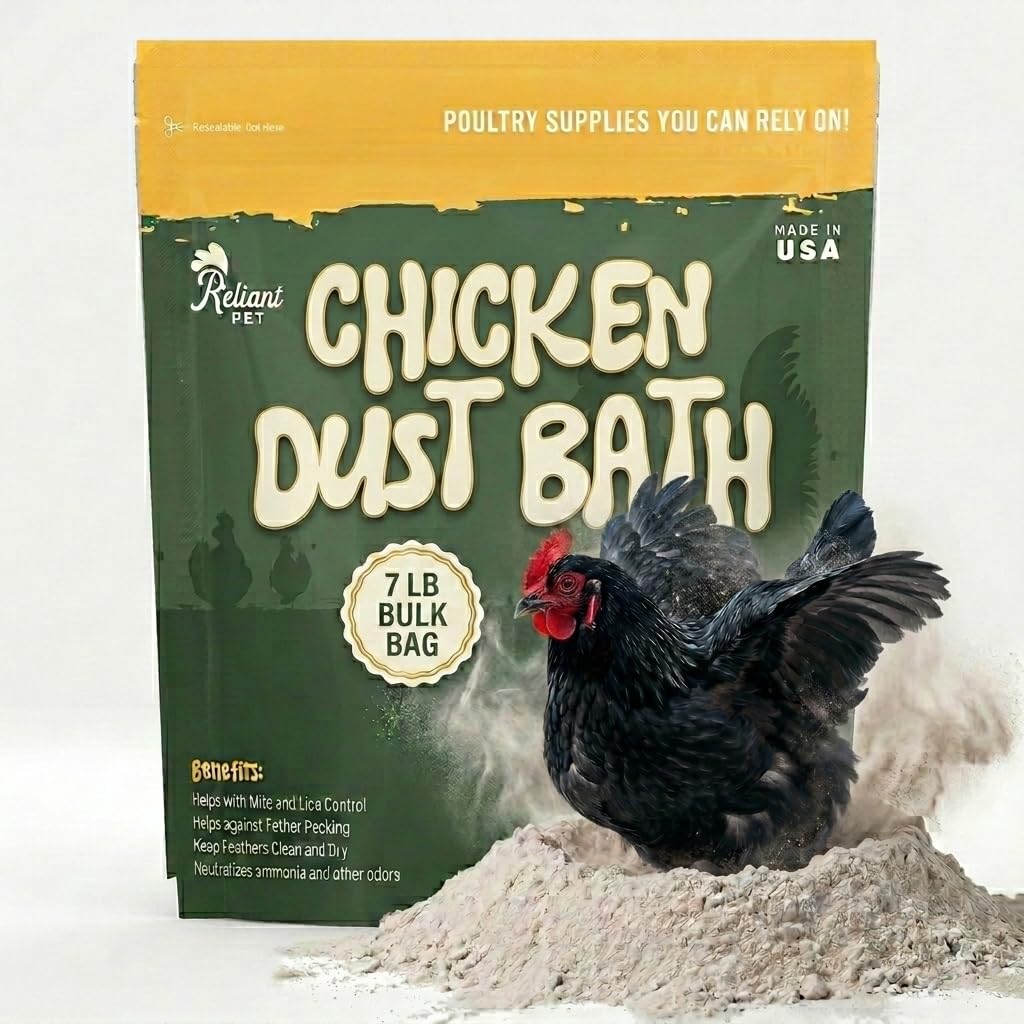
The Reliant Pet Chicken Dust Bath hits the sweet spot for small to medium flocks. At 7 pounds, the bag depth fills a standard dust tub to about three inches — enough for four hens to roll without kicking the container bare. The sand is formulated to be non-clumping, which means you can rake out soiled patches without replacing the entire bath; owners report using one fill for over two weeks with only spot removal.
Customer feedback consistently mentions that the mix is dust-free when poured — no coughing or sneezing from either birds or humans — and the texture is dense and cool, which chickens seem to prefer over lighter, fluffier options. Multiple reviewers noted that their entire flock accepted it immediately, even during rainy periods when outdoor dusting spots were muddy. The 7-pound weight also makes it practical for carrying to a coop without a wheelbarrow.
This is a pure sand blend rather than a mineral additive, so it won’t deliver the same ammonia-trapping or mite-abrading effects as zeolite or volcanic ash products. For flocks dealing with active mite infestations, you may want to mix in diatomaceous earth separately. But for daily maintenance, this is the most straightforward, low-mess option available.
Why we love it
- Truly dust-free pour minimizes respiratory risk
- Non-clumping texture allows easy spot cleaning
- Wide acceptance by chickens regardless of weather
Good to know
- Lacks additional mineral benefits for parasite control
- Bag size may run small for flocks larger than six birds
2. Chicken’s Choice Volcanic Ash Dust Bath
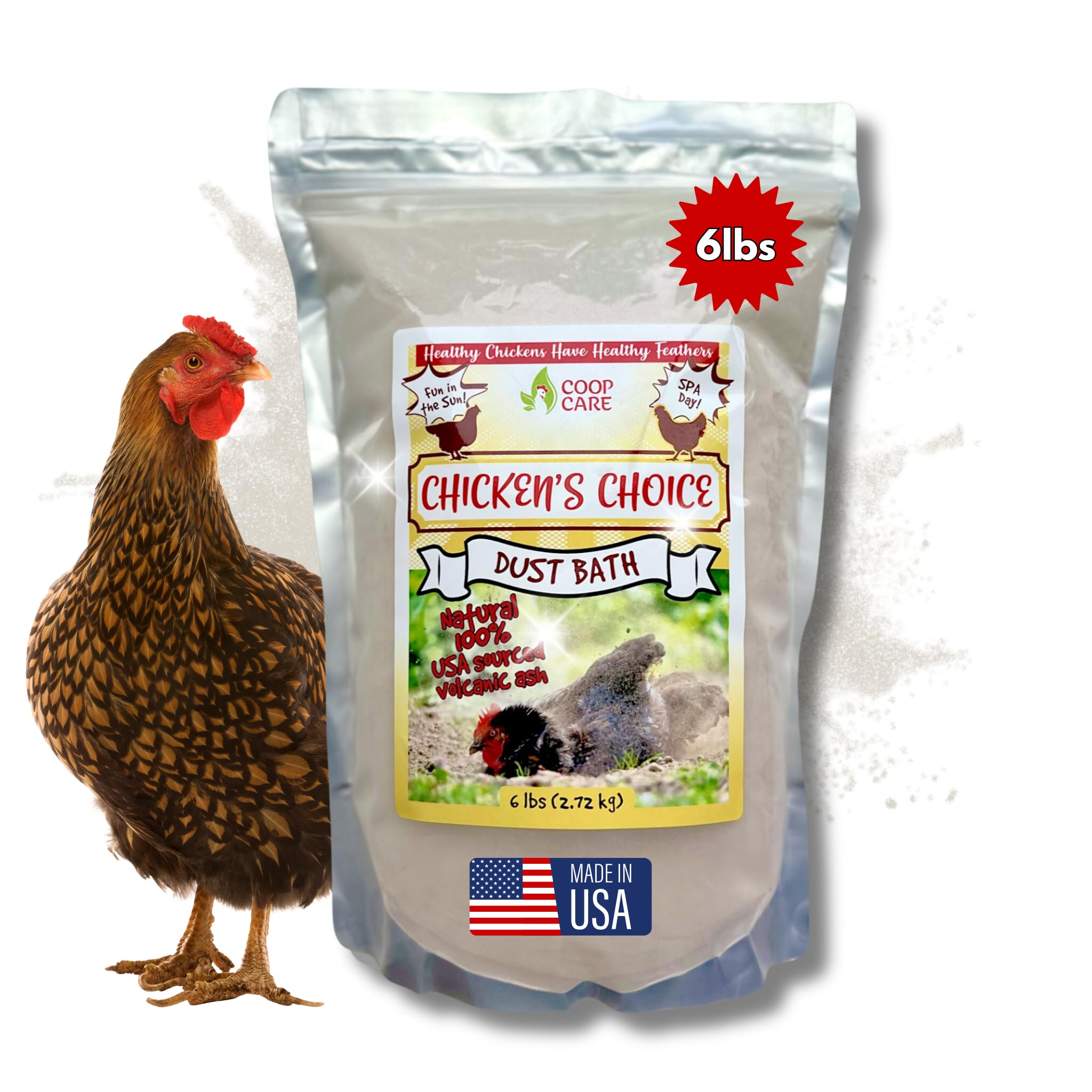
Chicken’s Choice delivers 100% US-sourced volcanic ash milled to a super-fine powder that chickens can work deep into their feather bases. The microscopic sharpness of volcanic glass shards is naturally abrasive to mites and lice — several owners of mixed flocks (chickens, turkeys, guineas) reported visible reduction in parasite loads within a week of switching to this substrate. It also mixes well with dry dirt, sand, peat moss, or herbs if you prefer a custom blend.
The 6-pound bag is compact, and some reviewers were surprised by the volume relative to the weight. It fills a cat-litter pan to about two inches deep, so you’ll need at least two bags for a full setup. That said, the absorption capacity is excellent — the ash pulls excess oil from feathers without leaving a greasy residue. Owners of Silkies and other feather-legged breeds found it gentle enough to not damage delicate plumage.
The primary limitation is that the product is purely volcanic ash with no added clay or zeolite for ammonia control. If your coop has strong odor issues, consider layering this over a zeolite base. Also, the ash is so fine that it can drift in a breeze — an indoor or sheltered container is strongly recommended.
Why we love it
- Volcanic ash provides natural mite/sticktight flea control
- Super-fine texture penetrates to skin level effectively
- Mixes easily with dirt, sand, or herbs for custom baths
Good to know
- Needs sheltered container to prevent wind drift
- Bag volume is smaller than expected for the weight
3. Zeolite Chicken Dust Bath
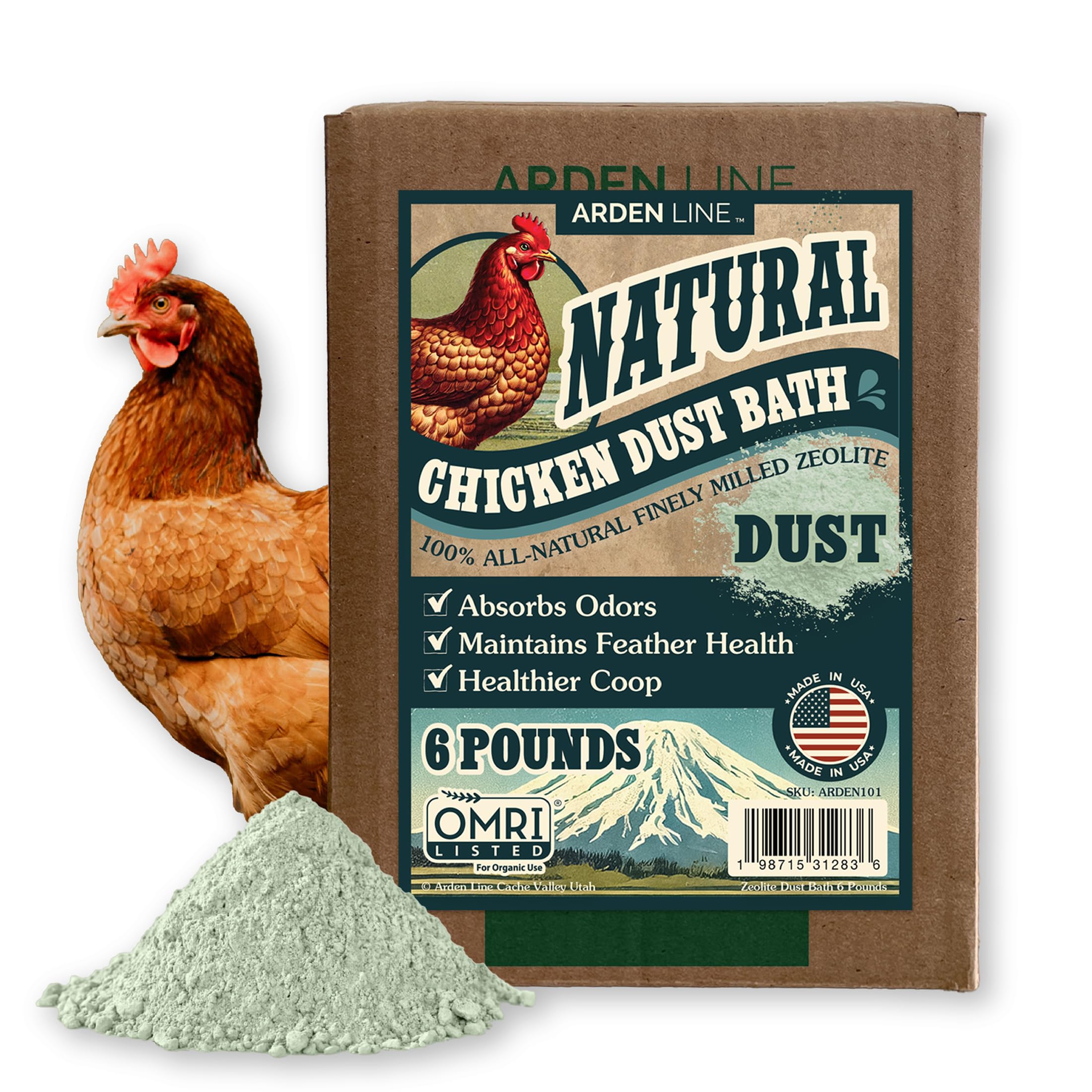
Zeolite is the standout ingredient when ammonia buildup inside a coop is a problem, and Arden Line’s finely milled zeolite dust bath is one of the few dedicated zeolite products for poultry. The mineral’s crystalline structure traps ammonia molecules on its surface, which means the dust bath doubles as a passive air filter. Multiple reviewers noted that their coops smelled noticeably fresher after switching to this product.
The milling is extremely fine — several customers warned that it produces a visible dust cloud during pouring, and a mask is recommended when filling containers. Once settled, though, the dust is soft and odorless, and chickens accepted it readily. The plastic-free kraft packaging is a nice touch for environmentally conscious keepers, though the box is not resealable, so you’ll want to transfer the dust to a sealed bin after opening.
The biggest complaint is value perception: the 6-pound bag is physically small, and owners of larger flocks needed to order multiple units. One reviewer noted that their chickens preferred free-range dusting spots over the zeolite bath, suggesting that some birds may need an adjustment period. It works best as a topper layer over a sand base rather than a standalone fill.
Why we love it
- Zeolite chemistry actively traps ammonia and moisture
- Finely milled for deep feather penetration
- Plastic-free packaging aligns with eco-conscious coop care
Good to know
- Very dusty during pour — always wear a mask
- Small bag volume requires multiple purchases for large flocks
4. Spanielbuns Chicken Dust Bath Sand Mix
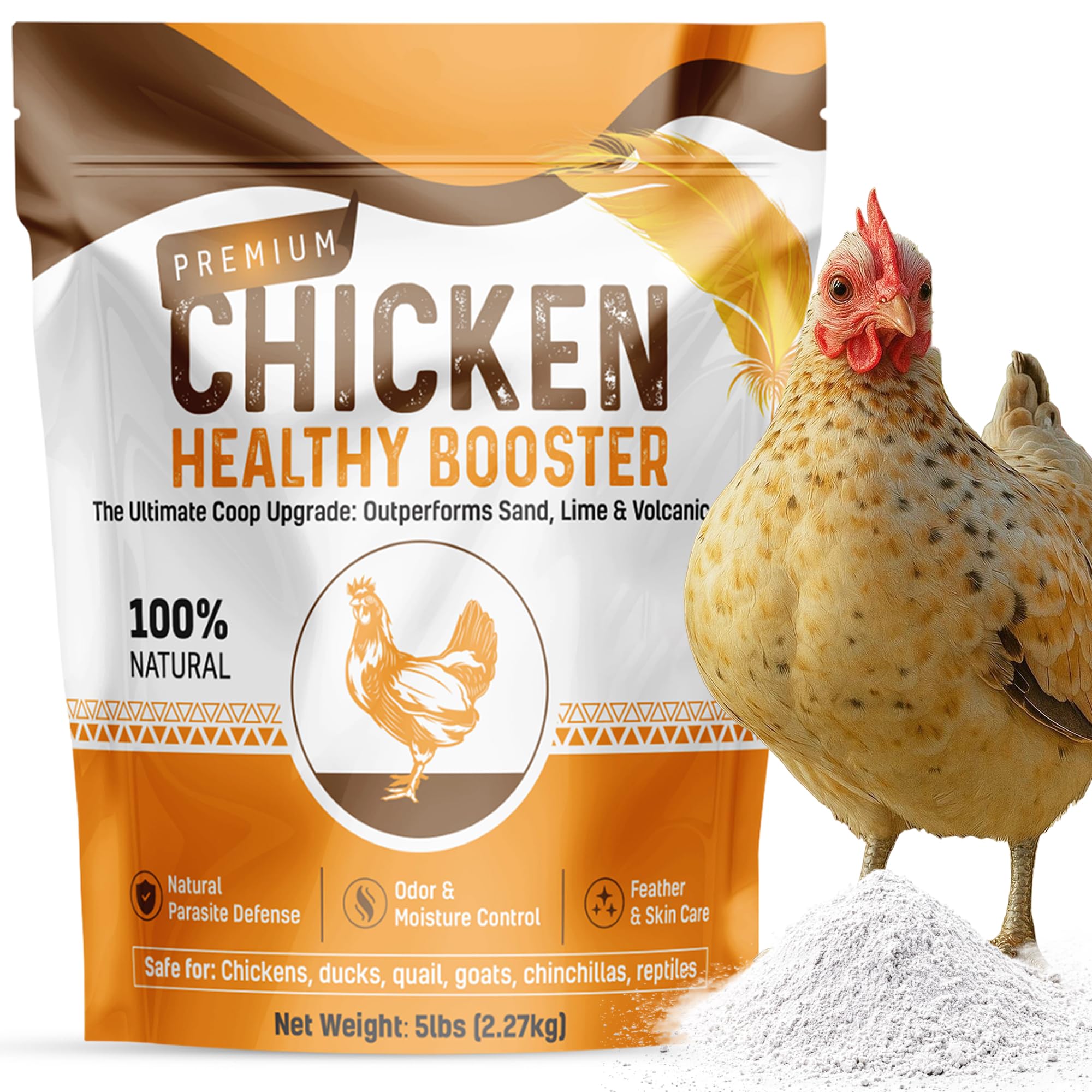
Spanielbuns has formulated a veterinary-style blend that combines food-grade diatomaceous earth, kaolin clay, and zeolite into a single bag. This is the most complete mineral profile of any product on the list: DE provides microscopic edge abrasion for external parasites, kaolin binds oils and toxins on contact, and zeolite handles ammonia and moisture. It’s designed to outperform single-ingredient solutions, and early customer reviews support that claim.
The texture is ultra-fine and lightweight — chickens kick it up easily, which means they get full-body coverage with minimal effort. Users report daily bathing activity and visibly glossier feathers after about a week. The 5-pound bag is compact, but because it’s a blend rather than pure sand, a little goes further when mixed with a base of play sand or peat moss. It also doubles as a coop bedding additive; sprinkling it into litter helps absorb moisture and neutralize odors between deep cleans.
The price per pound is the highest on this list, and the bag size is the smallest at 5 pounds. For a large flock using it as a standalone dust bath, you’ll go through it quickly. It works best as a concentrated additive — use one part blend to four parts sand or dirt to extend its lifespan without diluting effectiveness.
Why we love it
- Triple-mineral blend covers oil, odor, and parasites
- Ultra-fine texture encourages frequent dust bathing
- Versatile as bath mix or bedding additive
Good to know
- Smallest bag size at 5 pounds
- Best value when mixed with cheaper base materials
5. JFWOD Hamster Bath Sand

Technically marketed for hamsters and gerbils, this JFWOD desert sand works in a pinch for chicks, bantams, or keepers on a tight budget. It’s pure natural sand screened for uniformity — no additives, no clumping agents, no mineral enhancements. The particle size is visibly coarser than the other products on this list, which means it won’t penetrate feather bases as effectively for full-size hens. It’s best used as a base layer topped with a finer dust blend.
Customer feedback from hamster owners is uniformly positive — they praise the dust-free pour, the clumping ability (for rodent potty use), and the odor control for small enclosures. As a chicken dust bath, it’s not designed for the oil and mite loads of a full-sized bird, but for a small quarantine setup or a brooder with young chicks, the price per pound is hard to beat. The 7.7-pound bag is the heaviest on this list, giving you the most volume for the lowest investment.
The sand does not absorb ammonia or oils to any meaningful degree, so you’ll need to change it frequently to prevent bacterial buildup. It also doesn’t provide any parasite control. Consider this an entry-level option to get started, with plans to upgrade once your flock’s needs become clearer.
Why we love it
- Largest bag volume among all products reviewed
- Genuinely dust-free pour with no respiratory irritants
- Lowest cost per pound, ideal for temporary setups
Good to know
- Particle size too large for effective deep feather cleaning
- No mineral absorption or parasite control properties
FAQ
Can I use regular play sand for a chicken dust bath?
How often should I replace the dust bath material?
Is diatomaceous earth safe to add to chicken dust baths?
Will volcanic ash hurt my chickens’ feet or skin?
Final Thoughts: The Verdict
For most gardeners, the sand for chicken dust bath winner is the Reliant Pet Chicken Dust Bath because it offers the best balance of particle size, dust-free handling, and non-clumping maintenance for a small to medium flock. If you want natural mite and lice protection, grab the Chicken’s Choice Volcanic Ash Dust Bath. And for persistent coop odor issues, nothing beats the ammonia-trapping performance of the Zeolite Chicken Dust Bath by Arden Line.