
Swapping a muddy, odorous chicken run for a clean, dry surface starts with one simple material swap: sand. It drains instantly, resists caking, and makes daily coop maintenance a quick rake instead of a shovel-digging chore — but only if you choose the right grade and source.
I’m Mo Mahin — the founder and writer behind Furric. I spend my time cross-referencing particle size reports, washing recommendations, and hundreds of verified owner notes to separate safe, functional sand from cheap fill that turns into a wet mess.
Whether you are topping off a small run or filling a large enclosure, finding the right sand for chicken run hinges on dust levels, grain consistency, and the absence of sharp or toxic debris that can harm your flock.
How To Choose The Best Sand For Chicken Run
Not all sand is safe for chickens. Coarse, unwashed materials can hold moisture, breed bacteria, or contain sharp particles that injure feet. Here is what to check before opening a bag.
Grain size and texture
Look for fine to medium silica sand with grains around 0.3–1.0 mm. This size drains quickly, stays cool in summer, and lets chickens scratch naturally without compacting into a hard pan. Coarse builders’ sand (often called sharp sand) can contain jagged edges that damage combs and feet.
Dust and crystalline silica content
Chicken respiratory systems are sensitive. Avoid sand labeled as containing crystalline silica, which creates airborne dust when dry. Products that are washed, screened, and tested as “low dust” or “crystalline-silica-free” are safer for confined runs and reduce the risk of respiratory irritation in your flock.
Bag weight and coverage depth
A 20 lb bag covers roughly 2–3 square feet at a 1-inch depth, while a 50 lb bag covers about 6–8 square feet. For a chicken run, you generally want a minimum of 2 inches of sand to absorb droppings and allow scratching. Measure your run’s area and calculate how many bags you need before buying.
Quick Comparison
On smaller screens, swipe sideways to see the full table.
| Model | Category | Best For | Key Spec | Amazon |
|---|---|---|---|---|
| Safe Sand 25 lb Box | Premium | Low-dust, crystalline-silica-free runs | 25 lbs, tested free of crystalline silica | Amazon |
| Sun Joe PLYSAND50 (50 lb) | Mid-Range | Large runs needing deeper coverage | 50 lbs ultra-fine silica sand | Amazon |
| All Natural Play Sand (50 lb) | Value | Budget-friendly large fill | 50 lbs washed and screened | Amazon |
| Sandpiper Multiuse Play Sand (25 lb) | Mid-Range | Small runs and coop dust baths | 25 lbs chemical-free, finely textured | Amazon |
| Sun Joe PLYSAND20 (20 lb) | Entry-Level | Topping off or small sensory areas | 20 lbs ultra-fine silica sand | Amazon |
In‑Depth Reviews
1. Safe Sand for Sandbox/Natural White Safety Tested Playsand 25 Pound Box

Safe Sand stands apart because it is independently tested to be free of crystalline silica, lead, and asbestos — contaminants that are common in bulk play sands and can cause chronic respiratory harm in chickens. The pure white grains are fine, soft, and produce almost no airborne dust when dry, making it ideal for enclosed runs where airflow may be limited. At 25 lbs, a single box provides roughly a 1-inch depth over 3 square feet, perfect for a small run or a dedicated dust-bathing area inside the coop.
Owner reviews consistently praise the cleanliness and safety credentials, with multiple buyers noting that the sand arrives dry, free of debris, and without the chemical smell or dusty cloud that cheaper alternatives release when poured. The sand molds well when slightly damp, which helps chickens create compacted dust-bathing craters that hold shape rather than collapsing into powder. The packaging is a sturdy box rather than a flimsy bag, reducing the risk of tears during transport.
The premium cost per pound is the trade-off: you pay significantly more than for generic sand. But for keepers who prioritize flock health above raw volume, the safety testing and dust-free performance justify the investment. It is also a strong choice for runs housing bantam breeds or chicks that are more sensitive to particulate matter.
Why we love it
- Certified crystalline-silica-free and lead-free — rare in this price tier
- Near-zero dust keeps air quality high in covered runs
- Fine, soft texture encourages natural dust-bathing behavior
Good to know
- Expensive per pound compared to standard play sand
- 25 lb box fills only a small area — larger runs need multiple boxes
2. Sun Joe Silica Play Sand, Ultra Fine, 50 Lb Bag (PLYSAND50)
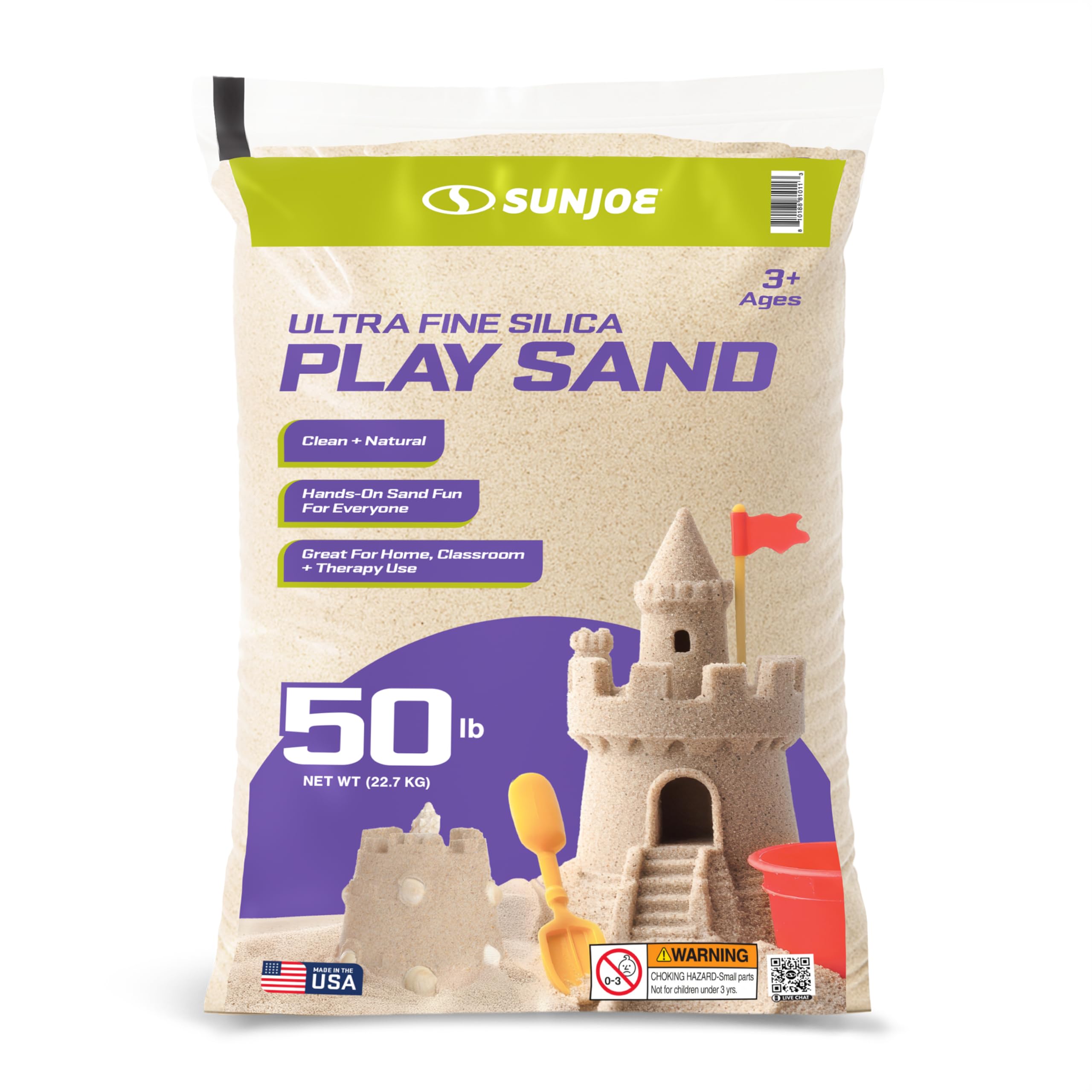
The Sun Joe PLYSAND50 offers the best value for larger chicken runs. At 50 lbs per bag, you need fewer bags to achieve the recommended 2-inch depth compared to 20 or 25 lb alternatives. The ultra-fine white silica sand is washed and screened to remove debris, and it has a soft, smooth texture that chickens enjoy scratching through. Multiple owner reviews confirm the sand is clean, bright, and free of the dusty haze that some bulk sands kick up.
Where this sand really shines is in runs with multiple birds. The larger grain consistency does not compact as readily as finer sands, staying loose and workable even after rain if the run has adequate drainage. Owners reported that the sand does not clump excessively when wet, and it dries quickly once the sun comes back out. The bag weight is manageable for one person to carry and pour, though ordering multiple bags for a large run could add up in shipping weight.
The main limitation is the lack of crystalline-silica certification. While reviews note low dust and good cleanliness, the product is not explicitly marketed as crystalline-silica-free. For most backyard flocks this is not a concern, but keepers with respiratory-sensitive birds may prefer the Safe Sand option above. Still, for sheer coverage volume per dollar, this is hard to beat.
Why we love it
- 50 lb bag is the most efficient way to cover larger runs
- Ultra-fine texture stays loose and resists hard-packing
- Dries quickly after rain and does not hold moisture
Good to know
- Not tested or labeled as crystalline-silica-free
- Shipping weight of multiple bags may incur extra fees
3. All Natural Play Sand Brown 50 lb

This all-natural brown sand is washed and screened, making it a straightforward, no-frills option for chicken runs. The 50 lb bag is priced competitively — multiple owners noted it represents the best bang for the buck compared to bagged play sand from big-box retailers. The brown color blends naturally with soil and yard environments, which some keepers prefer over the bright white of silica sand. Customers consistently describe the sand as clean, odorless, and fine-grained.
Owners using it for toddler sandboxes and chicken runs alike praise its thorough washing — there are no reports of stones, clay clumps, or organic debris in the bags. The clean texture makes it safe for chickens to scratch and dust-bathe without picking up sharp particles. One reviewer pointed out that the sand holds up well over time if stored under cover, drying quickly and not turning sour even after weeks of use.
The trade-off is a complete lack of safety certifications. This sand is not tested for crystalline silica, lead, or other contaminants. While the majority of owners had positive experiences, a single buyer expressed surprise that they had to pay more for sand that was explicitly labeled as non-carcinogenic. For keepers who want assured safety documentation, this is not the bag to reach for — but for budget-conscious owners with healthy, hardy birds, it works.
Why we love it
- Washed and screened — arrives clean and free of debris
- 50 lb bag at a low per-pound cost
- Natural brown color blends into garden environments
Good to know
- No certification for crystalline-silica content
- Slightly coarser than white premium sands
4. Sandpiper Multiuse Play Sand for Kids – 25 Lbs
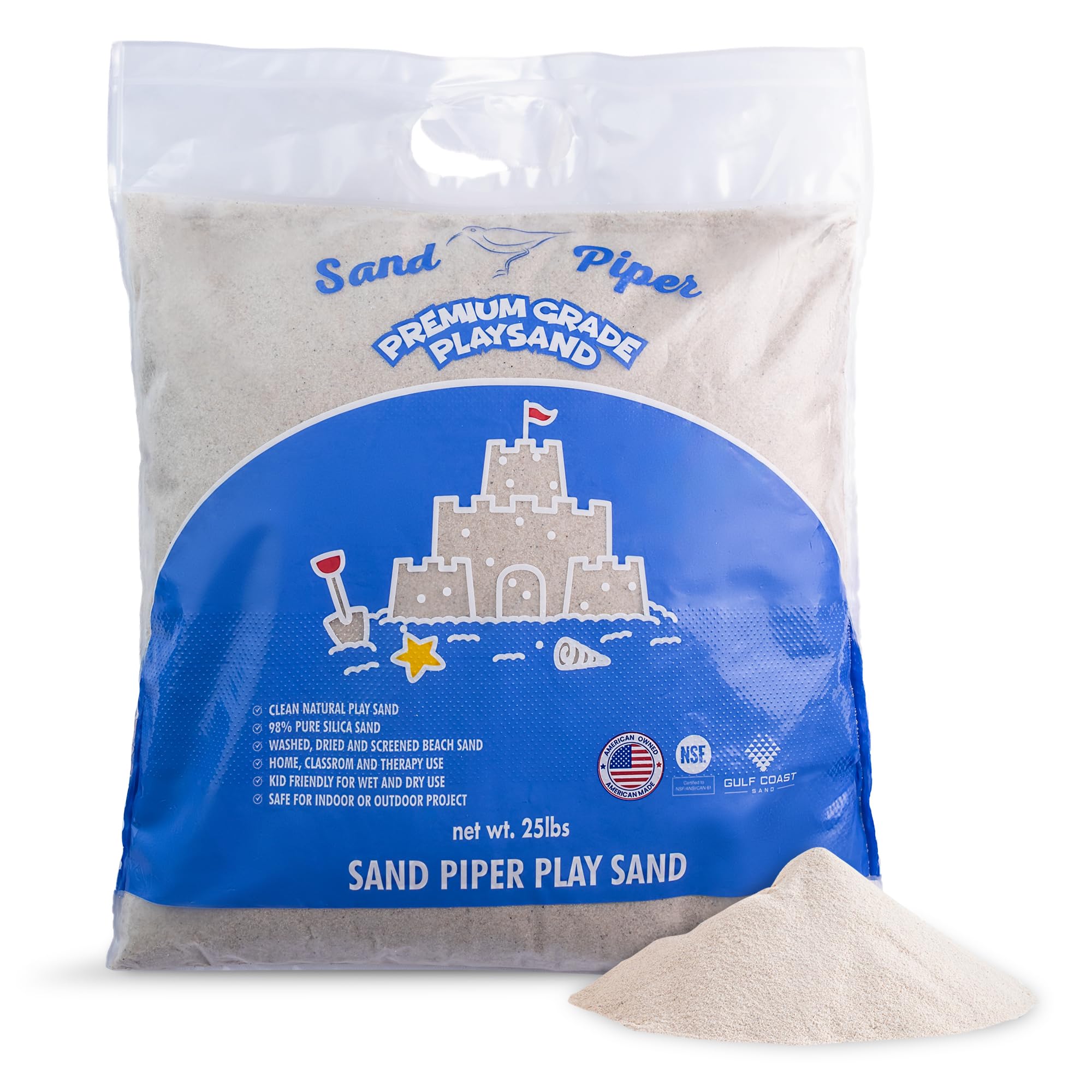
The Sandpiper Multiuse Play Sand is marketed primarily as a safe play sand for children, but chicken keepers have discovered it works exceptionally well for coop dust baths and small run top-ups. Made from 100% natural materials and boasting 99% silica purity, it is thoroughly cleaned and washed to remove fines and contaminants. The 25 lb bag is compact enough to handle easily, and the white color makes it simple to spot contaminated areas that need spot-cleaning.
Owner reviews highlight the sand’s versatility: multiple buyers specifically noted using it as a dust bath material for birds, praising its low-dust formulation and soft texture. It is also used for indoor sensory tables and craft projects, which speaks to its cleanliness level. The grains are consistently sized, which helps the sand drain evenly and prevents the formation of anaerobic pockets that can produce ammonia smells in a run.
The 25 lb capacity means this is best suited for smaller runs, coops with enclosed dust-bath boxes, or topping off existing sand. For a large run (say, 4×8 feet at 2 inches deep), you would need roughly six to eight bags, which raises the total cost significantly. But as a clean, chemical-free option for targeted use, it delivers on its promises.
Why we love it
- Chemical-free and washed — safe for chickens to ingest while foraging
- Consistent grain size prevents compaction and odor
- Compact bag is easy to transport and pour
Good to know
- 25 lb bag is too small for filling a large run
- Not tested specifically for crystalline-silica content
5. Sun Joe Silica Play Sand, Ultra Fine, 20 Lb Bag (PLYSAND20)
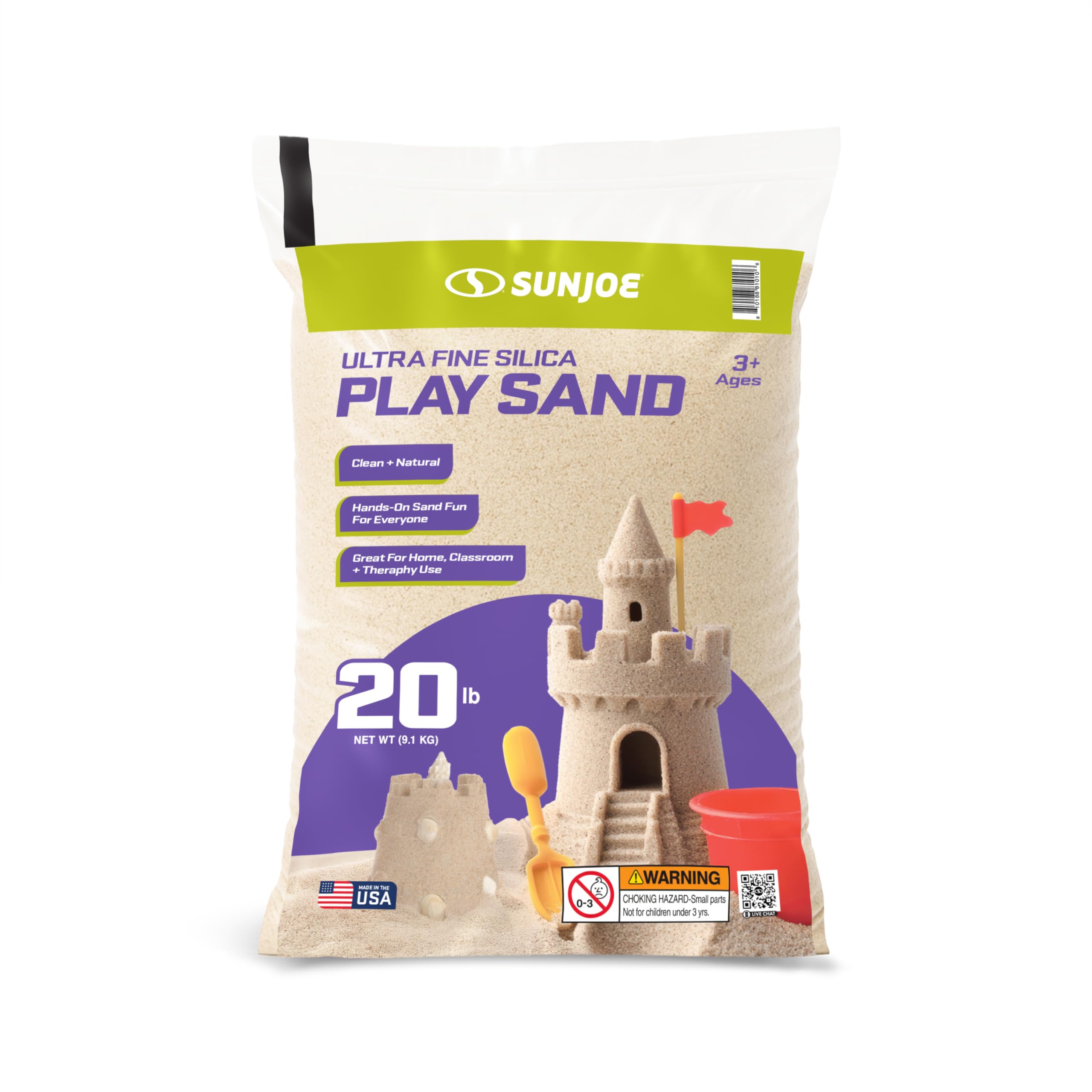
The smaller 20 lb sibling of the Sun Joe PLYSAND50 is the lightest option in this lineup. It is ideal for keepers who need just a few pounds to refresh a dust-bath area, fill a small indoor coop tray, or top off a shallow patch in the yard. Like its larger counterpart, this sand is ultra-fine, washed, and has a soft, smooth texture that chickens enjoy. The bag is manageable for anyone to carry and pour without a wheelbarrow.
Owner reviews confirm the same clean, bright appearance and low dust as the 50 lb version. Multiple buyers used it in sensory tables and small sandboxes, reporting that it does not generate the cloudy dust typical of construction-grade sand. The fine grain size means it stays soft underfoot and is gentle on chickens’ feet. Some keepers noted that the sand clumps slightly when wet but breaks apart easily once dry.
The obvious drawback is the quantity: 20 lbs covers roughly 2 square feet at a 1-inch depth, so it is not practical for full-run coverage. The per-pound cost is also higher than the 50 lb bag, making it a less economical choice for larger projects. It serves best as a top-up or for small, dedicated dust-bath boxes within a larger run.
Why we love it
- Ultra-fine, soft texture is gentle on chicken feet
- Very low dust — safe for confined coop dust baths
- Lightweight 20 lb bag is easy to handle and store
Good to know
- High per-pound cost compared to larger bags
- Too small for filling a full-size run
FAQ
Can I use construction sand in my chicken run?
How deep should I put sand in the run?
Does sand get too hot for chickens in summer?
How often do I need to replace sand in a chicken run?
Final Thoughts: The Verdict
For most keepers, the sand for chicken run winner is the Safe Sand 25 lb Box because its crystalline-silica-free certification and ultra-low dust make it the safest choice for enclosed runs and respiratory-sensitive flocks. If you need maximum coverage per dollar for a large run, grab the Sun Joe PLYSAND50 (50 lb bag). And for a budget-friendly large fill where certification is not a concern, nothing beats the value of the All Natural Play Sand 50 lb.