
Picking the wrong sand for your freshwater tank creates clouding that lasts weeks, traps decaying waste, or shifts your pH into dangerous territory — three outcomes that stress fish and undo your hardscape work. The ideal substrate buffers water chemistry without leachates, settles within hours, and stays loose enough for root growth and detritus worms to do their job.
I’m Mo Mahin — the founder and writer behind Furric. I spend my time comparing grain-size distributions, analyzing silicate content reports, and correlating long-term owner feedback to identify which sands deliver the clarity and biological stability freshwater tanks demand.
Whether you are building a planted aquascape or a bare-bottom cichlid setup, picking the right sand for freshwater fish tank comes down to grain shape, pH neutrality, and how thoroughly it rinses before you pour it in.
How To Choose The Best Sand For Freshwater Fish Tank
Not all bagged sand behaves the same underwater. Some products are crushed silica engineered for filtration, while others are coated play-sand that leaches discoloration. Three factors separate a substrate you’ll love from one you’ll regret.
Grain Size & Shape
Sand grains between 0.5 mm and 1.5 mm allow water flow through the bed while staying heavy enough to resist suspension during filter output. Angular grains lock together and create anaerobic pockets; rounded grains stay loose and let roots penetrate. For planted tanks, rounded fine sand wins every time.
pH & Mineral Composition
Crushed coral or aragonite-based sands buffer pH upward, which is desirable only for African cichlids and brackish species. For community tanks with tetras, rasboras, or angelfish, you want inert silica or quartz-based sand that holds pH steady at whatever your source water provides. Always confirm the bag states “pH neutral” for general freshwater use.
Bag Weight vs. Coverage Depth
A 20-pound bag covers roughly a 20-gallon tank at 1.5 inches of depth. Buying two small 5-pound bags almost always costs more per pound than one large bag. If you are scaping a 40-gallon breeder, skip the 5-pound samples and go straight to 20-pound units to avoid running short mid-pour.
Quick Comparison
On smaller screens, swipe sideways to see the full table.
| Model | Category | Best For | Key Spec | Amazon |
|---|---|---|---|---|
| Aqua Natural Galaxy Sand 20lb | Premium | High-contrast aquascaping | Sparkling black, 20 lb bag | Amazon |
| Imagitarium Black Aquarium Sand 20 lb | Mid-Range | Natural bacteria colonization | Non-toxic, 20 lb bag | Amazon |
| Seachem Fluorite Black Sand 7.7lb | Premium | Planted tank root growth | Porous clay granules, 7.7 lb | Amazon |
| Carib Sea Sunset Gold Sand 5lb | Budget-Friendly | Soft-bellied fish & turtles | pH neutral, rounded grains | Amazon |
| Aqua Terra Natural Tan Sand 5lb | Budget-Friendly | Small nano tanks | pH balancing, 5 lb bag | Amazon |
In‑Depth Reviews
1. Aqua Natural Galaxy Sand 20lb

The Aqua Natural Galaxy Sand delivers a dramatic dark floor that makes green plants and bright fish pop. Each tiny grain catches light, giving the substrate a subtle shimmer that mimics natural riverbeds under LED lighting. The 20-pound bag covers a 20-gallon tank at a solid 1.5-inch depth with no need for a second purchase.
This sand rinses relatively clean compared to other black options — most users report the water running clear after three or four bucket rinses. Because it is ethically sourced in the USA, the grain consistency stays uniform bag to bag, so you can buy a second bag later without visible seam lines. It is inert, so your pH remains exactly where your source water puts it.
For community tanks, cichlid setups, or planted aquascapes, this is the set-and-forget substrate. The only minor complaint is the initial dust cloud if you skip rinsing — but that applies to every sand in this category. Pair it with a gentle water pour and you get a mirror-clear tank by morning.
Why we love it
- Dramatic black color that enhances aquascape contrast
- Large 20 lb bag delivers high value per pound
- Ethically sourced and consistently graded grains
Good to know
- Requires thorough rinsing to avoid initial clouding
- Black color shows debris more readily than tan options
2. Seachem Fluorite Black Sand 7.7lb

Seachem Fluorite is not ordinary sand — it is a porous clay substrate engineered for rooted plants. The granules hold nutrients and release them slowly to plant roots, giving Amazon swords, crypts, and vallisneria a solid foundation. The black color provides a natural, unobtrusive base that does not distract from your hardscape.
One drawback is dust: Fluorite tends to produce a fine cloud that can take a day or two to settle even after rinsing. The trade-off is active root support that standard silica sand cannot match. If you are growing a heavy planted tank, the initial haze is a small price for months of vigorous root development.
The 7.7-pound bag is lighter than it looks — it covers about a 10-gallon tank at a proper depth. For larger tanks, budget for two bags. This is a niche product for planted enthusiasts, not the best choice for a bare-bottom cichlid tank or a goldfish setup.
Why we love it
- Porous clay feeds plant roots without liquid fertilizers
- Black finish complements green foliage beautifully
- Lasts the life of the aquarium without degrading
Good to know
- Creates a fine dust cloud that requires patience to settle
- Smaller bag size means higher per-tank cost for larger aquariums
3. Carib Sea Sunset Gold Sand 5lb

Carib Sea’s Sunset Gold Sand is the softest option in this lineup — no sharp edges, no crushed particles. The rounded grains are ideal for bottom-dwelling fish like corydoras, loaches, and kuhli loaches that sift through substrate without injuring their barbels. The warm gold color recreates a natural riverbed look that suits tetras and barbs.
This sand is pH neutral and contains no artificial dyes. It is manufactured in the USA, guaranteeing consistent grain size across batches. Owners report minimal clouding after rinsing, and the sand settles within a few hours of filling the tank. The 5-pound bag is perfect for smaller aquariums up to 15 gallons.
The main limitation is bag size. For any tank above 20 gallons, you will need two or three bags, which pushes the price above larger competitors. Stick with this for nano tanks or specialty setups where fish safety is the top priority.
Why we love it
- Ultra-soft rounded grains protect sensitive barbels
- No dyes or paints — entirely natural material
- Quick settling time after tank fill
Good to know
- Small 5 lb bag requires multiple purchases for standard tanks
- Gold tone may clash with dark hardscape designs
4. Aqua Terra Natural Tan Sand 5lb
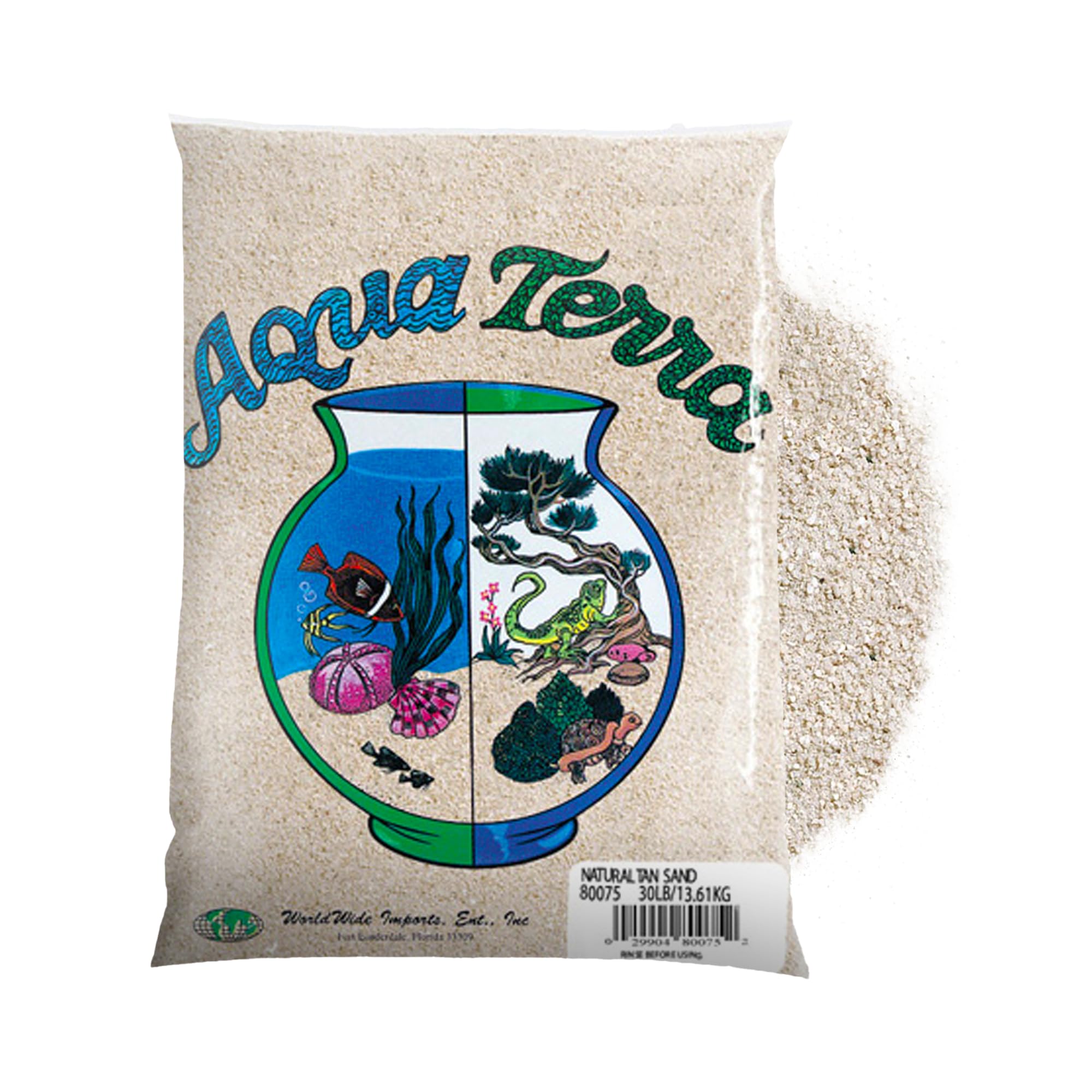
Aqua Terra Natural Tan Sand markets itself as a pH-balancing substrate, meaning it helps maintain stable levels rather than letting them drift. The light tan color mimics sandy natural habitats common for South American species like angelfish and discus. It works as a natural filter aid, trapping particles that would otherwise cloud the water column.
At only 5 pounds, this is a very small bag — it barely covers a 10-gallon tank to 1 inch of depth. The manufacturer claims eco-friendly sourcing and sustainable materials, which matters if you are building a responsible setup. Early rinsing is mandatory; the fine dust can take extra cycles to clear.
This sand is best for nano tanks, shrimp tanks, or as a top layer over a planted substrate. For standard 20-gallon or larger aquariums, the cost-per-pound becomes less attractive. Use it where you need precise pH stability in a small water volume.
Why we love it
- Helps maintain stable pH levels for sensitive fish
- Natural tan color complements biotope-style tanks
- Eco-friendly and sustainably sourced materials
Good to know
- Very small bag — not practical for tanks over 15 gallons
- Requires extensive rinsing to remove dust
5. Imagitarium Black Aquarium Sand 20 lb
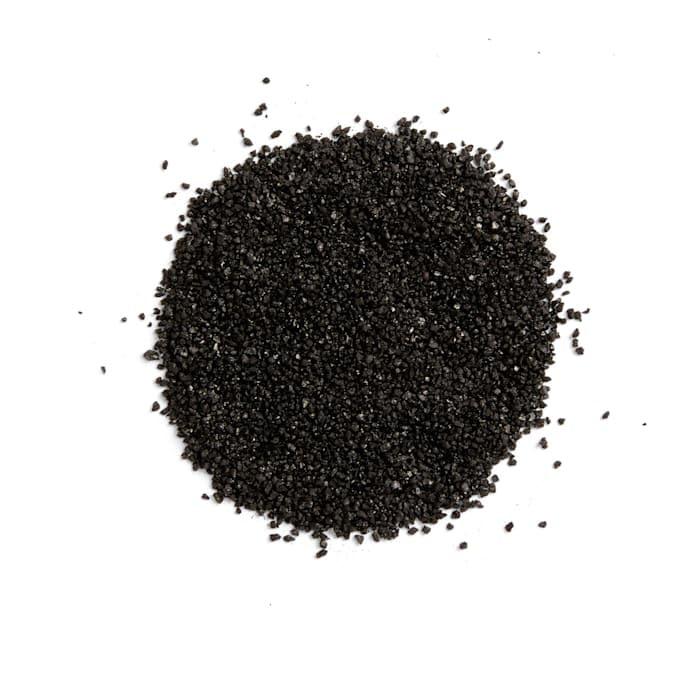
Imagitarium Black Sand focuses on biological filtration — the irregular grain surfaces provide ample surface area for beneficial bacteria that break down fish waste and leftover food. This sand is non-toxic and fish-safe, and the black color conceals debris between weekly cleanings. The 20-pound bag is a practical size for 20-to-30-gallon tanks.
The sand has a classic, matte finish that does not shimmer. It rinses reasonably well, though some batches may require an extra rinse to remove fine particles. The manufacturer recommends 2 pounds per gallon for optimal depth, meaning this bag fits a 10-gallon tank at the ideal 2-inch depth for rooted plants.
For beginners setting up their first community tank, this is a solid, no-fuss option. It does not buffer pH, it does not leach color, and it does not cost a premium. The only knock is that the black color can look flat compared to the galaxy-style shimmer of the Aqua Natural option.
Why we love it
- Large surface area supports robust biological filtration
- Non-toxic and safe for all freshwater species
- 20 lb bag provides excellent coverage for the price
Good to know
- Matte black finish lacks visual sparkle
- Occasional batch requires extra rinsing
FAQ
Can I use play sand from the hardware store in my freshwater tank?
How much sand do I need for a 20-gallon tank?
Will black sand heat up my tank under LED lights?
Is fluorite sand better than regular sand for planted tanks?
Final Thoughts: The Verdict
For most aquarists, the sand for freshwater fish tank winner is the Aqua Natural Galaxy Sand 20lb because it combines dramatic aquascape appeal, a practical bag size, and consistent grain quality without pH interference. If you are building a heavily planted tank, grab the Seachem Fluorite Black Sand 7.7lb for its nutrient-holding clay granules. And for a small nano tank or soft-bellied fish, nothing beats the Carib Sea Sunset Gold Sand 5lb with its ultra-safe rounded grains.