
Hermit crabs live half their lives buried, which means the wrong sand doesn’t just look bad — it can cut a molting cycle short or dry out a gill bed overnight. The line between a thriving crustacean and a stressed one is drawn in the substrate you pour into the tank.
I’m Mo Mahin — the founder and writer behind Furric. I study market data on hermit crab mortality, substrate aeration rates, and humidity retention composites across thousands of owner reports to separate the sands that support a full molt from those that turn to inhospitable dust.
A reliable environment depends on grain structure, moisture-holding capacity, and chemical safety — which is why selecting the right sand for hermit crabs goes beyond mere decoration to become a matter of survival.
How To Choose The Best Sand For Hermit Crabs
Hermit crabs depend on substrate to regulate humidity, support burrowing, and provide a safe casing for molting. The wrong grain size, additive mix, or compressibility can cause respiratory irritation or collapse during a molt.
Grain Shape and Compaction
Sharp-edged grains from cheap play sand can scratch soft exoskeletal tissue. Look for rounded oolitic aragonite or naturally worn coconut fiber particles that allow the crab to dig a stable tunnel that won’t collapse.
Humidity Retention Capacity
A substrate that dries out too fast forces your crab to spend energy hydrating instead of growing. Coconut fiber strands hold water longer than pure silica sand. A sand-fiber mix usually holds 70-80% ambient humidity longer than sand alone.
Chemical and Calcium Safety
Added calcium carbonate sounds beneficial, but in high concentrations it can harden into clumps that trap a molting crab. Natural calcium sources like aragonite, or a simple organic fiber-sand blend without synthetic dyes or salts, give the crab control over its own mineral intake.
Quick Comparison
On smaller screens, swipe sideways to see the full table.
| Model | Category | Best For | Key Spec | Amazon |
|---|---|---|---|---|
| Fluker’s All Natural Premium Sand | Sand/Fiber Mix | All-in-one humidity and molting blend | Sand + coconut fiber + probiotics | Amazon |
| Hermit Crab Aragonite 10LB | Pure Aragonite | Soft, natural burrowing with a calcium boost | Oolitic aragonite, phosphate-free | Amazon |
| Halatool Coconut Fiber 2 Pack | Organic Fiber | Budget-friendly humidity retention | Expands 3x when wet, 1.4 lb per brick | Amazon |
| Legigo Compressed Coconut Fiber 2 Pack | Organic Fiber | Odor control and tunnel stability | Natural coco husk, odorless | Amazon |
| Estes 28199 Aqua Sand | Aquarium Sand | Decorative white sand for crab-safe aquascapes | Larger grain, 5 lb bag | Amazon |
In‑Depth Reviews
1. Fluker’s All Natural Premium Hermit Crab Sand Substrate

Fluker’s combines playsand-grade particles with coconut fiber, sea salt, and calcium carbonate to create a substrate that holds 70%+ tank humidity without turning into mud. The 12-pound bag fills a standard 10-gallon tank with a 6-inch dig layer — the minimum depth hermit crabs need for a complete molt. Owners report burrowing behavior within hours of introduction, which means the grain compaction is loose enough for tunneling but dense enough to stay upright.
The added probiotics break down waste at the microbial level, reducing the ammonium smell that builds in closed terrariums. While the calcium content is moderate, it doesn’t form the crusty clumps that trap crabs mid-shed. Regular misting keeps the upper layer damp without pooling at the bottom.
Some keepers note the sand portion is finer than pure aragonite, which slightly reduces airflow in the deepest layer. For a one-bag solution that handles humidity, odor, and molting support, this blend is the most complete out-of-box option on the market.
Why we love it
- Pre-mixed sand and fiber means no manual blending
- Probiotics actively reduce odor from organic waste
- Supports stable tunnel walls during a full molt
Good to know
- Calcium can cause minor clumping if the tank stays above 85% humidity
- Heavier than pure fiber — you need a strong shelf for a 12 lb bag
2. HERMIT CRAB ARAGONITE 10LB

Oolitic aragonite is the gold standard for crustacean substrate because each grain is spherical rather than jagged, reducing the chance of exoskeleton abrasion during digging. This 10-pound bag from Pisces contains naturally renewable aragonite that’s phosphate-free — no chemical leach into the water column. Owners describe it as “super soft” and note their crabs burrow immediately without hesitating over sharp textures.
The round grain structure lets oxygen circulate between particles even when packed 5 inches deep, which prevents anaerobic bacteria pockets that cause sour substrate syndrome. Many experienced keepers mix this aragonite 50/50 with organic coconut fiber to split the difference between drainage and moisture retention. Several five-star reviews mention buying this brand repeatedly for crabs that have lived 7+ years, a longevity marker that correlates directly with substrate quality.
Being pure aragonite, it does dry out faster than a sand-fiber blend. To maintain 75-80% humidity at the bottom, you need to mist the surface daily and check the lower layer with a probe. The phosphate-free guarantee also makes it safe for sensitive gill irrigation.
Why we love it
- Rounded oolitic grains prevent shell and tissue scratches
- Phosphate and chemical free for sensitive molting cycles
- Supports oxygen flow to deep substrate layers
Good to know
- Needs daily misting to maintain ideal humidity
- Most effective when blended with coconut fiber
3. Halatool Coconut Fiber Substrate 2 Pack
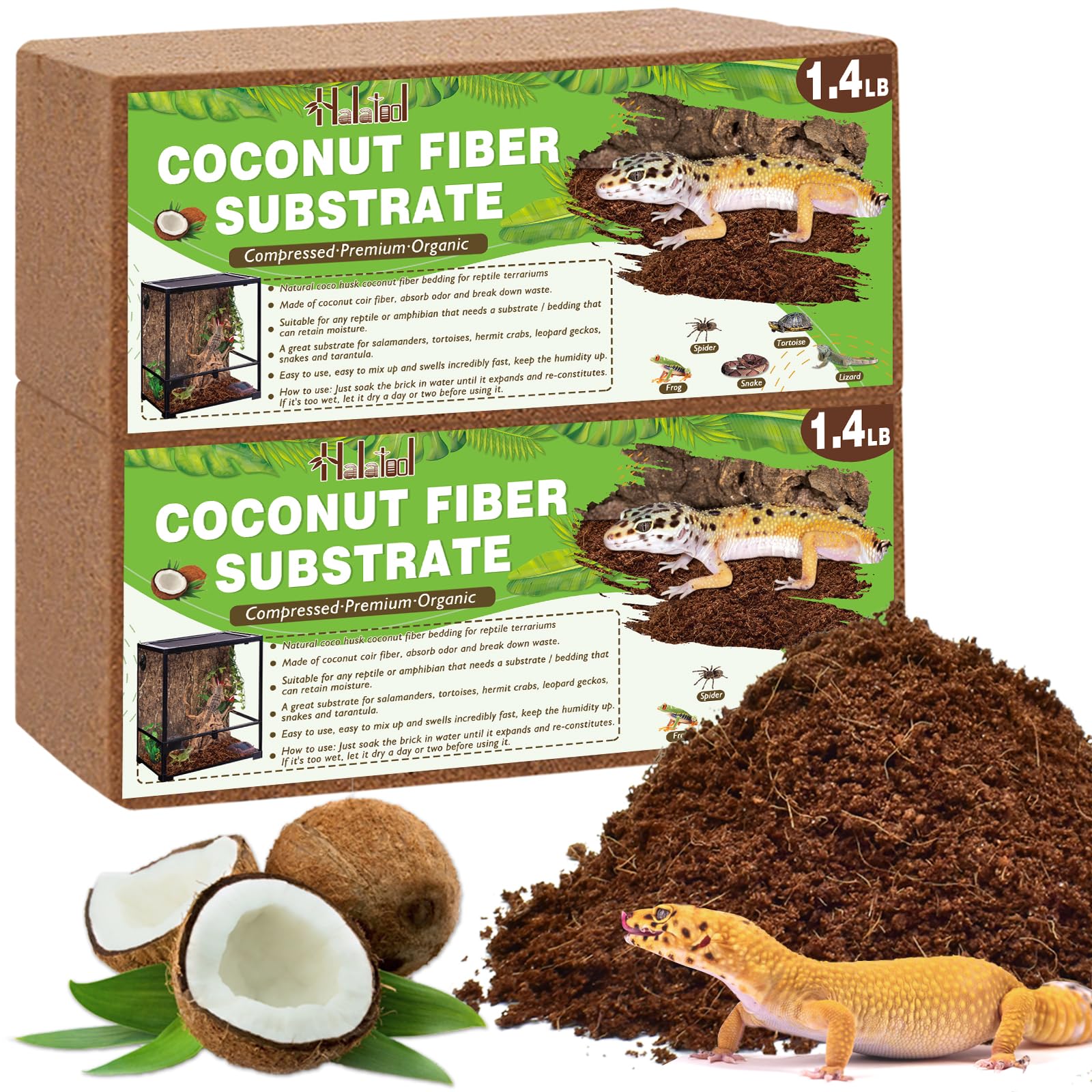
Each 1.4-pound compressed brick of Halatool expands to roughly three times its dry size once soaked, yielding enough substrate to fill a 4.2-gallon terrarium to a 4-inch depth. The 100% organic coconut husk fiber is free of dirt and foreign debris, which means no foreign particulates irritating your crab’s gills during the first week. Multiple owners confirm that a single brick, when fully expanded, provides enough moisture-holding material to cut misting frequency by approximately 30% compared to plain sand.
The fibrous texture allows hermit crabs to chew through and reshape tunnels without the risk of a collapse that traps them during a molt. Because it is pure organic fiber with zero calcium additives, it gives the keeper full control over mineral supplementation — add crushed oyster shell or cuttlebone separately based on the crab’s molt stage. Reviewers with crested geckos and snails also mention it works well, which speaks to the broad safety of the material.
The main effort is preparation: each brick requires soaking in warm water and then 1-2 days of drying if the moisture level is too high initially. Some users find the compressed bricks difficult to break apart by hand, suggesting a non-food blender for faster processing.
Why we love it
- Massively expands — two bricks cover a 10-gallon base
- No calcium or artificial additives — you control the mineral balance
- Retains moisture longer than sand-only substrates
Good to know
- Bricks must be soaked and dried before use
- Not a standalone substrate for crabs that need sand for exoskeleton grit
4. Legigo 2 Pack Compressed Coconut Fiber Substrate

Legigo’s compressed coconut fiber bricks operate on the same expansion principle as Halatool, but the key differentiator lies in the odor decomposition claim. The packaging explicitly states that the fiber structure safely decomposes waste while reducing unpleasant smells. For keepers using a bioactive cleanup crew, this substrate maintains a neutral pH that doesn’t inhibit isopod or springtail reproduction — a critical factor for natural waste cycling in a self-sustaining tank.
Each brick measures 7.87 x 3.94 x 1.97 inches dry, and after expansion yields enough fiber for a standard 10-gallon reptile enclosure. The loose fibers form natural burrows and tunnels that hermit crabs instinctively dig into within the first hour, according to owner reports. The fiber absorbs moisture without becoming a clay-like paste, so tunnels stay open longer than with sand-heavy mixes that slump when wet.
Like other compressed bricks, preparation time is the main hurdle. The fiber needs a full soak to break apart, and any unexpanded core can create dry pockets that crabs avoid. It works best when mixed with aragonite or play sand to give the substrate enough weight for tunnel stability.
Why we love it
- Natural odor decomposition reduces tank cleaning frequency
- Neutral pH supports isopods and other cleanup crews
- Fibers stay moldable without collapsing into mud
Good to know
- Requires thorough soaking and drying before use
- Better as a blend component than a sole substrate
5. Estes 28199 Aqua Sand

Estes Aqua Sand is a 5-pound bag of larger-grain white sand originally designed for freshwater fish tanks. For hermit crab keepers, it serves as a safe top-layer aesthetic when blended with a moisture-holding fiber base underneath. The grains are noticeably thicker than play sand, which means less dust in the air during setup and less risk of fine particles settling on your crab’s gills. Owner reviews note it rinses clear quickly and doesn’t cloud the water column once settled.
As a stand-alone substrate, however, this sand dries out quickly and does not hold the 75-80% humidity a hermit crab needs. Multiple crab owners treat it as a decorative cap over 4-5 inches of coconut fiber, using the white layer for visual contrast while the fiber underneath retains moisture. The bag is labelled “Aqua Sand” and carries a fish target audience, so there are no added salts, calcium binders, or biological additives that could interfere with a crab’s mineral balance.
The 5-pound bag covers approximately a 1.5-inch layer in a 10-gallon tank. For a full 6-inch dig depth, you would need multiple bags or a base layer of fiber. If aesthetics are your priority and you run a robust misting schedule, this sand works well, but it is not a complete habitat solution for molting crabs.
Why we love it
- Clean white color provides attractive visual contrast
- Larger grain means minimal airborne dust
- No chemical additives or salts
Good to know
- Dries quickly — must be paired with a moisture-holding base layer
- 5 lb bag provides only a thin surface layer in a standard tank
FAQ
Can I use play sand from a hardware store for hermit crabs?
What depth of sand does a molting hermit crab need?
Should I bake or wash sand before putting it in the tank?
Why does my sand dry out so fast even after misting?
Final Thoughts: The Verdict
For most keepers, the sand for hermit crabs winner is the Fluker’s All Natural Premium Sand because its pre-mixed sand/fiber/probiotic formula eliminates guesswork while delivering stable tunnel walls and consistent humidity. If you want a pure, rounded grain that lets you control the mineral mix, grab the Hermit Crab Aragonite 10LB. And for a budget-friendly base layer that keeps moisture locked in without additives, nothing beats the Halatool Coconut Fiber Substrate.