
Choosing the wrong substrate can crash your reef tank’s pH, trap detritus, and leave your water looking like a milkshake for days. The right sand buffers alkalinity, supports beneficial bacteria, and creates a natural bed for burrowing fish and corals without clouding your display.
I’m Mo Mahin — the founder and writer behind Furric. I’ve spent years comparing substrate specifications, studying marine chemistry data, and analyzing aggregated owner feedback to understand exactly how each grain type performs under real saltwater conditions.
Whether you are cycling a new nano reef or upgrading a mature system, selecting the correct sand for saltwater aquarium determines whether your biological filter thrives or your tank battles chronic pH swings and nutrient traps.
How To Choose The Best Sand For Saltwater Aquarium
Marine substrates are not just decoration — they actively manage your water chemistry. The wrong sand can leach silicates (feeding nuisance algae) or fail to buffer your pH below critical levels. Focus on three factors that define every saltwater‑ready substrate.
Calcium Carbonate Content and pH Buffering
Aragonite sands dissolve slowly in acidic water, releasing calcium and carbonate ions that keep your pH locked near 8.2. Silica‑based sands, by contrast, offer zero buffering and may introduce silicates that fuel brown diatom blooms. For reef tanks and any marine setup, 95%+ calcium carbonate is the baseline.
Grain Size and Bed Depth
Particles between 0.5 mm and 2 mm allow enough water flow to prevent anaerobic dead zones while remaining fine enough for burrowing gobies and jawfish. Anything finer than 0.3 mm compacts easily, trapping detritus and promoting hydrogen sulfide pockets. Deeper beds (2–3 inches) require coarser grains.
Pre‑Washed vs. Live vs. Dry
Pre‑washed dry sand goes in clear but still needs rinsing. “Live” sand contains dormant beneficial bacteria that can speed up cycle times, but it costs more and must be kept moist. Dry aragonite is the most cost‑effective option if you plan to dose bacteria yourself or cycle fishless.
Quick Comparison
On smaller screens, swipe sideways to see the full table.
| Model | Category | Best For | Key Spec | Amazon |
|---|---|---|---|---|
| Carib Sea Arag‑Alive 10lb | Live Aragonite | Cycling a new reef | Contains live marine bacteria | Amazon |
| Carib Sea Aragonite 40lb | Dry Aragonite | Large reef builds | 100% aragonite, 40 lb bag | Amazon |
| Aqua Natural Oolitic 20lb | Oolitic Aragonite | pH stability at 8.2 | 98% calcium carbonate | Amazon |
| Classic Sand & Play 20lb | Pre‑Washed Silica | FOWLR with low pH needs | Kiln‑dried, pre‑washed | Amazon |
| TheFrogHouse Black 45lb | Decorative Sand | Planted or blackwater tanks | 45 lb, black color | Amazon |
| LANDEN Namale 2L | Fine Natural Sand | Small nano tanks | 0.3‑0.5 mm grains | Amazon |
| Ausluru Silica 11lb | Silica Gravel | Budget freshwater/marine | 1‑2 mm multi‑purpose | Amazon |
In‑Depth Reviews
1. Carib Sea Arag‑Alive Special Grade 10 lb

This live aragonite substrate arrives with millions of dormant marine bacteria already in the bag, which can shave days off your tank’s nitrogen cycle. The special grade grain size (roughly 4–5 mm) prevents compaction and allows water to flow through the bed without trapping detritus.
Because the sand is seeded with beneficial microbes, you can add fish sooner than with dry sand — provided you keep the substrate moist during setup. Carib Sea sources this from natural marine deposits, giving you a true reef‑bottom composition rather than crushed coral substitute.
It works equally well in African cichlid tanks that need hard, alkaline water, but its primary strength remains saltwater reef cycling. The 10‑pound bag covers approximately a 10‑gallon tank at a 1‑inch depth, so larger displays will need multiple bags.
Why we love it
- Pre‑seeded bacteria accelerate biological filtration
- Grain size avoids anaerobic dead zones
- Supports stable pH for reef systems
Good to know
- Must remain damp before use to keep bacteria alive
- 10 lb bag is small for medium‑sized tanks
2. Carib Sea Aragonite Reef Sand 40 lb

If you are building a larger reef system, this 40‑pound bag of pure aragonite sand delivers the buffering capacity you need at a bulk price that makes sense. The grain size is consistent enough to reduce detritus build‑up while still allowing burrowing species to sift comfortably.
This is dry aragonite — no live bacteria — so you will need to dose an ammonia source and cycle the tank yourself. That gives you full control over the cycle timeline and prevents any die‑off from shipping delays. The sand is made in the USA from natural marine sources.
At a 1‑inch depth, this bag covers roughly a 55‑gallon tank, making it one of the most efficient purchases for standard 40‑ to 75‑gallon reef displays. Rinse thoroughly before adding to avoid clouding; the fine dust settles within 24 hours when rinsed properly.
Why we love it
- Large 40 lb bag suitable for mid‑large tanks
- 100% aragonite buffers pH near 8.2
- Consistent grain size limits detritus traps
Good to know
- Dry — requires manual cycling
- Needs thorough rinsing to prevent initial cloudiness
3. Aqua Natural Oolitic Aragonite 20 lb

This oolitic aragonite sand is composed of small, rounded grains harvested from sustainable Bahamian sources. The nearly pure calcium carbonate composition (98%) gives it one of the highest buffering capacities available in a dry sand, locking pH at a stable 8.2 without additives.
Pisces USA holds the only Bahamian government lease for aragonite harvesting, meaning this sand is sourced from a naturally renewable marine oolite bed rather than crushed mined rock. The fine, uniform oolitic shape prevents sharp edges that could injure bottom‑dwelling fish or invertebrates.
At 20 pounds, the bag is manageable for a single person to handle and covers a 20‑gallon tank at a 1‑inch depth. Because the grains are finer than standard aragonite, expect more cloudiness during initial filling — thorough rinsing and slow water addition are essential.
Why we love it
- 98% calcium carbonate buffers pH reliably
- Naturally renewable oolitic source
- Smooth, rounded grains safe for burrowers
Good to know
- Fine grains can cloud water if not rinsed well
- 20 lb bag only suits smaller tanks
4. Classic Sand & Play Natural 20 lb
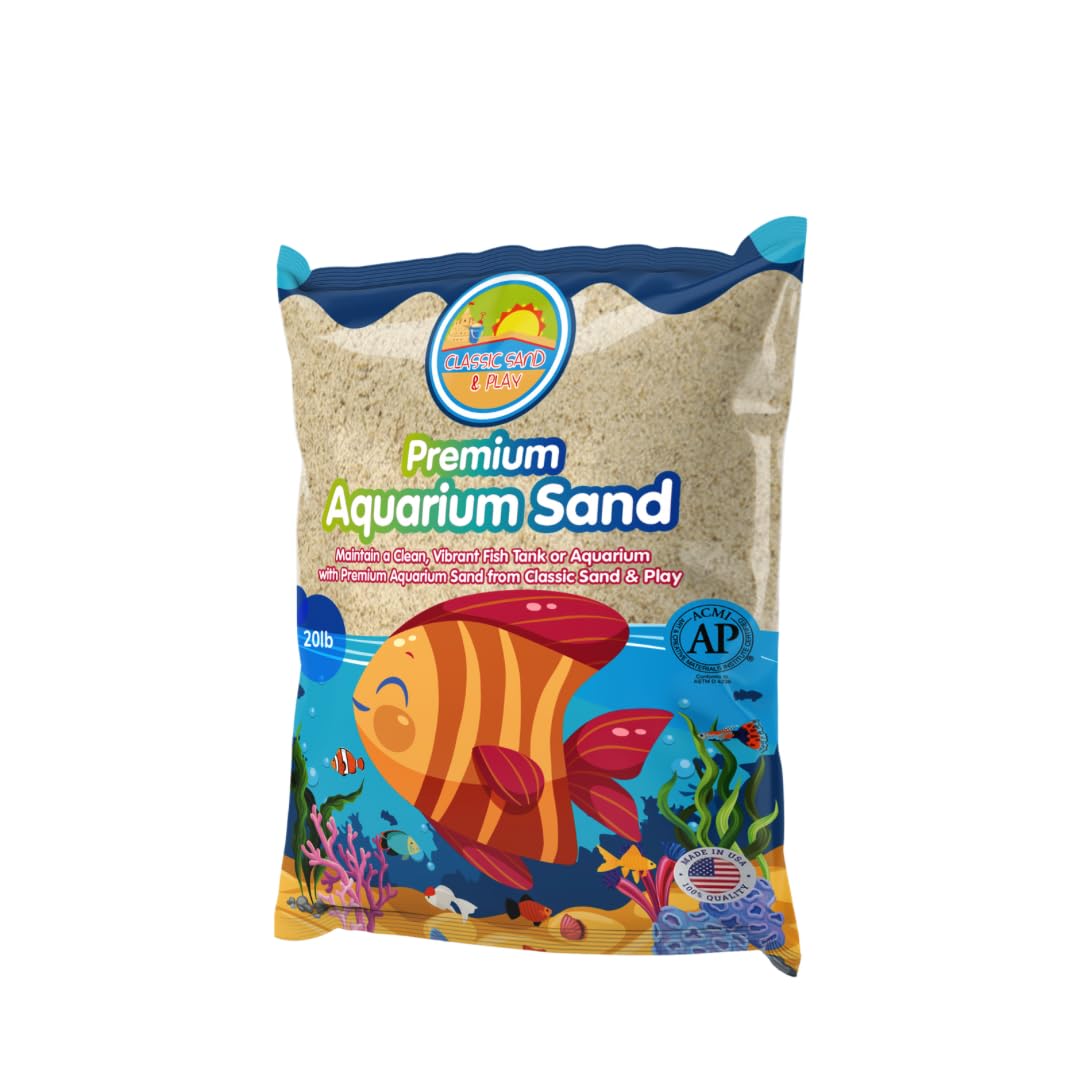
Classic Sand & Play offers a pre‑washed, kiln‑dried silica sand that enters the tank with minimal dust. While silica sand does not buffer pH like aragonite, it works well for fish‑only saltwater setups where pH swings are managed by other means, or for low‑demand marine systems.
The fine particle size (similar to play sand) creates a soft, natural look that makes colorful fish stand out. The bag is available in seven neutral color tones, letting you match the substrate to your aquascape without adding dyes or coatings.
Because it is silica‑based, you should test for silicate leaching during the first two weeks. Some users report initial diatom blooms that resolve as the tank matures. At 20 pounds, the coverage is comparable to other 20‑lb options — roughly a 20‑gallon footprint at 1 inch.
Why we love it
- Pre‑washed and kiln‑dried for minimal clouding
- Neutral color options for natural aquascaping
- Safe for fish and plants
Good to know
- No pH buffering — not ideal for reef tanks
- May cause diatom blooms initially
5. TheFrogHouse Black Aquarium Sand 45 lb

This black sand substrate from TheFrogHouse weighs in at 45 pounds, making it the heaviest option on this list. The deep black color creates striking contrast against brightly colored marine fish and coral frags, while the grain size provides ample surface area for colonization by nitrifying bacteria.
The sand is ideal for planted tanks because it allows roots to anchor firmly, but it also works for sand‑sifting fish like loaches and corydoras. It is marketed primarily for freshwater, but many saltwater hobbyists use it in fish‑only or low‑calcium demand setups where pH buffering is handled by the rock or supplement dosing.
Be aware that this is a natural silica‑based black sand — it does not buffer pH. If you run a reef tank with stony corals, you will need a separate buffer or aragonite base layer underneath. The 45‑pound bag covers a 40‑gallon breeder tank at roughly 2 inches of depth.
Why we love it
- Large bulk bag at a competitive weight
- Striking black color for high contrast
- Good surface area for bacteria growth
Good to know
- No pH buffering — reef tanks need additional alkalinity
- Primarily designed for freshwater applications
6. LANDEN Namale Aquarium Sand 2L

LANDEN’s Namale sand features extremely fine grains (0.3–0.5 mm) that create a smooth, almost silty bed. This is primarily a cosmetic sand for aquascaping, and its natural color blends seamlessly into biotope‑style tanks. It claims suitability for both freshwater and seawater, but its particle size needs careful consideration.
Because the grains are so fine, this sand compacts easily, which can lead to anaerobic spots in deeper beds. For saltwater use, it is best limited to a thin cap layer (under 1 cm) over a deeper aragonite base, or used in small nano tanks where flow is gentle and regular stirring is feasible.
The vacuum‑packed 2‑liter bag (roughly 7 pounds) is a small quantity designed for nano tanks or touch‑up work. If you own a LANDEN 45P tank (W45 x D27 x H30 cm), one bag gives you a 1 cm cap. For anything larger, you will need multiple bags.
Why we love it
- Extremely fine, natural look for aquascaping
- Vacuum packed for freshness
- Safe for all aquatic organisms
Good to know
- Very fine grains compact and may trap detritus
- Small bag — only practical for nano tanks
7. Ausluru Silica Gravel 11 lb
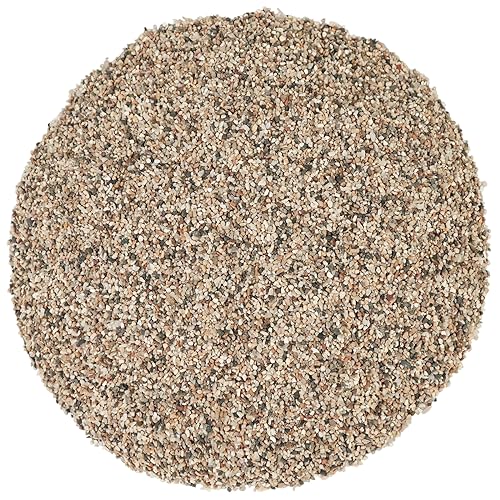
Ausluru’s silica gravel is a 100% natural product with particle diameters between 1 and 2 mm. It is sold as a multi‑purpose material — you can use it in aquariums, fire pits, or landscaping — so its packaging does not prioritize marine‑specific quality control like buffering or silicate testing.
For saltwater use, this is the most budget‑friendly way to add a substrate layer, but it comes with trade‑offs. Silica gravel offers zero pH buffering, and the 1–2 mm grain size is coarse enough that burrowing fish may struggle to sift it. It is best suited for a thin decorative cap or for fish‑only setups where you manage chemistry independently.
The 11‑pound bag is lightweight and easy to move, covering roughly a 10‑gallon tank at 1 inch. Rinse it aggressively before use — the initial dust can be considerable. Over time, monitor for silicate leaching if you keep corals or other calcium‑dependent organisms.
Why we love it
- Inexpensive entry‑level substrate for simple tanks
- Natural silica material, no dyes or coatings
- Lightweight and easy to transport
Good to know
- No pH buffering — not suitable for reef tanks
- Coarse grains may not work for sand‑sifting species
- Potential silicate leaching during initial months
FAQ
Can I use play sand or pool filter sand in a saltwater tank?
How deep should I layer sand for a reef tank?
Does black aquarium sand affect pH differently than white sand?
Final Thoughts: The Verdict
For most marine hobbyists, the sand for saltwater aquarium winner is the Carib Sea Arag‑Alive because its pre‑seeded live bacteria speed up cycling while its aragonite composition maintains proper pH. If you want maximum buffering control and bulk value, grab the Carib Sea Aragonite 40‑pound bag. And for a nano reef or small aquascape where aesthetics matter most, nothing beats the Aqua Natural Oolitic Aragonite for its pure, naturally renewable composition.