
A dog that launches itself into the front seat at a red light isn’t just a distraction—it’s a 50-pound projectile waiting for a hard brake. A proper car restraint isn’t a luxury; it’s the difference between a calm ride and a hazard that puts both of you at risk. The wrong “tether” can snap at the buckle, let your dog slip out of a collar, or tangle so badly the restraint itself becomes a danger.
I’m Mo Mahin — the founder and writer behind Furric. I’ve spent the last several years obsessively studying the market, comparing every clip, webbing thickness, and buckle design in canine car safety to filter out the gimmicks, and analyzing thousands of owner reports to identify which restraints actually hold up under real-world driving stress.
What matters most is a unit that maintains structural integrity when the rubber meets the road. That’s why we’ve assembled the definitive breakdown of the best seat belt for dogs currently on the market.
How To Choose The Best Seat Belt For Dogs
Every seat belt on this list keeps a dog secured in the back seat, but the devil is in the attachment hardware, webbing tensile strength, and adjustability range. Here’s what separates a safe restraint from a tangled mess that fails on impact.
Attachment Method and Hardware Type
The clip that connects the tether to your car’s seat belt or LATCH anchor is the single most common failure point. A basic spring-loaded carabiner can release under side-impact tension. Look for a locking carabiner or a seat belt buckle that clicks into your car’s existing buckle receiver. The tether should also use a 360-degree rotating swivel clip at the harness end—without it, your dog can twist the webbing around itself, reducing the effective length and creating a choking hazard.
Shock Absorption and Bungee Construction
A rigid strap transfers 100% of a sudden stop’s force directly to your dog’s chest and neck via the harness. An elastic bungee section—typically 6 to 12 inches of stretch cord—absorbs the initial jerk, preventing whiplash and giving your dog a controlled deceleration. The bungee must be enclosed in a heavy-duty nylon sleeve; exposed elastic cord frays quickly and loses its stretch over time, especially in constant UV exposure inside a car.
Webbing Width and Reflective Visibility
The vast majority of dog seat belts use 1-inch nylon webbing, which is the bare minimum for dogs under 50 pounds. For larger breeds, the webbing should be at minimum 1.5 inches wide to distribute pressure and prevent the strap from cutting into the harness loops. Reflective stitching or integrated reflective strips are non-negotiable for evening or early-morning travel—they allow you to quickly locate the buckle in a dark car, and they help emergency responders see the restraint if you ever need extraction.
Quick Comparison
On smaller screens, swipe sideways to see the full table.
| Model | Category | Best For | Key Spec | Amazon |
|---|---|---|---|---|
| Max and Neo | Single Strap | Large breeds & safety standard | 12-24″ adjustable, 2mm thick webbing | Amazon |
| Lukovee 2-Pack | 2-Strap System | Multi-dog households | 360° rotating buckle, 2-in-1 design | Amazon |
| Plutus Pet | Single Strap | Golf cart & SUV use | 25-32″ adjustable, locking carabiner | Amazon |
| Sonku | Chew-Proof | Dogs that chew through straps | Coated steel wire, 16-36″ adjustable | Amazon |
| Blueberry Pet | Single Strap | Aesthetic & budget-friendly | 16.5-25.5″ length, polyester webbing | Amazon |
In‑Depth Reviews
1. Max and Neo Dog Vehicle Seat Belt Bungee Harness
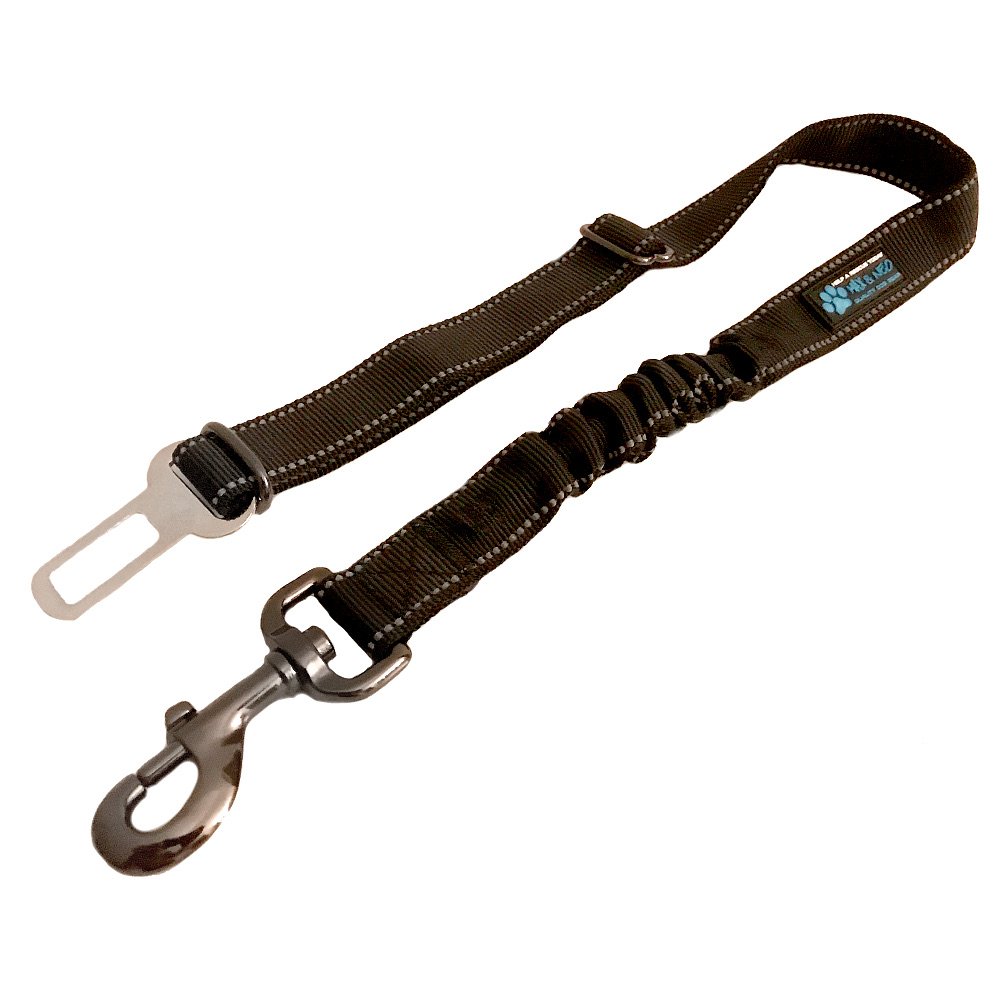
Max and Neo doesn’t cut corners on the fundamentals. The webbing is 2mm thick—noticeably denser than the industry-standard 1.5mm Nylon used by most competitors—and it’s paired with a reflective nylon sleeve that wraps the entire bungee section. The 12- to 24-inch adjustable range covers everything from a 15-pound terrier to a 125-pound Shepherd without the strap bottoming out on the car seat latch.
One owner reported tethering a 125-pound Shepherd to the center seat belt buckle, and the length allowed the dog to access both side windows for head-out rides without ever reaching the front seat. That’s the sweet spot for any adjustable tether: enough slack for comfort, not enough for the dog to climb into your lap. The locking clip on the car side requires a deliberate push to release, which reduces accidental disconnects when the dog shifts weight suddenly.
The bungee section absorbs hard stops gracefully, but one reviewer with a 45-pound dog noted they wished for slightly more stretch in the cord. The reflective stitching is positioned high on the webbing, making it visible in low-light conditions when the strap is secured to a dark seat. This is the most thoughtfully engineered single-strap restraint at this price point.
Why we love it
- 2mm thick reflective webbing outlasts thinner budget straps
- Adjustable range fits small to extra-large breeds
- Locking carabiner prevents accidental release
- Donates a leash to a dog rescue with every purchase
Good to know
- Bungee stretch could be slightly more forgiving for sudden stops
- Designed for rear-harness clip only; not for side-ring attachment
2. Lukovee Dog Seatbelt Leash for Cars, 2 Pack

Multi-dog households often face a tether mismatch: one dog needs a headrest loop, the other clips into the seat belt buckle. Lukovee solves that by bundling two different attachment styles in a single pack. Belt A clips into the vehicle’s LATCH anchor or the seat belt buckle, while Belt B wraps around the headrest post with a clip. This eliminates the need to buy separate configurations for front-seat and back-seat setups.
The 360-degree rotating metal buckle at the harness end is the star feature here. When a dog turns around to look out the side window, a fixed clip twists the webbing into a tight spiral, shortening the effective length by several inches. The swivel prevents that entirely. Reflective stitching runs the full length of the nylon strap, and the elastic bungee section is generous enough to absorb the lunge of a 50-pound dog spotting a squirrel outside the window.
One minor flaw surfaced in owner reports: one of the two tethers measures shorter than the other, which can be an issue for deep-chested breeds like a husky that need more slack to reach the window. The shorter strap is best reserved for a smaller dog or a seat position closer to the anchor point. Despite that, the dual-attachment design gives you flexibility that single-strap systems can’t match.
Why we love it
- Two different attachment styles in one cost-effective pack
- Rotating swivel clip prevents webbing twist and tangling
- Full-length reflective stitching for low-light visibility
- Bungee section absorbs sudden movement well
Good to know
- One strap is shorter, limiting reach for larger dogs
- Not compatible with every classic car LATCH system
3. Plutus Pet Dog Seat Belt for Car
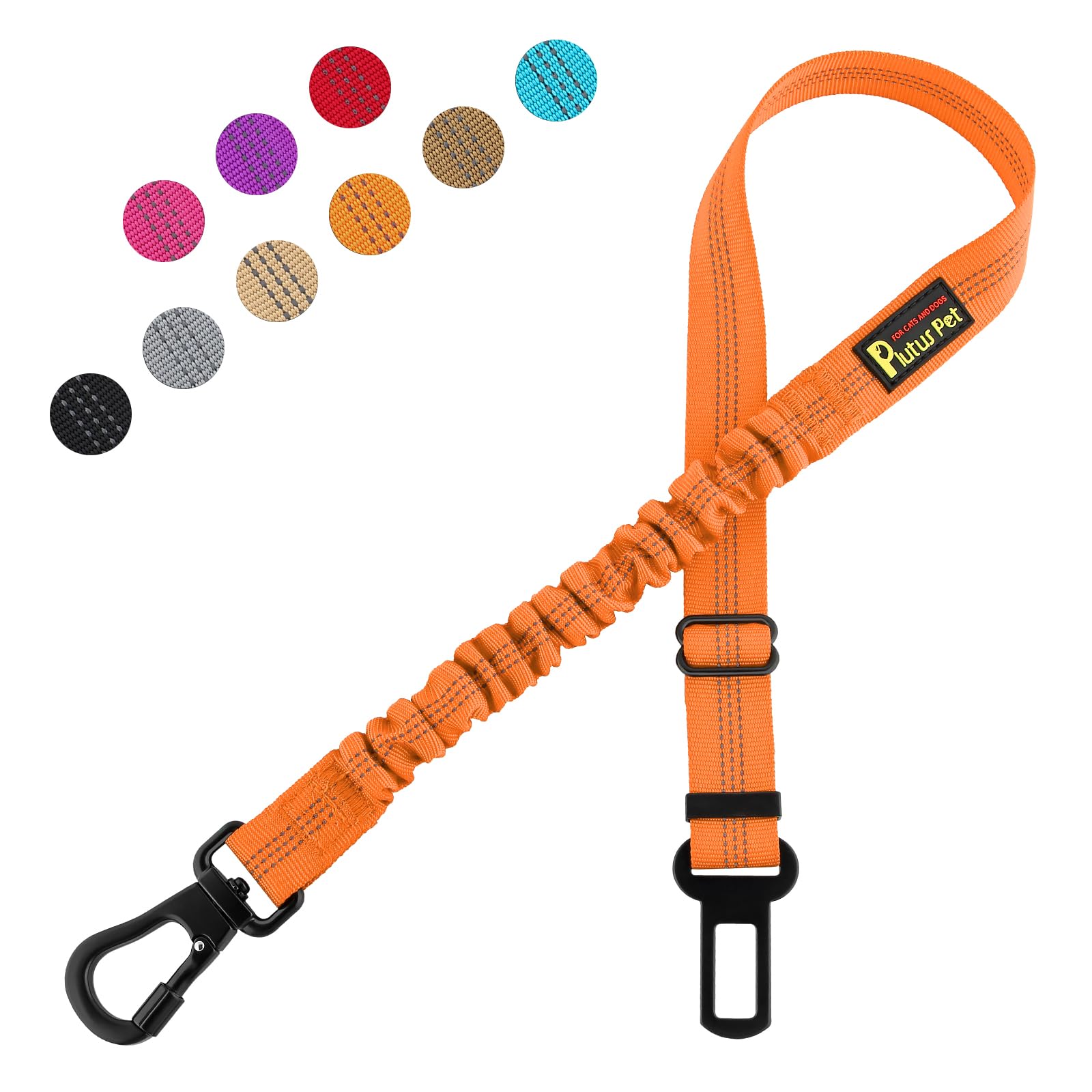
The Plutus Pet seat belt is engineered for vehicles where the anchor point sits far from the dog—long seat benches, third-row SUV seating, or golf cart frames. Its adjustable range extends from 25 to 32 inches, which is significantly longer than the typical 16- to 24-inch standard. This prevents the dog from being pinned against the seat when the strap is attached to a distant LATCH bar.
The locking carabiner clip at the harness end is a genuine safety upgrade. A standard clip can pop open if the D-ring on a harness twists sideways during a collision. The locking mechanism on the Plutus requires a two-step release, so it stays closed under rotational force. The universal buckle fits most passenger-side and rear seat belt receivers, and the 0.13-kilogram weight means it won’t add noticeable bulk to your dog’s harness.
A 50-pound Labradoodle owner used this specifically for golf cart rides and reported the dog never once attempted to jump out mid-drive. The bungee section is stitched into the nylon webbing rather than threaded through a loose loop, which reduces fraying at the anchor points. The reflective strips are positioned on both the bungee section and the main strap, providing 360-degree visibility if the dog shifts position.
Why we love it
- Exceptional 25-32 inch adjustability for deep seats or golf carts
- Locking carabiner prevents accidental unclipping under rotation
- Bungee stitched directly into webbing reduces fray risks
- Dual-position reflective strips for all-angle visibility
Good to know
- Single-count pack; no backup strap included
- Not recommended for use with a collar—harness required
4. Sonku Dog Car Seat Belt Restraint, 2 Pack

Sonku addresses a very specific pain point: dogs that chew through Nylon webbing in under a week. The core of this restraint is a coated stainless steel wire rope, similar to a heavy-duty bicycle cable lock. The outer coating is still a fabric sleeve, but the internal steel structure prevents the dog’s molars from severing the strap. This is the only tether on this list that can survive a determined chewer unsupervised.
The 16- to 36-inch adjustability is the widest range in the lineup, making it suitable for a 10-pound cat (yes, the manufacturer lists cats as compatible) all the way up to an extra-large breed. The multi-locking system is slightly unconventional—it uses a locking link that attaches to your vehicle’s LATCH bars or directly into the seat belt buckle. Several owners with older vehicles reported compatibility issues with pre-2000 car seat belt receivers, so verify your car’s latch type before buying.
One reviewer who owns a dog that previously chewed through “every seat belt on the market” reported zero damage after months of daily use. The steel core also serves a secondary purpose: it maintains tension much better than Nylon, which stretches over time under load. The trade-off is that the cable is less forgiving on the harness loops compared to a pure fabric strap, so make sure your harness has reinforced D-ring stitching.
Why we love it
- Steel wire core is virtually impossible to chew through
- Widest adjustable range (16-36 inches) on the list
- Survives full-weight pull tests without snapping
- Works with harnesses for both cats and dogs
Good to know
- Not compatible with many classic or pre-1990s vehicles
- Steel cable can be rough on harness D-rings over time
5. Blueberry Pet Cherry Garden Grey Adjustable Dog Seat Belt Tether
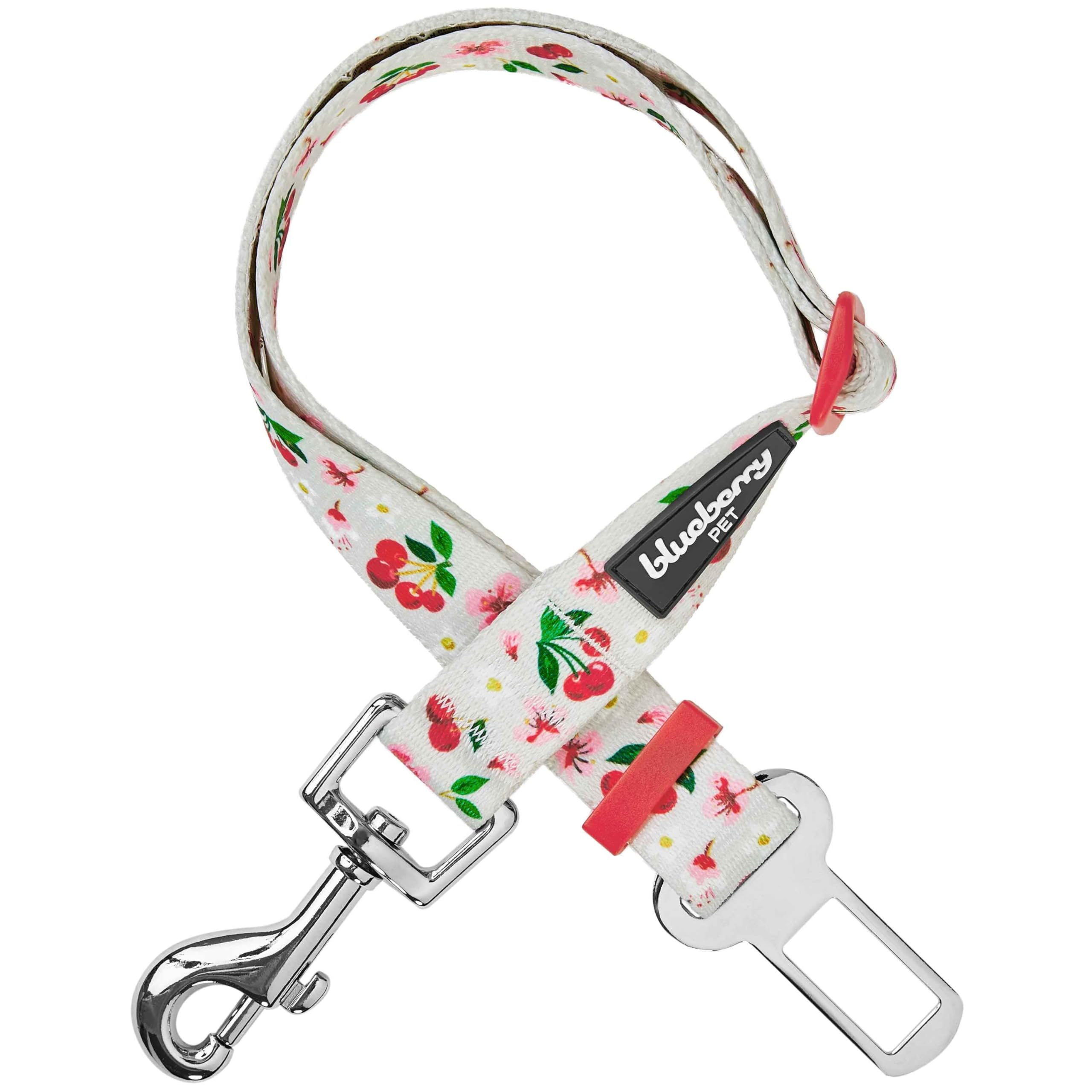
Blueberry Pet is an award-winning brand, making it a solid pick for new pet owners who want a straightforward, safe tether without the complexity of multi-headrest systems. The polyester webbing measures 1 inch wide and 16.5 to 25.5 inches adjustable, which comfortably suits small to medium breeds. The Cherry Garden pattern adds a layer of visual appeal, but the functional highlight is the buckle closure that stays firmly locked once set.
The adjustment mechanism holds tension remarkably well. Other budget tethers often slip when the dog moves, causing the webbing to loosen gradually over a ride. The Blueberry Pet buckle maintains its position even after repeated shifting. The polyester material is slightly less abrasion-resistant than Nylon, so it’s best suited for calm dogs that don’t actively chew or claw at their restraint.
One limitation to note: this tether is explicitly incompatible with Volvo cars due to the design of Volvo’s seat belt buckle receivers. It works with most other major vehicle brands. The manufacturer also advises against attaching directly to a collar—use only with a harness. The pack includes a single tether, so multi-dog households will need to purchase multiple units. The reflective threading is minimal compared to the Max and Neo, so visibility at night in a parked car is adequate but not premium.
Why we love it
- Secure buckle that holds adjustment without slipping
- Award-winning brand with verified manufacturing quality
- Attractive patterns available beyond standard black
- Lightweight and tangle-free for calm, well-behaved dogs
Good to know
- Not compatible with Volvo vehicles
- Polyester webbing is less durable than Nylon for aggressive chewers
FAQ
Can I attach a car seat belt tether directly to my dog’s collar?
What is the difference between a LATCH clip and a seat belt buckle attachment?
How do I measure the correct tether length for my dog?
Final Thoughts: The Verdict
For most drivers looking for the best seat belt for dogs, the overall winner is the Max and Neo Dog Vehicle Seat Belt because it combines 2mm thick reflective webbing, a locking carabiner, and a generous 12- to 24-inch adjustable range that fits everything from a terrier to a 125-pound Shepherd. If you need a two-strap system for multiple dogs or vehicles, grab the Lukovee 2-Pack with its 360-degree swivel clip. And for a dog that chews through every Nylon strap you buy, nothing beats the Sonku Steel Wire Restraint.