
The right seed blend turns a quiet yard into a non-stop aviary, but the wrong one leaves you with a crust of discarded hulls and a carpet of weeds sprouting under the feeder. Wild birds are picky eaters — they shun stale filler, crack open thin-shelled oil seeds first, and abandon feeders that offer nothing but milo and red millet. Choosing a mix that matches the species in your region and eliminates waste is the difference between a feeder that empties overnight and one that sits ignored.
I’m Mo Mahin — the founder and writer behind Furric. I’ve spent years studying wild bird feeding habits, comparing seed kernel-to-shell ratios, analyzing nutritional fat profiles, and cross-referencing customer reports of feeder activity across dozens of blends.
After reviewing five standout options, from no-mess suet nugget blends to single-ingredient black oil sunflower seeds, the best seed for wild birds balances high edible content, strong avian attraction across multiple species, and a clean feeding experience that keeps your backyard tidy and your feeder bustling.
How To Choose The Best Seed For Wild Birds
Not all bags labeled “wild bird seed” are created equal. The difference between a feeder that draws thirty birds an hour and one that collects dust comes down to ingredient composition, kernel quality, and the physical form of the seed. Understanding these three factors will help you pick a blend that matches your local species and minimizes cleanup.
Black Oil Sunflower: The Gold Standard Kernel
Black oil sunflower seeds have a thin, brittle shell that small birds like chickadees, titmice, and goldfinches can crack with ease. The kernel inside is meatier and contains roughly 40% fat — nearly double the oil content of striped sunflower seeds. This high energy density makes black oil the single most effective ingredient for attracting a wide range of species, from cardinals and jays to woodpeckers and nuthatches. A bag that lists black oil sunflower as the first or second ingredient is almost always a strong performer.
No Mess Versus Standard Blends
Standard blends leave a ring of discarded hulls under the feeder, which can kill grass, attract rodents, and create conditions for fungal growth. No mess blends bypass this problem entirely by removing the outer shell before packaging — every piece in the bag is 100% edible, so there is nothing left to discard. No grow blends take this a step further by using heat-treated seeds that will not germinate, preventing weeds from sprouting in the soil below. If you feed on a deck, patio, or manicured lawn, a no mess or no grow formulation is worth the premium.
Avoiding Filler Ingredients
Many economy blends pad their weight with milo, red millet, and cracked corn — ingredients that most songbirds avoid. Milo is especially unpopular among North American feeder birds; it typically ends up kicked onto the ground where it attracts starlings and pigeons. A quality blend will minimize or exclude these fillers entirely. Check the ingredient list and look for black oil sunflower, striped sunflower, safflower, peanuts, and white millet as the primary components.
Quick Comparison
On smaller screens, swipe sideways to see the full table.
| Model | Category | Best For | Key Spec | Amazon |
|---|---|---|---|---|
| Kaytee Seed & Suet No Mess | No Mess Blend | Balcony & cleanup-free feeding | 100% edible; no hull waste | Amazon |
| Songbird Melody by Valley Splendor | Premium Mix | Attracting diverse songbirds | 5 ingredient blend + raisins | Amazon |
| Old Potters Black Oil Sunflower | Single Ingredient | Bulk feeding & high fat needs | 12 lbs; Non-GMO; USA grown | Amazon |
| Happy Wings Black Oil Sunflower | No Grow Seed | Clean lawn & patio feeding | No grow; prevents sprouts | Amazon |
| Desert Valley Black Oil Sunflower | Artisan Batch | Small batch freshness | 3 lb resealable; hand packed | Amazon |
In‑Depth Reviews
1. Kaytee Seed & Suet No Mess Blend Blueberry 10 Pounds

This is the cleanest feeding experience in the lineup. Every piece in the bag — seed kernel and suet nugget alike — is fully edible, so there are zero hulls to rake. The blueberry flavoring acts as an aromatic attractant, and real customer reports confirm woodpecker visits at triple the rate of standard black oil sunflower alone. After ten pounds of use, the ground under the feeder stays bare and weed-free.
The suet component adds a concentrated fat source that fuels birds through cold mornings. Tube feeders, hoppers, and platform styles all work well with this blend. Reviewers living on apartment balconies highlight the absence of debris as a game-changer for second-story feeding where fallen shells would accumulate annoyingly below.
The only consideration is appetite — this blend empties feeders fast because birds consume every gram. Expect to refill every day or two during peak migration. The 10-pound bag is the sweet spot for a single feeder; heavy feeders may want to buy two bags at once.
Why we love it
- 100% edible — zero shell waste on ground
- Attracts woodpeckers at 3x the rate of plain sunflower
- Works in tube, hopper, or platform feeders
Good to know
- Birds consume it rapidly; expect frequent refills
- Blueberry scent may not appeal to all species equally
2. Songbird Melody by Valley Splendor
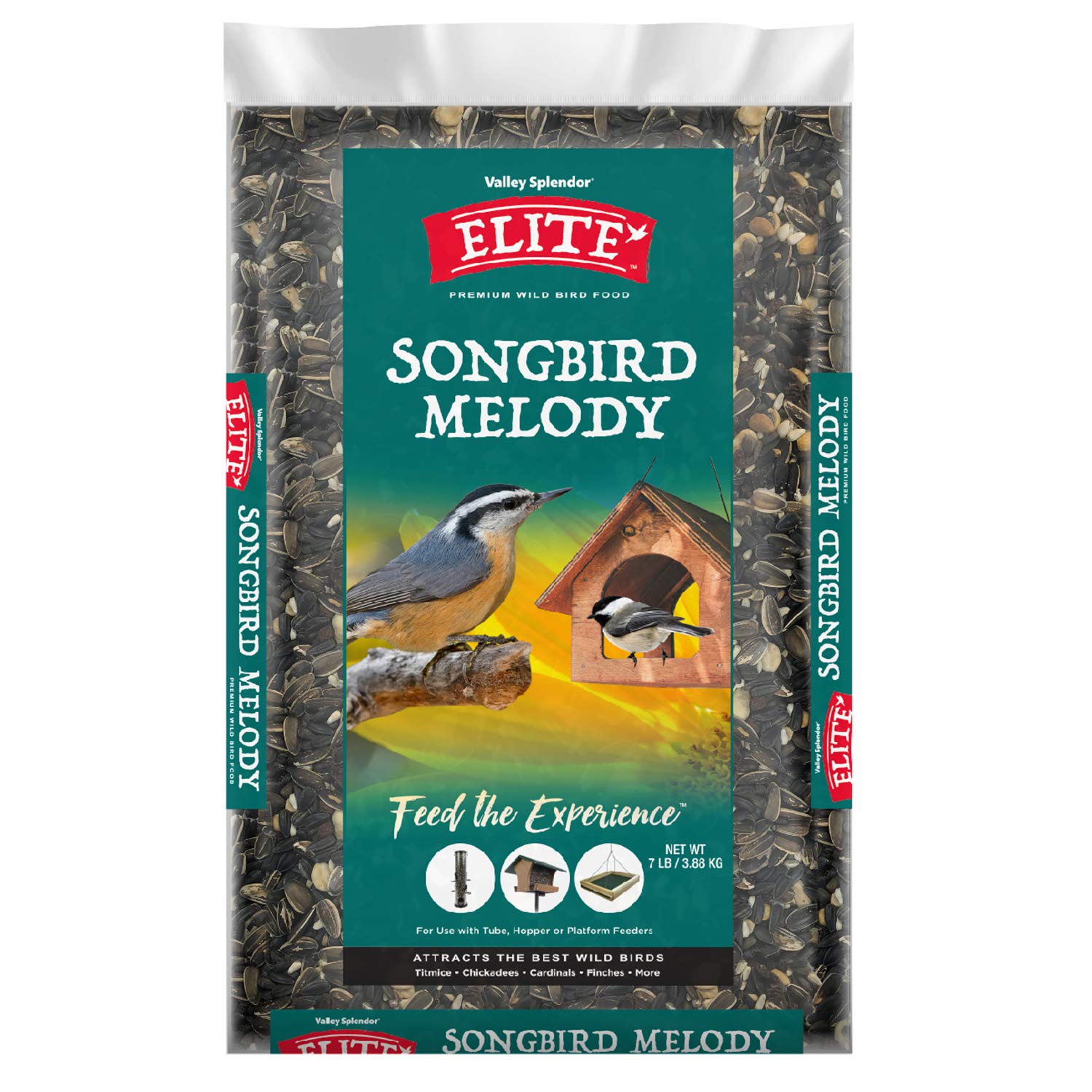
This blend moves beyond simple sunflower by combining black oil seeds, safflower, peanuts, striped sunflower, and raisins into a single bag. The variety targets different feeding styles — cardinals and grosbeaks go for the striped sunflower, while jays and titmice crack the peanuts first. Raisins add a sugar boost that migrating warblers and thrushes find irresistible during fall stopovers.
The addition of vitamin A and D supports feather development and bone strength, which matters during molting season and late-winter breeding prep. Reviewers consistently note that this blend attracts a broader species roster than single-ingredient bags, including birds that usually ignore plain sunflower feeders. The berry scent seems to be a genuine differentiator — multiple customers report increased visits within hours of switching to this mix.
On the downside, the black oil sunflower shells are still intact, so expect a ring of hulls beneath the feeder over time. The raisins also attract squirrels. If you want a zero-waste experience, this is not the bag for you — but if you prioritize species diversity over cleanup convenience, it delivers the widest bird variety in this review.
Why we love it
- Five-ingredient variety attracts the widest range of songbirds
- Enriched with vitamins A and D for feather and bone health
- Raisins provide unique energy source for migrating thrushes
Good to know
- Intact shells create ground mess under feeder
- Raisins and peanuts may attract squirrels quickly
3. Old Potters Wildlife Black Oil Sunflower Seeds 12 Pounds

When you need raw black oil sunflower in volume, Old Potters delivers a full 12-pound bag of seeds grown on small US farms without genetic modification. The in-shell format lets birds self-select the highest-oil kernels while the resealable bag keeps the remaining seeds fresh between refills. Customer reports consistently mention that the kernels inside these shells are plump and moist — a sign of recent harvest and proper storage.
True to its unprocessed claim, the bag contains occasional twigs and field debris. This is not a defect; it signals that the seeds were not chemically cleaned or irradiated. For birders who prioritize sourcing transparency and want to support small American agriculture over commercial commodity seed, this is the most trustworthy option available.
The hull waste is substantial with in-shell sunflower — plan to collect and compost the shells regularly. The 12-pound size lasts about a month for a single hopper feeder visited by a moderate-size flock. The per-pound cost compares favorably against smaller bags, making this the most economical choice for heavy feeders who burn through seed quickly.
Why we love it
- 12-pound bulk bag offers best per-pound value
- Non-GMO and sourced from small US farms
- Fresh, plump kernels with high oil content
Good to know
- In-shell format creates significant hull mess
- Occasional twigs and field debris present in bag
4. Happy Wings Black Oil Sunflower Seeds 5 Pounds
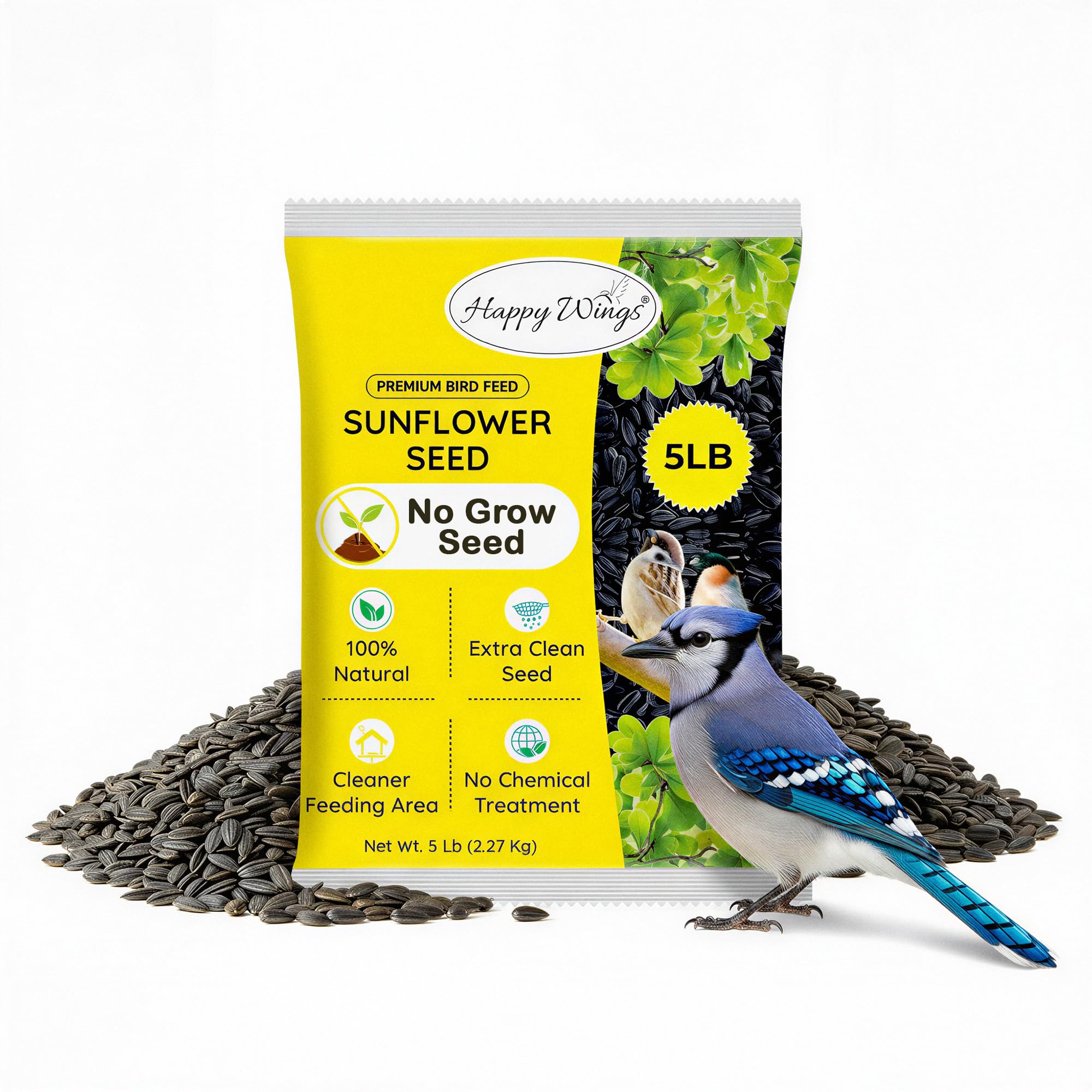
Happy Wings positions itself as a no-grow, cleaned seed designed to prevent sprouts under the feeder. The 5-pound bag is compact enough for small-space feeders but still delivers the high oil content that attracts cardinals, finches, chickadees, and sparrows. Customer reviews consistently mention the absence of weed germination as the standout benefit, especially for feeders placed over flower beds or thin lawns.
The seeds are uniformly sized and free of the dust and chaff that plague budget sunflower seed bags. Reviewers note that the thinner shell — a hallmark of black oil sunflower — is present here, making it easy for smaller beaked birds to access the kernel. The USDA- and BRC-GS-approved facility processing adds a layer of quality assurance that matters for birders who have experienced mold issues with off-brand seed.
The 5-pound quantity is the primary limitation. If you maintain multiple feeders or host a large flock, you will repurchase frequently. The absence of any filler ingredients is a plus, but the bag offers only black oil sunflower in a single format — no variety mix or suet component to broaden the species attracted.
Why we love it
- No-grow formulation stops weed germination under feeder
- Cleaned and dust-free for clean feeding
- Thin shells easy for small birds to crack
Good to know
- 5-pound bag is small for multiple feeders or large flocks
- Single-ingredient format lacks variety for diverse species
5. Desert Valley Black Oil Sunflower Seed 3 Pounds

Desert Valley distinguishes itself through small-batch hand packing. Each bag of black oil sunflower seed is filled in limited quantities, which minimizes the time the kernels sit in storage and preserves the natural oil content. The resealable bag maintains freshness between uses, critical for preventing the rancid taste that develops when exposed sunflower oil oxidizes.
The 3-pound size is ideal for single-feeder setups or for testing whether your local birds prefer black oil sunflower before committing to a larger bag. The seeds attract the full spectrum of black-oil visitors — cardinals, jays, woodpeckers, nuthatches, titmice, chickadees, grosbeaks, juncos, and doves are all listed by the manufacturer and confirmed in customer reviews. The thinner shell and higher meat-to-shell ratio relative to striped sunflower mean less waste per gram of seed offered.
At 3 pounds, this is the smallest volume option in the review, and the per-pound cost is higher than the 12-pound bag from Old Potters. If you feed a large flock, you will need to repurchase frequently. There is also no no-grow treatment, so expect hulls and the potential for volunteer sunflower sprouts under the feeder in warm weather.
Why we love it
- Hand packed in small batches for peak freshness
- Resealable bag prevents kernel rancidity
- Attracts the widest range of black-oil-feeding species
Good to know
- 3-pound bag is small; frequent repurchases needed for heavy feeders
- No no-grow treatment; shells and sprouts possible
FAQ
Does the blueberry flavor in Kaytee actually attract more birds?
Why do my birds ignore the milo in cheap seed blends?
How long does an opened bag of sunflower seed stay fresh?
Can I mix the Songbird Melody blend with plain sunflower to stretch it?
Final Thoughts: The Verdict
For most gardeners, the best seed for wild birds winner is the Kaytee Seed & Suet No Mess Blend because it eliminates hull waste entirely while delivering double the feeder traffic of plain sunflower. If you want a premium variety mix that attracts the widest species roster, grab the Songbird Melody by Valley Splendor. And for bulk feeding with the highest oil content per kernel, nothing beats the Old Potters 12-Pound Black Oil Sunflower.