
Thin-shelled black oil sunflower seeds are the single most reliable variable for turning a quiet backyard into a non-stop avian dining hall, but a bag loaded with milo, red millet, or cracked corn will leave your feeder ignored for days. The difference between a busy window and an empty perch often comes down to one spec: the ratio of actual edible kernel to filler weight.
I’m Mo Mahin — the founder and writer behind Furric. I’ve spent years analyzing ingredient panels, comparing protein percentages, and digging through thousands of verified owner reports to identify which seed mixes and single-ingredient bags deliver consistent traffic from cardinals, chickadees, finches, and nuthatches without leaving a mess of sprouts under the feeder.
In this guide, I break down five seed options by their ingredient purity, bird appeal, and ease of feeding so you can confidently choose the right seeds for wild birds regardless of your feeder style or regional species.
How To Choose The Best Seeds For Wild Birds
Not all birdseed is created equal. A bag that looks large on the shelf can be packed with filler grains that most wild birds ignore, leaving you with stale seed and fewer visitors. Focus on these three factors to narrow the field quickly.
Ingredient Purity & Filler Content
Check the ingredient panel before the weight. Premium blends list black oil sunflower, hulled sunflower hearts, safflower, or peanuts as the first ingredients. Bags that lead with milo, wheat, or red millet often attract only ground-feeding species like doves — cardinals, chickadees, and woodpeckers will pass them by. A “no filler” or “100% edible” claim means every seed in the bag contributes to the birds’ diet rather than the compost pile.
Shell Thickness & Accessibility
Thin-shelled black oil sunflower seeds are the universal staple because small-beaked birds like finches and chickadees can crack them open without struggle. Striped sunflower seeds have thicker hulls that favor larger birds like jays and grosbeaks but exclude many smaller songbirds. If you want a diverse crowd — and most backyard feeders do — choose thin-shell varieties or de-hulled sunflower chips that eliminate the shell challenge altogether.
Processing & Additives
Seeds labeled “no grow” have been heat-treated or processed to prevent germination. This keeps your feeder area clean of sprouts but does not reduce nutritional value. Non-GMO claims and USA-sourced sourcing also matter for buyers who prefer traceable, responsibly farmed grain. Avoid blends that list artificial colors, added flavors, or preservatives — birds do not need them, and they add zero nutritional benefit.
Quick Comparison
On smaller screens, swipe sideways to see the full table.
| Model | Category | Best For | Key Spec | Amazon |
|---|---|---|---|---|
| CountryMax Backyard Seeds 25lbs | Premium | High-volume feeding, large species variety | 25 lbs thin-shell black oil sunflower | Amazon |
| Old Potters Wildlife 12 lbs | Premium | Non-GMO, small-farm sourcing | 12 lbs black oil sunflower, unprocessed | Amazon |
| Cool Birds All Birds 10 lb | Mid-Range | Multi-species blends, year-round use | 10 lb blend with sunflower, millet, safflower, peanuts | Amazon |
| Audubon Park Extreme Variety 15-lb | Mid-Range | Extreme diversity of species | 15 lb blend with raisins, nuts, sunflower chips | Amazon |
| Happy Wings Black Oil Sunflower 5 lb | Entry-Level | Small-volume trials, first-time buyers | 5 lb no-grow black oil sunflower seed | Amazon |
In‑Depth Reviews
1. CountryMax Backyard Seeds Black Oil Sunflower 25lbs
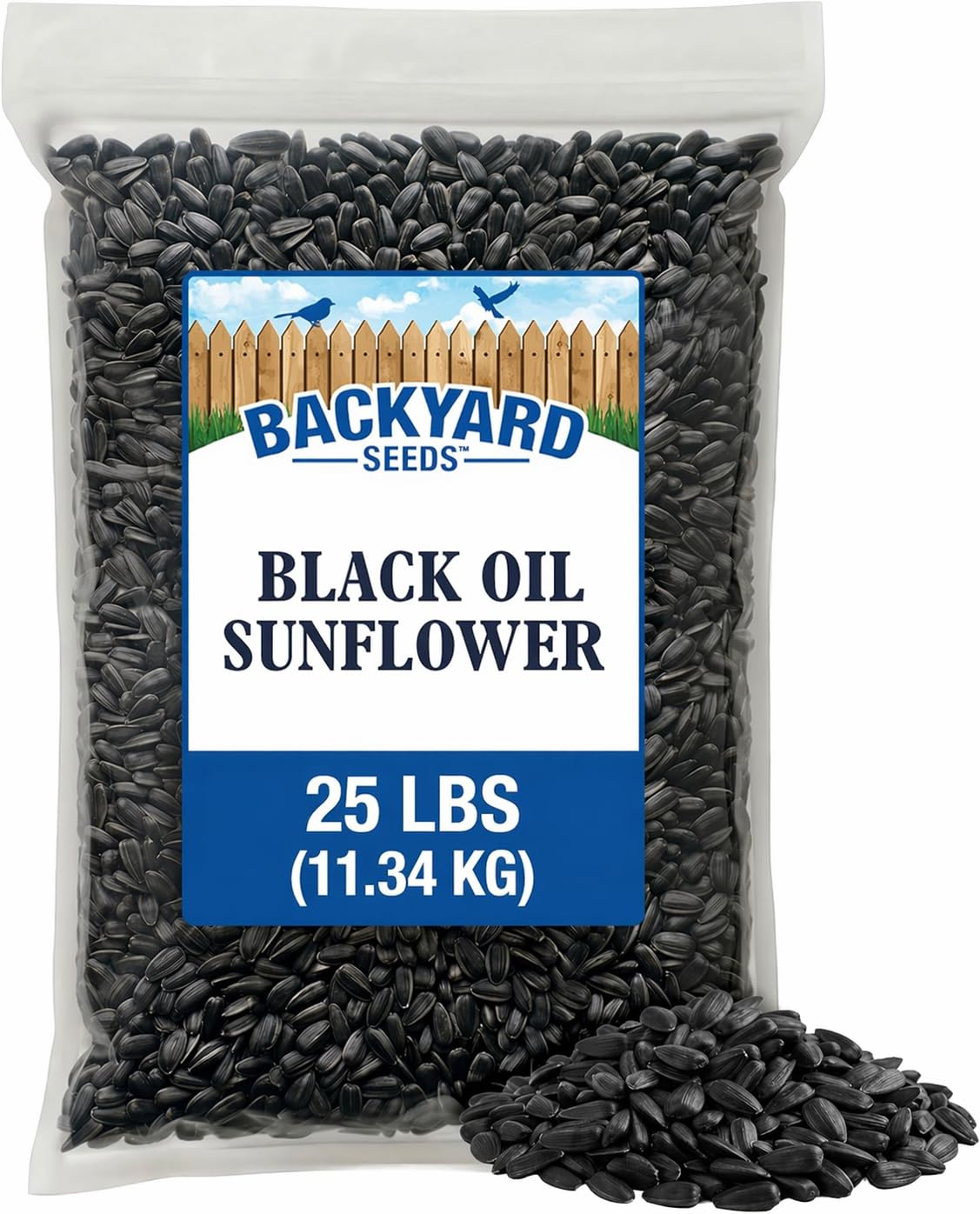
At 25 pounds of pure black oil sunflower with no filler, this bag delivers the highest edible-to-waste ratio in the lineup. The thin-shell construction means species with smaller beaks — chickadees, goldfinches, and nuthatches — can access the high-protein kernel without fighting a hard hull. The protein content supports birds through breeding season, migration, and winter when natural food sources are scarce.
CountryMax sources and processes the sunflower seeds in the USA, which adds traceability and freshness confidence. The package recommends storing the seed in a cool, dry place — a 5-gallon bucket with a lid is the ideal container for bulk buyers who want to maintain kernel crispness over several months.
Owner reports consistently mention cardinals, woodpeckers, and blue jays as regular visitors, with very little waste left under the feeder. The lack of filler grains like milo or wheat ensures every pound goes directly to the birds instead of being kicked aside or sprouting in damp weather.
Why we love it
- Zero filler — every seed is edible black oil sunflower
- Thin shells allow small-beaked species to feed easily
- USA-sourced with high protein for all seasons
Good to know
- Bulk 25-lb bag requires airtight storage to avoid moisture
- Can attract larger birds like jays that may dominate feeders
2. Old Potters Wildlife Black Oil Sunflower Seeds 12 lbs

Old Potters takes a minimalist approach that resonates with conservation-minded buyers: Non-GMO black oil sunflower seeds grown on small USA farms with no chemical treatments. The seeds arrive with traces of field debris — small twigs, a bit of chaff — which is a signature of the “authentically unprocessed” claim. This is not a polished, bleached product; it is raw agricultural seed meant to mimic the natural foraging experience.
The protein density in these seeds supports a wide spectrum of birds, from doves foraging on the ground to woodpeckers clinging to vertical feeders. The in-shell format preserves freshness longer than de-hulled options, though birds will leave hulls behind under the feeder. The 12-pound bag is a manageable size for moderate-volume feeders without requiring heavy storage equipment.
Buyers who prioritize environmental stewardship will appreciate the small-farm sourcing and the absence of artificial processing. The trade-off is that raw, unprocessed seed may have slightly more plant material than a polished commercial blend, but the nutritional core remains identical — high-oil, high-protein black oil kernels that bring in cardinals, chickadees, and finches consistently.
Why we love it
- Non-GMO and grown on small sustainable farms
- Unprocessed seeds retain natural oils and freshness
- Chemical-free sourcing supports eco-friendly feeding
Good to know
- Traces of field debris may be present in the bag
- In-shell format creates hull waste under feeders
3. Cool Birds All Birds Wild Bird Seed 10 lb
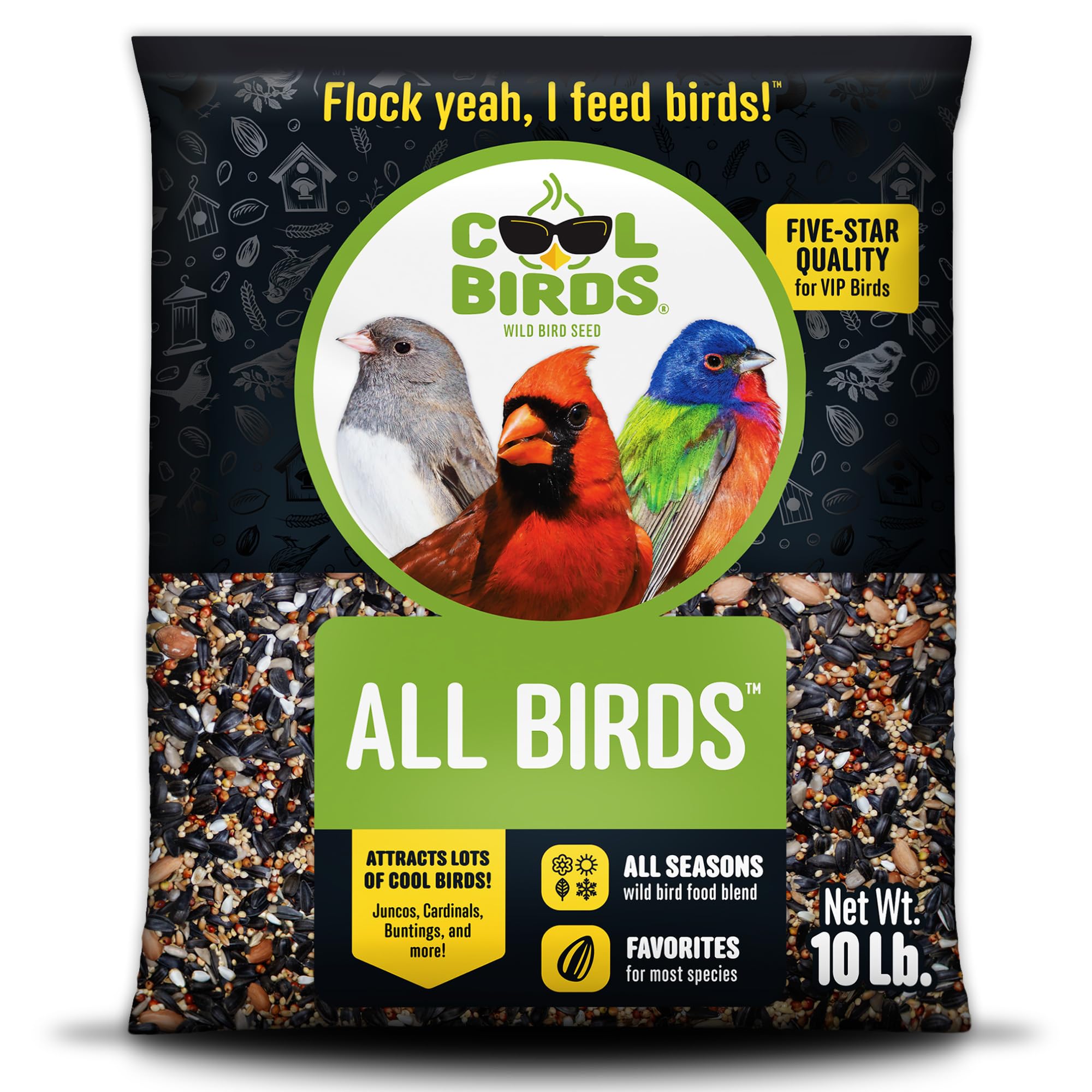
Cool Birds formulated this 10-pound blend to appeal to both perching birds and ground feeders by combining black oil sunflower, white millet, safflower, peanuts, and sunflower hearts. The sunflower hearts eliminate the shell barrier entirely, giving tiny-beaked birds immediate access to high-fat energy, while the safflower and millet attract species that avoid straight sunflower. The peanut inclusions add protein punch for larger visitors like jays and woodpeckers.
The blend works across tube, hopper, platform, and even smart camera feeders without jamming or excessive spillage. Owners who use window-mounted feeders report cardinals, doves, sparrows, and finches cycling through regularly, with very few filler complaints. The “no artificial colors” label means the seed’s color comes from the natural grains, not coatings.
At 10 pounds, this bag sits at a sweet spot between trial size and serious stock. The variety of ingredients means you will attract species that might skip a pure sunflower feeder, making it a strong option for buyers who want maximum diversity without managing multiple seed types.
Why we love it
- Variety of ingredients attracts ground and perching birds
- Sunflower hearts allow tiny-beaked birds to eat easily
- Works well in tube, hopper, platform, and smart feeders
Good to know
- Millet may be less attractive to some finch species
- Peanut pieces can spoil if exposed to rain
4. Audubon Park Extreme Variety Wild Bird Seed 15-lb
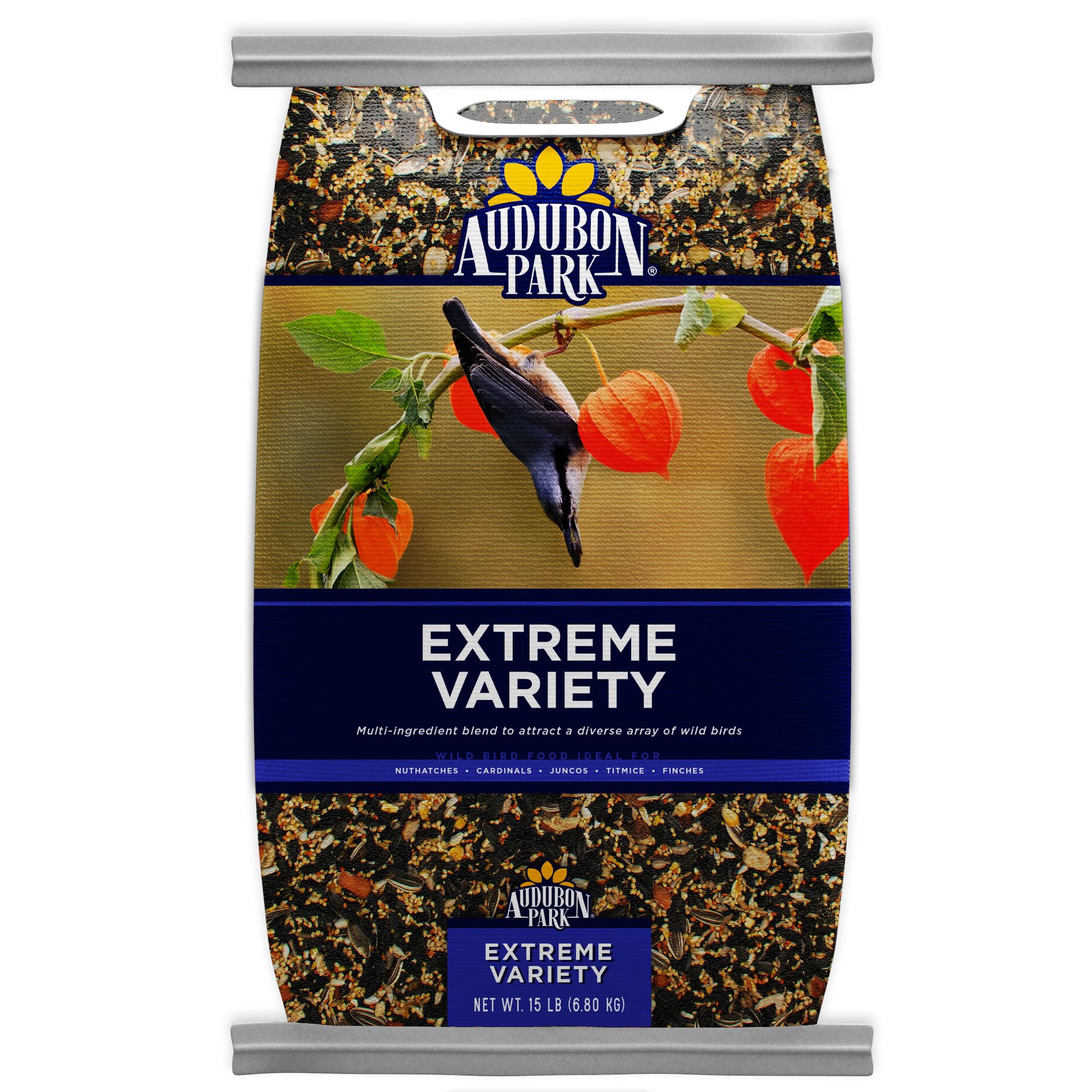
Audubon Park takes a maximalist approach with the Extreme Variety blend, packing black oil sunflower, peanuts, sunflower chips, raisins, nuts, and striped sunflower seed into a single 15-pound bag. The inclusion of dried fruit and nut pieces adds a texture and sugar content that standard seed blends lack, which can attract less common visitors like titmice and juncos alongside the usual cardinals and finches.
The blend is designed for use in tube, hopper, or platform feeders, though the larger nut pieces may require a platform or tray to prevent clogging in narrow tubes. The striped sunflower seeds appeal to heavier-beaked birds like grosbeaks, while the sunflower chips give smaller species a hull-free option. The 15-pound bag offers solid volume for moderate-to-heavy feeding households without hitting the bulk price point of the 25-pound options.
This is a good pick for buyers who want to maximize species diversity with a single purchase rather than mixing separate seed types. The raisin and nut components add an energy boost during cold months, though they can go stale faster than plain sunflower in humid conditions.
Why we love it
- Raisins and nuts attract diverse species including titmice and juncos
- Sunflower chips provide easy access for small birds
- Large 15-lb bag reduces refill frequency
Good to know
- Nut pieces may clog narrow tube feeders
- Fruit components can spoil faster than plain seed
5. Happy Wings Black Oil Sunflower Seeds 5 lb
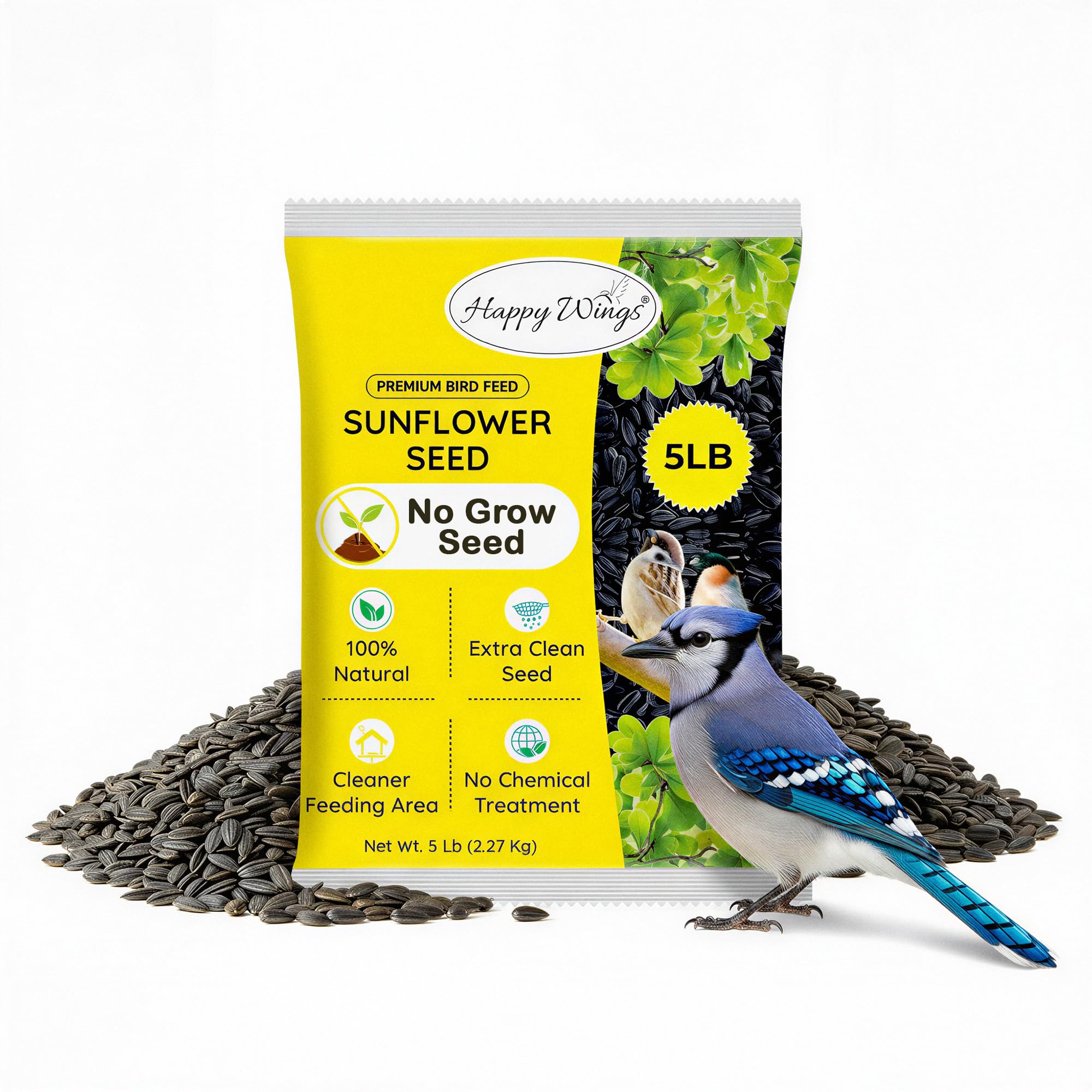
Happy Wings positions this 5-pound bag as an entry-level option for buyers who want to test bird interest before committing to bulk. The black oil sunflower seeds are processed in USDA- and BRC-GS–approved facilities and carry the Wild Bird Feeding Institute quality standard. The “no grow” treatment prevents seeds from sprouting under the feeder — a practical advantage for patio and lawn feeders where stray sprouts are unwelcome.
The high-oil content provides the energy density that cardinals, finches, and chickadees rely on year-round. The smaller 5-pound bag fits easily in apartment cupboards or small storage bins, and the resealable closure (included on the bag) helps maintain freshness between refills. Owners consistently describe the seeds as “good quality” with “no filler” in verified reviews.
This is not the most cost-efficient option per pound if you have a high-traffic feeder, but it is a low-risk starting point for new birders. The no-grow feature also makes it a clean choice for renters or homeowners who care about landscaping aesthetics around the feeding zone.
Why we love it
- No-grow formula prevents messy sprouts under feeders
- High-oil content supports energy needs across all seasons
- Small bag is ideal for first-time buyers or light use
Good to know
- Higher cost per pound compared to bulk bags
- 5 lbs may require frequent refills for busy feeders
FAQ
What is the difference between black oil sunflower and striped sunflower seeds?
Should I use a blend or straight black oil sunflower for the most bird variety?
Why do some birdseed bags say “no grow” on the label?
How long can I store a 25-pound bag of birdseed before it goes bad?
Final Thoughts: The Verdict
For most gardeners, the seeds for wild birds winner is the CountryMax Backyard Seeds 25lbs because it delivers pure thin-shell black oil sunflower at a competitive per-pound cost with zero filler, making it the single most efficient food source for the widest range of backyard songbirds. If you want a ready-to-use multi-species blend that attracts both ground feeders and perching birds, grab the Cool Birds All Birds 10 lb. And for non-GMO, small-farm sourcing with minimal processing, nothing beats the Old Potters Wildlife 12 lbs.