
The single biggest pain points of owning a robot vacuum have always been emptying the dustbin and untangling hair from the brush roll. The entire “self-cleaning” category exists to solve exactly these two jobs — a station that automatically pulls debris from the robot’s bin into a sealed chamber, paired with brush roll engineering that stops hair from ever wrapping around the axle. Once you experience a unit that handles both tasks without your involvement, going back to a standard robot feels like a downgrade.
I’m Mo Mahin — the founder and writer behind Furric. My process for analyzing this category involves cross-referencing manufacturer spec sheets, mapping the real-world suction and battery numbers against user-reported cleaning outcomes, and tracking which anti-tangle designs actually hold up in pet-heavy households over multiple months of use.
Navigating the market involves understanding several key performance layers — suction power measured in pascals, battery runtime, navigation accuracy, and the bin emptying mechanism. Our research zeroed in on the most reliable models to help you find the best self-cleaning vacuum for your home.
How To Choose The Best Self-Cleaning Vacuum
A self-cleaning vacuum is a major purchase, and understanding the core specs helps you avoid paying for features you don’t need or missing the ones that matter most for your home. Below are the critical decision points that separate an average performer from a daily workhorse.
Suction Power & Motor Design
Measured in pascals (Pa), this number directly determines how well the robot pulls debris from carpet fibers and grout lines. Entry-level models hover around 5,000 Pa, while premium units now exceed 30,000 Pa. For homes with medium-pile carpets or pets, look for at least 15,000 Pa. The motor’s efficiency also impacts noise and battery draw — a well-designed digital motor delivers strong suction without draining the battery in 15 minutes.
Navigation & Mapping Technology
LiDAR remains the gold standard for reliable room mapping, day or night. It builds a precise floor plan and allows room-specific cleaning, no-go zones, and scheduled routines. Camera-based systems (often paired with structured light) add object recognition — the robot can identify a shoe, a cable, or pet waste and steer around it. Pure gyroscopic or random-bounce navigation is obsolete for this price tier and should be avoided.
Auto-Empty Mechanism: Bagged vs. Bagless
A bagged auto-empty dock traps debris in a disposable bag that holds roughly 60-75 days of dirt, with the advantage of no dust contact when emptying. The trade-off is the ongoing cost of replacement bags. Bagless docks rely on a cyclone-based dirt cup that you dump directly into the trash. Some newer premium models have pioneered bagless designs to eliminate consumable costs while maintaining a 60-day capacity. Your preference here determines long-term maintenance.
Self-Cleaning Brush Roll & Anti-Tangle Design
The brush roll is the primary failure point for hair wrap. Look for models with a dedicated self-cleaning mechanism — often a channeled brush or rubber paddles that guide hair toward the suction path. Dual-roller designs, particularly those with one bristle and one rubber roller, perform better at separating captured hair. Some brands now advertise an SGS-certified zero-tangle rate, which is the closest thing to a guarantee you’ll get for pet hair households.
Mopping System: Roller vs. Pad vs. Sonic
If you need mopping, the implementation matters. A drag-pad mop is simple but can spread dirty water. A rotating roller mop — constantly rinsed with clean water at the dock — delivers true self-cleaning mopping. Sonic mopping scrubs at high frequency against the floor. All three can handle maintenance mopping, but only roller and sonic systems actively clean the mop itself. Ensure the model lifts the mop when crossing carpet to avoid wetting rugs.
Quick Comparison
On smaller screens, swipe sideways to see the full table.
| Model | Category | Best For | Key Spec | Amazon |
|---|---|---|---|---|
| Shark Navigator RV2120AE | Budget | Bagless auto-empty on a budget | 120 min runtime | Amazon |
| iRobot Roomba Plus 504 | Mid-Range | Pet hair & carpet focus | 210 min runtime | Amazon |
| iRobot Roomba Plus 505 Combo | Mid-Range | Self-washing mop + vacuum | 120 min runtime | Amazon |
| eufy E25 | Mid-Range | Always-clean roller mop | 20,000 Pa suction | Amazon |
| Shark Stratos AV2700ZE | Mid-Range | Sonic mopping + bagless dock | 110 min runtime | Amazon |
| DREAME L50 Ultra | Premium | High threshold crossing | 19,500 Pa suction | Amazon |
| ECOVACS DEEBOT X11 | Premium | Bagless 60-day dock + GaN charging | 19,500 Pa suction | Amazon |
| Roborock Qrevo Edge 2 | Premium | Edge-to-edge coverage | 25,000 Pa suction | Amazon |
| NARWAL Flow 2 | Premium | Self-washing track mop | 31,000 Pa suction | Amazon |
| Roborock Saros 20 | High-End | Ultra-slim + high threshold | 36,000 Pa suction | Amazon |
| DREAME X60 Max Ultra Complete | High-End | Thinnest profile + high suction | 35,000 Pa suction | Amazon |
In‑Depth Reviews
1. Roborock Qrevo Edge 2
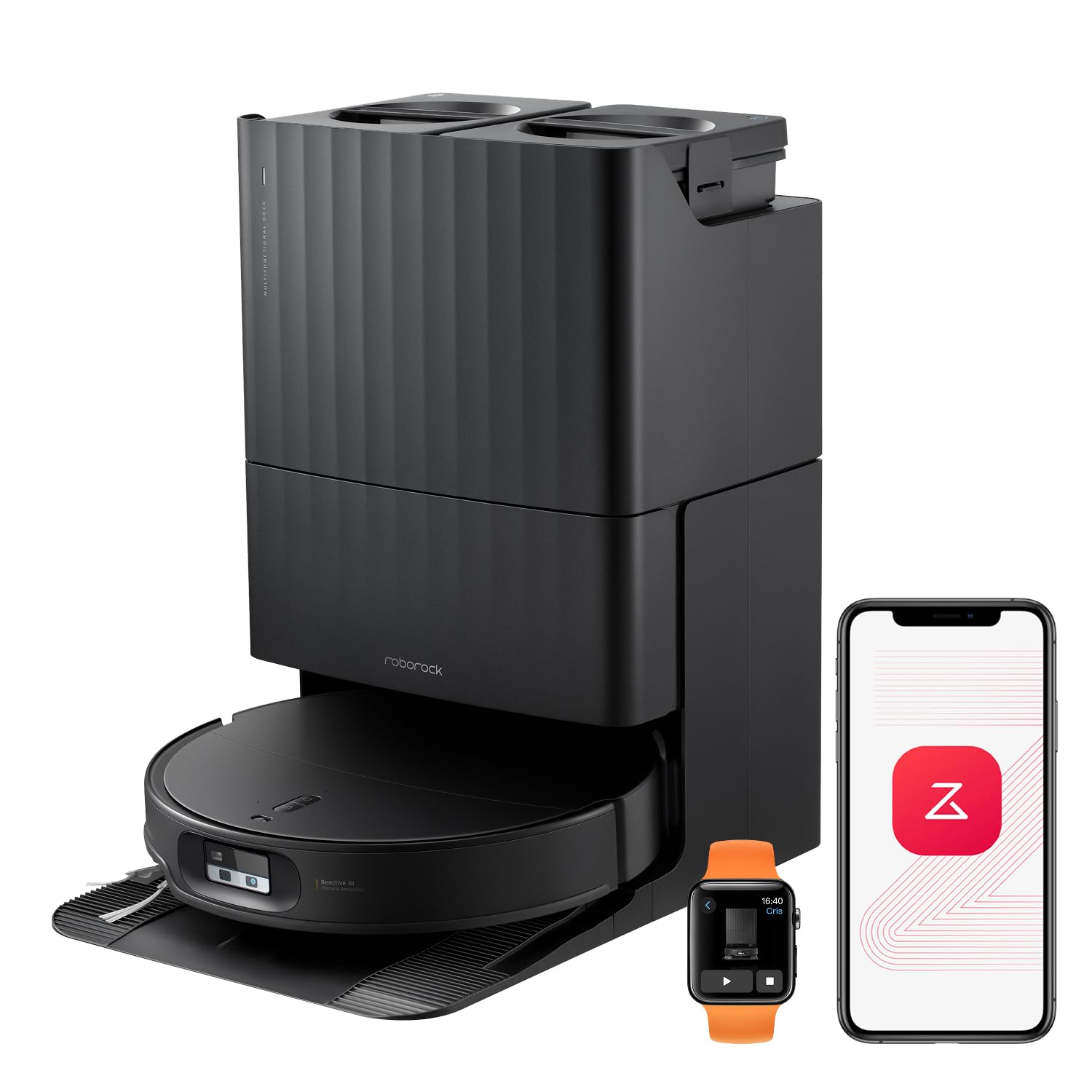
The Qrevo Edge 2 earns its top spot with a balanced spec sheet that nails every core requirement. Its 25,000 Pa suction is strong enough for deep carpet cleaning, while the FlexiArm Arc side brush physically extends to sweep dust from wall edges and corners — a concrete coverage advantage over models that rely solely on airflow to reach baseboards. The dual anti-tangle system uses rollers that guide hair toward the suction path rather than letting it wrap, which solves the brush-cleaning chore entirely for most households.
The multifunctional dock takes maintenance further by washing the mop pads with 176°F hot water, then drying them with warm air. It auto-empties the dustbin into a bagless compartment that holds up to 65 days of debris. The 3.14-inch ultra-slim profile and RetractSense Navigation system allow the robot to slip under low furniture — the LiDAR sensor retracts automatically when overhead clearance is tight, a thoughtful design detail that prevents it from getting wedged.
Reactive AI obstacle recognition, powered by structured light and an RGB camera, identifies over 280 object types and adjusts the cleaning path in real time. The SmartPlan 3.0 feature learns which rooms get the dirtiest and boosts suction accordingly. The 188-minute battery life covers large floor plans on a single charge, and the unit maintains position even in dark rooms thanks to the integrated LED light.
Why we love it
- FlexiArm delivers verifiable edge-to-corner cleaning
- Hot-water mop washing prevents odor buildup on pads
- Ultra-slim profile fits under standard furniture
- Reliable obstacle avoidance rarely gets stuck
Good to know
- Premium price requires a real commitment
- Still may miss very tight corners despite FlexiArm
- Water tanks need refilling every few cleaning cycles
2. Roborock Saros 20
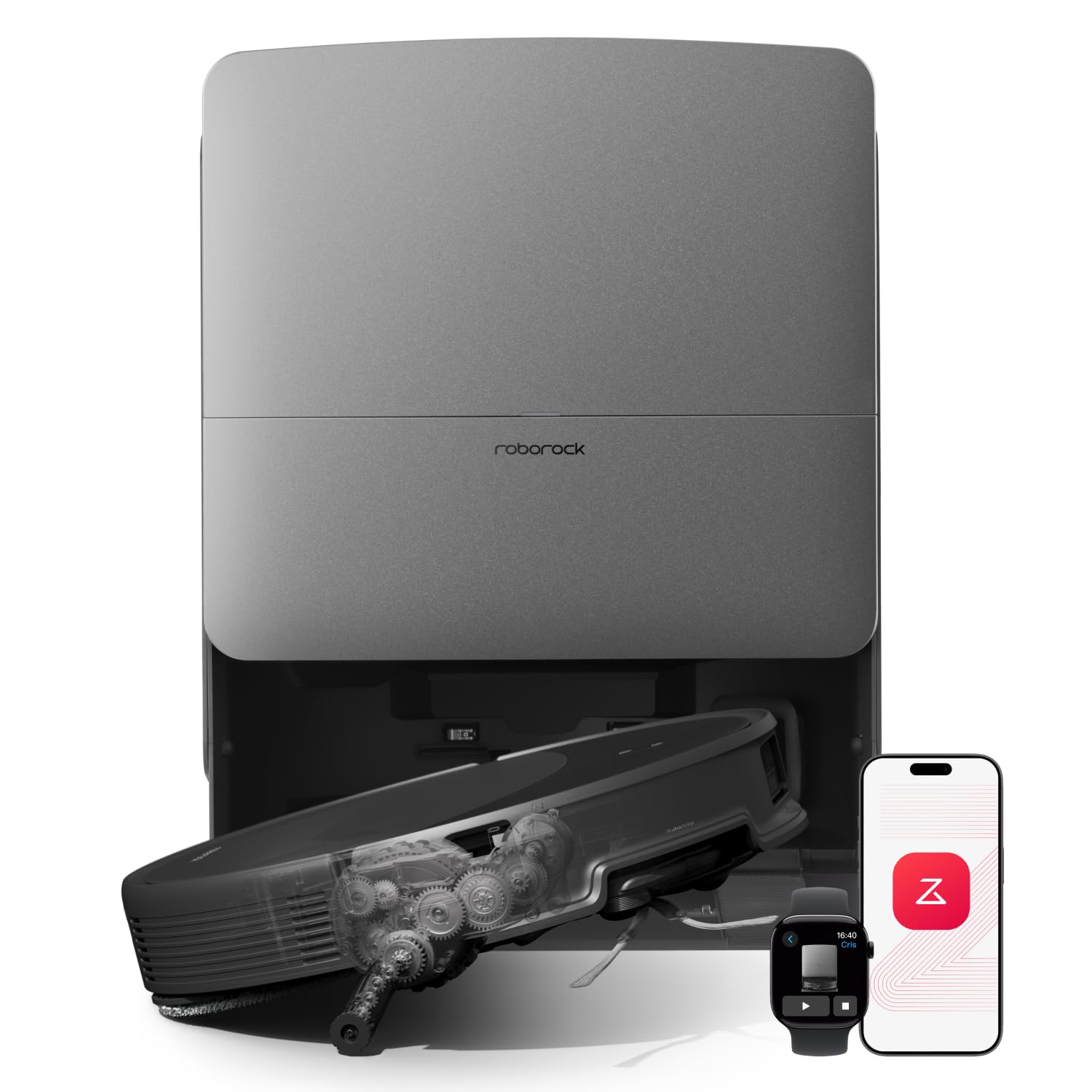
The Saros 20 pushes raw suction to 36,000 Pa, making it one of the most powerful self-cleaning vacuums in this lineup. That extreme suction is paired with the AdaptiLift Chassis 3.0, which dynamically raises the robot’s body to clear double-layer thresholds up to 3.46 inches without losing suction — a killer feature for homes with thick door transitions or uneven flooring between rooms. The 3.14-inch ultra-slim body allows it to reach under furniture as low as 3.13 inches, and the StarSight Autonomous System 2.0 uses 3D ToF sensors for real-time mapping that avoids over 300 object types.
The RockDock handles auto-emptying for up to 65 days, washes the mop with 212°F hot water, and dries it with 131°F warm air. The one-piece cleaning tray in the dock is a practical improvement — it increases water capacity and reduces operating noise compared to earlier designs. FlexiArm technology extends both the side brush and mop to reach edges and clean behind curtains, which is rare for a robot vacuum. The self-cleaning dock also features a detachable base for quick rinsing.
The 180-minute battery covers most homes on standard mode, and the dual anti-tangle system is effective for pet hair. The app supports SmartPlan 3.0, which adapts cleaning intensity based on room usage patterns. The built-in RGB camera doubles as a pet monitor, letting you check on animals while away. The unit supports both 2.4 GHz and 5 GHz Wi-Fi networks, which avoids connectivity issues that some users encounter with single-band models.
Why we love it
- Industry-leading 36,000 Pa suction for deep carpet cleaning
- AdaptiLift chassis clears high thresholds without assistance
- Ultra-slim design fits under low-profile furniture
- Hot-water mop washing and drying is genuinely hands-free
Good to know
- Top-tier price matches the top-tier performance
- Full deep-clean cycle takes over an hour for large homes
- Camera-based obstacle avoidance can sometimes be overly cautious
3. DREAME X60 Max Ultra Complete
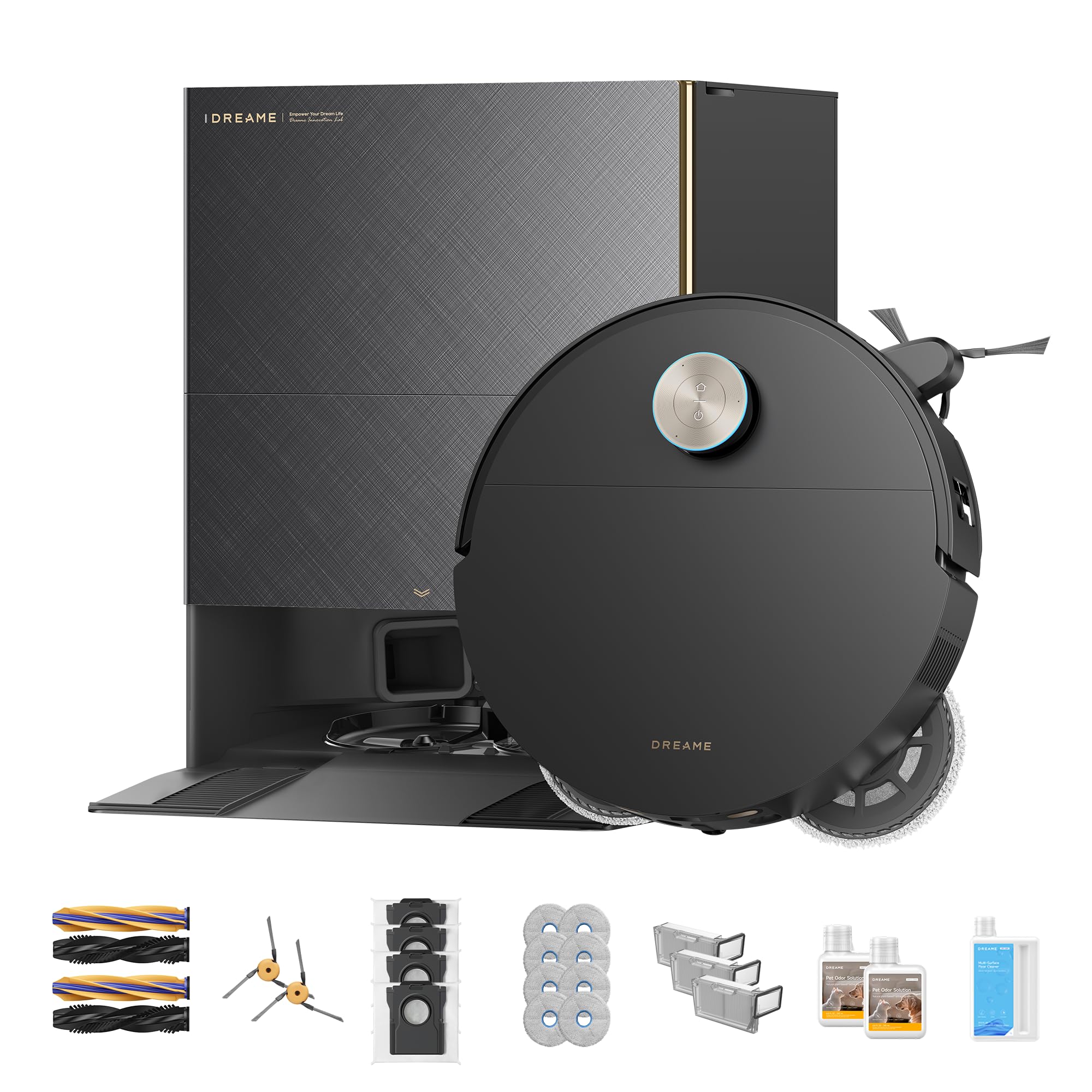
The X60 Max Ultra Complete takes the record for the thinnest robot vacuum among these premium models at just 3.13 inches. That slim profile allows it to navigate under sofas, beds, and cabinets where taller LiDAR bumps get stuck, making it an ideal choice for homes with substantial low-clearance furniture. The 35,000 Pa suction is powered by an upgraded DuoBrush with a retractable pressure plate that creates a semi-sealed chamber, boosting pick-up efficiency — DREAME claims three times the cleaning power versus standard brush designs.
The 10-in-1 multifunctional dock is the most feature-dense station of the group. It washes the dual omni-scrub mop pads with 212°F hot water, dries them with hot air, handles auto-emptying for up to 100 days, and includes a dual-solution compartment for both general cleaning solution and pet odor neutralizer. The spinning mop pads apply 15N of pressure at 230 RPM, combining heat and mechanical scrubbing to break down dried-on grease and sticky spills. Dual AI cameras with proactive illumination detect obstacles and steps up to 3.47 inches.
The MopExtend RoboSwing feature pushes one mop pad outward to reach corners, while SideReach sweeps out along baseboards. The 180-minute battery covers full-home cleaning in one session. The app allows customization of carpet cleaning modes, pet-friendly avoidance, and voice control. The 52-pound shipping weight reflects the substantial base station, which requires dedicated floor space. This model supports 2.4 GHz Wi-Fi only.
Why we love it
- Thinnest design in the premium tier — fits where others can’t
- 100-day auto-empty interval reduces maintenance dramatically
- Hot-water mop washing with spinning pads handles grease well
- Dual-solution tank allows separate cleaning and pet odor products
Good to know
- Only supports 2.4 GHz Wi-Fi, which may be limiting for some networks
- The dock is large and heavy at 52 pounds — needs dedicated floor space
- Price sits at the absolute high end of the market
4. NARWAL Flow 2
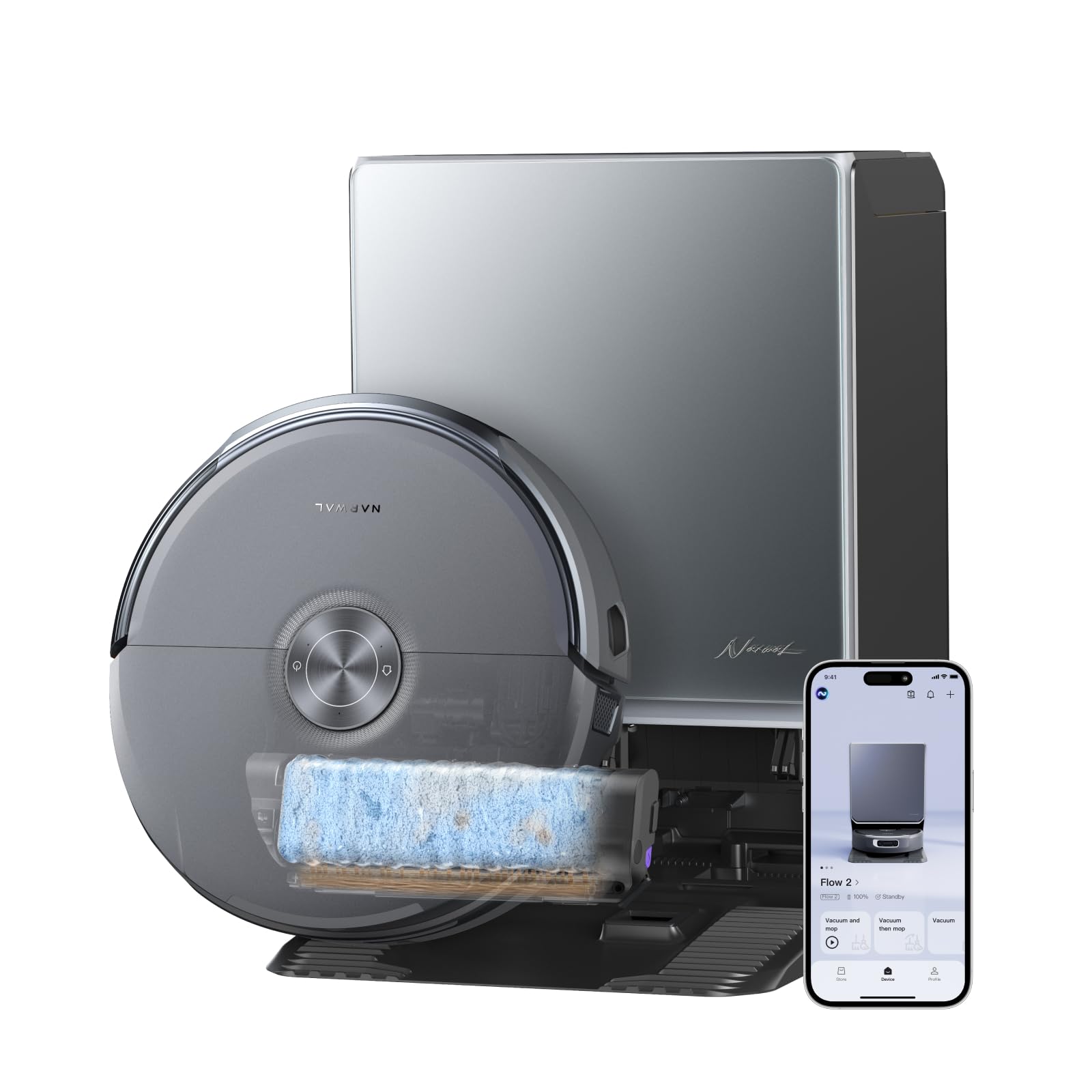
The NARWAL Flow 2 distinguishes itself with a novel FlowWash track mop that continuously rinses the cleaning belt with fresh water during the mopping run. This is a fundamentally different approach from pad-based systems that must return to the dock to clean themselves — the Flow 2’s belt is constantly self-wiping, so it never drags dirty water across clean floors. The 31,000 Pa suction handles pet hair and debris effectively, and the dual zero-tangle brush system (certified by SGS for 0% hair entanglement) is paired with an upgraded long-bristle side brush designed to capture hair that standard side brushes fling away.
The base station washes the mop with 212°F hot water, dries it with 104°F warm air, and holds a 2.4-liter dust bag rated for up to 120 days of debris. The dock also features a smart detergent dispensing system and a self-cleaning function that scrubs its own base. The dual AI cameras and VLM brain recognize common obstacles like shoes, cables, and pet bowls, and the robot can adjust its noise level near a crib for quieter operation — a thoughtful feature for households with babies or light sleepers.
The 275-minute battery life is the longest in this lineup, allowing the Flow 2 to clean very large homes without recharging mid-cycle. The built-in smart light bar on the dock communicates status at a glance. The unit supports both 2.4 GHz and 5 GHz Wi-Fi networks. Setup and initial mapping require a software update before first use, a minor upfront step that ensures optimal performance.
Why we love it
- FlowWash track mop never spreads dirty water — true real-time self-cleaning
- SGS-certified zero-tangle brush system eliminates hair wrap
- 275-minute battery covers very large homes on one charge
- Quiet-mode near crib is a unique differentiation for families
Good to know
- Initial mapping can require multiple attempts for accurate results
- Long mop wash/dry cycles at the dock before resuming cleaning
- Price is near the top of the premium range
5. ECOVACS DEEBOT X11 OmniCyclone
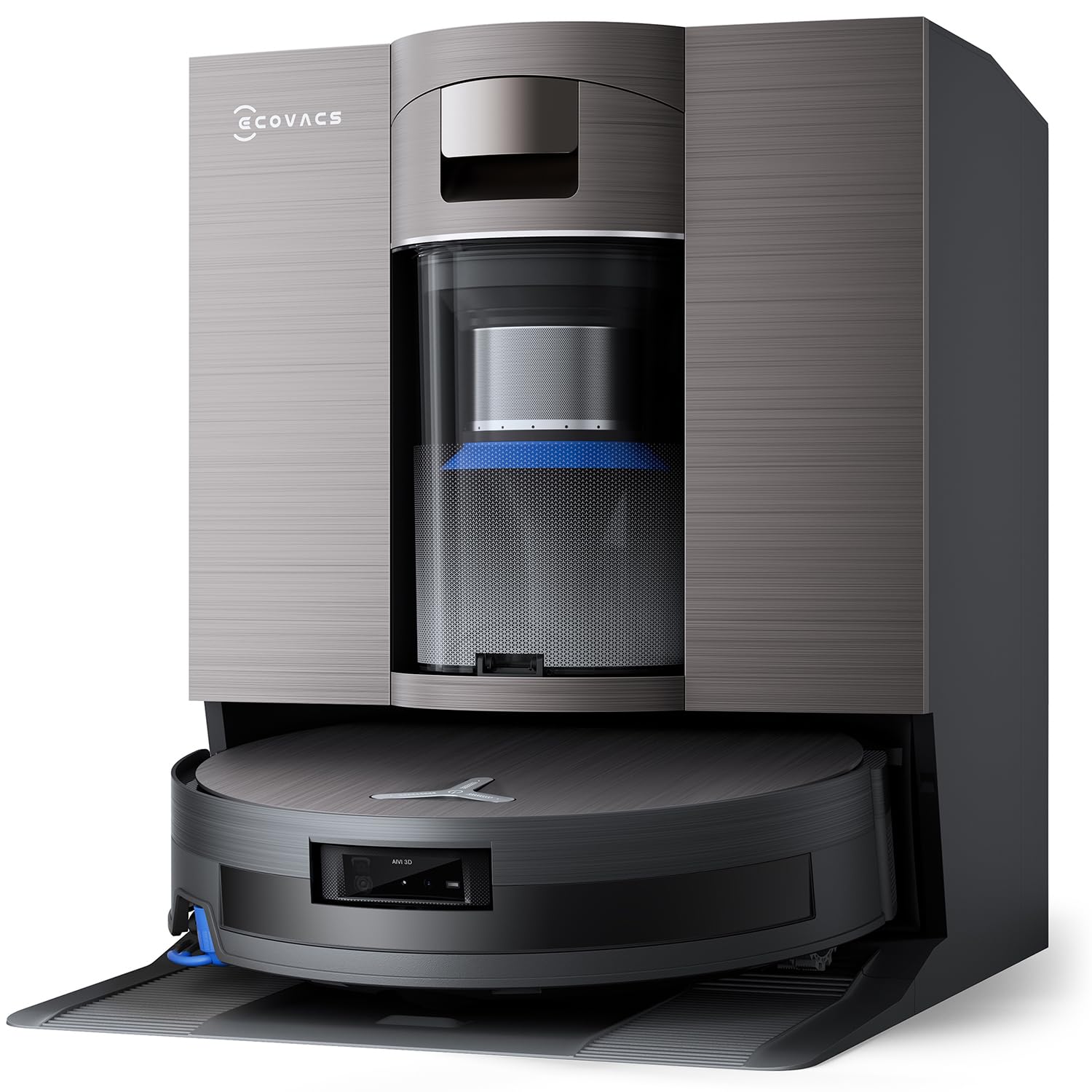
The X11 OmniCyclone is ECOVACS’s first bagless auto-emptying station, which eliminates the recurring cost and waste of disposable dust bags. The base uses a cyclone separator to drop debris directly into a removable bin that you dump manually — a practical approach for users who want to avoid buying refill bags. The dock also washes the OZMO Roller 2.0 mop with 167°F hot water, refills the water tank, and dries the roller. The PowerBoost GaN fast-charging system lets the robot recharge quickly during mop washing cycles, reducing downtime between cleaning passes.
Suction sits at 19,500 Pa with a 100W motor that delivers 38 CFM of airflow — a combination that balances strong pickup with relatively quiet operation. The ZeroTangle 3.0 brushes are designed for pet hair, though some user reports note that heavy-shedding breeds like Shelties can still cause wrapping around the brush bearings. The OZMO Roller 2.0 mop features TruEdge 3.0 for improved edge reach (50% improvement over the previous generation), and the Smart Wet & Dry Triple Lift System raises the mop, brush, and side brush when crossing carpets.
The AIVI 3D 3.0 navigation system combines LiDAR, ToF, and a camera to build maps and recognize obstacles. The YIKO Agent learns user habits over time and auto-adjusts cleaning strategies. The TruePass 4-Wheel Climbing system allows the robot to cross 0.9-inch steps and 1.6-inch gaps, making it adept at navigating between rooms with thresholds. The 200-minute battery ensures coverage for large homes. Users report fast first-mapping of 2,600 square feet in under 30 minutes.
Why we love it
- Bagless auto-empty saves money on consumables long-term
- GaN fast charging reduces dock downtime significantly
- TruePass climbing handles door thresholds without getting stuck
- Roller mop edge reach improved substantially over prior generation
Good to know
- Robust dog hair can still tangle around brush bearings
- Debris screen in the bin requires periodic hand-scoop cleaning
- App is comprehensive but can feel overwhelming with options
6. DREAME L50 Ultra
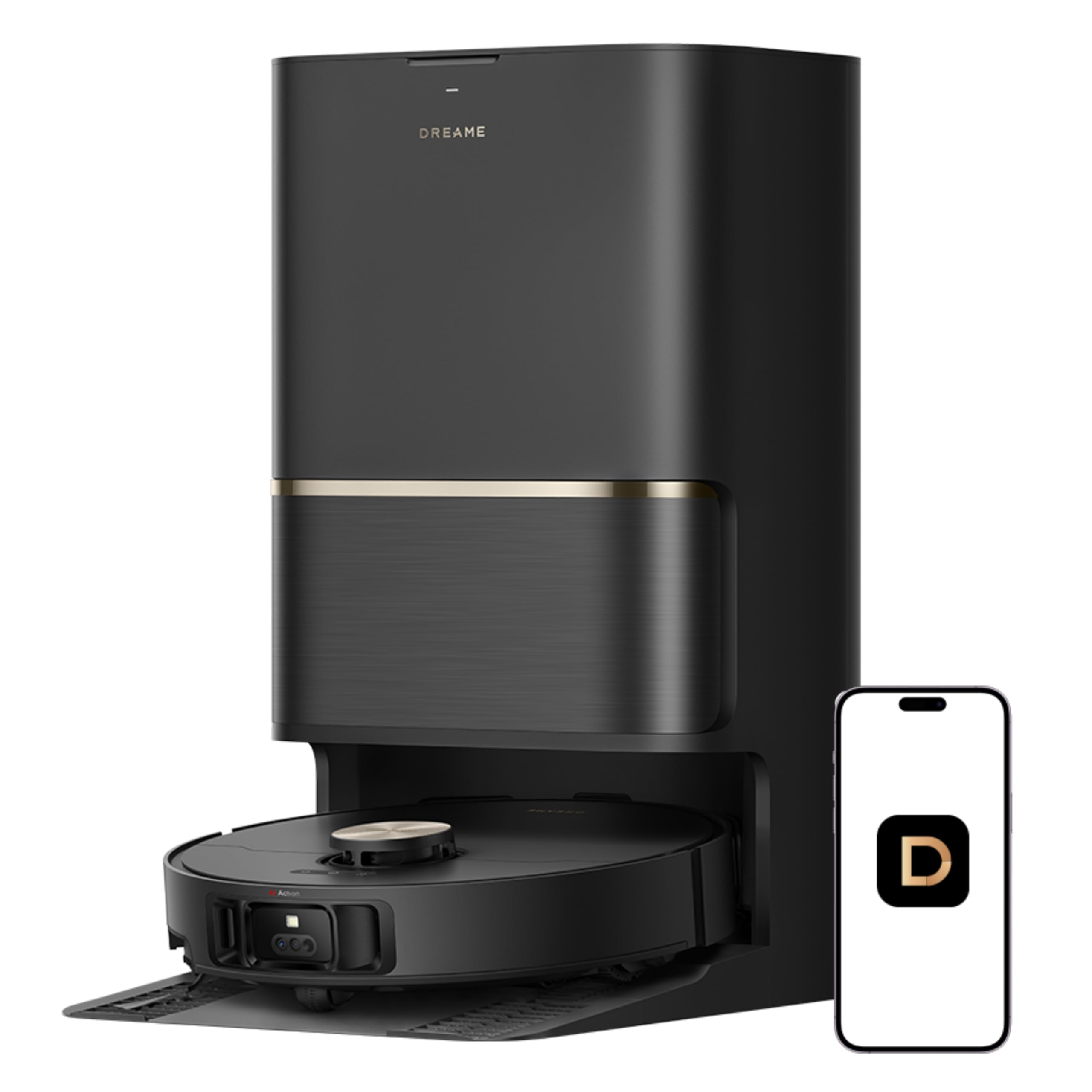
The DREAME L50 Ultra is engineered for homes with challenging transitions. The ProLeap system lifts the robot’s retractable legs to clear obstacles up to 6 centimeters high, which is nearly double the threshold clearance of most competitors. This makes the L50 Ultra a strong candidate for homes with thick transition strips, raised room dividers, or multi-level areas separated by low steps. The 19,500 Pa Vormax suction comes from the sixth-generation TurboForce high-speed motor, which DREAME tuned for lower noise output — something real buyers consistently report during normal operation.
The HyperStream Detangling DuoBrush combines a bristled rubber brush and a TPU rubber brush to collect hair from both hard floors and carpets. The design is effective for pet hair, though isolated cases of wrap around the brush ends have been reported. The AI action and 3D structured light detect and avoid over 180 types of obstacles — shoes, cables, furniture legs — with real buyers noting the robot rarely bumps into objects. The Dual Flex Arm technology extends both the side brush and mop pad outward to scrub corners and edges more thoroughly than fixed-width designs.
The PowerDock offers up to 100 days of auto-emptying, hot-water mop rinsing, and hot-air drying. The L50 Ultra also auto-refills the water and cleaning solution tanks and self-cleans the dock board to prevent buildup. The 180-minute battery handles large homes, and the Dreamehome App offers five carpet-cleaning modes (including mop lifting for dry carpets and dual-pass suction boost). The unit is on the larger side — the dock dimensions are 17 x 16 x 27 inches — so ensure you have adequate floor space.
Why we love it
- ProLeap 6cm climb clears most household thresholds
- Dual Flex Arm provides genuine corner and edge cleaning
- 100-day auto-empty interval is class-leading for convenience
- Quiet operation for vacuuming during calls or TV
Good to know
- Occasional hair wrap around brush ends requires manual removal
- Base station occupies substantial floor footprint
- Some users report app customization options can be confusing
7. eufy E25
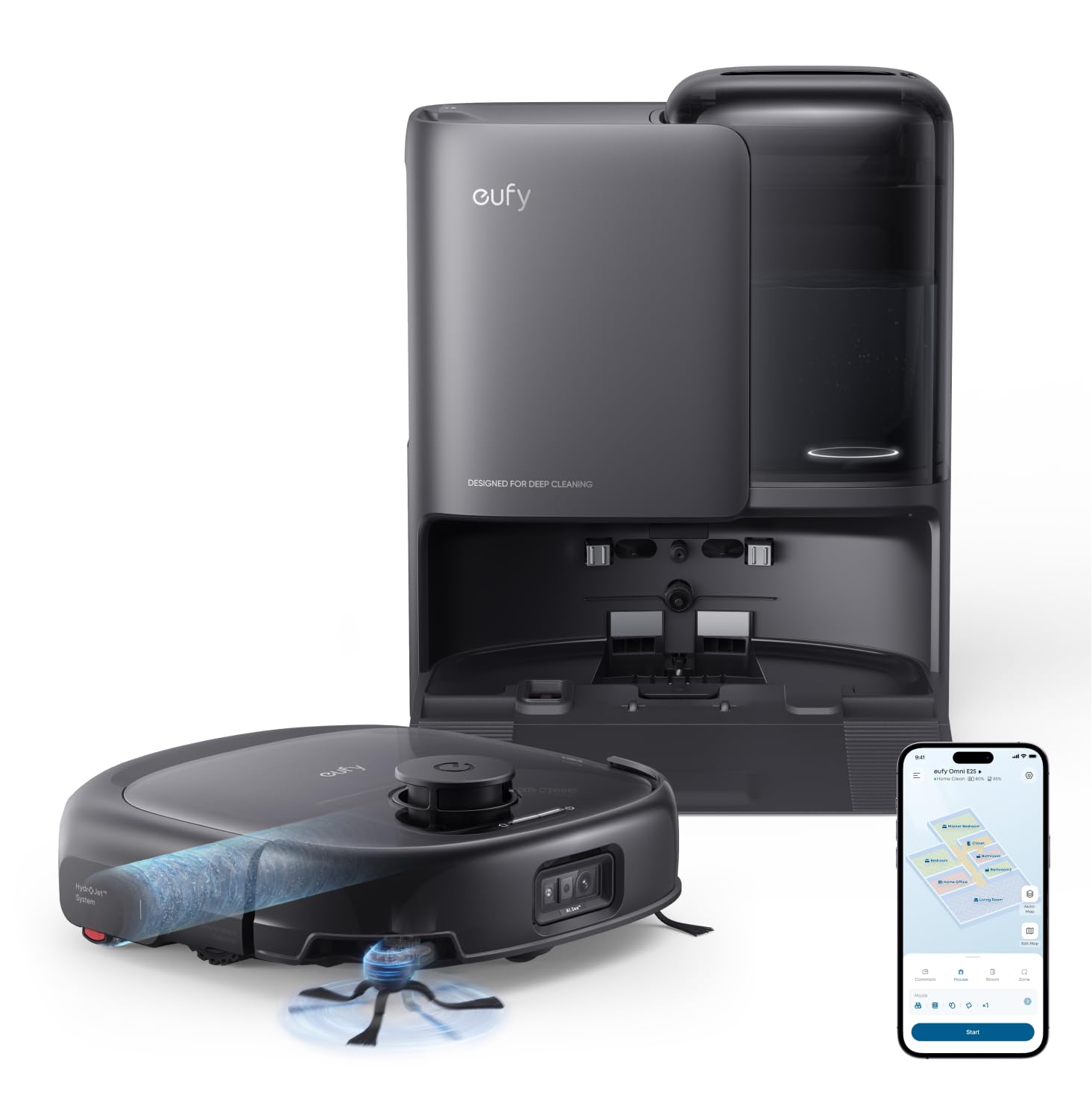
The eufy E25 punches above its price tier with the HydroJet Always-Clean Mop system, which refreshes the roller mop with clean water twice per second during the mopping run. This real-time cleaning prevents the cross-contamination that plagues passive drag-pad mops, and at 20,000 Pa suction, it competes directly with models costing two to three times more. The all-in-one station auto-empties dust into a 3-liter bag (lasting roughly 75 days), self-washes the roller mop, hot-air dries it at 50°C, and auto-refills water — a full suite of hands-off features that is rare in this price band.
The DuoSpiral anti-tangle brushes are designed specifically for pet hair management, and the CornerRover Arm extends the side brush to scrub along baseboards and furniture legs. The 21-millimeter climbing ability handles standard thresholds, and the 10.8mm mop lift prevents the wet roller from touching carpets during vacuum-only runs. The laser-guided navigation builds maps for up to five floor plans with auto floor switching, and the 125-minute runtime (in vacuum + mop standard mode) covers typical floor plans in a single session.
The noise level stays at or below 61 dB in max mode, which users consistently describe as quiet enough to run during calls or TV time. The eufy app integrates with Alexa, Google Assistant, and Siri for voice control. Setup is described as a five-minute process with no drilling required, and the helpful sticker explaining beep codes is a small but practical touch. The unit supports 2.4 GHz Wi-Fi only. Some users note that the dustbin may need frequent emptying if you have heavy pet shedding, though the auto-empty base mitigates this during standard operation.
Why we love it
- HydroJet mop cleans itself in real time — no pad-swapping
- 20,000 Pa suction at a mid-range price point is strong value
- CornerRover Arm extends reach for baseboard cleaning
- Five floor plan support with auto-switching for multi-level homes
Good to know
- Supports 2.4 GHz Wi-Fi only — no 5 GHz band
- Dustbin on the robot may require manual emptying for heavy shedding homes
- Mop lift may not fully clear very thick high-pile carpets
8. iRobot Roomba Plus 505 Combo
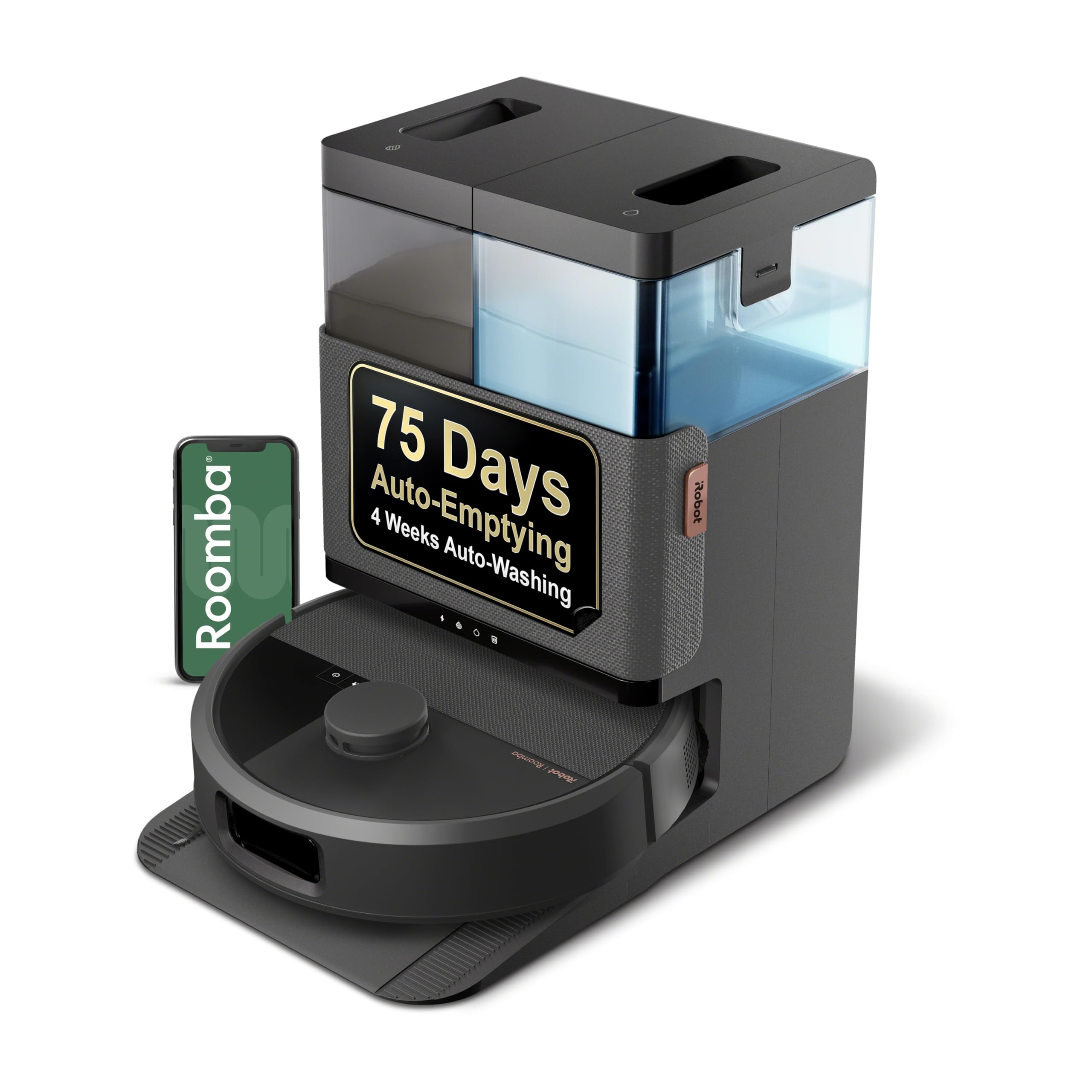
The Roomba Plus 505 Combo is iRobot’s entry into the self-washing mop category, and it delivers the brand’s hallmark reliability paired with the new AutoWash Dock. This dock handles three maintenance tasks: auto-emptying the dustbin for up to 75 days, washing the DualClean mop pads with continuous pad refreshing, and heated pad drying. The mop pads themselves extend outward via PerfectEdge technology, increasing floor-mopping coverage by 18% compared to stationary pads, and the SmartScrub feature applies 2x deeper scrubbing for tough dried-on messes.
The PrecisionVision AI camera identifies objects like cords, socks, and pet waste, then navigates around them. The ClearView Pro LiDAR maps the home quickly — user reports indicate mapping a large first floor in about 30 minutes. The anti-tangle dual rubber brushes flex to maintain contact with different floor types, and the Carpet Boost feature ramps suction automatically when the robot transitions from hard floors to rugs. The 70x stronger suction (compared to Roomba 600 series) is paired with a multi-surface rubber brush and edge-sweeping brush for comprehensive pickup.
The battery life is rated at 120 minutes, which users report covers two to three rooms on standard mode. The auto-lift mop pads detect carpet and raise themselves to avoid wetting rugs — a critical feature for seamless multi-surface cleaning. The new Roomba Home App offers four levels of suction control, room-specific cleaning, and repeat passes for high-traffic areas. The 505 Combo supports voice commands through Alexa, Siri, and Google Assistant.
Why we love it
- AutoWash dock washes and dries mop pads after every run
- PrecisionVision avoids pet waste, cords, and socks reliably
- Mop pads auto-lift when sensing carpet to prevent wet rugs
- iRobot ecosystem offers polished app and strong customer support
Good to know
- App UI can be buggy during initial setup and mapping
- LiDAR navigation may struggle under chairs or tables with many legs
- Battery may require a mid-clean recharge for very large floor plans
9. iRobot Roomba Plus 504
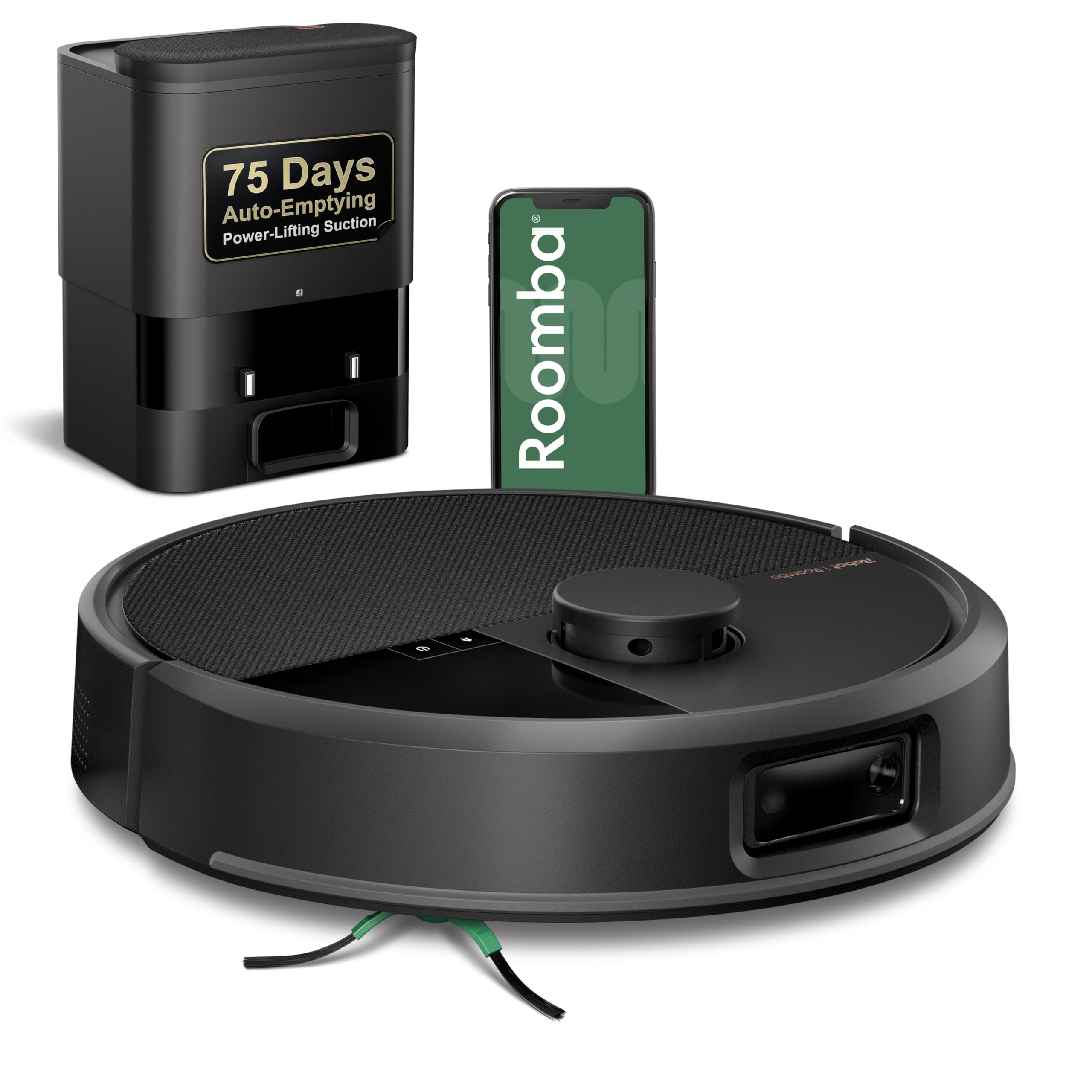
The Roomba Plus 504 is the vacuum-only variant of iRobot’s latest Plus series, and its primary edge is a 210-minute battery that can clean large homes without needing a recharge break. It shares the same PrecisionVision AI camera and ClearView Pro LiDAR navigation as the 505 Combo, offering reliable obstacle avoidance and accurate mapping. The anti-tangle dual rubber brushes handle pet hair effectively — real buyers with heavy-shedding dogs report excellent lift from carpets and hard floors without hair wrapping around the brush axles.
The AutoEmpty Dock traps debris down to 0.7 microns in an enclosed bag, holding up to 75 days of dirt. The four levels of suction control — including Carpet Boost — allow the robot to ramp power on rugs automatically. The Advanced Dirt Detect Technology makes the robot identify concentrated messes and make repeated passes over those areas. The 504’s design is slightly larger than the Roomba 600 series but fits a smaller footprint thanks to a more compact dock shape. Users note the auto-empty dock is quieter than previous Roomba iterations.
The new Roomba Home App provides room and zone-specific cleaning, and the data-driven approach means the robot learns which rooms get dirty fastest and prioritizes them. The unit pairs with Alexa, Siri, and Google Assistant. Some users report the initial mapping process can be finicky — requiring the phone screen to remain on during the process — and the overly cautious LiDAR algorithm may avoid cleaning under tables or chairs with dense leg patterns, leaving dust bunnies in those areas.
Why we love it
- 210-minute battery covers exceptionally large homes
- Powerful suction lifts stubborn pet hair from carpet fibers
- Auto-empty dock with HEPA-level filtration (0.7 microns)
- Dirt Detect makes targeted repeat passes over messy areas
Good to know
- Initial mapping requires phone screen on — can be frustrating
- LiDAR may miss spots under furniture with dense legs
- App has fewer features compared to competitor apps (no quiet hours, only one map)
10. Shark Stratos AV2700ZE
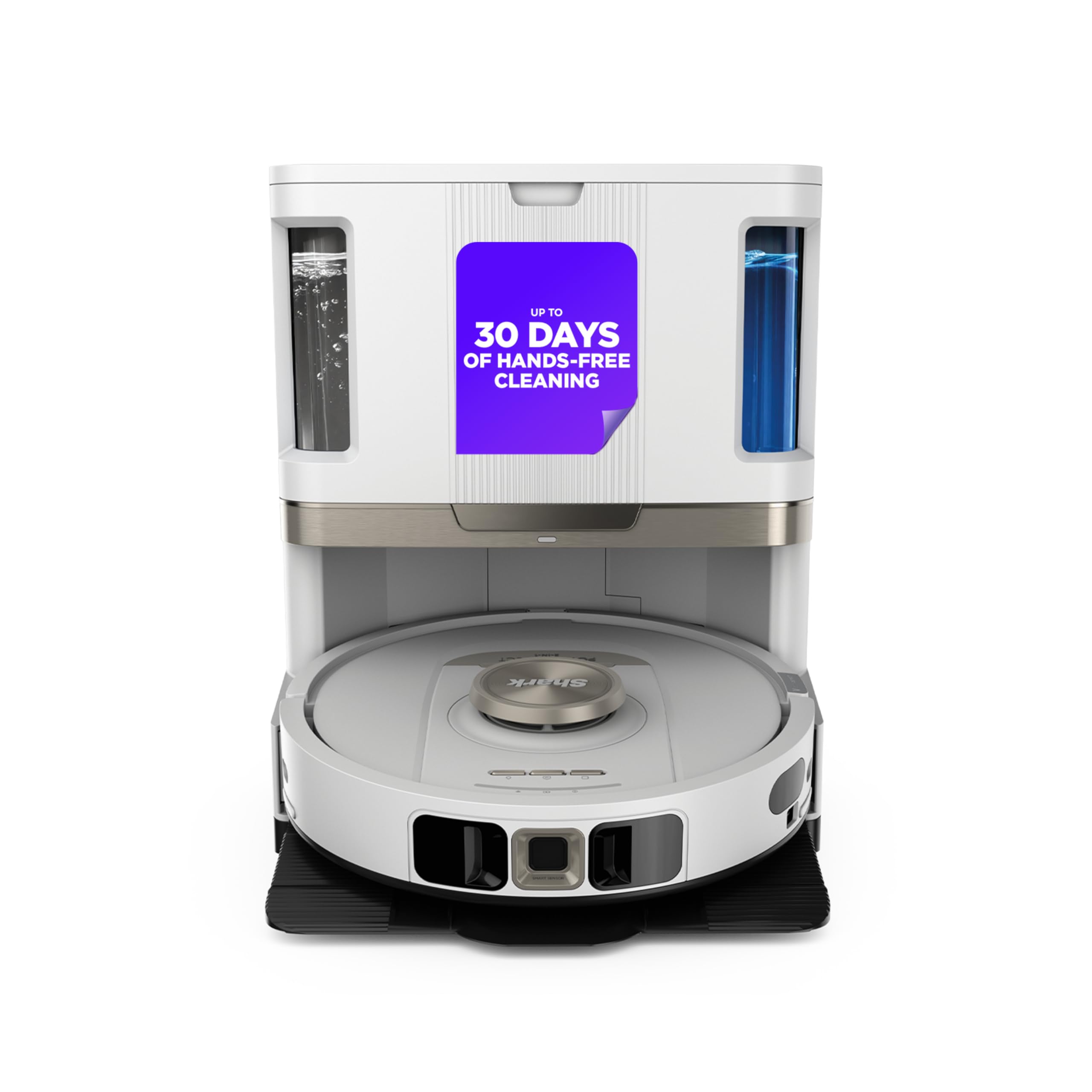
The Shark Stratos AV2700ZE operates in the mid-range with a bagless NeverTouch base that self-empties into a 60-day capacity bin, refills the water tank for up to 30 days of mopping, and automatically washes and dries the mop pad after every cleaning cycle. The bagless design is a real advantage for users who want to avoid buying replacement bags, and the base also houses two odor neutralizer cartridges to keep the dock fresh. The sonic mopping system scrubs floors at up to 100 oscillations per minute, using a removable mop pad that engages stained areas with mechanical agitation rather than just water flow.
The LiDAR navigation builds accurate home maps and supports no-go zones and room-specific cleaning via the SharkClean app. The self-cleaning brushroll with Anti-Hair Wrap technology engages both carpets and hard floors, and real buyers with husky-heavy households report excellent pet hair pickup without clogs. The Edge Detect feature uses short blasts of air to pull debris from wall edges into the cleaning path, improving pickup along baseboards. The AutoLift technology raises the entire robot body over obstacles and lifts the mop when crossing carpet automatically.
The 110-minute battery is adequate for mid-sized homes. The included 12-ounce VACMOP cleaning solution and two odor neutralizers provide starter supplies. Setup can be slightly frustrating according to some users — the instructions are not always clear, and the app requires the specific Shark floor cleaner to trigger the auto-refill mix. The HEPA filtration with Anti-Allergen Complete Seal helps trap dust and dander. The AV2700ZE is a strong value proposition for buyers who want both vacuum and mop in a single unit without stepping into the premium price tier.
Why we love it
- Sonic mopping provides mechanical scrubbing, not just water spreading
- Bagless NeverTouch base eliminates consumable costs
- Excellent pet hair pickup with Anti-Hair Wrap brushroll
- AutoLift handles thresholds and avoids wetting carpets
Good to know
- App connection and setup can be finicky
- Requires Shark-branded floor cleaner for auto-mix function
- Shorter battery life vs. premium competitors — not for large homes
11. Shark Navigator RV2120AE

The Shark Navigator RV2120AE delivers the core self-cleaning experience — a bagless auto-empty base with a 60-day capacity — at an entry-level price point that undercuts most competitors. The SmartPath Navigation uses spot LiDAR technology to map homes and clean in organized row-by-row passes, a meaningful upgrade over the random-bounce navigation found in budget robots. The self-cleaning brushroll is designed to pull up hair without wrapping, and users confirm it handles pet hair without the clogs that plagued earlier Shark robot models.
The vacuum offers up to 50% more suction compared to the Shark ION series, with a 120-minute battery that covers standard floor plans. The bagless base is a standout at this price — most entry-level auto-empty docks require proprietary bags, but the Navigator’s cyclone bin lets you dump directly into the trash. The ability to detect and avoid objects is present but not as refined as the premium AI systems; the robot avoids larger furniture and obstacles but may bump into smaller items. Users report the robot never gets stuck and achieves 98-99% room coverage in testing.
The SharkClean app supports scheduling, room-specific cleaning, and no-go zones. Voice control works with Alexa and Google Assistant. The primary drawback is weak performance on all carpet types — multiple user reviews note the robot struggles with low-pile to shaggy carpet, leaving embedded debris behind. For hard floor-focused homes, however, this unit offers the best price-to-function ratio for a self-emptying robot vacuum.
Why we love it
- Bagless auto-empty base at an entry-level price is exceptional value
- LiDAR navigation provides organized row-by-row cleaning
- Reliable battery life at 120 minutes for most homes
- Anti-hair wrap brushroll works well on hard floors
Good to know
- Poor suction and pickup across all carpet types — hard floors only
- Object detection is basic and may bump small items
- Replacement parts are harder to find compared to Shark’s stick vacuum line
FAQ
How does a self-cleaning vacuum differ from a regular auto-empty model?
Can a self-cleaning vacuum replace a traditional upright vacuum for deep carpet cleaning?
How often should I replace the dust bag in the auto-empty dock?
Final Thoughts: The Verdict
For most households, the best self-cleaning vacuum winner is the Roborock Qrevo Edge 2 because it combines 25,000 Pa suction, a zero-tangle brush design, and a dock that washes mop pads with hot water — all in a slim profile that fits under most furniture. If you need extreme suction for deep carpets and thick thresholds, grab the Roborock Saros 20 with its 36,000 Pa motor and AdaptiLift chassis. For the best value proposition that pairs a self-washing mop with strong suction at a mid-range price, nothing beats the eufy E25.