
Your cat heads to the bowl, eats normally, then fifteen minutes later you hear the unmistakable sound of regurgitation hitting the floor. The cycle repeats until you are scrubbing carpets and doubling vet visit bills. That scenario is the daily reality for owners of felines with delicate digestion, and the wrong kibble makes it exponentially worse — irritating the gut lining, triggering inflammation, and leading to chronic discomfort that manifests as vomiting, loose stools, or poor coat quality.
I’m Mo Mahin — the founder and writer behind Furric. I spend my time cross-referencing veterinary nutritional data, analyzing hydrolyzed protein structures, comparing prebiotic fiber blends, and studying real owner reports to determine which formulations actually stop the regurgitation cycle versus those that simply market themselves as gentle.
Whether your cat is a chronic vomiter, a chicken-allergic senior, or a young adult with unpredictable stool consistency, this guide breaks down the specific formulations — from ring-shaped kibble designs that force chewing to hydrolyzed proteins that bypass immune detection — to help you find the right sensitive stomach food for cats without wasting money on ineffective filler recipes.
How To Choose The Best Sensitive Stomach Food For Cats
Not every cat with a sensitive stomach needs a prescription diet, but every cat with chronic digestive issues needs a formulation designed around three specific pillars: protein source digestibility, fiber profile, and kibble mechanics. Ignoring any of these three means you are guessing, and guessing with a sensitive stomach cat often results in more mess to clean up.
Understand Protein Source and Hydrolyzation Level
The protein molecule size determines whether your cat’s immune system recognizes it as food or as an invader. Standard chicken meal contains intact protein chains that trigger inflammatory responses in sensitive cats. Novel proteins like turkey or venison offer a different molecular structure that the immune system has not previously flagged. For severe cases, hydrolyzed proteins — broken down into fragments too small for immune detection — provide the gold standard. A cat that vomits within two hours of eating likely needs at minimum a novel protein source; cats with skin lesions or chronic diarrhea alongside vomiting should shift directly to hydrolyzed options.
Evaluate the Prebiotic Fiber Profile
Fiber is not a single ingredient — it is a spectrum of soluble and insoluble compounds that affect transit time, stool moisture, and gut bacteria composition. Soluble prebiotic fibers like inulin, beet pulp, and chicory root feed beneficial gut bacteria that produce short-chain fatty acids, which directly reduce intestinal inflammation and strengthen the gut barrier. Psyllium husk and pumpkin seed provide gentle bulk without irritating an inflamed lining. Avoid recipes with excessive cellulose or peanut hulls, which are cheap fillers that offer zero prebiotic benefit and can actually scratch sensitive intestinal walls.
Consider Kibble Geometry and Eating Speed
A cat that inhales food and vomits immediately is suffering from mechanical regurgitation, not chemical sensitivity. For these cats, the kibble shape matters as much as the ingredient list. Ring-shaped or donut-shaped kibble forces the cat to chew — the tongue cannot simply scoop and swallow. This mechanical intervention slows intake by 40 to 60 percent compared to standard round kibble, allowing the stomach to process food in manageable portions. For cats that still eat too fast even with shaped kibble, look for flattened or pyramid-shaped pieces that require lateral tongue movement, further disrupting the gulping reflex.
Quick Comparison
On smaller screens, swipe sideways to see the full table.
| Model | Category | Best For | Key Spec | Amazon |
|---|---|---|---|---|
| Purina Cat Chow Gentle | Mid-Range | Gentle transition from standard kibble | Omega-6 fatty acids, prebiotic fiber | Amazon |
| Royal Canin Digestive Care | Mid-Range | Fast eaters who regurgitate whole kibble | Ring-shaped kibble, slows eating | Amazon |
| Blue Buffalo Basics | Mid-Range | Chicken-allergic cats needing limited ingredients | Turkey & potato, grain-free, LifeSource Bits | Amazon |
| Stella & Chewy’s Raw Coated | Mid-Range | Picky eaters needing high-protein, raw-coated kibble | 65-70% animal protein, freeze-dried raw coating | Amazon |
| Hill’s Science Diet Sensitive | Premium | Chronic vomiting with skin and coat issues | Prebiotic fiber, omega-3 & 6, Vitamin E | Amazon |
| Purina Pro Plan LIVECLEAR | Premium | Owners with allergies plus cat stomach sensitivity | Reduces Fel D 1 allergen, prebiotic fiber | Amazon |
| Hill’s Prescription Diet z/d | Premium | Severe food sensitivities needing hydrolyzed protein | Hydrolyzed chicken, ActivBiome+ prebiotic | Amazon |
In‑Depth Reviews
1. Hill’s Science Diet Adult Sensitive Stomach & Skin Dry Cat Food
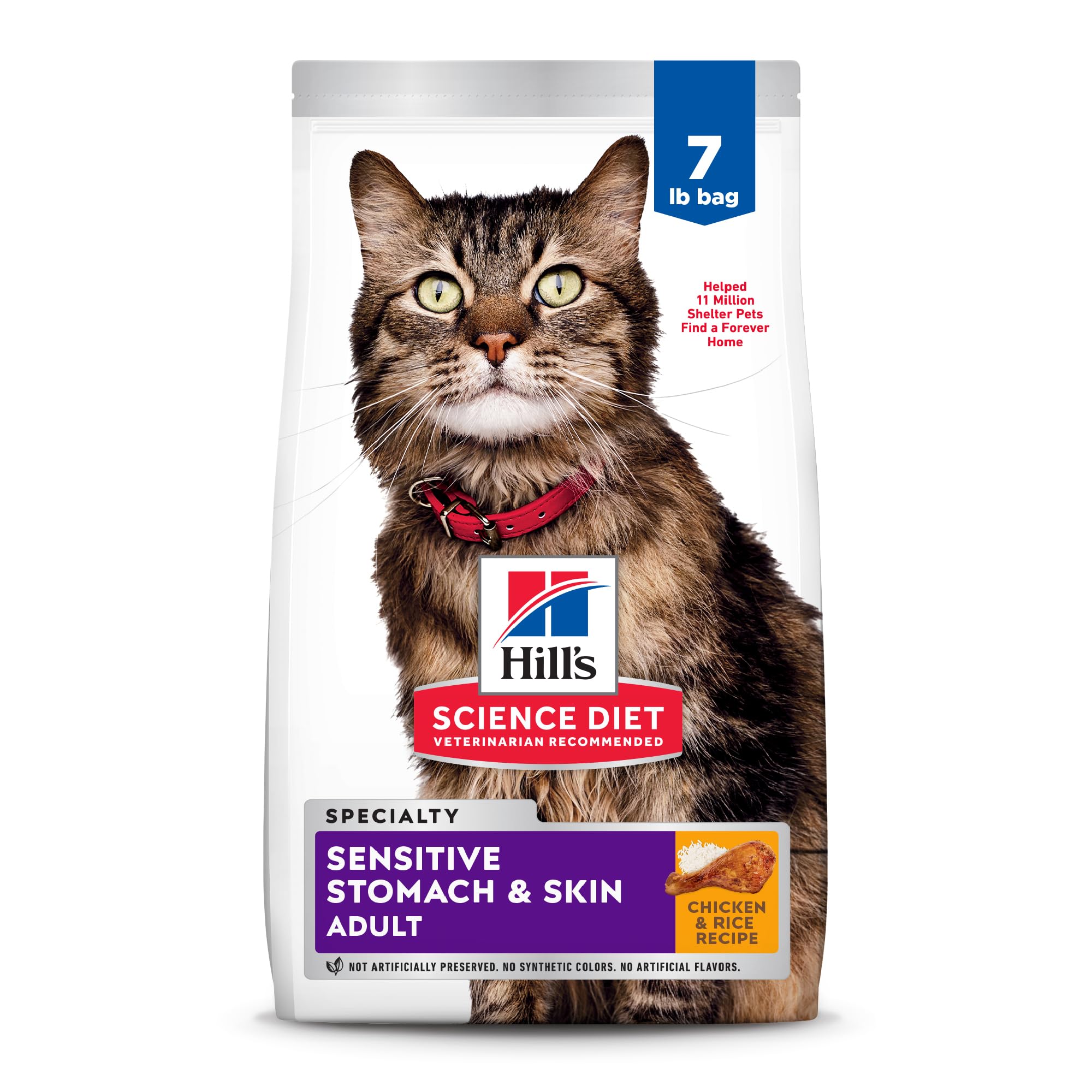
This formula represents the closest thing to a universal solution for chronic vomiting with skin involvement — the prebiotic fiber blend addresses the gastrointestinal inflammation directly while the omega-3 and omega-6 fatty acid ratio provides targeted support for the coat degradation that often accompanies food sensitivity. Real owner data shows vomiting cessation within three to seven days of switching, with stool odor normalization typically visible within the first week. The chicken and rice protein base is highly digestible but may not suit cats with confirmed chicken allergies.
The bag uses a convenient Velcro-style resealable closure that preserves kibble freshness far better than fold-over bags, and the pellet size is moderate — not so small that fast eaters inhale it whole, not so large that senior cats with reduced dentition struggle. Multiple owner reports confirm that cats who rejected Purina Pro Plan and Friskies accepted this formulation without any transition period, suggesting the palatability profile is broad enough for picky eaters.
Weight gain is the primary risk — the formula is calorie-dense enough that cats with reduced activity may overconsume. Owners of indoor-only cats should measure portions strictly rather than free-feeding. The 7-pound bag is the most economical size, and the formula is manufactured in the USA with globally sourced ingredients that meet veterinary standards.
Why we love it
- Stops chronic vomiting reliably within a week for most cats
- High-quality prebiotic fiber blend improves stool odor significantly
- Velcro bag closure keeps kibble fresh without clunky storage containers
Good to know
- Calorie-dense formula can cause weight gain in sedentary indoor cats
- Chicken base makes it unsuitable for cats with confirmed chicken allergies
2. Royal Canin Feline Care Nutrition Digestive Care Adult Dry Cat Food

The ring-shaped kibble is not a marketing gimmick — it is a mechanical intervention that forces the cat’s tongue to curl around the donut shape rather than scooping kibble directly, which slows intake by roughly half and prevents the rapid stomach distension that triggers regurgitation in gulpers. Royal Canin’s internal data shows over 95 percent healthy stool quality after ten days of feeding, which aligns with owner reports noting predictable, formed bowel movements within two weeks. The prebiotic and dietary fiber blend focuses specifically on promoting beneficial gut bacteria growth rather than just adding bulk.
Senior cats with dental problems benefit disproportionately because the ring shape requires chewing but the kibble hardness is moderate enough that cats with missing teeth can still manage it. The calorie density is lower than Hill’s Science Diet at 333 kilocalories per cup, making it a safer choice for cats prone to weight gain. However, the flavor profile is less intense than raw-coated or high-protein options, and some cats accustomed to strong-smelling kibble may initially reject the mild aroma.
The 3-pound bag is the standard size, and while the per-pound cost is higher than grocery-store brands, the reduction in wasted vomited food and vet visits makes the effective cost lower for chronic vomiters. Owners of multi-cat households with one fast eater and one normal eater should monitor the fast eater specifically during the first week to ensure the mechanical slowing effect is sufficient.
Why we love it
- Ring-shaped kibble effectively stops mechanical regurgitation from fast eating
- Lower calorie density than many sensitive stomach formulas
- Clinically proven stool quality improvement within 10 days
Good to know
- Mild aroma may be rejected by cats accustomed to strongly scented foods
- Small kibble holes can occasionally trap a cat’s tooth during chewing
3. Purina Cat Chow Gentle Sensitive Stomach and Skin Dry Cat Food
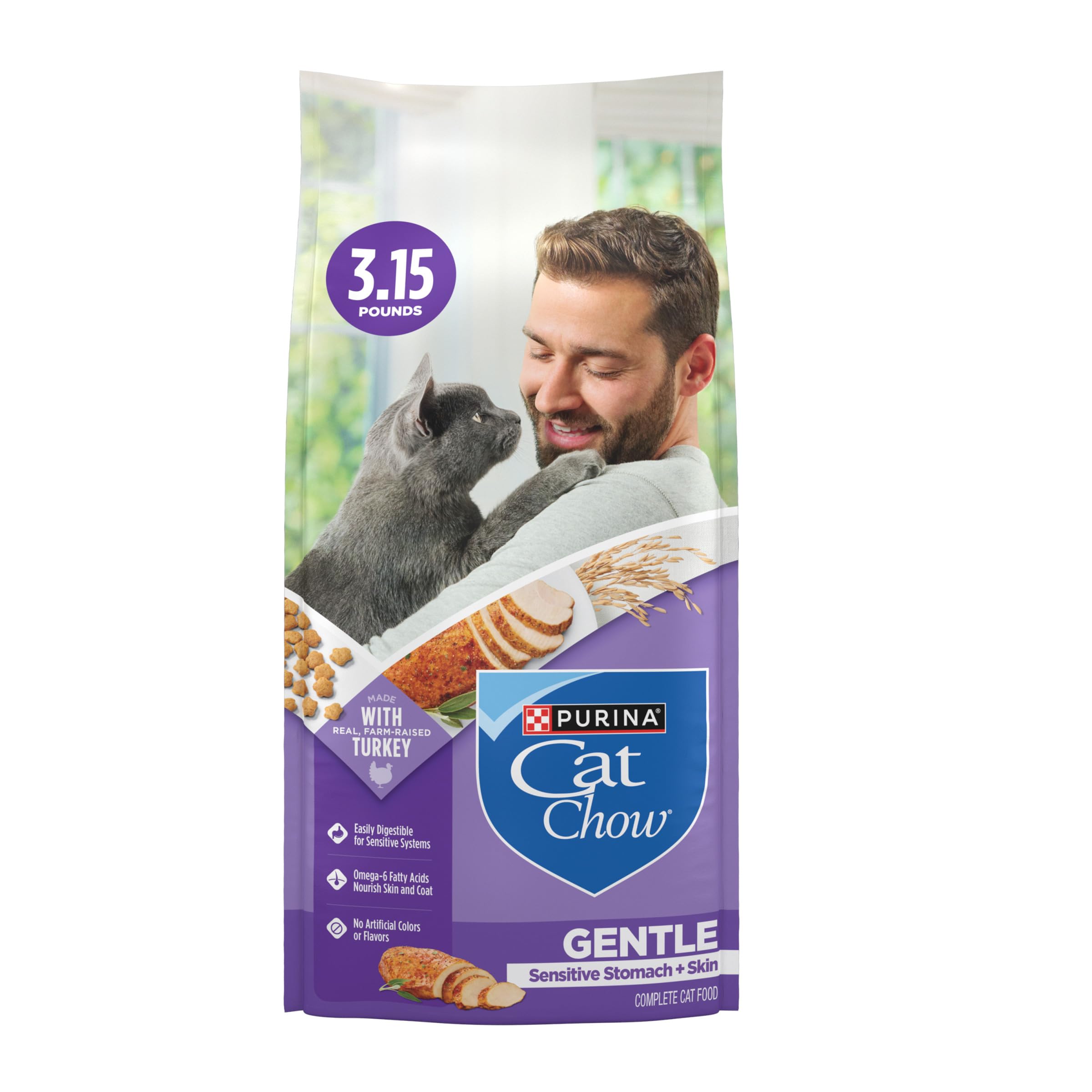
For owners managing a mild sensitivity rather than a severe food allergy, this Purina formula offers a turkey-based protein source that avoids the chicken that triggers many cats while keeping the price well below premium and prescription tiers. The farm-raised turkey provides a digestible protein foundation, and the omega-6 fatty acid inclusion at 29 essential vitamins and minerals supports skin barrier function alongside digestive health. Pack-of-four 3.15-pound bags give you flexibility in storage and portion control that a single large bag does not.
The kibble is standard round shape with no specialized geometry, so this formula works best for cats whose sensitivity is ingredient-based rather than speed-of-eating-based. Owners of cats that vomit due to eating too fast will need to pair this with a slow-feeder bowl. Customer feedback consistently mentions effectiveness for cats that “keep throwing up normal food,” suggesting the turkey protein swap resolves a common chicken intolerance that many owners do not initially identify.
The allergen-free claim means the formula avoids common trigger additives like artificial colors and artificial flavors, but it does not use hydrolyzed proteins or novel proteins — it relies on the simplicity of a single animal protein source. Cats with confirmed multiple-protein sensitivities may require a more restrictive diet. The 13-pound total weight across four bags makes this a solid entry-level option before investing in prescription-grade formulations.
Why we love it
- Turkey protein avoids common chicken sensitivity triggers
- Multi-bag pack offers freshness control and space flexibility
- Affordable entry point for mild sensitivity management
Good to know
- Standard round kibble does not slow fast eaters
- Not suitable for cats with severe multi-protein sensitivities
4. Stella & Chewy’s Raw Coated Cat Food

The raw-coated kibble format combines the convenience of shelf-stable dry food with the enzymatic benefits of a freeze-dried raw coating that provides digestive enzymes and natural probiotics without requiring refrigeration. Cage-free chicken is the number one ingredient, and the 65 to 70 percent animal protein content makes this one of the highest-protein options in the sensitive-stomach category — protein density this high can trigger digestive upset in cats accustomed to lower-protein grocery kibble, so a gradual transition over 10 to 14 days is non-negotiable.
Salmon oil and fenugreek seeds provide omega fatty acids that produce visible coat shine improvement within three to four weeks, supporting skin health during the digestive adjustment period. The small kibble size is appropriate for kittens and senior cats with reduced chewing capacity, but multiple owner reports note the pieces are almost too small for adult cats — the tiny pellet size may actually encourage gulping in larger breeds. The raw coating also means the kibble is more fragile and prone to breaking into dust at the bottom of the bag if handled roughly during shipping.
The bag’s pull-tab opening mechanism has drawn consistent complaints about failure, with multiple owners reporting missing tabs or tabs that tear off, forcing them to cut the bag open and lose resealability. If the bag cannot be resealed, the raw coating can absorb humidity and degrade the probiotic content. Transferring the food to an airtight container immediately upon opening mitigates this issue entirely.
Why we love it
- Raw-coated kibble provides digestive enzymes absent in standard dry food
- Extremely high protein content supports lean muscle maintenance
- Omega fatty acids from salmon oil improve coat condition within weeks
Good to know
- Pieces are small enough that adult cats may gulp rather than chew
- Bag opening mechanism frequently fails, requiring airtight storage
5. Purina Pro Plan LIVECLEAR Turkey and Oatmeal Formula
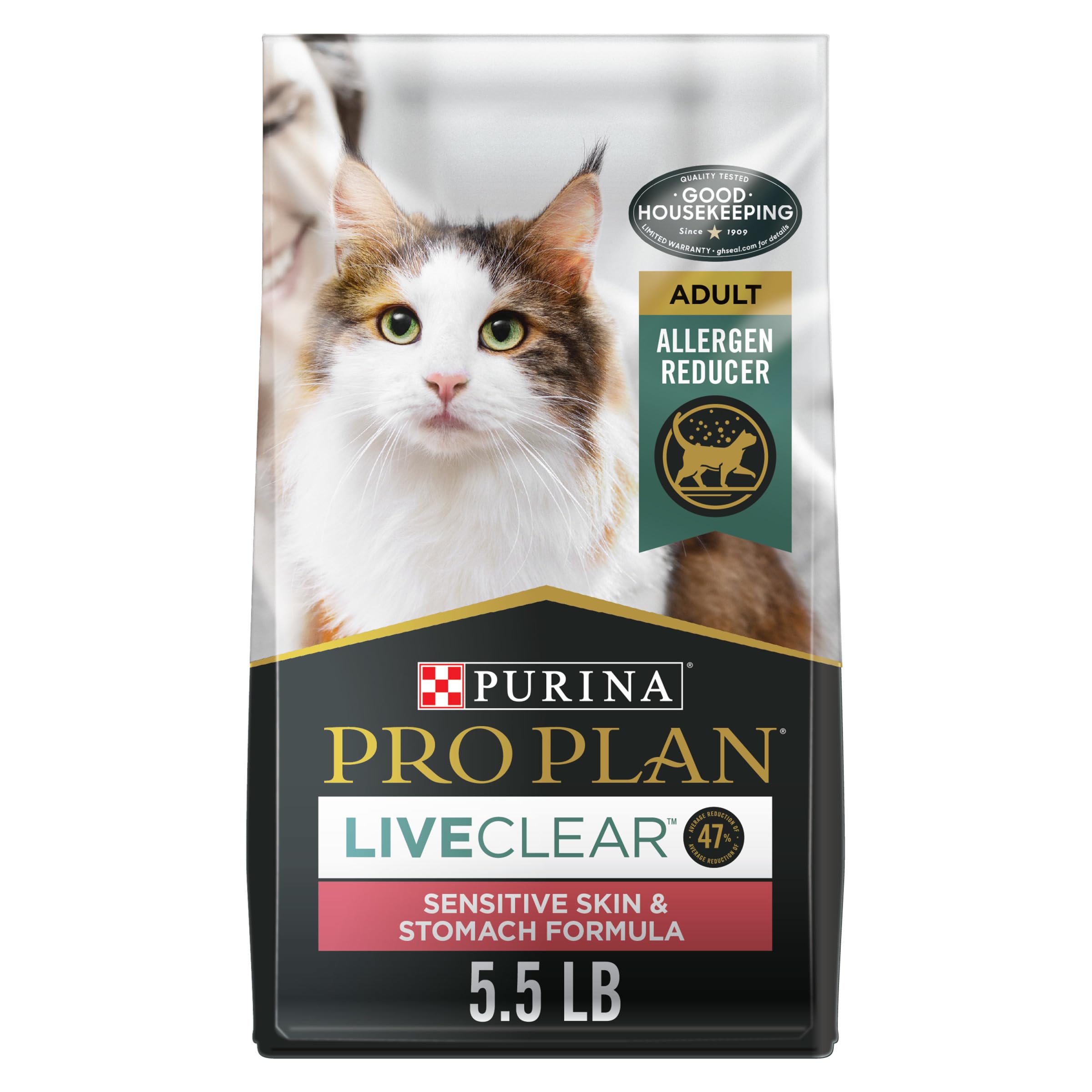
This formula occupies a unique intersection — it addresses both the cat’s digestive sensitivity and the owner’s allergic reaction to the cat. The patented LIVECLEAR technology uses a key protein sourced from eggs that neutralizes Fel D 1, the primary allergen in cat saliva, reducing it by an average of 47 percent in cat hair and dander after three weeks. For cat owners who suffer from itchy eyes or respiratory irritation but own a sensitive-stomach cat, this dual-action approach eliminates the sacrifice of either the cat’s digestive health or the owner’s comfort.
The turkey and oatmeal protein foundation is easily digestible and avoids the chicken that triggers many sensitivities, while the prebiotic fiber inclusion supports stool consistency. Oatmeal as a carbohydrate source provides gentle fiber without the inflammatory potential of corn or wheat. Owner reports note that the food increases stool production volume compared to standard kibble, likely due to the fiber content, but the stool odor is significantly reduced compared to grocery-store brands.
The cost is the primary barrier — this is the most expensive non-prescription option on this list, and the 5.5-pound bag size means the price per feeding cycle is noticeable. Some owners report that the allergen reduction is sufficient for mild human allergies but that visitors with severe cat allergies still react, suggesting the 47 percent reduction may not be enough for hyper-sensitive individuals. The oatmeal content can also be a concern for cats with confirmed grain sensitivities, though true grain allergies in cats are far rarer than protein allergies.
Why we love it
- Scientifically proven Fel D 1 reduction in cat dander and hair
- Turkey protein base is gentle on sensitive stomachs
- Improved stool odor compared to standard commercial kibble
Good to know
- High cost per bag relative to similar-sized non-prescription options
- Allergen reduction may not be sufficient for severe human allergies
6. Blue Buffalo Basics Grain-Free Dry Cat Food, Turkey & Potato Recipe

This is a true limited-ingredient diet — deboned turkey as the single protein source, potatoes as the carbohydrate, and a short ingredient list that avoids corn, wheat, soy, dairy, eggs, and artificial additives. The simplicity allows owners to isolate whether a specific ingredient is causing the sensitivity without the complexity of multi-protein or multi-grain blends. The LifeSource Bits are small antioxidant-rich pellets mixed into the kibble that contain vitamins C and E plus specific antioxidants selected by veterinary nutritionists.
Cat owners with chicken-allergic felines consistently report zero reaction to this turkey-based formula, and multiple long-term owners note that their cats lived into their mid-20s on Blue Buffalo recipes, suggesting the nutritional profile supports longevity when the digestive system tolerates it. The kibble pieces are small and hard — the hardness encourages dental scraping, but senior cats with missing teeth or gingivitis may find the texture challenging. The pumpkin and pea fiber content provides gentle prebiotic support without the inflammatory potential of grain-based fillers.
The 5-pound bag is smaller than it appears in product images, and the price per pound runs higher than the Purina Cat Chow while falling below the prescription-tier options. The senior formulation designation means the protein-to-fat ratio is calibrated for older cats with reduced activity, so younger high-energy cats may require a larger portion size than the feeding guide suggests. Some owners report cats eating around the LifeSource Bits and leaving them at the bottom of the bowl, reducing the antioxidant benefit.
Why we love it
- Genuine single-protein limited ingredient list for allergy isolation
- Long-term results show cats thriving into their 20s on this brand
- Grain-free formula eliminates corn, wheat, and soy triggers
Good to know
- Hard kibble texture may be difficult for cats with dental issues
- Some cats selectively eat around the LifeSource Bits
7. Hill’s Prescription Diet z/d Skin/Food Sensitivities Dry Cat Food

This is the prescription-grade solution for cats whose immune systems react to intact protein molecules regardless of the animal source. The hydrolyzed chicken protein is broken down into fragments smaller than 10,000 daltons — too small for the cat’s immune system to recognize as a threat, which eliminates the inflammatory cascade that produces vomiting, diarrhea, and skin lesions. The ActivBiome+ prebiotic fiber blend is a proprietary mix that rapidly activates gut microbiome bacteria to support digestive health alongside the immune-avoidance strategy.
Multiple owner reports describe this food as transformative for cats whose vomiting was misdiagnosed as hairballs by general veterinarians — cats that vomited daily for years stopped entirely within the first week of switching. The kibble texture is moderate, not overly hard, and the smell is described as more natural than typical kibble, which helps with acceptance among picky cats. The 4-pound bag size means you will need to reorder more frequently than with larger economy bags, and the prescription requirement adds a step: you must obtain veterinarian approval, though most online retailers process the verification digitally in minutes.
The primary drawback is cost — this is the most expensive option on this list per pound, and cats that require this formulation typically need to stay on it indefinitely, creating a long-term budget consideration. Some owners report that the hydrolyzed taste is less appealing to cats than standard protein, though most cats adapt within a week. The prescription nature of this food means you should not assume it is the right choice — a veterinary diagnosis of food sensitivity should precede purchase, as this formulation is medically targeted, not a general wellness product.
Why we love it
- Hydrolyzed protein eliminates immune detection for severe food sensitivities
- ActivBiome+ prebiotic blend actively supports gut microbiome health
- Dramatically stops chronic daily vomiting for most cats
Good to know
- Prescription required from a veterinarian before purchase
- Highest per-pound cost of any option in this guide
FAQ
Why does my cat vomit immediately after eating even with sensitive stomach food?
Should I choose limited ingredient or hydrolyzed protein for my cat?
Can I feed sensitive stomach food to a cat without digestive issues?
How long should I wait to see improvement after switching food?
Final Thoughts: The Verdict
For most gardeners, the sensitive stomach food for cats winner is the Hill’s Science Diet Adult Sensitive Stomach & Skin because it combines a highly digestible prebiotic fiber blend with omega fatty acids that address both digestive and dermatological symptoms in a single formulation without requiring a prescription. If your cat’s issue is specifically eating speed rather than ingredient sensitivity, grab the Royal Canin Digestive Care for its ring-shaped kibble that mechanically slows gulping. And for cats with severe food sensitivities that cause daily vomiting or skin lesions, nothing beats the Hill’s Prescription Diet z/d for its hydrolyzed protein that completely bypasses the immune response.