
Destructive chewing, relentless barking, and obsessive pacing are not signs of a “bad dog” — they are symptoms of a brain starved for the right kind of stimulation. When you leave for work, your dog’s cortisol spikes, and without a constructive outlet, that anxiety turns into chewed baseboards and scratched doors. The solution isn’t more walks; it’s the kind of mentally taxing work that tires a mind faster than a mile run ever could.
I’m Mo Mahin — the founder and writer behind Furric. Over the past decade, I’ve dissected hundreds of toy designs, studied the mechanics of canine enrichment, and analyzed thousands of owner reports to understand which materials, dispensing mechanisms, and puzzle complexities actually hold a dog’s attention long enough to defuse a panic cycle.
Whether you are crate-training a high-strung puppy or managing a rescue that cannot handle being alone, the right tool makes the difference between a destroyed sofa and a calm canine. This guide cuts through the marketing noise to rank the separation anxiety toys for dogs that genuinely buy your home a quiet afternoon.
How To Choose The Best Separation Anxiety Toys For Dogs
Not every squeaky plush or rubber ball qualifies as an anxiety-busting tool. The toys that work share three traits: they demand motor input, they release rewards unpredictably, and they require at least 20 minutes of focused interaction. Before you buy, match the toy’s mechanics to your dog’s specific stress profile.
Match Difficulty to Your Dog’s Frustration Threshold
A dog that panics in solitude does not need a hard puzzle that causes frustration — it needs a predictable win. Start with a Level-1 dispenser that releases treats with a roll or nudge. Once the dog associates the toy with positive reward, you can escalate to multi-step puzzles that require sliding, flipping, or pulling. An anxious dog that fails a hard puzzle will redirect that frustration back onto your furniture.
Look for Frozen-Enrichment Compatibility
Frozen treats extend engagement time by 300 to 500 percent compared to dry kibble alone. Toys with silicone molds or fillable cores that can be pre-frozen with yogurt, peanut butter, or pumpkin puree are king for separation anxiety. The cold temperature soothes gums while the slow melt forces the dog to work for hours instead of minutes. Avoid toys with hard plastic cavities that crack under freezing expansion.
Prioritize Bite Resistance and Material Safety
Anxiety-driven chewing is often harder than normal play. Thick food-grade nylon reinforced with natural wood fiber offers the best dent resistance without splintering. BPA-free natural rubber comes second — it has some give that is gentler on teeth but vulnerable to determined jaws. Avoid thin TPR molds, cheap ABS plastic that shatters, and plush toys with internal cardboard structures that disintegrate and pose ingestion risks.
Quick Comparison
On smaller screens, swipe sideways to see the full table.
| Model | Category | Best For | Key Spec | Amazon |
|---|---|---|---|---|
| Kogven Frozen Treat Holder | Frozen Chew Toy | Heavy chewers needing 30+ min sessions | Nylon + coffee wood fiber, 6 filling holes | Amazon |
| Outward Hound Hide-A-Squirrel | Plush Puzzle | Hunting-instinct play & soft-mouth dogs | 12.6″ trunk, 6 squeaky squirrels | Amazon |
| PETSTA 2-Pack Puzzle | Treat Dispenser | Small/medium dogs new to puzzle play | Adjustable openings, 8″ diameter | Amazon |
| PetSafe Cravin Corncob | Treat Ring Toy | Dental cleaning & 20-30 min engagement | BPA-free rubber, 4 included treat rings | Amazon |
| Forfon 9-Piece Puzzle Set | Enrichment Kit | Versatile kit for small/medium dogs | Natural rubber, 3 difficulty levels | Amazon |
In‑Depth Reviews
1. Kogven Frozen Treat Holder
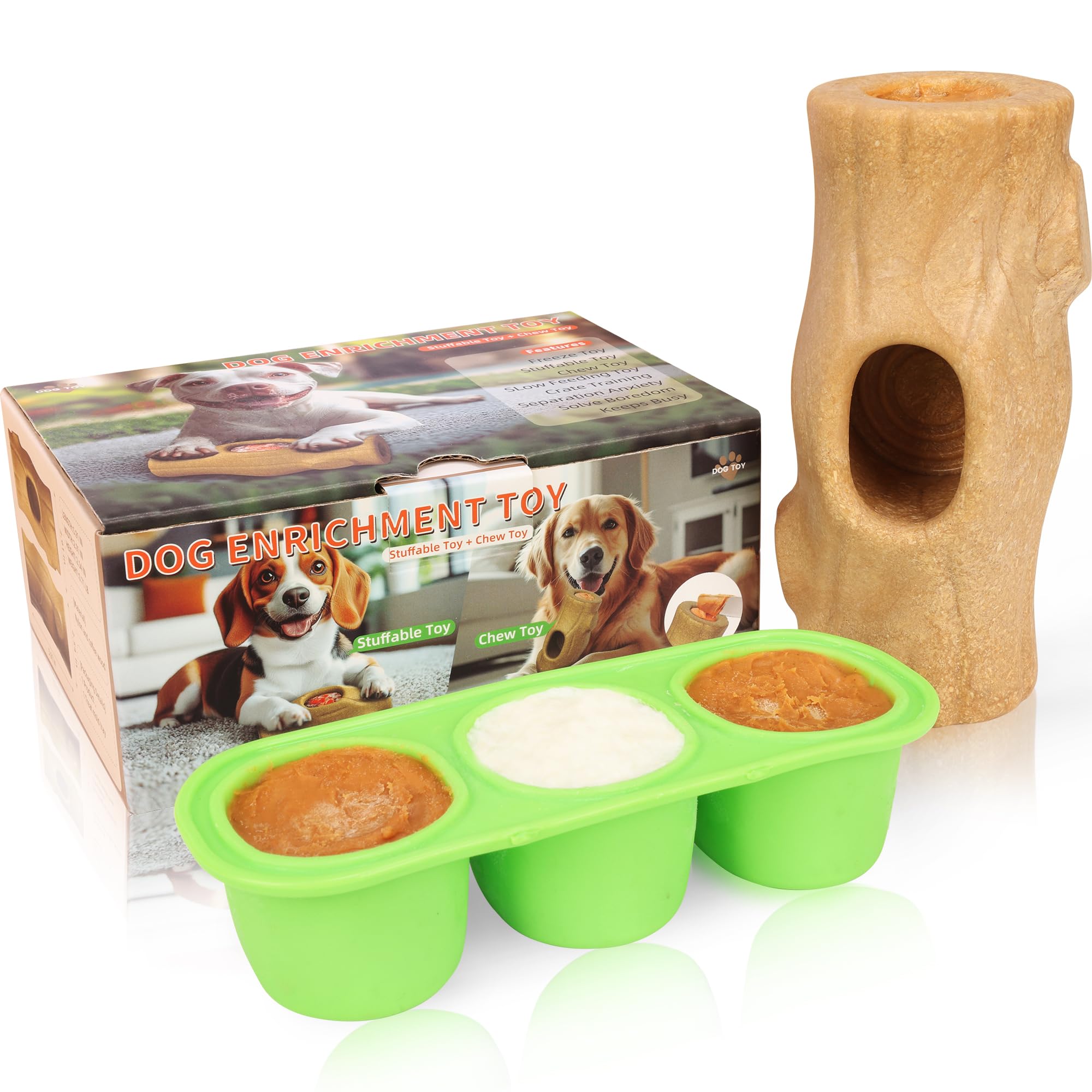
The Kogven treat holder is built specifically for the aggressive chewer who destroys standard rubber puzzles in minutes. Its body is molded from a dense blend of food-grade nylon and natural coffee wood fiber — a composite that resists denting far better than TPR or silicone alone. The tree-stump shape lets the dog grip it with front paws while licking, which reduces frantic toy-throwing behavior common in anxiety episodes.
The critical advantage here is the frozen enrichment cycle. The kit includes two silicone molds with six filling holes that you pre-fill with yogurt, pumpkin, or wet food and freeze. Once inserted into the nylon shell, the frozen block lasts 30 to 45 minutes of continuous licking and nibbling. Multiple owner reports confirm the toy survives over twenty freeze-thaw cycles without structural failure, though the silicone molds can warp in a dishwasher.
The one persistent drawback is mold removal — frozen treat blocks tend to stick, requiring running the molds under warm water or using a butter knife to pry them loose. Hand washing is mandatory. For large breeds exceeding 60 pounds, the 6-inch length feels slightly undersized, but for the intended medium-large dog range, the chew surface area is adequate.
Why we love it
- Composite nylon-wood blend withstands determined jaw pressure
- Pre-frozen treats extend engagement past 30 minutes reliably
- BPA-free construction with no sharp plastic splinters
Good to know
- Frozen treats are difficult to extract from the silicone mold
- Hand wash only — dishwasher warps the mold cups
2. Outward Hound Hide-A-Squirrel

The Hide-A-Squirrel taps directly into a dog’s prey-drive sequence: locate, dig, extract, and squeak. The X-Large tree trunk measures 12.6 inches and holds six separate squeaky squirrels that the dog must find and pull out one by one. This hide-and-seek mechanic works especially well for dogs whose anxiety stems from boredom rather than panic — the act of searching mimics the hunting pattern that tires a dog mentally.
Owner reports consistently highlight durability that defies the plush category. Multiple households with two or three dogs report the squirrels surviving three months of daily extraction games. For a 40-pound puppy that rips apart most fabric toys in one session, the trunk fabric holds up remarkably well against moderate chewing.
Three caveats matter. First, the newer versions use cardboard inside the trunk base for structure, which can rip if the dog digs through the fabric. Second, the squirrel tails and fur shed quickly during the first play session — expect minor mess. Third, some dogs simply do not care about the plush texture and ignore the squirrels entirely, though those owners successfully repurposed the trunk as a treat-hiding puzzle.
Why we love it
- Engages natural prey-drive sequence rather than passive licking
- Plush construction far more durable than typical fabric toys
- Replacement squirrels available separately to extend toy life
Good to know
- Cardboard internal structure can fail if trunk fabric is breached
- Squirrel fur sheds heavily on first use
3. PETSTA 2-Pack Dog Puzzle Toy
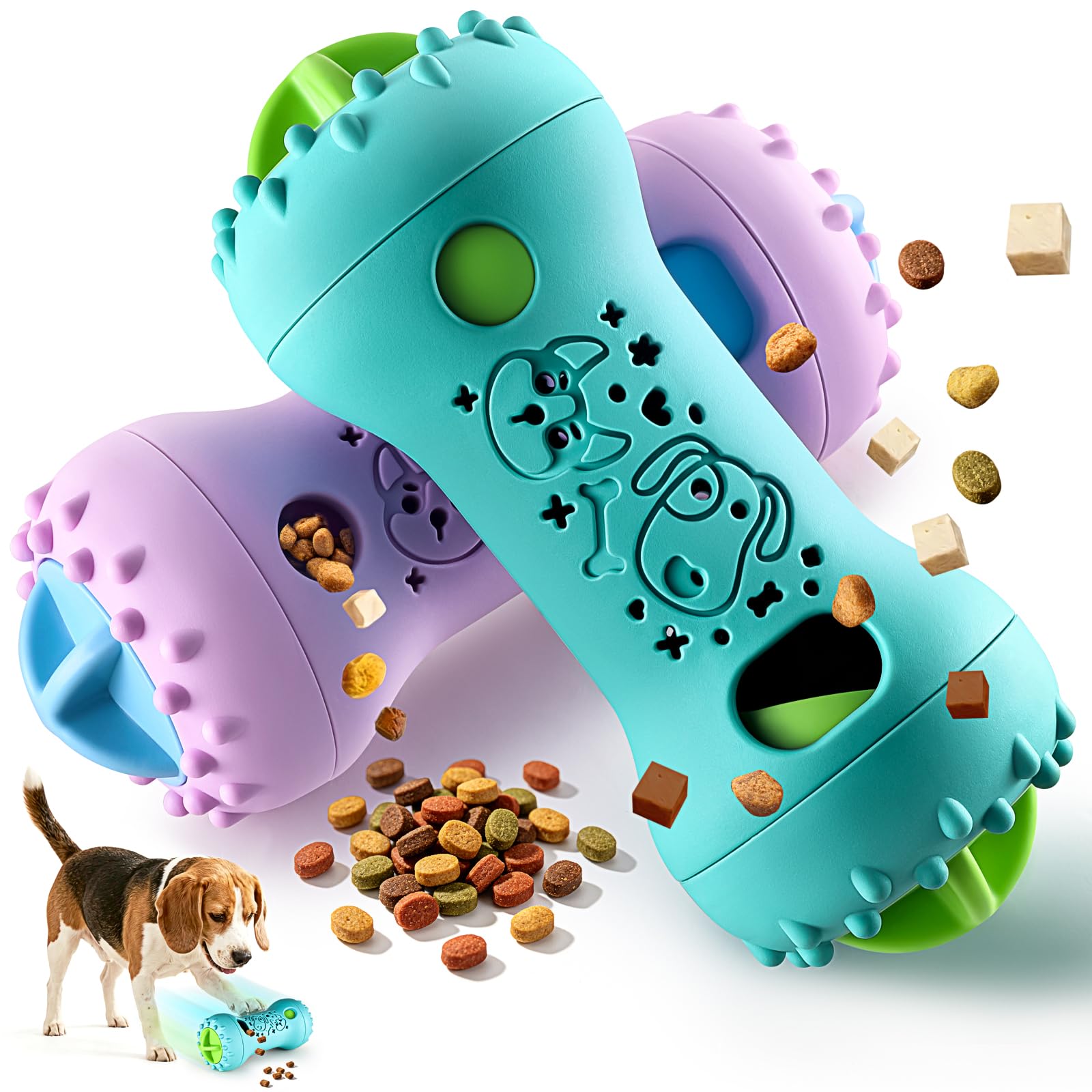
For dogs just beginning treat-dispensing play, the PETSTA two-pack offers the lowest barrier to entry. The ABS plastic shell requires only a gentle nudge or roll to release small kibble pieces, making it ideal for nervous dogs that need an immediate success to build confidence. The adjustable opening lets you control reward speed — tighter for longer play, wider for quick reinforcement during early training sessions.
The 8-inch flat disc shape slides across hard floors with minimal noise, which matters for apartment dwellers whose neighbors might not appreciate a heavy rubber toy thumping at 8 AM. Multiple verified owners of labs, blue heelers, and mixed rescues report the toy surviving the puppy chewing stage intact. Second-time buyers specifically note that the toy’s simple mechanism does not jam or malfunction after months of daily use.
Limitations are clear: this is not a toy for heavy chewers. The ABS plastic and nylon construction is designed for rolling and nudging, not clamping. A determined chewer could crack the shell. Additionally, the toy works only with small dry kibble or freeze-dried treats — sticky or irregular wet treats clog the adjustable openings. Clean the inner chamber promptly after each session to avoid residue buildup inside the twist-lock mechanism.
Why we love it
- Immediate reward mechanism perfect for anxious beginners
- Quiet rolling action suitable for apartment environments
- Two-pack provides rotation to prevent boredom habituation
Good to know
- ABS plastic is vulnerable to determined chewing
- Only accepts dry, small treats — sticky foods clog the openings
4. PetSafe Busy Buddy Cravin Corncob
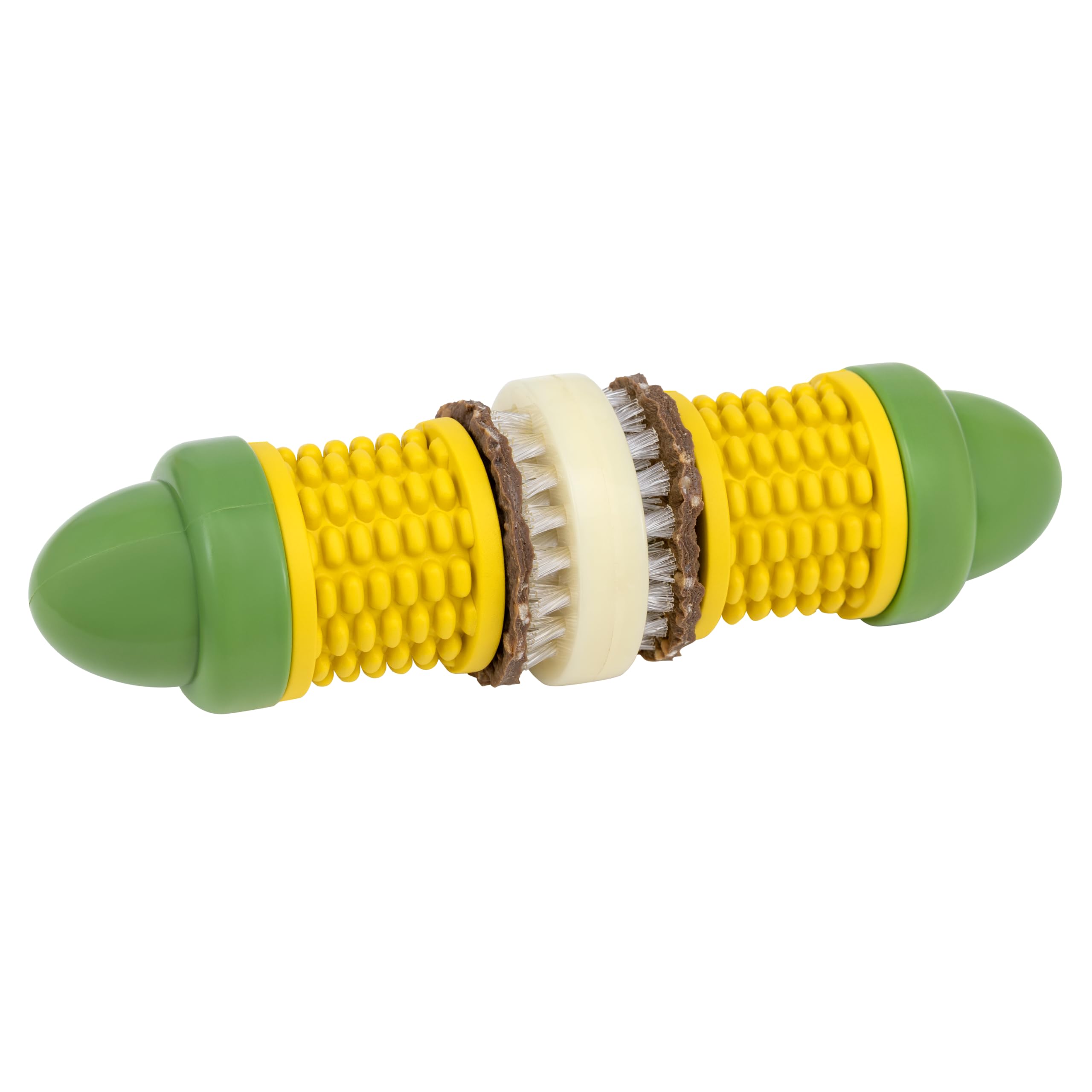
The Cravin Corncob splits its value between mental engagement and dental hygiene. The yellow rubber body holds included rawhide treat rings wedged into its grooves — the dog must chew and lick at the crevices to scrape off bits of the ring, which simultaneously cleans the surfaces of incisors, canines, and molars. The butter-scented BPA-free rubber attracts the dog’s attention even before treats are loaded, reducing the initial hesitation many anxious dogs show with new toys.
Owner reports from large-breed homes — particularly German Shepherd and lab owners — describe sustained engagement between 20 and 30 minutes per session. The Medium/Large size accommodates dogs over 50 pounds without feeling toy-small. The toy is dishwasher-safe, which matters for owners unwilling to hand-wash grooved rubber after wet treat residue accumulates in the crevices.
Two safety notes deserve attention. Several owners reported that the white treat ring ends, once softened by chewing, can snag and scrape gums in particularly enthusiastic dogs — supervise the final stages of a treat ring. Second, a single verified review noted that a bristle on the rubber body detached during chewing, posing a potential ingestion hazard. This appears to be a batch-defect outlier, but it warrants checking the rubber surface integrity before each use.
Why we love it
- Dual mechanical-cleaning action while the dog licks for treat reward
- Butter scent drives immediate interest without food inside
- Top-rack dishwasher safe for easy sanitation
Good to know
- Some dogs may scrape gums on softened treat ring ends
- Monitor rubber bristle integrity during heavy chew sessions
5. Forfon 9-Piece Dog Puzzle Toy Set
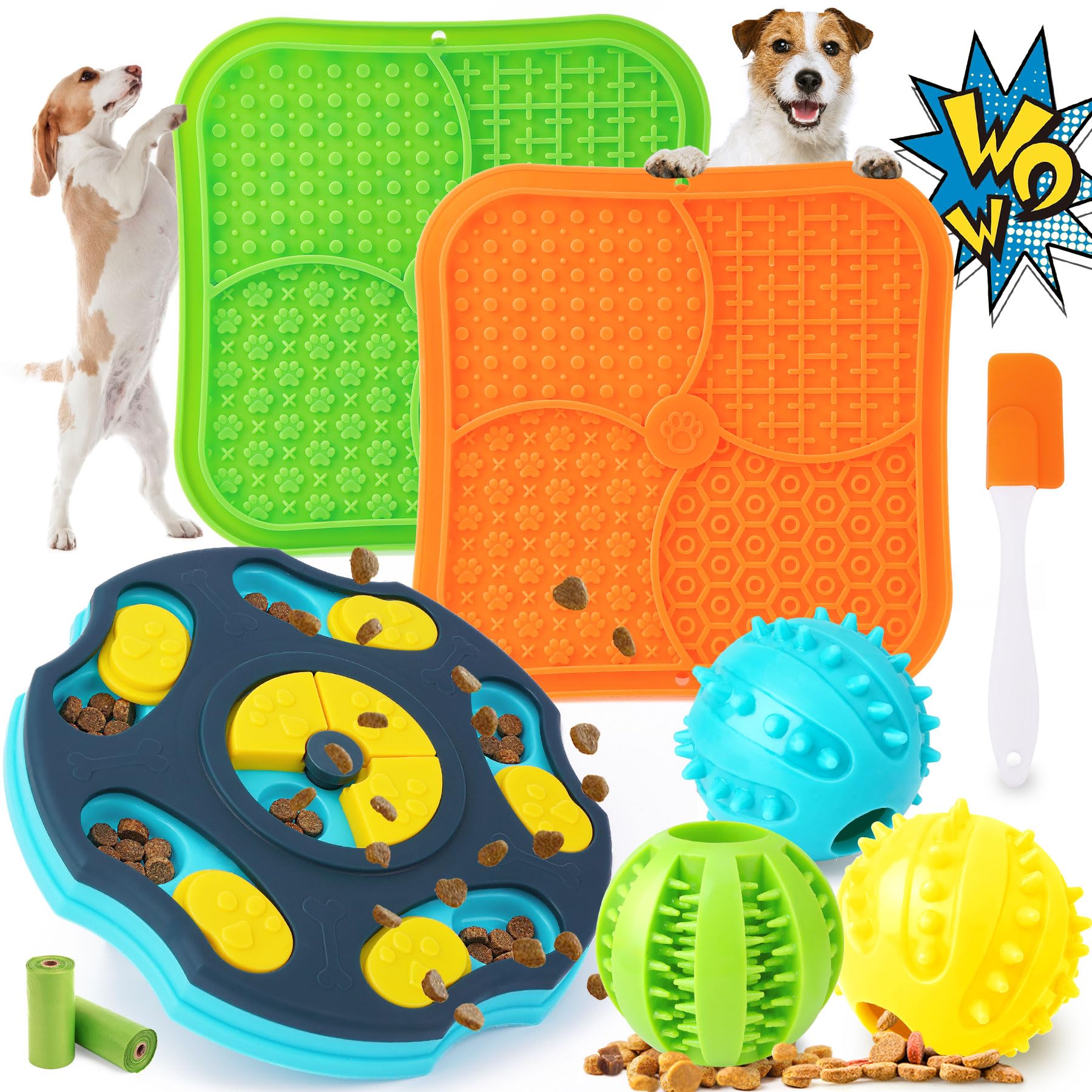
The Forfon set bundles nine individual components — two lick mats with suction cups, one slider puzzle, three treat balls, a silicone spatula, a brush, and two waste bags. This gives owners three distinct difficulty levels to rotate through the week, which prevents the novelty habituation that kills the effectiveness of single-toy solutions. The lick mats anchor to tile or tub surfaces via suction cups, turning bath time or post-meal licking into a 15-minute calming activity.
Small to medium dog owners report strong durability from the natural rubber and silicone materials. The slider puzzle works well for slowing down fast eaters by forcing the dog to slide each compartment cover to access kibble underneath. The treat balls can be used empty as fetch toys or filled for solo play, adding flexibility for owners whose dogs have different daily energy levels.
Two limitations reduce its suitability for some homes. First, the puzzle sliders are not secured by strong tension — determined large dogs can pop the covers off entirely rather than sliding them, turning the puzzle into a simple scatter-feed. Second, the lick pads use silicone that can get oily on hard floors without a tray underneath. Overall, this is the strongest choice for owners who want variety across a small-to-medium dog’s week without buying five separate products.
Why we love it
- Nine components offer rotation to maintain novelty over weeks
- Suction-cup lick mats add bathtub calming option
- Natural rubber and silicone materials are easy to clean
Good to know
- Puzzle sliders pop off under aggressive large-breed play
- Lick pads require a tray underneath to avoid oily floor marks
FAQ
How long should a separation anxiety toy keep my dog occupied?
Can I leave these toys unsupervised with my dog during the workday?
What filling works best for frozen puzzle toys to maximize duration?
Will these toys work for a rescue dog with severe isolation distress?
Final Thoughts: The Verdict
For most households, the separation anxiety toys for dogs winner is the Kogven Frozen Treat Holder because its nylon-wood composite shell survives heavy chewers while the frozen enrichment cycle buys owners a reliable 30-plus minute calm window. If your dog is a light chewer who benefits from prey-drive stimulation, grab the Outward Hound Hide-A-Squirrel for the hide-and-seek mechanic that tires the brain faster than any lick mat. And for budget-conscious owners managing small to medium dogs new to puzzle play, the PETSTA 2-Pack provides the lowest-friction entry point with a second unit ready for rotation the next day.