
That constant scratching, the sour yeasty smell, and the greasy, reddened skin—it’s a cycle that frustrates both you and your dog. Finding a shampoo that actually breaks the yeast overgrowth without stripping the coat or causing further irritation is the real challenge. You need a formula that targets Malassezia at the source while restoring the skin’s natural barrier.
I’m Mo Mahin — the founder and writer behind Furric. I’ve spent years comparing veterinary dermatology protocols, cross-referencing active ingredient concentrations like chlorhexidine and ketoconazole, and analyzing aggregated owner feedback to separate the shampoos that provide lasting relief from those that just mask the odor.
After evaluating dozens of formulas based on antifungal potency, contact-time requirements, and real-world outcomes for chronic yeast cases, I’ve narrowed the field to the five most effective options. This guide breaks down exactly how to choose the best shampoo for yeast in dogs and which specific formula fits your dog’s severity of infection.
How To Choose The Best Shampoo For Yeast In Dogs
Not all medicated shampoos are built for Malassezia pachydermatis. Selecting the wrong formula means weeks of continued scratching and a deepening infection. Focus on these three criteria to get it right the first time.
Active Ingredient Strength & Synergy
The most effective anti-yeast shampoos pair chlorhexidine (an antibacterial antiseptic) with ketoconazole or miconazole (broad-spectrum antifungals). A 2% chlorhexidine and 1% ketoconazole combination is the veterinary standard for moderate to severe cases. Single-agent formulas with only chlorhexidine or only an azole antifungal work for mild cases but often fail against established yeast biofilms.
Contact Time — The Make-or-Break Variable
Yeast cells have a thick cell wall that requires sustained exposure to the active ingredients. For the antifungal to penetrate, you must lather the shampoo onto damp fur and leave it for a full 5 to 10 minutes before rinsing. Rinsing too early is the number one reason owners report “this shampoo didn’t work.” The product literature of every effective formula reinforces this timing.
pH Balance & Moisture Retention
Canine skin has a neutral to slightly alkaline pH (around 7.5). Human shampoos are too acidic and disrupt the skin barrier, creating an environment where yeast thrives. A good veterinary anti-yeast shampoo is pH-balanced for dogs and includes moisturizing agents like oatmeal, aloe vera, or lactic acid to prevent the flaky dryness that follows antifungal treatment.
Quick Comparison
On smaller screens, swipe sideways to see the full table.
| Model | Category | Best For | Key Spec | Amazon |
|---|---|---|---|---|
| Vetnique Dermabliss Advanced | Premium | Severe yeast & bacterial infections | 2% Chlorhexidine + 1% Ketoconazole | Amazon |
| Miracle Vet Medicated Shampoo | Premium | Itch relief + yeast + hot spots | Hydrocortisone + Antifungal blend | Amazon |
| Douxo S3 SEB Shampoo | Premium | Oily, flaky skin & odor control | 0.5% Ophytrium seboregulator | Amazon |
| KetoWELL Topical Shampoo | Mid-Range | Mild fungal issues & maintenance | Ketoconazole single-agent | Amazon |
| Mane ‘n Tail Pro-Tect Medicated | Mid-Range | Budget-friendly broad-spectrum | Benzalkonium Chloride base | Amazon |
In‑Depth Reviews
1. Vetnique Dermabliss Advanced Vet Strength
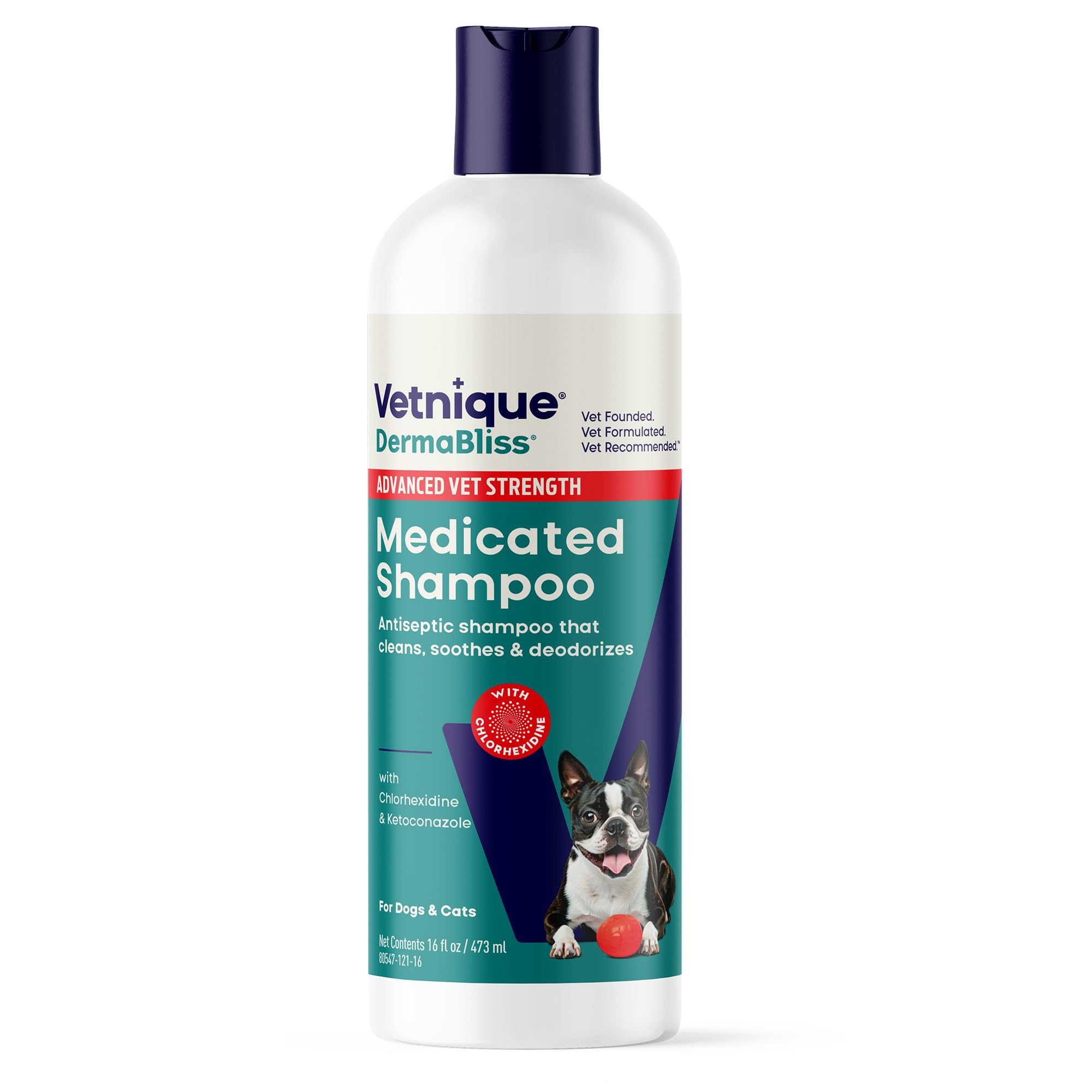
The Vetnique Dermabliss Advanced uses the exact dual-agent protocol—2% chlorhexidine paired with 1% ketoconazole—that veterinarians prescribe for persistent yeast and bacterial cocoon infections. This is not a maintenance wash; it is a treatment-grade intervention for dogs with red, flaky bellies, greasy coats, and sour odor that won’t quit. The lactic acid component exfoliates dead skin cells so the antifungal can reach the yeast at the follicle level.
Real owners report dramatic reversals: a 70-pound boxer mix with raw sores saw flakes vanish and belly skin heal after just two washes. An 11-year-old German Shepherd with an autoimmune-related rash cleared completely after three baths, with owners reporting better tolerance than oral medications that caused diarrhea. The soap-free, unscented formula means no harsh residue, and a small amount creates a thick lather that stretches a 16-ounce bottle across 4-5 full baths.
The only trade-off is the mild chemical scent—some owners describe it as medicinal or reminiscent of red dye—but it dissipates quickly after rinsing. For dogs with moderate to severe yeast outbreaks where single-agent shampoos have failed, this is the formula that ends the cycle.
Why we love it
- Veterinary-standard 2% chlorhexidine + 1% ketoconazole synergy
- Visible improvement in 1-2 washes for moderate to severe cases
- Soap-free and safe for dogs with highly sensitive skin
Good to know
- Mild medicinal scent during application; fades after drying
- Requires 5-10 minute contact time for full efficacy
2. Miracle Vet Medicated Dog Shampoo
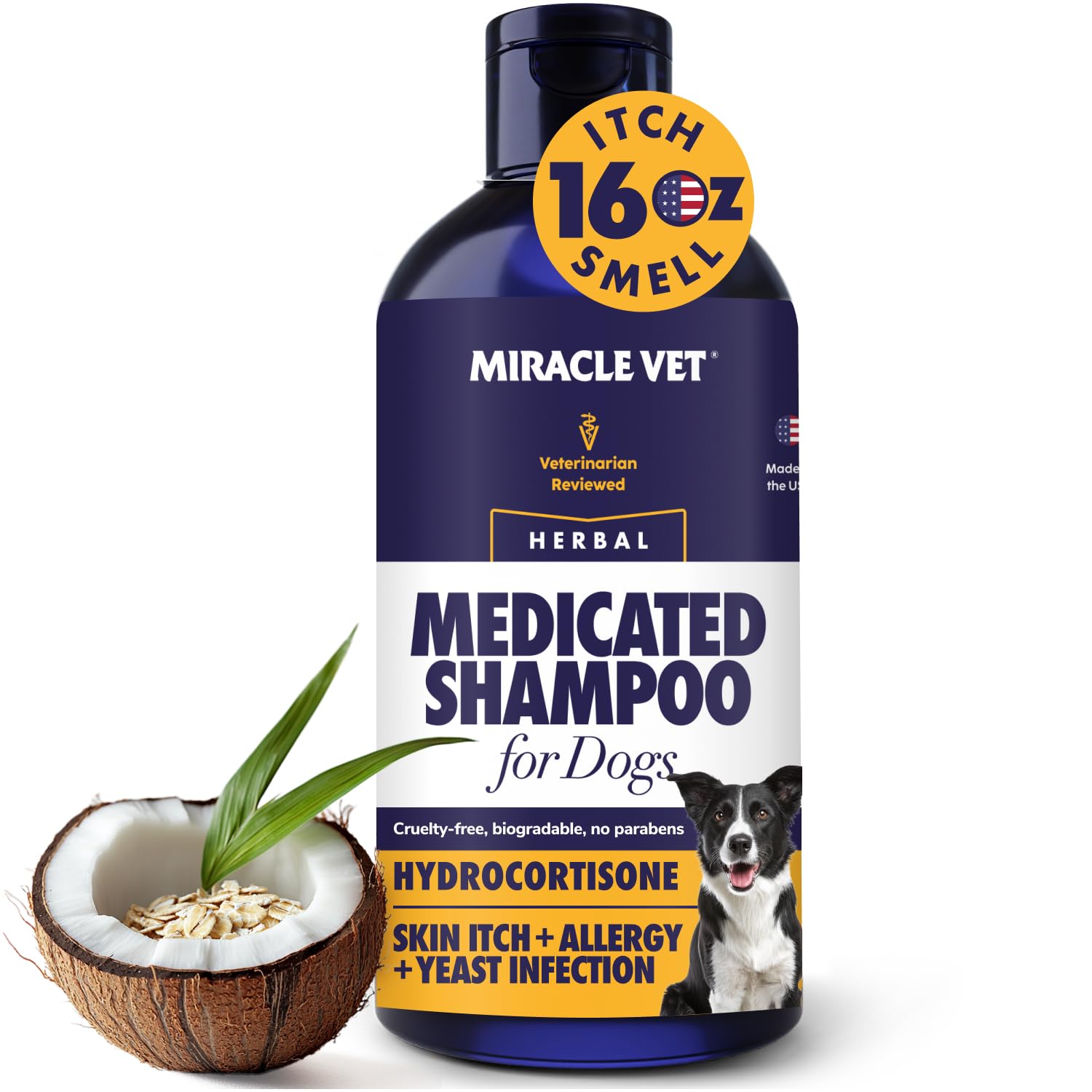
The Miracle Vet shampoo is a three-pronged formula that layers an antifungal/antibacterial base with hydrocortisone for immediate itch relief and moisturizing oatmeal for barrier repair. This makes it uniquely suited for dogs whose yeast infection has triggered a secondary hot spot cycle, where scratching breaks the skin and opens the door to bacterial invasion. The herbal scent is noticeably pleasant compared to most medicated washes.
Owner feedback confirms the speed of relief: dogs that previously scratched through the night settled into restful sleep after a single wash. The formula is free of parabens and dyes, and it targets not just yeast but also ringworm and environmental allergy manifestations. A 4-star reviewer noted the relief was “short-lived” after a few days, which suggests this works best as part of a weekly bath schedule rather than a one-and-done fix. For dogs with yeast plus significant pruritus, the hydrocortisone is a game-changer.
One limitation: the gel consistency requires thorough lathering to distribute evenly across a thick double coat. Owners of Golden Retrievers or Huskies report needing slightly more product per bath than with thinner liquid shampoos. But the combination of antifungal action and steroid-level itch control is rare in an OTC product.
Why we love it
- Hydrocortisone provides almost instant itch relief for hot spots
- Antifungal, antibacterial, and soothing moisturizer in one bottle
- Pleasant herbal scent masks the medicinal smell
Good to know
- Gel formula needs thorough lathering on thick-coated breeds
- Relief may last only a few days; requires weekly bathing schedule
3. Douxo S3 SEB Shampoo
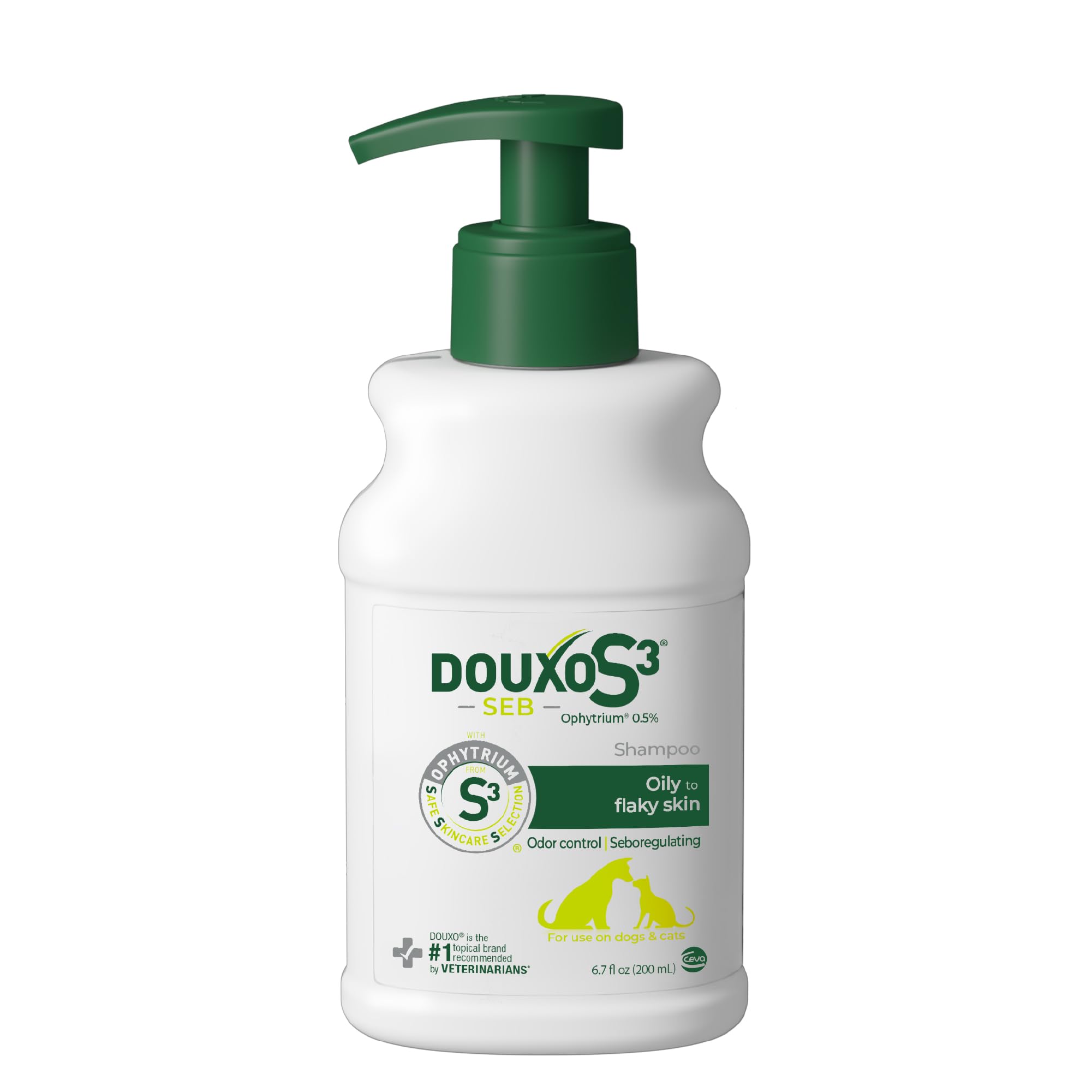
The Douxo S3 SEB takes a different approach from the chlorhexidine-heavy formulas. Instead of blasting yeast with high-concentration antiseptics, it uses Ophytrium—a patented phytocomplex—to normalize sebum production at the skin level. This makes it the top pick for dogs whose yeast problem is driven by seborrhea (excessive oil production) rather than a primary fungal invasion. The result is less grease for yeast to feed on, which breaks the cycle naturally.
Owner reviews highlight this as a “vet recommended” solution for greasy, stinky necks and flaky dandruff that standard antifungal shampoos couldn’t fix. One senior dog with a slick coat went from needing baths every two weeks to monthly, with significantly less itch and odor between washes. The formula is hypoallergenic and works on cats too, which is rare for a medicated shampoo. It also detangles fur and leaves a soft, shiny finish that owners consistently praise.
The 200 mL (6.7 oz) bottle is noticeably smaller than the 16-32 oz competitors, and the price per ounce is higher. For dogs with fine hair or cats with grooming issues, some users reported a greasy residue that required extra rinsing. This is not a general yeast shampoo—it shines brightest when the primary symptom is oily, flaky skin rather than raw infection.
Why we love it
- Clinically proven to reduce sebum, dandruff, and odor
- Safe for both dogs and cats, including sensitive skin
- Leaves coat soft, shiny, and detangled after one wash
Good to know
- Small bottle size (200 mL) compared to competitors
- Can leave greasy residue on fine-haired or poorly-groomed coats
4. KetoWELL Topical Shampoo (16 oz)

The KetoWELL shampoo relies on ketoconazole as its single active antifungal agent, making it a solid middle-ground option for mild to moderate yeast presentations. It is not a heavy-duty dual-action formula, so dogs with stubborn bacterial cocoon infections may need a stronger partner product. But for dogs that simply have itchy scabs, mild hair loss around the paws or groin, or a slight yeasty odor, this gets the job done without the cost or chemical load of a veterinary-strength scrub.
Five-star reviews consistently describe it as “liquid gold” for basset hounds and pit bulls—breeds prone to skin fold yeast and environmental allergies. One owner of a pit bull terrier with severe hot spots and fur loss bathed every 2-3 days with a 5-10 minute contact time, and reported full fur regrowth with soft pink skin within two weeks. Another user saw improvement after the first wash and full resolution after three washes over two weeks. The smell is described as mild and significantly better than many medicated alternatives.
At 16 ounces, it is a 30% smaller bottle than the Mane ‘n Tail option at a higher price per ounce. While it performs well for its intended use case, owners of large dogs with full-body yeast may find they go through the bottle quickly. This is best suited for smaller to medium breeds or as a maintenance wash after a severe outbreak has been controlled.
Why we love it
- Single-ingredient ketoconazole is gentle enough for weekly use
- Works quickly—visible results in 1-3 washes for mild cases
- Leaves coat soft and shiny with a mild, pleasant smell
Good to know
- No chlorhexidine; not strong enough for severe dual infections
- 16 oz bottle may deplete quickly for large or double-coated breeds
5. Mane ‘n Tail Pro-Tect Medicated (32 oz)

The Mane ‘n Tail Pro-Tect is the volume king of this list, delivering 32 fluid ounces of broad-spectrum antimicrobial coverage at a cost per bath that is hard to beat. Its active ingredient is benzalkonium chloride, a quaternary ammonium compound with activity against bacteria, yeast, mold, fungi, and viruses. It is not a dedicated azole antifungal like ketoconazole, but its broad-spectrum action makes it effective against difficult-to-identify opportunistic organisms that may complicate a yeast diagnosis.
Real-world reports confirm its versatility: owners use it on golden doodles with patchy dry skin (resolved after two baths over 10-12 weeks), Labradors with smelly dander and hair loss (improvement after the very first bath), and even goats on the farm. The formula is gluten-free, colorless, nearly odorless, and gentle enough for weekly use. It is also safe for skin with cuts, tears, and abrasions, which is common when itching has led to self-trauma.
The limitation is that benzalkonium chloride is less targeted against Malassezia than ketoconazole or chlorhexidine. Owners of dogs with severe, chronic yeast infections with a strong odor may find it controls smell but doesn’t fully eliminate the fungal overgrowth. It works best as a first-line treatment for mild yeast-related skin issues or as a whole-body cleaning shampoo that also addresses environmental allergens and ringworm spores.
Why we love it
- 32 oz bottle offers exceptional value per bath
- Broad-spectrum antimicrobial covers yeast, bacteria, fungi, and viruses
- Colorless, odorless, and safe for open wounds or abrasions
Good to know
- Benzalkonium chloride is less specific for Malassezia than azole antifungals
- May require more frequent bathing for stubborn yeast cases
FAQ
Can I use human dandruff shampoo on my dog for yeast?
How long should I leave medicated shampoo on my dog?
Will the yeast come back after I stop bathing?
Final Thoughts: The Verdict
For most dogs with a confirmed yeast infection, the shampoo for yeast in dogs winner is the Vetnique Dermabliss Advanced because its 2% chlorhexidine and 1% ketoconazole dual-action formula matches the veterinary gold standard for treating both yeast and secondary bacterial infections. If your dog’s primary issue is relentless itching and hot spots, grab the Miracle Vet Medicated Shampoo for the fast-acting hydrocortisone relief. And for dogs with oily, flaky seborrhea-driven yeast, nothing beats the seboregulating power of the Douxo S3 SEB.