
Finding a reliable shelter for outside cats means solving a real problem: keeping feral, stray, and community felines safe from rain, wind, snow, and winter chill. The wrong choice leaves cats exposed to damp bedding, freezing drafts, or a structure that collapses after one storm. A proper cat house, by contrast, offers durable waterproofing, effective insulation, and a raised floor that prevents ground moisture from seeping in. The best models also resist UV damage, hold up to repeated rain, and provide enough interior space for a cat to curl into a tight ball or stretch out comfortably.
I’m Mo Mahin — the founder and writer behind Furric. I’ve spent years comparing outdoor cat shelter specifications, studying insulation ratings, evaluating HDPE and resin construction methods, and analyzing hundreds of real owner experiences to understand which models actually keep cats dry and warm through the toughest weather.
Whether you care for a single outdoor friend or manage a small colony, this guide breaks down every key feature you need to weigh before committing to a shelter for outside cats.
How To Choose The Best Shelter For Outside Cats
Not all outdoor cat shelters perform equally. The differences come down to material durability, insulation approach, floor elevation, and ease of cleaning. Understanding these four factors will help you pick a shelter that genuinely protects cats through changing seasons.
Material Durability and Weather Resistance
Polyester fabric shelters are lightweight and collapsible, making them easy to store and move, but they typically have a shorter lifespan than rigid alternatives. Resin and HDPE plastic shelters resist cracking, warping, and UV damage far better, though they can be heavier. Wooden shelters offer excellent insulation but must be treated or painted to resist rot. For year-round outdoor placement, HDPE or heavy-duty resin is the most reliable choice because it withstands direct sun, heavy rain, and snow loads without structural breakdown. Fabric models work well on covered porches where they are shielded from direct precipitation.
Insulation and Temperature Regulation
Single-wall construction provides minimal thermal protection. Dual-layer walls or hollow-core designs trap an air pocket that slows heat transfer, keeping the interior cooler in summer and warmer in winter. Some shelters include reflective foil or honeycomb panels inside the walls for added insulation. When evaluating a shelter, check whether the walls are solid plastic or have an internal air gap. Models that lack insulation can be improved by adding straw (not hay, which retains moisture), but starting with an insulated design is far more effective. Integrated heating pads, when present, should have a thermostatic control to prevent overheating and must carry a UL or FCC certification for fire safety.
Elevated Floor and Draft Management
A raised floor prevents ground moisture, rain splash, and snow from seeping into the sleeping area. Look for at least two to three inches of clearance. Some shelters include detachable legs or plastic feet that screw into the base. The entrance itself matters: a round burrow-style opening minimizes wind intrusion because the cat’s body fills the gap, whereas a wide rectangular door lets in more cold air. Many high-quality shelters include a flap door or a transparent curtain that cats can push through while blocking precipitation. An escape door on the rear or side gives cats a second exit if a predator approaches the main entrance.
Size, Assembly, and Maintenance
A single adult cat needs roughly 16 to 20 inches of internal width to turn around and lie down comfortably. For a small colony or a mother with kittens, look for shelters with at least 24 inches of internal length. Assembly complexity varies widely. Snap-together or tool-free designs can be set up in minutes, while screw-based models may require a Phillips head or a power drill. Maintenance is equally important — removable roofs make cleaning and bedding changes simple, and smooth interior surfaces (HDPE, resin, or sealed wood) resist odors and can be wiped down. Fabric shelters with Velcro seams can be fully disassembled for washing.
Quick Comparison
On smaller screens, swipe sideways to see the full table.
| Model | Category | Best For | Key Spec | Amazon |
|---|---|---|---|---|
| Texsens Outdoor Cat House | Mid-Range | Single cats on covered porches | 25.19″W interior, honeycomb insulation | Amazon |
| Indestructible Heated Cat House (Lslpin) | Premium | Cold winter climates | HDPE, 3″ elevated, includes heating pad | Amazon |
| Heavy Duty HDPE Stackable Cat House (Generic) | Premium | Small colonies and multi-cat setups | 15″W x 16″H, dual-layer hollow HDPE | Amazon |
| DRATO Resin Cat House | Mid-Range | Year-round outdoor placement | 18.46″D x 23.62″H, resin construction | Amazon |
| TSEHOOHOO Stackable Plastic Shelter | Mid-Range | Stacking multiple units for colonies | 20.8″L x 16.1″W internal, stackable | Amazon |
| Anysiny Cat House (Large) | Budget | Entry-level, mild climates | 19.7″W x 15.7″H, polyester construction | Amazon |
| GEGURI Wooden Cat Shelter | Premium | Colony housing, permanent placement | 35″W x 27.6″H, elevated ventilated floor | Amazon |
In‑Depth Reviews
1. Texsens Outdoor Cat House – Weatherproof Large Cat Shelter

The Texsens shelter hits a rare sweet spot: it packs thoughtful insulation into a lightweight, collapsible design. The walls use odorless honeycomb panels paired with aluminum foil, which creates a thermal barrier far more effective than the single-layer polyester shells found at the same price tier. The elevated plastic base and six screw-in legs give two inches of clearance, keeping the floor dry even on wet grass or concrete. Inside, the 25.19-inch width offers enough room for one adult cat to stretch out or for a mother cat with a litter of kittens.
The double-flap system — a clear vinyl curtain for wind and rain plus a mesh panel for airflow — lets you adjust ventilation by season. An observation window on the roof makes checking on cats simple without opening the shelter, which is useful for skittish strays. Reflective strips on the front improve visibility at night, reducing the chance of accidental bumps. Assembly uses Velcro connections and takes under a minute, though the legs require a power drill because the screw holes are tight. The included cooling mat is a nice summer bonus, though the stitching on the soft cotton pad may need reinforcement over time with heavy use.
Owners consistently praise the dry interior after rainstorms and the fact that cats begin using it within days. The main limitation is that the fabric outer shell, while water-resistant, will not survive direct ground contact in a muddy area — the elevated base is essential. For a covered porch or a sheltered corner of the yard, this is the most versatile mid-range shelter available.
Why we love it
- Honeycomb-plus-foil insulation outperforms basic fabric shells
- Elevated base with legs prevents ground moisture seepage
- Observation window and reflective strips add safety and convenience
Good to know
- Leg screws require a power drill for full installation
- Fabric exterior is not intended for long-term ground contact in mud
2. Indestructible Heated Cat House (Lslpin)
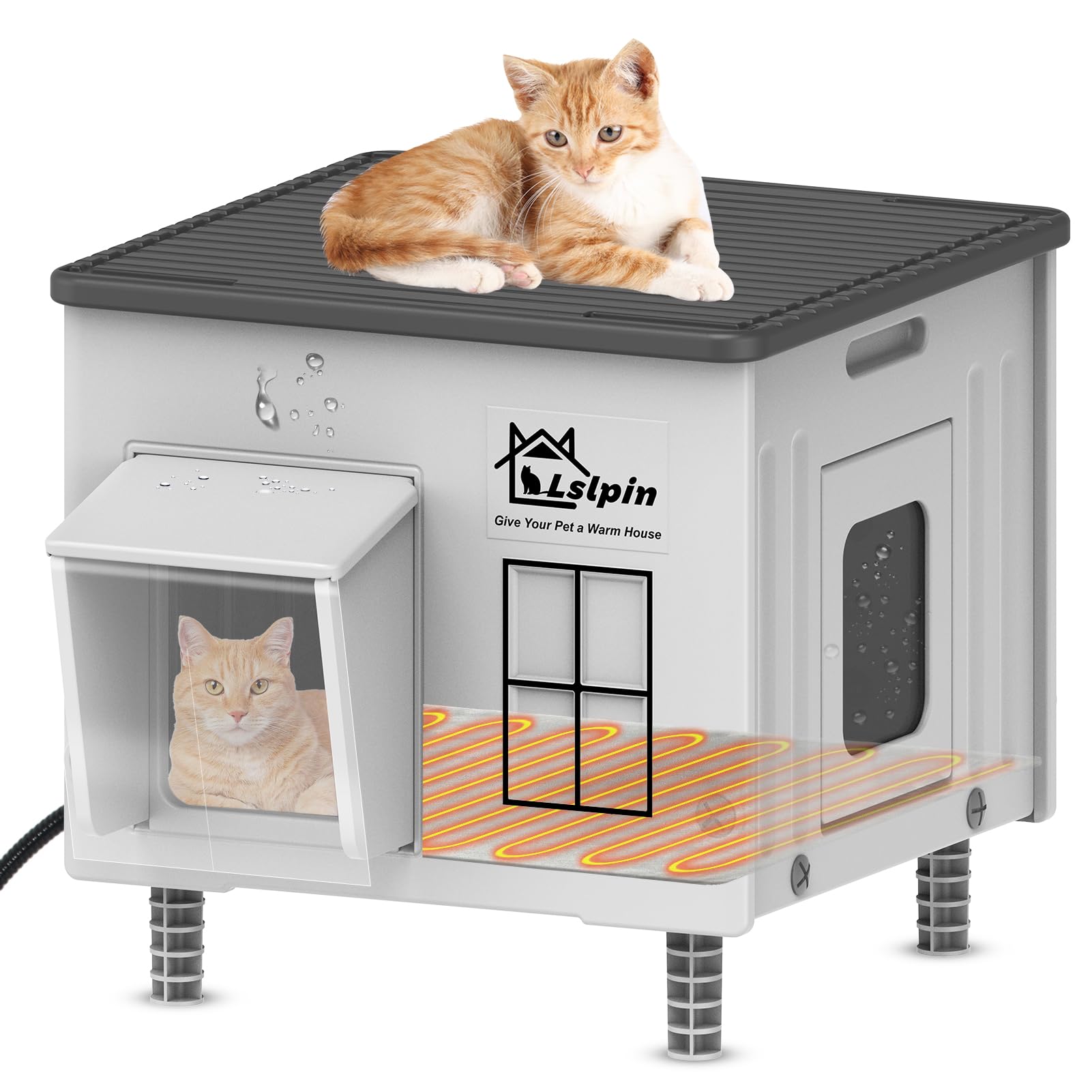
For cat caretakers who face freezing winters, the Lslpin heated shelter is a purpose-built cold-weather solution. The body is molded from thick HDPE with a double-layered wall on all four sides — the air gap between layers creates a thermal buffer that keeps interior temperatures stable. The included heating pad is UL-certified and thermostatically controlled, so it warms only when the temperature drops, and it cannot exceed a safe surface temperature. The pad is flame-retardant (V-0 rated) and waterproof, meaning it can sit directly on the floor without absorbing moisture from wet fur.
The floor stands three inches off the ground on durable plastic feet, a full inch higher than most budget competitors. This clearance prevents rain splash and snow melt from reaching the interior. The transparent plastic door flap blocks wind while letting cats see out, which helps cautious strays feel secure. An escape door on the rear panel gives cats a second exit route. Assembly requires some effort — the panels snap together, but getting the initial alignment right takes patience, and the instructions are printed small. The interior measures 17.7 by 14.9 inches, which fits one large cat or two small cats snuggling together.
Owner feedback is overwhelmingly positive, with many noting that feral cats who previously avoided shelters began sleeping inside within a week. The heating cord is six feet long, so placement near an exterior outlet is necessary. In summer, the heating pad can be removed entirely, converting the shelter into a well-ventilated hideaway. This is the best choice for anyone who needs an all-season shelter with built-in warmth.
Why we love it
- UL-certified, thermostatically controlled heating pad
- Double-layered HDPE walls provide real insulation
- Escape door and transparent flap enhance safety
Good to know
- Snap-together assembly takes more effort than Velcro designs
- Requires access to an outdoor power outlet for the heating pad
3. Heavy Duty HDPE Stackable Cat House (Generic)
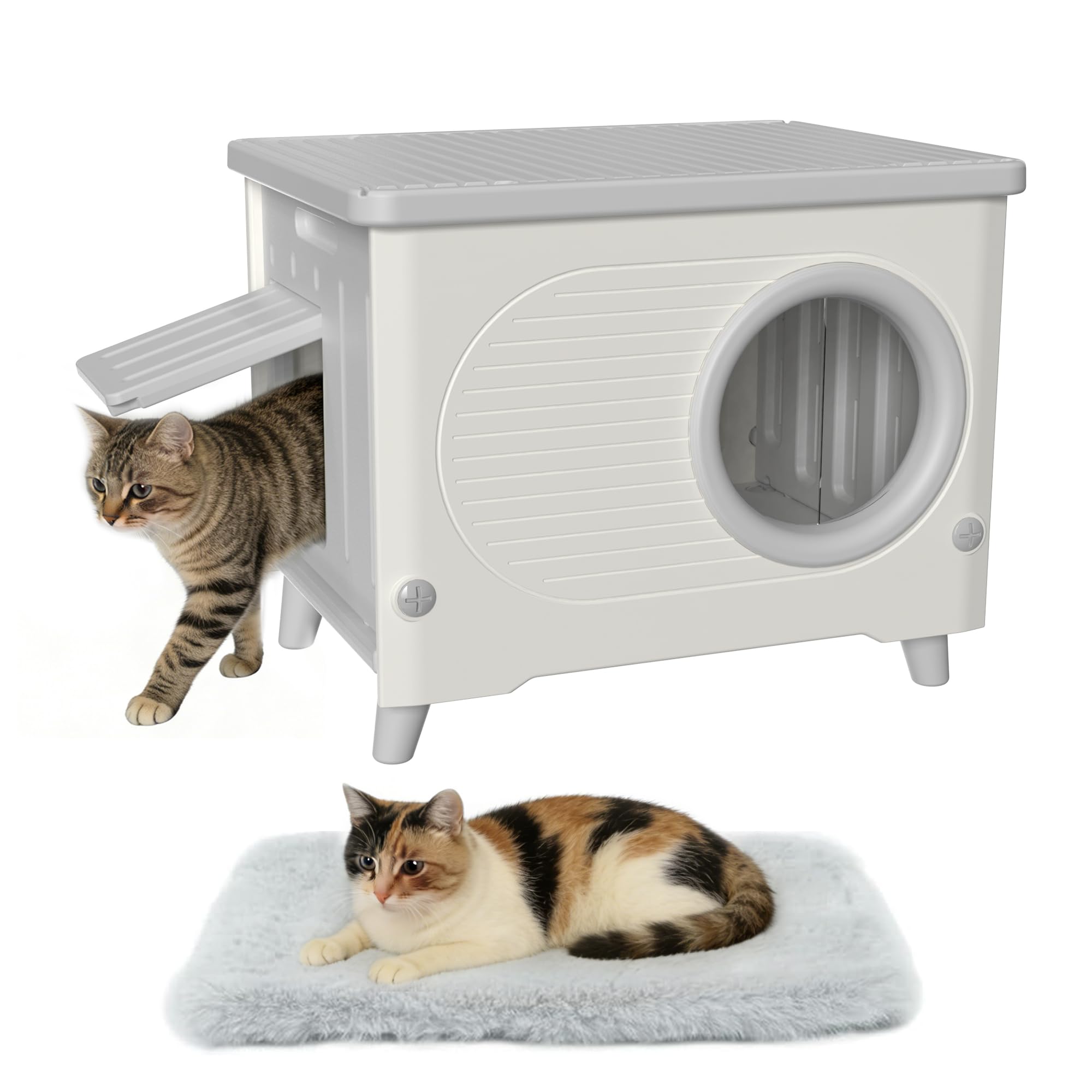
This shelter is built for caretakers who manage small colonies and need a structure that can survive direct sun, heavy rain, and occasional snow without degrading. The HDPE shell has a dual-layer hollow core — essentially, two walls with an air gap between them. That air gap is what provides insulation; it slows heat transfer far more effectively than a single plastic wall can. The round burrow entrance is small enough to block wind but large enough for adult cats to enter without crouching. This shape aligns with feline instincts, making timid strays more likely to use it.
The elevated base keeps the floor away from damp ground, and the stackable design lets you place two units vertically to save space in a barn or garage. Assembly is truly tool-free — the panels slide together with interlocking tabs, and the entire structure can be set up in about five minutes. The interior is 15 inches wide and 16 inches high, roomy enough for one adult cat or three kittens. A soft cushion is included, though in wet conditions, replacing it with straw is more effective for moisture management. The smooth HDPE surface wipes clean instantly, which is a major advantage over fabric shelters that absorb odors.
The main tradeoff is that the dual-layer hollow walls, while better than single-wall plastic, still cannot match the thermal performance of the Lslpin’s double-wall design with the heating pad. For moderate climates or sheltered placements (porch, barn), this is an excellent, low-maintenance pick. In extreme winter zones, pairing it with an additional heating pad or straw bedding will be necessary.
Why we love it
- Dual-layer HDPE walls with air gap for thermal efficiency
- Tool-free assembly in under five minutes
- Round entrance reduces wind intrusion naturally
Good to know
- Insulation is moderate; additional bedding may be needed in extreme cold
- Not as spacious as larger wooden shelters for multi-cat use
4. GEGURI Winter-Proof Insulated Wooden Cat Shelter
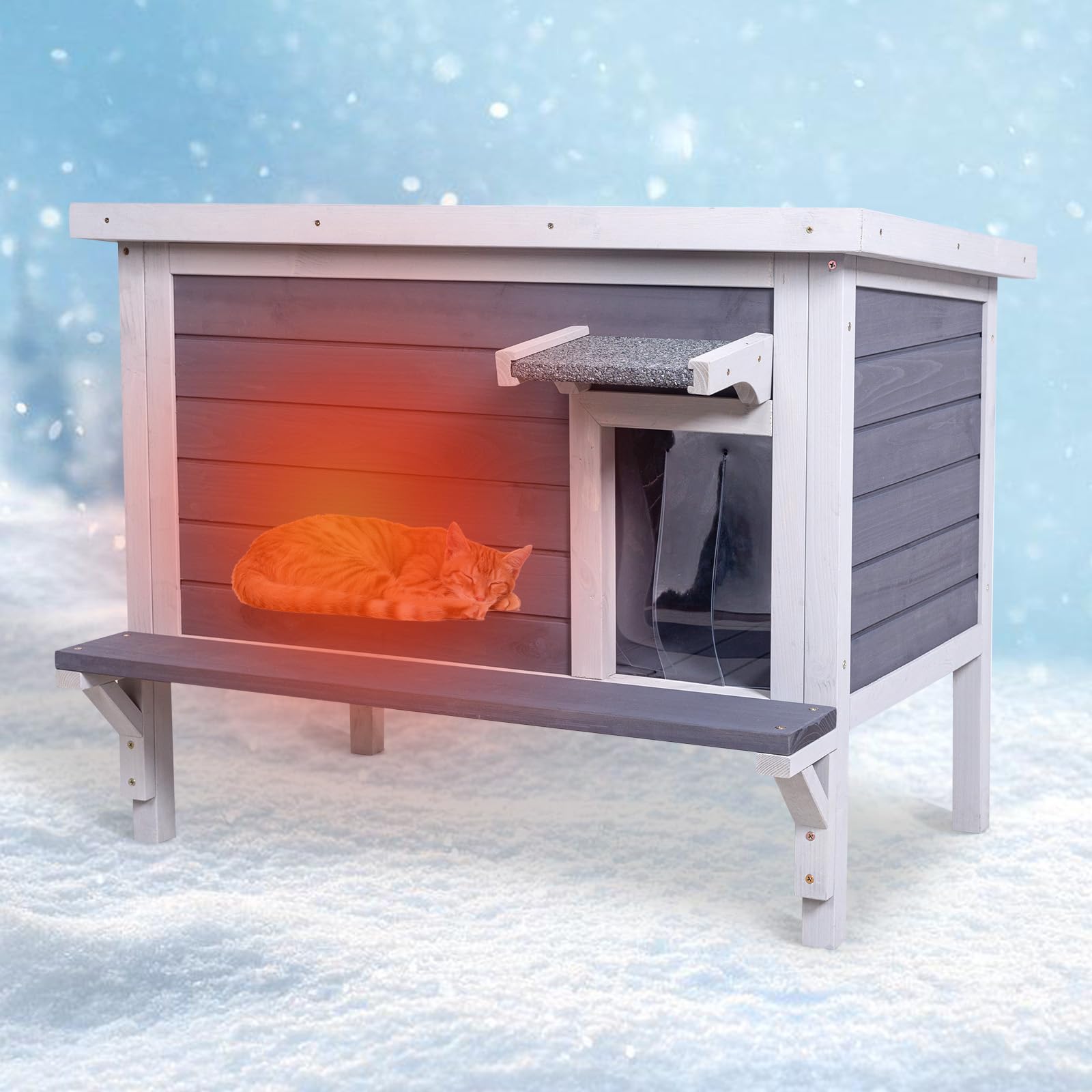
When multiple cats need shelter under one roof, the GEGURI wooden enclosure provides the largest footprint in this lineup at 35 inches wide and 27.6 inches tall. The thick wooden walls offer natural insulation — wood has a higher R-value per inch than plastic — and the included insulated liner boosts cold-weather performance further. An offset entrance blocks wind from reaching the main sleeping area and gives shy cats a sense of privacy. The floor is both elevated and ventilated, with small gaps that allow air circulation underneath while preventing direct ground contact.
The removable roof makes cleaning straightforward — you can lift the entire top to access the interior, swap out bedding, or check on cats without disturbing them. Assembly requires basic tools (a screwdriver), but the pre-drilled panels align well, and the instruction sheet is clear. There is a compartment designed to hold a heating pad, though the pad itself is not included, which keeps the base price lower while giving you the option to add heat if needed. The exterior has a neutral finish that blends into patios, decks, and backyard sheds without looking out of place.
Owner reviews emphasize how quickly feral cats accept the shelter, likely because the enclosed design and offset entry make them feel hidden from predators. The main consideration is weight — at over 20 pounds, it is the heaviest shelter here and not easily moved once placed. Additionally, wood requires annual sealing or treatment to prevent rot in continuously wet environments. For a permanent colony shelter on a covered porch or inside a barn, this is the most spacious and thermally capable option.
Why we love it
- 35-inch width comfortably houses multiple cats
- Wood walls plus insulated liner provide superior warmth
- Offset entrance and removable roof improve safety and maintenance
Good to know
- Heavy and not easily portable once assembled
- Heating pad is not included; must be purchased separately
5. DRATO Outdoor Resin Cat House
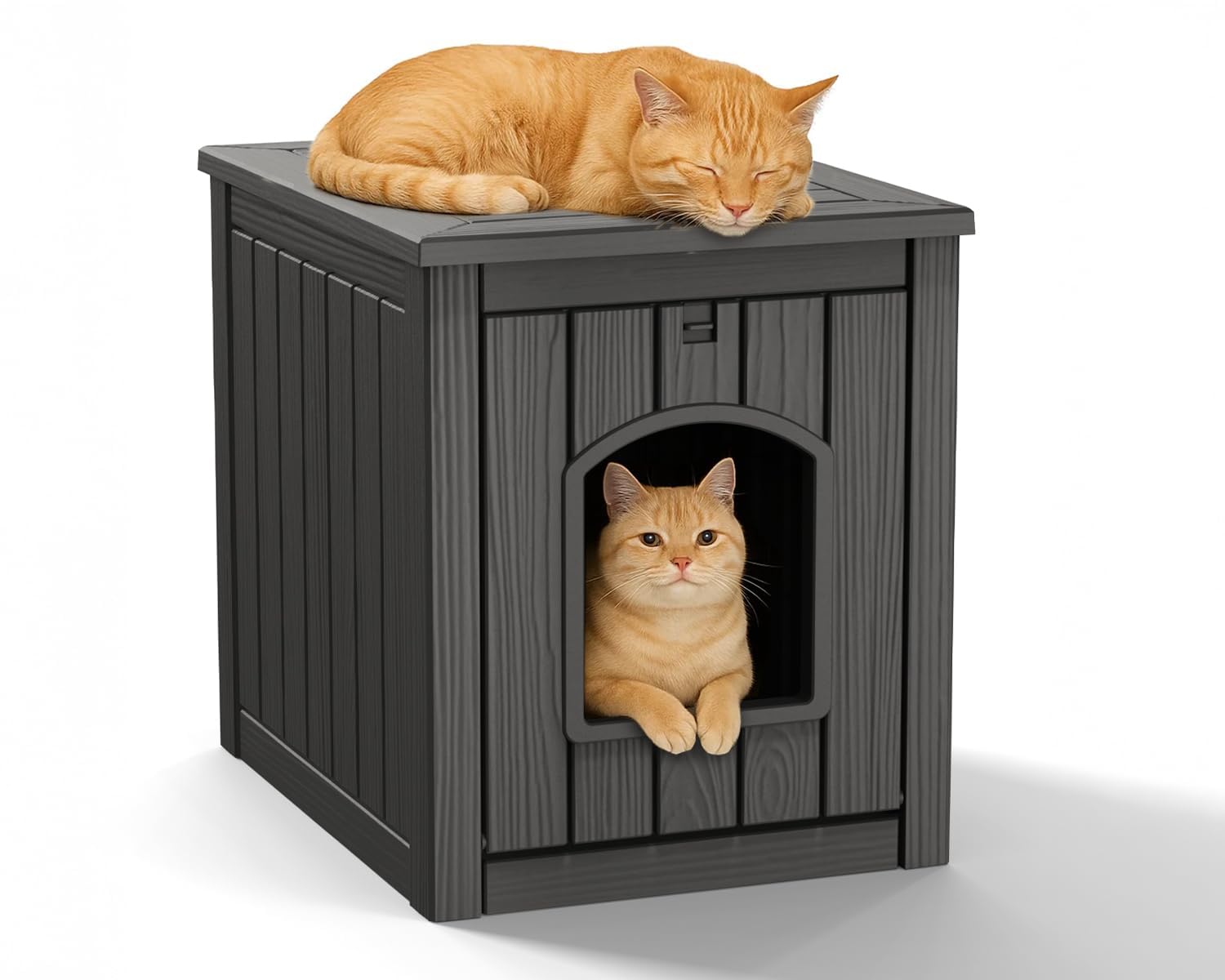
The DRATO shelter proves that resin construction does not have to be expensive. The shell is a blend of polyethylene and polypropylene, materials that resist UV rays and rain far better than fabric. The smooth surface wipes clean in seconds and will not absorb cat odors. Assembly uses a click-together panel system — the pieces are labeled with letters, and most owners report completing the build in five minutes without tools. The interior is 18.46 inches deep and 23.62 inches tall, offering more vertical space than many similarly priced models, which is helpful for cats that like to sit upright.
The weatherproof design has held up through heavy rain in real-world tests, with no leaks reported at the seams. The black color absorbs some solar heat in winter, which is a subtle advantage. The plastic base is solid, but it sits flush on the ground — there is no elevation, so placing it on a dry surface or adding a pallet underneath is recommended in wet climates. The structure is lightweight enough to move between indoor and outdoor spaces without strain. Small ventilation slots allow airflow without creating drafts, and the entrance is large enough for an adult cat to enter comfortably.
One limitation is that the resin panels, while durable, are not double-walled, so the interior will be close to ambient temperature. For mild climates or sheltered placement (patio, garage), this is a fantastic mid-range choice. In freezing conditions, adding straw bedding or a self-warming pad is necessary. Owners consistently mention how sturdy the assembled unit feels and how quickly their cats adopted it.
Why we love it
- Resin shell resists UV, rain, and odors
- Click-together assembly takes under 10 minutes
- Generous vertical space for sitting upright
Good to know
- No elevation — needs a dry surface or pallet under it
- Single-wall construction offers minimal insulation
6. TSEHOOHOO Stackable Plastic Cat House
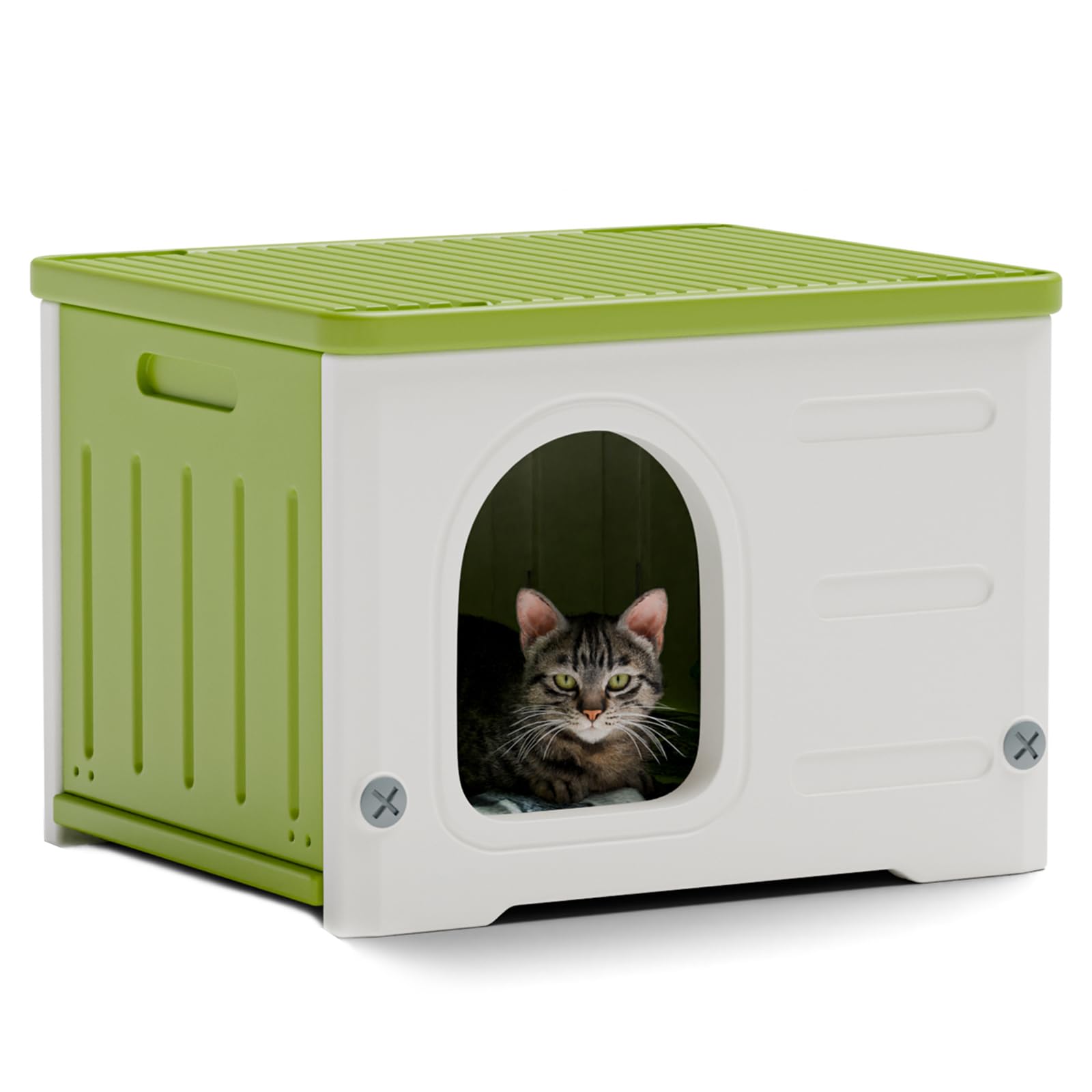
If you need to shelter multiple cats in a tight footprint, the TSEHOOHOO stackable design is a space-saving solution that does not compromise on stability. The plastic shell is visibly thicker than typical budget shelters, and the double-layer construction (thickened walls) gives it a load-bearing capacity that allows stacking two units securely. The internal space measures 20.8 inches long and 16.1 inches wide, which fits two average-sized adult cats or a mother with kittens without crowding.
The base is elevated on a sturdy stand, creating a gap that prevents ground moisture from wicking into the interior. Three sides are fully sealed except for the entrance, which reduces drafts significantly. Assembly uses screws and accompanying diagrams — the process takes about five minutes, though a few owners noted that some screw holes did not align perfectly and required slight adjustment. The included cat mat is thicker than expected and adds a soft layer, but adding straw underneath improves warmth in winter. The top buckle design makes the roof easy to remove for cleaning.
The stacked configuration works well in barns or garages where floor space is limited. However, the green color stands out in a garden setting, which may be a concern if you prefer a more discreet look. The plastic material, while sturdy, can become cold to the touch in freezing temperatures — insulating the interior with a layer of straw is essential in cold climates. Owners managing colonies consistently rate this highly for its ease of cleaning and the fact that cats use it immediately.
Why we love it
- Stackable design saves floor space for colonies
- Thickened plastic walls with elevated base resist moisture
- Easy-to-remove roof simplifies cleaning and bedding changes
Good to know
- Some screw holes may require adjustment during assembly
- Green color may not blend with all outdoor settings
7. Anysiny Cat House (Large, Collapsible)

The Anysiny shelter is the most affordable entry point in this guide, and it delivers good value for mild climates or covered placements. The polyester outer shell is waterproof and UV-resistant, with a reinforced EVA layer that adds some rigidity. Ground plugs are included to secure the shelter against wind, a feature typically missing at this price point. The interior, at 19.7 inches wide and 15.7 inches tall, fits one adult cat comfortably or two small cats. A removable feeding bowl attaches to the side, giving cats access to food and water without leaving the shelter.
Assembly is straightforward — the frame folds into shape, and the fabric cover slides over it in about two minutes. The included soft mat provides a comfortable sleeping surface, and the gray color blends neatly into garden settings. Owners consistently note that indoor cats also love using this shelter, so it doubles as a cozy hideaway when not needed outdoors. The collapsible design makes it easy to store during summer or transport to another location.
The clear limitation is the single-wall polyester construction. While water resistant, the fabric will not keep cats warm when temperatures drop below freezing without additional insulation such as a mylar blanket or straw. The polyester shell also degrades faster under direct sun than HDPE or resin. For a sheltered porch, garage, or as a temporary solution, this is a smart budget pick. For exposed placement in harsh weather, a rigid shelter is a better long-term investment.
Why we love it
- Collapsible design stores flat when not in use
- Side feeding bowl adds convenience for daily care
- Ground plugs prevent wind from tipping it over
Good to know
- Single-polyester wall provides minimal insulation in freezing weather
- Fabric will wear faster than rigid plastic or wood
FAQ
Can a fabric cat shelter survive heavy rain?
What does the escape door actually do?
How do I keep a non-heated shelter warm in winter?
Is the heating pad in cat shelters safe to leave on overnight?
How many cats can fit in a single shelter?
Final Thoughts: The Verdict
For most cat caretakers, the shelter for outside cats winner is the Texsens Outdoor Cat House because it delivers honeycomb insulation, an elevated base, and easy assembly at a mid-range price that outperforms cheaper fabric alternatives. If you face freezing winters and want built-in warmth, grab the Lslpin Heated Cat House with its UL-certified pad and double-walled HDPE construction. And for managing a small colony in a permanent location, nothing beats the GEGURI Wooden Shelter for interior space and natural insulation.