
When your dog locks onto a trail and leans into the line with full body drive, the last thing you need is a harness that restricts their stride or rubs raw spots under the front legs. Skijoring demands more from a harness than any casual walk or hike — the forces are higher, the duration longer, and the margin for poor fit nearly zero. I’ve spent weeks studying pressure mapping data, reading through hundreds of musher and canicross athlete reports, and cross-referencing veterinary guidance on shoulder biomechanics to separate the gear that truly protects from the gear that just looks the part.
I’m Mo Mahin — the founder and writer behind Furric. My research approach combines deep market analysis with careful evaluation of how each harness distributes load across the chest and shoulders during sustained pulling.
After carefully analyzing pressure distribution and fit across top designs, this guide to the best skijoring dog harness helps you pick with confidence.
How To Choose The Best Skijoring Dog Harness
Skijoring puts unique stress on a dog’s body. The harness must transfer pulling force evenly while allowing full shoulder extension and unrestricted breathing. Standard walking harnesses simply aren’t built for this — they compress the shoulders or dig into the chest under load. Here are the critical factors to evaluate before buying.
Harness Architecture: X-Back vs. Freemotion vs. Standard
X-back harnesses, like those from Neewa, distribute pull force across the ribcage and back, keeping the shoulders free. Freemotion designs from Non-stop dogwear use side attachment points and bungee elements to allow even greater stride length while protecting the skeleton. Avoid standard walking harnesses with front clips or narrow chest straps — they restrict movement and can cause chafing during high-output pulling.
Fit Measurement: Neck, Chest, and Back Length
Skijoring harnesses rely heavily on neck circumference for proper placement. If the neck opening is too loose, the harness shifts sideways during pulls; if too tight, it restricts breathing. Always measure the widest part of the neck, the deepest part of the chest, and the back length from the base of the neck to the base of the tail. Most sizing issues come from skipping the neck measurement.
Padding and Material Durability
Look for padded neck and ribcage areas that prevent rubbing during long outings. Polypropylene and nylon webbing are standard for wet and snowy conditions. Reflective trim is non-negotiable for low-light winter runs. Non-allergenic, breathable materials reduce the risk of skin irritation, especially for dogs with thick double coats that trap heat and moisture.
Quick Comparison
On smaller screens, swipe sideways to see the full table.
| Model | Type | Best For | Key Feature | Amazon |
|---|---|---|---|---|
| Non-stop dogwear Freemotion 5.0 | Freemotion | Serious skijoring & canicross athletes | Side bungee system for skeletal protection | Amazon |
| Ruffwear Flagline | Multi-sport | Versatile trail running & skijoring | Three leash attachment points with lift handle | Amazon |
| Non-stop dogwear Freemotion (Size 8) | Freemotion | Large, deep-chested pulling dogs | Fully adjustable chest and length for custom fit | Amazon |
| Neewa Pro Sled Dog Harness | X-back | Nordic breeds & sledding activities | Polypropylene with padded neck and ribcage | Amazon |
| Neewa Sled Pro Harness (Small) | X-back | Smaller dogs new to pulling sports | Even pressure distribution across entire body | Amazon |
| Wilderdog Lightweight Harness | Trail | Everyday hikes & light pulling | Dual D-ring attachment with breathable mesh | Amazon |
| Carhartt Nylon Duck No Pull Harness | Utility | Durable everyday control with light pulling | Rain Defender water repellent and martingale chest | Amazon |
In-Depth Reviews
1. Non-stop dogwear Freemotion Harness 5.0

The Freemotion 5.0 is the harness that world-class canicross and skijoring athletes helped design, and it shows in every detail. The Y-shaped neck opening allows unrestricted shoulder movement while the side pull points distribute force evenly across the torso rather than concentrating it on the sternum. Padded neck opening adds stability without restricting airflow, which matters immensely during high-output sprints on snow.
Three meters of reflective piping plus a dedicated reflective loop give you excellent visibility during low-light winter runs. The inner lining is gentle on the dog’s coat, and all fabrics are chosen to avoid both skin irritation and environmental harm. Sizing requires careful neck measurement since the neck opening is non-adjustable, but the chest and length adjustments accommodate a wide range of body shapes once you dial in the right size.
Serious skijoring enthusiasts and anyone entering canicross or bikejoring will find this harness delivers the pressure distribution and freedom of movement needed for sustained performance. It’s not a casual walking harness — it’s purpose-built for dogs that love to pull.
Why we love it
- Side bungee system protects skeletal system during hard pulls
- Reflective piping and loop for superior low-light visibility
- Developed and tested by world-leading dog-powered sports athletes
Good to know
- Neck opening is non-adjustable — precise measurement critical
- Best suited for dogs that actively pull; overkill for casual walking
2. Ruffwear Flagline Dog Harness

The Flagline bridges the gap between a technical skijoring harness and a versatile trail companion. It features three leash attachment points — a V-ring on the back, reinforced loops on the chest, and a rear loop — giving you control options that adapt to training, running, or lifting. The padded top handle and belly panel provide secure lift support for helping your dog over snow banks or into the car post-run.
Six adjustment points create a custom fit that stays put even on deep-chested breeds like greyhounds and Rhodesian Ridgebacks. The dirt-resistant liner and reflective trim add practicality for muddy winter trails. Owners of rescue dogs particularly praise the escape-proof design — the third strap around the belly prevents backward slipping that many harnesses allow.
For skijorers who also hike, run trails, and need a harness that does double duty without compromising on safety, the Flagline delivers impressive versatility. It’s lighter than full sled harnesses while still providing the structural integrity needed for moderate pulling.
Why we love it
- Escape-proof with three adjustment points and belly panel
- Lightweight ripstop material with quick-dry properties
- Reflective trim and light loop for visibility
Good to know
- Not designed for extreme long-distance pulling like pure sled harnesses
- Some users report the back section can bunch on shorter-bodied dogs
3. Non-stop dogwear Freemotion Harness (Size 8)

This is the harness that started the Freemotion revolution in dog-powered sports. The Size 8 variant caters specifically to large dogs with neck circumferences between 19 and 20.5 inches — think sturdy Siberian Huskies, Alaskan Malamutes, and large breed mixes built for pulling. The patented design ensures unobstructed airways even during maximum effort, a critical safety feature that sets it apart from harnesses that compress the trachea under load.
Side bungees allow extra forward extension during each stride, protecting the skeletal system from the abrupt force spikes that occur during starts and turns. The pulling point is positioned to give your dog maximum utilization of power without compromising joint health. Regulars in the mushing community praise how the harness stays centered on the dog’s body even during asymmetric pulls around corners.
This is an investment-grade harness for committed skijoring enthusiasts who want professional-level gear. The sizing process requires careful attention — measure your dog’s neck snugly and verify back length before ordering. The payoff is a harness that performs reliably season after season.
Why we love it
- Proven Freemotion design protects airways and shoulders
- Side bungees absorb shock and extend stride safely
- Stays centered on the body during active pulling
Good to know
- Sizing is precise — measure carefully or size up for thick fur
- Premium price reflects professional-grade construction and materials
4. Neewa Pro Sled Dog Harness (XXX-Large)

The Neewa Pro Sled Harness is purpose-built for wolf-like Nordic breeds — Siberian Huskies, Alaskan Malamutes, and Greenland dogs. Its X-back construction distributes pulling pressure uniformly across the dog’s entire body, eliminating the choking and leg entanglement issues common with generic harnesses. The polypropylene material with padding on the neck and ribcage areas provides absolute comfort during sustained pulling sessions.
Reflective inserts improve visibility during early morning or evening runs when winter light fades fast. The harness works for dog sledding, dog trekking, canicross, skijoring, and bikejoring. Experienced mushers note that the material softens with use, becoming more comfortable over time while maintaining its structural integrity. Sizing runs small according to multiple reports, so ordering one size larger than your dog’s measurements is a smart move.
For owners of traditional Nordic breeds who want a dedicated pulling harness without the premium price of custom European designs, the Neewa Pro delivers reliable performance. The buckleless design takes a couple of tries to master, but the secure fit and even pressure distribution make it worth the learning curve.
Why we love it
- X-back design distributes pressure evenly across the body
- Padded neck and ribcage for long-run comfort
- Reflective strips enhance low-light visibility
Good to know
- Sizing runs small — order one size up from measurements
- Buckleless design can be tricky to put on initially
5. Neewa Sled Pro Harness (Small, Red)

The small version of Neewa’s Sled Pro Harness opens up skijoring and pulling sports for smaller dogs that still have the drive and energy to work. Using the same X-back construction and polypropylene padding as the larger sizes, it provides even pressure distribution for dogs that weigh as little as 30 to 40 pounds. This makes it an excellent choice for Border Collies, athletic mixed breeds, and compact hunting dogs that want to pull wheeled rigs or participate in canicross.
Reflective inserts maintain visibility, and the breathable, non-allergenic materials prevent skin irritation during extended use. Owners of smaller active breeds report that their dogs maintain full stride freedom without the harness shifting or bunching. The same sizing caveat applies — measure carefully and consider sizing up if your dog has a thicker neck or deeper chest than the breed standard.
If you have a smaller dog with a big pulling heart, this harness removes the barrier to entry for skijoring and bikejoring. It offers the same professional-grade pressure distribution as the larger versions at a weight-appropriate scale.
Why we love it
- Same X-back design as larger sizes, scaled for smaller dogs
- Breathable, non-allergenic padding for comfort
- Reflective inserts for safety in low light
Good to know
- Sizing runs small — compare measurements carefully
- Buckleless design takes practice to put on correctly
6. Wilderdog Lightweight Dog Harness
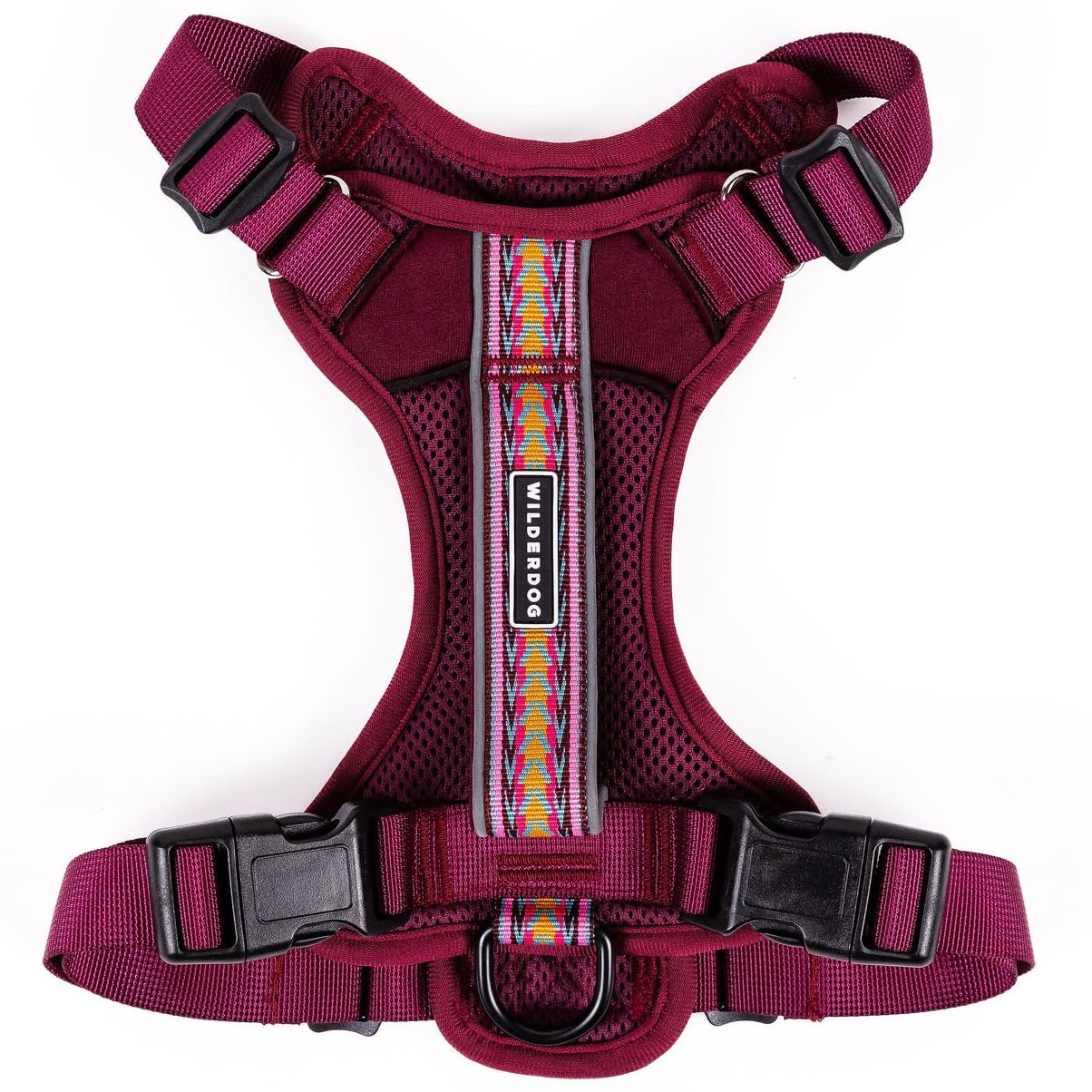
The Wilderdog harness brings trail-ready features to the skijoring conversation at a more accessible entry point. It includes two D-ring attachment points — one on the chest and one on the back — plus reflective stripes and a top handle for quick assists over obstacles. The lightweight design weighs only 6.7 ounces for the medium size, which reduces fatigue on longer outings while still providing sturdy control.
The harness slips over the dog’s head and clips at the chest with two side release buckles, keeping all four paws on the ground during setup. Both neck and shoulder straps are fully adjustable. Owners of active hunting and herding breeds report that the harness holds up well to trail conditions and provides enough structure for light pulling activities. The matching leash with swiveling locking carabiner is a popular add-on.
For skijoring newcomers who want a capable harness that works for everyday hikes and introductory pulling, the Wilderdog is a strong mid-range choice. It won’t replace a dedicated Freemotion harness for serious athletes, but it offers genuine versatility at a fair price.
Why we love it
- Lightweight design reduces fatigue on long outings
- Front and back D-ring attachments for training versatility
- Easy on and off with side release buckles
Good to know
- Side strap adjusters can loosen during active use
- Not built for heavy-duty competitive pulling
7. Carhartt Nylon Duck No Pull Dog Harness

Carhartt’s Nylon Duck Harness brings rugged utility to the pulling dog world. Built from 500-denier polyester with Rain Defender DWR technology, it repels light rain and maintains its shape through daily use. The martingale chest strap provides no-pull function, and the over-the-head yoke design with fully adjustable chest and belly straps creates a secure fit without compromising comfort. Spacer mesh backing adds breathability for active dogs.
Reflective low-light stitching increases visibility in dim conditions. The single-buckle design makes on and off quick — a feature that owners of strong pullers particularly appreciate. Reviews from owners of 110-pound working dogs confirm that the duck material stands up to sticker weeds and rough terrain. The unpadded design keeps it lightweight, though some dogs with sensitive skin may prefer additional padding at pressure points.
This harness works best for skijoring newcomers who want a durable, weather-resistant harness that can handle light pulling and heavy everyday use. It’s not optimized for competitive skijoring, but for the price, it delivers exceptional utility and longevity.
Why we love it
- Rain Defender DWR technology repels moisture and maintains shape
- Single-buckle design for quick on and off
- 500-denier polyester construction for long-term durability
Good to know
- Unpadded design may cause chafing on long pulling runs
- Some dogs dislike the over-the-head outfitting style
Safety & Care Tips
Inspect Webbing and Stitching Before Each Run
Skijoring generates repeated stress on every seam and buckle. Before each outing, run your fingers along the entire webbing length, focusing on attachment points and stitching near buckles. Look for frayed edges, loose threads, or stretched material. A harness that looks fine at rest can fail catastrophically under a hard pull. Replace immediately if you find any compromised stitching or cracked hardware.
Wash and Dry According to Material Specs
Most skijoring harnesses tolerate machine washing on a gentle cycle with low or no heat. Polypropylene and nylon dry quickly but can hold onto odors if not cleaned regularly. For non-stop dogwear and Neewa harnesses, hand washing with mild soap preserves the padding integrity. Never use fabric softeners — they break down webbing fibers and reduce reflective tape adhesion. Air dry completely before storage to prevent mildew growth inside padding layers.
FAQ
Can I use a regular walking harness for skijoring?
How do I measure my dog for a skijoring harness?
What is the difference between X-back and Freemotion harnesses?
Final Thoughts: The Verdict
For most pet parents, the best skijoring dog harness winner is the Non-stop dogwear Freemotion 5.0 because it combines professional-grade pressure distribution with side bungee protection that keeps your dog safe during hard pulls. If you want maximum versatility for trail running and skijoring alike, grab the Ruffwear Flagline. And for a dedicated X-back pulling harness purpose-built for Nordic breeds at a fair price, nothing beats the Neewa Pro Sled Dog Harness.