
That first transition from nursing to solid food is a critical window for your kitten’s growth, and getting the texture right can make or break the switch. A pate that’s too thick, shreds that are too long, or a formula missing essential DHA can send a tiny eater straight back to the bowl, refusing to eat. The right soft food delivers the moisture, protein density, and brain-building nutrients a growing system needs without overwhelming a developing digestive tract.
I’m Mo Mahin — the founder and writer behind Furric. I’ve spent years combing through ingredient panels, comparing guaranteed analysis values, and tracking the real-world owner feedback that separates marketing claims from actual kitten health outcomes.
Whether you’re weaning an 8-week-old or feeding a growing adolescent, the soft food for kittens market is packed with options, and the wrong choice can lead to pickiness or nutritional gaps that affect coat condition and energy levels down the line.
How To Choose The Best Soft Food For Kittens
Kittens have unique nutritional demands that adult cat food simply doesn’t meet. A proper kitten formula must deliver concentrated energy, balanced calcium and phosphorus for bone growth, and DHA for retinal and cognitive development. Below are the critical factors to vet before you buy.
Check the guaranteed analysis for protein and fat
Kittens need roughly 30–50% of their calories from protein on a dry-matter basis, plus a minimum of 9% crude fat for energy. Look for a pate or shred formula that leads with a named meat (chicken, salmon, duck) rather than vague “meat meal” or by-products. A wet food with a crude protein content around 10–12% on a “as fed” basis is a solid starting point for growing kittens.
Match the texture to your kitten’s mouth
Not all soft food is created equal in texture. Pate is smooth and easy to lap up — ideal for kittens just leaving milk. Shreds and chunks require more chewing and work better for older kittens (12+ weeks) who have stronger jaw muscles. If you see your kitten pushing food around the bowl, try switching to a finer pate texture before giving up on the brand.
Verify DHA and taurine levels
DHA (docosahexaenoic acid) is the primary omega-3 fatty acid in the brain and retina of kittens. A formula that explicitly lists DHA from fish oil or a marine source is a strong indicator of proper developmental support. Taurine, an essential amino acid, must be added because cats cannot synthesize it naturally — deficiency causes blindness and heart problems.
Look for AAFCO kitten feeding protocol
The Association of American Feed Control Officials (AAFCO) sets nutrient profiles for growth and reproduction. Any bag or can labeled “complete and balanced for growth” has passed this standard. Avoid foods labeled only for “all life stages” without the growth designation unless you cross-check the numbers, because the adult maintenance standards are lower.
Quick Comparison
On smaller screens, swipe sideways to see the full table.
| Model | Category | Best For | Key Spec | Amazon |
|---|---|---|---|---|
| Tiki Cat Baby Shreds Variety Pack | Premium | Picky kittens & flavor variety | 2.4 oz cans, 4 recipes | Amazon |
| Nulo Freestyle Pate Variety Pack | Mid-Range | Grain-sensitive kittens | 2.8 oz cans, 5 protein sources | Amazon |
| Sheba Perfect Portions Kitten Pate | Mid-Range | Single-serving convenience | 2.6 oz twin-pack trays, Chicken | Amazon |
| Purina ONE Grain Free Pate Variety Pack | Budget-Friendly | High-protein budget option | 3 oz pull-top cans, 3 flavors | Amazon |
| Hill’s Science Diet Kitten Pouches | Premium | Vet-recommended assurance | 2.8 oz pouches, Chicken Stew | Amazon |
In‑Depth Reviews
1. Tiki Cat Baby Wet Cat Food Shreds Variety Pack

Tiki Cat Baby is formulated specifically for kittens aged 8 weeks and older, with a shredded texture that is small enough for tiny mouths yet substantial enough to encourage chewing. The 2.4-ounce can size is deliberate — a single can roughly matches a kitten’s per-meal stomach capacity, reducing waste from uneaten leftovers. The variety pack rotates through Chicken & Salmon, Chicken, Tuna & Chicken Liver, Chicken, Duck & Duck Liver, and Chicken & Egg, so you’re unlikely to hit flavor fatigue.
Each recipe includes DHA from fish oil to support vision and brain development, plus added taurine and a balanced calcium-to-phosphorus ratio for skeletal growth. The ingredient panel is free from grains, fruits, vegetables, carrageenan, and artificial fillers — a clean profile that mirrors a raw prey diet without the nutritional gaps. Owner reports consistently mention that even “picky” kittens who refused pate brands went after these shreds immediately.
At 12 cans per pack, the cost per serving lands in the premium tier, but the ingredient quality and flavor rotation justify the investment for the weaning to 6-month window. The only trade-off is the small can size — a larger, growing kitten may need two cans per feeding as they approach 20 weeks. Still, for the critical early weeks, this is the most targeted kitten-specific wet food on the list.
Why we love it
- Shredded texture is easier for tiny mouths than big chunks
- Four distinct recipes keep a curious kitten engaged
- No grains, carrageenan, or artificial ingredients
Good to know
- Small 2.4 oz cans may require two per feeding for older kittens
- Shred format may be too advanced for very young weaning kittens
2. Nulo Freestyle Cat & Kitten Wet Pate Variety Pack

Nulo Freestyle Pate delivers a smooth, homogenized texture that kittens transitioning from milk find immediately familiar. Each 2.8-ounce can packs five distinct animal protein sources — chicken, salmon, chicken liver, tuna, and shrimp — spread across three recipes (Chicken & Salmon, Chicken & Chicken Liver, Yellow Tuna & Shrimp). The high-meat, low-carbohydrate formulation deliberately avoids corn, wheat gluten, soy, and artificial preservatives.
What sets this option apart is the grain-free guarantee paired with a calorie density that supports rapid growth without excessive fillers. The pate format means no sharp edges or long shreds that a 9-week-old might struggle to swallow. Owner feedback highlights that this brand rarely triggers digestive upset, and the 12-can pack covers roughly a week of twice-daily feeding for a single kitten.
The one consideration is that Nulo markets this for “all life stages,” not exclusively for kittens, so the DHA and calcium-phosphorus balance is less aggressive than a dedicated kitten-only formula. For most owners, this is a non-issue — the protein and fat numbers are well within growth standards — but those wanting a strictly growth-targeted profile should check the guaranteed analysis against AAFCO kitten guidelines.
Why we love it
- Smooth pate texture ideal for weaning kittens
- Five animal protein sources for amino acid diversity
- Grain-free and free of artificial additives
Good to know
- Labeled “all life stages” rather than kitten-specific
- Some kittens may prefer shredded over pate texture
3. Sheba Perfect Portions Kitten Wet Food Pate

Sheba Perfect Portions solves the biggest inconvenience of canned wet food — the leftover half-can sitting in the fridge drying out. Each 2.6-ounce tray splits into two sealed servings, so you peel one side for the morning meal and save the second portion fresh for the evening. The pate itself is finely milled to a mousse-like consistency that even a 6-week-old kitten can lap up without gagging.
This recipe is formulated specifically for growth, with DHA for brain development, a complete amino acid profile, and Vitamin E to support the immune system. The chicken recipe uses real poultry as the primary ingredient and is free from corn, grains, and soy. Owner reviews consistently note that kittens who refused other pate brands readily accepted Sheba’s texture, likely because of the fine grind that mimics the smoothness of milk replacement formulas.
The 24-count box provides 48 total servings, giving it a strong per-meal value compared to canned equivalents. The trade-off is limited flavor variety — this pack is all chicken, so flavor rotation requires buying a separate variety box. Additionally, the tray packaging generates more plastic waste than standard cans, which may be a concern for eco-conscious buyers.
Why we love it
- Twin-pack trays eliminate leftover storage
- Fine pate texture is perfect for very young kittens
- DHA and Vitamin E specifically added for growth
Good to know
- Single chicken flavor only in this pack
- Plastic tray waste is higher than standard cans
4. Hill’s Science Diet Kitten Wet Cat Food Pouches
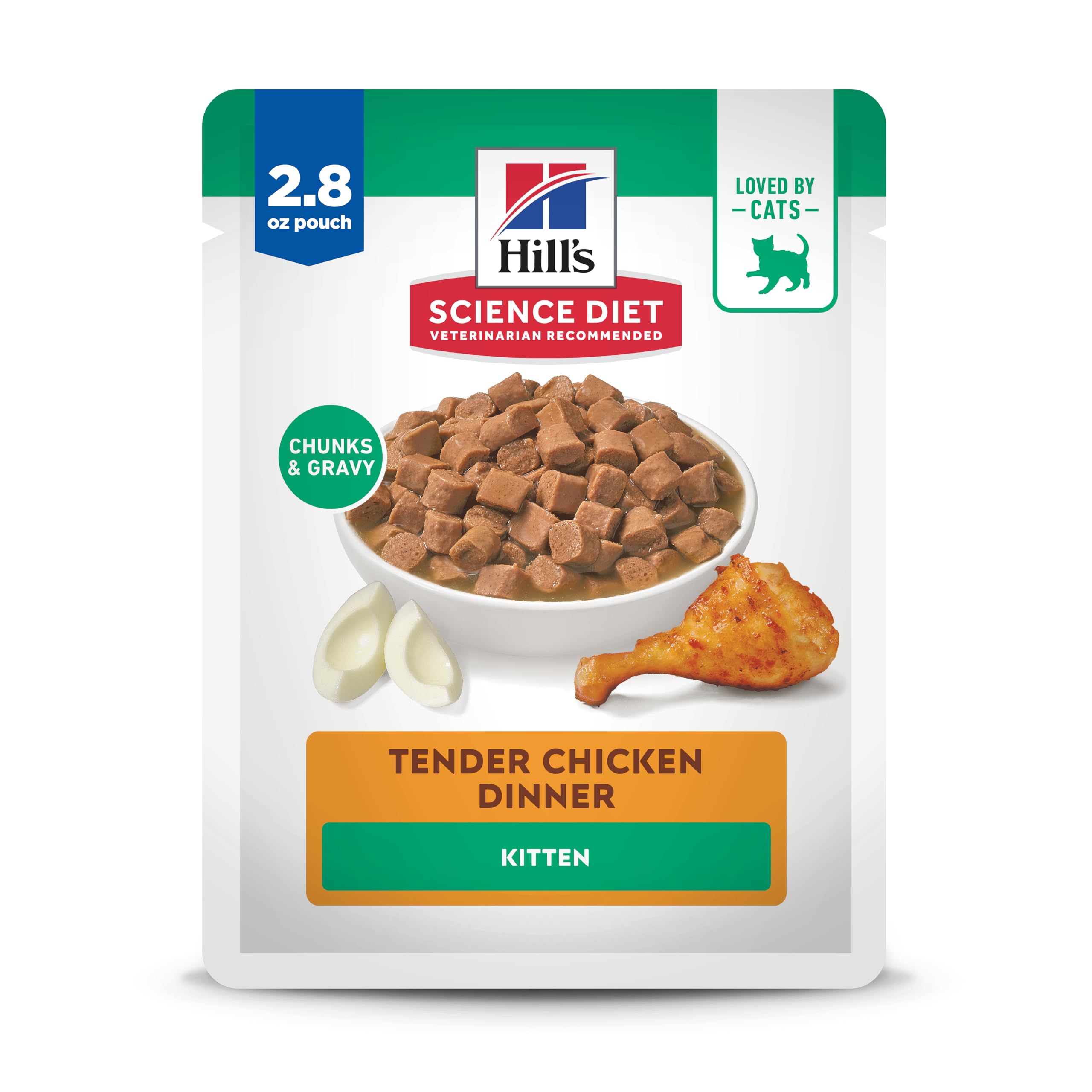
Hill’s Science Diet is the veterinarian-recommended brand by a wide margin, and this kitten-specific pouch formula carries that credibility into a wet food format designed for sensitive digestive systems. Each 2.8-ounce pouch is a tear-open single serving — no can opener needed, no leftover storage — and the chicken stew texture is a fine mince that straddles the line between pate and shreds, appealing to a broad range of kitten preferences.
The ingredient profile features natural chicken as the primary protein, supported by added vitamins, minerals, and amino acids specifically calibrated for growth rather than maintenance. The formula is made in the USA with global ingredients, and Hill’s enforces strict quality control that includes feeding trials. Owner feedback is overwhelmingly positive on stool quality — kittens on this food tend to produce firmer, less smelly waste compared to grain-heavy alternatives.
The primary barrier is the cost per pouch, which sits at the top end of this list. A 24-pack lasts a single kitten roughly 12 days at two servings per day, making it the most expensive option per meal. However, for kittens with known food sensitivities or those under a veterinarian’s dietary guidance, the premium is justified by the consistency and the AAFCO growth certification backing each batch.
Why we love it
- Veterinarian-recommended brand with feeding trial data
- Tear-open pouches for zero-mess serving
- Consistent stool quality reported by owners
Good to know
- Higher cost per serving than canned alternatives
- Only chicken stew flavor in this pack
5. Purina ONE Grain Free Pate Variety Pack

Purina ONE’s Grain Free Pate Variety Pack offers the best cost-per-ounce in this selection without sacrificing clean ingredients. Each 3-ounce pull-top can is slightly bigger than the competition, giving you more food per container for the same price point. The variety includes Beef, Chicken, and Ocean Whitefish recipes, all with real meat as the first ingredient and a tender pate texture that works for kittens as young as 8 weeks.
The formula is high in protein for muscle development, moisture-rich for hydration (especially important for kittens who don’t drink enough standing water), and includes antioxidants for immune support. While Purina ONE labels this for “all life stages” rather than specifically for kittens, the guaranteed analysis shows crude protein around 10% and crude fat around 5% on an as-fed basis — numbers that comfortably meet AAFCO growth requirements. The grain-free stance also helps avoid the corn and wheat fillers that can cause loose stools in sensitive kittens.
The main caveat is that the pate can be slightly denser than Nulo or Sheba’s version, which may cause hesitation in very young or picky eaters. Adding a splash of warm water and mashing it with a fork usually resolves this. The 24-can count provides substantial pantry depth, making this the most economical choice for owners feeding multiple kittens or running a long-term wet food rotation.
Why we love it
- Best value per ounce in the list
- Three flavor rotation in one pack (beef, chicken, fish)
- Pull-top cans require no can opener
Good to know
- Pate texture is denser than some competing brands
- Labeled “all life stages,” not strictly kitten-formulated
FAQ
Can I feed my kitten only soft food or should I mix in dry kibble?
How many cans of soft food should a 10-week-old kitten eat per day?
Does soft food cause diarrhea in kittens?
When should I transition my kitten from soft food to adult cat food?
Final Thoughts: The Verdict
For most kitten owners, the soft food for kittens winner is the Tiki Cat Baby Variety Pack because it combines a kitten-specific DHA formulation with four shred-based recipes that even the pickiest eaters accept. If you want the convenience of no-refrigeration-needed twin trays, grab the Sheba Perfect Portions. And for a budget-friendly option that still delivers high protein and grain-free ingredients, nothing beats the Purina ONE Grain Free Variety Pack.