
Whether you’re navigating a tight barrel pattern, galloping across cross-country terrain, or putting miles on the trail, your horse’s lower legs absorb tremendous concussion and are vulnerable to brushing injuries, interference, and the development of painful splints. The right protection isn’t an accessory—it’s essential equipment for keeping your performance partner sound and comfortable. But with endless options on the market, finding a boot that stays put, breathes effectively, and delivers targeted defense without restricting natural movement can feel like a guessing game.
I’m Mo Mahin — the founder and writer behind Furric. I’ve spent years analyzing equine product specifications, studying veterinary guidelines on leg protection, and cross-referencing detailed owner feedback from thousands of riders to understand exactly what separates a mediocre boot from one that genuinely safeguards those critical tendons and splint bones.
In this guide, I break down the nuances of fit, material, support systems, and breathability to help you confidently choose the most effective splint boots for horses that match your discipline, your horse’s confirmation, and your standards for durability.
How To Choose The Best Splint Boots For Horses
Selecting the right splint boots involves more than matching a color to your saddle pad. The boot must fit the specific anatomy of your horse’s leg, withstand the demands of your discipline, and maintain its protective integrity ride after ride. Here are the defining factors to weigh before you buy.
Material and Breathability
Neoprene is the workhorse material in this category—durable, flexible, and easy to clean. However, traditional neoprene traps heat, which can lead to excessive sweating and skin irritation during long rides or hot weather. Premium options now incorporate performance fabrics like brrr technology that actively wick moisture and dissipate heat. EVA foam adds shock absorption but increases bulk. Evaluate your climate and the intensity of your work: frequent high-speed sessions in warm weather call for breathable, neoprene-free liners, while casual trail riding tolerates standard neoprene well.
Closure System and Fit Security
A boot that shifts or loosens during work is worse than no boot—it can create rub points or expose the leg at critical moments. Hook-and-loop fasteners with reinforced contact areas offer reliable adjustability, but the strap length matters: overly long straps on a small boot can catch on fences or vegetation. Zipper closures provide a clean profile but can fail if dirt jams the mechanism. Pull-on styles with a “locked” strap design, like the Classic Equine Flexion, offer an extra layer of security against rotation. Always size based on cannon bone circumference and fetlock height—ignoring the manufacturer’s chart is the fastest route to a poor fit.
Level of Support and Targeted Protection
Splint boots are designed to shield the medial (inside) aspect of the cannon bone from impact with the opposite hoof. But many boots now incorporate additional support systems: double sling straps for suspensory branch lift, cradle fetlock systems that allow independent movement of support cells, or rigid plastic shells for interference protection. Consider your horse’s confirmation and injury history. A horse prone to interfering needs a robust shell. A horse with suspensory issues benefits from a boot with orthopedic sling technology. Match the support architecture to the actual vulnerability, not the marketing claims.
Quick Comparison
On smaller screens, swipe sideways to see the full table.
| Model | Category | Best For | Key Spec | Amazon |
|---|---|---|---|---|
| Classic Equine Flexion Support Boots | Premium | High-speed competition, fetlock support | Cradle Fetlock System with Flexion Cells | Amazon |
| Professional’s Choice 2XCOOL Sports Med Boots | Premium | Hot-weather, intense training | brrr cooling fabric, Kevlar suspensory strap | Amazon |
| Iconoclast Hind Orthopedic Support Boots | Premium | Orthopedic hind leg support, rehab | Patented Double Sling Straps | Amazon |
| Weaver Leather Prodigy Original Athletic Boots | Mid-Range | Performance riding, shock absorption | EVA foam, neoprene liner, Dynamic Sling System | Amazon |
| Weaver Leather Equestrian Splint Boots | Mid-Range | Trail riding, all-purpose protection | Western style, neoprene construction | Amazon |
| Tough1 No Turn Bell Boots | Budget | Overreach protection, lower leg coverage | Perforated neoprene, Quick-Grip closure | Amazon |
| HORZE Chicago Protective Tendon Boots | Budget | Jumping, turnout, rigid strike protection | Hard plastic shell, neoprene lining | Amazon |
In‑Depth Reviews
1. Classic Equine Flexion by Legacy2 Support Boots

Classic Equine’s Flexion boot sets a high bar with its patented Cradle Fetlock System—individual abrasive-resistant cells that move and stretch independently, supporting the fetlock without locking up natural flexion. This design is engineered for high-intensity speed events like barrel racing and roping, where unrestricted mobility is non-negotiable. The “locked” middle Velcro strap is a standout detail that prevents the boot from twisting, a common frustration with lesser designs. Riders report that the tight clean fit also keeps dirt and debris out, a massive advantage over open-front or baggy alternatives.
The pull-on closure simplifies application, though the sizing can be deceiving—several customers noted they needed to go up a size from the chart’s recommendation. This boot prioritizes fetlock support, so if your primary concern is medial splint protection rather than suspensory or fetlock support, you may find the architecture overbuilt. The outer neoprene material is durable but runs warmer than the high-tech cooling fabrics found on premium competitors. Machine-washable care is a practical bonus for riders who push through muddy conditions.
Overall, this boot delivers unmatched stability for speed disciplines, but the sizing caveat demands careful measurement of cannon bone circumference. It’s a top-tier choice for riders who want maximum support without sacrificing range of motion, and the black color works across all barn aesthetics. If your horse needs braced support for fetlock issues alongside basic splint protection, this is the pair to beat.
Why we love it
- Patented Cradle Fetlock System for independent support
- Locked middle strap prevents rotation during speed work
- Machine-washable for easy maintenance
Good to know
- Sizing runs small; most users size up
- Limited cooling capability compared to fabric-lined boots
2. Professional’s Choice 2XCOOL Sports Medicine Horse Boots
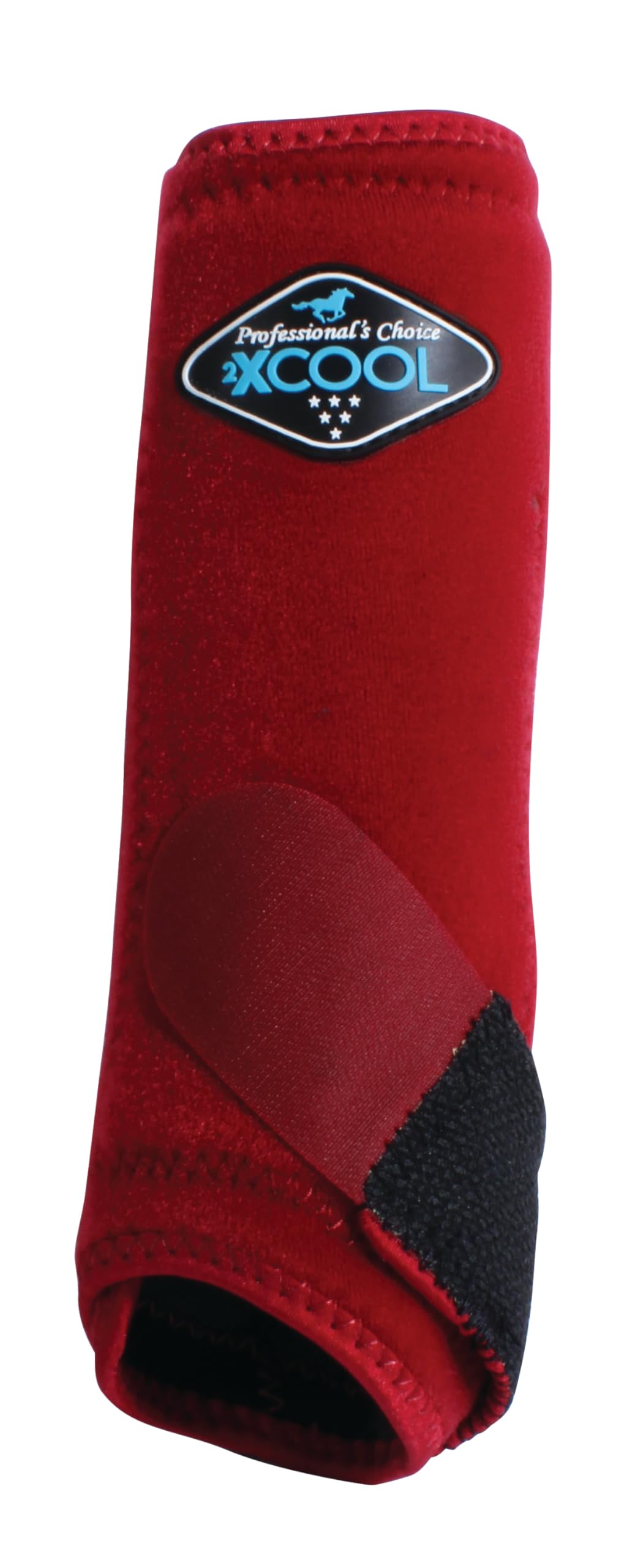
Professional’s Choice engineered the 2XCOOL boot around a singular problem: heat buildup inside traditional neoprene boots. The liner features brrr performance fabric with natural cooling minerals that create a Triple Chill Effect—active wicking and rapid drying that draws heat away continuously. In 90°F conditions, riders report zero leg sweat after an hour of work, a game-changer for horses with sensitive skin or those working in humid climates. The neoprene-free construction also sheds weight significantly compared to standard splint boots.
The suspensory strap integrates a stretch Kevlar patch that provides targeted support to the suspensory ligament while flexing naturally with each stride. This makes the boot viable for horses recovering from soft-tissue issues or those needing extra reinforcement in the fetlock region. The vivid crimson red color is bold and visible, but the 2-pack includes only front boots, so you’ll need to buy separately for rear leg protection. Some riders mentioned that the cooling effect degrades slightly after repeated machine washing, though the boot remains functional.
This is the definitive choice for riders training in heat or for horses prone to heat-related hock irritation. The trade-off is a slightly softer shell than rigid plastic boots, so if your primary risk is hard interference strikes rather than heat, you may prefer a harder exterior. At roughly 75 rides and holding, the durability is commendable, and the warranty from Professional’s Choice adds peace of mind.
Why we love it
- Superior cooling with brrr active-wicking liner
- Kevlar suspensory strap for targeted support
- Ultra-lightweight and neoprene-free construction
Good to know
- Cooling fabric performance may decline after many washes
- Softer shell offers less rigid strike protection than hard plastic
3. Iconoclast Hind Orthopedic Support Boots

Iconoclast takes a distinct approach by focusing purely on orthopedic lift and cradle support for the hind leg. The patented Double Sling Straps provide unparalleled lateral support that evenly distributes pressure to the suspensory branches, effectively lifting and cradling the equine leg. This is not a general-purpose splint boot—it’s a targeted rehabilitation tool for horses with suspensory ligament strains, check ligament injuries, or cellulitis recovery. Customer reports confirm significant gait improvement in mini horses with torn medial ligaments and full-sized horses recovering from severe infections.
The cotton fabric construction is a deliberate choice, offering breathability and machine-washability without the heat retention of neoprene. The hook-and-loop closure is exceptionally strong—multiple reviewers noted the Velcro is almost aggressively secure, which is exactly what you want to prevent migration during pasture gallop or turnout. However, the boot is tall and may be too long for short, thick draft pony legs despite fitting the width correctly. Iconoclast does not provide height measurements in the product specifications, a gap that forces some trial and error.
If your horse has a diagnosed hind-leg support need, these boots deliver genuine therapeutic value. They are less suited as a daily training boot for sound horses, as the sling system adds bulk and complexity that isn’t necessary for basic splint protection. Sold as a pair for the hinds, but individual boot sales would be a welcome option for asymmetric leg issues.
Why we love it
- Patented double sling system for lateral suspensory support
- Cotton fabric is breathable and machine-washable
- Extremely strong hook-and-loop closure prevents movement
Good to know
- Too tall for shorter, thicker leg confirmations
- No height measurement available pre-purchase
4. Weaver Leather Prodigy Original Athletic Boots

Weaver Leather’s Prodigy boot bridges the gap between budget and premium by incorporating a Dynamic Sling System that provides superior support without the + price tag. The form-fitting EVA foam absorbs concussion effectively, while the neoprene liner ensures comfort during prolonged wear. The stretchy binding conforms to the leg, and darted edges help keep dirt and debris from accumulating—a practical consideration for arena work. Riders with performance Quarter horses report excellent durability over many rides, with secure Velcro that remains functional.
The boot runs slightly small, so buyers should order up—a medium fits a 16-hand Appendix Quarter Horse, while a large suits a 15.2-hand gelding. The turquoise color is vivid but may appear more blue than the online listing, which can complicate matching with existing tack. The Velcro can be stiff initially and may catch on delicate materials, though this loosens with use. Dry cleaning is recommended, which is less convenient than the machine-washable options higher up this list.
This is an excellent mid-range option for riders who want authentic support features like the sling system without paying premium prices. It works best for general training, barrel practice, and trail riding where moderate strike protection is needed.
Why we love it
- Dynamic Sling System adds genuine support at a mid-range price
- EVA foam provides solid shock absorption
- Stretchy binding creates a snug, dirt-resistant fit
Good to know
- Runs small; order one size up
- Dry clean only — less convenient
5. Weaver Leather Equestrian Splint Boots

Weaver Leather’s straightforward splint boot focuses on the essentials: durable neoprene construction, a strong Velcro closure, and a reasonable price point. The Western-inspired style with a black protective pad works well for trail riders and pleasure riders who need reliable protection against over-reaching without the complexity of multi-strap systems. The closure system is simple to operate—zip on and secure—but the Velcro strip is long enough that riders with small fetlocks may find excess strap that requires trimming to prevent snagging.
True-to-size fit is a consistent positive in customer feedback, with small sizes accommodating Quarter Horses comfortably. The turquoise color is bright and accurate to the listing. However, some users suggest reinforcing the Velcro stitching proactively, as the stock construction may not withstand heavy daily use at full tension. The lack of additional support features like a sling or cradle system means these boots are strictly for basic splint and strike protection—not for horses with ligament issues or those requiring fetlock stabilization.
This boot is a solid entry-level or backup option for casual riding. It protects the splint bone area adequately and cleans up easily with a damp cloth. If you’re a weekend trail rider or a barn that needs multiple pairs for different horses, the value proposition is strong. For high-intensity speed events or rehab, look toward the premium tier.
Why we love it
- True-to-size fit with easy zip-on closure
- Bright color options for tack coordination
- Solid value for reliable basic splint protection
Good to know
- Velcro stitching may need reinforcement for heavy use
- No advanced fetlock or suspensory support features
6. Tough1 No Turn Bell Boots
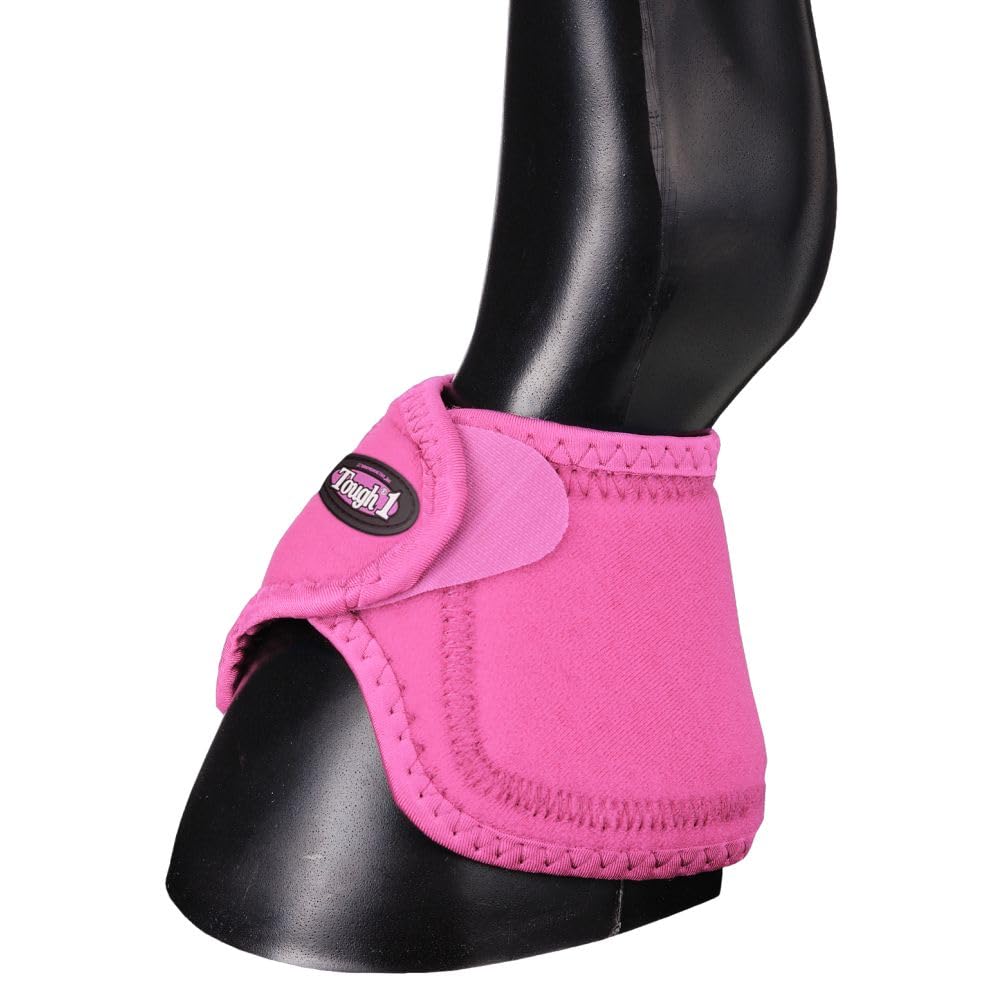
Tough1’s No Turn Bell Boots target a specific problem: bell boots that rotate and leave the hoof unprotected. The “no-turn” bump at the back is designed to prevent spinning, and in the first few months of use, it works effectively. The perforated neoprene provides airflow that helps the boot dry quickly after wet conditions. The Quick-Grip closure system is functional, though the Velcro can be tricky to fasten initially. Riders with pony-sized mares and Quarter Horses both report a snug fit that stays in place for several weeks before any rotation begins.
Durability is a mixed story. In deep mud and heavy turnout, these boots hold up for approximately six months before the neoprene begins to lose shape and the “no-turn” feature loses effectiveness. After that, the boot can spin and leave the coronary band exposed, which defeats its purpose. The cut-away design reduces bulk, but the trade-off is less overall coverage than full-coverage bell boots. Some riders recommend buying these as a budget starter pair and replacing seasonally rather than expecting long-term performance.
If you need a bell boot specifically for lower-leg protection rather than a splint boot for the cannon bone area, this is a cost-effective choice. The variety of color options is a plus for matching stable sets. However, for permanent turnout or horses that aggressively paw or over-reach, a more robust full-coverage boot with a reinforced no-turn feature may be necessary.
Why we love it
- Perforated neoprene for fast drying and breathability
- No-turn design works well for initial months of use
- Great fit for ponies and smaller horse legs
Good to know
- No-turn feature degrades after several months
- Cut-away coverage leaves some hoof area exposed
7. HORZE Chicago Protective Horse Tendon Boots
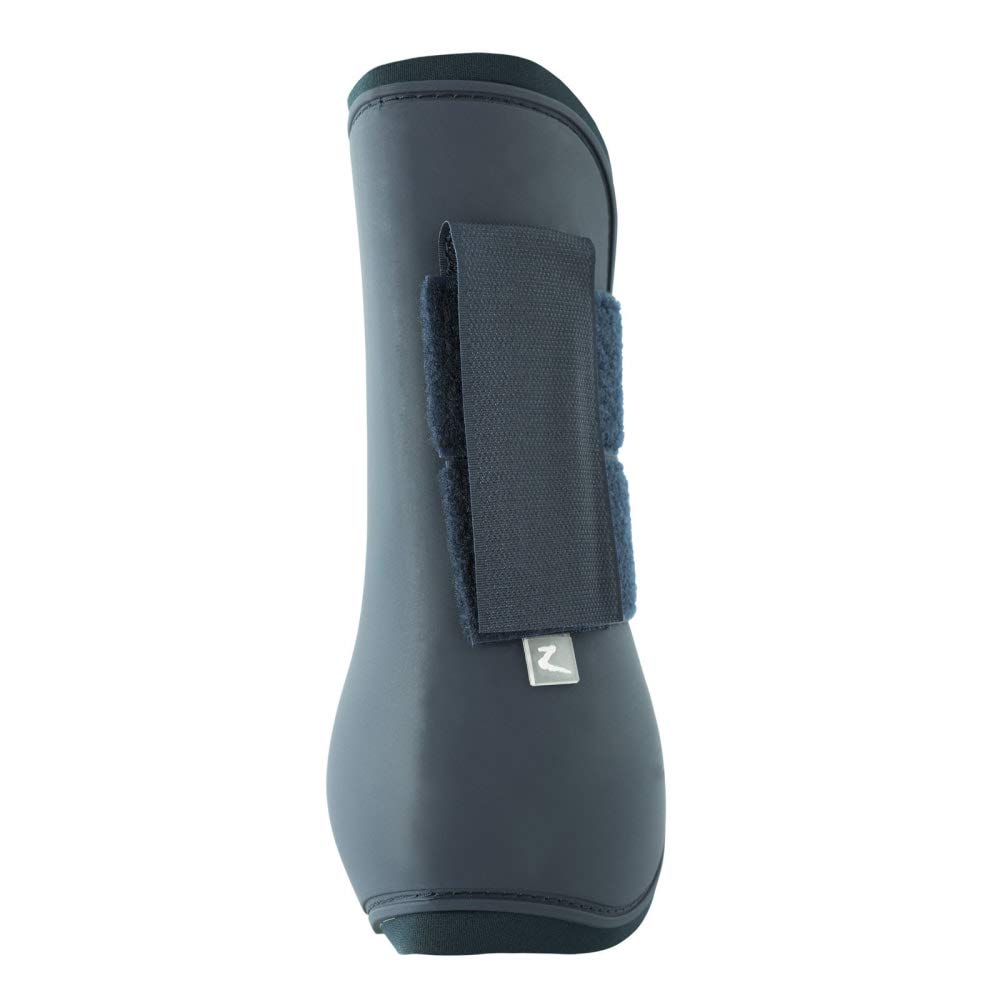
HORZE’s Chicago boot takes a classic open-front approach with a sturdy hard plastic shell that provides excellent rigid protection for the tendon area during jumping, trail riding, and turnout. This is a pure strike-protection boot—there are no sling systems, cooling fabrics, or orthopedic features. What you get is robust, no-nonsense defense against brushing injuries and interference. The shell is stiff enough that customers have used it successfully as a rehab boot for check ligament injuries, protecting the leg from hind hoof strikes during pasture gallop.
The neoprene lining cushions the leg and prevents rubbing, though the rigid shell makes this boot uncomfortable for stall rest—the horse can’t bend its leg naturally when lying down, and the straps may cause indentation. The dual Velcro closure with an over-strap prevents loosening during active work, and ventilation is adequate for moderate temperatures. Sizing is accurate: the small fits a 14.2-hand Welsh Cob. However, the hard plastic is vulnerable to cracking if impacted repeatedly against solid obstacles, so durability is not infinite.
This is the top choice for riders who need uncompromising strike protection on a tight budget. It’s ideal for jumping where interference is a real risk, or for turnout of horses that tend to over-reach. The limited heat management and complete lack of support features disqualify it for long-distance trail riding or dressage. Pair with Horze fetlock boots for a full set, but note the shell’s rigidity limits its applications beyond active work.
Why we love it
- Rigid plastic shell offers maximum strike protection
- Dual Velcro and over-strap keep boot secure
- Effective for rehab use when leg needs guarding
Good to know
- Uncomfortable for stall rest due to rigid shell
- Limited breathability and no soft-tissue support features
FAQ
How often should I replace my horse’s splint boots?
Can I use front splint boots on the hind legs?
What is the difference between splint boots and tendon boots?
Should my horse wear splint boots for turnout?
How do I prevent my horse’s splint boots from turning?
Final Thoughts: The Verdict
For most riders seeking reliable, competition-ready protection, the splint boots for horses winner is the Classic Equine Flexion Support Boots because the Cradle Fetlock System delivers independent support without sacrificing mobility—exactly what you need for speed events and daily training. If you ride in hot, humid conditions and want active cooling, grab the Professional’s Choice 2XCOOL Sports Medicine Boots. And for orthopedic hind-leg support during rehabilitation, nothing beats the Iconoclast Hind Orthopedic Support Boots with their patented double sling system.