
The wrong stone can slowly poison your tank. Certain gravels leach carbonates, spike pH, or contain sharp edges that injure bottom-dwellers like corydoras. Choosing safe, inert stones for your aquarium is the single most important hardscape decision you will make for your fish’s long-term health and your aquascape’s visual stability.
I’m Mo Mahin — the founder and writer behind Furric. I’ve spent years analyzing market trends, cross-referencing geological safety data, and studying owner feedback on how different substrates affect water chemistry and livestock behavior in freshwater systems.
After evaluating dozens of options against strict criteria — inert composition, grain consistency, rinsing effort, aesthetic clarity, and biotope suitability — these five picks represent the safest and most visually rewarding stones for aquarium setups you can buy right now.
How To Choose The Best Stones For Aquarium
Not every stone found in nature is safe for submerged life. Limestone, shell-based gravels, and many river pebbles contain calcium carbonate that dissolves in water, driving pH upward and stressing sensitive species. Start here to avoid a chemistry disaster.
Inert vs. Reactive Composition
Pour a few drops of white vinegar on a dry stone. If it fizzes, the stone contains carbonates and will raise pH over time. Safe aquarium stones — slate, dragon stone, river pebbles, and most silica-based sands — produce zero reaction. This single test eliminates 80% of unsuitable options.
Grain Shape and Particle Size
Sharp-edged crushed gravel lacerates the barbels of corydoras and loaches and traps waste in deep crevices. Smooth, rounded pebbles or well-tumbled sand allow detritus to sit on top where your filter can grab it. For planted tanks, 2–4 mm grain depth supports root spread without compaction.
Color Impact on Aquascaping
Dark substrates make plant greens and fish colors pop by absorbing reflected light. White or bright gravels bounce light back under plants, sometimes causing algae. Mid-tone river mixes offer a natural look that hides mulm between cleanings — a practical advantage for low-maintenance keepers.
Quick Comparison
On smaller screens, swipe sideways to see the full table.
| Model | Category | Best For | Key Spec | Amazon |
|---|---|---|---|---|
| Aqua Natural Galaxy Sand | Fine Sand | Planted tanks, corydoras, shrimp | Sparkling black, 0.5–1mm grain | Amazon |
| Small World Slate Stone | Slate Pieces | Cave building, hardscape structure | 5–7 inch flats, 10 lbs bag | Amazon |
| Halatool Green Agate | Polished Pebbles | Accent top-dressing, small nano tanks | 9–15mm naturally polished | Amazon |
| FANTIAN River Rocks | Mixed Gravel | General cover, turtle/topper tanks | 1/4 inch smooth pebbles | Amazon |
| Unocho Dragon Stone | Hardscape Rock | Iwagumi layouts, feature rock | 2–6 inch pieces, pH‑neutral | Amazon |
In‑Depth Reviews
1. Aqua Natural Galaxy Sand 20lb

The Galaxy Sand delivers the most dramatic light-play of any substrate in this lineup. Each grain catches and scatters light, giving the tank floor a starfield shimmer that makes neon tetras and cherry shrimp look as if they are suspended above a night sky. The grain is fine enough for corydoras to sift without damaging their barbels, yet heavy enough to stay put during water changes.
Rinsing effort is remarkably low — multiple owners reported the bag arriving with minimal dust compared to typical black sands. After a quick bucket rinse, the water ran nearly clear. The tank did experience a brief white haze after initial fill, but that cleared within hours, not days. Over time, the deep black background makes green plant foliage and bright fish colors stand out with real contrast.
At 20 pounds, this bag covers a 20-gallon long tank to a depth of about 1.5 inches. Ethically sourced in the USA, this is a marine-safe, inert silica sand that will not shift pH. The only real caveat: fine sand can compact if not stirred occasionally, and it requires a gentle filter intake to avoid sucking up grains.
Why we love it
- Minimal rinsing needed out of the bag
- Deep black finish with sparkle effects
- Soft enough for sensitive bottom dwellers
Good to know
- Initial cloudiness takes a few hours to settle
- Fine sand can pack tight without root disturbance
2. Small World Slate Stone 10lbs

For hobbyists who want to build caves, overhangs, and terraced ledges, this slate delivers pieces that stack naturally without epoxy. Each 10-pound box contains 7 to 12 hand-split stones ranging from 5 to 7 inches long — enough to construct a multi-level hardscape in a 36-gallon tank. The deep grey color carries a subtle silvery mica sheen that catches light from above, giving the scape a wet-rock realism.
Slate is one of the most inert stones available. It contains no calcium carbonate and will not buffer pH, making it safe for both soft-water species like rummy-nose tetras and hard-water cichlids. A handful of reviewers noted white quartz veining and occasional orange surface discoloration — this is natural variation, not contamination. A thorough rinse removes dust, and the stones arrive well-packed with minimal breakage.
The main drawback is thickness inconsistency. Some stones measure under half an inch, which can feel fragile when used as a structural base. Thicker pieces support weight well; thinner ones work best as flat capstones. For reptile keepers, these stones also retain heat from basking lamps, making this bag a dual-use win for multi-habitat households.
Why we love it
- Ideal flat shapes for stacking and cave building
- Completely inert — won’t shift water chemistry
- USA-sourced with thoughtful packaging
Good to know
- Some pieces are thinner than expected
- Minor quartz veining is natural but may surprise
3. Halatool Green Agate Stones 8LB
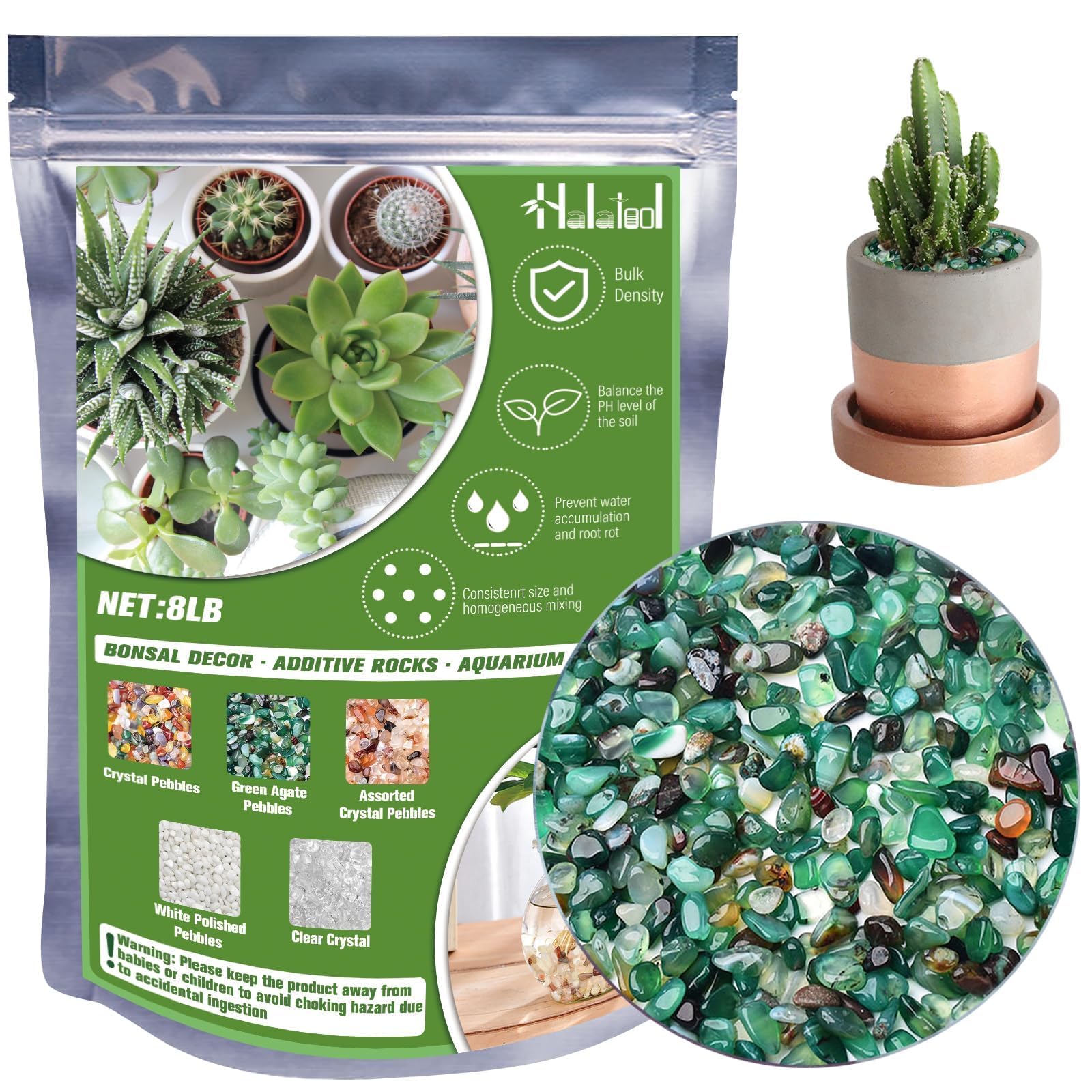
Natural green agate brings a pop of permanent color that dyed gravel can never match. These stones arrive naturally polished with a smooth, oval shape that feels pleasant in hand and glides through water without scratching silicone seals. The color will not fade under LEDs or intense sunlight, making these suitable for terrariums, paludariums, and open-top tanks.
Each pebble measures 9 to 15 millimeters — roughly pea-sized. This is too large for a full substrate layer but perfect as an accent topper over black sand or mixed gravel. The natural polish hides surface dust well; a single rinse is enough before dropping these into the display. Some stones have tiny natural pits or surface cracks, but these are surface-level and do not trap waste any worse than smooth pebbles.
Coverage is generous: a single 8-pound bag covers roughly one square foot at a 1-inch depth. The bag size can look deceivingly small when unboxed — the density of agate means 8 pounds occupies less physical volume than 8 pounds of sand. For a nano tank under 10 gallons, this bag is plenty. For larger displays, budget at least one pound per gallon for top-dressing coverage.
Why we love it
- Permanent natural green color — no dye risk
- Polished smooth, safe for all fish
- Works beautifully as decorative topper
Good to know
- Small bag volume relative to weight
- Too large for full substrate in deeper tanks
4. FANTIAN 20 lbs Mixed River Rocks

At 20 pounds of smooth, mixed-color river pebbles, this bag delivers the most square footage per dollar in this guide. The 1/4-inch grain size is large enough to allow water flow between particles, preventing the anaerobic dead zones that plague fine sand. The colors are light and varied — tan, cream, soft grey, and occasional speckled pebbles — giving a bright, natural stream-bed appearance.
Cleanliness out of the bag is impressive. Multiple owners noted that after 2–3 rinses the water ran clear, with far less dust than hardware-store gravel. The pebbles are uniformly smooth with no sharp edges, making them safe for turtles, frogs, and any fish that roots around the bottom. The weight is enough to anchor driftwood that wants to float without needing adhesive.
One drawback: the bag size (13.5 x 9 x 5 inches) can be physically bulky to store, and you will need a second bag to achieve a 2-inch depth in a 20-gallon tank. The mixed colors do not offer the dramatic contrast of black sand, so if you want a dark background for your plants, this is not the right choice. For a clean, natural, low-cost foundation, it is hard to beat.
Why we love it
- Excellent value per pound vs. pet store prices
- Minimal dust and very clean after washing
- Safe for turtles and burrowing fish
Good to know
- Light colors show mulm faster than dark substrates
- Needs 2+ bags for deep substrate in larger tanks
5. Unocho Dragon Stone 10lb
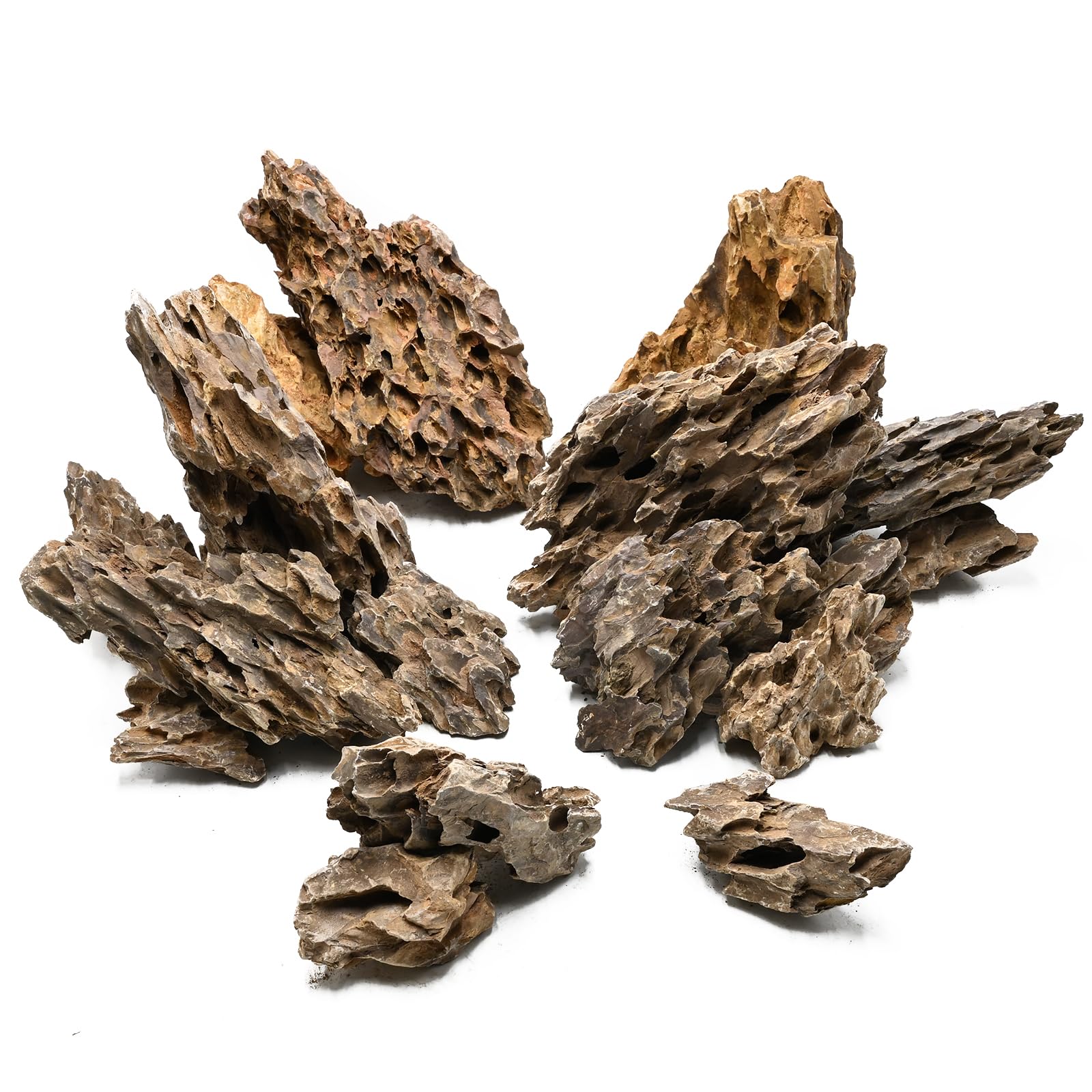
Dragon stone — also sold as Seiryu rock — is the go-to for Iwagumi-style layouts because of its intricate honeycomb texture and layered folds that create immediate visual depth. Each piece in this 10-pound box is hand-picked, and the variation is genuinely stunning: some stones look like miniature mountain ridges, others like eroded canyon walls. The yellow-brown patina darkens beautifully once submerged.
The listing states these stones do not alter water chemistry, and multiple tests confirm they are pH-neutral once rinsed. However — and this is critical — they arrive coated in a fine red clay dust that gets deep into every crevice. Owners consistently recommend a stiff brush, high-pressure spray, or even a short bleach soak (followed by thorough rinsing) to get them clean. The payoff is worth the effort: clean dragon stone anchors Java fern and Anubias roots perfectly without glue.
Size distribution is generous: a 10-pound box yielded 5 large pieces over 4 inches and several smaller accent stones. A few pieces are thin enough to snap by hand if you need smaller fragments for detailing. The only real competitor concern is that the fine clay dust can cloud a freshly filled tank for 24–48 hours if you rush the washing step. Plan your scaping session with an extra rinse day built in.
Why we love it
- Unique natural texture unmatched by other stones
- Holds plant roots without glue
- pH-neutral and safe for all freshwater species
Good to know
- Extremely dusty — needs aggressive cleaning
- Some pieces are thin and may break during handling
FAQ
Will dragon stone change my water pH?
How do I know if a stone contains calcium carbonate?
What grain size is best for bottom-feeding fish?
Can I boil stones to sterilize them before use?
Final Thoughts: The Verdict
For most aquarists, the stones for aquarium winner is the Aqua Natural Galaxy Sand because it combines zero-rinse convenience, a stunning dark aesthetic, and absolute safety for all bottom-dwellers in one 20-pound bag. If you want architectural hardscape pieces you can stack into caves, grab the Small World Slate Stone. And for a true award-winning Iwagumi layout, nothing beats the sculptural texture of the Unocho Dragon Stone.