
Creating a vibrant, healthy home for your aquatic turtle goes beyond clear water and a good filter—it starts with what’s under their feet. The right substrate isn’t just decoration; it’s a critical component for natural digging behaviors, safe foraging, and overall well-being, preventing serious health risks like impaction.
I’m Mo Mahin — the founder and writer behind Furric. With over 15 years dedicated to reptile husbandry, I’ve immersed myself in deep market research, analyzing veterinary safety standards for shell and digestive health, and evaluating real-world feedback from a community of dedicated turtle keepers to separate the truly beneficial from the merely adequate.
This guide cuts through the confusion, presenting substrates that prioritize safety and mimic natural habitats. After evaluating countless options, I can confidently say that choosing the right best substrate for aquatic turtles is the foundation for a clean, healthy, and engaging aquatic habitat.
How To Choose The Best Substrate For Aquatic Turtles
Selecting a substrate is one of the most important decisions for an aquatic turtle keeper. The wrong choice can lead to digestive blockages, injured skin, or a perpetually cloudy tank. Your goal is to find a balance between safety, functionality, and ease of maintenance that suits your turtle’s natural instincts.
Grain Size and Ingestion Risk
The single most critical factor is ensuring the substrate particles are either too large to be swallowed or fine enough to pass safely if ingested. Small, uniform gravel is a major impaction hazard. Opt for either large, smooth pebbles (larger than your turtle’s head) or very fine, sandy grains that won’t clog their digestive tract.
Material and Water Chemistry
Inert materials that don’t alter water pH or hardness are ideal for most aquatic turtles. Natural sands and stones are typically safe, while some clay-based substrates are designed for planted tanks. Avoid dyed or chemically coated gravels, as colors can leach and materials may have sharp edges.
Ease of Cleaning and Maintenance
Consider how the substrate will affect your tank upkeep. Fine sand can compact and harbor anaerobic bacteria if not stirred occasionally, while larger pebbles allow waste to fall between them, requiring thorough vacuuming. A good substrate should help, not hinder, your cleaning routine.
Natural Behavior and Enrichment
Many turtles, especially softshell species, are innate diggers. A soft, fine sand substrate allows them to exhibit this natural burrowing behavior, which is crucial for their mental well-being. Even for non-burrowers, a naturalistic riverbed floor provides environmental enrichment.
Quick Comparison
On smaller screens, swipe sideways to see the full table.
| Model | Type | Best For | Key Feature | Amazon |
|---|---|---|---|---|
| Zoo Med Aquatic River Pebbles | Gravel | Sliders, Cooters, Map Turtles | Pre-washed, turtle-safe size | Amazon |
| Seachem Flourite Black Clay Gravel | Clay Gravel | Planted turtle habitats | Porous, inert, supports plant roots | Amazon |
| Aqua Natural Galaxy Sand | Sand | Dramatic aquascapes & burrowing | Fine black sand, sustainably sourced | Amazon |
| Exo Terra Turtle Pebbles, Large | Gravel | Turtles over 4″ shell diameter | Extra large, smooth, prevents ingestion | Amazon |
| Aqua Natural Sugar White Sand | Sand | Bright tanks & bottom dwellers | Triple-washed, ultra-clean, fine grain | Amazon |
| Exo Terra Riverbed Sand | Sand | Softshell turtles & natural diggers | Very fine, natural, promotes burrowing | Amazon |
| REPTI ZOO Coconut Chip Substrate | Coco Husk | Paludarium land areas | Expands greatly, natural, odor-absorbing | Amazon |
| kathson Turtle Basking Platform | Platform | Small turtles under 4″ width | Resin rock design with ramp | Amazon |
| River Rocks for Plants 5.5 LB | Gravel | Decorative topping | Polished natural stones, 1″-1.5″ size | Amazon |
| ReptiChip Coconut Chip Bedding | Coco Husk | Terrarium land sections | Ready to use, dust-free, organic | Amazon |
| Aqua Natural Delta Sand Bio-Substrate | Bio Sand | New tank cycling | Seeded with live nitrifying bacteria | Amazon |
In-Depth Reviews
1. Zoo Med Aquatic River Pebbles
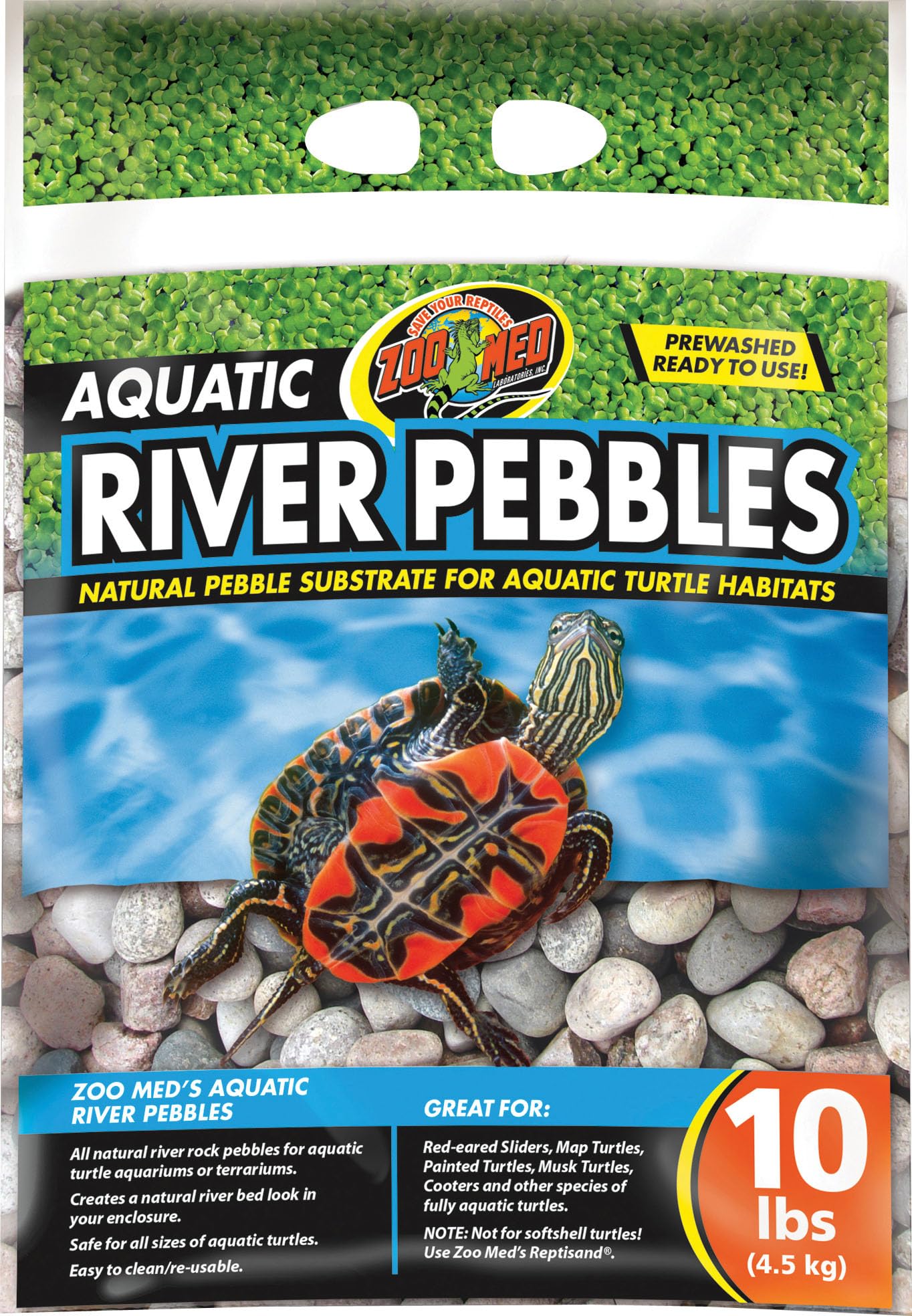
When safety is the non-negotiable priority for common species like Red-Eared Sliders and Map Turtles, these river pebbles from Zoo Med set the standard. They are specifically sized to be utterly impossible for your turtle to swallow, eliminating the terrifying risk of intestinal impaction that haunts every responsible keeper.
The pebbles come pre-washed, a thoughtful touch that reduces initial cloudiness, though a quick rinse is still wise. Their smooth, rounded edges are gentle on delicate plastrons and skin, and the natural color variation creates an authentic riverbed aesthetic. From a maintenance perspective, their size allows waste to settle between them, making spot-cleaning with a gravel vacuum straightforward.
Long-term turtle parents report these pebbles hold up beautifully, don’t degrade, and their neutral composition won’t alter your water chemistry. They provide a stable, diggable floor that satisfies natural foraging behaviors without the associated danger of smaller gravel.
Why we love it
- Engineered for safety with a size that prevents ingestion entirely
- Pre-washed condition minimizes setup mess and cloudiness
- Smooth, natural stones are harmless to shells and skin
- Trusted brand with a specific focus on reptile and turtle care
Good to know
- Waste can fall between stones, requiring diligent vacuuming
- Not suitable for turtle species that enjoy deep burrowing
- You’ll need multiple bags for adequate coverage in larger tanks
2. Seachem Flourite Black Clay Gravel

For the aquarist who dreams of a lush, planted turtle habitat, this premium clay gravel is a game-changer. It provides a stable, porous foundation that allows plant roots to anchor and thrive, all while maintaining a completely inert profile that won’t swing your pH—a critical balance in a turtle’s bioactive environment.
The deep black color offers a stunning contrast that makes both your turtles and greenery pop. Its porosity is its secret weapon; it doesn’t just sit there but provides ample surface area for beneficial bacteria to colonize, supporting your biological filtration. The particle size is large enough to be safe for most turtles, yet small enough to create a dense, natural-looking substrate bed.
Established planted tank enthusiasts emphasize that while it’s famously dusty out of the bag, a thorough rinse—as Seachem themselves instruct—results in a crystal-clear, professional-grade foundation. This is an investment in creating a miniature, self-sustaining ecosystem.
Why we love it
- Superior porous structure supports robust plant root growth
- Completely inert, so it won’t alter water chemistry unexpectedly
- Rich black color creates dramatic visual depth and contrast
- Provides additional surface area for beneficial biofilm colonization
Good to know
- Requires extensive, patient rinsing to avoid initial cloudiness
- A premium investment compared to basic sands or gravels
- The jagged edges, while porous, are less smooth than river pebbles
3. Aqua Natural Galaxy Sand

If you’re aiming for a sleek, modern aquascape that also caters to a turtle’s burrowing instincts, this fine black sand delivers on both fronts. Its ultra-fine grain size is perfect for species like softshell turtles that love to dig and bury themselves, as it moves effortlessly and won’t cause abrasions.
The sand is sustainably sourced and arrives remarkably clean, with minimal dust compared to other options. Its dark color brilliantly highlights your turtles and any tank decor, while also cleverly concealing typical detritus between cleanings. The subtle sparkle under tank lighting adds a touch of natural elegance you don’t get with plain gravel.
Reptile habitat designers appreciate how easy it is to shape for sloping landscapes or creating different depths. It’s dense enough that it typically stays put with proper filtration, preventing constant cloudy clouds from swimming activity, making it both beautiful and practical.
Why we love it
- Perfectly fine texture is ideal for natural digging and burrowing behaviors
- Dark color showcases turtles and hides waste effectively between cleanings
- Comes very clean, requiring less rinsing than many other sands
- Ethical sourcing provides peace of mind for environmentally-conscious keepers
Good to know
- Can compact over time, needing occasional gentle stirring
- Fine grains may get sucked into underpowered or intake-unprotected filters
- The “sparkle” effect is subtle and depends heavily on your lighting
4. Exo Terra Turtle Pebbles, Large

For keepers of adult Red-Eared Sliders, Cooters, or other large species, finding a substrate that’s truly ingestion-proof can be a challenge. These Exo Terra pebbles are specifically graded to be “large,” with a consistent size that is absolutely non-negotiable for safety with bigger, stronger turtles.
The pebbles are uniformly smooth and rounded, having been tumbled to eliminate any sharp edges that could scratch a turtle’s plastron or skin. This creates a comfortable walking and resting surface. Their natural tan and grey color palette mimics a true riverbed, avoiding the artificial look of some colored gravels. They have enough weight to stay in place but are still easy for you to rearrange during tank maintenance.
Veteran keepers of sizable turtles note that these pebbles finally put a stop to the nervous habit of checking every poop for gravel. They provide mental stimulation as turtles nose through them, and their size makes waste removal above them relatively simple, though a gravel vacuum is still essential for what settles beneath.
Why we love it
- Consistently large size is 100% safe for adult turtles with powerful jaws
- Pre-tumbled smoothness prevents any injury to shells or soft tissue
- Natural color variety looks authentic and doesn’t fade over time
- Heavy enough to resist being moved around by strong water currents
Good to know
- Like all large gravel, waste management requires diligent underneath cleaning
- Not suitable for very small or juvenile turtles
- Arrives with a fine dust that requires a good rinse before use
5. Aqua Natural Sugar White Sand

To create a bright, clean-looking habitat that makes your turtle’s colors shine, this sugar white sand is a top contender. Its off-white, natural shade reflects light beautifully, giving the entire tank a luminous, airy feel that darker substrates can’t match. It’s particularly stunning in setups with live plants.
The “triple-washed and kiln-dried” claim is real; this sand arrives in a condition that’s leagues cleaner than typical play sand. Aquarists consistently report minimal cloudiness, even with a light rinse. The grain size is a perfect medium-fine—dense enough not to blow around uncontrollably but soft enough for comfort. It’s also inert, so it won’t affect your water hardness or pH.
Those who keep turtles alongside bottom-dwelling fish like loaches or catfish choose this sand specifically for its gentle texture, which protects delicate barbels. It creates a stunning canvas that makes every element in your tank stand out with clarity.
Why we love it
- Exceptionally clean processing results in almost no dust or cloudiness
- Bright color maximizes light reflection and showcases your turtle
- Fine, smooth texture is safe for all aquatic life, including delicate fish
- Neutral composition ensures it won’t alter critical water parameters
Good to know
- Light color shows debris and algae more readily than darker sands
- May require more bags than expected for a deep bed in a large tank
- Not the best choice for prolific diggers that constantly stir up the bottom
6. Exo Terra Riverbed Sand
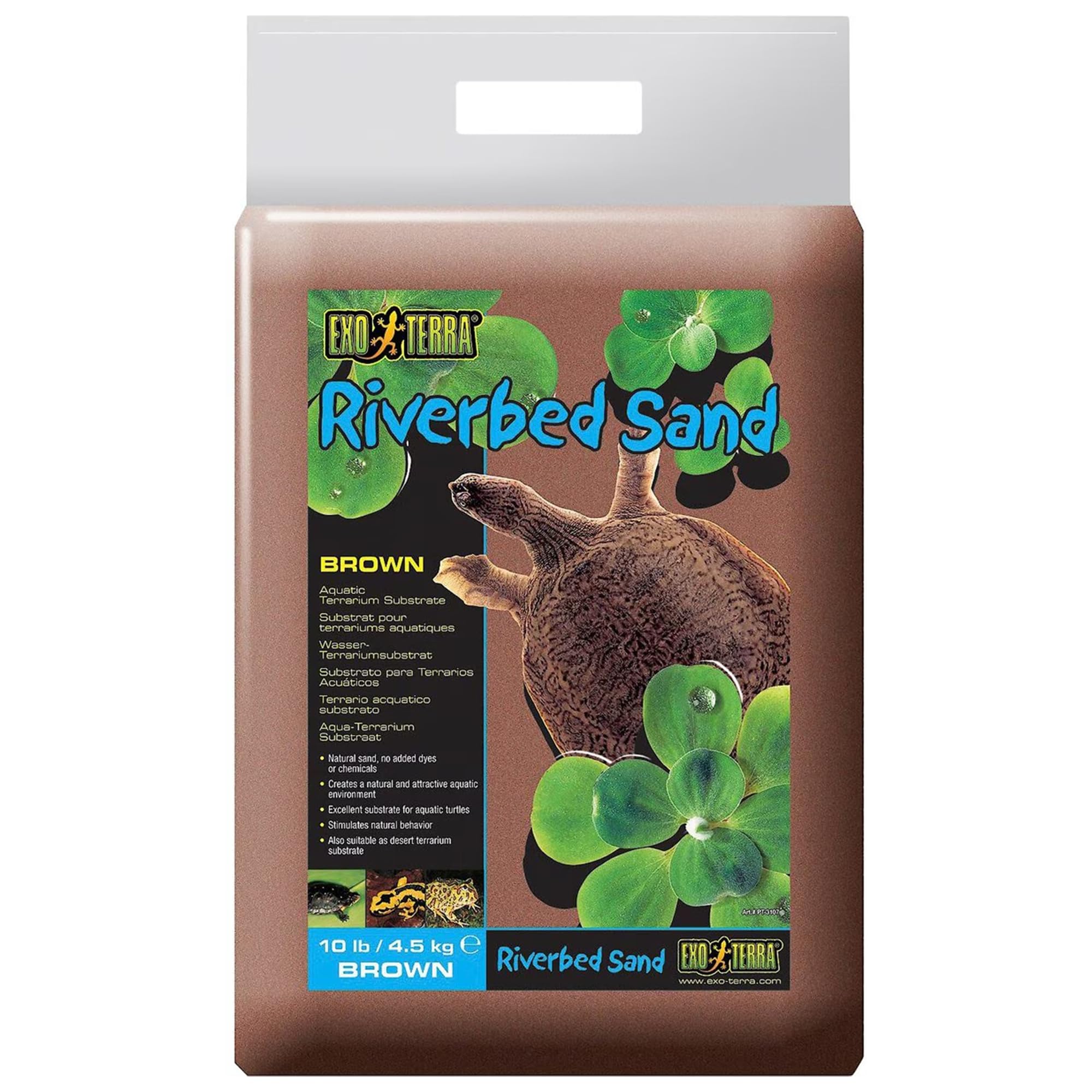
If your priority is replicating the soft, diggable river bottoms that aquatic turtles like softshells and mud turtles evolved with, this very fine sand is purpose-built for the job. Its grain size is specifically chosen to be easily secreted if accidentally ingested, unlike problematic gravel.
This sand encourages innate burrowing behavior, which is crucial for the mental well-being of many species. It’s soft on their plastrons and limb skin, preventing the abrasions that coarse substrates can cause. The natural brown color blends seamlessly into a realistic biotope setup. It’s free of dyes and chemicals, focusing purely on providing a naturalistic medium.
Keepers of softshell turtles, in particular, swear by this substrate, noting their pets immediately become more active and engaged, spending hours digging and settling into the sand. It requires a dedicated rinsing session before use, but the enrichment it provides is well worth the extra setup time.
Why we love it
- Ultra-fine texture is perfect for species that naturally burrow and dig
- Promotes essential natural behaviors that reduce stress in captivity
- Soft and smooth, posing no risk of abrasion to skin or shell
- No added dyes or chemicals, making it a pure, natural choice
Good to know
- Requires extensive, patient rinsing to remove fine silt and avoid cloudiness
- Can be easily kicked up by active swimmers, clouding the water column
- Being so fine, it can get into filter intakes without proper pre-filters
7. REPTI ZOO Coconut Chip Substrate

For the innovative keeper building a paludarium—a half-water, half-land habitat—this compressed coconut chip substrate is a genius solution for the terrestrial zone. It expands dramatically with water, creating a voluminous, natural-looking bed that’s perfect for creating raised land areas where your turtle can fully emerge and explore.
The chips are organic, hold humidity beautifully without getting soggy, and have natural odor-controlling properties. They provide excellent drainage, preventing waterlogged soil in the land section, and their texture is comfortable for walking and nesting. This substrate allows you to plant hardy terrestrial plants directly into the land portion, enhancing the bioactive quality of the enclosure.
Advanced hobbyists creating complex ecosystems appreciate the sheer volume this block yields. It’s a cost-effective way to build up significant topography. It’s important to note this is for the *land area*; it should not be used as a primary substrate fully submerged in the aquatic section.
Why we love it
- One compressed block expands to a massive volume, offering great value
- Ideal for creating humidity-retaining, well-draining land areas in paludariums
- Natural coconut material is safe, biodegradable, and controls odors
- Provides a perfect medium for planting the terrestrial section of a habitat
Good to know
- NOT for use as a primary substrate in the fully aquatic zone of the tank
- Requires careful quality check, as rare batches may contain foreign debris
- Needs to be kept moist to maintain humidity; can dry out in arid setups
8. kathson Turtle Basking Platform

While not a substrate in the traditional sense, this clever accessory functions as a raised, solid “land” area that complements your tank’s floor covering. For small turtles or those in tanks where building up substrate isn’t feasible, it provides an essential, easy-to-access dry basking spot right out of the water.
The realistic rock texture blends well with natural substrates below, and the gentle ramp is easy for even tiny hatchlings to navigate. The suction cups provide surprisingly secure adhesion to glass, creating a stable platform. It’s made from aquarium-safe resin, so it won’t affect water quality. This is particularly useful for young turtles who need unimpeded access to UVB and heat lamps for proper shell development.
Owners of juvenile Sliders and Painted Turtles find this platform solves the “how do I give them a dry area?” puzzle in a simple, space-efficient way. It encourages natural basking behavior, which is non-negotiable for metabolic health and preventing shell rot.
Why we love it
- Provides a critical, easy-to-access dry basking area for essential UVB exposure
- Realistic rock appearance integrates seamlessly with naturalistic setups
- Gentle ramp design is accessible for small and juvenile turtles
- Sturdy suction cup mounting offers reliable stability in the water
Good to know
- Size is quite small, suitable only for turtles under 4 inches in width
- Resin material can be less durable than real stone if subjected to heavy impacts
- Suction cups may require re-adhesion during routine water changes
9. River Rocks for Plants 5.5 LB

This bag offers a straightforward, entry-level option for keepers needing smooth, natural stones to create a basic riverbed floor. The rocks are polished and rounded, providing a safe, non-abrasive surface. The natural color mix adds visual interest without artificial dyes.
They work well as a decorative topper in sections of the tank or for creating specific landscaping features. Their size (1″-1.5″) is generally safe for larger juveniles and adult turtles, as they are difficult to swallow. They are versatile beyond the aquarium, which adds to their value for crafty hobbyists.
Feedback from turtle parents using these as a secondary substrate or in specific zones indicates they hold up well in water and maintain their appearance. They are a simple, no-frills solution for someone who wants the aesthetic of river rock without complex features.
Why we love it
- Very budget-friendly option for obtaining natural-looking stones
- Polished, smooth finish is safe against a turtle’s shell and skin
- Versatile for use in tank landscaping or other DIY pet/plant projects
- Natural, non-fading colors avoid an artificial tank appearance
Good to know
- Size consistency can vary, requiring manual sorting to remove smaller, ingestible pieces
- Waste and algae can easily accumulate in the larger gaps between stones
- Not pre-washed for aquarium use, so requires thorough cleaning and inspection
10. ReptiChip Coconut Chip Bedding
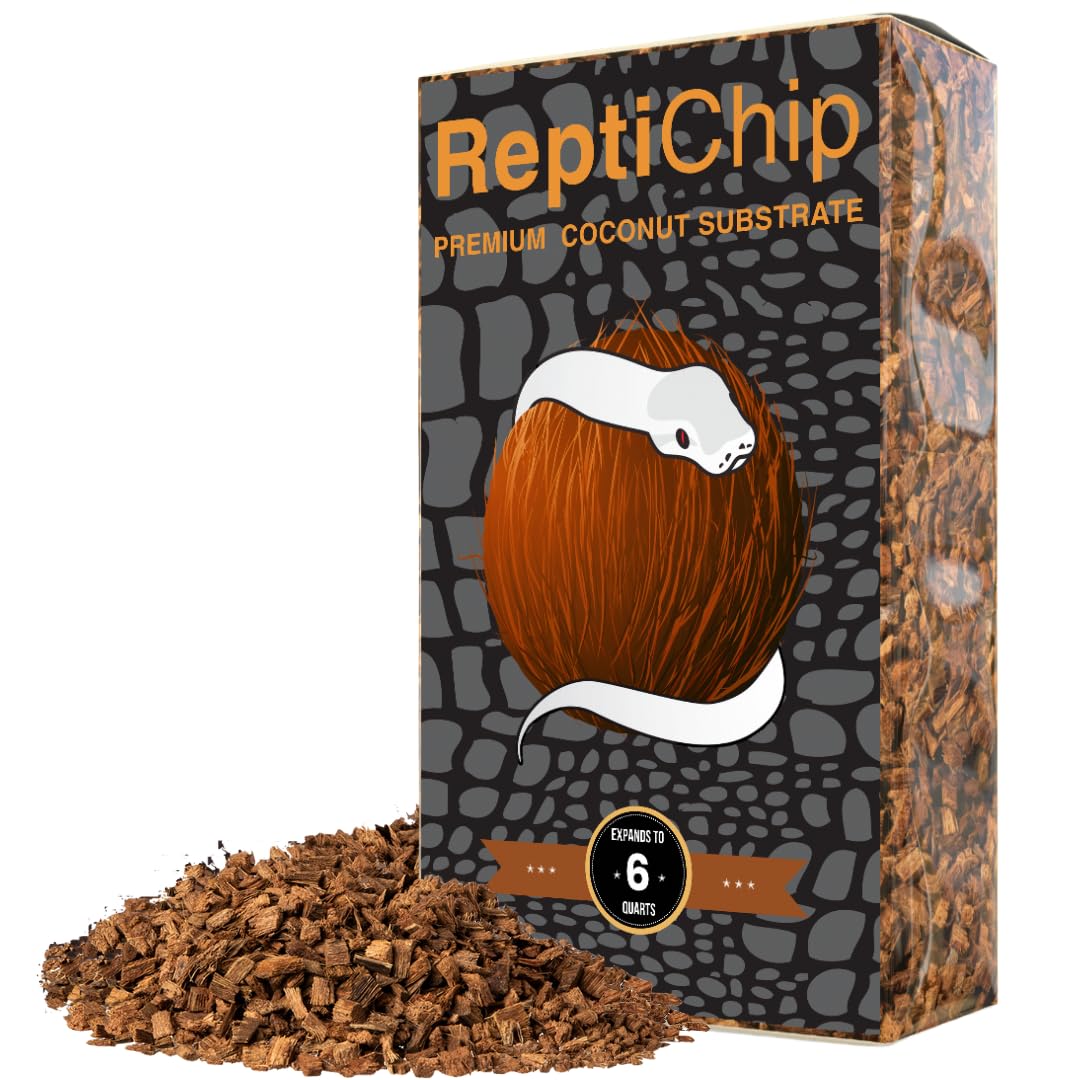
This loose coconut chip product is another excellent option for the land portion of a semi-aquatic setup. Unlike compressed blocks, it comes ready to use straight from the bag for dry areas, or can be moistened to boost humidity. It’s renowned in the reptile community for being exceptionally clean and virtually dust-free.
The chips are larger and more uniform than fiber, allowing for better airflow and drainage in land areas, which helps prevent mold. They create a naturalistic forest floor aesthetic and are completely organic and sustainable. For a turtle paludarium, they make a comfortable, absorbent substrate for the dry zone where your turtle might choose to nest or simply rest away from the water.
Herpetoculturists praise its consistency and cleanliness. It’s a reliable, mid-range product for constructing a high-quality terrestrial environment. Remember, its primary application is for the dry, terrestrial section, not as a main substrate under water.
Why we love it
- Exceptionally clean processing results in a nearly dust-free product
- Ready to use out of the bag, saving time compared to expanding blocks
- Larger chip size promotes air flow and reduces risk of compaction and mold
- Excellent for creating natural, humidity-friendly land areas
Good to know
- Designed for terrestrial/basking areas, not for full submersion
- Smaller package size than expanding blocks, so less volume per purchase
- Can dry out quickly if not sealed properly between uses or kept moist
11. Aqua Natural Delta Sand Bio-Substrate

This unique product is a secret weapon for setting up a new turtle tank or revitalizing an established one. It’s not just sand; it’s a bioactive substrate seeded with live nitrifying bacteria. These bacteria are the workhorses of your nitrogen cycle, instantly converting harmful ammonia from turtle waste into less toxic compounds.
It’s meant to be mixed with regular sand (at a 1:4 ratio) to “inoculate” your entire substrate bed, creating a powerful, decentralized biological filter right under your turtle’s feet. This is especially beneficial in turtle tanks, which typically have a high bioload. It can significantly shorten or even eliminate the stressful tank cycling period, making the environment safe for your pet much faster.
Aquarists facing “new tank syndrome” have found this product to be a lifesaver, establishing stable water parameters rapidly. The sand itself is a natural brown color and fine-grained, making it a good base material when mixed as directed.
Why we love it
- Seeded with live bacteria to jumpstart or bolster the essential nitrogen cycle
- Can dramatically reduce the time needed to establish a safe, cycled tank
- Distributes beneficial bacteria throughout the substrate, not just in the filter
- Fine, natural sand base is safe and blends well with other substrates
Good to know
- Must be used as part of a mix, not as a standalone substrate
- Instructions warn against rinsing, which can wash away the beneficial bacteria
- The bacterial boost is a one-time benefit during initial setup
Safety & Care Tips
The Impaction Rule of Thumb
Any loose substrate particle should be either significantly larger than your turtle’s head (making it impossible to swallow) or fine enough to pass through their digestive system without lodging. The dangerous middle ground—small, pea-sized gravel—is the most common cause of fatal intestinal blockages. When in doubt, err on the side of larger, smooth stones or very fine sand.
Maintenance is Non-Negotiable
Regardless of your chosen substrate, a strict cleaning regimen is vital. For sand, gently stir the surface weekly to prevent anaerobic gas pockets. For gravel or pebbles, use a gravel vacuum during water changes to suck waste out from between the stones. Never let uneaten food decay in the substrate, as it will ruin water quality and harm your turtle’s health.
FAQ
Is sand or gravel better for aquatic turtles?
How deep should the substrate layer be?
Can I keep my turtle tank bare-bottom with no substrate?
Final Thoughts: The Verdict
For most pet parents, the best substrate for aquatic turtles winner is the Zoo Med Aquatic River Pebbles because it perfectly balances proven safety for common species with natural aesthetics and ease of maintenance. If you want to support a lush, planted habitat or have a dedicated burrowing species, grab the Seachem Flourite Black Clay Gravel or the Exo Terra Riverbed Sand. And for creating a complex paludarium with a stunning land area, nothing beats the REPTI ZOO Coconut Chip Substrate for its value and functionality.