
Choosing the wrong ground cover for your bearded dragon’s enclosure isn’t just a cleaning inconvenience — it’s a direct threat to their digestive health. Loose, ingestible particles can lead to impaction, a serious condition that affects their ability to process food and absorb heat. The ideal material must balance natural burrowing behavior with strict safety standards for a desert reptile.
I’m Mo Mahin — the founder and writer behind Furric. I’ve spent thousands of hours analyzing owner reports, comparing substrate composition data, and studying how particle size and moisture retention affect arid reptile health to separate marketing claims from genuine biological needs.
Whether you’re establishing a bioactive desert vivarium or simply upgrading from paper towels, this guide breaks down the safest and most practical choices for a substrate for bearded dragon enclosures — ranked by material safety, ease of maintenance, and long-term value.
How To Choose The Best Substrate For Bearded Dragon
Not every bag on the shelf is safe for a bearded dragon. Their natural habitat consists of compacted clay, sand, and rocky soil — not loose fine sand or moisture-retaining peat. The wrong material will spike humidity, harbor bacteria, or clog their digestive tract. Here are the critical factors to weigh before you pour a single scoop into the tank.
Particle Size and Impaction Risk
The number-one killer of healthy bearded dragons kept on loose substrate is impaction. Particles smaller than 2mm — common in play sand and fine coconut coir — cling to food and are easily swallowed, forming a blockage. A safe loose substrate uses larger, heavier particles that pass through the gut without clumping. Mixed substrates with a sand-to-soil ratio around 30:70 or 40:60 provide the right texture for digging while keeping swallowable fines to a minimum.
Humidity and Ventilation
Bearded dragons need ambient humidity between 30% and 40%. Substrates like pure coconut fiber or peat moss hold too much water, raising humidity into dangerous territory that causes respiratory infections. A good arid blend drains quickly and does not stay damp at the surface. Bioactive mixes designed for deserts include components like calcined clay, decomposed granite, and horticultural sand that shed water instead of sponging it.
Bioactive Potential vs Simplicity
A bioactive substrate supports a micro-ecosystem with springtails and isopods that break down waste, reducing full cleanouts. This requires a drainage layer and a soil mix that can sustain plants without rotting. If you are not ready for bioactive husbandry, a simple loose mix of organic topsoil and washed playsand (with large, rinsed particles) offers a natural look without the complexity. Know which path you want before buying.
Quick Comparison
On smaller screens, swipe sideways to see the full table.
| Model | Category | Best For | Key Spec | Amazon |
|---|---|---|---|---|
| Bio Dude Terra Sahara | Bioactive Mix | Arid bioactive vivariums | 6 quarts; mixed clay, sand, soil | Amazon |
| Zoo Med Eco Earth (3 Pack) | Compressed Coir | Holding humidity for sheds | Expands to 7-8 liters per brick | Amazon |
| Josh’s Frogs BioBedding Tropical | Bioactive Soil | High-humidity enclosures | 10 quarts; charcoal-infused | Amazon |
| Legigo 4 Pack Coco Fiber | Compressed Brick | Budget-friendly loose bedding | 1.4 lbs per brick; 4 bricks | Amazon |
| Halatool 6 Pack Coco Fiber | Compressed Brick | Value multi-pack for large tanks | 1.4 lbs per brick; 6 bricks | Amazon |
In‑Depth Reviews
1. The Bio Dude Terra Sahara Bioactive Substrate

The Bio Dude Terra Sahara is purpose-formulated for desert reptiles, meaning it does not raise enclosure humidity — a critical advantage over generic coir or topsoil blends. The mix contains calcined clay, sand, and organic soil in precise ratios that allow water to drain through while maintaining a dry surface. It supports deep burrowing and tunnel stability, which bearded dragons instinctively need for thermoregulation and security.
User reports confirm this substrate holds tunnels for weeks without collapsing, and that live succulents and cacti thrive directly in it. The biological balance includes mycorrhizal fungi and beneficial bacteria that break down waste, eliminating the need for monthly full tank replacements. The pre-mixed nature removes the guesswork of measuring ratios yourself — a major time saver if this is your first bioactive setup.
One caveat for keepers of smaller reptiles: the mix contains some larger chunks that could pose a risk to leopard geckos, but for full-grown bearded dragons the particle size is appropriate and not easily swallowed. Use a feeding dish to further minimize incidental ingestion. The earthy color mimics Australian outback soil, creating a naturalistic look that owners consistently praise.
Why we love it
- Pre-balanced desert formula won’t spike humidity
- Holds burrows and tunnels for weeks
- Supports live plants and bioactive cleanup crew
Good to know
- Relatively small 6-quart bag for larger 120-gallon enclosures
- Sharp-eyed keepers should remove any large pebbles
2. Zoo Med Eco Earth Compressed Coconut Fiber (3 Pack)
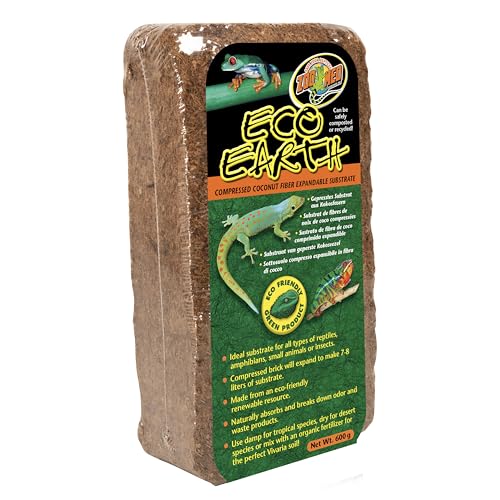
Zoo Med Eco Earth is a staple in reptile keeping for a reason: the compressed coconut fiber expands reliably to 7-8 liters per brick, providing ample coverage for a standard 40-gallon or larger enclosure. The texture is fine and uniform, holding moisture well for reptiles that need a humidity spike during shedding. Bearded dragons during a shed benefit from a slightly damper patch of substrate, and this product delivers that without becoming swampy.
However, this is not a substrate designed for arid environments. The coir retains water longer than sand or desert soil blends, which means keepers must monitor humidity closely and allow the surface to dry fully between mistings. Many owners report using it as a supplement — mixed with playsand or topsoil — rather than as a sole substrate. The 3-pack format is the most economical way to buy coir, costing less per liter than single bricks from other brands.
Some users note that it can be dusty if expanded with too little water, and that the fine particles settle into a dense mat that burrowing dragons may struggle to dig through. For a hatchling or juvenile beardie, the fine texture raises impaction risk if eaten. Adult dragons on a mostly greens-based diet are less prone to ingesting it accidentally, but a feeding bowl is still recommended.
Why we love it
- Consistent expansion and texture every time
- Affordable per-liter cost in 3-pack
- Great for creating a humid shed corner
Good to know
- Holds moisture — unsuitable as 100% arid substrate
- Fine particles require close feeding supervision
3. Josh’s Frogs BioBedding Tropical Bioactive Substrate

Josh’s Frogs BioBedding is a fully composed bioactive soil blend that includes peat, charcoal, and organic matter — tailored specifically for tropical species that need constant moisture. In a bearded dragon enclosure, this substrate requires careful management because the water retention is high. It is best used as a drainage base layer or mixed with large amounts of sand and clay to reduce its moisture-holding capacity.
The inclusion of activated charcoal keeps the substrate fresh by absorbing odors and preventing anaerobic pockets from forming. Users with established springtail and isopod colonies report that the mix supports a healthy cleanup crew for years without needing replacement. The 10-quart volume provides a generous depth for a 40-gallon tank — enough for a 3-4 inch layer that allows burrowing.
This is not the first choice for a pure desert vivarium. The high organic content can rot if kept dry for long periods, and it naturally raises humidity. Beardie owners who want a bioactive path should mix this 50:50 with dry sand and decomposed granite to bring the moisture profile into arid range. The clean, dark appearance is attractive, but the maintenance overhead is higher than a dedicated desert blend.
Why we love it
- Excellent bioactive foundation with charcoal filtration
- Deep 10-quart volume for thick substrate layers
- Supports long-term microfauna populations
Good to know
- Tropical formula — must be heavily diluted for desert use
- Risk of mold if kept too dry or too wet
4. Legigo 4 Pack Compressed Coconut Fiber Substrate
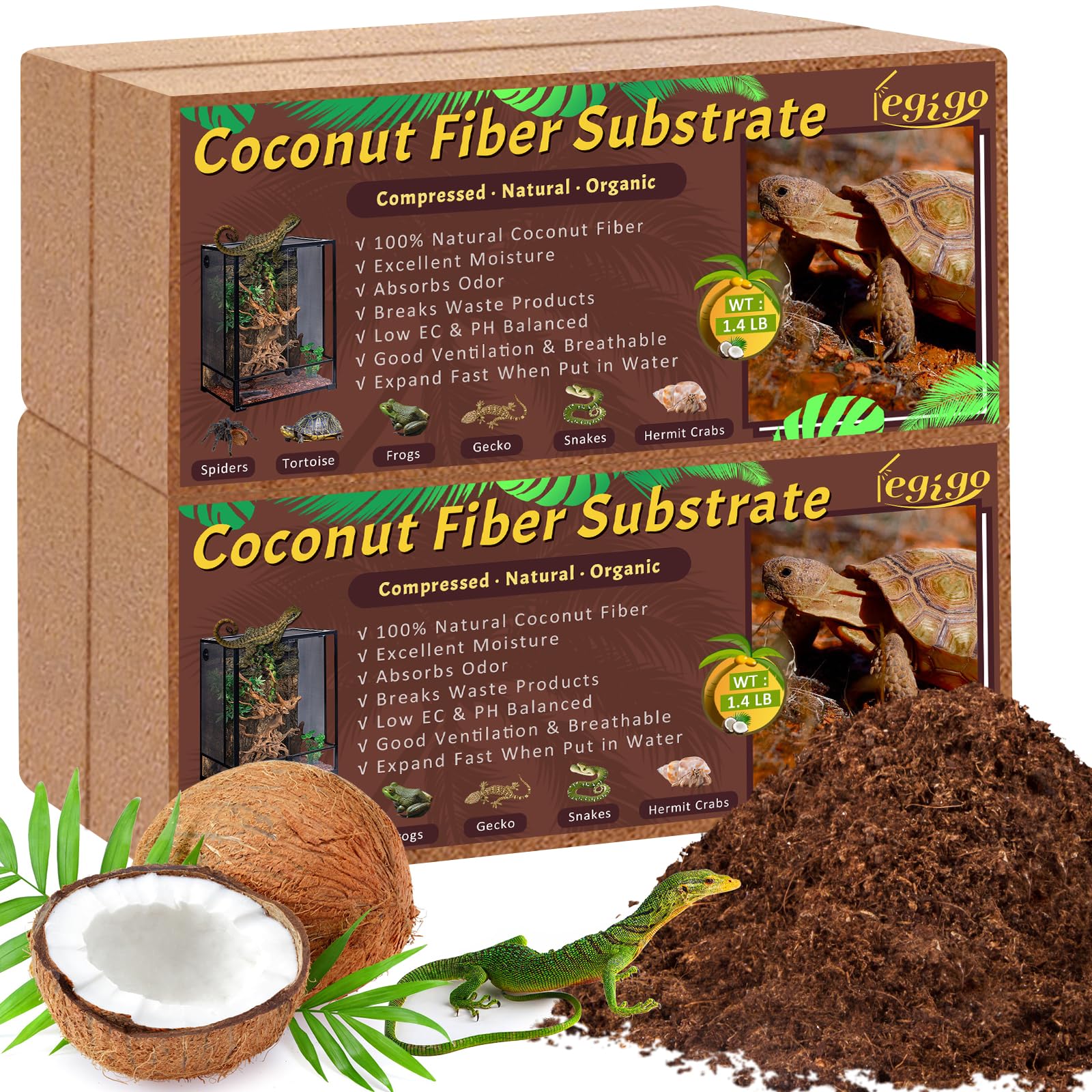
Legigo’s 4-pack provides an entry point into loose substrate at a cost that makes it easy to experiment. The compressed coir bricks expand with hot water to a fluffy consistency that works well as a temporary substrate or as a base layer beneath a more arid topsoil mix. The material is odorless and breaks down waste naturally, keeping the enclosure fresh between spot cleans.
Several users note that the bricks lack printed instructions, which can be confusing for first-time buyers. The standard method — soak the brick in warm water and fluff — works perfectly, but new keepers may not know the correct water-to-brick ratio. Once expanded, the coir is soft and easy for reptiles to dig through, but the fine particle size again raises the impaction concern for dragons that eat from the floor. Using a feeding dish is non-negotiable here.
For a bearded dragon, this substrate is best used sparingly — added to a sand-soil mix to lighten the texture rather than as a full tank fill. The 4-pack gives you enough to experiment with mixing ratios across several enclosure refreshes. If you are on a tight budget and want something more natural than newspaper, this coir is a decent starting point, but it will require regular humidity monitoring.
Why we love it
- Very low cost per enclosure refresh
- Odorless and absorbs waste effectively
- Neutral material for custom mixing
Good to know
- No instructions included on packaging
- Requires dilution with sand for arid setups
5. Halatool 6 Pack Coconut Fiber Tortoise Substrate
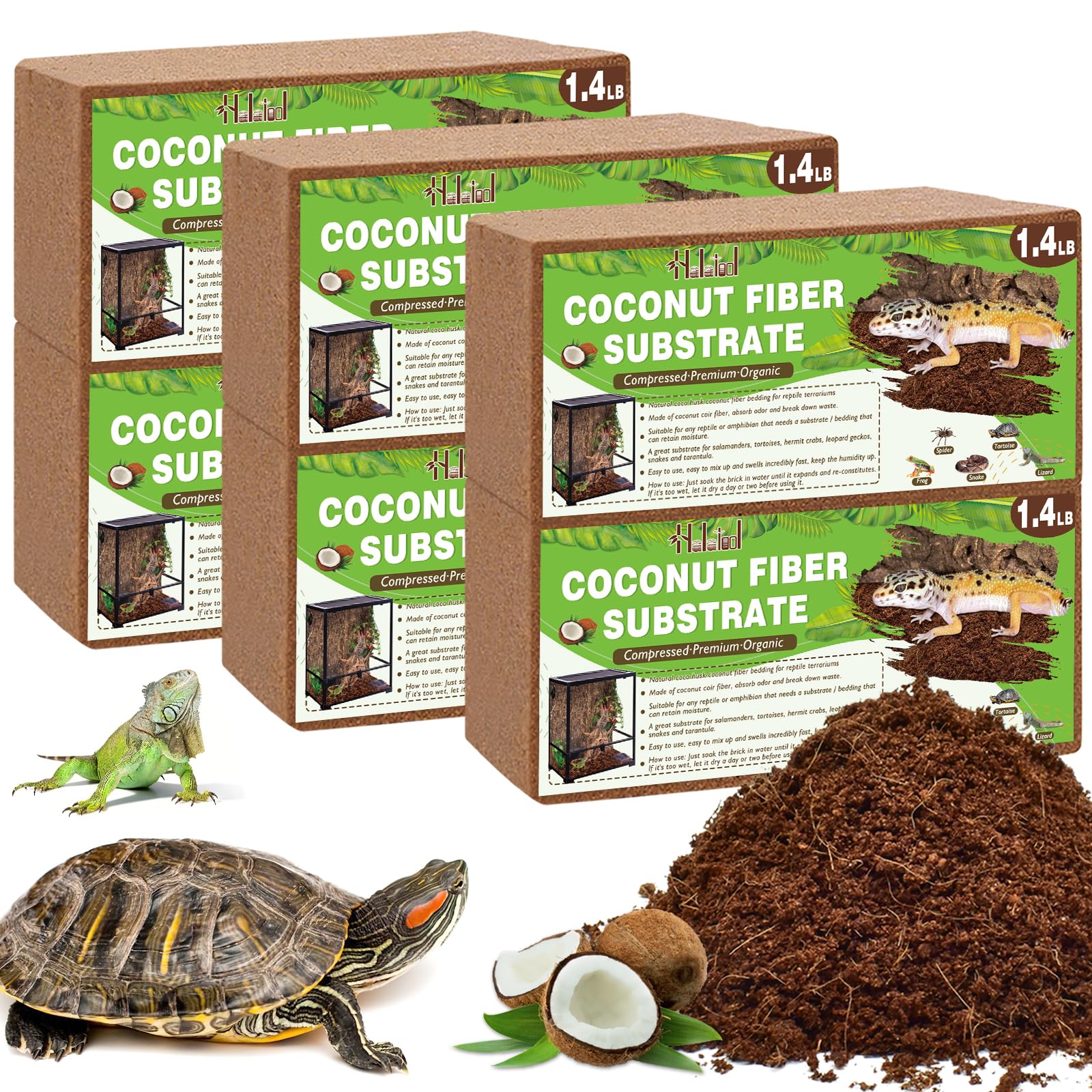
Halatool’s 6-pack of coconut fiber bricks offers the highest volume per purchase in this lineup. Each brick absorbs up to 10 times its weight in water, expanding into a soft, spongy substrate that covers large enclosures without needing multiple orders. The organic material is clean and free of visible debris, which owners of tortoises and hermit crabs have praised for its consistency.
The main drawback for bearded dragon keepers is the same as any pure coir product — it holds too much moisture for a desert reptile when used alone. Users report that the expanded coir takes several days to dry at the surface if applied too thick, which risks raising enclosure humidity above safe levels. Mixing it with 60% or more sand and clay helps, but then you are paying for volume you have to dilute.
Some reviewers mention that the coir contains larger fibrous pieces that do not break down fully when soaked, giving the texture a slightly uneven feel. These strands are not dangerous but can be annoying for owners who prefer a uniform surface. For a bearded dragon, this product is best reserved for creating a humid hide during shedding periods, not as the primary floor covering.
Why we love it
- Massive expansion — 6 bricks fill very large tanks
- Clean and organic with no chemical additives
- Great value per brick compared to single-packs
Good to know
- Uneven fibrous chunks after expansion
- Too moisture-retentive for full arid coverage
FAQ
Is pure sand safe for a bearded dragon?
What is the ideal substrate depth for an adult beardie?
Can I use reptile carpet instead of loose substrate?
Final Thoughts: The Verdict
For most keepers, the substrate for bearded dragon winner is the Bio Dude Terra Sahara because it matches the arid moisture profile, holds stable burrows, and supports a bioactive cycle without guesswork. If you want a cost-effective bulk option that works well when mixed with sand, grab the Zoo Med Eco Earth 3-Pack. And for a fully bioactive tropical base that you can dilute to desert specs, nothing beats the longevity of Josh’s Frogs BioBedding.