
The wrong bedding can cause respiratory infections, scale rot, or fatal impaction in a Blue Tongue Skink. This burrowing species evolved to dig through loose, sandy loam, not damp bark or dusty chips. Picking the correct substrate matters more than any other enclosure element for their long-term health and natural behavior.
I’m Mo Mahin — the founder and writer behind Furric. I spend my time comparing substrate particle sizes, measuring humidity retention, analyzing pH balance, and cross-referencing thousands of owner reports to separate the safe foundations from the dangerous fillers.
This guide focuses exclusively on options that balance burrow support, moisture management, and safety for these heavy-bodied skinks, bringing you the most reliable substrate for blue tongue skink habitats available on Amazon right now.
How To Choose The Best Substrate For Blue Tongue Skink
Blue Tongue Skinks aren’t arboreal climbers — they are heavy-bodied terrestrial burrowers that require a substrate deep enough to dig into (4 to 6 inches) and structured enough to hold a tunnel shape. The wrong choice leads to respiratory irritation or obstruction if ingested during feeding.
Particle Size and Risk of Impaction
Loose, fine particles like sand or small coco dust can clump inside a skink’s gut if accidentally swallowed. Medium-sized chips or fiber strands that are larger than the skink’s head are generally safer, as they pass through the digestive system more easily. The ideal substrate should be coarse but soft enough to not abrade the skink’s scales during digging sessions.
Moisture Retention and Humidity Control
Blue Tongue Skinks need a humidity range of 40 to 60 percent. A substrate that holds moisture too tightly (like pure peat or dense clay) can spike humidity and cause respiratory infections. A substrate that dries too fast (like pure aspen) forces the skink into a chronically dry shed. The best substrates here achieve a middle ground, offering a moist lower layer and a dry top layer so the skink can self-regulate.
Bioactive Compatibility and Longevity
If you are setting up a bioactive enclosure with isopods and springtails, the substrate must be organic, free of fertilizers or pesticides, and able to sustain a clean-up crew without molding. Coco-based substrates are ideal for this because they are naturally inert and break down slowly, while mixes containing vermiculite help retain enough moisture for the micro-fauna to thrive long term.
Quick Comparison
On smaller screens, swipe sideways to see the full table.
| Model | Category | Best For | Key Spec | Amazon |
|---|---|---|---|---|
| BabiChip Coconut Chip | Coco Chips | Burrowing & humidity control | 12 qt / Small chip size | Amazon |
| Josh’s Frogs Dig-It | Peat-Vermiculite | Soft tunneling substrate | 10 qt / Includes vermiculite | Amazon |
| Riare Coco Coir Bricks | Compressed Coir | Budget bulk & bioactive | 8 bricks / Low EC & balanced pH | Amazon |
| Zoo Med Eco Earth | Compressed Coir | Humidity geckos & skinks | 3 bricks / Expands 7-8L each | Amazon |
| Halatool Coco Fiber Bricks | Compressed Coir | Entry-level budget setups | 6 bricks / 8.75 lbs total | Amazon |
In‑Depth Reviews
1. BabiChip Coconut Chip Substrate

The BabiChip substrate uses small, loose coconut husk chips that strike an ideal compromise for a Blue Tongue Skink: coarse enough to prevent impaction yet soft enough to allow deep burrowing without scale abrasion. At 12 quarts per bag, a single purchase provides a 4 to 5 inch layer for a standard 4×2 foot enclosure, which is exactly the depth these skinks need to feel secure while digging.
Owners consistently report that the chips hold humidity well — a light misting keeps the bottom layer damp and the top dry, allowing the skink to self-regulate between moisture levels. The product is free of dust and sharp splinters, making it much safer than generic forest floor bark which often contains jagged fragments. It also has a natural earthy smell that encapsulates waste odor effectively without chemical fragrances.
One limitation is that the smaller chip size may not be ideal for bioactive setups because isopods and springtails prefer finer particulate to graze on. However, as a standalone substrate for a non-bioactive enclosure, this product offers the simplest, most reliable setup: open the bag, spread it, mist the corners, and let the skink dig. No brick-soaking, no screening — just ready-to-use bedding that outperforms anything in the same price tier.
Why we love it
- Smallest chip size reduces impaction risk for heavy-bodied skinks
- Outstanding dust control — bag is clean from first pour
- Maintains moisture gradient without becoming waterlogged
Good to know
- Not fine enough for long-term bioactive colony support
- Some users find the chips too sharp for juvenile snakes — fine for adult BTS scales
2. Josh’s Frogs Dig-It Substrate

Josh’s Frogs Dig-It is a pre-mixed substrate composed of peat moss and vermiculite, creating an extra-soft texture that encourages natural tunneling behavior. Unlike coarser coco products, this substrate holds a burrow shape incredibly well — a Blue Tongue Skink can dig a tunnel that stays intact rather than collapsing behind them. The addition of vermiculite is also beneficial for egg-laying females who may need a lay box component.
The peat base makes humidity control more deliberate. When misted, Dig-It retains moisture for a long period — skink keepers in drier climates report that a single misting keeps humidity in the 50-60 percent range for 48 hours. However, in more humid environments, this same property can cause the substrate to stay too wet if not allowed to dry between mistings. Owners recommend using a deep layer (5+ inches) and only wetting the bottom half.
The biggest downside is that peat-based substrates are inherently more dusty when dry. When you first open the bag, the material is fine and can create a puff of particles if poured aggressively. Letting the substrate settle for 24 hours after setup reduces this issue dramatically. Dig-It also commands a slightly higher price per quart compared to coco bricks, but the convenience of a pre-mixed, burrow-friendly blend makes it a top choice for keepers who prioritize natural behavior over cost savings.
Why we love it
- Burrows and tunnels stay intact — skinks can build stable networks
- Moisture retention is excellent for dry climate enclosures
- Vermiculite provides a bonus layer for breeding and lay box use
Good to know
- Can become dusty if allowed to dry out completely
- Holds moisture too long in high-humidity zones without careful management
3. Riare Organic Coco Coir Bricks
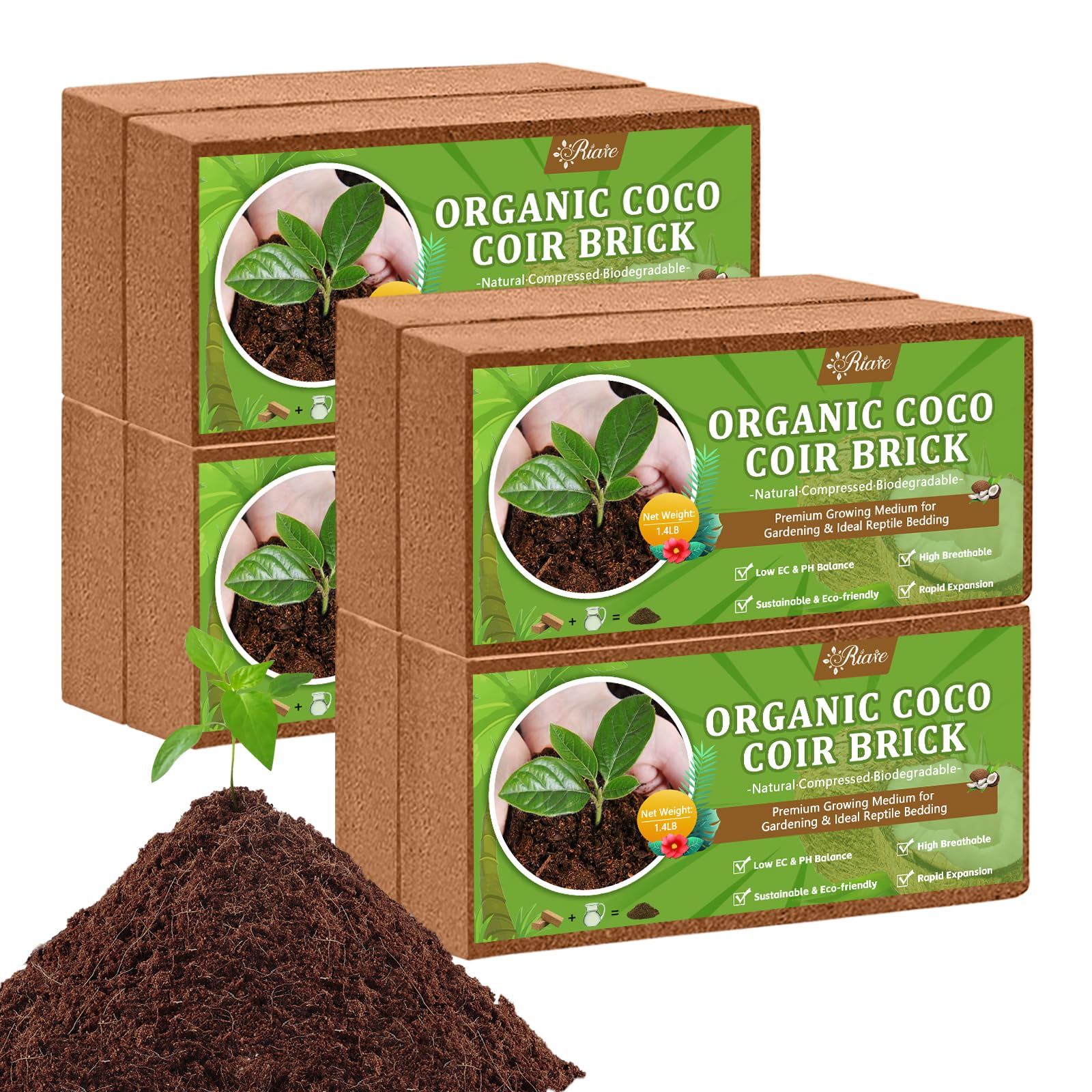
Riare’s compressed coco coir bricks are engineered for low electrical conductivity (EC) and balanced pH, making them the best choice for keepers building a bioactive Blue Tongue Skink enclosure. The bricks expand to roughly 7-8 liters each, and with eight bricks in the package you get enough material to fill a 4×2 foot tank to a 4-inch depth with plenty left for a cleanup crew layer. The fibers are free of rocks and trash — a consistent texture throughout every soak.
For bioactive setups, this coir supports isopods and springtails well because the fibrous structure provides ample surface area for microbial grazing. The low EC means no salt buildup will harm plants or microfauna, and the balanced pH (typically around 5.5 to 6.5) sits comfortably in the range most terrarium plants and worms tolerate. Simply rehydrate the bricks with dechlorinated water, mix some leaf litter and sphagnum on top, and your cleanup colony will establish within weeks.
The only caveat is that as a pure coir product, it does not hold tunnel shapes as well as peat blends. Skinks digging through this substrate will find their tunnels collapsing in loose, dry coir. Mixing the coir with 20 percent washed play sand or adding a layer of compressed coco chips on top helps provide structure while retaining the bioactive benefits. For the price per cubic inch, this is the most economical way to stock a large bioactive skink setup.
Why we love it
- Low EC and balanced pH ideal for plants and cleanup crews
- Each brick expands significantly — best value for bioactive builds
- No synthetic fillers, rocks, or debris in the compressed bricks
Good to know
- Pure coir lacks structural integrity for stable burrow tunnels
- Requires mixing with sand or chips to achieve ideal digging texture
4. Zoo Med Eco Earth Compressed Coconut Fiber
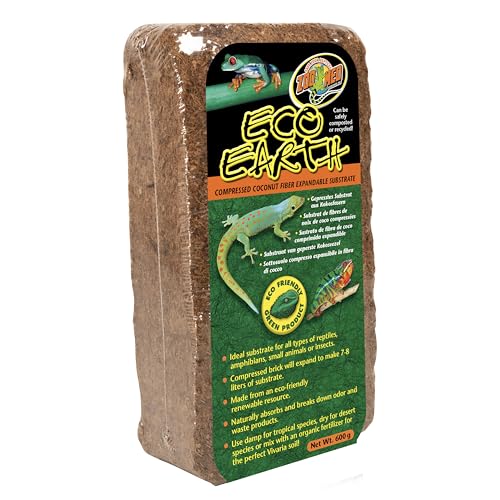
Zoo Med Eco Earth is a long-standing standard in reptile husbandry, and for good reason. Each compressed brick expands to 7-8 liters of fine coconut fiber — a powdery, soil-like texture that Blue Tongue Skinks enjoy pushing through. The 3-pack expands to roughly 21-24 liters total, which is just enough for a shallow 3-inch layer in a 4×2 foot enclosure, though you’d want to buy two packs for a full 5-inch digging depth. The fine texture is excellent for humidity generation.
One of the strongest points of Eco Earth is the low odor profile. The coconut fiber has a faint, natural earthy scent that customers consistently describe as pleasant and non-invasive. The substrate also works well for spot cleaning — solid waste sits on top of the fine fiber rather than being absorbed into large chips, making it easy to scoop out without disrupting the entire bedding. The material rehydrates quickly if you need to re-mist dry patches.
However, there is a recognized dust issue with Eco Earth. When handled dry, the fine fiber can create airborne particles that irritate both the skink’s respiratory system and the keeper’s sinuses. Many owners mitigate this by moistening the substrate before placing it in the enclosure and maintaining consistent humidity. The fiber also dries out noticeably faster than chip-based products, requiring more frequent misting in arid climates. For keepers who monitor humidity closely and prefer a fine-particle texture, this remains a reliable choice.
Why we love it
- Fine fiber texture is easy on skink scales during digging
- Expandable bricks provide consistent high-quality coir every time
- Natural earth scent neutralizes enclosure odors effectively
Good to know
- Dusty when dry — must be pre-moistened before use
- Dries faster than coco chip alternatives, requires frequent misting
5. Halatool Organic Coco Fiber Bricks
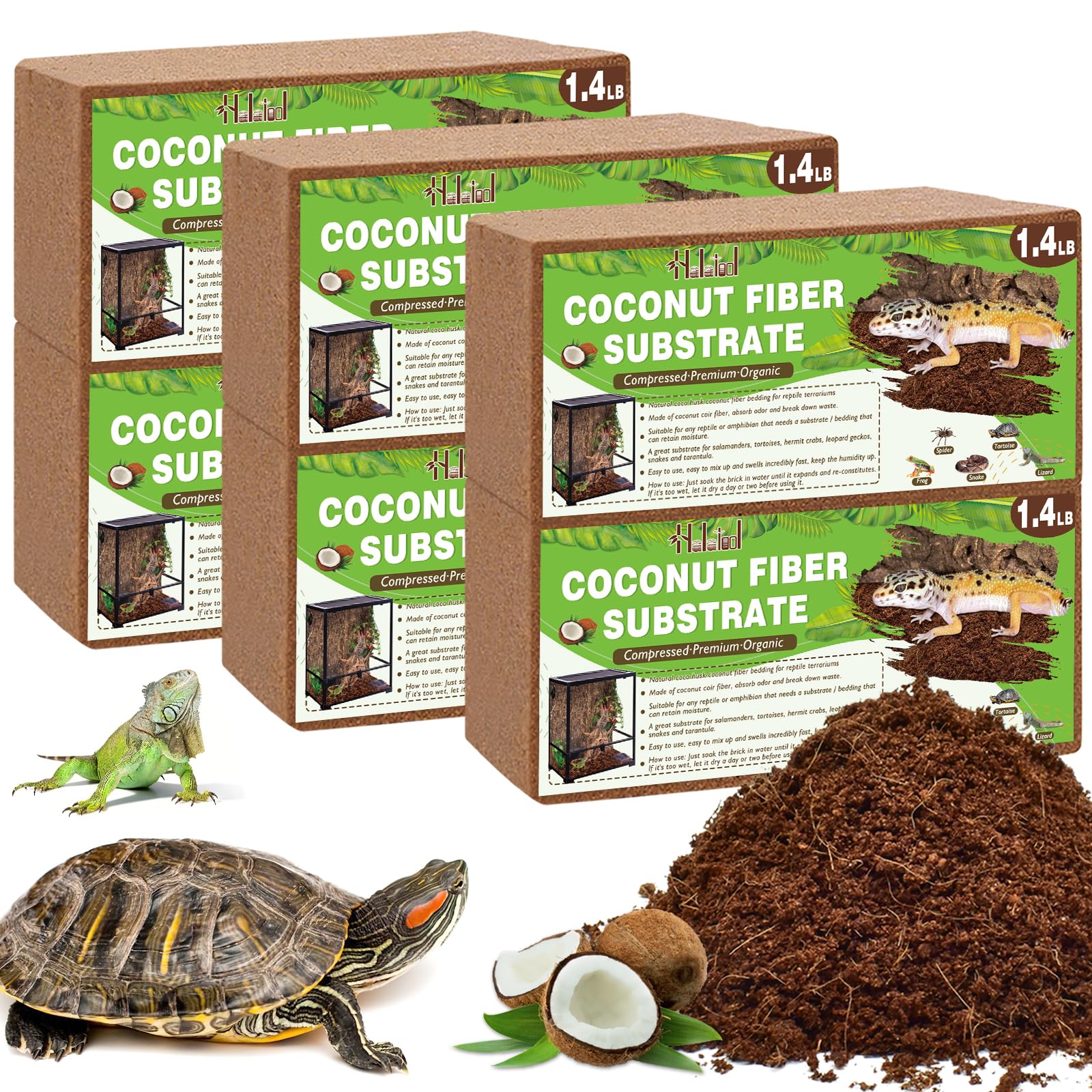
Halatool delivers six compressed coco fiber bricks that collectively weigh 8.75 pounds, making this the highest volume option per dollar in the list. When fully expanded, the total yield is substantial enough to fill two separate 4×2 foot enclosures with a 3-inch layer — perfect for keepers with multiple reptiles or those starting their first enclosure on a tight budget. The bricks absorb 8 to 10 times their weight in water, so the expansion ratio is competitive with pricier brands.
The primary trade-off is particle consistency. Several buyer reports note that after expansion, the bricks leave some larger, chunkier pieces mixed with fine fiber, creating an uneven texture. For Blue Tongue Skinks, this isn’t a huge problem — the varied particle size can actually aid drainage — but it does mean the substrate doesn’t have the uniform finish of more premium brands like Zoo Med or BabiChip. The compressed bricks also require dedicated effort to break apart completely; soaking them in warm water and manually crumbling them by hand is the most effective method.
For keepers who do not need substrate that holds stable burrows and simply want a deep, budget-friendly floor covering that allows digging, Halatool works well. The coco fiber does not contain harmful chemicals, and it works fine as a base layer beneath a more expensive top coat. The main drawback reported is that the bricks can stain other items in the package during shipping due to dust migration — but the substrate itself performs adequately for its entry-level price point, especially for short-term quarantine setups or temporary enclosures.
Why we love it
- Highest volume-to-price ratio — fills two enclosures from one pack
- Absorbs 8-10x its weight in water for excellent expansion
- Organic and safe for temporary or quarantine enclosures
Good to know
- Inconsistent particle size — chunks mixed with fine fiber
- Bricks require manual breaking apart; cannot pour and go
FAQ
Can I use sand as a primary substrate for a blue tongue skink?
How often should I completely replace the substrate in the enclosure?
What is the ideal substrate depth for a blue tongue skink enclosure?
Can I mix different substrates together for better texture?
Final Thoughts: The Verdict
For most keepers, the best substrate for blue tongue skink is the BabiChip Coconut Chip Substrate because its small chip size minimizes impaction risk while holding humidity and burrows with minimal preparation. If you want a soft, stable tunneling medium that supports breeding setups, grab the Josh’s Frogs Dig-It. And for large bioactive builds where budget and organic purity matter most, nothing beats the Riare Organic Coco Coir Bricks.