
The floor of your tank is not just decoration. Every root your plants spread, every sifting motion your corydoras make, and every cycle of your biological filter depends on what you choose to lay down. A poor substrate traps waste, clouds water, and starves plants. A great one stays stable for years and keeps your chemistry where it should be.
I’m Mo Mahin — the founder and writer behind Furric. I’ve spent thousands of hours cross-referencing grain sizes, ammonia release curves, pH buffering data, and long-term owner reports from planted-tank veterans, shrimp breeders, and aquascaping competition builders to isolate what really separates a smart buy from a regret.
This guide breaks down five of the most popular options based on real chemistry and real use cases to help you confidently choose the right substrate for fish tank your setup deserves.
How To Choose The Best Substrate For Fish Tank
Choosing a substrate starts with one question: are you planting root-feeders or are you prioritizing soft bottom-dwellers? Active soils buffer pH and feed roots but release ammonia initially. Inert sands and gravels stay chemically neutral and require no cycling adjustment but offer zero plant nutrition. Your decision should match the biology of your tank.
Grain Size and Shape
Fine sand under 1 mm allows detritus to sit on top where your filter can grab it, but it compacts tightly and can suffocate roots if not agitated. Larger gravel, 3–5 mm, lets water flow through the gaps and supports deep root systems, but uneaten food falls into the cracks and rots if you skip vacuuming. Sharp edges can damage barbels on bottom-dwellers like corydoras and loaches, so always check for rounded particles.
Chemical Activity: Inert vs. Active
Inert substrates — silica sand, pool filter sand, most painted gravels — do not change your water chemistry. They are safe for any fish and require no special cycling. Active soils like Controsoil and LANDEN Aqua Soil contain baked clay or volcanic ash that buffers pH downward, softens water, and leaches ammonia to kick-start the nitrogen cycle. This makes them ideal for shrimp and plants that prefer slightly acidic water, but you must plan for the initial ammonia spike and monitor pH carefully during the first few weeks.
Weight and Anchoring
A dense substrate like coarse gravel stays put when you dig in a root tab or pull out a stem plant. Lightweight volcanic soils can lift up when disturbed, causing cloudy water. If you keep large cichlids that dig extensively, you need heavy, inert sand or pebbles that will not billow into the water column with every scoop.
Quick Comparison
On smaller screens, swipe sideways to see the full table.
| Model | Category | Best For | Key Spec | Amazon |
|---|---|---|---|---|
| LANDEN Aqua Soil | Active Soil | Planted aquariums & shrimp | 3–5 mm porous clay | Amazon |
| Ultum Nature Systems Controsoil | Active Soil | Aquascaping & low-ammonia cycling | Volcanic ash, pH 6.8 buffer | Amazon |
| Aqua Natural Galaxy Sand | Inert Sand | Dramatic black aquascapes | 0.5–1 mm fine black grains | Amazon |
| Imagitarium Black Sand | Inert Sand | General freshwater & contrast | Matte black fine grain | Amazon |
| Imagitarium Blue Jean Gravel | Colored Gravel | Vibrant community tanks | 3–5 mm coated pebbles | Amazon |
In‑Depth Reviews
1. LANDEN Aqua Soil Substrate

LANDEN’s Aqua Soil is made from processed natural earth materials, not dyed gravel or simple sand. Each 3–5 mm granule is porous, which gives beneficial bacteria enormous surface area to colonize. Reviewers running 55-gallon tanks with multiple bags report crystal-clear water after any initial floaters settle out, and the porous structure traps free-floating debris instead of letting it recirculate.
This is an active substrate — it releases organic acids and nitrogen compounds that help aquatic plants establish deep root systems. The pH settles between 6.0 and 6.5, making it a strong match for soft-water species like cardinal tetras, crystal red shrimp, and dwarf corydoras. The manufacturer recommends waiting one week before adding fish, with partial water changes during the first two weeks to manage the ammonia cycle.
Owners note that each bag contains small amounts of dried grass and leaf fragments, so a gentle pre-rinse or careful surface scooping is wise, even though the bag says no rinsing is required. Multiple five-star reviews highlight accelerated plant growth, especially for stem plants like Ludwigia, and the dark brown-black color creates a natural, muddy-bottom aesthetic that serious aquascapers prefer over black paint.
Why we love it
- Porous clay feeds beneficial bacteria colonies
- Buffers pH to acidic range for plants and shrimp
- Encourages rapid root development in stem plants
Good to know
- Contains natural debris that may need pre-cleaning
- Initial ammonia release requires controlled cycling
- Lightweight grains can float if poured too aggressively
2. Ultum Nature Systems Controsoil

Controsoil is engineered for planted aquariums and is one of the few active soils marketed specifically for low ammonia release. Made from volcanic ash, each granule provides oxygen exchange channels that prevent anaerobic pockets from forming. This is critical for deep substrate beds where trapped gas can cause pH crashes and root rot in densely planted tanks.
The pH buffer targets 6.8, which is slightly acidic but less extreme than some aquatic soils that dip below 6.0. This makes it suitable for a wider range of community fish, including species that prefer neutral water. Owners report that when paired with a starter bacteria supplement, the tank can cycle in two to three weeks. The soil is not nutrient-rich by itself, so root tabs are recommended for heavy root feeders like swords and crypts.
A common observation in reviews is that Controsoil arrives dusty and requires multiple rinses, despite the no-rinse claim. The color is a lighter brown-tan initially and darkens to a deep black over several months. Soft pellets are gentle on corydoras barbels, and the lightweight texture allows plants to root without resistance. One five-star reviewer simply wrote about their Alocasia tissue cultures — a testament to its versatility beyond standard aquariums.
Why we love it
- Very low ammonia spike speeds up cycling
- Soft, lightweight granules protect bottom-feeders
- Volcanic ash structure filters impurities from water column
Good to know
- Dusty out of the bag — requires thorough pre-rinsing
- Not nutrient-rich; root tabs needed for heavy feeders
- Color starts light brown, not the dark black shown online
3. Aqua Natural Galaxy Sand

Galaxy Sand is a fine, sparkling black sand with individual grains that catch the light, giving the tank floor a subtle shimmer. It is ethically sourced in the USA and comes remarkably clean — most reviewers report that a single rinse is enough to remove residual dust. The deep black background makes green plants, white sand, and brightly colored fish pop visually with high contrast.
This is an inert substrate, meaning it does not buffer pH or release ammonia. It is chemically safe for any freshwater setup, from betta bowls to African cichlid tanks. The fine grain size is ideal for sand-sifting species — multiple reviewers specifically mention that their corydoras and loaches sift through it happily without injury. The sand is dense enough at 20 pounds per bag to resist floating when you refill the tank.
Owners note that the initial cloudiness can take a day or two to clear fully with good filtration, but the result is a polished, professional look. One reviewer called it “cory-approved.” The primary trade-off is that because the sand is so fine, it can be sucked into filter intakes or siphon tubes during water changes if you vacuum too aggressively. A gentle hover over the surface is the safe approach.
Why we love it
- Beautiful shimmery black finish with natural sparkle
- Safe for delicate bottom-dwellers like corydoras
- Minimal rinsing needed before setup
Good to know
- Fine grains can be pulled into filter intakes
- Requires gentle siphoning to avoid removing sand
- Initial cloudiness may take 24–48 hours to clear
4. Imagitarium Black Aquarium Sand
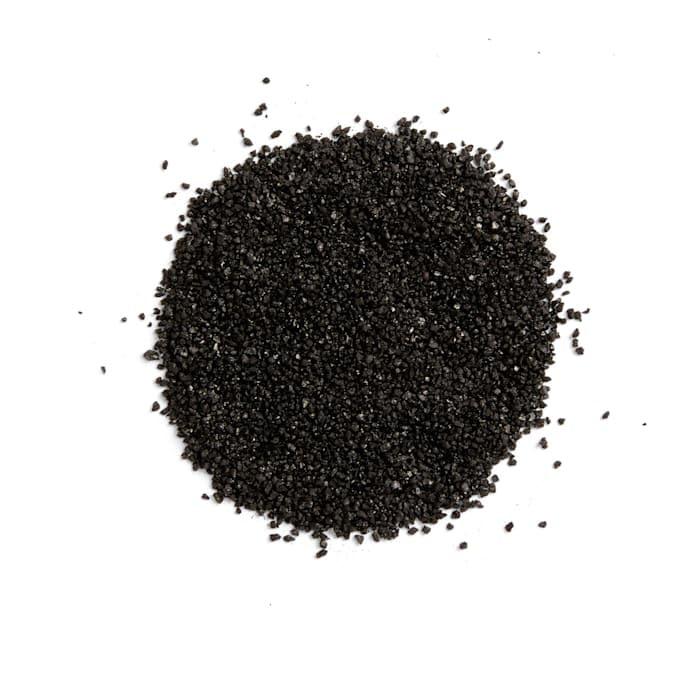
Imagitarium’s Black Sand is a non-toxic, inert fine sand that delivers a matte black finish without shine or glitter. At 20 pounds per bag, it provides good weight for anchoring driftwood and hardscape while keeping the visual focus on your fish and plants. The manufacturer advises rinsing well, and owners confirm that ten minutes of rinsing runs the water clear.
The sand is lightweight enough that some users report floating clumps caused by trapped air bubbles in the first few days. These clumps dissipate as the sand settles. The matte color creates a neutral backdrop that enhances the natural colors of any fish — neon tetras, cherry barbs, and blue rams all stand out sharply against the dark floor. Because it is inert, it will not alter your water chemistry, making it a safe choice for beginner tanks or hospital setups where pH stability is essential.
Consistency between batches appears to be an occasional concern. The lightweight sand can also be drawn into filter impellers during vacuuming, so a pre-filter sponge on the intake is recommended. For the price per pound, it is one of the most affordable black sand options available at scale.
Why we love it
- Matte black creates a clean, high-contrast look
- Low cost per bag for large tank setups
- Chemically inert — safe for any fish species
Good to know
- Batch quality can vary; inspect bag before use
- Floating clumps from trapped air in first few days
- Lightweight particles may clog filter intakes
5. Imagitarium Blue Jean Gravel
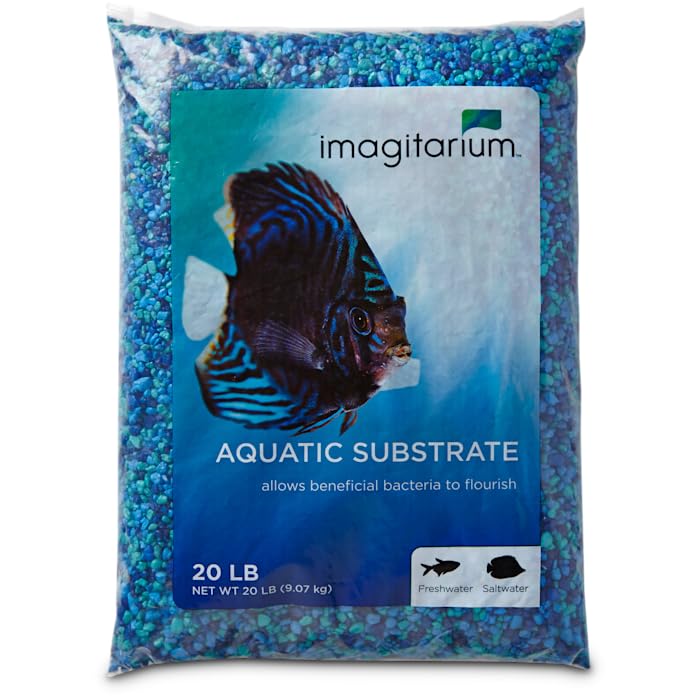
Imagitarium’s Blue Jean Gravel is a classic colored-pebble substrate designed for community tanks where the goal is visual impact. The blue hue is vibrant and holds up well over years — several reviewers note the color is still bright after several years underwater. The gravel is non-toxic, fish-safe, and promotes beneficial bacteria growth on its surface area.
At 3–5 mm per pebble, this is a true medium-sized gravel that allows good water flow through the substrate bed. It prevents anaerobic dead spots better than fine sand. The manufacturer recommends using 2 pounds per gallon of water for a standard depth, so a single bag covers roughly a 10-gallon tank with a 1–2 inch layer. The larger particle size also makes vacuuming effortless — detritus sits between the pebbles and lifts easily with a siphon.
Some owners report that the painted coating can chip slightly during handling, and the chipped paint floats to the surface in small flecks. This does not affect the fish and fades visually once the tank is filled and filtered. Mixing Blue Jean with a neutral gravel like black or tan can create a more natural streambed look. For colorful tanks with fish like guppies or platies, this gravel creates a playful environment that contrasts well with live plants.
Why we love it
- Bright blue color stays vibrant for years
- Medium grain allows great water flow and easy vacuuming
- Promotes beneficial bacteria colonization
Good to know
- Paint can chip and create floating debris
- Artificial look does not suit natural biotopes
- Not suitable for bottom-dwellers with sensitive barbels
FAQ
Can I mix active soil with inert sand?
How deep should my substrate be for live plants?
Will black sand harm my fish?
Final Thoughts: The Verdict
For most planted-tank keepers looking for active nutrition and stable pH, the substrate for fish tank winner is the LANDEN Aqua Soil because its porous clay structure supports both biological filtration and aggressive root growth without requiring multiple bags for a standard 20-gallon setup. If you want minimal cycling time and soft granules for delicate bottom-feeders, grab the Ultum Nature Systems Controsoil. And for a dramatic, sparkling black look in a chemically neutral tank, nothing beats the Aqua Natural Galaxy Sand.