
Goldfish are notoriously messy eaters and waste producers, making substrate selection a critical filtration and health decision rather than a cosmetic afterthought. The wrong choice traps debris, spikes ammonia, and can injure delicate barbels, while the right one supports biological filtration and simplifies cleaning.
I’m Mo Mahin — the founder and writer behind Furric. I’ve spent years analyzing aquarium product specifications, studying water chemistry data from owner reports, and cross-referencing hundreds of verified buyer experiences to determine which substrates actually hold up under the heavy bioload of a goldfish tank.
Whether you prefer the natural look of river pebbles or the sleek darkness of fine sand, this guide breaks down the top contenders so you can confidently choose the right substrate for goldfish tank without second-guessing your water quality.
How To Choose The Best Substrate For Goldfish Tank
Goldfish are not like tropical community fish. They produce far more waste, they dig and forage constantly, and they have sensitive barbels that can be abraded by sharp edges. The ideal substrate strikes a balance between being heavy enough to stay put during digging and being smooth enough to avoid injury.
Grain Size and Shape
Gravel between 2–5 mm is widely considered the sweet spot for goldfish. Pieces smaller than 1 mm (fine sand) can be kicked up and swallowed, while gravel larger than 8 mm allows too much waste to sink between the gaps. Rounded pebbles are safer than sharp, angular rocks that can cut barbels or snag fins during rooting behavior.
pH Neutrality and Chemical Safety
Goldfish prefer a pH range of 7.0–8.4. Many decorative substrates made from crushed coral, aragonite, or limestone will leach calcium carbonate and drive pH upward, which is unnecessary for goldfish and can stress them. Always verify that the substrate is labeled pH neutral and free of artificial dyes or wax coatings that can leach into the water column.
Weight and Depth
A goldfish can displace lightweight substrate during digging. Heavier materials like silica gravel or dense sand stay in place better. Plan for a depth of 1–2 inches in a bare-bottom style or 2–3 inches if you intend to plant. Too-deep sand beds can develop anaerobic pockets that release toxic hydrogen sulfide, so avoid exceeding 2 inches with fine sand unless you have a robust clean-up crew or frequent deep vacuuming.
Quick Comparison
On smaller screens, swipe sideways to see the full table.
| Model | Category | Best For | Key Spec | Amazon |
|---|---|---|---|---|
| Aqua Natural Galaxy Sand 20lb | Premium Sand | Deep black aquascapes with plant contrast | 20 lb bag, 0.5–1 mm grain | Amazon |
| Seachem Fluorite Black Sand 7.7lb | Mid-Range Sand | Planted goldfish tanks with root feeders | 7.7 lb bag, very fine granules | Amazon |
| Carib Sea Sunset Gold Sand 5lb | Mid-Range Sand | Soft-bellied fish and natural riverbed look | 5 lb bag, pH neutral | Amazon |
| Ausluru Silica Gravel 5lb | Budget Gravel | Mixed pebble size for shallow tanks | 5 lb bag, 0.16–1.24 in pieces | Amazon |
| Imagitarium Blue Jean Gravel 20lb | Premium Colored Gravel | Colorful display tanks with moderate cleaning | 20 lb bag, 3–6 mm pebbles | Amazon |
In‑Depth Reviews
1. Aqua Natural Galaxy Sand 20lb

This sparkling black sand from Aqua Natural delivers a dramatic, high-contrast backdrop that makes goldfish coloration and live plants stand out immediately. The 0.5–1 mm grain size is fine enough for corydoras and loaches to sift safely, yet dense enough that goldfish digging won’t resuspend clouds of particles after the initial rinse. Multiple owner reports confirm that a thorough rinse produces crystal-clear water within a few hours of filling.
The 20-pound bag provides generous coverage for tanks up to 40 gallons at a 1.5-inch depth. The sand is sustainably sourced in the USA, and the deep black finish does not fade or leach color over time. Aquascapers praise how easily it shapes into slopes and valleys without collapsing, making it ideal for planted goldfish setups that require stability.
Owners note that the sand arrives relatively clean compared to budget alternatives, but a few washes are still essential to remove the fine dust. Once settled, the sand stays put during water changes and does not require constant re-leveling. The shimmer effect from the natural mica content adds a premium visual element that colored gravels cannot replicate.
Why we love it
- Deep black color creates stunning contrast against goldfish and plants
- Minimal rinsing required compared to other sands at this price point
- Dense enough to resist goldfish digging without clouding the water
Good to know
- Still requires 2–3 rinses to remove initial dust cloud
- 20 lb may not cover larger tanks deeper than 2 inches
2. Seachem Fluorite Black Sand 7.7lb

Seachem Fluorite is a staple in the planted aquarium community, and the black sand variant brings the same porous, nutrient-adsorbing properties to goldfish tanks. The grains are exceptionally fine — many owners describe them as almost powdery — which means they pack tightly to create a stable base for rooted plants like Vallisneria or Anubias. The porosity also provides a massive surface area for nitrifying bacteria, helping manage the high ammonia load goldfish produce.
The trade-off is rinsing effort. Because the particles are so fine, initial rinsing can feel endless, with cloudy water persisting through multiple washes. Owners who rinse thoroughly and pour water slowly over a plate report that the tank clears within a day. The final look is a rich, dark charcoal color that makes goldfish pop, though many note it appears more gray than pure black once submerged.
Goldfish keepers with heavy root-feeding plants will benefit most from this substrate. The nutrient content is baked into the clay substrate itself, not added as a chemical fertilizer, so it won’t spike ammonia during setup. However, the 7.7-pound bag is relatively small; a 20-gallon tank needs at least two bags for a 2-inch depth.
Why we love it
- Porous clay structure supports robust biological filtration
- Nutrient-rich without chemical additives, safe for goldfish
- Fine texture allows deep root growth for live plants
Good to know
- Extremely dusty — requires aggressive rinsing before use
- 7.7 lb bag only covers small tanks; larger setups need multiple bags
3. Carib Sea Sunset Gold Sand 5lb

Carib Sea’s Sunset Gold Sand is engineered to replicate the warm, golden tones of natural riverbeds, making it an excellent choice for goldfish keepers who want a biotope-accurate aquarium. The sand is pH neutral and free of artificial dyes, so it will not alter water chemistry or leach color over time. Many owners with soft-bellied species like corydoras specifically choose this sand for its smooth, rounded grains that won’t abrade sensitive barbels or fins.
Rinsing is a required ritual here. The sand carries significant dust from manufacturing, and owners report that 20+ minutes of rinsing are necessary before the water runs clear. Those who skip this step face cloudy water that may take days to settle. Once properly cleaned, the sand settles quickly after disturbance and maintains crystal clarity even during aggressive water changes.
At 5 pounds, this bag is best suited for nano tanks or as a top-dressing layer over a less attractive substrate. Larger goldfish tanks will require multiple bags. The natural gold color works well with both dark backgrounds and brightly colored goldfish varieties, creating a sun-drenched look that many aquascapers find more natural than stark white or jet black options.
Why we love it
- Warm golden color mimics natural river habitats
- pH neutral and dye-free — safe for sensitive goldfish
- Soft, rounded grains won’t damage barbels or fins
Good to know
- Very dusty out of the bag; expect 20+ minutes of rinsing
- 5 lb bag is small; larger tanks require multiple purchases
4. Ausluru Silica Gravel 5lb

Ausluru’s Countryside Silica Gravel offers a budget-friendly entry into natural stone substrates, with a mix of vermilion and olive-green tones that bring an earthy aesthetic to any goldfish tank. The handpicked pebbles range from 0.16 to 1.24 inches, which means the smaller pieces are suitable for goldfish tanks while the larger ones work better as accent stones or in shallow bare-bottom setups. The gravel is 100% natural and wax-free, so there is no risk of chemical leaching.
Owners report that the gravel arrives clean and dust-free compared to sand options, requiring only a quick rinse before use. The mixed sizes create a visually dynamic substrate that looks more organic than uniform gravels. Because the pieces are natural stone, they are heavy enough that goldfish digging does not scatter them easily, and the rounded shapes are safe for barbels.
The main limitation is the 5-pound bag size. For a 20-gallon goldfish tank, you would need at least three bags to achieve a 1.5-inch depth. The larger pebbles in the mix can also trap waste in the gaps between them, so a gravel vacuum with a wide tube is recommended for cleaning. This is a solid choice for smaller tanks or quarantine setups where budget is the primary concern.
Why we love it
- 100% natural stone with no wax or dye coatings
- Dust-free out of the bag — minimal preparation needed
- Mixed sizes and earthy colors create a natural look
Good to know
- 5 lb bag is small; multiple bags needed for standard tanks
- Oversized pebbles can trap debris between gaps
5. Imagitarium Blue Jean Gravel 20lb
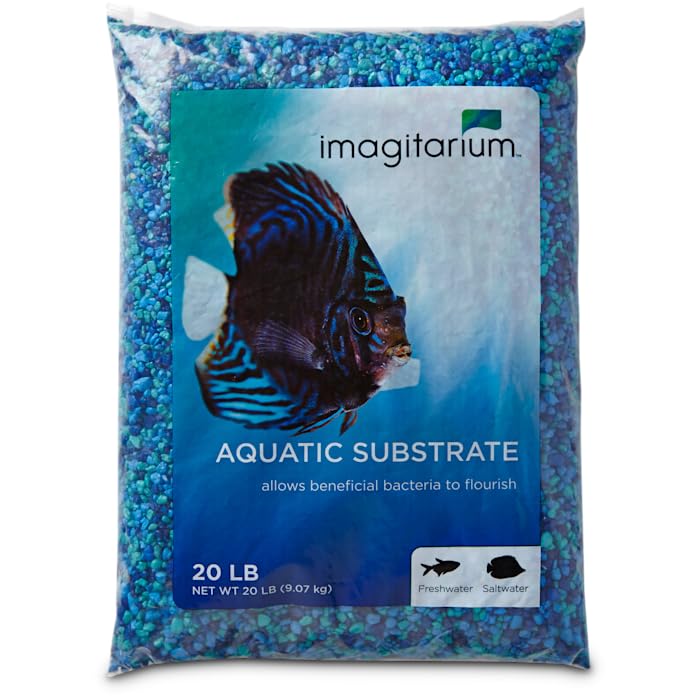
Imagitarium’s Blue Jean Gravel brings a vibrant, deep-blue aesthetic to goldfish tanks that stands out dramatically against orange and white goldfish varieties. The 20-pound bag offers excellent value for larger tanks, providing enough material to achieve a 2-inch depth in a 40-gallon setup. The gravel promotes beneficial bacteria growth through its porous surface, helping break down the waste goldfish produce in high volume.
Owners consistently praise the color retention. Multiple reviews note that the blue hue remains vibrant even after years of submersion, with no visible fading or chipping when handled gently. The gravel requires minimal rinsing — significantly less than sand — and the initial water cloudiness clears quickly. The 3–6 mm pebble size is ideal for goldfish: large enough to avoid accidental swallowing, small enough to allow a gravel vacuum to clean effectively.
The main concern is that the color coating can chip slightly during aggressive scrubbing. Owners advise rinsing the last 25% of the gravel separately, where the smallest chips and dust tend to accumulate, and avoiding abrasive cleaning. For goldfish keepers who prioritize visual impact and low maintenance over a natural riverbed look, this gravel delivers consistent performance.
Why we love it
- Vibrant blue color holds up for years without fading
- 20 lb bag offers generous coverage for larger tanks
- Minimal rinsing needed compared to sand substrates
Good to know
- Color coating can chip if scrubbed aggressively
- Does not support rooted plants as well as clay-based substrates
FAQ
Can goldfish safely eat sand or gravel?
How often should I replace the substrate in my goldfish tank?
Does black sand make goldfish colors brighter?
Final Thoughts: The Verdict
For most goldfish keepers, the substrate for goldfish tank winner is the Aqua Natural Galaxy Sand 20lb because it combines dramatic visual contrast with easy maintenance and excellent weight stability against goldfish digging. If you need a nutrient-rich base for live plants, choose the Seachem Fluorite Black Sand 7.7lb. And for a budget-friendly natural stone look in smaller tanks, nothing beats the Ausluru Silica Gravel 5lb.