
Finding the right foundation for your hermit crab’s home isn’t just about looks — it’s about survival. These fascinating creatures spend most of their time underground, and the wrong substrate can lead to failed molts, respiratory issues, and a shortened lifespan. I’ve spent years studying what makes a habitat thrive, and I can tell you that the ground beneath their claws matters more than almost any other factor in your tank setup.
I’m Mo Mahin — the founder and writer behind Furric. My recommendations come from analyzing hundreds of real owner experiences, cross-referencing veterinary safety standards for crustacean care, and evaluating how each substrate holds up to the demanding humidity and burrowing needs of captive hermit crabs.
After sorting through thousands of keeper reports and studying the specific material requirements for healthy molting and gill function, I’ve narrowed the market down to the options that truly deliver. The best substrate for hermit crabs must hold tunnel shape under pressure, retain moisture without flooding, and remain free of harmful additives that can burn soft exoskeletons.
How To Choose The Best Substrate For Hermit Crabs
Selecting the right substrate is the single most consequential decision you’ll make for your hermit crab’s enclosure. Get this wrong, and you’ll fight humidity issues, risk molting deaths, and deal with foul odors. Get it right, and your crabs will thrive for years. Here’s what matters most.
Depth Requirements for Safe Molting
Hermit crabs need enough substrate to completely bury themselves — at least three times the height of your largest crab. For most setups, that means a minimum of six inches of substrate, and larger crabs may need ten inches or more. Shallow substrate forces crabs to molt on the surface, where they are vulnerable to disturbance, dehydration, and attacks from tank mates. Always err on the side of deeper is better.
Moisture Retention Without Waterlogging
Your substrate must hold moisture to maintain the 75-85% humidity hermit crabs require, but it cannot become waterlogged. Soggy substrate compacts, collapses tunnels, and promotes bacterial growth and mold. The ideal substrate feels like damp sandcastle sand — it holds its shape when squeezed but doesn’t drip water. Coconut fiber excels at moisture retention, while play sand provides structural integrity for tunnels. Most experienced keepers use a 5:1 ratio of sand to coconut fiber.
Safety During Molting
Molting is the most vulnerable period in a hermit crab’s life. The new exoskeleton is soft and easily damaged. Avoid substrates containing calcium carbonate, which hardens like cement when wet and can trap or encase a molting crab. Also avoid substrates with added salts, which can burn the soft exoskeleton. Pure play sand, organic coconut fiber, and aragonite sand are all safe choices that support healthy molting.
Sand vs. Coconut Fiber vs. Mixed Substrates
Sand alone compacts well for tunneling but dries out quickly. Coconut fiber alone holds moisture beautifully but doesn’t compact enough to hold tunnel shape. Mixed substrates combine the best of both worlds. Pre-mixed options save time and guarantee proper ratios, while buying separate components gives you more control over texture and depth. Aragonite sand offers the added benefit of calcium availability without the hardening risks of calcium carbonate.
Quick Comparison
On smaller screens, swipe sideways to see the full table.
| Model | Type | Best For | Key Feature | Amazon |
|---|---|---|---|---|
| Josh’s Frogs BioBedding | Pre-Mixed | Bioactive setups & premium safety | Includes sand, coco fiber, food & minerals | Amazon |
| Fluker’s Premium Sand | Sand Mix | All-around reliable performance | Probiotics break down organic waste | Amazon |
| Zoo Med Hermit Soil 3 Pack | Coco Fiber Bricks | Budget-friendly humidity control | 3 bricks expand to 21-24 liters total | Amazon |
| Aqua Natural Aragonite | Aragonite Sand | Natural calcium source, soft texture | Phosphate-free, sustainably sourced | Amazon |
| CocoCuts 10 lb Block | Coco Husk Chips | Dust-free, easy break-up | Expands to fill 18 gallons, no wetting needed | Amazon |
| Riare 8 Pack Coconut Chip | Coco Husk Chips | Large enclosures & multi-pet setups | 8 bricks, chunky texture, excellent humidity hold | Amazon |
| REPTI ZOO 72 Quart | Coco Fiber Brick | Bulk coverage for large tanks | 72 quarts from a single 10 lb brick | Amazon |
| Gro-Med ReptiCare | Coco Husk Chips | Bioactive terrariums on a budget | Expands to 65 quarts, triple-washed | Amazon |
| Riare 6 Pack Coco Fiber | Coco Fiber Bricks | Entry-level, small to medium tanks | 6 bricks, natural odor absorption | Amazon |
| Legigo 6 Pack Coco Fiber | Coco Fiber Bricks | Budget-friendly multi-pet use | 100% organic, decomposes waste safely | Amazon |
| Aqua Natural Galaxy Sand | Black Sand | Aesthetic vivariums & aquascaping | Sparkling fine black sand, ethically sourced | Amazon |
In-Depth Reviews
1. Josh’s Frogs Hermit Crab BioBedding Bioactive Substrate
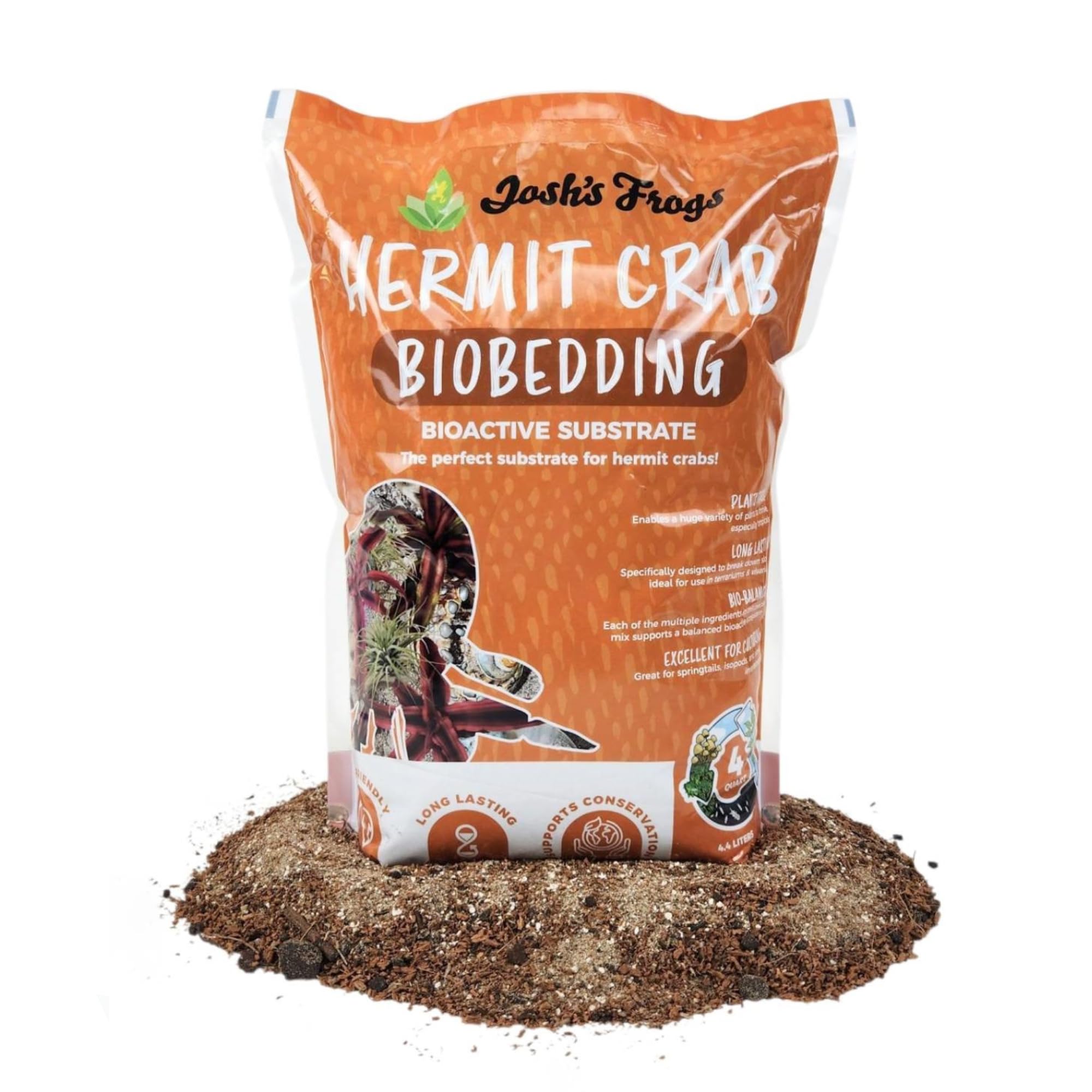
Josh’s Frogs has created something truly special with this BioBedding — a complete, pre-mixed substrate that eliminates the guesswork of blending your own sand and coconut fiber. It’s specifically formulated for hermit crabs and Halloween moon crabs, which tells you right away that this isn’t a generic reptile substrate repurposed for crabs. The bag arrives already mixed with sand, coco fiber, food particles, and essential minerals, so you can pour it directly into your tank and start building your bioactive setup immediately.
What sets this substrate apart is the careful formulation. It contains no calcium carbonate, which can harden into a cement-like consistency when wet and trap molting crabs. It also excludes added salts that could burn a freshly molted exoskeleton. The moisture retention is outstanding — keepers report that it stays at the perfect dampness for burrowing without becoming waterlogged. Many users have successfully grown live plants directly in this substrate, which creates a more natural and enriching environment for crabs. The inclusion of food-grade minerals means cleanup crews like springtails and isopods have a food source to establish a self-cleaning ecosystem.
For keepers who want the safest, most convenient option that supports bioactive setups and reduces maintenance, this is the clear winner. A single bag provides good depth for a 10-gallon tank, but larger enclosures will need multiple bags. The peace of mind from knowing the formula is specifically designed for hermit crabs makes the investment worthwhile. This is the substrate I recommend to anyone who wants their crabs to live their full natural lifespan.
Why we love it
- Pre-mixed and ready to use — no blending required
- No calcium carbonate or harmful salts
- Supports live plants and bioactive cleanup crews
- Excellent moisture retention for molting
Good to know
- Higher cost per bag compared to DIY options
- Larger tanks need multiple bags for proper depth
- Moisture content varies by batch; may need adjustment
2. Fluker’s All Natural Premium Hermit Crab Sand Substrate

Fluker’s has been a trusted name in reptile and amphibian care for decades, and their Premium Hermit Crab Sand Substrate lives up to that reputation. This 12-pound bag contains a carefully balanced mix of sand, coconut fiber, sea salt, calcium carbonate, and natural probiotics. The sand texture is fine enough to support tunneling but coarse enough to prevent compaction, and the coconut fiber component helps retain the moisture that hermit crabs desperately need for healthy gill function.
The inclusion of probiotics is a genuinely useful feature — these beneficial bacteria help break down organic waste, reducing ammonia buildup and keeping the substrate fresher for longer between full changes. Experienced keepers note that the sand holds tunnel shape exceptionally well during molting, which is critical because a collapsed tunnel can trap and kill a molting crab. The 12-pound bag provides enough depth for a standard 10-gallon tank, and the sand is pre-moistened to the ideal consistency right out of the bag. Long-term users report that this substrate has supported multiple successful molt cycles without mold issues or foul odors, provided regular spot cleaning is maintained.
This is an excellent mid-range option that combines convenience with proven performance. The only caveat is the calcium carbonate content — while Fluker’s formulation doesn’t seem to cause the hardening issues seen with pure calcium carbonate sand, some keepers prefer to avoid it entirely for molting crabs. If you want a ready-to-use sand that supports beneficial bacteria and holds tunnels well, this is a solid choice that thousands of crab owners trust.
Why we love it
- Pre-mixed with coconut fiber for moisture retention
- Probiotics help break down waste naturally
- Holds tunnel shape exceptionally well
- Trusted brand with decades of reptile experience
Good to know
- Contains calcium carbonate — some keepers prefer to avoid
- Pre-moistened bag is heavy and can be messy to pour
- Not ideal for bioactive setups with live plants
3. Zoo Med Hermit Soil Coconut Fiber Brick (3 Pack)

Zoo Med’s Hermit Soil is a classic for good reason — it’s pure, compressed coconut fiber that expands dramatically when hydrated. Each 600-gram brick yields between 7 and 8 liters of substrate, so the three-pack gives you roughly 21 to 24 liters total. That’s enough to provide six inches of depth in a 10-gallon tank with some left over. The coconut fiber is sustainably sourced and fully compostable, making it an eco-conscious choice for environmentally minded keepers.
Where this substrate truly shines is humidity control. Coconut fiber is naturally absorbent and releases moisture slowly, helping maintain the 75-85% humidity range hermit crabs need. Keepers report that mixing this with playsand in a 5:1 ratio creates the perfect balance of tunnel stability and moisture retention. The fiber is also naturally odor-absorbing, breaking down waste products and keeping the tank smelling fresh. Many long-term crab owners use this exclusively, either alone or as a sand additive, and report healthy molts and active crabs. The bricks store compactly and last for months, making this an economical choice for ongoing maintenance.
The main drawback is that coconut fiber alone doesn’t compact well enough to hold tunnels — it needs to be mixed with sand for burrowing crabs. Some keepers also find the brick expansion process messy, as the fibers can be dusty when dry. But as a humidity-boosting component or a standalone substrate for species that don’t require deep tunneling, this is an outstanding value that delivers consistent results.
Why we love it
- Excellent humidity retention for healthy gill function
- Three bricks provide months of substrate for most tanks
- Naturally absorbs odors and breaks down waste
- 100% natural, compostable, and eco-friendly
Good to know
- Must be mixed with sand for proper tunnel support
- Brick expansion process can be messy
- Not a complete substrate solution on its own
4. Aqua Natural Hermit Crab Aragonite 10LB

Aqua Natural’s Aragonite sand is a hidden gem in the hermit crab community. Unlike common play sand or calcium carbonate sand, aragonite is a naturally occurring form of calcium carbonate that doesn’t harden when wet. It’s the same material found in natural coral reef environments, and it provides a soft, fine texture that hermit crabs absolutely love to dig in. The 10-pound bag is sustainably sourced and phosphate-free, which matters for water quality if you’re running a paludarium or bioactive setup.
The texture is where this substrate really wins fans. Keepers consistently describe it as “soft” and “silky” — crabs can burrow effortlessly, and tunnels hold their shape beautifully. The aragonite also provides a natural source of calcium that crabs can access as needed, supporting exoskeleton health without the risks associated with crushed coral or calcium carbonate sands. One keeper reported that their crab is seven years old and thriving on this substrate mixed with coconut fiber, noting that it’s far safer than calcium sands that can harm crabs. The sand retains heat well, which is beneficial for maintaining stable tank temperatures.
The 10-pound bag is sufficient for a shallow layer in a medium tank, but you’ll likely need two bags for the six-inch depth that larger crabs require. It’s also slightly more expensive than playsand, though the quality justifies the difference. For keepers who want a natural, soft, calcium-rich substrate that supports healthy molting without hardening risks, this is an excellent choice that comes highly recommended by experienced crab owners.
Why we love it
- Soft, fine texture that crabs love to burrow in
- Natural calcium source without hardening risks
- Sustainably sourced and phosphate-free
- Retains heat well for stable tank temperatures
Good to know
- May need multiple bags for deep substrate beds
- Higher cost per pound compared to play sand
- Not a complete substrate — best mixed with coco fiber
5. CocoCuts Coconut Husk Reptile Substrate 10 lb Block

CocoCuts has engineered a coconut husk substrate that solves one of the biggest frustrations with compressed bricks — you don’t need to soak it to break it apart. This 10-pound block crumbles easily by hand, saving you the hassle of waiting for bricks to hydrate and the mess of wringing out excess water. The husk chips are dust-free, which is a significant advantage for respiratory health — both for your crabs and for you during setup. Once expanded, it fills up to 18 gallons of enclosure space.
The chunky texture of coconut husk chips provides excellent aeration in the substrate, preventing anaerobic pockets that can produce harmful gases. This is especially valuable in deep substrate beds where the lower layers can become compacted over time. Reptile breeders and collectors have praised this product for its consistency and cleanliness, noting that it outperforms many premium brands at a lower price point. The chips hold moisture well but drain effectively, creating a healthy microenvironment for burrowing crabs. Long-term users report that it maintains its structure for months without breaking down into sludge.
One thing to note is that the chunky texture is better suited for larger crab species or as a base layer mixed with finer sand on top. Smaller crabs may prefer a finer substrate for digging. The 10-pound block is also heavy and can be awkward to handle during setup. But for keepers who want a dust-free, easy-to-use coconut husk substrate that supports healthy burrowing and aeration, CocoCuts delivers impressive quality and value.
Why we love it
- Breaks apart easily without soaking
- Dust-free production process for respiratory health
- Excellent aeration prevents anaerobic pockets
- Fills up to 18 gallons of enclosure space
Good to know
- Chunky texture may be too coarse for small crabs
- Heavy block can be awkward to handle
- Best used as part of a mixed substrate setup
6. Riare 8 Pack Natural Coconut Chip Substrate
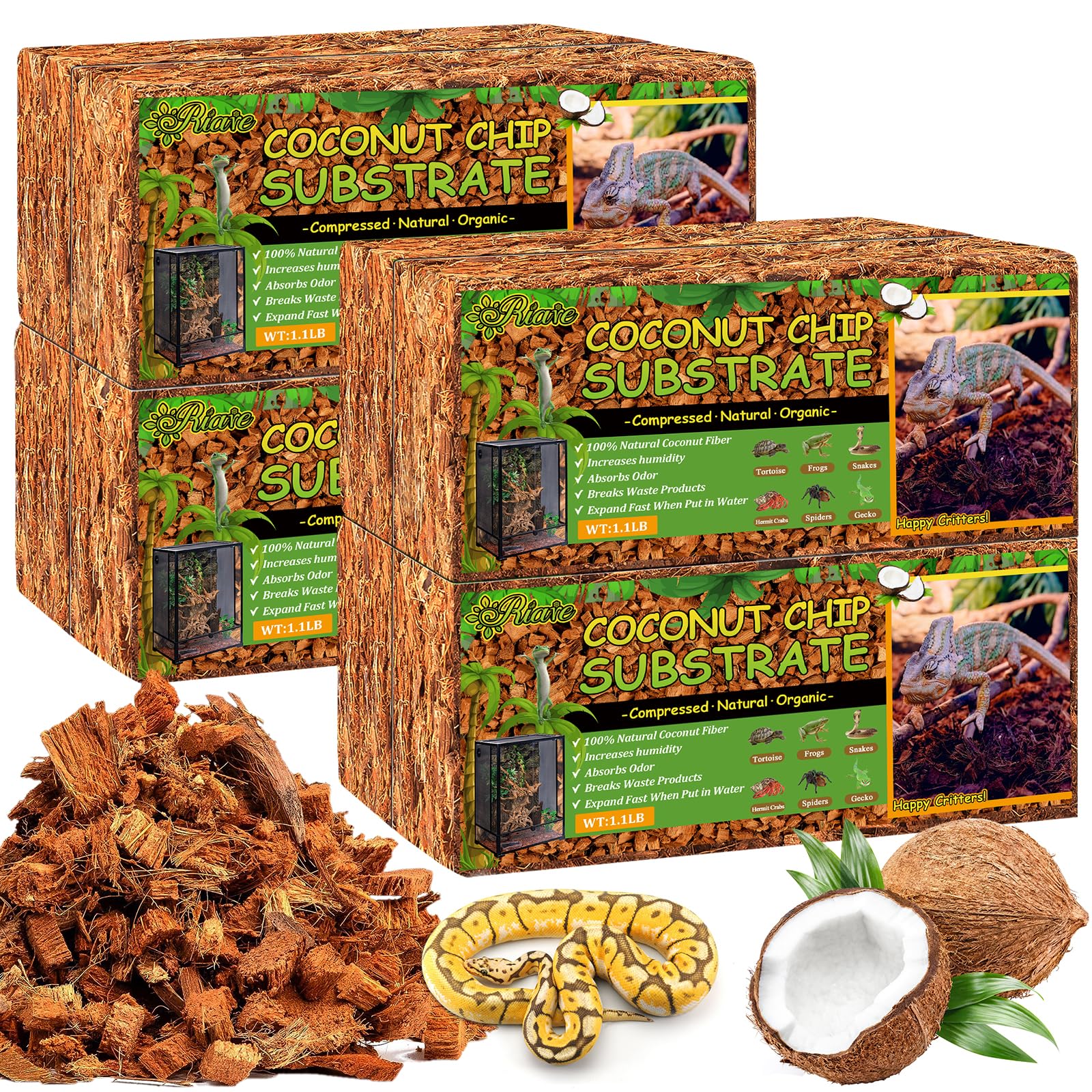
Riare’s 8-pack of compressed coconut chip bricks is a powerhouse option for keepers with multiple enclosures or large tanks. Each brick expands significantly when hydrated, and the 8-pack provides enough substrate to fill a 4x2x2 foot enclosure completely. The coconut chips are chunky and natural, without sharp pieces or excessive dust that could irritate your crabs. The texture strikes an excellent balance — coarse enough for aeration but fine enough for burrowing once broken down.
Humidity retention is exceptional with these chips. They absorb water readily and release it slowly, maintaining stable humidity levels in the enclosure for days between mistings. Snake and reptile keepers have noted that this substrate outperforms premium brands like ReptiChip while costing significantly less. The chips are also effective at neutralizing odors from waste, keeping the enclosure fresh between cleanings. For hermit crab owners, mixing these chips with playsand creates an ideal substrate that holds tunnels well while maintaining the humidity crabs need for healthy molting.
The main consideration is that the bricks require proper hydration before use — you’ll need a large container to expand them, andthen the mess can be avoided. The 8-pack is a fantastic value for serious keepers who want premium coconut chip substrate without the premium price tag. For hermit crab enclosures, combine with playsand for best results.
Why we love it
- 8 bricks provide massive volume for large enclosures
- Excellent humidity retention and odor control
- Outperforms premium brands at a lower cost
- Chunky texture prevents compaction and promotes aeration
Good to know
- Bricks need proper hydration; can be messy to expand
- Chunky texture may need mixing with finer substrate for small crabs
- Weight of 8 bricks is significant for shipping and handling
7. Gro-Med ReptiCare Compressed Coconut Chip Substrate
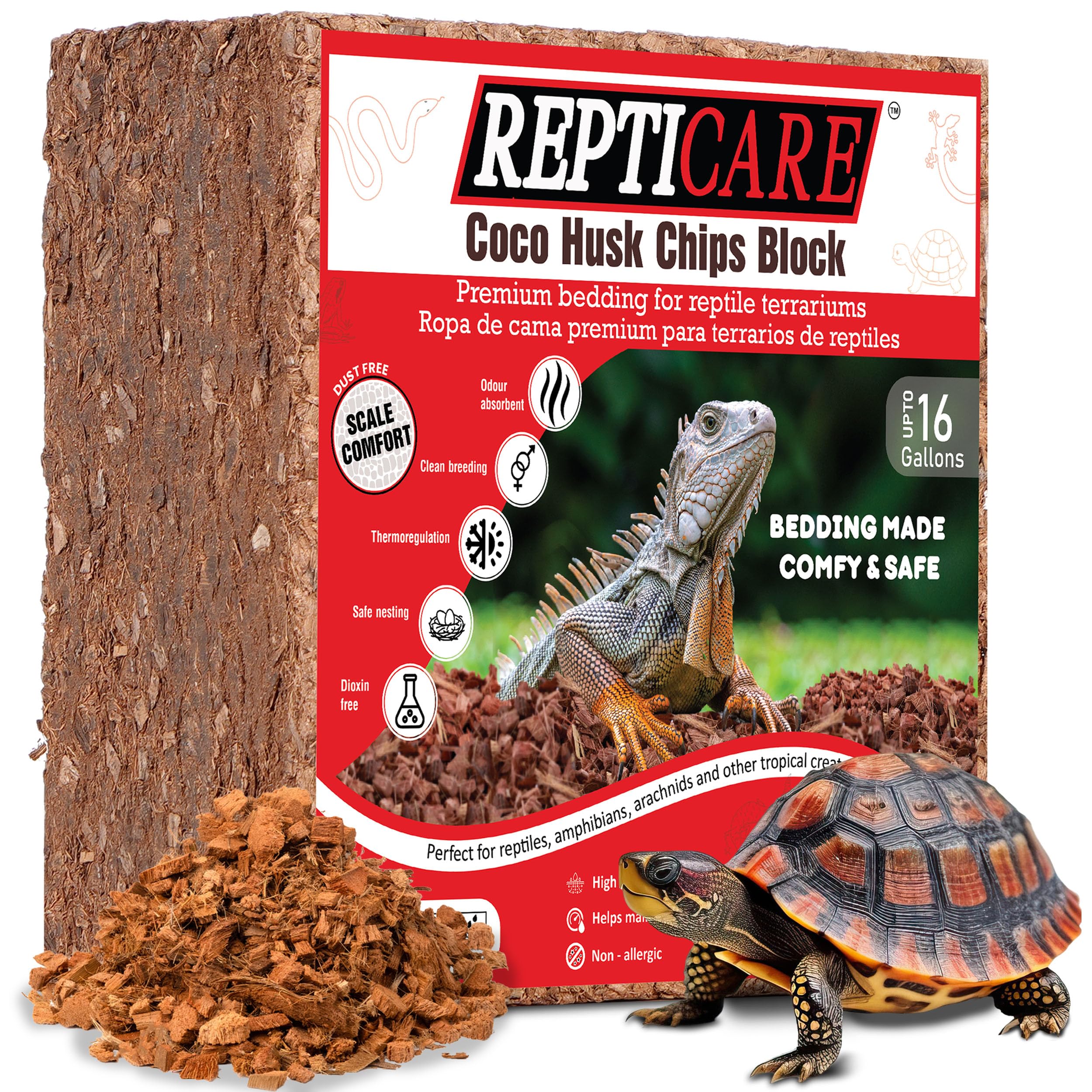
Gro-Med’s ReptiCare block is a powerhouse of expansion — one 10-pound block swells to an impressive 65 quarts of coconut husk chips. That’s enough to fill two 120-gallon reptile enclosures with a generous layer, making it an exceptional value for keepers with multiple tanks or large setups. The chips are triple-washed to reduce dust and impurities, creating a clean environment for sensitive pets like hermit crabs. The packaging is detailed and well-organized, reflecting the brand’s attention to quality.
The texture is rougher than fine coconut fiber, but the chips soften considerably once hydrated. Keepers report that the substrate holds moisture well and masks odors effectively, with waste blending into the dark color. For hermit crabs, this works best as a base layer mixed with playsand to provide the structural support needed for tunneling. The chips are also suitable for bioactive setups, though some users have reported occasional mold issues if the substrate becomes too wet without adequate ventilation. The block breaks down more easily when soaked in hot water, and the resulting chips are long-lasting, requiring replacement only every six months with proper maintenance.
While the value is undeniable, quality control has been inconsistent — a small number of users have reported finding plastic fragments or mold in their blocks. This is a risk with many compressed substrates, but it’s worth inspecting the block thoroughly before use. For keepers on a budget who need bulk substrate for large enclosures and are willing to do a quick quality check, Gro-Med offers an unbeatable volume-to-price ratio.
Why we love it
- Expands to 65 quarts — exceptional volume for the price
- Triple-washed for reduced dust and impurities
- Long-lasting, requires replacement only every 6 months
- Good moisture retention and odor control
Good to know
- Occasional reports of mold or plastic fragments
- Rough texture needs mixing with sand for crab burrows
- Best to inspect thoroughly before use
8. Riare 6 Pack Natural Coconut Fiber Substrate

Riare’s 6-pack of compressed coconut fiber bricks offers a versatile and affordable entry point for new hermit crab keepers. Each brick is made from natural, organic coconut coir that expands into a soft, fluffy substrate when hydrated. The 6-pack provides enough volume for multiple setups or a deep layer in a medium tank. The fiber is odorless and excellent at retaining humidity, which is essential for maintaining the tropical environment hermit crabs need.
Beyond humidity control, this substrate excels at odor absorption — it breaks down waste and neutralizes smells, keeping the enclosure fresh between cleanings. Keepers have used it successfully for a variety of pets, including chickens, turtles, and snakes, which speaks to its versatility. For hermit crabs, it’s best mixed with playsand in a 5:1 ratio to provide the structural integrity needed for tunneling. The bricks are easy to store and have a long shelf life, making them a practical choice for ongoing maintenance. Users report that the fiber is dust-free and gentle on pets’ respiratory systems.
The main downside is that the bricks can be dusty when dry, and the expansion process can be messy if not done carefully. Some users have also noted that the package may arrive with minor damage due to shipping. Additionally, the fiber alone does not hold tunnel shape, so mixing with sand is mandatory for burrowing crabs. For keepers looking for a reliable, budget-friendly coconut fiber option that performs well in mixed substrates, Riare’s 6-pack delivers solid value.
Why we love it
- 6 bricks provide ample substrate for multiple tanks
- Excellent humidity retention and odor absorption
- Dust-free and gentle on respiratory systems
- Versatile — works for many reptile and amphibian species
Good to know
- Must be mixed with sand for proper tunnel support
- Expansion process can be messy
- Packaging may arrive with minor damage
9. Legigo 6 Pack Compressed Coconut Fiber Substrate
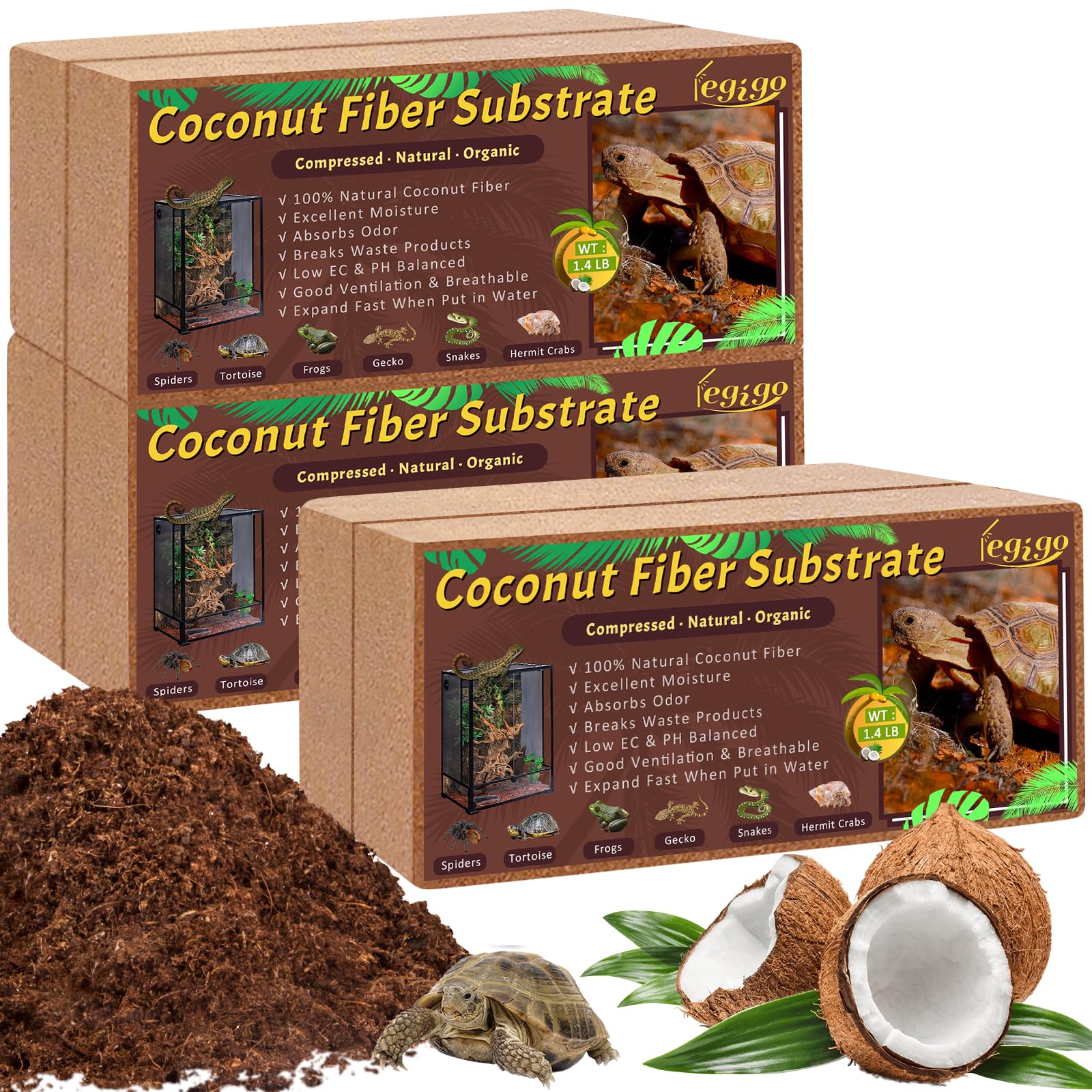
Legigo’s 6-pack of compressed coconut fiber bricks is a straightforward, no-frills option that gets the job done. Each brick expands into a soft, breathable substrate that maintains proper humidity levels and safely decomposes waste. The natural coconut coir is free from harmful chemicals and impurities, making it safe for hermit crabs and other sensitive invertebrates. The 6-pack provides a generous amount of substrate for the price, and the compact bricks store easily when not in use.
One of the standout features is the substrate’s ability to absorb and decompose waste while controlling odors. Keepers report that it keeps enclosures smelling fresh and looking clean, even with multiple animals. The fiber is also compostable, so you can dispose of it in your garden after use without environmental guilt. For hermit crabs, this substrate works best when mixed with sand to create a stable burrowing medium. The bricks expand quickly in hot water and break apart easily, though some users note that the packaging lacks clear instructions for first-time users.
The main criticism is occasional quality control issues — a few users have reported finding foreign material in the bricks, such as small pieces of plastic or debris. This is a concern for any natural product, and it’s wise to inspect the expanded substrate before adding it to your tank. Despite this, the majority of users are satisfied with the performance and value. For budget-conscious keepers who need a reliable coconut fiber base for their mixed substrate, Legigo offers a solid option that won’t break the bank.
Why we love it
- Great value for a 6-pack of expanding bricks
- Excellent moisture retention and odor control
- 100% natural, compostable, and chemical-free
- Compact bricks store easily
Good to know
- Occasional reports of foreign material in bricks
- No instructions included on packaging
- Must be mixed with sand for burrowing crabs
10. Aqua Natural Galaxy Sand 20lb

Aqua Natural’s Galaxy Sand brings a touch of drama to your hermit crab enclosure with its fine black grains that sparkle under proper lighting. This 20-pound bag is ethically and sustainably sourced in the USA, and the sand is phosphate-free and safe for aquatic and terrestrial setups. The grains are uniform in size, smooth without sharp edges, and rinse clean with minimal effort. While marketed primarily for aquariums, many keepers use it successfully in vivariums and hermit crab tanks as a decorative and functional substrate.
The dark color creates a stunning contrast against shells, plants, and decorations, making your enclosure visually pop. The sand is heavy enough to stay in place during burrowing, and tunnels hold their shape reasonably well when the sand is properly moistened. Keepers report that plants like Java fern and Amazon sword grow well in this substrate, making it suitable for bioactive or planted setups. The 20-pound bag provides plenty of depth for a medium to large tank, and the sand doesn’t alter water parameters, which is important for maintaining stable conditions.
The main drawback is that this sand is not specifically formulated for hermit crabs — it lacks the moisture-retaining properties of coconut fiber, so it must be mixed with coco coir to maintain adequate humidity. Some users have also noted that the sand can be dusty initially, requiring thorough rinsing before use. The sparkle effect is subtle and most visible under blue LED lighting, not in normal room light. For keepers who prioritize aesthetics and are willing to mix substrates, Galaxy Sand offers a beautiful foundation that performs well when combined with moisture-retaining components.
Why we love it
- Stunning black color with subtle sparkle
- Smooth, uniform grains safe for burrowing
- Sustainably sourced and phosphate-free
- Heavy enough to stay in place during digging
Good to know
- Not a standalone substrate — must mix with coco fiber
- Can be dusty; needs thorough rinsing
- Sparkle effect is subtle in normal lighting
11. REPTI ZOO Reptile Coconut Fiber Substrate 72 Quart

REPTI ZOO’s 72-quart coconut fiber brick is a bulk solution for serious keepers. One 10-pound block expands to 2.5 cubic feet of fine coconut substrate, enough to cover a large enclosure with several inches of depth. The fine texture is gentle on skin and scales, making it suitable for hermit crabs, turtles, snakes, and amphibians. The substrate is 100% organic and biodegradable, with strong odor-absorbing properties that keep enclosures fresh between cleanings.
The moisture retention is exceptional — the fine coconut fiber holds water like a sponge, maintaining high humidity levels for days. Keepers report that it eliminates waste odors effectively, with one user noting that after 23 years of keeping reptiles, this is the first substrate that completely neutralized their boa’s waste smell. The substrate is also easy to clean, with solid waste sitting on top for quick removal. For hermit crabs, this fiber works best as a base layer mixed with playsand to create a stable burrowing medium. The 72-quart yield means you’ll have plenty of substrate for multiple tank changes or a very deep bed for large crabs.
Quality control has been a concern for some users — a few have reported finding decaying leaves, wood, or even dead bugs mixed into the brick. The packaging also has tape on both ends that must be removed before hydration, which is an extra step. Additionally, breaking the dry brick apart can be messy and dusty. Despite these issues, the overwhelming majority of users are satisfied with the performance and value. For keepers who need bulk coconut fiber and are willing to inspect the product before use, REPTI ZOO offers an unbeatable volume at a competitive price.
Why we love it
- 72 quarts from a single brick — exceptional volume
- Superior moisture retention for humidity-dependent species
- Excellent odor neutralization, even for large reptiles
- Fine texture is gentle on skin and scales
Good to know
- Occasional reports of debris (leaves, bugs) in brick
- Packaging tape must be removed before use
- Dry brick is dusty and messy to break apart
- Must be mixed with sand for hermit crab burrows
Safety & Care Tips
Maintain Proper Depth and Moisture
Your substrate should be at least six inches deep for small to medium crabs, and deeper for larger specimens. Check moisture levels weekly by squeezing a handful — it should hold together without dripping water. Mist the surface as needed, but avoid overwatering, which can lead to anaerobic conditions and harmful bacteria. Stir the substrate occasionally to prevent compaction and promote even moisture distribution.
Spot Clean and Replace on Schedule
Remove visible waste and uneaten food daily to prevent ammonia buildup. Replace the entire substrate every three to six months, depending on tank size and crab load. When replacing, discard old substrate completely and clean the tank with a reptile-safe disinfectant. Never reuse substrate from a tank where a crab has died, as it may harbor pathogens. For bioactive setups, replace only the top layer and let cleanup crews handle the rest.
FAQ
Can I use play sand from the hardware store for hermit crabs?
How often should I change the substrate in my hermit crab tank?
Is calcium sand safe for hermit crabs?
What is the best ratio of sand to coconut fiber for hermit crabs?
Final Thoughts: The Verdict
For most pet parents, the best substrate for hermit crabs winner is the Josh’s Frogs Hermit Crab BioBedding because it eliminates guesswork, supports bioactive setups, and is specifically formulated for crab safety. If you want maximum value and bulk volume for large enclosures, grab the REPTI ZOO 72 Quart Coconut Fiber. And for a natural, calcium-rich sand that crabs love to dig in, nothing beats the Aqua Natural Aragonite. Whichever you choose, remember that depth and moisture are the keys to a thriving hermit crab habitat.